It takes moral courage to admit you’re wrong

“When the facts change, I change my mind.” said JM Keynes, arguably one of the most intelligent people of the twentieth century. We think that this is the mindset that defines LSS readers. Today we offer a short piece about a man called Bernard de Haas and his colleagues in one corner of the research community, which does them all immense credit.

Bernard had published a paper on using brain scans to measure changes in behaviour. It was all routine stuff; they did the work, checked out the statistics and published. A few years later anther researcher called Susanne Stroll contacted Bernard to discuss some problems growing out of his work. She didn’t do it a nasty vindictive way. Both teams joined in a collaborative approach to tease out the truth-and eventually Bernard felt he had to withdraw his findings. Nature explains below what happened.*

Not all scientists are like this, gentle reader: we have known several who delighted in discovering errors in the work of colleagues, and gleefully broadcasting them. While attempts to discuss their own shortcomings were met with sullen hostility and angry shouting. A bit like five year olds in fact.

The central problem for us all is: why are there so few Bernards and Susannes? Why are so many in the arrested development stage of a five year old? Who get hold of one tiny idea and twist every incoming fact so that it fits with their perception. Who can think of no better way to counter their opponents than to scream abuse? Who deny all facts and have no idea of shading or context? The problem is now acute. The internet is like a polluted stream: to drink from now is to endanger one’s health. Bernard’s article points out the psychological roots of intelligence. And the emotional roots of its opposite.

What my retraction taught me (nature.com)

The experience [of retracting a paper] has not left me bitter,” writes experimental psychologist Ben de Haas. “If anything, it brought me back to my original motivation for doing research.” Despite the pain of losing work he was proud of, solving a mystery and working collaboratively with fellow researchers was a positive experience overall. He calls for incentives that foster the common goal of better research.Nature | 5 min read

#fakenews #research #reason
At last, we’re serious about antibiotics

We have so many friends to thank this morning for sending us links to a breaking story. Oxford University has received a £100 million grant from Ineos to start serious research projects into antibiotic resistance and new antibiotics. Regular readers will be fed up with us banging on about this; but we say: at last! It’s well covered this morning, so we’ve done a couple of links to stories at the BBC and Mail.

We’d like to make a couple of observations here. As some of you have pointed out, one of the most important ways in which we have squandered the opportunity antibiotics gave us was their uncontrolled and massive use in animal farming. The thoughtless desire to measure success by how cheaply you get goods to the point of sale, and no other has done immense damage to public health in so many areas. Let’s hope the new rango of antibiotics doesn’t go the same way.

Secondly to thank the work of Professor Colin Garner. He it was who first identified this problem back in 2014, since when he has campaigned tirelessly. Building a whole new charity, recruiting big hitters like Dame Sally Davies, lobbying and organising…..we would all be in a much worse place without him. If you want to learn more about his work, please visit the website of antibiotics research UK Antibiotic Research UK | Fighting Antibiotic Resistance

Oxford research tackles threat of antibiotic resistance – BBC News

Ineos gives Oxford University £100m for antibiotic… | Daily Mail Online

#antibiotics #superbugs #antibioticresearch #oxforduniversity #ineos #professorcolingarner

One for our American friends

We at LSS are always honoured to have readers in the United States of America. For those who have never visited, it is a large country which is, on average, south of Canada and north of Mexico. It is famous for beautiful scenery and delicious foods. And for a deep, seemingly unbridgeable racial divide which is now close to tearing it down altogether.

The origins of the divide have perplexed historians and social scientists for centuries. It may well be that the instinct to form tribes and hate all who are different is a primary human drive. We certainly respect the learning of authors such as Amy Chua whose Political Tribes we link below.*

Could the United States have ever taken a different turn? Below we offer two studies of two experiments which both grew out of the Civil War. (1861-1865)

The Free State of Jones was a pro-Union rebellion in the deep Confederacy State of Mississippi between 1864 and 1865. Led by a charismatic poor farmer called Newton Knight, a group of white agriculturalists and runaway black slaves staged something that seemed to have been somewhere between a guerrilla insurrection and a full blown revolution. LSS links you to a wonderfully balanced, charmingly written piece in the Smithsonian by Richard Grant. Oddly, Knight survived until 1921 and the branches of his families still live today in various states of disamity

The True Story of the ‘Free State of Jones’ | History | Smithsonian Magazine

A political attempt to stage a multiracial democracy occurred in Wilmington North Carolina in 1898. It was overthrown when armed white insurrectionists rose up and overthrew the government, following closely contested elections. Their victory was total; segregation and Jim Crow laws were then enacted which were not cleared away until the 1960s. An irony of history was that all this was done in the name of the Democratic Party, then the principal exponents of white supremacy.

Wilmington 1898: When white supremacists overthrew a US government – BBC News

The views that genes are destiny and that our instincts are more powerful than our reason have been skated over too long by many doubtless well-meaning people. They remind us of the Victorians and sex: let’s all try very hard to pretend that it doesn’t exist. There is now an overwhelming need to discover how these instincts play out in many places from prisons and aircraft carriers to the halls of governance, and how factors like poverty and inequality may inflame them. Or not. It is the great scientific opportunity of this century. And about time too.

Amy Chua Political Tribes Bloomsbury 2018

Free State of Jones (film) – Wikipedia

#freestate of jones #wilmingtonnorthcarolina #politicaltribes #racism #uscivilwar #newtonknight #mississippi #northcarolina

Weekly round up: Education, Education, Education

Education for women: British Prime Minister Alexander de Pfeffle “Boris” Johnson calls for more education for women. With a journalist’s eye for a telling phrase, he sees it as the Swiss Army Knife in the fight against poverty. Ahead of his chairmanship of the G7, he has appointed MP Helen Grant as his special envoy. As something that LSS has been advocating since our inception, we think it’s a worthy initiative. And as a man who has risen to the top with the best education that money can buy (Eton, Balliol), he must know the value of it. Here’s the BBC:

Boris Johnson says girls’ education key to ending poverty – BBC News

Education for Doctors: History shows that nations which are quick on the early uptake of female education soon develop a competitive advantage, as this story from nineteenth-century America shows. Nature: How the Blackwells unleashed the Caged Force of Female Physicians. Feminists of all shades should click on this

A history of Elizabeth Blackwell, the first woman in the United States to receive a medical degree, and her sister Emily, a fellow physician, reveals the complex personalities who dared to kick down the door of the all-male US medical establishment. “The path for women in medicine was not created by an army of kind, like-minded people,” writes reviewer Hannah Wunsch, herself an intensive-care doctor and epidemiologist, “but by determined individuals, each with her own agenda.”Nature | 6 min read

Education for our electronic friends: Machines are now becoming so intelligent that we have to educate them, just like with trainee musicians who try too hard. Here’s one with intriguing implications from Nature; Machine learning cleans microscopy images

Algorithms to filter out the noise from micrographs are yielding stunning results. But the magic does have risks: biologists must take care not to lose or muddle valuable signal. The stronger the noise, the more likely it is that the results are ‘hallucinations’ dreamt by the computer. And the algorithm’s reasoning isn’t always transparent. A growing collection of tools allows researchers to find and compare multiple de-noising approaches and to contribute new ones.Nature | 8 min read

“Educate, educate, educate” said former British PM Tony Blair. We recognise it’s not everything. We know people who used their education to go on to make millions. We knew others with two degrees who went on to lead miserable, stunted lives. We know of at least two millionaires who never went near tertiary education, and obviously blossomed. But the point is statistical, not individual. A good education system is like a healthy ecology. It is the substrate in which economic progress thrives. To leave one half of the human race under educated (or with none at all) is a sure way to fall behind. As Johnson knows, no force is more potent against the dark forces of ignorance than female education.

#borisjohnson #educationfor women #elizabethblackwell #feminism #artificialintelligence

Friday Night Cocktails-The Scorpion and memories of 1982

Suggested by Mr Andrew Foster of Dorset

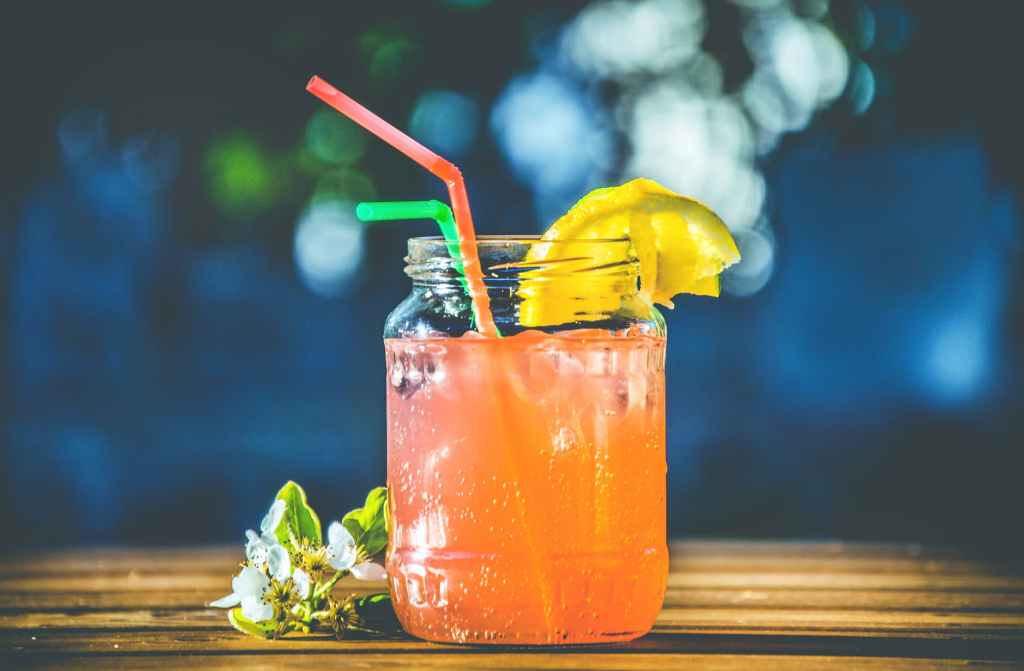
March 1982. Even the Falklands (Malvinas) were unheard of, and everything that followed that is but a twinkle in the eye of time. In the cold winter air we braved our way on Friday nights to the Beachcomber Bar in Berkeley Street W1. Here we gathered in happy hours with a crowd of civil servants, scientists, advertisers and IT folk, to while away some time in the company of a supercharged cocktail or two. And what a tropical locale in that icy landscape! Dense vegetation of palms and parrots, with real live caimans floating in pools and tanks. A little more fun than The Gasworks Arms! And to celebrate the tropicality of it all, here’s a scorpion, which had a sting that left you unable to walk. Well, we were young.

Put five cubes of ice in a cocktail shaker. Add one measure of brandy, half a measure of white rum, and half a measure of dark rum and two teaspoons of Amaretto, then two measures of fresh orange juice. Shake, and serve into a chilled glass over the cubes. Decorate with slices of orange and lemon

Source: The Ultimate Cocktail Book, Hamlyn

In memory of Nicki Southwell (neé Moll) 1956-2019 Never forgotten

#cocktails #beachcomber #london

We see weed as way ahead

When you’re in a desperate situation, think laterally. Think differently. Think about something that was there all along, but which you’ve overlooked That’s why we couldn’t resist showcasing two stories from the Daily Mail about new natural solutions to our ecological crisis.

Global Warming Everybody agrees there’s quite a lot of it about. One solution is to grow more trees. Trouble is: they’re slow to grow, and there’s always a danger that one of the President’s mates will be allowed to come along in five years and chop them all down. According to Ian Randall, a better alternative is humble sea kelp. It grows thirty time faster than trees. Its carbon capture properties are prodigious. Kelp forests give a marvellous haven for sea life. And get this- you can harvest it for cattle feed, which in turn cuts down methane emissions from these large beasts. So what’s not to like? Read this story about Carbon Kapture and its kelp farms

Environment: UK firm reveals plans seaweed farms off the Welsh coast to tackle carbon emissions  | Daily Mail Online

Plastics Ever heard of sea grass? Neither had we. But this humble little ocean vegetable may be helping to gather up the 8 million tonnes of plastic which are dumped annually into our oceans. And to deposit them in easier-to-manage clumps called Neptune’s Balls. (Neptune was the Roman god of the sea- we didn’t know he liked dancing). Here Shivali Best tells of studies in Mallorca which are looking at using sea grass to turn the tide on this disgusting act of self harm we’re all doing. Incidentally, what a great place to do scientific research!

Seagrass ‘Neptune balls’ are found to sieve MILLIONS of plastic particles from water | Daily Mail Online

#kelp #seagrass #globalwarmimg #climatechange #methane

Hungry children now means we’re all poorer in 2031

No one would ever dare accuse the Kelloggs Corporation of being lefties, pinkoes, liberals or any of the other adjectives in the demonology of the Right. It’s always been a shining example of progressive, enlightened capitalism, supplying the market with clean, benign products. (Declaration of Interest-we love them). That’s why when they come up with a report on child hunger, it needs to be taken very seriously indeed.

UK readers will be aware of the controversy swirling around the footballer Marcus Rashford and his campaigns on child hunger. Readers may take many views on this. Some religious readers may look at it on compassionate grounds. Libertarians and economists of the Chicago persuasion may take the view that any interference in a free market is both inefficient and an intolerable assault on liberty. The aforementioned Lefties and pinkoes may well develop tropes on abstract concepts like social justice and equity, whatever they are.

But what if the real argument is none of those? What happens if you take the patriotic view of long term national efficiency? The Kelloggs reports waxes lyrical indeed on the damage that hunger is doing to teaching, exam passes and assessment. We’ve included a couple of other links which suggest childhood hunger leads to increases in things like violence and physical and mental health problems. We were shocked to discover that the ancient evil of rickets is back on the rise. (Economic History note: a high incidence of rickets in the lower classes is a pretty good sign you have a truly free market economy).

If Britain is now to be a successful, stand-alone nation, it will need the best trained, best-educated workforce it can muster. There is depressing evidence that it is stuck at mid table in the world education leagues, but we promise another blog on that later. The lesson from History is also clear. The malnourished, stunted late Victorian lower classes were not up to their tasks either as workers or defenders of the Empire. (During the Boer War, the Army was forced to reject between 40 and 60% of volunteers on health grounds). There is evidence that the Government is taking Rashford seriously. Good-we can’t afford to make the same mistake twice. There’s no Empire to fall back on, nor anyone else.

R2_Kellogg_A_Lost_Education.pdf (kelloggs.co.uk)

The long-term effects of going hungry – BBC Future

Researchers link childhood hunger, violence later in life — ScienceDaily

The Boer War: Recruitment, National Efficiency and New Liberalism – Revision Cards in A Level and IB History (getrevising.co.uk)

#marcusrashford #childpoverty #childhoodhunger #kelloggs #education #boerwar #declineofbritain

Could mRNA vaccines open the way to a cure for Multiple sclerosis?

We’ve all heard of BioNTech-they were Pfizer’s partner in developing the first of the new generation mRNA vaccines against Covid-19. Remember all the excitement back in November last year? Now it seems that mRNA technology can do a lot, lot more. Like potentially curing the dreadful disease of Multiple Sclerosis. BioNTech scientists Katalin Karikó and Ugur Sahin have released results on studies on mice with a neurodegenerative disease which is similar to MS. The mRNA injections seem not only to slow the progress of the disease, but also to reverse it. It’s early days yet, but the implications are revolutionary.*

So, let’s open out this whole trope of mRNA a little further, courtesy of Nature Briefings*:

Two of the first COVID vaccines to get emergency approval — developed by Pfizer-BioNTech and Moderna — use RNA technology. They are the first RNA vaccines authorized for use in humans, despite efforts going back decades. Nature explores how manufacturing and distribution challenges held the technology back and what the future holds now that the power of RNA vaccines has been unleashed.

Please click on the link below for the piece by Elie Dolgin. It’ll quickly tell you how these things were dreamed up, how they work, and their potential, even against “Holy Grail” illnesses like malaria, tuberculosis, HIV and cystic fibrosis. We think such knowledge should now be part of the mental furniture of every educated person. Just as your grandparents suddenly had to know about things like radar, nuclear reactions and antibiotics back in 1945. Because if even half of this mRNA technology works, it will transform the world more surely than even those advances did.

for the BioNTech story, here’s Nuño Dominguez in El Pais– translators at the ready

La vacuna de la covid abre una nueva vía contra la esclerosis múltiple | Ciencia | EL PAÍS (elpais.com)

here’s the link to Nature

How COVID unlocked the power of RNA vaccines (nature.com)

#mRNA #vaccines #sars-cov-2 #BioNTech #multiplesclerosis #HIV

Doubling the power of solar panels

If there’s one type we can’t stand at LSS it’s can’t-doers and nay-sayers. There were lots of them around fifteen years ago, trotting out their gloom about how solar power could never work, it was expensive, it was inefficient. Fortunately Professor Henry Snaith and his company Oxford PV* don’t listen to rubbish. Instead they are pushing back the boundaries on new solar panels which will soon revolutionise our homes, workplaces, and so slash carbon emissions.

We’ve come a long way with solar panels, but they tend to operate at only around 20% efficiency. That’s because their semiconductor layer is made of silicon, which absorbs best in the red end of the spectrum. Henry’s idea is to incorporate a second layer of Perovskite, which looks for the bluer end. He thinks he can now push the efficiency up to around 44%. And that’s not all.

The perovskite idea has been floating around for a while, but Henry has taken the bull by the horns and set up a factory in Germany which should soon be churning out these panels big time. Instead of a 320W output, your average panel could now be churning out 440W. They hope to add a third layer which could take efficiency up to 50%, close to the practical limit from solar panels.

There’s so much to like here. The combination of learning, intelligence and optimism to try something new. Uniting the best of technology and finance to make a real difference. International co-operation, implying faster spreads of new ideas and systems, as well as economies of scale in production. As for their research labs-it’s a masterpiece of antiseptic efficiency, just look at their website if you don’t believe us!

And its not the only great new idea. The BBC has a series discussing 38 other ways to save the planet.* We link to their Oxford PV podcast below, with Tom Heap, but you might want to try a few more. Room for optimism, dare we think?

39 Ways to Save the Planet – More Power from the Sun – BBC Sounds

Leaders in perovskite solar technology | Oxford PV

#perovskite #oxfordpv #solarpanels #renewable energy #globalwarmimg #climatechange

Larry Elliott warns “what goes up might come down”

Learning, Science and Society is not an investment advice column-don’t read this if you want to get rich. But as citizens of the globe, and with the advice of persons far wiser than ourselves, we feel entitled to observe the trends in world markets, much as we observe those in science or the weather-because they affect each and every one of us.

In our opinion one of the wisest of those persons is Larry Elliott of the Guardian. An inveterate Brexiteer on a staunchly Remain newspaper, he’s very much his own man, and so when he speaks, we sit up and listen. And Larry is troubled. In his piece Are soaring house prices and house prices an epic bubble about to pop?,* he points to some troubling signs. History fans will recognise the eerie similarities with the spring of 2007 or even the uneasy summer of 1929. Firstly, the real economy is shrinking, and employment is falling in the US. Meanwhile asset prices in things like homes and shares are roaring away-with new tech equities like Tesla being singled out for scrutiny. Eyebrows are starting to rise on wise heads. Elliott cites investment sage Jeremy Grantham. But he’s not the only one, as we found elsewhere.

New entrants to the markets are always the most open to volatility. There’s nothing inherently wrong in this; once upon a time, steels and automobiles were new stocks! So we have nothing against crptocurrencies per se, it’s just that anything new will jump around until it finds its true price. So we see news that the FCA has issued risk advice to cryptocurrency investors as actually a sign that markets overall may indeed be starting to overheat. As evidence of this, the piece by Kalyeena Markotoff* notes that Bitcoin has already gone down to $35,000. This could be a blip on an upward march, of course. Bitcoin has been around for eleven years now. But does it trade in a world where assets generally are overpriced, as they were in 1929? We can’t help but be reminded of one of those cartoon characters who runs off of a cliff and keeps running, until he looks down-when the fall begins. And this goes for holders of everything, not just cryptos.

To be sure: we are not investors, much less advisers. But the straws in the wind seem to indicate caution, a little reigning in of exuberant spirits, at least until we see how the new Covid-19 vaccines really play out.

Are soaring markets and house prices an ‘epic bubble’ about to pop? | Larry Elliott | Business | The Guardian

Bitcoin: be prepared to lose all your money, FCA warns consumers | Business | The Guardian

Bitcoin tumbles 20% in worst crash since March (msn.com)

#assets #investments #cryptocurrencies #larryelliott #wallstreetcrash #1929 #2007crash