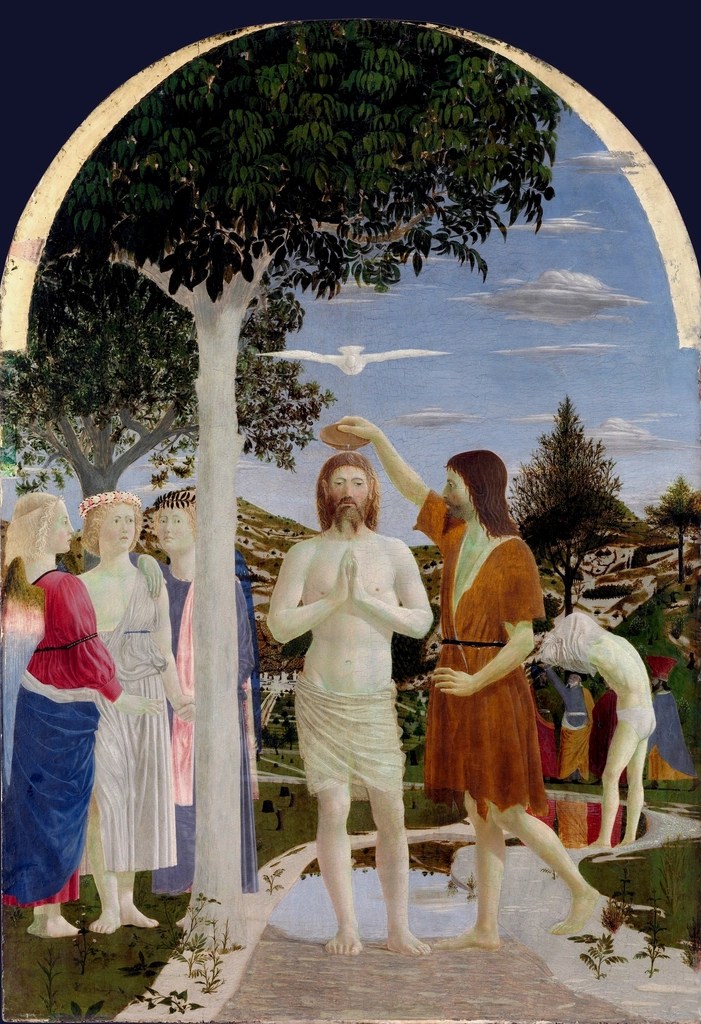
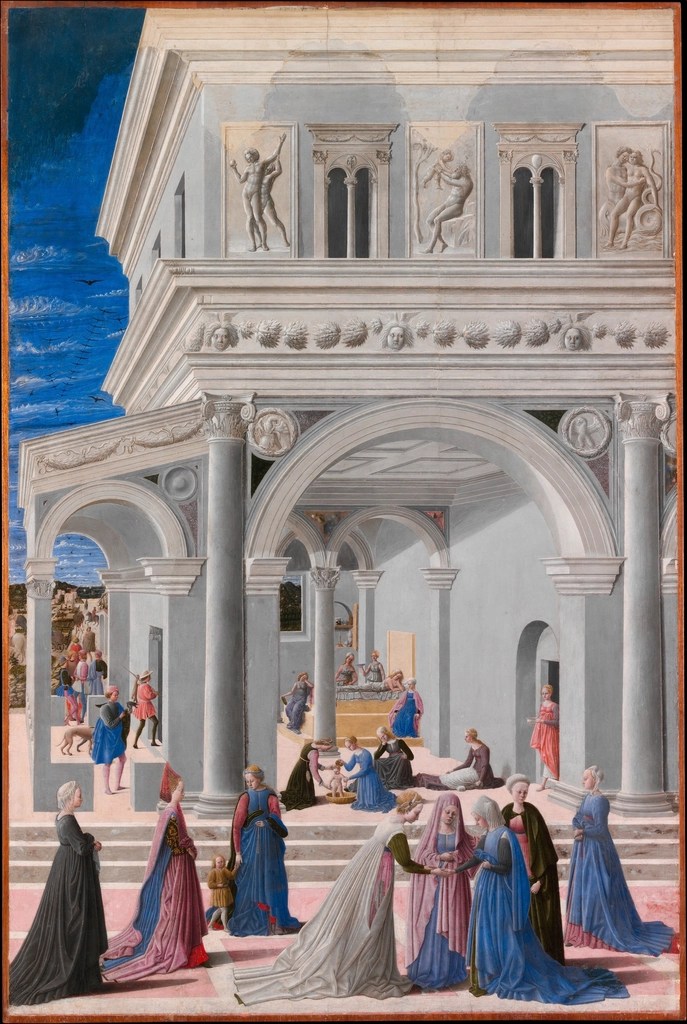
Think back to school: did you ever know the kid who was bright at everything? Most of us were good at something, but that alone: the sporty type who to put it politely, was not too strong on sciences. The maths nerd with negative social skills. The arty type, the musician, the classroom politician…..but did you ever know someone who was brilliant all around the block? We think that Piero Della Francesca (1415-1492) must have been one of those irritating subset of pupils who really was.[1]
Apprenticed as a painter and artist in his birthplace of Borgo Santo Sepolcro, he was soon brushing up against giants like Fra Angelico, Donatello and Brunelleschi. Something must have rubbed off, because within a few years he was earning the first commissions for what was to become a remarkable canon of early Renaissance masterpieces: they remain favourites of the art-loving public to this day. And for once we can be very specific about their USP: because alongside his studies in art the young Piero had been busy studying geometry and other branches of mathematics. Their influence is not just glimpsed in his work, they are the very basis of its careful precision and intellectual rigour. Here was a Renaissance man par excellence, who can stand comparison with Leonardo or indeed the genius of any age in human history. A Polymath for All Seasons.
One of the downsides of the immense quantities of knowledge in the modern world is the way it drives ever narrower specialisation. And this is quite necessary: one must spend years studying a particular enzyme system or economic model before there is anything new to say. In the course of a long life we have met one, possibly two, polymathic geniuses who might make useful contributions in several fields in the way that Della Francesca did. But to see the light sparkle in his pictures is to glimpse a time when the educated could still delight in all discoveries, and learning seemed to be something more than a task.
[1] Piero della Francesca – Wikipedia
#art #science #polymath #Italy #renaissance #mathematics

 Learning, Science and Society