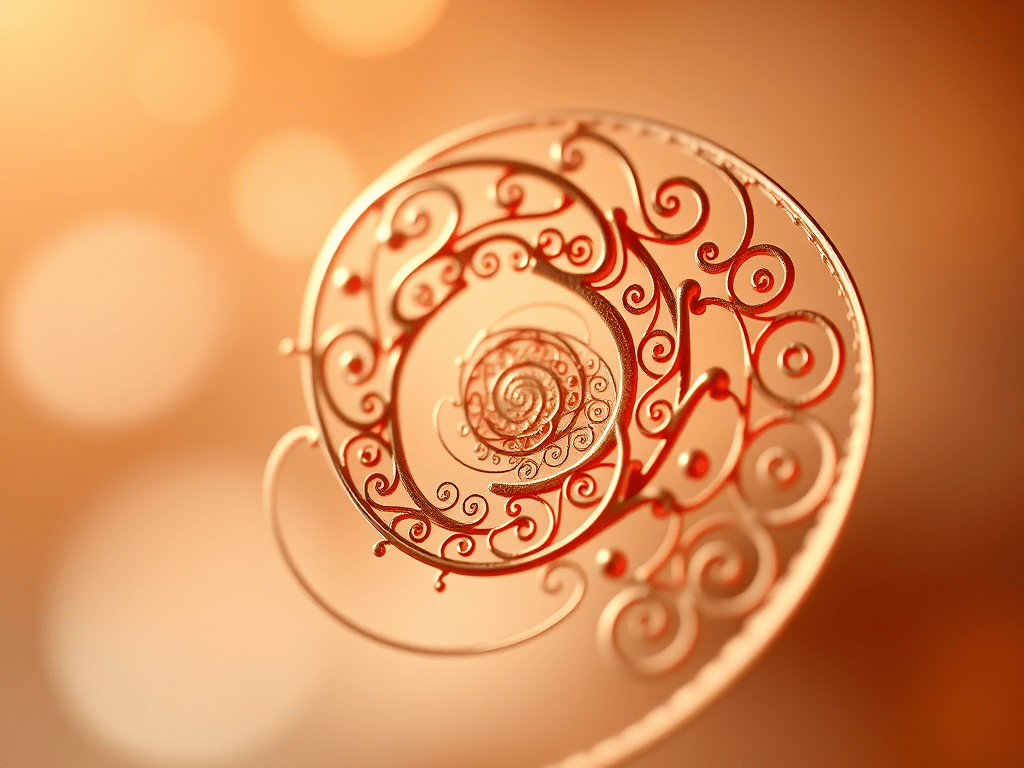

Have you ever looked at the strange spiral in a broccoli floret and wondered how it got like that? Or hundreds of other things in nature from the shapes of waves on the beach to the arrangements of artichoke leaves? The answer to all this and much more was discovered by Leonardo Pisano, better known to the modern world as Fibonnaci.(C1170 AD-c 1245) [1] [2]
A bright lad from Pisa in Italy, his big break came when his father took him on a business trip to Bugia in what is now called Tunisia. Father and son met an Arab mathematician (the Islamic world was still far ahead in science and technology) who kindly showed them the amazing new numbering system which they had learned in turn from the Hindus. The young Leo realised at once that this strange numerical system of 0, 1 2-9 was utterly superior to the cumbersome Roman system of letters( V X MCXCCVL, etc) On his return to Italy he published the Liber Abaci, whose short 27 or so chapters are one of the most significant books in the canon of western learning. Not only did it update all and sundry on the new number system. Not only was it full of useful applications for this system. Above all it promulgated an intriguing new sequence of numbers which goes 0,1, 1, 2, 3, 5, 8, 13…..to infinity. Each number in the sequence is formed by adding the two before. Dividing one by its predecessor quickly gets to the Golden ratio, which artists and architects have been using as on of the most aesthetically pleasing constructions for centuries.
We have alluded here before to odd mathematical structures such as pi and Eulers number: which show up again and again in nature: Fibonacci’s sequence is another of them. We have no idea why, but then: nor does anyone else. But the real significance of Fibonacci was his timing. For the first time, and after a long sleep, Western Europe was starting to make original contributions in natural sciences. And it did it by borrowing humbly from other more learned cultures. A lesson we should not forget today.
[1] https://en.wikipedia.org/wiki/Fibonacci
[2]https://www.bbc.co.uk/bitesize/articles/zm3rdnb
#fibonacci #mathematics #middle ages ##tunisia #india #biology #architecture

 Learning, Science and Society