
Taking time out as ever from more serious matters, we return to our old playground of human evolution. And not just for R and R, important as that is. Also, because the methods and pronouncements of its scholars are important guides to how we should all approach any complicated and potentially controversial subject.
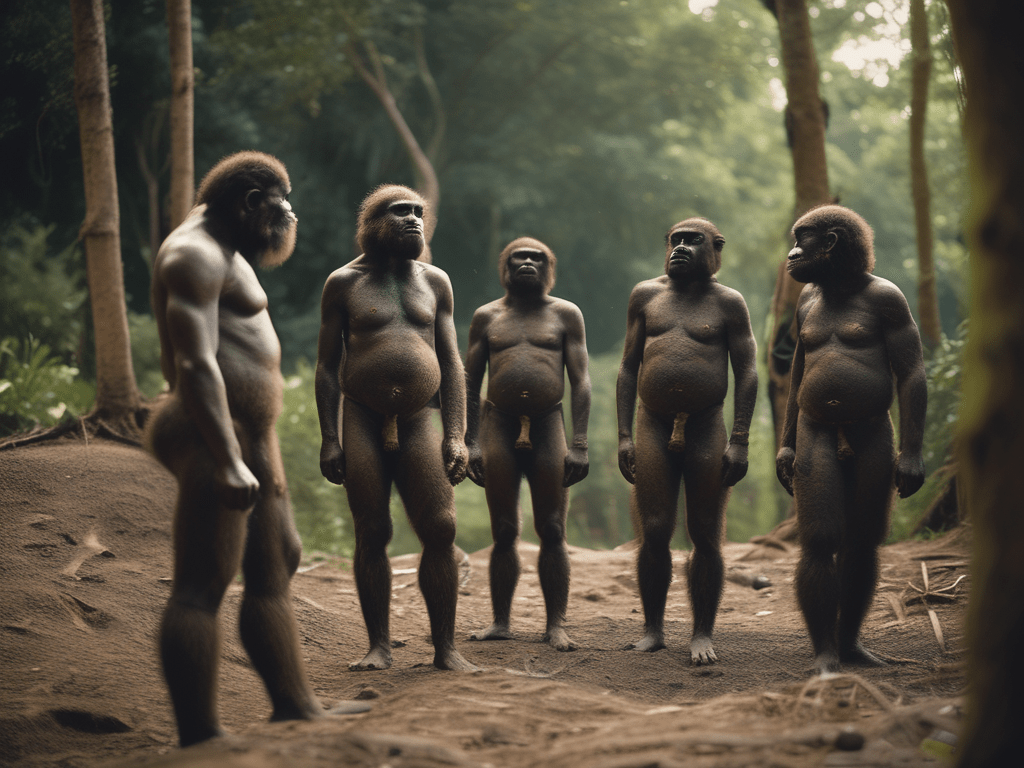
Until recently the origin of our own species seemed fairly clear cut. It emerged from a pack of other big-brained contenders (think Denisovans and Neanderthals among others) starting around 250 000 years ago, in Africa, and clearing the rest of the field no later than 35000 years BP. However recent work by Professor Chris Stringer of London’s prestigious Natural History Museum and colleagues have now cast this into doubt. It is even possible that the line leading to Homo sapiens may have started to go its own way before 1000 000 years BP. You can read why in these takes from Jonathan Chadwick of the Mail here [1] or a slightly extended version in the museums own PR piece here [2] It all goes back to 1990 and the discovery of a rather squashed skull called Yunxian 2 which was attributed to Homo erectus: a perfectly reasonable decision at the time. But using advanced new reconstruction techniques Stringer and his colleagues assert
……… Yunxian 2 displays a unique combination of primitive and more advanced traits. These include a large, squat braincase and a more projecting lower face, similar to Homo erectus. At the same time, derived features in the face and rear of the braincase, as well as a larger brain capacity, are closer to later species such as Homo longi (‘Dragon Man’) and Homo sapiens.
We have been following this game for for nearly six decades: so what do we think? First Chris Stringer is a fine scholar whom we have always admired. Secondly, we welcome all attempts to re evaluate data and set it in new contexts: that way real learning occurs. Our caveat is more with practice . Always and again in human evolution, new fossils found are baptised with confident new binomial Latin names in the great Linnean tradition. Then vast conclusions are drawn, which, in our experience, are substantially revised some years later. This has led not only to the muddle in the middle to which the articles allude. There are plenty more early on the story, and more than one much later on. We think the first clearing step should be to talk less about species, and more about gene frequencies populations. and ways of life. These clearly cluster at points of excavation, such as Afar, Java or Atapuerca to name but a few. But each point, however iconic, is represented by relatively few bones. There are enormous gaps in space and time between each, into which genes and populations must have been flowing all the time. Is it not possible that there has only been one human line all along, and that many of the variations are likely due to factors such as ecology, climate or isolation? The real answer is to dig, dig and dig again.
[1]https://www.dailymail.co.uk/sciencetech/article-15132633/skull-pushes-origins-400-000-years.html
#paleoanthropology #human evolution #clade #species #Homo sapiens #China

 Learning, Science and Society