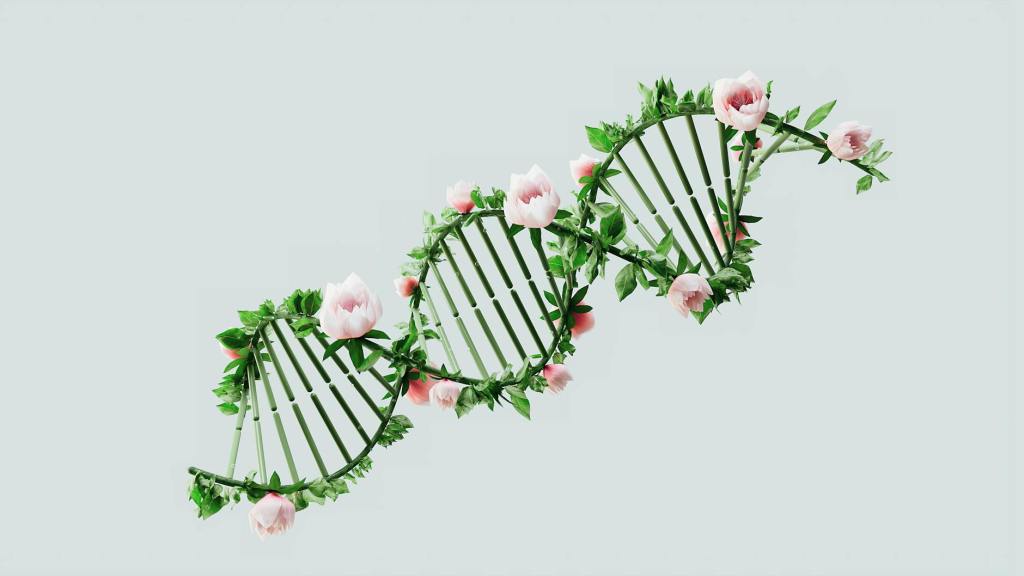


Far in the future when the current crop of elections in France, the UK, Iran and the USA are lost in the dusty pages of history books, people will remember this sunny weekend . For it was when Nature Briefings published not one but two stories (count ’em!) about learning and technologies which will still be shaping the lives of those yet unborn. And you read about them here, gentle reader!
Epigenetic Advance From one time Cinderella to starring role, the science of Epigenetics(all that stuff hanging around DNA but isn’t your honest to goodness genome)[1] has started to come of age. Proof of this lies in the fact that it’s starting to become the basis of real cures, in this case for Prion-based diseases “Epigenome Editor” blocks bad proteins
A molecular-editing tool that’s small enough to be delivered to the brain shows promise for warding off prion diseases, a rare but deadly group of neurodegenerative disorders. The system — known as coupled histone tail for autoinhibition release of methyltransferase (CHARM) — changes the ‘epigenome’, a collection of chemical tags that are attached to DNA and that affect gene activity. In mice, CHARM silenced the gene that produces the disease-causing proteins in most neurons across the brain without altering the gene sequence. This system is the first step towards developing a safe and effective ‘one and done’ treatment for reducing the levels of harmful proteins that cause prion disease, says bioengineer Madelynn Whittaker.Nature | 5 min read
Reference: Science paper
Goodbye CRISPR, welcome Bridge RNA Remember how this blog used to wax lyrical about CRISPR back in the ancient days of 2022? Well, there’s a new kid on the block “Jumping Gene” enzyme edits genomes
| A technique that harnesses ‘jumping genes’ — mobile genetic sequences naturally found in bacteria that can cut, copy and paste themselves into genomes — could hold the key to redesigning DNA at will. Guided by an RNA molecule called a ‘bridge’ RNA or ‘seekRNA’, the system has been shown to edit genes in a bacterium and in test-tube reactions, but it is still unclear whether it can be adapted to work in human cells. If it can, it could be revolutionary, owing to its small size and its ability to make genetic changes that are thousands of bases long — much larger than is practical with the CRISPR — without breaking DNA.Nature | 6 min read Reference: Nature paper 1, Nature paper 2 & Nature Communications paper |
You’re a funny old species, aren’t you? When you use your inherent qualities of curiosity and intelligence you can achieve things like this. The rest of the time you divide yourselves into imaginary groups and spread destruction, holding yourselves back by centuries from a better life. Will someone pray tell us why you do it?
#medicine #epigenetics #genetics #prions #gene editing

 Learning, Science and Society