Programmable Therapeutics(here’s what they’ll be talking about in 2046)


In these happy, carefree days of 2026, we almost take the success of advanced techniques like CRISPR–Cas9 and CAR‑T for granted. Yet not so long ago they were obscure experimental curiosities, known only inside specialist laboratories. So we asked ourselves: is there something equally obscure in 2026 that will be the stock‑in‑trade of doctors in 2046? We think there might be: programmable cell therapeutics.[1]

The jumping‑off point is the logic behind CAR‑T. Readers will recall how T‑cells are removed from a patient, engineered to recognise the chemical signatures of their cancer, and then reinfused to hunt down malignant cells. Researchers are now extending this idea to a wider cast of immune cells, stem cells, and progenitors, so they can tackle diseases far beyond oncology.

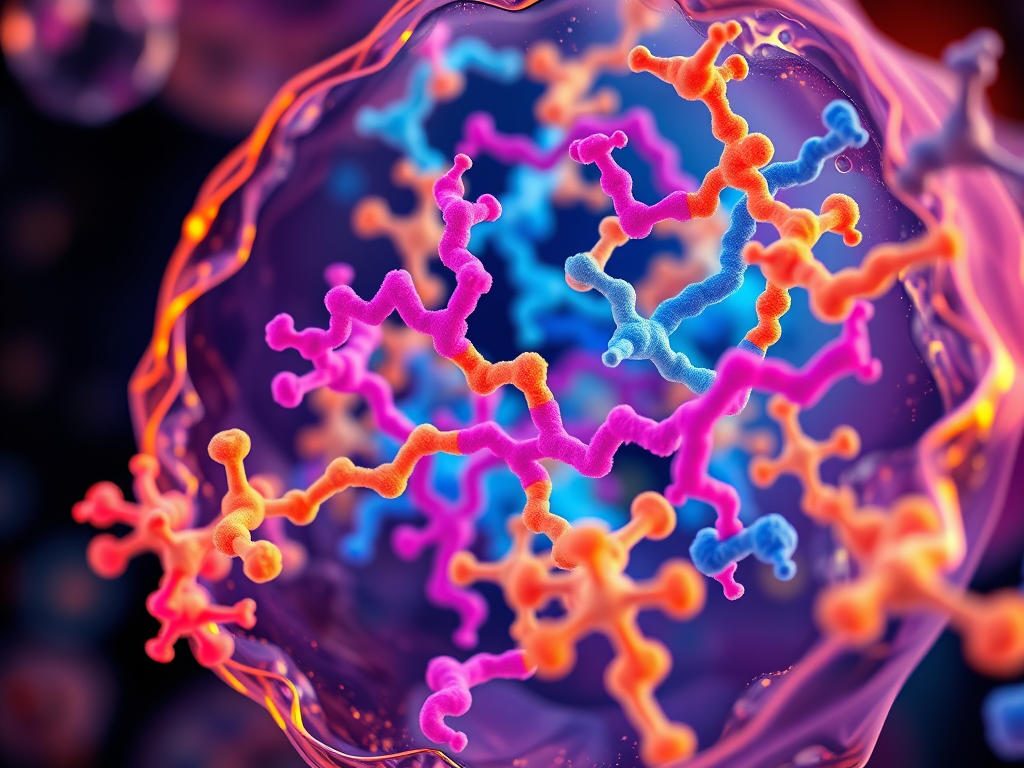
What makes the next generation different is the importation of ideas from electrical engineering. Instead of a single engineered receptor, cells can be fitted with ON/OFF switches, logic gates, multi‑step decision pathways, and feedback loops. In other words, cells that don’t just attack — they compute. They sense the molecular environment, decide what’s happening, and act accordingly.

And thanks to delivery tools such as viral vectors and mRNA‑carrying nanoparticles, these circuits can increasingly be installed in vivo. Rather than the expensive choreography of removing cells, re‑engineering them, and putting them back, the ambition is to program the cell to reprogram itself. Why rebuild the army in the barracks when you can train the soldiers already in the field?

Gentle readers, we are always looking for ways to put you ahead of the curve — not what is happening now, but what will be happening in five, ten, or twenty years’ time. By 2046 we could plausibly see:

  • cancer therapies that activate only in tumour microenvironments
  • gene therapies that self‑limit to avoid toxicity
  • immune cells that make multi‑step decisions
  • RNA‑based switches that restore gene expression dynamically

All this, of course, depends on continued investment in scientific research and a strong ecosystem of independent universities and research institutes. Hopeful, isn’t it.

[1]Next-generation programmable cell therapies for precision medicine | Nature Reviews Genetics

#gene editing #medicine #health #cancer #mRNA #CRISPR #CAR-T #DNA


When Bacteria Explode: a new clue in the old antibiotic arms race

Bacteria are relentlessly evolving resistance to our attacks with antibiotics and phages — but how? If we understood their tricks a little better, we might still have a chance of avoiding the lethal pandemics of antibiotic‑resistant organisms otherwise waiting in the wings. A new paper from researchers at the John Innes Centre[1] has now shed light on at least one way that  whole populations of bacteria may be secretly defending themselves from our ministrations.

The team found that the bacterium Caulobacter crescentus has an extraordinary switch mechanism that can cause it to “explode” under certain conditions. When it does, it releases tiny virus‑like particles containing fragments of its own DNA. Pertinent to our quest, gentle reader, is that some of this DNA may include instructions on how to resist antibiotics — or perhaps even the bacteriophages we deploy against them. The researchers also identified the components of this switch, which go by the snappy names LypABC and CdxB. They don’t yet know exactly what flips the switch, but they have their suspicions.

All of this is good news for those of us following the antibiotic‑resistance story. We now have a clearer picture of how at least one type of bacterium spreads resistance among its own members. And if we know what these switches are, we have a fighting chance of intervening to turn them off. If, as the researchers suspect, the presence of a hostile phage is indeed one of the triggers, then this is a very great step forward indeed

[1]A bacterial CARD–NLR-like immune system controls the release of gene transfer agents

Emma J. BanksPavol BárdyNgat T. TranPhuong M. NguyenBoris StojilkovićKevin GozziAbbas Maqbool & Tung B. K. Le Nature Microbiology (2026)C

[2]John Innes Centre | Excellence in plant science, genetics and microbiology

#antibiotic resistance #bacteria #dna #genes #virus #bacteriophage #health #medicine

Breakthrough for blindness, an old lesson re-learned: and a mystery question

Leber congenital amaurosis, called LCA for short, is the most common form inherited sight loss in children[1] It’s caused by defects in a cluster of genes including RPE65 and until recently was quite untreatable. Now, as Ian Sample reports for the Guardian,[2] a team of researchers have effected a major new treatment called Luxturna: a gene‑replacement therapy delivered by injecting a working copy of the RPE65 gene directly under the retina. By giving retinal cells the functional gene they’re missing, it restores the visual cycle and can improve light sensitivity, visual function, and navigation ability in people with RPE65-related Leber congenital amaurosis. Interestingly the team comprises a husband and wife called Jean Bennett and Albert Maguire who share the prestigious Breakthough Prize [3] with their colleague Katherine High.

Regular readers will share our admiration for the work of this remarkable trio. They may note moreover that the researchers have something else to teach us, something that strongly concurs  with opinions often expressed in this blog:

Bennett said it was a “tremendously exciting time” for scientific and medical research, but warned that the US administration’s attacks on science could “cause damage for generations to come”, leading her to fear a brain drain that the country would struggle to recover from.

“Agendas have become politicised, government agencies that support basic and applied research have been undermined, knowledgeable advisers and experts have been dismissed or have fled and revised guidelines contradict decades of rigorous research,” 

Says it all really. But don’t just sit around reading it here:tell your friends and neighbours. For us there still  remains outstanding question. Is Albert Maguire by any chance a relation of Ken Maguire, one of the best pub landlords of the 1990s, being sometime manager of the superb Latymers in Hammersmith Road London W14?

[1]Leber congenital amaurosis – Moorfields Eye Hospital

[2]‘Oscar of science’ awarded to team behind gene therapy that restores lost vision | Science | The Guardian

[3]Breakthrough Prize – Wikipedia

#LCA #Blindness #gene therapy #medicine #health #science #research #pub #beer

Can your cat save you from cancer?

Cats:  our feline friends:  variously cute, lovable, admirable and beautiful. They’re becoming more and popular as pets. Which brings several advantages in the treatment of cancer, believe it or not. Like dogs, their nearest rival, they are exposed to all the same molecular slings and arrows of everyday domestic life-cleaning products- foods, fuels, what have you-as we are. But we also share more genetic material with them then we do with our canine chums. Moreover cancer is rapidly becoming a major cause of mortality in middle aged to elderly cats just as it is to humans in that stage of. It’s a set up for ground breaking studies. And Miguel Ángel Criado for El País and Helen Briggs of the BBC have two excellent reports on a groundbreaking study which has done exactly that. (teaser: one of these links is in Spanish, and one in English-can you guess which?)

The study, co-led by the learned Dr Louise van der Weyden of the Wellcome-Sanger Institute is the first really large map of oncogenic(cancer related) aspects of the cat genome. It’s full of intriguing details, which you can read by clicking on the marvellous articles which we have hyperlinked. But we could not resist a tiny spoiler, concerning Dr Weyden’s discoveries around the gene FBXW7 , a tumour‑suppressor gene whose loss helps drive aggressive forms of human breast cancer. Intriguingly, the same gene is frequently mutated in feline tumours. This cross‑species echo suggests that cats and humans may share a conserved vulnerability in the FBXW7 pathway, making our kitties unexpected partners in understanding this cancer mechanism.

And the conclusion? We need to help cats to help us. You could give to a cancer charity [3] You could give to a cat charity[4] But knowing our readers to be generous types we have included sufficient hyperlinks for you to do both!

[1] El mayor mapa genético del cáncer de los gatos abre la puerta a tratamientos compartidos con humanos | Salud y bienestar | EL PAÍS

 [2]https://www.bbc.co.uk/news/articles/cvg3n7j8xyqo?at_campaign_type=owned&at_link_type=web_link&at_format=link&at_ptr_name=facebook_page&at_link_origin=BBC_N

[3] https://www.cancerresearchuk.org/get-involved/donate?

[4] Cats Protection | UK’s Largest Cat Welfare Charity

#cancer #breast cancer #cats #medicine #health #research #genome #oncology

Two new stories give fresh hope on cancer

Two stories give us hope of real progress in understanding and treating cancer. The first from the excellent Emma Gritt of the Mail [1] concerns the work of the great  Dr Mariano  Barbacid whose work has been so crucial in elucidating and developing the whole theory of oncogenes and the role they play in cancer. His team has been studying the effects of three drugs on the KRAS gene, deeply implicated in the development of the pancreatic form of the disease. But:  don’t read us, read Emma-she knows a lot more  than we do

The second story, from the inimitable Ian Sample of the Guardian [2] concerns the application of the Google Deep Mind AI tool to study genetic drivers of cancer-and other diseases too. To quote Ian:

We see AlphaGenome as a tool for understanding what the functional elements in the genome do, which we hope will accelerate our fundamental understanding of the code of life,” Natasha Latysheva, a DeepMind researcher, told a press briefing on the work.

Once again click!. You’ll get a lot more from Ian than you will from us.

Both stories blend into two of our old LSS favourites. Firstly, the use of AI to look at complex biological patterns which humans alone struggle to perceive. (LSS 1 12 20 et seq) Secondly, that repeatable frequencies in DNA may be tied, probabilistically, to repeatable patterns of symptoms. Veteran readers will recall our hopes that this methodology may apply to psychiatric disorders too: (LSS 18 12 25 and 29 12 25). Of course, we expect to learn of environmental and epigenetic factors as well.  But if we are right, these genetic advances may provide a firmer starting point for future investigations than we have now.  How much more is achieved when facts are sacrosanct, not convenient entities to be selected and disposed according to the immediate convenience of their user! A lesson which certain  US politicians and the news channels which so fanatically support them would do well to learn.

[1] Huge pancreatic cancer breakthrough as scientists achieve ‘permanent disappearance’ of disease with new triple-threat approach tested in lab | Daily Mail Online

[2]Google DeepMind launches AI tool to help identify genetic drivers of disease | Genetics | The Guardian

#AI #deep mind #cancer #genes #DNA #medicine #health #oncogenes #psychiatric disorder #heart disease

On another year of blogging…….

As 2025 draws to a close we thought we’d look back over our posts and general contributions to the zeitgeist in what has been a white knuckle ride of a year for just about everyone one on the planet. After all we do believe in recycling, don’t we?

Antibiotics and the potential shortages thereof, has been a constant theme, and we think we’ve covered a story or two every month. Sources like Nature Briefing, The Guardian, El Pais The Mail and many others have been invaluable here and our most sincere thanks go to their journalists who are keeping this vital story at front and centre of public consciousness. In fact, If we see a journalist write a good story in this trope, we write to thank them: and beg you to do the same.

We are proud to cover other serious threats as we see them. None more so than Global Warming, which gets covered every month or so. It’s odd to recall that the fires that tore through Los Angeles in California happened nearly a year ago now (LSS 9 1 25) But they were prescient: every subsequent we made this year, to France, to Portugal, to Spain, wherever, the TV news has been dominated by ferocious fires. It was sad to discover how much of this might have been avoided(LSS 11 7 25) . As for the denialists-we thought the strange legend of The Fisher King might go some way to explaining why they feel as they do(LSS 27 10 25)

We tried to cover some more hopeful science stories as well. The progress in genetic editing techniques such as CRISPR-Cas-9 and Base Pair Editing hold out the hope for unlimited progress (LSS 19 5 25 was a working summary) and have also tried to track progress in technologies such as nuclear fusion, artificial intelligences as well as more recondite topics as evolution(LSS 19 3 25) Our usual series like Heroes of Learning and Friday Night fun have covered subjects as diverse as Fibonacci and Fish and Chips. We thought would like the new series on World Government (LSS 8 1 25 et seq) and Taxes(LSS 17 11 25 et seq) and the Best time to have been Alive (23 7 25 et seq) which by starting in China should avoid all accusations of Eurocentric bias

Of everything we covered the biggest stand out for us was the new discoveries in genetic mapping which may shed real light on the origins of psychiatric disorders(LSS 18 12 25) But for our readers it was the highly speculative Is Donald Trump a Socialist? ( LSS 7 4 25) in which we stated that, although he and his followers would recoil in horror from that label, he is acting like a socialist, however unintentionally. That one has almost never ceased to be read and commented upon. We are not sure why.

Once again thanks to all of you for your suggestions comments and ideas. It is a pleasure to read some of your blogs and postings which now cover the whole world. We in the educated community, the progressive community if you will, are few in number. But our influence is always outsize to our numbers, as it has been throughout History. You gentle reader are the hope of the world. Whatever your belief, enjoy the festivities.

#antibiotics research #microbiology #global warming #psychiatic disorders #health #medicine #environment #dona;d trump #china

Stem Cell Therapy: Lamarckism by Force Majeure

First of all hats off to Oliver Chu, the brave boy from California who has just undergone a successful trial of stem cell therapy for a terrible condition called Hunters Syndrome. [1] as Ian Sample of the Guardian explains. It’s caused by a simple mutation in a gene called IDS-1 which controls the production of a vital enzyme Iduronate-2-sulfatase; without which the body cannot break down key sugars, leading to organ damage of all sorts and cognitive decline. The trick has been to extract the stem cells from Oliver’s blood: replace the faulty gene with a true copy using a viral vector; and pop them back in to Oliver, whenceforth they will thrive happily, self reproducing from their own line, and producing bountiful quantities of the enzyme for life.

And this for us is the key part. Let’s repeat : the new stem cells with the engineered gene will start their own self replicating line. In Oliver. Now Oliver himself started from a single stem cell-a single fertilised ovum, as do all living things. With DNA that was used to build every single following cell as it grew . An Ur stem cell if you like. But now. young Oliver has two. All the cells from his original cell, Plus the new line, from the engineered stem cell. whose line is now flooding his system with the good enzyme..

The central tenet of biology up to now is that we all of us-tigers, pterodactyls, humans, whatever-have a single unmodifiable line of DNA in our cells. Random variations may be passed to the next generation and tested by Natural Selection. But the actual DNA deep in the cells cannot be changed or modified. That’s the Darwinian positioned its held up pretty well for centuries. The alternative, proposed by Lamarck is that organisms are modified by the environment and this information can be learned inthe genes and passed on. So far there has been no evidence to support this view whatsoever . But what if the environment contains clever humans who can choose to modify DNA, and thereby create what are in effect hybrid organisms with two separate DNA lines-like young Oliver? Is this Darwinian? It’s not how it happens in nature, and its been done by force majeur. But it sounds a lot like Lamarckism from where we sit.

[1]https://www.theguardian.com/science/2025/nov/24/groundbreaking-uk-gene-therapy-manchester-hunter-syndrome

#stem cells #hunters syndrome #darwin #lamarck #evolution #medicine #health

PERT: Next step in gene editing offers real hope for hereditary diseases

Almost a quarter of hereditary diseases can be put down to mutations which break an established pattern of DNA, so it can no longer be read. No wonder they are called nonsense mutations. Often these mutations are expressed as STOP codons: just a short three letter sequence that stops protein synthesis dead, like a bad piece of coding in a computer programme. Now a new technique called PERT (Prime Editing RNA Therapy)allows the cellular process to override glitch in the DNA and resume synthesis. The new technique equips cells with engineered tRNAs that override these stop signals, letting the ribosome continue translation and produce the full protein. Here once again is Nature Briefing with one of their excellent short explanations Versatile gene-editing tool fixes nonsense, plus hyperlinks if you wish to delve deeper.

A multipurpose gene-editing tool can correct several genetic conditions in mice by restoring proteins that have been cut short by disease-causing mutations. The method, called PERT, uses engineered RNA molecules that allow protein synthesis to continue even when a DNA mutation tells it to stop prematurely. These ‘nonsense mutations’ comprise nearly one-quarter of known disease-causing DNA variants. As such, if PERT proves effective in humans, it could overcome the need to design bespoke treatments for individual diseases.Nature | 5 min read
Reference: Nature paper

There’s a lot to like here. Firstly the prime editing is straight out of the same stable as the CRISPR and Base Pair Editing techniques which we have heralded here for years (LSS passim) Secondly, unlike most gene therapies, which must be tailored to each mutation, PERT could treat many different diseases with a single editing agent. This is a huge shift in scalability. And if the suppressor tRNA is permanently installed in the patients genome, it is possible that only one treatment may be needed. Once again we are reporting at the early stages (that’s our brief) so all parties are careful to emphasise we are nowhere near clinical applications yet. However, just as we learned during the COVID 19 pandemic , the ability to intervene at the RNA level, precisely between gene and protein, appears to be one of the most fertile areas in medical knowledge for years to come.

#hereditary disease #RNA #DNA #molecular biology #health #medicine

Heroes of Learning: Svante Pääbo

It’s hard to remember how different human evolution was before Svante Pääbo and his transformative discoveries in genetics. There were some bones, but they were bit few and fragmentary. People argued interminably over them like so many medieval nominalists and realists. There were tools, and heroic studies of the scratches thereon. People spent lifetimes following various primates in and out of the rain forest: but it is hard to say whether a chimpanzee is really like a human ancestor, or a baboon is : or is not.

Then in 1997 at the Max Planck Institute in Leipzig, Svante Paabo announced a breakthrough: the actual DNA from inside the mitochondrion of a real (dead) neanderthal. For the very first time here was something tangible, data rich, and available for statistical scrutiny. Now we knew who we were, and who they were. As if that were not enough, in 2009 his team announced a whole Neanderthal genome. Then came immortality: on the floor of a cave in distant Siberia came a tiny bone which Pääbo showed to be a third type of human: the Denisovans. The utter. twisted, anastomosing complexity of the modern human story became clear: and with it the implication that it had always been thus. Giving him the Nobel Prize in 2022 must have been the easiest decision since that monkey in 2001: a space odyssey thought a horse skull might be a good place to land a good thwack.

But the real significance of Svante Pääbo lies deeper. It’s in the observable phenomenon that every so often some genius comes along and turns a field upside down. That every debate, however heated and angry, will one day become futile as more gets found out. It’s like that in all sciences, and a good many non sciences too. The biggest mistake any of us can make is to think we have all the answers. Thanks Svante Pääbo for showing there’s always something new around every corner.

[1]https://en.wikipedia.org/wiki/Svante_P%C3%A4%C3%A4bo

#genome #dna #human #neanderthal #anthropology #evolution science

CRISPR gallops ahead (article contains a warning for xenophobes)

Warning: this article may make uncomfortable reading for xenophobes everywhere)

Progress in CRISPR-Cas-9 (Clustered Regularly Interspaced Short Palindromic Repeats)[1] and the associated enzyme is getting faster and faster. We started reporting on this truly innovative technique in 2020 and regular readers will recall updates ever since. Only four years ago it still felt a bit theoretical. But now radical applications are coming thick and fast Read this from Nature Briefing CRISPR horses spark debate reporting on the rather recondite world of polo pony breeding

the horses pictured above{*} are the first of their species to have been created with the help of the CRISPR–Cas9 gene-editing technique. They are clones of the prize-winning steed Polo Pureza, with a tweak to myostatin — a gene involved in regulating muscle development — that is designed to quicken their pace. Critics say that genetic manipulation has no place among polo’s traditional breeding practices — it has already been banned by some of the sport’s governing bodies. But a zoo of CRISPR-edited animals, from cows to sheep, is gaining acceptance in agriculture.Nature | 5 min read

{*} sorry LSS readers-we can’t show this-ed

In one sense there’s nothing new here. Humans have been modifying the genetics of plant and animal species since the dawn of the Neolithic. CRISPR and other base editing techniques have simply speeded the whole process up by making specific, designed changes and crucial nodes in the subject organism’s development. There is every reason to suppose that any number of new modifications to animals(and crop plants such as wheat) will be developed in the next few years. Some may even enable us the preserve the integrity of food supplies despite the ravages of things like plastics pollution and global warming. Also, as we have also reported here, gene editing is beginning to show real applications in medical fields such as sickle cell disease and certain cancer therapies. All of which leads us to an intriguing thought.

If ponies may be so easily modified, why not humans? One could start small by just modifying athletes and other small groups. Yet eventually the techniques could become ubiquitous in our species. Hang on-our species? Because the genetic differences between beings consisting entirely of CRISPR modified genes and the rest of us would then be far, far greater than those currently existing between our different races and ethnic groups. Are xenophobes everywhere already wasting their own time?

[1]https://www.yourgenome.org/theme/what-is-crispr-cas9/

#CRISPR Cas 9 #base pair #medicine #biotechnology #sickle cell #agriculture #stock breeding