Hidden Dangers: The Conversation on PFCs

Today we unashamedly and wholeheartedly turn over our blog to a straight lift from The Conversation. And an excellent article from Professor Patrick Byrne of Liverpool John Moore University. Who has devoted his life’s work and formidable intelligence to tracking the sources of PFCs in the River Mersey (the one the Beatles grew up near)[1]

For those who want to come up to speed here are two paragraphs from Patrick’s article

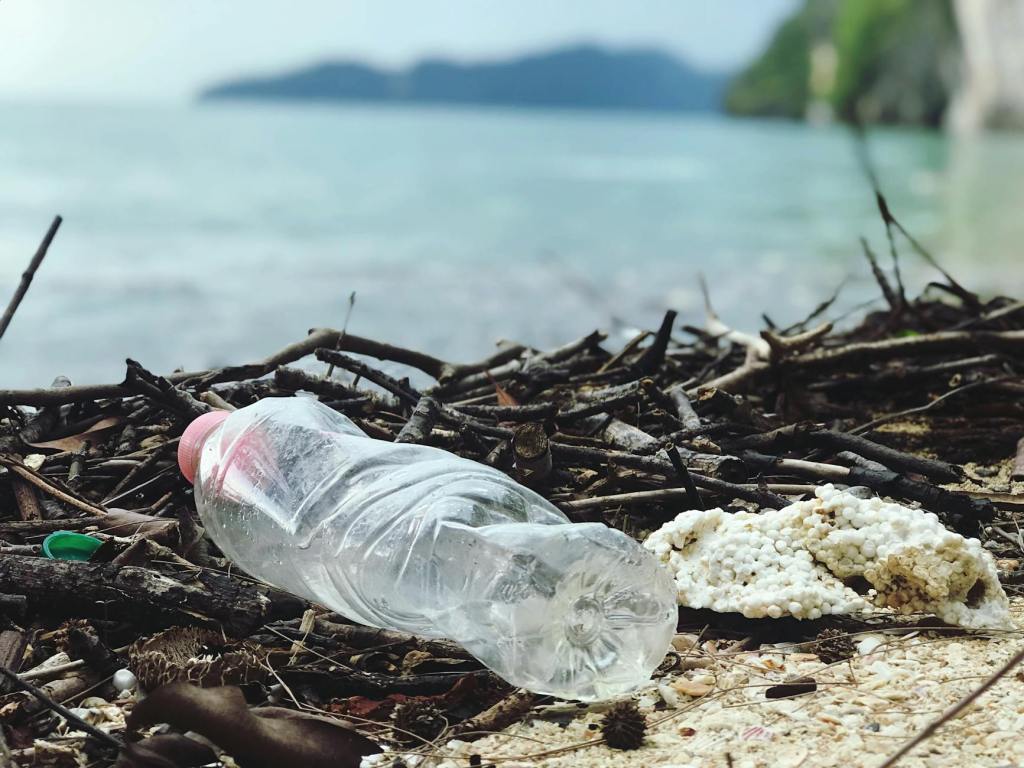
Per- and polyfluoroalkyl substances (PFAS), more commonly known as “forever chemicals”, are a large family of human-made chemicals found in everyday products like food packagingwater-repellent clothes and fire-fighting foams. They are valued for their ability to resist very high temperatures and to repel water and oil, but these same properties make them extremely persistent.

Once released, some PFAS could take thousands of years to break down. They accumulate in the environment, build up – with different compounds accumulating at different rates – inside the bodies of wildlife and people, and have been associated with harms to health. The most studied types have been linked to cancers, hormone disruption and immune system problems.

And one elegaic, personal thought.Back in the 1960s when those same Beatles were growing up, the world was a different place. All those plastics and chemicals, now in Patrick’s rubbish dumps seemed part of a bright, dynamic new landscape of progress: a brave new world. There can indeed be progress, But be very careful how you go about it

#plastics #endocrine disruptors # PFCs #pollution #environment #toxins

More on undiscovered antibiotics in Nature

A few years ago we published a couple of blogs suggesting that the saliva of  Komodo dragons (Varanus komodoensis) might be a possible place to look for new sources of antibiotic compounds. (LSS 27 10 20; 6 9 21) Poor dragons! It now seems that their tantalising resistance to infection may be due to other factors than miraculous antimicrobial molecules. But at least it got us thinking:  might there yet be some useful aids to our antibiotic quest lurking out there, undiscovered?

The antimicrobial potential of some plants is quite well known. Garlic(Allium Sativum) turmeric Curcuma longa)and the tea tree(Malaleuca alternifolia) are classic examples. Best estimates suggest there are between 250 000 and 500 000 species of plant on out planet. Provided not too many are destroyed to make way for shopping malls, there may be hope of some more undiscovered potential among our leafy friends. [1] Turning to animals, our first candidate is the Matablele Ant (Megaponera analis)  They not only produce antibiotics from their metapleural glands,(what they?-ed) but they also diagnose infected wounds in their nestmates and apply targeted treatment. Their secretions contain over 50 antimicrobial compounds, some effective against Pseudomonas aeruginosa, a notorious human pathogen When Matabele ants are wounded, their cuticular hydrocarbon profile changes, signalling infection. Nestmates detect this and apply antibiotic secretions from their thoracic glands. This is the first known example of non-human creatures performing sophisticated medical wound care [2]. Other animals  such as frogs, insects, and marine life produce antimicrobial peptides (AMPs) as part of their innate immunity. These AMPs are being studied for their ability to combat resistant bacteria. And, if we were betting men, we might take a small punt on Sarcotoxin 1A and anti microbial peptide found in the saliva of flesh flies belonging, unsurprisingly, to the genus Sarcophaga [3]

Educated readers will recall how Alice met a Cheshire Cat in a wood. After imparting some words of wisdom, it vanished. But its smile remained. [4] So with our LSS dragon: it may be gone, but the smile of hope which it gave us lingers on.

[1] Plant Products as Antimicrobial Agents – PMC

[2] Ants produce life-saving antibiotics for treating infected wounds

[3] https://en.wikipedia.org/wiki/Sarcotoxin#:~:text=The%20proteins%20are%20present%20in

[4] Lewis Carroll Alice in Wonderland Chapter 6

#antibiotic molecules #ecology #habitat destruction #health #medicine #microbiology #tea tree #sarcotoxin

Driving drives Dementia

Cars, don’t you love them? They cost a lot of money, they run people over, they allow cities to sprawl out over the countryside. Now comes evidence that the pollution that they cause, along with many other sources of pollution it has to be said, may be causing a special form of dementia called Lewy Body Dementia. [1] Ian Sample of the Guardian reports on a massive study of 56.5 million patients carried out by Dr Xiaobo Mao of Johns Hopkins University in the United States. The team found that fine particulate matter called PM2.5 (LSS passim) caused proteins in the brain to form toxic clumps which slowly destroy nerve function leading to cognitive decline characterised by to memory loss, poor attention spans, visual hallucinations and sleep disturbance. The team went further and found the deadly particles induced similar symptoms in mice, confirming their evidence from population studies in humans .

When we did out background research for this article we were quickly overwhelmed by the amount of available evidence. This report [2] by the UK Government waxes lyrical on the different types of air pollutants-particulates, NO2 SO3, ammonia. and many more.. as well as the many symptoms the pollution causes in the human body. And this from the Alzheimers Society [3] puts the ball in the polluters’ court when it comes to neurodegenerative diseases particularly. We weren’t ever going to fit all that in paragraph two of a three paragraph blog, so we won’t try

What we will do instead is ask where does all this pollution comes from. Cars? Sort of. Factories? In a way. But the real source is a set of misguided economic policies which value growth numbers above all else. You have to have more growth than your neighbours or younare not reaklly worth anything at all. There must be more new cars, new washing machines new mobile phones, bright new shiny anythings, so that we can create a frantic cycle of production and consumption to prove how rich and clever and successful we are. But is the definition of the good life really to drive an overpriced automobile over concrete flyovers for a few years, followed by a long cognitive decline into dementia, really such a good life? Answers please-we’d love to hear them.

[1]https://www.theguardian.com/environment/2025/sep/04/fine-particulate-air-pollution-trigger-forms-dementia-study-lewy-body

[2]https://www.gov.uk/government/publications/health-matters-air-pollution/health-matters-air-pollution

[3]https://www.alzheimers.org.uk/about-dementia/managing-the-risk-of-dementia/reduce-your-risk-of-dementia/air-pollution

#automobiles #pollution #dementia #health # neurology

Round Up: Trumponomics, Wind Farms, AIDS and Depeche Mode. Among other things

Donald Ducks out of the Free Market  Any questions you might have about the leftward drift of Mr Trump’s economic policies are  only confirmed  as he starts trying to take control of interest rates and large companies like Lockheed Martin. We’ve two pieces here: the Guardian and NSBC which riff on both themes. Watch the video in the latter: it features economist Gillan Tett,  as formidable an intellect as any  currently offering their thoughts in the serious media at the moment .

https://www.theguardian.com/business/2025/aug/25/trump-federal-reserve-lisa-cook-explained

https://www.youtube.com/watch?v=85N6X5jvK9g

Contemplating, Celebrating New Life #1 Creating entirely new life forms was once a dream of the more outre writers of Science Fiction. Now it seems very real indeed as this piece from the Mail, which has enormous implications for many fields from Medicine to astrobiologyBreakthrough as scientists create a new form life | Daily Mail Online

New pill aids HIV sufferers Once again our researchers have put up a piece from the Mail . But bloggers can’t be choosers, so we ran with it. This is no cure: but it keeps the virus at bay and so help thousands lead healthier and more productive lives Monthly pill brings hope in fight against world’s deadliest STI

The Heat is on  An unexpected side effect of  global warming is that it may be making us age faster.  There’s an irony here: as most of the deniers fall into the -erm- ahem- more senior- sections of the population this may only impede efforts to control this runaway catastrophe  Heatwaves make a Biological Clock Run Fast from Nature Briefing

Repeated exposure to extreme heat events can accelerate the body’s ageing process. A long-term study of almost 25,000 people in Taiwan found that, for every extra 1.3 ℃ a person was exposed to, around 0.023–0.031 years was added to their biological clock on average — an extent comparable to that caused by regular smoking or alcohol consumption. The effect looks small, but cumulatively “can have meaningful public-health implications”, says environmental epidemiologist and study co-author Cui Guo. “Heatwave is not a personal risk factor, but a global concern,” she says. Nature | 4 min read
Reference: Nature Climate Change paper

Fearing the winds of change Peoples’ stated beliefs and opinions are often a guide to their deeper anxieties. A world view based on hyperconsumption and fossil fuels is now seriously archaic. This explains the deep angst ridden controversies  that swirls around wind farms: they are huge visible  reminder that we’ve been getting things seriously wrong for over one hundred years Here’s The Conversation

Contemplating Celebrating New Life-#2   You knew we were going to chose this one, didn’t you? Yes- Depeche Mode it is

#gillian #tett #economics #federal reserve #socialism #capitalism #biology #dna #HIV #AIDS  #renewables #global warming #climate change

Bacteriophages v Bacteria: this arms race offers opportunities

We’ve always hymned the praises of bacteriophages here (LSS passim): that they will be a vital second option to supplement the next generation of antibiotic drugs. But we have a confession. We didn’t understand them. We didn’t appreciate that they are biological systems (viruses) interacting with other biological systems (bacteria). And as such, will obey all the usual rules of all such systems, such as arms races between predator and prey, Now a new article by Franklin Nobrega for the Conversation puts that right. [1]

Bacteria have evolved some fascinating defence mechanisms to ward off the relentless attacks of their phage enemies. These involve cutting the nuclear material of the viruses: building up strong cell walls and cellular shutdown mechanisms which act a bit like your IT Department does when it detects a global virus attack on your building’s systems. Recently Franklin and his team have investigated an early warning system called KIWA which gives the bacteria advanced notice that an attack is imminent. To which phages have in turn responded by their own mutations, and so it goes on, etc etc.

There’s a lot to encourage us here. Firstly, human knowledge of bacteriophages and their ways is deepening all the time, always a good thing. In fact Franklin is part of the University of Southampton phage collection project which we showcased here a few weeks ago (LSS 1 7 25) More strikingly, as two systems attack each other in an arms race, they leave little gaps, tiny vulnerabilities, which outsiders can exploit. The promise of new drugs and new bioengineering techniques looks very real indeed. Especially, we suggest if information scientists and complexity theorists are brought in to work alongside the biological teams. All in all, a rather good day for those of us interested in the problems of microbial antibiotic resistance. Go boldly, gentle readers, and be of good cheer.

[1]https://theconversation.com/how-ancient-viruses-could-help-fight-antibiotic-resistance-261970?utm_medium=email&utm_campaign=Latest%20from%20The%20Conversation%20

#microbial antibiotic resistance #bacteria #bacteriophage #health #medicine #phage collection project

If you want to know the truth about cancer, ask Liz O’Riordan

Because she’s seen it from both sides, is why. First she was a doctor, who like, worked in the field? And then because, she got it herself, right? Became a patient, and experienced all the heart stopping, roller coasting, will-I -won’t-I? chain of emotions that all her own patients did. If those aren’t qualifications enough, gentle readers, we don’t know what are. And-she has one other which seals the deal as far as we’re concerned. Read on, and you will learn what that is.

We came across Dr O’Riordan in the course of listening to a series called Marianna in Conspiracyland on BBC Radio 4 [1] Not having an especially large legal department we must be careful what we say. But the programme details the activities of the types of people who disparage reason-based science and evidence-based medicine. And instead offer a dubious range of alternative theories, explanations and prescriptions to people who are scared out of their wits by a cancer diagnosis. In the nicest possible way, the programme tried to explain the consequences of choosing these paths of treatment, And Dr O’Riordan was one of the speakers they called in their support. A little bit like the prosecution in a criminal case calling an expert witness in DNA or drugs, as t’were.

Because since her own diagnosis and treatment, Dr O’Riordan has spent her days ceaselessly writing, speaking, making media appearances, all to one end. Refuting fallacies, identifying illogicalities, reasoning with the unreasonable. In books like The Cancer Roadmap [2] she tries to explain the science behind why cancers develop and grow, what the best treatments are, and why so-called “alternative systems” don’t seem to be up to much. In this undertaking she joins a great tradition of rationalists and sceptics starting with Lucian of Samosata,[3] and stretching all the way through to people like Peter Medawar, Carl Sagan and Dr Ben Goldacre.

But she goes one step further. Because she never condemns or sneers at anyone. Instead she tries to ask why people turn from rational medicine to alternatives and faith. In other words she deploys human qualities of empathy and compassion. And we could all learn from that. For years on this blog we have bemoaned the growth of fake information, conspiracies and general rubbish which grows on the interweb like the digital equivalent of a cancer. Not just in cancer theory; in matters like global warming, politics and economics. Hasn’t done much good. Somehow, the easy, comforting answer outpaces the complicated rational one each time, and by ratios of thousands. We are in danger of becoming the last generation of enlightened, rational thinkers, perhaps for thousands of years. Time to listen to Liz and her methods. Soon.

[1]https://www.bbc.co.uk/programmes/m001mssm

[2]https://liz.oriordan.co.uk/author/

[3]https://en.wikipedia.org/wiki/Lucian

[4]https://en.wikipedia.org/wiki/Ben_Goldacre

#cancer #medicine #alternative medicine #rational #empirical #science #health

More on the deadly dangers of stress (sorry, but you need to know this)

A few decades ago, a friend remarked how his brother had left a stable happy marriage for a much younger woman at work. It didn’t last long- the man in question died a few years later of Crohn’s disease. The new relationship didn’t turn out very happily, as I learned from passing gossip. “Going over the side” they used to call it, back in the day. It seemed unremarkable enough -until a few years later a work acquaintance of about the same age and circumstances suffered a similar fate. Raising the question: was the knowledge of the awful decisions they had both made eating away inside, burning with stress, until their poor immune systems broke down altogether? This was the start of a trope we have followed ever since. We have alluded to it several times on these pages(LSS 2210 24; 23 8 20} to name but a few. Now we are glad to see our concerns addressed by altogether more weighty and learned persons (surely not?-ed)

For Nature and its brilliant Briefing arm have put the matter at the forefront of their latest editions Read this, Time to Take Stress seriously, if you don’t believe us:

When George Slavich’s father died suddenly, the clinical psychologist was well aware of how the stress could affect his health, but his health-care providers weren’t as interested. “The experience highlighted a paradox between what I know stress is doing to the brain and body, and how little attention it gets in clinical care,” says Slavich. He is among the researchers investigating how the body reacts to stress and how it contributes to deadly diseases.Nature | 11 min read

You see George isn’t any old George. He is a clinical psychologist at UCLA, no less. And he has launched a project with many other eminent scholars to research the link between stress and many disorders that plague us all, from heart and respiratory disorders to all kinds of psychological and psychiatric ones. Is there good stress? Is there bad? What causes each, and how to cure them? All these questions are now front and centre of George’s research. You can read more here[1] and here[2]

For the last fifty years or so, the whole psychological imperative has been to make people work ever faster for longer for ever lower wages. it is supposed to make us all more prosperous and happy, or something. What if it is doing the opposite?

[1]https://www.nature.com/articles/d41586-025-02066-z?utm_source=Live+Audience&utm_campaign=5e2c1eb595-nature-briefing-daily-20250708&utm_medium=email&utm_term=0_-33f35e09ea-

[2]https://www.frontiersin.org/journals/psychology/articles/10.3389/fpsyg.2024.1471084/full

#immune system #stress #coronary disease #psychology #chronic illness #overwork #health

Weekly Round up: Air Pollution, Gene therapy and raspberries

Air pollution is the new smoking   Stopping smoking has led to massive falls in rates of lung cancer. But this fearsome disease is still lurking out there. The current cause? Air pollution ,as Ian Sample explains for the Guardian

https://www.theguardian.com/science/2025/jul/02/air-pollution-lung-cancer-dna-mutations-study

Gene therapy chalks up another win Ok,today it’s one particular form of deafness, attributable to one particular gene, as  Maoli Duan explains for the Conversation. But: the more science you do the more you learn. Meaning other disabilities may one day prove susceptible as well. And the more you spend on scientific research the more you get benefits like this. A lesson rapidly being forgotten in the United States of America

https://theconversation.com/gene-therapy-restores-hearing-in-toddlers-and-teenagers-born-with-congenital-deafness-new-research-258112?utm_medium

 Machines that out think humans It’s the scary nightmare of science fiction films from Blade Runner to the Terminator series. Up until recently the idea still seemed to be fiction.  All that may be about to change as Nature Briefing reports

An artificial-intelligence system called Centaur can predict the decisions people will make in a wide variety of situations — often outperforming classical theories used in psychology to describe human choices. Trained on data from 160 psychology experiments in which 60,000 people made more than 10 million choices, the system can simulate human behaviour in tasks from problem-solving and gambling, and even those it hasn’t been trained on. Using Centaur, “you can basically run experimental sessions in silico instead of running them on actual human participants”, says cognitive scientist and study co-author Marcel Binz.

Nature | 4 min read
Reference: Nature paper

Friday Night Feast Raspberries and Ice cream We are not all gloom and serious stuff here. Thinking it was time for a quick Friday Fun feature, we realised that we’d done strawberries several times (LSS passim), In which case the humble raspberry can make a really pleasant alternative, especially if combined with ice cream instead of cream. After all, even if we are on a diet-you, gentle reader may not be.  So- eat a bowl for us  we used to love it.

#cancer #AI ~pollution #gene therapy #raspberries

Bit of a round up: Yes Men, Fusion, Bowel Cancer, molecular shuttles and seething in the Sahel

Overwhelmed by a huge flood of suggestions , the only way we could cope was to pull them into this handy easy to access guide to some of the most significant happenings of the week. You don’ have to click on all of them

Will the Yes men Bring Down Donald Trump? As organisations get successful they attract more people who are adept at climbing the ladder rather than doing the job. The USA is somewhere near peak Trump at the moment. The Conversation warns how bad advice could end all in tears

Fusion on Trent The person who sent us this idea has had to endure our enthusiasm for nuclear fusion for more than fifty three years, despite the fact that it hasn’t worked for fifty of them. Now all that may be about to change in Nottinghamshire in the UK as The I newspaper explains https://inews.co.uk/news/politics/limitless-clean-energy-nuclear-fusion-3711971

thanks to P Seymour via Apple News

Weighing the risks of bowel cancer Inequality leads to poor diets. Poor diets lead to obesity. Obesity leads to bowel cancer. How ironic, therefore, to see a riff on this theme in the Mail, of all places. But there it is so, there you go, as they say(that’s enough cliches-ed)

https://www.dailymail.co.uk/health/article-14756279/Doctors-discover-vital-new-clue-search-cause-mystery-bowel-cancer-explosion-50s.html

Shuttle and open We’ve riffed a bit ourselves here about the blood brain barrier over the years. It’s a pretty tough problem for those who would like to treat various disorders of the central nervous system. Now new hope come sin the form of molecular shuttles as Nature Briefing explains

To reach the brain, drugs must pass through the highly-selective blood-brain barrier. Large molecules, such as antibodies, don’t cross easily, if at all. Now, small chemical tags that can ‘shuttle’ drugs across the barrier are offering a way forward. Several such shuttles, which take advantage of natural transport systems, are in the works. Some have already been trialled in rare diseases, with signs of success. The field is in its infancy, but these shuttles promise to revolutionize treatments for diseases from Alzheimer’s to cancer.Nature | 10 min read

When scientists have a bone to pick It is an invariable law in paleontology , especially of the human kind, that the rancour of the disputes between its protagonists is in inverse proportion to the numbers of remains they have to work with. There is no better example of fear and loathing than the disputes over the bones of Sahelanthropus, the famous Toumai, which was once hailed as the uber-ancestor of us all. Before you hand over the world to an Aristocracy of the Educated, as some advocate, read this.

https://www.theguardian.com/science/2025/may/27/the-curse-of-toumai-ancient-skull-disputed-femur-feud-humanity-origins?CMP=Share_iOSApp_Other

#cancer #bowel #nuclear fusion #dona;d trump #health #medecine #alzheimers #sahelanthopus

Brand New Antibiotic- a last hurrah for Harvard University?

Today we are brining you news of one of the best stories we’ve covered in many a long year of campaigning. Today Hofman-La Roche have announced late stage trials of a brand new antibiotic called Zosurabalpin. If all goes well it could be ready for clinical practice very soon. [1] We’ve been following this for a while now (LSS 1 4 24; The Conversation 5 1 24)[3] : it’s extraordinarily gratifying to see the long process so near to fruition.

There’s much to be excited about at a pure scientific level. Zosuralpin is designed to go after the particularly deadly bacterium Acinobacter baumannii, which can kill up to 50% of its victims. It’s one of those gram negative ones with a double cell wall. Zosurabalpin tackles this in a new way, specifically targeting lipopolysaccharides which the organism uses to maintain the integrity of those walls. For the first time since we entered the world of antibiotics, a gram negative bacteria, the ones which used to really concern the great Professor Garner and the other founders hasa been cornered. But that’s not our main learning point today.

Because Hofman did not develop this alone. Like all modern research it was international and collaborative. The international partner they chose was Harvard University, the oldest in the United States Of America, and one of the best in the world. Until recently. For as astute readers will know, this institution has recently been on the end of a tremendous kicking from President Donald Trump (pictured above with some of his supporters) and other members of his government. We are not certain yet if this will end terminally for Harvard. But at the very least, the time they spend defending themselves from their barbaric assailants would be time better spent developing new antibiotics. It’s worth balancing consequences like that against the savage impulses of the unreasoned, the unlearned and the unintelligent.

[1]https://www.ineosoxford.ox.ac.uk/news/new-antibiotic-class-shows-promise-against-drug-resistant-bacteria

[2]https://www.lbc.co.uk/news/health/new-antibiotic-could-defeat-resistant-superbug-human-test-zosurabalpin/

[3]https://theconversation.com/new-antibiotic-zosurabalpin-shows-promise-against-drug-resistant-bacteria-an-expert-explains-how-it-works-220564

#antibiotic resistance #hofman La roche #zosurabalpin #gram negative #medicine #healh #harvard #donald trump #harvard