
Clean, Green Copper?

One of the downsides of making the change to a clean, renewable economy is the enormous cost of some of the technologies. And we are talking energy and pollution here, not money. It’s an uncomfortable truth which enemies of progress gleefully point out wherever and whenever they can. Take copper for example. It’s going to be central to any green ecosystem, showing up as vital component of anything and everything from electric cars to eco power plants. But, as the superlative Robin McKie of the Guardian points out, mining it demands enormous quantities of energy. As for the waste left behind- we almost dare not think.

Yet Robin is nothing if not hopeful . In this article he reviews a whole set of hopeful new technologies which are designed to find cleaner, more sustainable ways of pulling out this vital metal. Demands of brevity force us to extract only one(no pun intended) as it fits with the vaguely biological ambience of this blog

 a company, RemePhy, has been started by Imperial PhD students Franklin Keck and Ion Ioannou……They have used GM technology to develop plant-bacterial systems that have an enhanced ability to extract metal from the soil. “Essentially, you will be able to grow these crops on land contaminated by waste left over from the mining of metals such as copper, and they will extract that metal,” (explainer-London’s Imperial College is nurturing many of these initiatives-ed)

The oldest trope on this blog is our admiration for when clever people tweak existing ideas and suddenly do something really useful in a new und unexpected way. Imagine the strategic benefits to a country that not only supplies itself with copper, but cleans itself up as it goes along. The benefits of Science and Reason, we suppose?

[1]tps://www.theguardian.com/global/2025/mar/02/copper-scientists-london-energy-electrical

#copper #metals #mining #pollution #imperial college #renewables #clean energy

Mura Technology brings real hope on plastic pollution

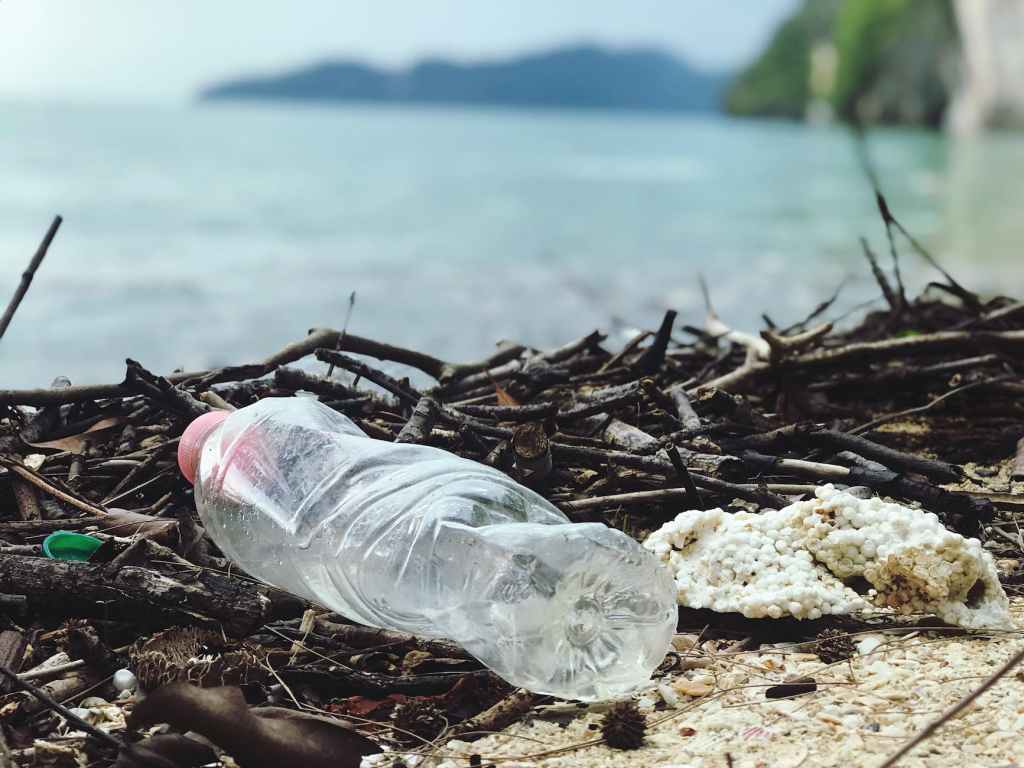
The other day, someone on the Board suggested a reprise piece on Plastics Pollution. But when we looked back to the archives, we’d done so many of them! Choking up the system like the plastics themselves. Unlike the plastics however, the old articles don’t choke up the waterways, poison the seas, kill wild life and damage our health. Real plastic waste does all of this and more, as this article from Wikipedia makes clear.[1]

There is no realistic, practicable way to ask mankind, particularly the more-erm, intellectually challenged-members of our species to give up plastics. Yet they are slowly but steadily killing us. So what is to be done. Mura Technology[2]think that the answer is to recycle them. They think what? Yes, we didn’t believe it at first. But with the right combination of heat and pressure they think they can resolve any plastic waste back to the original oily products they were made from. To be used again. Humankind imitating nature. Circular manufacturing and all that. It won’t get rid of all the horrible plastic already in the sea; but it will stop anymore going in. and that’s a start.

Now, we owe this infographic to the amazing website Nature Briefings. It’s our go-to website for up to date clearly explained developments in Science, technology and of course their impacts on society. We think you should too. so once again we have put in their link[3[ in the hope you will sign up. Because the more people that do it, the quicker reason and learning will re assert themselves and we will move from this dark place [3] And get this-it’s free!

Good, isn’t it?

[1]https://en.wikipedia.org/wiki/Plastic_pollution

[2]https://muratechnology.com/

[3]Enjoying this newsletter? You can use this form to recommend it to a friend or colleague — thank you!

#plastic pollution# #recycle #environment #nature #ecosystem

Materials Science Meets medicine-with a bonus for our Spanish amigos

There’s whole areas of learning and technology which we don’t cover much here. Because frankly, we are just too ignorant. So with the guidance of Dr José Manuel Torralba we present some truly startling advances in the field of Materials Science. What we found was so unexpected that you’ll have to forgive the slightly gushing Tomorrows World 1970- style vibe with which we serve it up. (One link is in English [1] but as we found the the Spanish one first, we present that, too [2])

Implants and artificial tissues Ever heard of nitinol? Neither had we. It’s a sort of alloy of titanium and nickel. already well tested by dentists and others. According to José, it should now be possible to create corneal implants which are capable of shape-memory. Yes, that was a new one on us too. But it looks as if this is going to be an exciting, but very practical area.

Batteries have memory too Our next surprise was batteries with anodes made from something called silicon nanofibres which apparently will be much better at storing energy than the current graphite ones. If nothing else, a real boost for renewable energies

and finally:

Metamaterials We thought this was like something out of a Terminator style movie. But it may be possible to to design materials which, in the words of José

We can modify a material’s surface by creating structures that cause waves to move, bend, or reflect in specific ways. This allows us to create invisible materials (manipulating light), radar-undetectable materials, or materials that completely isolate sound. By altering a material’s internal architecture, we can achieve unprecedented mechanical properties. 

It’s so refreshing to dive into a little-visited area and find out what the clever people who work in it have been up to. Especially when it informs one of the main tropes of this blog, which is medical research. We hope you found this slight diversion useful, and will leave you with this thought:
There are more things in heaven and earth, Horatio, than are dreamt of in your philosophy- Hamlet Act 1 Scene 5

[1]https://materials.imdea.org/the-supermaterials-that-will-transform-our-lives-in-2025/

[2]https://www.bbc.com/mundo/articles/ckg9v74kvr2o

#metamaterials #nanotubes #medicine #implants #materials science

Are YOU a cause of deforestation?

What could be more innocent this weekend than a brisk stroll through your local shopping mall? All air-conditioned and centrally-heated, antiseptically clean, and crammed full of shops with must-have frocks and trainers and clothes and make-up and jewellery and mobile phones and shirts and trousers and computers and chocolates and more clothes and shoes and cosmetics and toys and even more clothes and accessories and skirts and furniture and even more cosmetics…..might you, have you, contributed to the tearing-down of trees in some far-away rain forest?

According to Global Canopy, you probably have.[1] They are a non-profit company that tries to monitor the role of the world’s largest corporations in the sustainability of the planet, looking at production, supply chains transport- all the aspects of a modern operating firm, in fact. What impressed us was the way that they try to work with companies by providing data and feasible strategies instead of just standing outside in the rain with placards. But they are no patsies, either. Get this from their website

The 10th edition of the Forest 500( their regular survey-LSS) reveals that almost a quarter (23%) of the companies and financial institutions that have featured in each of the 10 annual assessments have still not published a single commitment on addressing deforestation…….Meanwhile, nearly two-thirds (63%) of companies that have set commitments are failing to publish adequate evidence of their implementation

They go on to name names, which we dare not here, for lack of a proper legal department. But you’ll see them tomorrow during the course of your excursion. And that’s before you stop off in the Food Concessions on level four………

Why is all this important? Well we at LSS think that deforestation if one of the major causes of the worlds ills. It not only contributes humongously to global warming, it interferes catastrophically with hydrological cycles, driving desertification and land degradation. (ever wondered where all those migrants come from?) It may even be releasing new pathogens such as respiratory viruses into the human ecosphere, as we have alluded to before in these pages (LSS Passim) The World Counts has a nifty little website here to bring you somewhat up to speed [2].

Now we at LSS are not urging you to give up the accoutrements of civilised life today. We are Whigs, not Cistercian Monks, and certain member of the Editorial Board might find immediate changes to their lifestyles very uncomfortable indeed. But look again at the way Global Canopy work; with the grain of corporate life (weak pun intended) Can you ,should you find ways to bring pressure on companies by investing differently? By purchasing a little more slowly, and perhaps a little more judiciously? By getting just one item a week from a charity shop? If you want to donate to, or help these people in some other way, we would applaud that, too. As Tesco used to say back in the 1990s; every little helps.

Thanks to G Herbert for this story

[1]https://globalcanopy.org/press/10-years-of-data-reveals-the-major-companies-persistently-ignoring-their-role-in-driving-deforestation/

[2] https://www.theworldcounts.com/challenges/planet-earth/forests-and-deserts/why-is-deforestation-a-problem

#deforestation #supply chains #palm oil #global warming #shopping malls #consumer

Global warming: five graphs to frighten anyone

Looks like we’ll need that carbon capture machine from yesterday’s blog (LSS 19 11 2024) Global warming is accelerating fast. An excoriating series of graphs, compiled by the industrious team of Helena Horton, Lucy Swan, Ana Paz and Harvey Symons, of the Guardian, punches the information right between your eyes. in a series of vivid clear and easy to grasp graphics [1] We thought that five in particular were especially noteworthy : Earth Surface Temperatures (up) Heat stress (up) Ocean surface temperatures (really up) and emissions(really, really up)

If you want to know why all this has been caused by human activity, click here [2]

But the consequences are feeding into our daily lives now, wrecking our political and social systems. For as people see their lands ravaged and turned uninhabitable by all this, they flee to the last surviving places where life may still be tolerable. It’s called migration. And so we close with a question. it’s particularly for the older sorts, who gripe and snipe at every effort to produce clean energy. How will you restore the ravaged lands of the south, and thereby stop the flow of migrants at source?

[1]ttps://www.theguardian.com/environment/2024/nov/20/the-climate-crisis-in-charts-how-2024-has-set-unwanted-new-records

[2]tps://www.climate.gov/news-features/climate-qa/how-do-we-know-build-carbon-dioxide-atmosphere-caused-humans

#climate change #migration #global warming #fossil fuels #carbon emissions #electric vehicles

CSAR Carbon Capture technology: small hope in difficult times?

If US President Elect Donald Trump does what he says-pulling his country out of international climate agreements and encouraging oil drilling wherever possible-then the world will enter a catastrophic downward spiral. Urgent measures will be desperately needed. Could Continuous Swing Adsorption Reactor Technology be the answer? According to Darren Orf of Popular Mechanics, yes it could. [1]

A Norwegian Institute called SINTEFF [2] has not only researched this intriguing double capture process to achieve new levels of efficiency, but is actually testing it on industrial plant. As every schoolchild knows it’s not enough to come up with new sources of clean power, like wind farms. It’s going to be vital to seize the carbon from all those dirty industries like cement, metal production and waste incineration. Well, the results look good. Get this:

Although CSAR performed well in laboratory settings, the technology needed to be tested in the wild. Over the summer, SINTEF worked with the BIR AS waste combustion plant outside Bergen, Norway………In a 100-hour-long test operation, the CSAR pilot demonstration captured the same amount of CO2 gas as it had in a laboratory setting. In total, this represents roughly 100 kilograms of CO2 per day…………..

How ironic that a small country like Norway should be right at the cutting edge of such vital design! Or is it really surprising? Back in the 1980s both Britain and Norway enjoyed a bonanza of money from North Sea Oil. Norway sensibly invested theirs in a state owned sovereign wealth fund. It led their tiny population to acritical economic mass, allowing them to develop projects like this. And Britain? They spent it all on tax cuts for City Brokers and Landowning Grandees. Not surprising at all, when you think about it.

with thanks to P Seymour

[1]https://www.popularmechanics.com/science/green-tech/a62855594/csar-cabon-capture-climate-change/

[2] https://www.sintef.no/en/sintef-research-areas/ccs_ccus/

#carbon capture #carbon storage #global warming #donald trump #runaway greenhouse effect

Are Co operatives making a come back?

History: it’s a funny, cantankerous old thing. Any action seems to produce its opposite. It may be happening again. Starting in the South east London Borough of Lewisham.

As every schoolchild knows, the Industrial Revolution produced an atomised, nihilistic society where the overwhelming majority lived in slums, and worked every hour for pitiful wages. The new metropolises like Manchester drew waves of strangers into disease ridden slums. The results were far indeed from the hopes of the philosophers of the Enlightenment whose heady thoughts on free markets had kick-started the whole sorry mess. Yet somehow, in those desperate places, people began to come together. New community organisations began to thrive. Methodist Churches were one example. Trade Unions another. There were things like Working Mens clubs and libraries. Building Societies. And of course the Co operative movement, where poor people could club together to make their purchases at their own shops.(overseas readers might like to know it still exists today, but is barely differentiable from any other hight street grocer) Each in turn contributed to the foundation of the Labour Party. Fast forward one hundred years, what with the collective experience of wars and depressions and most people assumed that collective actions were the optimal solutions to most of our problems.

Following the world crisis of 1973-74,everything changed. Free marketeers saw their chance to exalt the individual above all else. Writers like Hayek and Friedman paved the way for politicians like Thatcher and Reagan. Even popular books like The Selfish Gene could be read in such a way as to exalt the cult of the sovereign individual . Down with the state! Taxes were an imposition on human liberty! Although the adherents of such doctrines could never explain how the National Health Service was Communist, but the Army was not, the individualistic tendency bit deep into our lives and culture. With the results we see today. Once again, atomised communities. Poverty. Capital in the hands of a very few, who invest with a grudging reluctance that would make Mr Gradgrind envious indeed. Pollution, rack rented slums, and growing poverty, especially among children.

Once again there seems to be a reaction setting in. Starting at the bottom, people are beginning to come together in groups to save what is important to them, from the all -dissolving solution of unrestricted free markets. As Kemi Alemoru explains in this article for The Standard [1], it seems to begin around the need to preserve collective things like music venues and pubs. Her piece treats the Southeast London area of Lewisham as a sort of living field experiment. But the thought strikes us. If it works for things like those, why not for bigger ones? Like housing. Controlling air pollution. Making roads safe. Even, whisper it, schools and collective education.

To borrow from another area of learning “every action produces an equal and opposite reaction. Maybe this is the start of one.

[1]https://www.standard.co.uk/homesandproperty/property-news/the-battle-for-lewisham-how-coops-are-reinvigorating-communities-b1157728.html

#free markets #collectives #cooperatives #hayek #keynes #methodist #coperative society #friendly society #trade union

Five Problems in the in-Box of a World Government

It’s election time in some of the world’s biggest democracies. This year India, the USA and UK all go the polls, and the EU has just done so (we don’t count the recent sham in Russia) All of these places face immense problems. And we don’t think they can solve them, because the root causes are global, making frontiers out of date. Imagine then, if a Global President were elected this year and took office on 1st January 2025. What would be the top five problems in their in-box?

1 Intractable conflicts. People draw imaginary lines and then fight bloody wars across them. The current conflicts between Russia-and -Ukraine and Israel- and- Palestine are current examples, with no obvious resolution, if the nation state remains the highest form of political organisation. Older readers will recall how the conflicts between Mercia and Wessex dwindled once they were combined into England. It was the same after France and Germany joined the EU. A World Presidency would imply that all these ancient hatreds are in fact futile.

2 Climate Change/Global Warming What happens in the Antarctic, the Amazon Basin and the Great Barrier Reef affects us all equally. The existence of endlessly competing polities, each jockeying for its own advantage may fatally slow efforts to deal with this existential threat. A World Government would rapidly co-ordinate mitigation efforts and resource allocation, and it is likely that this one would indeed soon be a memory.

3 Migration and identity crisis People move from poor areas to richer ones according to the same irrevocable laws that govern the movement of ions in an electric field. Yet the deep crisis of identity this provokes has produced toxic political and intellectual consequences in the richer countries, which make it impossible to transfer resources to the poorer ones. By ordering this done, a World Government would have essentially removed the motivation to migrate at all, thus ending the crisis forever.

4 Pandemics Recent experience has shown that economy-shattering pandemics can spread with lightning speed. And, believe us, Covid-19 was mild compared to some viruses which are waiting in the wings. For some reason, those pesky viruses don’t respect frontiers any more than molecules of carbon dioxide do, suggesting that the whole idea of national solutions may be somewhat out of date.

5 Grasping the Opportunity If humanity is to survive, it would be judicious to give ourselves extra chances. Colonising the Moon or Mars would provide ample second homes, even if our local tribesmen blow this one up with their nuclear weapons. Such a colonisation would be faster, more efficient and more just if all were invited to participate and share in the consequences. A World Government would mean that the undertaking would not only be successful, but that existing squabbles were not exported among the planets.

We know this will be saying the unsayable, especially among certain classes of society. Yet there comes a point when a society is bulging in crises, bursting against the limits which constrain it. It’s our contention that these limits are artificial and self imposed. There can never be a return to the good times of the past. But with thought and effort, they may come again in the future.

#world government #nation state #pandemic #global warming #migration #inequality

Will multicoloured hydrogen save the world?

When we were young, hydrogen came in one colour-and you couldn’t see it. It was a just a load of bubbles the Teacher made in the chemistry lab. Fast forward fifty years, and it seems to come in a baffling spectrum of colours. There’s Green, pink, grey, gold, blue, black, brown and turquoise. [1] This handy guide from the National Grid will take you further. They’re all different industry nicknames where the stuff comes from. Just to confuse matters, different people seem to use the same nicknames to mean different things. But underneath all this lies one simple truth-hydrogen gas could represent a useful path to a sustainable future, and still enjoy what might pass for a tolerable lifestyle.

For reasons of space, we’ll concentrate on one exciting sounding candidate which insiders dub Gold hydrogen. The redoubtably named International Electrotechnical Commission waxes rather lyrical about it here [2] It’s a reputable outfit, and there are some good links for those with the coffee time to delve a little further. But-all that glistens is not gold, as Shakespeare once memorably observed. Writing in The Conversation, David Waltham produces a thoughtful balance sheet of the pros and cons of Gold Hydrogen (bewilderingly, his definition of it is a bit different to the IEC’s) He is far from anti; but this well-expressed caveat is well worth bearing in mind

The big question, though, is how seriously to take gold hydrogen. Will it turn out to be an over-hyped distraction of very limited utility? Or will it provide a pain-free path into a low-carbon future? The truth probably lies between these extremes, but only time (and further research) will tell us.

Well said Professor Waltham. That’s how LSS thinks. On just about everything.

[1]https://www.nationalgrid.com/stories/energy-explained/hydrogen-colour-spectrum#:~:text=Green%20hydrogen%2C%20blue%20hydrogen%2C%20brown%20hydrogen

[2]https://www.iec.ch/blog/could-white-and-gold-hydrogen-be-clean-fuel-options#:~:text=By%20contrast%20white%20hydrogen%20refers,conventional%20ways%20of%2

[3]https://theconversation.com/gold-hydrogen-natural-deposits-are-turning-up-all-over-the-world-but-how-useful-is-it-in-our-move-away-from-fossil-fuels-220230

#hydrogen fuel #fuel cell #green hydrogen #gold hydrogen #sustainable #global warming #climate change