Has Global Warming happened to you yet?

Everyone can choose how they learn about global warming. For some it is to read the science  by consulting sites such as the Royal Society[1] , NOAA,[2]  the Met Office [3] and other adults in the room. The second is to wait until it happens to you. Increasingly, people are choosing the second option because the climate is now delivering personal tutorials: a fire that shouldn’t have burned, a flood that shouldn’t have reached that high, a heatwave that shouldn’t have been possible at this latitude. We’ve got three examples for you today, which we present with due apologies and sympathy to the victims( it really isn’t their fault).

 A. The 2022 UK 40°C heatwave

Most people who lived in Southern England that year can share memories like driving around the M25 through clouds of smoke from the burning heaths of Surrey, or seeing our beloved green South Downs turn the colour of chamois leather. Attribution studies conclude climate change made it at least 10 times more likely.[4]

 B. The 2021 Pacific Northwest heatwave

You’d think the cool, rainy Pacific Coast would be the last place to expect a catastrophic climate change event. But this one was described by scientists as “virtually impossible” without global warming. [5]

C. The 2023–24 Canadian wildfires

The largest in Canadian history; attribution work shows climate change made the conditions significantly more likely and more severe.[6]

We could go on- but at  this point there pops up  the usual man from the Dog and Duck who yells “these are only (expletive deleted) probabilities! Just models! No one has PROVED these were caused by climate change!” To which we reply:

If you refuse to act until science gives you 100% certainty, you’ll never act on anything. Climate attribution uses the same probability standards we rely on for medicine, insurance, and engineering — the ones we trust every day without complaint. When scientists say “an event was made ten times more likely by climate change”, that’s not vague. That’s the same level of evidence we use to approve drugs, design bridges, and set insurance premiums. If you accept probability‑based evidence when it keeps planes in the sky and hospitals running, but reject it only when it concerns climate change, that’s not a scientific position — it’s a political one. It’s also disingenuous.  But above all, it is very short term.

[1] Evidence & Causes of Climate Change | Royal Society

[2] Climate Change | NOAA Climate.gov

[3] Climate – Met Office

[4] UK heat scientific report

[5]Philip et al. (2022), “Rapid attribution analysis of the extraordinary heat wave on the Pacific coast of the US and Canada in June 2021.” Earth System Dynamics, 13, 1689–1713.

#global warming #climate change #fossil fuels #fires #floods #droughts

Diabetes: another benefit of the BCG Vaccine?

A couple of years ago we did a piece called Did your long-ago BCG Vaccine save you from dementia? In which we reported that the famous BCG (Bacillus Calmette-Guérin) vaccine was also proving efficacious in cases of bladder cancer and certain types of dementia. (LSS 2 12 24) Well today things just became even more intriguing. Read this from Nature Briefing, Century Old Vaccine helps control diabetes;

A tuberculosis vaccine developed in the 1920s helps to regulate blood sugar in people with certain types of diabetes, enabling them to reduce their insulin use. The findings demonstrate yet another beneficial off-target effect of the Bacillus Calmette–Guérin vaccine, derived from a weakened form of the bacterium that causes tuberculosis in cows. The shot has been approved to treat bladder cancer in the United States and is being investigated against conditions such as Alzheimer’s disease. The results were presented at the American Diabetes Association meeting on 7 June.

Nature | 5 min read

And the Learning Point? When we did Training and Teaching, they always told us that we had to have a learning point. So we think it’s this:

Vaccines are one of civilisation’s quiet miracles:[2] you design them for one threat, and decades later they’re still paying unexpected dividends — BCG for TB, then bladder cancer, then dementia, and now hints of protection against diabetes. That’s what real science does: it compounds. You invest once, and the benefits echo for generations. But if you decide, like the climate denier or the old‑school smoker, that evidence is optional and expertise a nuisance, you’re effectively betting your long‑term future against the only tool that has ever reliably improved it. Reality is not something you can pick and choose.

[1] BCG vaccine – Wikipedia

[2] Vaccines and immunization


#vaccination #BCG #tuberculosis #cancer #dementia #diabetes #health #medicine #research

Chikungunya: another potential Climate Change epidemic?

News that we’re in for a record El Niño[1] this year brings a depressing thought is Climate Change going to deliver a whole new wave of tropical diseases alongside all those floods. fires and migrations? We’ve touched on this before (LSS 25 10 21,14 11 23, 2 10 25) but had rather hoped  that it had all gone away. It hasn’t, as this excellent article by Shivali Best of the Mail [2] explains in forensic detail. And it’s her work we’ll be riffing on today, with a little help other sources.[3]

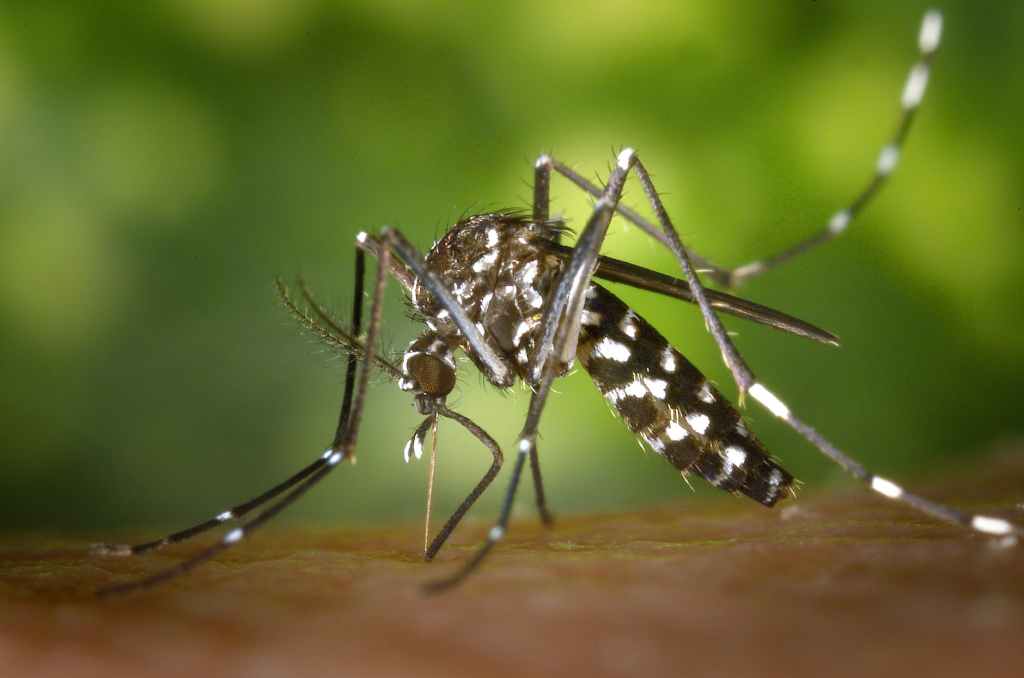
Shivali takes Chikungunya virus as her theme. It’s a nasty little disease caused by an alphavirus of the Togaviridae group.  Discovered in Tanzania in 1952 it delivers a painful cocktail of symptoms including fever and severe joint pains: the latter may be extremely debilitating and long-lasting. But the real problem lies in its vectors, the famous yellow fever mosquito Aedes aegypti and the scarily named tiger mosquito (a. albopictus) Do they call it that because of its bite? Not only does climate change allow these insects to spread to lands where the cold had formerly precluded their presence. The same warming allows the virus to breed up to five times faster inside the mosquito. Before you ask: there are vaccines of sorts underway: but progress has been slowed because most of the money has been spent on wars and shopping malls.

And so Chikungunya joins the long sorry list of diseases spreading due to global warming. To which we could append Malaria, Dengue, Zika, Lyme, Tick Born Encephalitis,  Vibrio group……..enough! LSS readers are a well-informed lot. They know what’s happening. They know why. The real task before us all is how to clear up the damage, and make those culpable pay for it

[1]Prepare for El Niño, UN warns – it could be the strongest in decades – BBC News

[2]Chikungunya virus is heading for Europe: Scientists warn mosquito-borne tropical disease could spread to major cities thanks to climate change | Daily Mail

[3]Chikungunya fact sheet

#chikungunya #malaria #climate change #disease #vector #epidemic #health #mosquito

Broaden your mind with these two great brain stories from Nature Briefing

We believe that research into the human brain is the flip side of research into Artificial Intelligence. As the two will one day coincide, the more we know about both the better. So when Nature Briefing, that go-to Record for all things new and scientific, puts out not one but two (two, folks!) stories on the human brain, we felt it our solemn duty to bring you them both.

We have always believed that scaring people into doing things is counter-productive in the long term. Our worse fears are confirmed by this piece called Stress stops the Brain Joining the dots.

Acute stress makes it difficult to connect memories of past experiences with fresh information — a process crucial for making deductions. This could explain why people struggle to show insight under pressure. During psychological tests that involved making links between indirectly related pictures, brain imaging showed altered activity in the hippocampi of people who had been through a stressful mock interview compared with those of people who’d had to complete a simpler task, which suggests that their brains hadn’t inferred connections between the images as strongly.

Nature | 5 min read

Reference: Science Advances paper

Every epoch casts reality in its own image The Victorians though that everything in the world worked like a steam engine. Around 1910 they thought all was electric circuits. And Cold war people put us all down as computers. Every picture of the brain is an analogue, an attempt only as this piece The Brian is no machine makes clear.

In The Brain, In Theory, neuroscientist Romain Brette makes the case to move away from the predominant model of the brain, which treats the organ like a computer. Brette argues that engineering metaphors are often vague and misleading, and attempts to breathe life back into brain science by focusing on the study of the nervous system on biology. “Brette’s take-down of the field’s dominant theoretical frameworks is systematic,” writes neuroscientist Àlex Gómez-Marín in his review. “The book is intense and intricate. One can get lost in it, but it is worth the adventure.”

Nature | 7 min read

So our advice is study both of the above with close attention, gentle reader. It’s a no-brainer!

#neuroscience #artificial intelligence #biology #IT  #nervous system #logic #stress

Programmable Therapeutics(here’s what they’ll be talking about in 2046)


In these happy, carefree days of 2026, we almost take the success of advanced techniques like CRISPR–Cas9 and CAR‑T for granted. Yet not so long ago they were obscure experimental curiosities, known only inside specialist laboratories. So we asked ourselves: is there something equally obscure in 2026 that will be the stock‑in‑trade of doctors in 2046? We think there might be: programmable cell therapeutics.[1]

The jumping‑off point is the logic behind CAR‑T. Readers will recall how T‑cells are removed from a patient, engineered to recognise the chemical signatures of their cancer, and then reinfused to hunt down malignant cells. Researchers are now extending this idea to a wider cast of immune cells, stem cells, and progenitors, so they can tackle diseases far beyond oncology.

What makes the next generation different is the importation of ideas from electrical engineering. Instead of a single engineered receptor, cells can be fitted with ON/OFF switches, logic gates, multi‑step decision pathways, and feedback loops. In other words, cells that don’t just attack — they compute. They sense the molecular environment, decide what’s happening, and act accordingly.

And thanks to delivery tools such as viral vectors and mRNA‑carrying nanoparticles, these circuits can increasingly be installed in vivo. Rather than the expensive choreography of removing cells, re‑engineering them, and putting them back, the ambition is to program the cell to reprogram itself. Why rebuild the army in the barracks when you can train the soldiers already in the field?

Gentle readers, we are always looking for ways to put you ahead of the curve — not what is happening now, but what will be happening in five, ten, or twenty years’ time. By 2046 we could plausibly see:

  • cancer therapies that activate only in tumour microenvironments
  • gene therapies that self‑limit to avoid toxicity
  • immune cells that make multi‑step decisions
  • RNA‑based switches that restore gene expression dynamically

All this, of course, depends on continued investment in scientific research and a strong ecosystem of independent universities and research institutes. Hopeful, isn’t it.

[1]Next-generation programmable cell therapies for precision medicine | Nature Reviews Genetics

#gene editing #medicine #health #cancer #mRNA #CRISPR #CAR-T #DNA


If you are going to get wiped out by an asteroid, don’t let it spoil the weekend

For anyone who thinks dinosaurs are extinct you should try living near vast colonies of seagulls, where we do, and try to keep your car clean. But, as every schoolchild knows, most dinosaurs, especially the big scary ones, really did go extinct one day 66 million years ago when a rather large asteroid landed in the Gulf of Mexico(or do we now call it the Golf of Trump?-check before publishing-ed) But what was it like to live through that momentous day in the history of the world? Now erudite Professors Michael J Benton and Monica Grady, writing in the Conversation, have made a stab at recreating the colossal impact, through the eyes of the creatures that lived through it, from the day before until many years later when everything had played out.[1]

Well, imagine it for yourself, gentle reader. A warm Cretaceous day like many others, a Friday perhaps, with the prospect of a sunny weekend ahead…. Ankylosaurs scuttling through the undergrowth, Triceratops and T. rex vying for number one spot at the watering hole, all normal and above board, until…..well, we won’t spoil it, gentle reader. Click on the link and read for yourself.

And remember this thought. However urgent your latest report seems to be, however late the train is for the next meeting, or how long you have to wait to park at Sainsburys, trouble- unexpected, unforewarned, undeserved even- may suddenly come at you from out of a clear blue sky. And change things round more than somewhat. And finally: if we had lived there at that time, it really would have been a Friday, because everything bad happens to us twice.[2]

[1]  https://theconversation.com/what-it-would-have-been-like-to-experience-the-dinosaur-killing-asteroid-armageddon-a-blow-by-blow-account-271786?

[2] Cretaceous–Paleogene extinction event – Wikipedia

#asteroid #dinosaur #extinction #KT boundary #cretaceous #evolution #geology

No Pandemic this time: but what happens next?

While we sympathise with the unfortunate passengers and crew of the MV Hondius who may have been exposed to the hantavirus, our first response was rather selfish; “is this a new pandemic, and if so, how bad will it be?” We were not alone: and fortunately, as this excellent summary article from Julia Musto of the Independent, via MSN, explains: humanity seems to have dodged the bullet this time [1] Although utterly dangerous the virus  just doesn’t seem to spread with the same facility as others such as  SARS-CoV-2, or the influenza group. So that’s alright then.

Or is it? Because as certain as the House always winning, another pandemic will come along. Bringing the same economic, social and physical disruptions as COVID 19 did back in 2020. Or worse maybe. Surely humanity has learned some lessons from that catastrophe? Taken steps, you might think, to mitigate the worst effects and learn to pool our resources so that next time round everything will be different? Not according to Kat Lay of the Guardian [2] whose indefatigable investigations have unearthed another avoidable catastrophe in the making.

Because although a Pandemic Treaty has been signed , it cannot go into effect until a special clause called a Pabs (Pathogen access and benefits sharing) has been ratified. It hasn’t, as regular readers will be unsurprised to learn. The result is:

“If a new pathogen emerged today, the world remains largely unprepared for it. A lack of action to prevent and prepare for the next pandemic threat is a disservice to humanity,” 

Kat cites the usual litany of petty squabbles, mutual jealousies and general misinformations which have led us all into this sorry plight and ends her article there.

But we, gentle readers, cannot quite leave you without adding our own thought. Natural Selection tells us that species go extinct when their key survival features are no longer adequate  to their environment (what use are flippers to a whale out of water, for example?) Humanity’s key advantage was its intelligence and relatively large brain. Is this clear example of the failure to use this clear cognitive advantage a sign of even worse things to come?

[1] https://www.msn.com/en-gb/health/general/could-cruise-boat-hantavirus-be-the-next-global-pandemic/ar-AA22CAGh?

[2] https://www.theguardian.com/global-development/2026/may/05/talks-stall-on-who-pandemic-treaty-global-response-disease-outbreaks?CM

[3] MV Hondius hantavirus outbreak – Wikipedia

#hantavirus #pandemic #covid 19 #WHO #health #medicine #virus

Progress on Multiple Sclerosis: When Big Data meets Molecular Genetics

Few of us have not met someone who is suffering from Multiple Sclerosis, that terrible wasting disease wherein the immune system seems to turn on its own body, especially in the fatty sheaths around the neurons. Leading to a progressive deterioration in mobility before confining victims finally to a wheelchair-or even worse. The experience for families and victims was extra-bad because for many years the cause seemed unknown, making hope of any cure quite unlikely. Michael Marshall of the New Scientist has been covering this story most assiduously. And so we are pleased to showcase it, because it celebrates achievements in two our our favourite fields-big data and molecular biology-and the benefits which accrue when scientists from both work together.

We urge you to read Michael’s article either by buying the hard copy mag (there’s tons else to read inside it) or paywalling past the link below [1] Suffice it to say: #1 The molecular evidence that the Epstein Barr virus (which can cause glandular fever) is involved. #2 That this has a strong effect on both B cells and T cells in the immune system, which ,when they go rogue, are essentially responsible for the terrible lesions of MS #3 That not all hosts of Epstein Barr virus go on to develop MS, because the chances of that depends on certain genetic propensities and variants and, best of all #4 the above and more, which we report so glibly, has been elucidated by the use of huge data studies : 10 million people in one, 617, 186 in another, even 471 000 B cells in another-how’s that for numbers, folks?-which were only possible because: #5 places like the UK and USA have worked to build big collaborative things the the UK Biobank and All of us. Well some of the people in those countries have anyway.

All of which leads us to few reflections, some of which will not be uncongenial to regular readers. Firstly, it seems a pretty good idea to spend money on science, especially basic research, instead of cutting it. Secondly scientists these days work best in large teams whose members come from all sorts of backgrounds and this is especially true when you throw multidisciplinarygroups of them together. And that this also seems to be true of football teams: how far would Arsenal FC. for example, have enjoyed their current success if they had insisted on retaining a staff entirely composed of plucky British lads? [2] The implications in turn for visa systems, cultural openness and plain common sense are clear in turn.

[1]Huge study reveals how Epstein-Barr virus may cause multiple sclerosis | New Scientist

[2]‘Everything can happen’: Trossard confident of Arsenal’s chances in final | Arsenal | The Guardian

#multiple sclerosis #Ebpstein-Barr virus #T cells #B cells #autoimmune disease #medicine #health

Hydrogen from Microbiology-another hopeful story from Nature Briefing

You might be forgiven for thinking we’re against bacteria at this blog. Got a beef with them, want more antibiotics to kill them, especially that pesky little Escherichia coli that is always clogging up the pristine pages of our little website. Nothing could be further from the truth: we are simply against bacteria that kill people, that’s all, and we admire the little creatures for all the useful things they do

Nothing more useful it seems than generating hydrogen in clean green ways that massively reduce greenhouse gas emissions. Of course we need hydrogen for all sorts of things-food, drugs, plastics-but the way it is currently made is depressingly energy intensive  Which is what this remarkable team of researchers at Edinburgh University have done, re purposing E coli to make hydrogen in amazingly clean ways Get this extract from the admirable Nature Briefing:

. The new process involves growing a strain of Escherichia coli that naturally produces hydrogen when deprived of oxygen. The researchers added a palladium catalyst and substrate for the hydrogen to bind to, and when they removed oxygen, hydrogen was bound to 94% of the substrate.

And they didn’t stop there:

The team then turned waste bread into a food source that could be given to the bacteria instead of glucose, to show that this type of food waste can be repurposed. The system resulted in a three-fold decrease in greenhouse-gas equivalent emissions compared with using fossil fuels, according to the team’s modelling.

There’s a lot to be said here. First our admiration for the amazing work and intelligence of the scientists[2] whose original paper we seem for once to be able to reproduce in full. The marvellous ways old things like bread and E coli are recycled to useful purposes. And a further point which the team at the admirable Nature Briefing know well. Progress, hope even, comes from the application of the scientific method. The use of evidence and reason to judge it in that order. Nothing else, however much you might want it to be so.

[2] Native H2 pathways enable biocompatible hydrogenation of metabolic alkenes in bacteria | Nature Chemistry

#microbiology #palladium #greenhoiuse gas# hydrogen# E coli #sustainabilityn #drugs #plastics

WHO has a Cunning Plan to speed antibiotic development

The scientific community has developed and approved new antibiotics in recent years. This is good, but unfortunately not sufficient to catch up with evolving drug-resistance bacteria, especially against those of greatest concern. We need a reliable pipeline with new antibacterial agents that are innovative, affordable, accessible to all those who need them.”

Dr Yvan Hutin, Director of Antimicrobial Resistance at WHO

Says it all really, everything that we’ve been banging on about here for the last six years and more. The problem is simple, but deadly.  Although more than 90 new antibiotics are now in development, very of few of them target the really high-priority organisms that worry health care professionals: and even fewer of these are really innovative (in the way that penicillin was in its day for example) And so the World Health Organization, that most noble of entities has come up with a Cunning Plan to really get things moving. They gave divided it into three Target Product Profiles:

-our old friends the multidrug resistant gram negative bacteria such as enterobacteriales, Acinobacter baumanii and Pseudomonas aeruginosa, who’ve shown up in so many old LSS blogs we won’t bother to list them.

Gram positives like Enterococcus faecium.  We have wondered why the gram negatives have been getting all the attention, and seeing no Darwinian reason why the gram positives should not evolve resistance too, are extremely glad someone is at last paying attention to them.

-their third trope for action is bacterial meningitis, caused by organisms such as Neisseria meningitidis and  Streptococcus pneumoniae among others. Particularly welcome, for of those who incur such dreadful infections, one out of six will die and of the survivors, about one in five will be left with some long term disimpairment.

Hats off to Dr Hutin in particular and the World Health Organization in general. The World Health Organization is often treated as a mere federation of its member states, but in practice it is something larger and more coherent than the sum of its parts. Individual nations see only their own budgets, their own pathogens, their own political cycles; the WHO sees the whole epidemiological chessboard. Its strength lies in that cooperative vantage point — the ability to gather data from Lagos and Lima, to convene experts from Seoul and Stockholm, and to turn a hundred local anxieties into a single, rational blueprint for global action. In a field as fragmented and under‑powered as antibiotic development, that kind of coordination isn’t bureaucracy; it’s civilisation defending itself. There’s your glass-raiser for Friday Night Cocktails, gentle readers.

WHO releases new target product profiles for urgently needed antibiotics

#antibiotics #penicillin #world health organisation #epidemiology  #microbiology #health #medicine