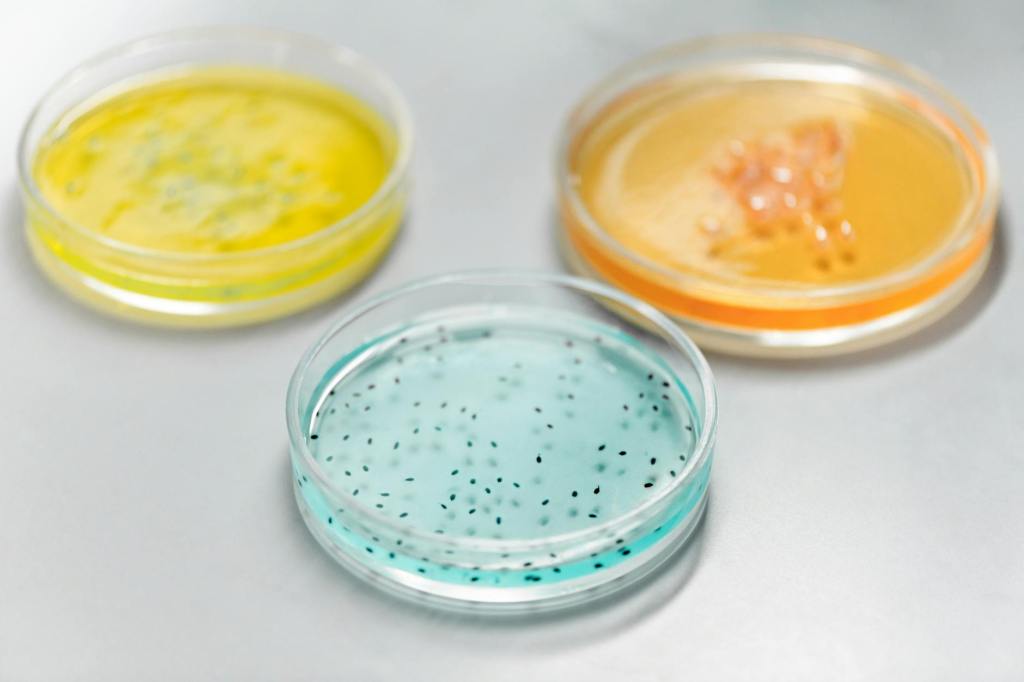
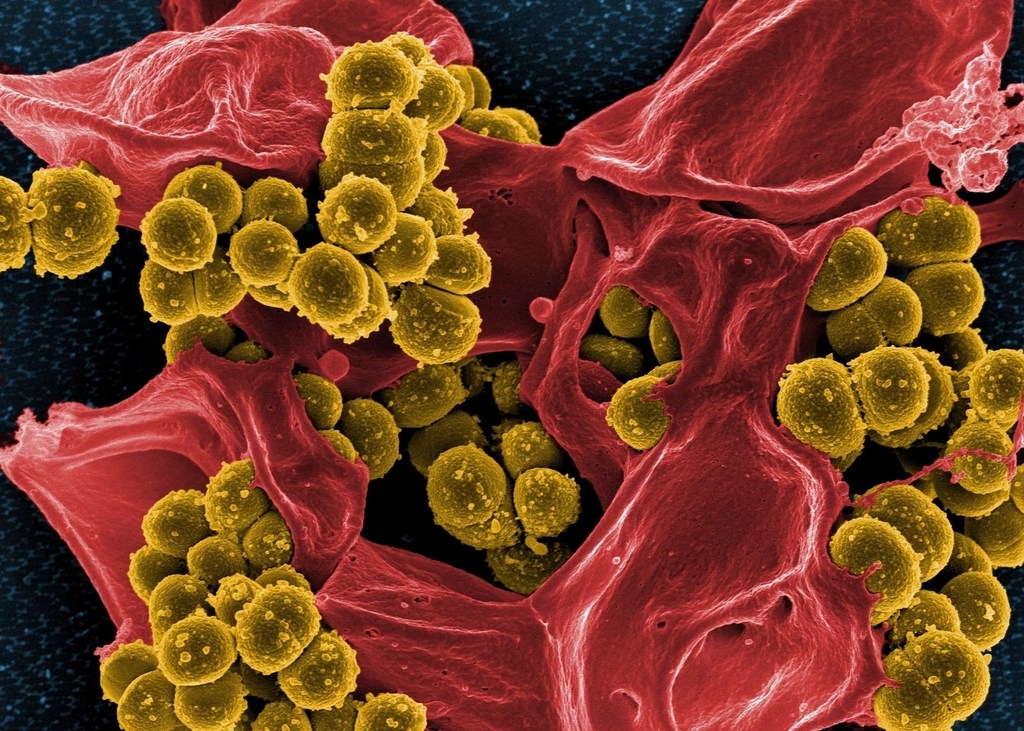
LSS v The Guardian: Clash of the Titans. And the battleground is antibiotics

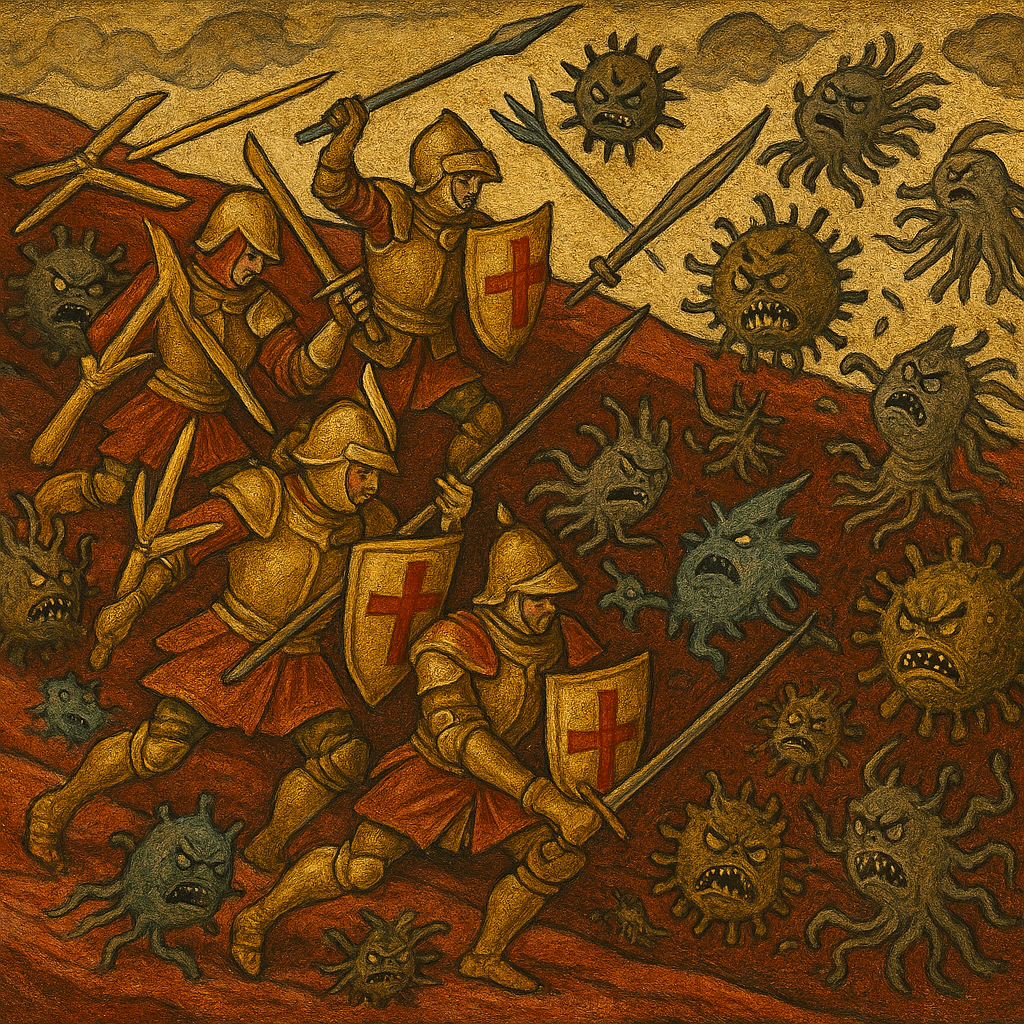
Readers of LSS, we present today a true clash of titans: us versus the popular daily newspaper The Guardian. For they have just published a leader article on antibiotics progress which takes an altogether different view to our own sunnily optimistic piece (LSS 18 12 25) about humanity’s general progress in solving the problem of antibiotic resistance. [1]

Avid readers will recall our effort well. Riffing on the work of the guardians very own Kat Lay (brilliant writer) we noted how the new antibiotics Zoliflodacin and Gepotidicin offered startling new horizons in the battle against gonorrhoea and other other unpleasant diseases of-well you know, down there, as they say. We hoped that, as antibiotics for these diseases had been developed, those for other diseases might soon follow. And thanks to Ms. Lay, we discovered the work of the Global Antibiotic Research and Development Partnership (GARDP) whose work we will now champion for ever more. All in all, everything was in a much better place than when we started this crusade, eleven long years ago, we concluded.

Not so fast, says The Guardian. Humanity may actually be losing the race to develop these new drugs. Since 2017 only 16 new antibiotics have achieved approval, and none of them are very different to the old ones. Which means resistance to them can be expected very soon. Point to them, we concede. They namecheck GARDP again, noting its work as a positive. But that the financial structures designed to encourage pharmaceutical companies to step up to the mark are still rather new. And-more points to the team from York Place- there is a rather incisive survey of where all these new antibiotics are to come from. Old LSS favourites like natural sources and AI modelling are acknowledged. But they are not all-curing magic wands. And what to do with any new antibiotics anyway? Ration them carefully, so that resistance develops more slowly? How do you do that in a world of billions, where people and information flow so freely, and the profits of piracy are so temptingly in reach? Gentle readers, your editors did not think of those ones fully either.

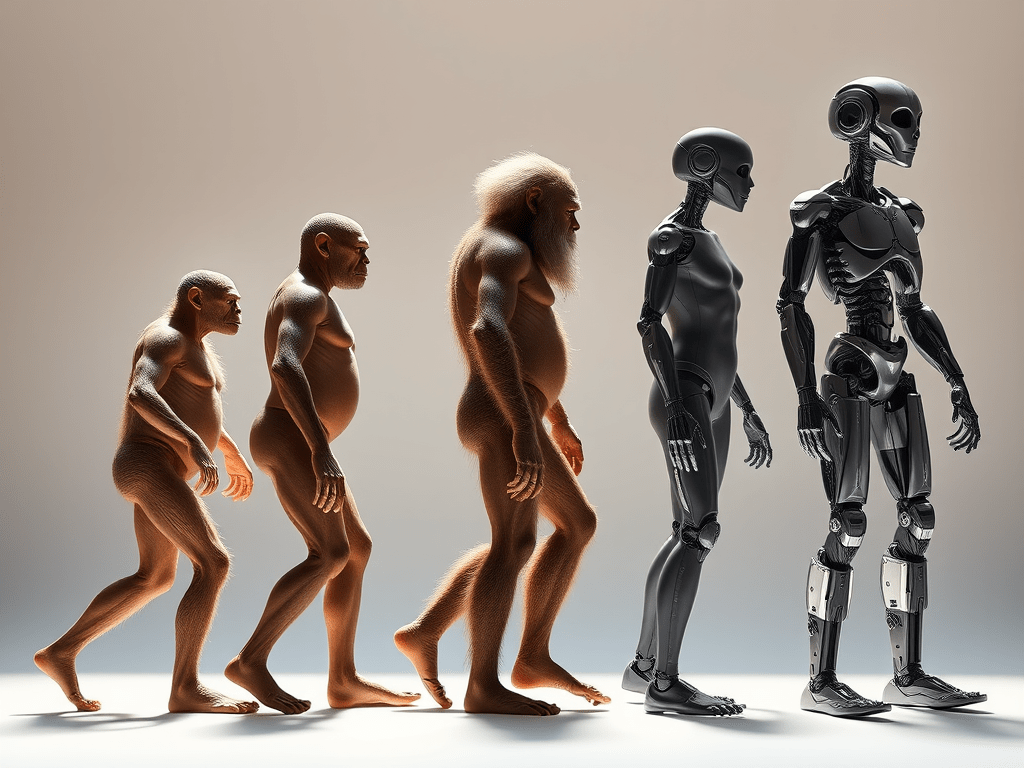
OK, we throw in the towel. Guardian 3 LSS 0 (FT). When it comes to superior knowledge, close reasoning and intellectual power, they have got us beat. But we take consolation gentle readers, When the genetic dice roll, they roll evenly. They got all the brains. We got all the charm and good looks. As the last picture above demonstrates very clearly. And yes- we promise another cocktail recipe before New Year.

[1]https://www.theguardian.com/commentisfree/2025/dec/29/the-guardian-view-on-antibiotics-recent-breakthroughs-are-great-news-but-humanity-is-losing-the-bi

#antibiotic resistance #antibiotics #health #medicine #microbiology #epidemiology #GARDP

Now AI is designing antibodies too

Do you understand the human immune system, or the even vaster world of immunology? Neither do we. Too big, too vast, too complicated. And that’s despite 43 years of trying and working along side some pretty nifty immunologists, back in the day. But AI does, Fresh from its triumphs on protein design (LSS passim) its superior intelligence has now been turned on the knotty problem of how to run up new antibodies. Read this, AI designed antibodies race towards trials from the indefatigable Nature Briefing

Scientists say they are on the cusp of turning antibodies designed by artificial intelligence (AI) into potential therapies just a year after they debuted the first example of an entirely AI-designed antibody. Previously, the structure of antibodies proved somewhat of a black box to AI models. But new and improved models — such as an updated version of AlphaFold — have more successfully predicted the shape of flexible structures that give antibodies the specificity they need to bind to foreign molecules. Researchers at several companies now say they’ve designed ‘drug-like’ antibodies. Nature | 5 min read

There’s a lot to unpick here, and we won’t try to do it all. The first thing that stands out is how quickly this is moving from proof of concept to clinical reality, The second is that the possibility that designed antibodies will target receptor sites hitherto off-limits to their natural predecessors. Think infectious diseases first, and rightly. But the implications for cancer therapy -and dare we hope, neurodegenerative diseases?- are clear after a moment’s reflection. Designer antibodies will greatly reduce the need for much animal immunisation and testing. And, perhaps a best of all, a thriving commercial ecosystem of start-up companies is beginning to form around the new learning, ready to turn it into everyday reality in a hospital or medical prectice near you, gentle reader.

Although we can’t claim credit for these advances-you all know us too well- we think it striking that they have come from the qualities we prize . Careful observation. Null hypotheses testing. Slow steady work. And always looking for what proves you wrong not what proves you right. Those qualities are what save lives and generally make them better. A shame that they are being abandoned now by a hysterical ignorant population and so many of its foolish leaders.

#immunology #antibodies #medicine #health #cancer #disease #biotechnology

Round up: MAGA psychology, strange new cells, how to become a teetotaller….and much more

We said we’d stopped doing round ups: but here goes anyway:

It’s about the psychology, stupid! George Orwell once noted that peoples’ political and religious beliefs often reflect their deep underlying emotional preoccupations. Which is why facts and reason so often fail to change minds. Never have we seen this argument so convincingly demonstrated as in this this short article by Magnus Linden, Claire Campbell and Fredrik Bjorklund for The Conversation: Maga Explained: How Personality and Context Shape radical Movements

The Unexpected was hiding in plain sight We always like it when that happens (remember birds and dinosaurs?) Now the inestimable Nature Briefing has a tale of how astrocytes, those formerly humble and overlooked cells of the brain may be pretty important after all The Silent Cells within our brains:

Astrocytes make up one-quarter of the brain, but were long thought to be merely the supporting act for the stars of the cognitive show: neurons. Now astrocytes are emerging as key players shaping our behaviour, mood and memory. The cells seem to orchestrate the molecular mix in the environment around synapses, varying that mix according to brain state — how alert or awake the brain is, for example. This, in turn, can determine whether neurons fire in response to a signal coming across the synapse. “Neurons and neural circuits are the main computing units of the brain, but it’s now clear just how much astrocytes shape that computation,” says neurobiologist Nicola Allen.Nature | 11 min read

Can GLP help you give up the booze? Sticking with Nature Briefing, that go-to source for science news of all kinds, we noticed this riff on all those weight loss drugs everyone seems to be taking lately, No wonder there’s no one left in the pub. Can GLP-1 drugs treat addiction?

Scientists are testing whether blockbuster drugs that mimic the hormone GLP-1 — sold under brand names such as Ozempic and Mounjaro — can help to cut cravings other than those for food. For years people prescribed GLP-1s for diabetes or weight loss have shared stories about finding themselves suddenly able to shake long-standing addictions to cigarettes, alcohol and other drugs. Now, data are starting to back them up, with results from more clinical trials expected soon. “At the end of the day, the neurobiological system that is activated by rewarding substances — food, sex, drugs, rock and roll — it’s the same system,” says psychopharmacologist Roger McIntyre.Nature | 11 min read

Will we ever lose our Bonds? We have noted before how deeply in hock governments around the world have become since the 2008 crisis and COVID 19. But better minds than ours, more deeply learned, have known it all along. Here’s Richard Partington writing before the Budget, Aditya Chakraborty afterwards: plus we wanted to give you Katie Martin of the FT too, but couldn’t get past the paywall.

https://www.theguardian.com/uk-news/2025/nov/24/bond-market-power-rachel-reeves-budget?CMP=Share_AndroidApp_Other

https://www.theguardian.com/commentisfree/2025/dec/02/misleading-rachel-reeves-budget-labour-bond-markets

Action at a distance? We don’t do a ;ot of physics here, sadly, so we hope this intriguing article about quantum entanglement from Jara Juana Bermejo Vega of El Pais will go some way to making amends. English monoglots be warned: you will need your translator app

https://elpais.com/ciencia/las-cientificas-responden/2025-12-01/el-entrelazamiento-cuantico-puede-explicar-fenomenos-de-comunicacion-a-distancia-entre-gemelos-o-de-un-hijo-con-su-madre.html

Forgive us breaking our promises but we felt these stories were so intriguing that we’d toss them at you and let you make up your own minds

#neurobiology ##psychology #GLP-1 #alcohol #drugs #MAGA #politics

The Cambrian: Giant Explosion or small blast, few casualties?

Was the Cambrian period (538-486 million years ago) the most significant in the history of Life? [1] Was there really a kind of biological explosion where simple single celled creatures suddenly transformed them selves into complex multicellular beasts with nervous systems, eyes, guts and feeding strategies? It’s always been a bone of contention with some shouting emphatically “yes” and others being a little more sceptical. “Sampling bias”, they say: correctly adducing that there were plenty of multicellular creatures in the Pre-Cambrian, it’s just very difficult to find their remains.

Now the proponents of the Big Change Theory have found their case strenghtened. Recent research. described here by Kate Ravilious for the Guardian, suggests a natural mechanism which drove the changes and caused a sudden leap in the diversity of life. According to Kate

changes in solar energy caused climatic changes that altered the amount of weathering of land surfaces – especially at high latitudes – with periods of fast weathering releasing bursts of nutrients into the oceans, which drove photosynthesis and pushed up oxygen levels, fuelling the high speed evolutionary changes. [3]

And the interaction of these changes in solar output with variations in the earth’s orbit would explain the timing and nature of these sudden leaps for life.

And our take? Something happened around Cambrian times, gentle readers-there really is a step change, as shown by the appearance of shells, backbones and all the other markers of our modern phyla. And the idea of a coinciding, plausible mechanism is persuasive indeed. However as veterans of the paleontological wars we have a few questions. Did the Cambrian explosion a generate an increase in total biomass, or just complexity of forms? If this pattern of solar cycles and variable orbit repeats every two or three million years, why have we not seen at least one comparable event since (500 million years is a long time) Were there no volcanoes, tectonic plates or asteroids to muddy the waters in the Cambrian, the way they did in the Permian or Cretaceous, for examples? We love the Cambrian explosion and the way it has driven curiosity and much good research. But like every Big General Idea-in science , history, psychology, whatever- we see them more as pointing the way to more research, not a final answer.

[1]https://en.wikipedia.org/wiki/Cambrian

[2]https://www.theguardian.com/science/2025/nov/26/changes-in-solar-energy-fuelled-high-speed-evolutionary-changes-study-suggests

[3]https://agupubs.onlinelibrary.wiley.com/doi/10.1029/2025GL118689

#evolution #paleontology #cambrian #precambrian #solar cycle #earth orbit #fossils

Stem Cell Therapy: Lamarckism by Force Majeure

First of all hats off to Oliver Chu, the brave boy from California who has just undergone a successful trial of stem cell therapy for a terrible condition called Hunters Syndrome. [1] as Ian Sample of the Guardian explains. It’s caused by a simple mutation in a gene called IDS-1 which controls the production of a vital enzyme Iduronate-2-sulfatase; without which the body cannot break down key sugars, leading to organ damage of all sorts and cognitive decline. The trick has been to extract the stem cells from Oliver’s blood: replace the faulty gene with a true copy using a viral vector; and pop them back in to Oliver, whenceforth they will thrive happily, self reproducing from their own line, and producing bountiful quantities of the enzyme for life.

And this for us is the key part. Let’s repeat : the new stem cells with the engineered gene will start their own self replicating line. In Oliver. Now Oliver himself started from a single stem cell-a single fertilised ovum, as do all living things. With DNA that was used to build every single following cell as it grew . An Ur stem cell if you like. But now. young Oliver has two. All the cells from his original cell, Plus the new line, from the engineered stem cell. whose line is now flooding his system with the good enzyme..

The central tenet of biology up to now is that we all of us-tigers, pterodactyls, humans, whatever-have a single unmodifiable line of DNA in our cells. Random variations may be passed to the next generation and tested by Natural Selection. But the actual DNA deep in the cells cannot be changed or modified. That’s the Darwinian positioned its held up pretty well for centuries. The alternative, proposed by Lamarck is that organisms are modified by the environment and this information can be learned inthe genes and passed on. So far there has been no evidence to support this view whatsoever . But what if the environment contains clever humans who can choose to modify DNA, and thereby create what are in effect hybrid organisms with two separate DNA lines-like young Oliver? Is this Darwinian? It’s not how it happens in nature, and its been done by force majeur. But it sounds a lot like Lamarckism from where we sit.

[1]https://www.theguardian.com/science/2025/nov/24/groundbreaking-uk-gene-therapy-manchester-hunter-syndrome

#stem cells #hunters syndrome #darwin #lamarck #evolution #medicine #health

PERT: Next step in gene editing offers real hope for hereditary diseases

Almost a quarter of hereditary diseases can be put down to mutations which break an established pattern of DNA, so it can no longer be read. No wonder they are called nonsense mutations. Often these mutations are expressed as STOP codons: just a short three letter sequence that stops protein synthesis dead, like a bad piece of coding in a computer programme. Now a new technique called PERT (Prime Editing RNA Therapy)allows the cellular process to override glitch in the DNA and resume synthesis. The new technique equips cells with engineered tRNAs that override these stop signals, letting the ribosome continue translation and produce the full protein. Here once again is Nature Briefing with one of their excellent short explanations Versatile gene-editing tool fixes nonsense, plus hyperlinks if you wish to delve deeper.

A multipurpose gene-editing tool can correct several genetic conditions in mice by restoring proteins that have been cut short by disease-causing mutations. The method, called PERT, uses engineered RNA molecules that allow protein synthesis to continue even when a DNA mutation tells it to stop prematurely. These ‘nonsense mutations’ comprise nearly one-quarter of known disease-causing DNA variants. As such, if PERT proves effective in humans, it could overcome the need to design bespoke treatments for individual diseases.Nature | 5 min read
Reference: Nature paper

There’s a lot to like here. Firstly the prime editing is straight out of the same stable as the CRISPR and Base Pair Editing techniques which we have heralded here for years (LSS passim) Secondly, unlike most gene therapies, which must be tailored to each mutation, PERT could treat many different diseases with a single editing agent. This is a huge shift in scalability. And if the suppressor tRNA is permanently installed in the patients genome, it is possible that only one treatment may be needed. Once again we are reporting at the early stages (that’s our brief) so all parties are careful to emphasise we are nowhere near clinical applications yet. However, just as we learned during the COVID 19 pandemic , the ability to intervene at the RNA level, precisely between gene and protein, appears to be one of the most fertile areas in medical knowledge for years to come.

#hereditary disease #RNA #DNA #molecular biology #health #medicine

Making an end to Cervical Cancer, making a start on an end to Alzheimers- two stories of real hope

At a time when ignorance and anger are gleefully presenting themselves as the new norms, it’s heartening to see that some people are still active on our side. And achieving real, substantial progress. That’s why we’re proud to bring you two stories which show what educated minds, still employing the twin discipline of fact and reason, have achieved lately.

Repurposing old medicines. Regular readers will will recall our enthusiasm for lateral thinking, using old things which were there all along to do unexpected new ones. So Sharon Wooller of the Mail has a triple whammy for us this week.[1] After screening 80 commonly used drugs or vaccines , ingenious scientists at the University of Exeter selected three that might have a bearing on the terrible scourge of Alzheimers disease. They are: Viagra, which stops those pesky tau plaques from building up. Riluzole which may actually bring them down. And the shingles vaccine Zostavax which may also affect the immune system. Now we know the brain barrier frontier is pretty much down (LSS passim) this has to be a powerful runner, gentle readers. But best of of all is why these scientists set out to do this. To quote Sharon. in a nutshell:

Making drugs from scratch can take ten to 15 years and cost billions of pounds, with no guarantee they will work.

If you cant afford new ones, why not try a few old ones? Quod erat demonstrandum

Cervical success People can co-operate, even across national lines, when there is “cause sufficient”. One of these was cervical cancer, which not only blighted and destroyed lives, but effectively deprived the world of much of the better half of its workforce. Two releases today from GAVI and the WHO evince the remarkable strides in the vaccination programmes which have done do much to eliminate this disease. Hats off not just to the scientists, but also to the intrepid field workers who have combed the wildest, remotest corners of the earth, employing the most recondite means, to save lives and afford a brighter future to millions [2] [3]

When we read stories like these we know we are not alone. Our side is still out there. And unless they crush all universities and research institutes everywhere, we shall be back one day. For keeps.

[1]https://www.dailymail.co.uk/health/article-15298699/Viagra-Alzheimers-drugs-hope.html

[2] https://www.gavi.org/news/media-room/cervical-cancer-vaccines-save-over-1-million-lives-lower-income-countries

[3]https://www.who.int/news/item/17-11-2025-world-marks-cervical-cancer-elimination-day-as-countries-accelerate-action

#vaccine #drug #medicine #alzheimers #cervical cancer #women #health

Heroes of Learning: Svante Pääbo

It’s hard to remember how different human evolution was before Svante Pääbo and his transformative discoveries in genetics. There were some bones, but they were bit few and fragmentary. People argued interminably over them like so many medieval nominalists and realists. There were tools, and heroic studies of the scratches thereon. People spent lifetimes following various primates in and out of the rain forest: but it is hard to say whether a chimpanzee is really like a human ancestor, or a baboon is : or is not.

Then in 1997 at the Max Planck Institute in Leipzig, Svante Paabo announced a breakthrough: the actual DNA from inside the mitochondrion of a real (dead) neanderthal. For the very first time here was something tangible, data rich, and available for statistical scrutiny. Now we knew who we were, and who they were. As if that were not enough, in 2009 his team announced a whole Neanderthal genome. Then came immortality: on the floor of a cave in distant Siberia came a tiny bone which Pääbo showed to be a third type of human: the Denisovans. The utter. twisted, anastomosing complexity of the modern human story became clear: and with it the implication that it had always been thus. Giving him the Nobel Prize in 2022 must have been the easiest decision since that monkey in 2001: a space odyssey thought a horse skull might be a good place to land a good thwack.

But the real significance of Svante Pääbo lies deeper. It’s in the observable phenomenon that every so often some genius comes along and turns a field upside down. That every debate, however heated and angry, will one day become futile as more gets found out. It’s like that in all sciences, and a good many non sciences too. The biggest mistake any of us can make is to think we have all the answers. Thanks Svante Pääbo for showing there’s always something new around every corner.

[1]https://en.wikipedia.org/wiki/Svante_P%C3%A4%C3%A4bo

#genome #dna #human #neanderthal #anthropology #evolution science

Nature Briefing on a brand new antibiotic(or was it there all along?)

Today, gentle readers, we bring you really good news in our joint quest to finally overcome the problem of antibiotic resistant micro organisms. And it comes of course from Nature Briefing, that indispensable source of all good science news and reporting. Let’s start with their summary Antibiotic was hiding in plain sight, and then briefly run through all the implications

Scientists have discovered a powerful antibiotic while studying the process through which a soil bacterium naturally produces a well-known drug. The compound — called premethylenomycin C lactone — is more than 100 times more active against bacteria than the final product, antibiotic methylenomycin A, which was first identified in 1965. Tiny doses of the surprise discovery killed strains of bacteria known to cause hard-to-treat infections.Nature | 5 min read
Reference: Journal of the American Chemical Society paper

Okay, so wanted the implications? Firstly for us at LSS. Great reassurance to see progress in our core area of real, old-skool antibiotics. Now, if these make a comeback, can they please be used sparingly, and in conjunction with therapies like vaccines and bacteriophages, so we are not in this whole mess again around the year 2065? Secondly, the new compound premethylenomycin C , though only a precursor is a hundred times more powerful than methylenomycin A. As Dr Challis, one of the co-authors of the work observes, that’s a turn up for the evolutionary book if ever there was one. But for us the Big One is how many years of painstaking research this all took, how many tiny detailed steps in the synthetic chain had to be weeded out. They started back in 2006 when one George W Bush was still President of the United States and everyone thought that Katy Perry was the way of the future. Blue sky abstract research; done as much out of intellectual curiosity as anything else. Which is odd. Because every so often one of our Right Leaning media outlets comes up with tropes such as WOI ARE VE WYESTIN ORL DIS TEXPAYUHS MUNNI ONNER RESURTCH WOT DON’T DO NUFFINK? SPEN IT ON SUMFIN USEFUL GUVNOR, INNIT! Which raises a deep question; how do you measure the value of research like premethylenomycin ? The costs are small but substantial enough to cash-strapped Universities. But the pay-off is almost infinite. That one we will leave to you, faithful readers of our words.

[1]https://www.nature.com/articles/d41586-025-03595-3?utm_source=Live+Audience&utm_campaign=f5bcecac99-

#antibiotics #biochemistry #microbio;ogy #medicine #health #antibiotic resistance

Does this whale hold the secret of eternal youth?

I have lived long enough, my way of life is fall’n into the sere, the yellow leaf…..Macbeth Act V scene 3)

Most of us would pretty much agree with the Thane of Glamis. But up to now, achieving that Pan-like state of eternal youth has been no more than a dream, whatever the cosmetics companies say. Until today, when recent discoveries of a protein in the Bowhead whale suggests that this same eternal dream may actually come true. We’ve two takes on the story: a popular one from Ashleigh McCaul of the Mail: and a more in-depth view from Nature Briefings Secrets of a 200 year old whale which carries, as ever, links to deeper coverage (no whale pun intended)

A cold-activated protein that helps to repair broken DNA could be the bowhead whale’s secret to living sometimes for more than 200 years. Researchers travelled to northern Alaska to collect samples of tissue from the whales (Balaena mysticetus) from Iñupiaq Inuit communities. The team found that the whale’s cells produce a protein called CIRPB, which helps to mend potentially cancerous DNA mutations. The results show that an efficient DNA repair system is “a very effective strategy to confer this extreme longevity”, says molecular biologist Zhiyong Mao.Nature | 4 min read
Reference: Nature paper

And our opinion? it’s interesting how science is fine when its discoveries coincide with the deepest wishes of the population. Yet science is not so convenient when it reminds of certain uncomfortable truths, such as the imminence of catastrophic climate change, The response of some is to launch culture wars, wherein the conclusions and recommendations of the educated must not only be resisted, they must be actively torn down if at all possible. This article by Alex Heffron and Tom Carter-Brooks for the Conversation chronicles how this is currently playing out in the English countryside., where some persons are trying to foment opposition to the installation of solar panels on private land. Of course, motives will be mixed: and not all of us think an array of panels is quite as pretty as a meadow of waving wheat. But we must have clean power: or we will surely die, young and old alike.

We are certain you will find a comparable example near to where you live, gentle reader Yet it’s the psychology of all this that gives us this thought, for what it may be worth. Now, It was said of Peter Pan than he never grew up. The best definition of growing up is to realise not all your wishes can come true at once. It seems some people must do more to recognise that, however many decades they have accumulated.

[1]https://www.dailymail.co.uk/sciencetech/article-15247935/How-whales-hold-secret-humans-living-FAR-longer-scientists-discover-longest-living-mammal-repairs-DNA.html

[2]https://theconversation.com/you-cant-eat-electricity-how-rural-solar-farms-became-the-latest-battlefront-in-britains-culture-war-268128?utm_medium=email&utm_campaign=Latest%

[3]https://theconversation.com/you-cant-eat-electricity-how-rural-solar-farms-became-the-latest-battlefront-in-britains-culture-war-268128?utm_medium=email&utm_campaign=Latest%

#climate change #global warming #renewable energy #peter pan #ageing #whale