

Why Taxes are good for you #7: but why you still won’t want to pay them

It’s time to wrap up our counter-intuitive series Why Taxes are good for you. We started it as a slightly cheeky riposte to the massively funded and relentlessly intolerant opposition who insist that taxes must be, always and everywhere, a despicable evil. In the first part we met the industrious but not very knowledgeable Dave Watford who expounded upon the best of their arguments from his post at the bar of the Dog and Duck. We went on to learn the rather chilling truths about life in a low tax nirvana, where their are no laws, roads nor health services and violent death lies around every corner. Part three considered the little known but incredibly well documented story of 18th Century China whose low taxes led it to be conquered by the tax- funded armies of ruthlessly hypocritical western nations. Whatever else they are for, taxes are good for your health as we showed in part 4. We felt that part 5, despite being a historical argument, was crucial. No taxes equals no economy. And if you really do want to get rich, the best chance of doing it is by starting from a well-taxed society, as our part six concluded. We provided lots of links and books and that sort of thing for you to read in order to draw your own conclusions. And so we said ” Quod erat demonstrandum

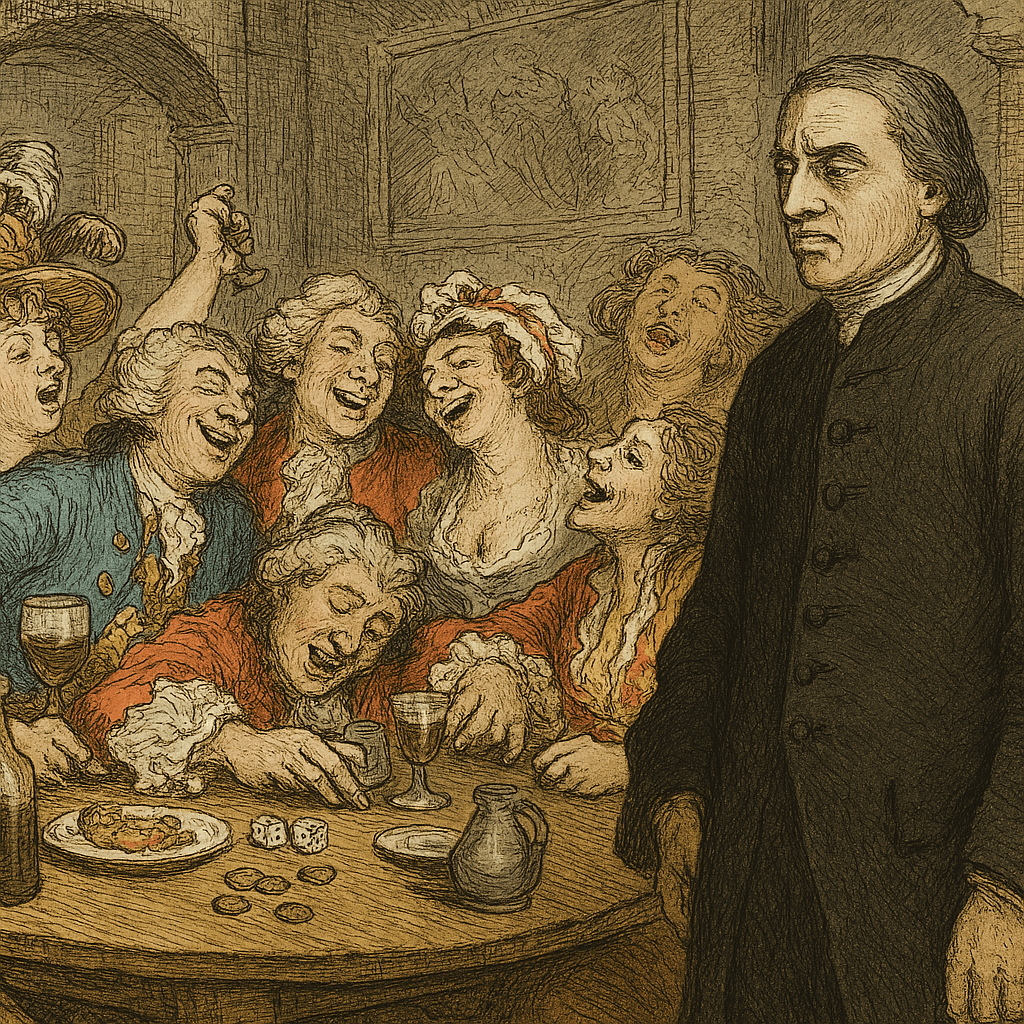
Except it wasn’t. Isn’t. And probably never will be. Because we forgot one thing. The benefits of taxes are long term, and require an immediate short term loss. Think how Dave Watford sees it. Money taken from his pocket to pay for armies, nurses, roads is not there now. Indeed, some of those hospitals, schools and museums may not even have been built yet. But Dave feels that loss of money very personally. Money which he could spend here, and now on, any number of Bright Shiny Things. And it is no good telling him “Dave-most of these Bright Shiny Things, that you covet so desperately, will have no value in the long term. Remember how you longed for an Austin Healey, a record by the Bay City Rollers, Watneys Red Barrel, a bottle of Hirondelle, a quadrophonic stereo? All good in their day, no doubt-but are they quite what they were, have not other things come along to take their places?

But Dave knows things that we do not. Has studied authors that we have never heard of. Like Thorstein Veblen who as long ago as 1899 showed that people buy Bright Shiny Things not because those things are useful, but to signal the wealth, status and sophistication of the buyer. To consume conspicuously, ostentatiously, vainly, and emptily. To doom themselves thereby to domination by rich men, and to conquest by foreign ones. Oh well. We tried to warn.

Veblen, T: The Theory of the Leisure Class: An Economic Study in the Evolution of Institutions (1899).

#economics #taxes # finance #history #veblen #consumer society #production #marketing

Why taxes are good for you #6: The best thing for an Enterprise Economy

As we approach the end of this series, we could not resist two more arguments which have always irritated the “taxes are evil” lobby. If only because we haven’t met one of them who has come up with a convincing counter argument. And the first should be beloved of all: taxes are a superb way to control inflation. As Britain and the US began to gear up for the Second World War the sheer enormity of the spending needed ran the risk of runaway inflation. It was Keynes in How to Pay for the War who saw the answer. Taxes, he argued would not provide the money; they would suck excess cash from everyones’ wallets , thereby keeping prices on a relatively stable trajectory. The US applied a similar philosophy in its own way [1] The economy grew at unprecedented rate, bringing prosperity to all. And there was a an even more significant side effect, which led to prosperity lasting for decades thereafter.

Because in both Britain and the US, vast defence spending contracts generated an equally vast ecology of institutions, government departments, University research labs and the rest. All beavering away at new discoveries, new ideas and shiny technologies. No wonder the years 1945 -1970 are remembered so fondly as times of progress and prosperity . Names like Rolls Royce, Boeing and McDonnell Douglas are just the tiniest iceberg tips. If you want to know more, trying kicking off from the site of the US’ famous famous DARPA[2] a seed bed for an almost fractal cornucopia of new ideas. Even things we use today like GPS, the internet, and advanced semiconductors are all horses from this stable. By contrast, the economic ascendancy of western countries only really declined after the tax and regulation reforms of the Thatcher-Reagan years when Proud Finance finally crushed Humble Industry.

Why does this all work? Because ultimately the State is able to take a risk which private enterprise capital cannot. We don’t blame them: this is not a moral failing, just a question of numbers and distributed risk. Its true that in some countries private banks have a much more supportive relationship with their local industries: but these tend to be lands where such innovations as Regulations and Industrial Planning are celebrated, and not seen as wicked socialist evils. Leave aside the fact that taxes pay for the roads, hospitals and schools which provide entrepreneurs with a ready supply of able workers. Their real benefit is to create a vast pool of opportunity in which enterprise can afford to reach losses and profits in turn, and keep coming back for more. After all-what use is a football club without a League to play in? We will be revisiting these and other thoughts in the last of our series. Hold on to your seats.

[1]https://www.federalreservehistory.org/essays/wwii-and-its-aftermath

[2]https://www.darpa.mil/research

#fiscal #tax #financialisation #keynes #second world war #inflation #research and development #history #economics

George Monbiot on the arc of History

There’s a simple view of history as series of pageants. Kings fight glorious  battles, heroes like Nelson and Genghis Khan kill lots of people,  talented artists like Michaelangelo gaily paint frescoes of the male nude all over the walls of some slightly dodgy cleric’s new palace  It’s interesting,  it’s fun, it excites podgy old men who have never been in a war to dress up in funny costumes. There’s only one problem with it, in fact,

It’s bollocks.

Starting slowly at first,  reading the works of much clever people like Professor Kennedy[2] [3] we realised that History is driven by deep slow moving inexorable forces: things like climate, infant survival rates and  technology. Britain rose because it was the first to develop modern commercial and industrial processes. It fell when other countries started to do those things better. Rome succeeded, for a while ,because it turned the Mediterranean Sea into a single trading zone in an epoch when sail was the most economic means of transport. It fell when plagues and climate change so decimated its population that it could no longer defend the frontiers of that zone. Above all it’s demographics, economics and logistics that determine the fate of nations, not battlefield heroics.

It is in this light that we present this article by George Monbiot of the Guardian. [1] For it attempts to address this single determining factor, both  in our lives-and those of the next four or five generations to come. It doesn’t matter if you love immigration, or hate it. Whether you thought everything would solved  by a rising population or a falling one, (as we used to).  See this more as advice from a wise accountant to a failing family firm “this much is in your coffers, therefore these will be your spending options” In world terms, the arc is very simple. The population will grow a little while longer. Then it will start to fall. Precipitously. All decisions on defence, finance culture, even our own little idées fixées like antibiotics and climate change, shall be made in the light of this simple, ineluctable fact.

We have followed Monbiot on many topics for years; his writings are always stark and cogent. We urge to you look him up and read more. But today, for now, we beg you to read this one, It should lend perspective like nothing else.

[1] https://www.theguardian.com/commentisfree/2025/dec/12/europe-migrants-birth-rates-immigration-countries

  [2]Paul Kennedy, The Rise and Fall of the Great Powers: Economic Change and Military Conflict from 1500 to 2000 (New York: Random House, 1987).

[3] Kyle Harper, The Fate of Rome: Climate, Disease, and the End of an Empire (Princeton: Princeton University Press, 2017).

#history #population #demographics #immigration ##economics

Why taxes are good for you #5: No taxes= no economy

Let’s go back to part one of this series where our old friend Dave Watford is leaning on the bar of the Dog and Duck. Complaining how the government takes all his money in taxes and” if he ditnt ‘av ter pay no (expletive deleted) taxes his wife wouldn’t ‘av ter (expletive deleted) work at all!” It’s a widely held view, assiduously promoted by certain very well funded “think” tanks. In fact it’s the exact opposite of how a real economy works. Or exists at all. All the evidence suggests that without taxation, and the government to enforce it, there could have been no economy.  Humanity would have frozen at the level of sheep grazers and dirt farmers.

It worked something like this Once there was a King somewhere in old Mesopotamia: and he invented something called an Urg, No one wanted it much at first. Until the King said: ”everyone has to pay ten  Urgs a year in taxation. Which I will enforce.” Suddenly the Urg had value because-everyone needed it to pay the taxes. They started to work and trade to earn and swap all the Urgs they needed to pay the King. Who helpfully kept the whole process going by creating more Urgs which he issued  to people in order that they could pay their taxes…….suddenly roads were built, trade networks flickered into life, and huge buildings like ziggurats started going up. “Ah!”. cry the detractors, “all these things were gong on before there was money!” It was Keynes who nailed this fallacy. Money is about much more than coins, and came much earlier, he said. Money is all about the network of obligations, debts and credits, which by their redemption make trade possible. The whole point of the king was to ensure that these contracts were enforced. Coins came much later in the archaeological record, as a convenient  technological advance to the system. . The electronic banking of their day, if you like.[1] [2]

We’ve talked before how kings use taxes to pay for armies and policemen and courts and other things to keep its citizens safe. But below that level, they are even more fundamental to the very existence of an economy. Without them there would be no Dog and Duck bar for Dave to lean on. He would depend on home brewed beer and home spun clothes. And, as it was mainly women who produced all those sorts of things (they do most of the work in agricultural societies), think of this Dave:-she would indeed ‘av ter work, mate. Innit.

[1] The History Of Taxation In Ancient Civilizations: A Comprehensive Overview Of Early Fiscal Systems And Their Impact

[2] The Shocking Origins of Money Hidden in 1,000-Year-Old Artifacts

[3] Kelton, S The Deficit Myth John Murray 2021  see especially pp 25 et seq

#archaeolgy #economics #history #taxes #money #coins

World Government: Great Idea or daft fantasy?

We’ve passed a little time this year discussing the idea of a World Government. In our series which began back in January[1] we looked at the basic idea. Many of the world’s problems, we opined, were transnational: mass migration, climate change and pandemics are only a few. Nation states were no longer big enough to solve these on their own, we said. Or rather, their existence precluded the solutions, in any reasonable time frame, which would permit human survival. We also noted the terrible danger of a World State[2] : that it could quickly engender an tyranny even more terrible than those of Robespierre or Stalin: and this time with no where to escape to at all.

We spent some time discussing the idea both in these pages and with friends and acquaintances. We received some surprising responses. Even some quite hardened nationalists and Europe-bashers thought we had a good idea, but that it was utterly unfeasible in any meaningful time frame. We think that they are probably right. For another trope of these pages has been the depressing tendency of humankind to divide itself in to mutually loathing groups, over issues both large and small. We have looked at the work of thinkers Like Amy Chua , Eric Kaufman and David Ronfeldt{3.4] We looked at studies like the Robbers Cave Experiment [5] which seem to provide the essential psychological underpinning to these writers’ ideas. All of the foregoing made us feel that our sceptics had the point, and that our Big Idea was, if not wrong, then at least hopelessly impracticable.

It is the to the credit of Great Big Ideas that even when wrong, they can point the way to fertile new investigations, if they are catchy enough. No one thinks Henri Pirenne said the last word on Medieval Economics, not Freud on psychiatry. But it was the achievement of these scholars to make their ideas so strong that they challenged further studies, if only because some were so eager to prove them wrong. It is in this spirit that we shall turn to looking at some questions we have raised. Is the Nation State, which has served us so well so far, really constrained ? Can people from different groups and identities not only sink them into a common cause but actually achieve something thereby? These will be some of the the in the months ahead. And while you are waiting, don’t forget: problems like antibiotic resistance, climate change and mass migration will be getting worse.

[1]LSS 1 8 25, 14 1 25 et al

[2] LSS 22 1 25

3 LSS 16 8 20

4 LSS 10 3 21

[5]LSS 1 4 25

#world government #nation state #economics #politics #tribalism #amy chua

Why Taxes are good for you #3: look what happened to China

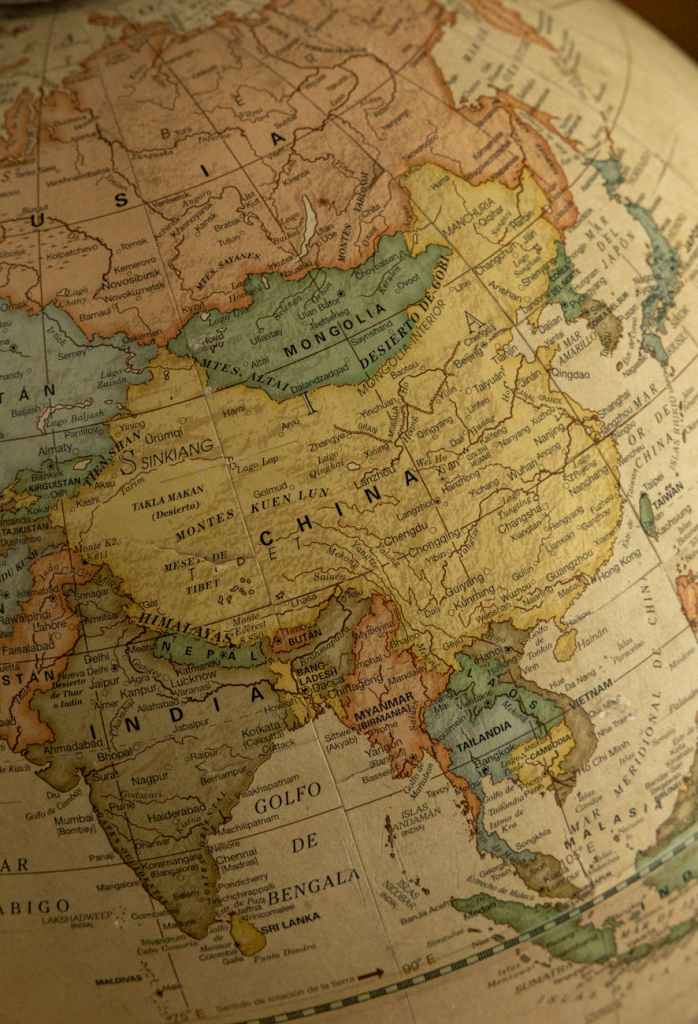
One of the great disadvantages of low taxes is that you end up getting conquered. As China learned at terrible cost. In the eighteenth century Qing China had been one of the greatest states in the world:, rich and populous, with booming trade, advanced techniques in agriculture, and envied craftsmanship  Taxes were low, less than 5% of GDP it is estimated. So was military spending. And there was the problem. For nations in the west, like Britain for example, ran at much higher tax burdens, perhaps 15-20% GDP. With the result that they could pay for vast armies and fleets which captured all the world’s sea lanes and trade routes. It’s true that the most advanced western thinkers were classic Liberals like Ricardo and John Stuart Mill, who loudly proclaimed the virtues of low taxes and a minimal state. It was just that no one serious paid any attention to them. The result that these fleets and armies were eventually flung against China. The resulting Opium Wars were not only one of the most terrible crimes in History, they disgraced and destabilised China until 1949.[1] [2]

It was a lesson the British themselves had to relearn after the rise of Hitler forced them into frantic re-armament after 1937. After nearly two decades of orthodox economics like the Gold Standard and low taxes, suddenly the latter began to rise. Fast. All those Spitfires and cruisers and radar had to come from somewhere. So in 1938 the standard rate of income tax was raised to 27.5% (5s 6d in the pound) to help fund rearmament.   A 41% surtax applied to very high incomes (over £50,000 annually), targeting the wealthiest. Other hated impositions like death duties and PAYE *were imposed. And -despite what it says in the Daily Mail-it worked. Not only was just enough done to survive the perilous summer of 1940, by 1944 Britain was the most fully mobilised of all the wartime economies. Pride indeed.

Yet there is a little irony at work here . It is our lived experience that those who most loudly proclaim the greatest patriotism are also those who would avoid paying taxes wherever and when ever possible. It is their right to say such things. But ours also to at least doubt the sincerity of a patriotism which will not pay to uphold that which it professes to adore.

*Pay as You Earn

[1] Thomas Piketty Capital and Ideology

[2] David Ricardo Principles of Political Economy and Taxation

#taxation #economics #liberalism #free markets #imperialism #opium wars #china #britain

Making an end to Cervical Cancer, making a start on an end to Alzheimers- two stories of real hope

At a time when ignorance and anger are gleefully presenting themselves as the new norms, it’s heartening to see that some people are still active on our side. And achieving real, substantial progress. That’s why we’re proud to bring you two stories which show what educated minds, still employing the twin discipline of fact and reason, have achieved lately.

Repurposing old medicines. Regular readers will will recall our enthusiasm for lateral thinking, using old things which were there all along to do unexpected new ones. So Sharon Wooller of the Mail has a triple whammy for us this week.[1] After screening 80 commonly used drugs or vaccines , ingenious scientists at the University of Exeter selected three that might have a bearing on the terrible scourge of Alzheimers disease. They are: Viagra, which stops those pesky tau plaques from building up. Riluzole which may actually bring them down. And the shingles vaccine Zostavax which may also affect the immune system. Now we know the brain barrier frontier is pretty much down (LSS passim) this has to be a powerful runner, gentle readers. But best of of all is why these scientists set out to do this. To quote Sharon. in a nutshell:

Making drugs from scratch can take ten to 15 years and cost billions of pounds, with no guarantee they will work.

If you cant afford new ones, why not try a few old ones? Quod erat demonstrandum

Cervical success People can co-operate, even across national lines, when there is “cause sufficient”. One of these was cervical cancer, which not only blighted and destroyed lives, but effectively deprived the world of much of the better half of its workforce. Two releases today from GAVI and the WHO evince the remarkable strides in the vaccination programmes which have done do much to eliminate this disease. Hats off not just to the scientists, but also to the intrepid field workers who have combed the wildest, remotest corners of the earth, employing the most recondite means, to save lives and afford a brighter future to millions [2] [3]

When we read stories like these we know we are not alone. Our side is still out there. And unless they crush all universities and research institutes everywhere, we shall be back one day. For keeps.

[1]https://www.dailymail.co.uk/health/article-15298699/Viagra-Alzheimers-drugs-hope.html

[2] https://www.gavi.org/news/media-room/cervical-cancer-vaccines-save-over-1-million-lives-lower-income-countries

[3]https://www.who.int/news/item/17-11-2025-world-marks-cervical-cancer-elimination-day-as-countries-accelerate-action

#vaccine #drug #medicine #alzheimers #cervical cancer #women #health

Why taxes are good for you: part #1 of a new series

Next to the arrival of immigrant persons, nothing so exercises the anger of our old friend Dave Watford and his mates at the Dog and Duck as the imposition of taxes. All taxes. Any taxes. Death duties, sales taxes, income taxes……the mere mention of the “t ” word is enough to unleash paroxysms of indignant wrath. As we have heard it so many times we think we can give a fair summary of their case, which goes like this

I’ll tell you what’s wrong with this country, mate —taxes. I work hard, and they just take it. For what? So some bloke in a suit can sit in an office pushing paper? I don’t see any of it. Roads are still full of ‘oles, the(expletive deleted) NHS is on life suppawt, and don’t get me started on foreign aid. They say it pays for schools an ‘ospitals—well I haven’t been in school for 40 years and I haven’t seen a(expletive deleted) doctor since ’98. Why should I pay for stuff I don’t use? And all these entrepreneurs, they’re the ones wots creating jobs. Government just gets in the way. If they cut taxes, we’d all be better off. More money in our pockets, less wasted on(expletive deleted) bureaucracy.

Dave, despite the obvious logical fallacies in your arguments. we respect you! We know you and your kind work hard and on the whole put in more than you take out. We know how your lives are centred on family and community, and that the world can seem a harsh, bewildering place. But can we, dare we, just take a short time to offer the counter-intuitive case? Just because every argument by its nature always carries a counter point.

For we believe that taxes and their imposition do more than pay for armies, police and courts (which they do). We believe they do more than generate economic growth (and we will show that they do indeed) That they create more stable societies-and we have strong evidence for that. But what we really believe is that the idea of taxes lies at the very beginnings of Civilisation, and are what made it possible to rise above the level of stone age farmers and grangers. It’s that profound. In the next few weeks we shall be running a series of blogs which explore these themes. If only for the sake of balance. In the meantime compare Finland (top tax rate 57.65%, rigidly enforced) with Chad (top tax rate 30%, barely enforced), and answer these questions:

1 Which has GDP per capita of a $53 189 and b which $1420?

2 which of the two boasts a universal healthcare, free education, strong infrastructure, low corruption. and which b Fragile institutions, limited public services, poor infrastructure, high corruption.?

3 Which of the two do you think has Higher life expectancy, lower infant mortality, combined with top global rankings in happiness and education?

ANSWERS TO QUIZ

1 a Finland b Chad

2 a Finland b Chad

3 Finland

#economics #tax #infrastructure #growth #GDP wealth creation

Depressing Diptych for November #2:Falling vaccine rates

As the sun sets on the Americas, politically and economically, a new and insidious trend is only going to add to their problems. Read this from the ineffable Nature Briefing: Canada loses measles elimination status

Canada no longer holds measles elimination status after experiencing a cross-country outbreak that has persisted for more than 12 months. By default, this means that the entire Americas region has also lost its status. Infections took hold in undervaccinated Mennonite communities where the COVID-19 pandemic eroded already-shaky trust in the healthcare system — a shared source of recent measles outbreaks in the United States. The number of new cases is going down, but the loss is “a giant wake-up call that we have gaps in our public health infrastructure”, says physician-scientist Isaac Bogoch.CBC | 6 min read

If only it were just them! But it’s now a world-wide trend. According to a recent report by the WHO,[1] Measles cases rose to 10.3 million in 2023, a 20% increase from 2022, with outbreaks intensifying into 2024 and 2025. No less than 138 countries reported measles cases in the past year, with 61 facing large or disruptive outbreaks—the highest since 2019. Meningitis and diphtheria (horrid afflictions) are also re-emerging, particularly in regions with strained health systems and declining immunization coverage. And the causes? Funding cuts and humanitarian crises for one thing Access barriers, especially in marginalized communities, for another  But the prime one, and most baffling to us, is our old bugbear: Misinformation and vaccine hesitancy, A fact well illustrated by a similar  study from Europe which showed that vaccine hesitancy among adolescents and parents ranges from 12% to over 30%. We invite you to research more, gentle readers.

And so combining with the previous part of our Dreary Depressing Diptych of dispatches (that’s enough D’s-ed) we get a truly dismal picture of this species which has the barefaced cheek to call itself “sapiens.” If an tiger came to you an announced it was was giving up its stripes, you would counsel “don’t do it-if you throw away your principle evolutionary advantage, you will get no dinner!” Similarly if a spider monkey were to forego the use of its tail, or a real spider its web. But humanity seems determined to forego the use of its principal evolutionary advantage, its brain. Palaeontology will record what comes next.

[1]https://www.who.int/news/item/24-04-2025-increases-in-vaccine-preventable-disease-outbreaks-threaten-years-of-progress–warn-who–unicef–gavi

#vaccine #measles #diptheria #medicine #health #childhood disease

Fear, despair and loathing as the last drops of 20th Century Politics drain away

If ever there was a journalist whom we have learned to take seriously, it is John Harris of the Guardian. He it was, along with film-maker John Domokos , who first went round the people in the heartlands of Britain in the 2010s. And thereby revealed the depths of bewilderment, rage and despair that now lurk ubiquitously just below the surface of our national life. “Anywhere but Westminster” they called their work, revealing the deep cleavage between the formal politics of governance and the real feelings of most voters. His article which we riff on for you today, gentle readers is a neuralgically painful contrast between the increasingly empty rituals of the nation’s leaders and an ever more bloody-minded and fractious populace. [1]

Being a thoughtful sort of chap, Harris goes deeper. suggesting that this explains the sudden rise in the fortunes of formerly small parties such as the Greens, Reform, Plaid Cymru and the others. And the agonising decline in the fortunes of those two stalwarts of 20th Century British politics, the Conservative and Labour Parties. He cites the obvious causes- a stagnated economy, changing identities and “the failures of the various administrations that have run the UK since 2008” And this:

The essential point was made a few days before Reeves’s speech by Luke Tryl, the UK director of the thinktank and research organisation More In Common, and someone with an incisive understanding of where we have arrived. “I still don’t think enough people realise how much traditional mainstream politics is in the last chance saloon, in no small part because it can’t be trusted to deliver what it promises,” he said on X. 

Why has every single administration failed to deliver the things people want? Governments in the last century used to deliver quite acceptable levels of health, defence, housing and so on.. Here we move beyond Harris (we never put words in others’ mouths) to our own speculations, touched on in our blog Pity poor Rachel Reeves, LSS 23 10 25, and earlier ones in this vein. Remember how we said every nation state, even the richest, are plagued with such debts and poor economies that they no longer have any room to seriously mitigate the lives of their citizens? That the combined weight of investment capital, expressing its power in things like bond and currency markets, could stymie the efforts of any finance minister? Could it therefore be that the Nation State, which has hitherto served us so successfully, is no longer an effective vehicle to manage the the lives of its citizens? It is a terrifying conjecture: for we have no idea of what may replace it. But one thing we do remember: read everything you can lay your hands on about the collapse of Yugoslavia, and what followed.

[1] https://www.theguardian.com/commentisfree/2025/nov/09/21st-century-politics-labour-tories-turbulence-green-party-reform

#nation #country #politics #governance #finance #currency market #bond market #populism