Conversation Article gets to the heart of why people get things wrong

You know a piece of writing is good when it explains many things, not just the ostensible subject the writer has before them. Such is the case with Edward White of the prestigious Kingston University in the UK whose article in the Conversation forms the basis for today’s blog [1] Ostensibly, the subject is Evolution. Now, we’ve always liked a bit of Evolution here. But only as abit of light relief, following it the way people follow the fortunes of Leicester City FC or the doings of celebrities.

Not so in the United states of America where the subject is of neuralgic importance as Edward points out. Huge numbers of the citizens of that country still hold that God created Man exactly according to the schemata laid out the in the early chapters of Genesis in the Hebrew Bible. And he has a barrage of statistics to explain how and why. But the point for us, gentle readers is why these people think as they do. For it explains a much wider truth, which is: no species as so supremely adapted to self delusion and to believing the lies, deceits and threats of charlatans as is Homo sapiens. And this is true in all fields-politics, religion, economics, even science and medicine(remember the MMR controversy?) The fault according to Edward is motivated Reasoning, where you start with a conclusion and work back to justify it. This ensures a high chance of error, whatever cognitive powers you may possess, as astute readers will have spotted. Why do people do this? Get this killer quote from Ed:

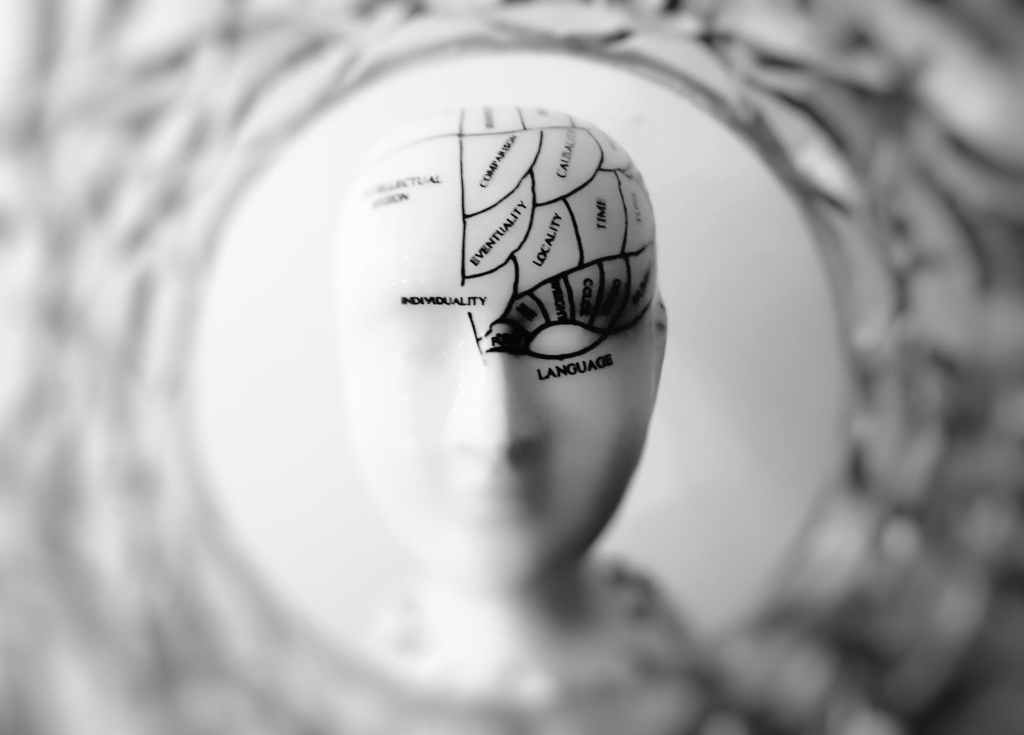
Brain imaging studies show that people with fundamentalist beliefs seem to have reduced activity in the dorsolateral prefrontal cortex — the brain region responsible for cognitive flexibility and analytical thinking. When this area is damaged or less active, people become more prone to accepting claims without sufficient evidence and show increased resistance to changing their beliefs when presented with contradictory information. Studies of brain-injured patients show damage to prefrontal networks that normally help us question information may lead to increased fundamentalist beliefs and reduced scepticism.

As Edward concludes: for most people learning is about who gets to define truth, and own the power that flows from it thereby

And our conclusion? We seem to be drilling down to the bedrock at last and knowing why people make and hold errors, From here at last the Progressive Community may find a way forward

[1]https://theconversation.com/why-many-americans-still-think-darwin-was-wrong-yet-the-british-dont-260709?utm_medium=email&utm_campaign=Latest%20from%20The%20Conversa

Is Donald Trump a Socialist? #2: some readers responses

A few months ago(LSS 7 4 25) we published a blog called Is Donald Trump a Socialist? It was one of those end-of -the -day tired pieces which we expected to be soon forgotten, by ourselves and everybody else. Instead it turned out to be one of the most read, and remarked-upon pieces we have put out in months. Sadly, much more so than our ones on antibiotic resistance ones which was what this blog is supposed to be all about.

The essence of the piece boiled down to this. Capitalists, Liberals, Neo-liberals, call them what you will, believe that individual liberty is the only true basis of a healthy society and a prosperous economy. People making their own choices on how to spend their money, whom to hire and whom to fire, where to live, etc will allow the optimum possible outcome in the supply of Capital, Goods and Labour. The essence of socialist belief is that people cannot be trusted to make those decisions and that the state must often step in to ensure the best possible social and economic outcomes. In that sense, Mr Trump’s attempts to control the supply of Labour by immigration controls, and of Goods by tariff controls are socialist policies, not capitalist ones. The responses have been coming ever since. Here are a few which are broadly representative . (We protect the respondents anonymity for all sorts of reasons)

MC from Edinburgh pointed out that if a Communist like Mr Xi could run a capitalist economy in China, why shouldn’t a Capitalist like Trump run a socialist one in America? (intriguing!)

DG from Texas said that Mr Trump’s policies were not Socialist, they we Nationalist (that doesn’t make them Capitalist, we thought)

JS from Massachusetts said he had studied economics at Princeton. And that essentially we had “placed Trump on a New Deal continuum, with fewer unions and more nationalisation” (We are still struggling to understand this)

V. from Mumbai wondered “if all leaders become Socialist when it comes to steel and swing states”

As we write an actual self-proclaimed Socialist called Zohran Mamdami is running for Mayor of New York, that Holy Ground Zero of Capitalism. If we are right, he and Mr Trump may find more in common than they realise. Maybe it’s all about what you do, not what you call yourself, that counts.

But we feel exceedingly grateful for your reactions. Keep ’em coming.

#Donald Trump #Xi Jinping #Capitalist #communist #socialist #liberal #neo liberal #free market #tariff #immigration control

No that last blog does not make us a bunch of Communists

Every so often one of our blogs engenders some intriguing feedback . Alongside the usual welcome comments with all their nods and frowns, we occasionally get one that is a little-uh- longer, yet expresses its views with passionate clarity, to push euphemism to its limits. Such was the case today, when a reader alleged that our criticism of fossil fuel and tobacco companies was a sure sign that we were under the influence of Communists, who aim to tear down the free market system and replace it with a “nightmare of bureaucratic state socialism” of the sort found in places like Venezuela and North Korea. In particular the reader observed:

What you’ve got to remember is that markets not governments are best at allocating resources. Intervening in fossil fuel markets is crypto socialism- it will only distort price signals, stifle innovation and lead to unintended consequences”

When we asked if this was true for immigration control as well, they replied

“Absolutely! Free markets mean the free movement of labour. Anything else is protectionism in disguise.

So, where does that leave us at LSS? Having worked for many years in the Government Employ and thereby known the ways of Civil Servants, we can more and more share the view that Free Markets really do work better. No, it’s the “unintended consequences” that pulls us up. Free markets can have those too. Totally unregulated sales of tobacco produced an epidemic of cancer. We suspect that over enthusiastic marketing of certain foods and drinks will one day produce an epidemic of obesity. As for gushing out vast quantities of poisonous mineral oil and burning it with heedless abandon-well we wish people had been better informed before this was started. To call for better product information, and to ask that consequences of free markets are cleaned up, or at least controlled, does not make one a Communist. Or anything like it.

Thanks for the feedback, and we appreciate that in view of this respondent’s employment, they must remain anonymous

#climate change #free markets # global warming #immigration #communism #socialism #capitalism #hayek #marx

Simon Kuper on how to Make the Transition to Intelligence and Wisdom

One of Saturday morning’s great pleasures, an hour or so before Spanish class, is to settle down in Costa with a coffee and a hard copy of the Financial Times. And one of the best writers in that journal is Simon Kuper. He’s clear, he’s brief, he deals in the currency of short sentences and defined concepts. He’s also a polymath, covering subjects as diverse as politics, urban planning and football(he’s even done a very workmanlike guide to the affairs of Barcelona FC . [1] In fact, he’s exactly the sort of writer we ought to showcase here, because he believes in our core LSS values of evidence, reason, and reserved judgement.

How appropriate therefore that his last column was called Seven Intellectual Habits of the best thinkers., for there can be no better short guide. [2] The problem is that access is behind a paywall. As LSS is such an important institution, and our readers so avid for wisdom, we rang the Editor of the Financial Times a to demand that this be lifted as a Special Case., and that he/she/ they might like to buy us lunch to discuss the matter further. The young person on the switchboard thanked us very much and promised they would call us back. So far they have not done so(that was three days ago) but doubtless there were other callers. So, while we are waiting, we thought that we could offer you a distilled reproduction of Simon’s thoughts:

1 Read Books ” Their complexity is a check on pure ideology” People who simplify the world are the ones who fall for conspiracy theories or the offers of charlatans.

2 Don’t use screens much Apparently, biochemist Jennifer Doudna, who invented CRISPR technology gets her best insights when she’s out weeding her tomato plants. Obviously you have to use screens a bit, or you couldn’t read this! But we get Simon’s drift: a little screen time is a lot.

3 Do your own work, not the world’s The same Doudna got a gig at Genentech, leading their research. She lasted two months before hightailing it back to Berkeley where the true intellectual freedom led her to the Nobel Prize. We agree: people who spend all their time on office politics actually accomplish very little that is either interesting or of value.

4 Be multidisciplinary Kuper cites the examples of Hayek, Godel, Van Neumann and others who all studied one thing, trained in another and did their best work in a third. Daniel Kahneman is cited as another multi-disciplinarian polymath of formidable intellectual power. Rather worryingly, our AI system has set his book as homework for us. Where’ are John and Sarah Connor when you really need them?

5 Be an empiricist who values ideas Kuper cites the case of Isaiah Berlin and his marvellous work the Hedgehog and the Fox , a masterpiece of political philosophy. Incidentally Winston Churchill got him mixed up with Irving Berlin and invited the wrong one to dinner.”My British Buddy” as Berlin himself would later remark in song.

6 Always assume you might be wrong Yep: in this country we are still trying to repair the effects of the blissful certainties of Brexit. You will doubtless have examples from your own lands

7 Keep learning from everyone “Only mediocrities boast as adults about where they went to University at 18.They imagine that intelligence is innate and static. In fact people become more or less intelligent through life depending on how hard they think. The best thinkers are always learning from others, no matter how young or low status” We quote Kuper rather fully here as the first part seems one of the most admirable and accurate summaries of the sorts of people one met on a daily basis during long decades in the Scientific Civil Service. Now there’s intelligence indeed.

[1]https://www.worldofbooks.com/en-gb/products/barca-book-simon-kuper-9781780725543?sku=NGR9781780725543&msclkid=6c7699156a7f1cc4c9f2f1238

[2]https://www.ft.com/content/c42cb640-a03c-441b-868f-d1a92d78bcb7

#wisdom #intelligence #FC Barcelona #isaiah berlin #daniel kahneman #thinking #financial times #simon kuper

Is Keir Starmer becoming a Socialist?

Because he’s certainly acting like one. Forget the labels that people apply to each other, and to themselves. They’re mostly rubbish anyway. Look at someone’s actions. Today, Sir Keir (great name, by the way) has announced that his government has announced major new controls on the flow of immigration into the United Kingdom.[1] In support of this action, he cites the social problems caused by uncontrolled immigration and the harm it does to the social fabric. In doing so he makes the classic socialist case for controlling the laws of supply and demand. The same argument that socialists of all kinds from the most milk-and-water Social Democrats way out to the crazed ravings of Maoists and Trots.

The Capitalist argument is quite different. The law of supply and demand is the best approximation we have to the way people live in groups. Any restriction of free movement of anything such as taxes, business regulation or migration controls is contrary to nature, and must therefore lead to long term harm. After all, what is more socialist than civil servants telling employers whom they may, and whom they may not, hire to do a job? The socialist riposte is clear: the State should ban your desire to hire foreign workers if by doing so you harm the well being of members of our community here.

No, we are not going to say which one we agree with. The capitalists had their time to run the world, particularly after 1991. Their dream of universal prosperity seemed to be a true busted flush after 2008. Since then, the wind has been blowing in a socialist, that is to say, regulated direction. Whether it is to be socialism of the National or International variety remains to be seen

[1]https://www.theguardian.com/politics/live/2025/may/12/immigration-keir-starmer-labour-reform-visa-foreign-workers-uk-politics-latest-live-news

#socialism #capitalism #sir Keir starmer #immigration #economics #politics

Evolution is happening right now in South Korea

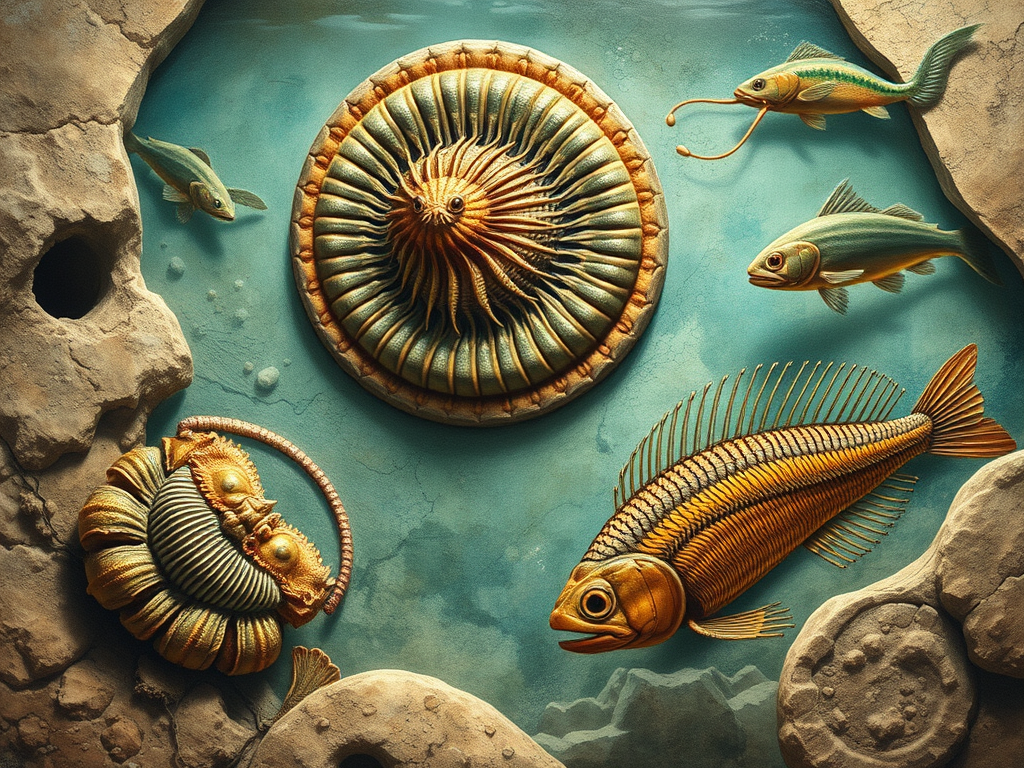
We tend to think of Evolution as something happening over millions of years. First, all those trilobites and early fish swimming in the warm Devonian seas. Then early newts and scorpions slithering out onto land, followed by dinosaurs and pterosaurs dodging the cycads; and finally those desperate battles between humans and mammoths in the frozen wastes of the tundra. Millions of years-billions if you look at things like bacteria and red algae.

But evolution isn’t like that. The change of one species into another is a by product some something much smaller, local and more rapid. It is about the environment selecting a gene here, now, for one small purpose. Read this from Nature Briefing, No Diver is an island

A tradition of diving on the South Korean island of Jeju might have influenced the genomes of all of the islanders. The Haenyeo — meaning ‘women of the sea’ — have been cold-water diving year-round and without any breathing apparatus for centuries. A genetic analysis revealed that gene variants associated with reduced blood pressure, cold water tolerance and red blood cell count — which is related to oxygen-carrying capacity — are more common in people from Jeju, regardless of whether they dive themselves, than in other South Koreans.CNN | 7 min read
Reference: Cell Reports paper

In other words, good old fashioned Darwin-Mendel natural selection of the central DNA of the organism. Because one gene variant conveys a selective advantage which the other allele doesn’t. Textbook case: on single genetic change will transform a bacterium into an antibiotic-resistant organism, with profound consequences millions. Of course, if you have enough of these over time, you might eventually transform a tabby into a tiger, or a dinosaur into a bird. But those are second order consequences.Recent discoveries have made our understanding a little more complicated. We have to factor in epigenetics (the great Nessa Carey is good guide [1] ) and even the possibility of some environmental feedback into the genome, to which we have alluded here sometimes(LSS passim)

Every so often we come across some fool, usually a pub bore or right wing columnist, who loudly declaims” I don’t believe in evolution-why would a fish want to transform itself into a salamander?” Here is your answer. The majestic old Darwinian model still functions, Right at the heart of one of the most modern countries in the world.[2]

[1]https://en.wikipedia.org/wiki/Nessa_Carey

[2]https://en.wikipedia.org/wiki/Haenyeo

#natural selection #evolution #epigenetics #darwin #mendel #dna #gene #south korea

Cortical Labs: the first working Synthetic Biological Intelligence

Far back in the last century, Arthur C Clarke drew attention to a slow but steady trend in human evolution: the gradual merging of the human body with artificial technology. Like all great things it started small, so small as to be almost unremarked. Firstly were primitive artificial legs and hands, all that could be done with the technology of the time. By the time Clarke made his prediction in the novel 2001; a Space Odyssey, the scientists of the day were experimenting with artificial hearts, lungs and kidneys. Fast forward to our own age. Not only have things like prosthetic limbs and eyes greatly improved. We are starting, tentatively, to modify the genes of living cells with early techniques like CRISPR Cas-9 (LSS passim). Elsewhere, the attempts to engineer interfaces between human tissue and silicon chips seem to be showing real possibilities of success.

But we think that the efforts of Cortical Labs to create Synthetic Biological Intelligence(SBI) takes the trend to a whole new level. [1] Their CL1 computer uses laboratory grown neurons interfacing with silicon chips to create an entity that defies old -style classifications of what is biology and what is technology. Rather than offer you 18 dreary paragraphs, we will urge you to visit their website. But if we cherry-picked that: The CL 1 far more energy-efficient than a conventional computer; that it is ideal for disease modelling. drug disorder research; that it dispenses with much of the need for animal experiments; that above all it will be available for shipment at a cost of $35000, you would see why we have chosen this item for your entertainment today. Because we honestly thought that this kind of thing was decades away. Forgive us: but we have no financial, professional, personal or any other kind of relationship with this company. We never endorse; but when we report, we mean it.

And we do indeed report developments which seem to be genuinely game changing, and truly the work of the most intelligent people at the very limits of human accomplishment. We believe that this is one of them. Which is where our doubts creep in. For Arthur C Clarke also pointed out how the very act of adopting technology (stone tools at the beginning) transformed the biology of creatures that used it. So much so that they changed into new species, quite unrecognisable to their ancestors. And absolutely dependent on the new technologies to survive, with no possibility of de-inventing them . We are not the first to suggest that some engineered organism will replace us. But we do think that possibility is now very real and very near.

thanks to G Herbert

[1]https://corticallabs.com/cl1.html

#synthetic biological intelligence #cortical labs #artificial intelligence #computers #biology #evolution

Yes, the brain can erase unpleasant memories-but what does that say about who we are?

An old friend once told us about his experiences as a child evacuee during the Second World War. Or rather, he didn’t: because those memories did not exist. Like those of millions of others, his experiences were agonisingly traumatic. And he had blotted them out altogether. News of how the brain achieves this erasure of painful memories comes in this story from the inimitable Nature Briefing called Dopamine hit overwrites memories of fear

In mice, dopamine acts on neurons in a brain region called the basolateral amygdala (BLA) to kick-start fear extinction — the overwriting of fearful memories when danger has passed. Researchers found that this dopamine is produced in a separate part of the brain called the ventral tegmental area. Humans have “the same evolutionarily conserved parts of the brain that regulate these fear responses” as mice, says neuroscientist Larry Zweifel, which hints that neurons in the BLA could be a target for drugs to help to treat fear-related conditions such as post traumatic stress disorder.Nature | 4 min read
Reference: 
Proceedings of the National Academy of Sciences paper

Normally we would riff enthusiastically on the hopes of a cure for PTSD, or admire the ingenuity of the scientists who have made these discoveries. But today, if you’ll forgive us, we want to go in a different direction.

For if unconscious and automatic healing processes of the brain can so affect our memories, what does that say about our consciousness? Are you really in charge of the way you remember, feel, and think? At first glance this may seem to be the abstract playground of a lot of philosophers, psychologists and neuroscientists. The trouble for us is that many religious and economic systems depend on the assumption that each of us is an autonomous individual. Who freely chooses between good and evil or cheap and expensive. And these doctrines affect the real lives of millions. As Keynes observed, every politician who prides himself on being an entirely pragmatic individual is always the intellectual slave of some long dead economist. The writers of many religious books are much older still: but millions still kill and die for their words. We freely admit to being utterly baffled by all this, and are unlikely to return to anything quite so intricate again any time soon. But next time we hear anyone declaiming confidently on things like politics or religion, we will wonder deeply about what is happening in their mind,

As promised above we will endeavour to keep away from all this philosophical stuff. But if you want to know more, the works of Timothy O’Connor, Ben G Yacobi, Benjamin Libet, Daniel Dennet and Sigmund Freud provide useful starting points.

#free will #neurology #unconscious #conscious mind #economics #religion #politics #philosophy

When a culture turns away from science, its decline begins

Fans of the old Jacob Bronowski TV series The Ascent of Man will recall a key episode. In the early seventeenth century the Catholic Church decided to persecute aspiring scientist Galileo Galilei. In 1633 the Inquisition even put him on trial for having discovered that the Earth goes round the Sun. Using the threat of torture, they forced him to deny this simple reality. Bronowski’s take on all this was to assert that this was the key step which sent the Catholic part of Europe (hitherto the dominant bit) into decline. Scientists and scholars fled to the more tolerant environment of Protestant Europe, whose economies benefitted accordingly. The few Catholic thinkers of note remaining (Descartes and Pascal spring to mind) But they were like the last rays of a setting sun, before darkness and superstition suffocated all.

A one off? Special pleading? History suggests otherwise. From about the 8th Century to the 13th of the Christian Calendar (apologies to Islamic readers, but let it do for now) the Islamic world was dominant not only in trade and war, it was supreme in all the skills of learning and science. Thinkers such as Al Khwarizmi, Ibn Sina (known as Avicenna in western lands) and Al Birani made contributions to human learning which will last forever. Yet, starting about the middle of the twelfth century CE there was a slow but steady trend away from reason and science towards deeper religious orthodoxy as Hilel Ofek explains in his essay Why the Arab World rejected Science [1] Slowly the northern nations began to close the gap and eventually move ahead. Nearer our own time Corelli Barnett showed how Britains decline began as abstract studies of things like Latin and Greek came to dominate the Universities, while subjects like science and engineering were accorded second rate status. [2] [3] The values of a well entrenched landed aristocracy won out over the more plebian instincts of the middle class . With long term disastrous consequences for Britain’s place in the world

And the relevance of all this? Across the western world, there is now a strong, growing and incredibly well-funded movement against science and objective evidence. [4]It’s felt in policy debates on economic questions, university funding, on vaccines, and above all in the swirling brawls around climate science and global warming. The temptation is to put all this down to the ebbs and flows of political debate. But that is to miss the point. Questions of science are not political. They are not open to understanding by the mental tools developed for political and religious debate. A nation, a whole culture is being continually weighed in the balance, and can fall at any time. Is this now happening in the so called “advanced ” western nations.

[1]https://www.thenewatlantis.com/publications/why-the-arabic-world-turned-away-from-science

[2]Corelli Barnett The Collapse of British Power 1972

[3[ Corelli Barnett The Audit of War 1986

[4]https://www.theguardian.com/commentisfree/2025/mar/20/kemi-badenoch-net-zero-brexit-right-clima

#science #global warming #climate change #reason #history #christianity #islaam #british empire

Weekly Round Up: Eternal Life, China takes over, Russian Problems and a dialogue of the deaf. What a lot to think about!

We couldn’t help noticing these thought provoking tropes!

The Brain that Lived for Ever According to The Guardian, eternal life may be just around the corner. Dr Ariel Zeleznikow-Johnson is hoping to extract our brains and preserve them, in order that future generations will revive them and help us to live forever. Assuming that is, that they can bothered-who needs a clapped-out 21st century brain when you have quantum computing wired into your own? Perhaps John Agar and the Brain from Planet Arous were on to something after all. https://www.theguardian.com/science/2024/dec/01/with-brain-preservation-nobody-has-to-die-meet-the-neuroscientist-who-believes-life-could-be-eternal

If America Stumbles, will China take over? If America really does pull out of the Climate change agreements, any claim to moral leadership and soft power will have been vitiated. Forever. It will give the Peoples Republic of China the right to step up to the plate and lead the world to safety. Who can blame the rest of us if we follow? Here’s Justin Rowlatt for the BBC https://www.bbc.co.uk/news/articles/c3rx2drd8x8o

Russia’s best week turns sour Election of Donald Trump, more advances on the battlefield, free nations losing heart: what’s not to like for Russia’s Vladimir Putin? Except that his Syrian outpost is cracking and his economy is slowly going down the tubes, as this article from The Conversation makes clear. Like Britain in the 1940s he has sold out hope of future growth for the sake of victory here and now. In effect, his empire is really just a satellite of China. But maybe that’s a good thing for the rest of us-see above . https://theconversation.com/russian-rouble-collapse-exposes-deep-problems-in-the-countrys-economy-244869?utm_medium=email&utm_campaign=Latest%20from%20The%20Conversati

Why don’t they listen to scientists? A running theme of this blog is that the world never seems to notice the work and methods of science(except when it needs vaccines in a hurry) There’s no easy answer, if the popular mind deals in emotion and stories, and the scientific one in reason and evidence. Nature Briefings offers this thoughtful discourse Why we’re not solving more with Science

A Nature global survey finds that most specialists are unhappy with systems that provide science advice to policymakers. Eighty per cent said their country’s science-advice system was either poor or patchy, and 70% said that governments are not routinely using such advice. Nature’s survey — which took place before the US election in November — together with more than 20 interviews, reveals where some of the biggest obstacles to science advice lie. Eighty per cent of respondents thought policymakers lack sufficient understanding of science — but 73% said that researchers don’t understand how policy works. “It’s a constant tension between the scientifically illiterate and the politically clueless,” says policy specialist Paul Dufour.Nature | 15 min read

Well that’s it for this week. We don’t profess any religion here, but we are fans of 17th century English, brought up on the resonances of Shakespeare and Milton and the King James Bible. Which is why we have chosen this cadent little homily from their version of Proverbs 12 3 to send you away

Happy is the man that findeth wisdom and the man that getteth understanding/ for the merchandise of it is better than the merchandise of silver and the gain thereof than fine gold/she is more precious than rubies and the the things thou canst desire are not to be compared unto her

(it applies to women, too)

#china #america #climate change #neurology #the brain from planet arous #russia #vladimir putin #reason #emotion #evidence