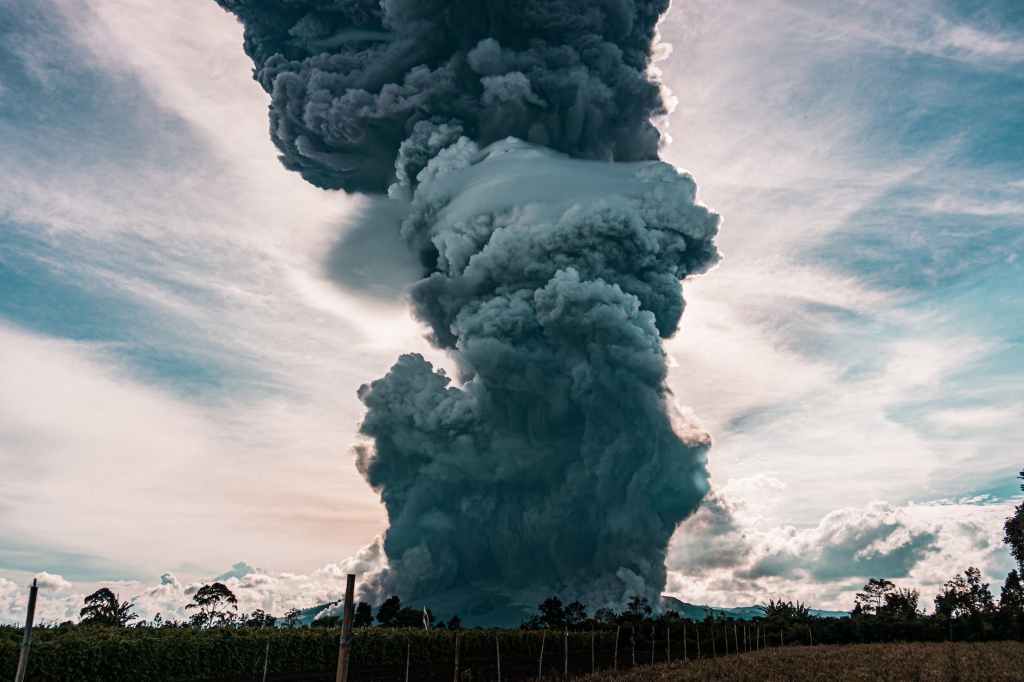
Rookwood Operations: Clearing phosphates AND capturing carbon

Today we have a good news story, brought to us by the ineffable Robin McKie of the Guardian, which brings genuine hope, Because it solves two problems for the price of one.[1]

To begin at the beginning. In the last fifteen years or so, England’s rivers have started to fill with huge, choking blooms of algae, which seize all the oxygen from the water, thus killing everything else before, dying back themselves . To leave a poisonous foul-smelling sewer , like the ones you used to find in old towns in the Industrial revolution. The cause? High levels of phosphates on agricultural lands, which runs off into the waterways, producing sudden spurts in the aforementioned algae-and down we go to death, for the ecosystem that is. Now, it could be argued that without high phosphate levels we could not feed our population ( feed or fatten?-ed) So how to square the circle?

The answer is to trap the run-off phosphates and return them to the land. And a small company called Rookwood Operations[2] is doing just that, down in the leafy county of Somerset. Their new Phosphate Removal Material just sits in the water, soaking up the phosphates until it’s full. Whereupon it is returned to the land ready for the farmers to exploit again. And get this:

For every metric ton of PRM produced, carbon is sequestered, locking CO2 for up to 1000 years.
PRM is made from completely natural circular sourced sustainable components

How’s that for two in one? There’s so much to like here for LSS readers. There’s even a feminist angle, as one of the company founders was up for the prestigious UK Women in Innovation Award.

Thinking new. Thinking differently. Using existing technologies to squeeze progress in a new way. Surely that trumps going round smashing your friends over the head because it makes you feel better?

[1]https://www.theguardian.com/science/2025/feb/02/uk-scientist-wins-prize-for-invention-that-could-help-avert-phosphogeddon

[2]https://rookwoodoperations.co.uk

#Rookwood operations #phosphates #river pollution #capture technologies #agriculture #technology

Heroes of Learning: Peter Ramus

Due to difficulties with the Word press site we are unable to bring you images. We hope to resume this function soon

Remember your first textbook? Your first real textbook, when you’d left school and started to learn something which you really wanted to? It could have been one on  Accounting, Zoology, Economics or something altogether more useful like Nursing or Housing Studies. OK,  It wasn’t light reading, exactly. But here was real serious learning, laid out by experts, divided into chapters, references, sections, with questions and answers. The very essence of professional: but, sometimes, there was wonder in there too, as it made you think. And how far would you have got without  this guidebook, comfort and, above all, friend? RP Littlewood, Living Spanish , that was our personal favourite. They’re still publishing it today, much updated of course.

Well what if we told you that all this was down to one man. He is called Peter Ramus in English, but he was one of those typical polymathic polynational scholars that the Renassance was always throwing up. There were brighter and better scholars at the time. But Peter had one insight which made his contribution to our progress as good as any of theirs . He realised that knowledge had to be organised, systematised and arranged into an orderly manner, enabling students to access it far more quickly, freeing up new time for creative thinking and discussion. And so he invented the Textbook. It was a force multiplier of immense power. Combined with effective use of the new printing technology it allowed learning to spread quickly and effectively in many fields. No single textbook or edition is ever perfect. They must be updated every few years as new  discoveries ensue. But the method and layout guarantee a sure design which has lasted, as its easy transference to the internet shows. An so we hail Peter Ramus as a true hero of learning, who helped make us what we are today.

Our link today comes from the BBC , the UK’s publicly funded source of news and information. It is rigorously objective and independent, and as such is hated by private purveyors of news of all sorts . Please support it where you can.

[1] https://www.bbc.co.uk/sounds/play/m0026vst

[2]https://en.wikipedia.org/wiki/Petrus_Ramus

#textbook #learning #teaching #renaissance

World Government #2: the end of mass migrations

The world heats, driving waves of refugees in search of survival. Nationalism, religious identitarianism, ethnic exclusion grow. The resulting conflicts throw more waves of refugees onto the shores of societies with neither the psychological nor economic means to cope. Those societies in turn experience fear and destabilisation, as people understandably try to cling to the mental assurances of the past, leading to more nationalism, identity politics………… This spiral downwards will require big thinking indeed if we are to survive at all as a species.[1]

The problems we have identified-(climate change and mass migration) are closely connected. They are rooted in deep inequality. People migrate along economic lines from poor to rich, just like ions in an electric field. They always have done. The solution is a mass transference of sufficient wealth from richer countries to poorer ones  to build up their economies. This would  not only reduce the incentive to migrate. It would also slow the endless production of status goods like luxury cars and fashionable clothes in the rich countries. The ending of such frivolous production, distribution and consumption  would enable an enormous reduction in carbon emissions.

Yet how can a world constructed on hundreds of lines of sovereign and religious identities ever achieve this transfer? There is too much incentive to cheat. To let other nations make the transfers, while guarding local advantage. To allow funds to be hidden in “sovereign” jurisdictions. To allow quick fossil fuel booms to grab short boosts of wealth. To think short term, to think parochially. Perhaps future generations will even decide it was criminally, like the Slave-owning Planters of the US South in the nineteenth century. Whereas a single world Government would cut through all these problems at once. And we haven’t begun to mention the advantages in things like health, space exploration and cleansing pollution, which would follow easily.  Once again, the situation is now so desperate, that it’s time to consider something utterly different. We begin to suspect that something to be a World Government, however bizarre that sounds.

In the next post in this series we shall look at the history of the idea of world government, and find it’s not such a new idea after all.

[1] Is the world ready for mass migration due to climate change? – BBC Future

#world government #migration #climate change #pollution #inequality

Torsten Bell’s prescription: but will the British take his medicine?

Here’s a telling statistic about the United Kingdom.  Between 1850 and 1992 more than 200 reservoirs were regularly opened across the country, even during World War Two: seven were dug in 1955 alone. Since 1992, not one has been constructed. What goes for reservoirs goes for every other conceivable aspect of infrastructure.  Britain is a country living off its past like fallen aristocrats, in deadly hock to nostalgia and expecting a comfort of life way beyond its means.

Such is the thesis of Torsten Bell  (Judd School, PPE Oxford, Resolution Foundation and now Labour MP)  He presents his thesis in a work of immense detail and careful scholarship called Great Britain? How We Get Our Future Back. He details the consequences of our doleful mismanagement in terms of education, poverty wages, health, and a tax-and-benefits system of Byzantine complexity and contradiction.  Yet it is chapter five on investment which diagnoses the root causes of British woes. Compared to other OECD countries, the British are terrible at it, both public and private. This in turn leads to appalling weaknesses in productivity, entailing less investment, and so on etc, etc. Downwards. The consequences of this economic stagnation will be a rise in political extremism as different ethnic and cultural groups fight over the shares of a declining national cake.

His analysis and prescriptions read like the DNA of the present Labour Government. It fits into a long tradition of well-meaning analyses of what’s wrong with Britain. Yet he  cautions against the pat solutions of Centre Left bien-pensants (our problems are much deeper than membership or not of the EU) He calls for a new patriotism, based on our undoubted strengths in things like service industries. In this and many other recommendations, he has much good to say.  But will the British want his, and his party’s, medicine? Consider this:

Anyone serious about governing Britain should plan on taxes remaining at higher levels than we are used to (p189)

Paying taxes is the litmus test of patriotism: if you won’t put your hand in your pocket, how serious are your protestations of national love?  Our fellow countrymen grumble about health and roads: but they hate, viscerally hate, paying taxes, as we know from our lived experience of them.  So any new ethos based on shared experience will die stillborn; there are still too many comfortable with the mental furniture of our decline, at least among the English.

Great Britain PLC is a failing company: underinvested , indebted, overdrawn and still overpaid in many grades. A merger was tried between 1973 and 2016, but it failed. Now the only option is a foreign takeover. How hostile shall it be?

We have one criticism of the hardback The graphs are printed in weak grey ink, thereby making comprehension difficult at times, and spoiling the hard work of the author and his researchers

Torsten Bell Great Britain? How We Get Our Future Back The Bodley Head 2024

#great britain #uk #economics #politics #social democracy

hMPV: Shock Horror, or small pandemic, few hurt?

As all journalists know, there are two types of story. One is “HUGE SOMETHING SHOCK HORROR” the other is “small thing happens, Few hurt or injured” Which do you think catches more clicks/sells more papers/hooks more viewers? So it is with a certain caution that we approach the current media froth around the new hMPV virus that is clearly occupying the thoughts of so many members of the Daily Mail newsroom.

hMPV (human metapneumovirus) is a pretty standard seeming single strand RNA virus of the respiratory syncytial group.[1] It is one of many that surge in late winter in the northern hemisphere after people have been living close together for long weeks in the warm, but with regular trips out into the cold. It can be dangerous, there’s no doubt about it, especially to vulnerable groups such as young children the elderly and those with respiratory conditions. As it is not in our interests for any of our readers to die or lose family members, we urge you to take the sensible precautions enjoined by medical authorities.

What is interesting is the way it’s being reported, especially in western media. The two stories our researchers have put up, both from the Mail are actually pretty representative of all western media, regardless of political, social, racial, sartorial and gender affiliation. [2][3] The westerners are anxious for China to share more information and data on the current outbreak. The Chinese, with long memories of western interference, have their own concerns. Everyone recalls the bitter trading of accusations, suspicions and mistrusts during the COVID-19 pandemic, and are all about as calm and rational as a pair of nestling blackbirds in May.

And our thoughts ?Call us naive, but we long for a world where scientific and medical questions are treated as such, and the maximum co-operation is effected. Let the boys with their toys worry about things like who has most battleships later. Unfortunately it seems to be a human cognitive weakness to elide any possible phenomenon into a weapon to bash the enemy. We are not experts, but we suspect their may be bigger existential threats than this virus. Perhaps a more advanced species will one day make better distinctions.

[1]https://en.wikipedia.org/wiki/Human_metapneumovirus

[2]https://www.dailymail.co.uk/health/article-14254567/symptoms-HMPV-mystery-illness-surging-China-UK.html

[3]https://www.dailymail.co.uk/health/article-14258029/china-details-hpmv-outbreak-UK-experts.html

#hmpv #virus #pandemic #china #west

Can you Catch Cancer from a Cut?

Just because something is rare doesn’t mean that it’s insignificant. At least, not if it comes surrounded by well-attested research from trained professionals. Which is why this intriguing article by Alexa Lardieri of the Mail has really got us thinking.[1]

A man in Germany was operated on for a rare type of tumour. During the process, the poor surgeon cut his hand. It was cleansed and bandaged immediately. Six months later a tumour, which was genetically identical to his patient’s cancer, was found to be growing on the surgeon’s hand. This all happened back in 1996; but the case continues to excite speculation to this day.

Much more can be found in Alexa’s cogent article. Riffing on it, it suggests the following questions

1 How does transmission occur? Is it via nuclear DNA? Is there an epigenetic mechanism? Dare we speculate that a protein might be involved?

2 Alexa reports that the poor surgeon’s immune system may not have been quite as strong as it might have been. So…are we being bombarded with unknown carcinogens all the time, and it’s only our immune systems keeping us safe?

3 What do we mean by “cause” anyway? Does buying cigarettes give you cancer? Or is it smoking them? Or is it something in the smoke, like tar? Or could we even speculate that it is not the tar per se, but the molecular changes it induces in the cells of the victim? Where does cause end, and effect begin?

Yet it is in such cracks in logic that the most fruitful discoveries are to be found. This case, and the questions it raises are one such example. Thanks, Alexa, for bringing it back from 1996. Which was a great year for music too.

[1]https://www.msn.com/en-ae/public-safety-and-emergencies/health-and-safety-alerts/surgeon-catches-cancer-from-patient-in-first-of-its-kind-case/ar-AA1wRLpW?ocid=Bin

cancer #dna #epigenetics #immune system #health #medicine

Are the British ceasing to be their own oppressors?

Teaching English in England was always different. You weren’t just instructing in the language; you were delivering a handy survival guide to our ancient, entrenched class system, and what all those words, pronunciations and signifiers meant in the hierarchy. In this land, small cues in voice, dress, hair, clothing and vocabulary mark harsh and zealously-policed lines of demarcation. Crossing them can mean social exclusion at best or serious physical harm at worst.

It is rooted in our aberrant education system.* Which allows anomalies like the output of the top 9 most expensive schools, representing 0.15% of pupils produce 10% of the entries in Who’s Who, our Establishment’s self- regarding house manual. [1] That people who hold our top jobs are five times as likely to have gone to private schools than state ones.[2] We must leave it to you to surf the waves of links which we have provided, gentle readers. They are but the tip of a mighty iceberg.

No nation can survive at the top for long if it continues to fish for talent in a smaller pool. And Britain’s decline since 1900 has been precipitate. Why then do British people in general and English ones in particular, continue to acquiesce in a system which so stultifies their life chances? Nostalgia for the times of lost dominion? Fantasy wish fulfilment? Money worship? An understandable suspicion of the destructive capacities of many “reforms” proposed by Left wing activists who laughably described themselves as “educationalists”?

None of us who care for the future of our island ever wanted to abolish Private education. But we always knew this quasi-apartheid must end one day. The way to achieve that was to make State schools so good that it would be economic madness for a family to choose any other. Signs that this may at last be happening are found in this intriguing article by Joanna Moorhead. She and her husband were solidly Private: but are entirely satisfied with State for their own offspring. You may read why here.[3] For anyone English, this change is seismic: practical economics has started to trump considerations of status, class and tribe. If this continues, it will be welcome.

* Handy note for foreigners Public school=Private school State School= publicly funded school Gottit?

thanks to P Seymour

[1]https://www.asanet.org/news_item/alumni-britains-top-private-schools-are-94-times-more-likely-reach-elite-positions/

[2]https://www.theguardian.com/society/2019/jun/25/britains-top-jobs-still-in-hands-of-private-school-elite-study-finds

[3]https://inews.co.uk/inews-lifestyle/parent-private-school-kids-state-school-differences-3454845

#learning #society #public schools #state schools #life chances

Southern States make the same old mistake: pity them in the long run

Pity the poor people of the Southern United States! Because they are making the same mistake as their ancestors did long, long ago. For much the same reasons, we suspect. Have a look at this from Nature Briefings, Southern Scientists Face Political Problems

A survey of faculty members working in US southern states suggests that the political climate is hitting morale among academics and driving a brain drain away from the region. Nearly 3,000 self-selected participants cited diminished academic freedom, restrictions on reproductive healthcare, harassment and the erosion of support for diversity, equity and inclusion programmes. “Multiple faculty members at my institution have been doxxed and harassed, including by elected officials,” wrote one female instructor in Texas. “This makes it difficult for me to do my job or feel safe on campus or at home and honestly just live my life.”Nature | 6 min read

Teaching of certain ideas is to be restricted or banned, The Ten Commandments displayed in every University Classroom……why the fear of words, the loathing of discussion? Because the dominant group (largely white, male and fundamentally Christian) is profoundly insecure. A siege mentality is setting in. The key questions in academe: (“Is this Beautiful?” ” Is this True”) are now too dangerous to ask. There is to be one question only-“does this build up the defences of an ethno-nationalist society?”

The same attitude to learning bedevilled the Old Plantation-and-Slave south before 1861. As Hugh Brogan observes[1]

….a strange barbarous culture grew up which quickly annihilated …Jefferson’s Dream that the University of Virginia, which he founded in 1819, would be a great light of civilisation. The colleges of the South remained jokes until into the twentieth century pp294-295

And now their descendants are playing the same sad game. Why the fear of ideas, the need to snuff out questions?

America is fast becoming an ethno-nationalist society, where different groups jostle for power and status. Now there are good reasons to suspect that this is the natural state of human society. We have argued this before on this blog, citing authors such as Chua and Kaufman(LSS Passim) It may well be understandable, natural even, to defend a state of affairs where your group is the top dog. But happens when someone else has been concentrating on more profitable things, and then comes to get you? The South first learned the answer to that in 1865. Will it have to do so again?

[1] Hugh Brogan The Pelican History of the United States Penguin 1986 see especially ch 14

##ethno-nationalism #slavery #The South #Evangelical #republican

.

Argentina: Now it’s the Right’s turn to threaten Science

It was quite hard being on the Left in the nineteen seventies. The Right had all the best arguments. It was getting harder and harder to defend collective solutions to anything, while their idea of individual freedom was very attractive indeed. Above all, they said, the free market mechanism required and guaranteed freedom of enquiry. No market can work if you are not allowed to ask honest questions about the price of gold. While the Left’s reputation on free inquiry was appalling(think Lysenko-but it’s still in tatters today in many parts of academe)

Which is why , fifty years on it so strange to see the Right throwing away this advantage. Now it is they who must deny climate change, as it threatens the sacred tenets of free market fundamentalism. They who, for indiscernible libertarian reasons of their own, must oppose vaccines and the hygienic treatment of water supplies. We suppose that desperation makes for bad choices. Perhaps that is why Nature Briefings has opted for this strange, sad story from Argentina, where, perhaps with good intentions, perhaps not, President Milei has embarked on a bizarre programme to try to abolish his country’s future, Researchers Fear end of science in Argentina:

One year into the term of libertarian president Javier Milei, his agenda to slash Argentina’s deficit has meant that, as his administration’s slogan says, “there is no money” for science. The country’s main funder of research projects has been forced to come to a virtual halt, despite most of its money coming from international agencies. Government-funded scientists have seen salaries fall and many have recoiled from Milei’s rejection of climate science. The result is that the country is facing a huge brain drain. “With six more months like this, there will be nothing left” of the scientific community, says Mariano Cantero, the director of an institute in Bariloche.Nature | 6 min read

We could declaim on cliches like cutting of noses to spite faces, right arm with left. or even cría cuervos y te sacarán las ojos.…but instead we’ll end on a personal note. We have always depended on the kindness of Argentinians, both in our professional visits to that distant country, and in personal friendships formed at various times over the years. It was once a very rich, progressive country, and still has a strong middle class yearning to be free. How sad then to witness them in another act of self-harm, burning the seed corn of future meals for the sake of an accounting theory. There is always a reaction in politics, and a Left wing Maduro style regime may prove to be even more terrible than a Millei style rightwing one. We hope that él sentido común may yet prevail.

#argentina #science #maduro #milei #science #research #r&d

Larry Elliott’s balanced view on immigration. A Must-read

Nothing releases passion like the subject of immigration. Nor is anything so certain to unleash binary thinking, with defenders and attackers of this essentially economic phenomenon dividing into mutually hostile camps, high on their own anger and righteousness. It’s time for some balanced nuanced thinking. As ever, Larry Elliott of the Guardian is here to provide it, [1] In an article titled It’s not bigotry to worry about immigration

We won’t steal his thunder. You should read it. No, really, this time. it applies to your country too. But we will dare to adduce the two essential points

1 Immigration isn’t all bad-it has serious economic advantages

2 Immigration isn’t all good- it has serious economic disadvantages

Our thoughts? Those who call themselves leftists should be passionately against immigration, as it’s a classic example of a free market mechanism disrupting society. Those who call themselves rightists should be passionately in favour of immigration as it’s a classic example of a free market mechanism disrupts society, which is always the price for economic efficiency. Can we go back to some science now?

https://www.theguardian.com/commentisfree/2024/dec/11/migration-figures-britain-economy-keir-starmer

#economics #immigration #migration #poverty #economic development