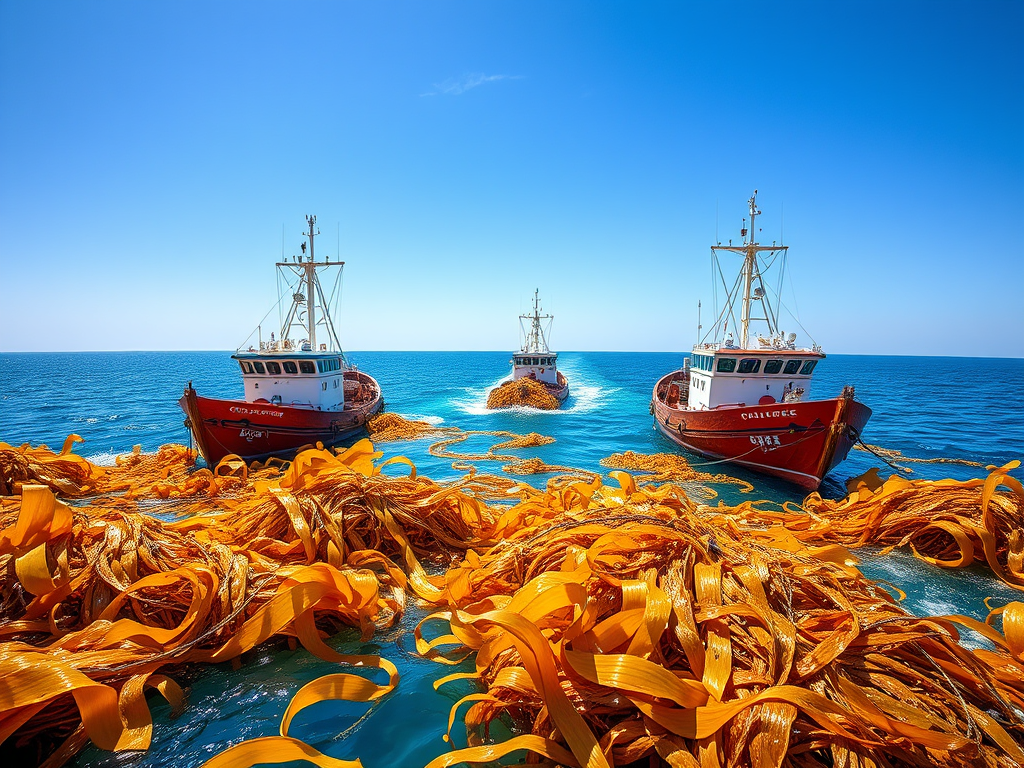
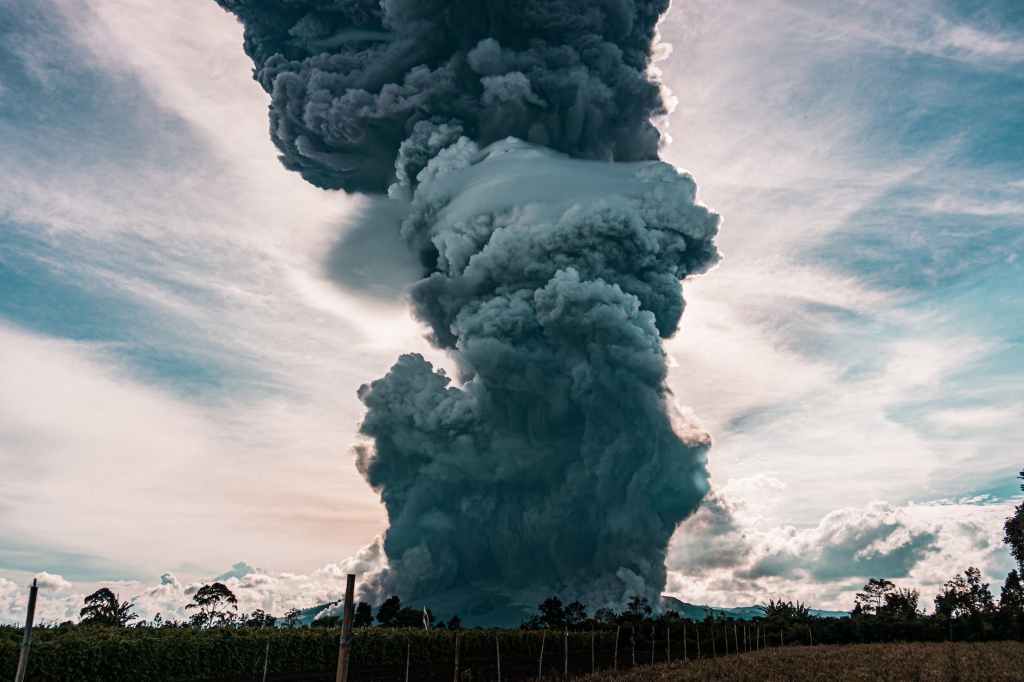
If we are going to get through the current climate crisis, and come out alive at the other end, we ‘ll need to consider every new idea, however outre it may sound at first sight, Which is why we want to showcase, via the Conversation,[1] the work of Mike Allen , Professor of Genomics at the University of Exeter and founder of SeaGen,[2] a company which has the courage and vision to think differently. ]For Mike thinks that by using robotics, he can harness the enormous biomass of seaweed in the sargasso sea, and other places
Now we’ve always been pro- seaweed here. Veteran readers may recall our promotion of the new Sussex kelp forest, both on this site and in articles in local newspapers and websites [3] and we certainly talked about how the stuff, especially kelp, could be a source of all kinds of useful things like food and fertiliser. But as his article and website makes clear, Mike is taking this to a whole new level. By using autonomous robotic systems, the harvesting and processing of the weeds can be done on an ergonomic and industrial scale.
We have no financial or any other connection to this man or his company. But we are massive fans of the hopeful start-up. Because we believe that progress, real progress grows form that complicated network of new companies , university departments, government agencies and anonymous little industrial estates where the real dreams of the future are born. We’ve done stories like this before, and will do more in the future. If you really need a declaration of interest it is this: they may help us to survive.
As we write these words, President Donald Trump seems to have run into some largely self-inflicted economic troubles. It is hard to say how serious or long lasting these are, and whether they will permanently affect his ability to govern. But one thing is clear: even if he fell from office tomorrow, his significance, his very presence would last for all time. He and his movement are a symptom not a cause. As two articles in the Guardian, one by Richard Partington, and the other by George Monbiot, make clear what has been going on. [1] ]2]
Globalisation, Neo-liberalism, free movement of capital and people, call it what you will, has brought us unprecedented advances in knowledge, and prosperity for billions of people who would otherwise have been excluded from both these things Yet in the countries where the creed began, especially those free market Anglo-Saxon economies of the USA and UK, it has left millions behind. Whose lives rot in the shadow of decaying factories, crumbling roads and decrepit health systems. While lurid images of good times and progress still flit across their screens, their only link to the bright hopeful world beyond. Some, like the educated and the rich are still doing well. Why not them? In such desperate circumstances it is all too easy to start blaming foreigners, global elites, or the tiny fraction who follow divergent sexual practices. And if the educated become an enemy, how will they adopt our values of reason and evidence?
Trump speaks for millions of these people, and that is why his support not only holds up, it may even grow as the crisis gets worse, as George opines. We don’t agree entirely with his analysis: many people we know who hold populist opinions are securely embedded in well funded pensions or established businesses. For us, the roots of xenophobia and self congratulation are far deeper. But the vast spread of uncertainty, insecurity and above all a pervasive sense of dread, the downsides of economic “efficiency” and ergonomic supply chains are the sea in which these emotions thrive. “Socialists do fine until they run out of other peoples’ money” runs the old saloon bar cliche. To which Donald Trump and others would retort “Capitalists do fine until they run out of other people’s security. And jobs. And eventually their nations.
Why did no one ever make a better case for a mixed economy, surely the answer to our problems?
Today we turn our blog over lock, stock and barrel to that admirable website Nature Briefing, whose links we have posted before and will do so again. This main piece from them explains we have done so:
Vaccines have given many families in wealthy nations the luxury of forgetting about the toll of some infectious diseases. But for some, that is changing: a second unvaccinated child in Texas died this week from measles. Anti-vaccine misinformation is rampant, not least from members of the administration of US president Donald Trump. Globally, many children still die because they can’t get the immunizations that they should, and cuts to international aid put progress at risk.
At the same time, vaccines are reaching new heights of success: the human papillomavirus (HPV) vaccine appears to prevent almost all cervical cancers. Vaccines against COVID-19 were developed with unprecedented speed and saved millions of lives. And from a scientific standpoint, the future looks bright, with mRNA technology, unlocked by pandemic-era research, offering hope for new jabs against viruses such as monkeypox, and therapeutic vaccines against cancer.Nature | 6 min read
Please add briefing@nature.com to your address book.!!!! Please !!!!
The piece follows with some excellent, easy to understand graphics, which you will have to click on their website to look at, and which obviously we can’t reproduce here. To extract some killer facts: by eliminating smallpox, vaccines have saved 5 million lives a year. By eliminating other scourges including measles, tetanus and TB they have probably saved about 154m lives overall since 1975. That anti-vaxxers must now march their legions against HPV vaccines raises deep questions about misogyny as well as the public understanding of science.
But it’s that quote at the beginning of the nature article which as got the hook in us. “Vaccines have given many families in wealthy nations the luxury of forgetting about the toll of some infectious diseases.” Yep, it’s that word luxury. It’s often associated with the word Vanity. And we need a bonfire of many of those very soon.
Once again, if you want to see the graphics, do this!
Please add briefing@nature.com to your address book.
Stop the press! Urgent! Even though it’s Thursday afternoon and we’ve done our blog for the day, a new story is bursting to be told. Because while leafing through the Interweb to see if we had been included in any top secret message groups, we came across a story by the assiduous Clara Harter of the Los Angeles Times: Deadly Drug Resistant fungus CDC calls urgent threat is spreading in hospitals [1] We won’t steal Clara’s thunder. But basically, it’s called Candida auris, it spreads rapidly in healthcare facilities. and it tends to target the sick and the old.
Wanting to know more , we went to the site of the Centers for Disease Control and Prevention (CDC)[2] whose purpose, as every schoolchild knows is goal is to protect public health and safety through the control and prevention of disease injury and disability both in the USA and throughout the world[3](fungi don’t stop at national borders, you see) We found their web page to be concise, easy to access and extremely helpful. How lucky Americans are, to have such a body that anticipates threats to public safety, co-ordinates the efforts of medical facilities and health agencies and keeps the public informed, free of charge!
Well until recently they were, Because we have learned that the CDCs are yet another target in the cross hairs of Mr Musk and his enthusiastic band of young cost cutters. [4] According to the independent Medical Economics:
The cuts include 1,300 U.S. Centers for Disease Control and Prevention (CDC) staff — about 10% of its workforce — and all first-year officers in the Epidemic Intelligence Service (EIS) — a disease response unit.
We are ignorant of Mr Musk’s motives; he may be a man of profound compassion and acute foresight. His economic learning may be profound; we cannot say. But if the fungus spreads, and if its economic cost is as great as its human one, we will know that it could have been prevented.
At least the Left had moral purpose. For all the mass murders. inefficiencies and lies perpetrated under Socialist systems, we cared about the poor! Whereas you lot (the Capitalists, comrades) are nothing but selfish greedy amoral money grabbers, hooked on cocaine and fast sports cars. But Capitalism has one moral advantage wired into its very DNA. It foments truth and honest dealing.
Before you reel in disbelief, citing hoards of dodgy builders, corrupt bond traders and megalomaniac media moguls, consider this. If I buy a load of concrete from you to make a reliable bridge, I need to know it works. If I know I can sue you because the concrete is unreliable, and get good judgement in a court, you are much more likely to supply me with good concrete. The bridge stays up, and I am confident I may build another. If on the other hand you are a friend of the President, or a member of his party, you can buy the judgement of that court. You keep your money, I get no redress. The Party and The President get a kickback. But the long term consequences are dire. Bridges fall down. Less people undertake the risk of building them, as the chances of a total loss soar. Foreigners especially will suspend their investment. For if a native cannot get justice, what chance for evildoers like them in such a system? It was this truth we overlooked: and no educated progressive we know has been a socialist since about 1985. This idea of open, independent, and above all transparent justice was the real American Exceptionalism. And why they began to pull ahead even of relatively open societies like Britain, where the justice system was mired in class prejudice.
However it seems to us that President Trump and his administration may have started to reverse this process. As Giselle Ewing explains in Politico[1] the Trump government has embarked upon a highly partisan series of attacks on both individual lawyers lawyers and the firms that employ them. This barrage of measures include investigations, denials of security clearances, terminations of contracts, and even blacklists. All in effect dividing the legal system and its future promotions into two camps. One of the Government. The other: its opponents. Once again, we stress that in our view Mr Trump is acting rationally by his own lights, and above all those of his supporters. Who are for the most part poor labourers and struggling small businessmen. Whose everyday lives are harsh and insecure. To whom long term concepts like Justice and Equity will seem abstract and far away. But if this trend continues, then the USA may end like Russia or one of those African countries where justice is no more than the whim of the President. And economic forces like investment, property rights and and trust behave accordingly.
“The trouble with racism is that it means second-rate people in first rate jobs.” These words, once spoken casually to us, are the real basis of our opposition to discrimination of all kinds: It’s inefficient; it’s not in the long term interests of the oppressor. All societies suffer from hierarchy and ethnic hatreds, But was saddest of all to see the United States of America, born in such enlightenment, to be so disfigured by this most ancient weakness of the human mind. One attempt to counter this was the establishment of Historically Black Universities and Colleges, which aimed to provide some higher education for students who were excluded from white institutions. They have been around for a long time, and you would have thought by now that the penny would have dropped: “this is a fantastic source of underused potential which could benefit us all, especially now that China is treading on our cowboy heels”. Well, read this and think again: Unshackle Historically Black Universities in Nature Briefing
Historically Black colleges and universities (HBCUs) in the United States “are producing world-class research and record numbers of Black scientists with one hand tied behind our backs and shackles on our ankles” because of “consistent, drastic underfunding” compared to institutions established to educate white students, writes evolutionary biologist Joseph Graves Jr. “For example, my research group alone has produced more Black women with PhDs in microbial evolution in the past five years than the rest of the country has in the past five decades.” Graves calls on industry, philanthropists and individuals to shore up weakening government support for HBCUs, minority-serving institutions and tribal colleges and universities.Nature | 10 min read
It’s not that we especially like black people ,or white people, or any ethnic, religious or social group . Quite the opposite, most of the time, for most of them. Nor are we especially compassionate or just, as far as we know. But we do regard all forms of generalised prejudice as a debility of the human mind, like the propensities to gamble, drink to excess, or indulge in concupiscent and promiscuous sexual practices. (that’s a polite way to put it!-ed) All of these errors waste time and money which in the long run would make us wiser, happier and safer. Let’s see if anyone does anything about these colleges.
Read not to contradict and confute, nor to believe and take for granted, nor to find talk and discourse, but to weigh and consider
It was Francis Bacon , the founder of the scientific method who recorded those words in his famous work Of Studies. We have always followed them assiduously, as you know well gentle reader. So today we present a diptych of stories on our old bugbear microplastics pollution, because togethe, they illustrate the Baconian approach very well.
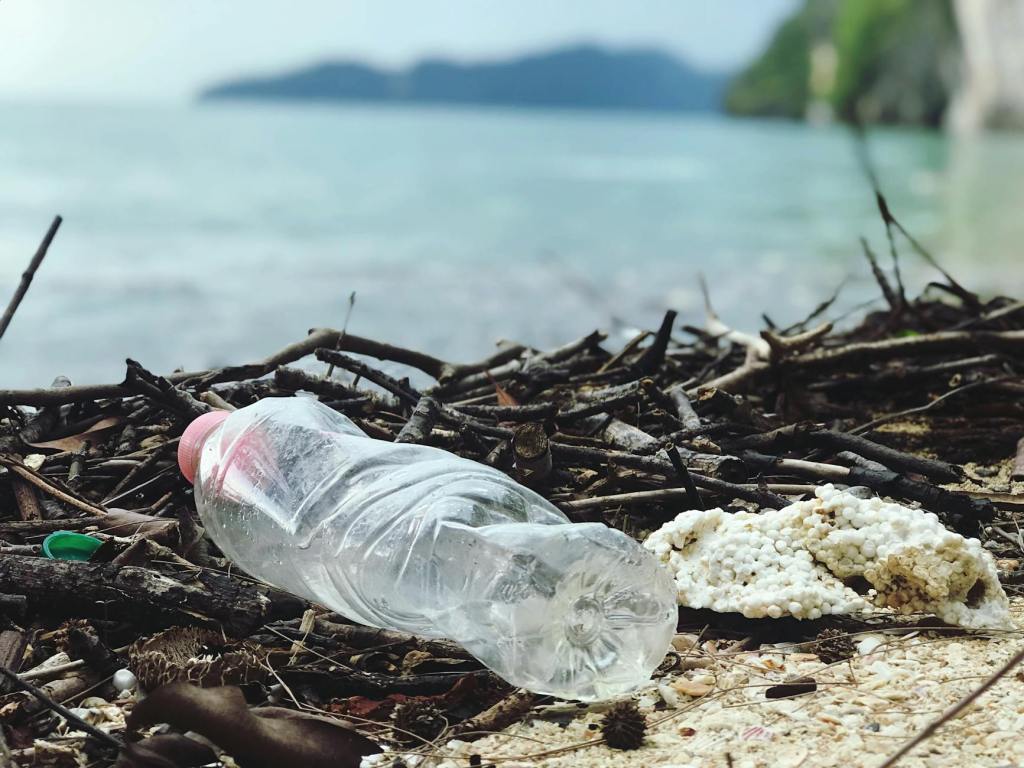
All of you share our worries about the dangers of microplastics. We tried to count the blogs we’ve done on it but ran out of patience early on. And today’s first story, from the learned Damian Carrington of the Guardian fits well into the gloomy canon.[1] Damian reports some truly alarming studies which suggest that microplastics are seriously threatening photosynthesis among our most vital food crops, such as wheat and rice. Get this for a killer quote
Asia was hardest hit by estimated crop losses, with reductions in all three of between 54m and 177m tonnes a year,
Although they are hitting food production everywhere and not just crops: seafoods are particularly vulnerable as well. Case proven again: microplastics are hell, right?
But we would not be LSS, we would not be Baconians, if we didn’t then go to this story in Nature BriefingsMicoplastics Research Needs Ironing Out
Last month, Briefing readers recoiled from the news that human brains seem to be full of plastic bits — with a recent study of autopsied bodies finding our brains might contain as much as 4.5 bottle caps’ worth of plastic. But some of the most shocking studies about microplastics in human tissues rely on small sample sizes, lack appropriate controls or “are not biologically plausible”, write four health researchers. “Without more rigorous standards, transparency and collaboration — among researchers, policymakers and industrial stakeholders — a cycle of misinformation and ineffective regulation could undermine efforts to protect both human health and the environment,” they argue.Nature | 8 min read Reference: Nature Medicine paper
And the point? It’s this need for our side to be rigorously scrupulous wherever and whenever we can. When climate scientists offered the slightest room for doubt, Big Oil and its well-funded armies of deniers and manipulators pounced, casting doubt, insinuating, opening the door to denial. We are the smaller, weaker side and must tell the truth if we are to be believed. During the Second World War, Goebbels and the Nazis flooded the media with and endless stream of new claims, false facts, non sequiteurs and fake news. And at first it worked. But the BBC played a different game. Carefully to admit Allied losses and defeats as well as victories they slowly built trust among even their German audiences. In the end, their radio broadcasts were the main source of news for millions of Hitler’s followers.
We will play the long game,. And reality will justify us.
“But why do they all come here?” is the agonised cry of Dave Watford and his mates in every pub from Truro to Thurso. Dunno, Dave. The English language? Because of our free market, low regulation economy, where the reward is for taking risks? Because we’re still relatively prosperous? But Dave and the boys are right: Immigration and its discontents are the number one driving force in all our lives here in the third decade of what may prove to be our very last century.
Or are there deeper forces at work? People have always moved from bad conditions to try to find better ones. Such movements are always deeply resented by the native populations in the host lands. It is the achievement of Channel 4‘s Go Back to Where you Came From [1] to cast the question in terms of the way people really are, not the way they ought to be. Six ordinary, but essentially decent British people complete a typical migrant’s journey from the ravaged lands of their origin to their final landing under the White Cliffs of Dover. The producers chose Syria and Sudan as the “GO” points. Wow. We get it.
And we stress: ordinary, decent people. So the producers deliberately chose the reality show format to highlight their odyssey; for no one in 2025 would have watched a documentary. And what an odyssey for the 21st century it is! They run the gauntlet of squalid refugee camps, freezing and burning temperatures, lousy food, unmentionable lavatory facilities, major league armed criminals and deadly waters in the course of their journeys. All the while in dialogue themselves, and with the locals. All six displayed levels of courage and endurance which we could ever endure, we confess.
Like the heroes of any epic road movie, they are transformed, so that they are not the same people they were when they started it. One man in particular stood out: a haulage contractor from Yorkshire who though sheer hard work has built up a small lorry business. It lets him feed his family, of whom he is fiercely protective, with out any help from the state. And get this: if you are fined £10 000 every time an illegal immigrant jumps on your lorry, wouldn’t you be just a little resentful? But it is to the immense credit of this man, and the film makers, that they slowly uncover the causes of his plight. War; ecological collapse; deep inequality and the paid apologists who defend it at every turn. He comes, he sees, he thinks, he changes. His deep reserves of emotional intelligence finally process the better angels of his nature.
Yet we at LSS do not advocate opening England’s doors to every migrant, however desperate their plight. Emotion and pity are bad guides to policy. A Nation state is not the same thing as the Social Services department of a London Borough. But the lesson is clear: a substantial, though not crippling transfer of funds from richer to poorer countries would eliminate most human migration quite quickly.
Go Back to Where you came from at last shows the true causes of this problem, And most people learned the lesson. That is a mighty achievement indeed.
Anyone with the slightest interest in early civilisation must pay tribute to the work of Professor Colin Renfrew. That fascinating period spanning the Neolithic to the early Iron Age witnessed the transformation of humanity from hunter gatherers subsisting barely above the animal level to the first technological civilisations, deploying writing, building, pottery, roads and all the other appurtenances that set us above the beasts. This was Renfrew’s territory. And it encompassed a vast sweep from Cycladic figurines to the immense migrations of the Indo European speakers and the changes they wrought With a few Anatolians thrown in for good measure
So today we throw this blog open to the likes of NatureBriefings(see below) and Wikipedia [1] to tell you about his life and accomplishments. For Renfrew had all the marks of the true scholar. His learning was vast, his methods empirical, his conclusions provisional. He knew the real value of learning to is prompt further investigations, not to provide easy answers. If someone had provided clear and unequivocal evidence that the Indo Europeans had originated in Sutton Coldfield and not the Steppes, he would have been the first to agree. If ever you have travelled the sunny lands of the Mediterranean or Levant, gazed in wonder at the ruins still there, or tried to understand the guide book, remember :you are in Renfrew territory. Tread with respect.
Archaeology’s Closest thing to a household name Colin Renfrew, who helped to transform archaeology as a scientific discipline, died last November, aged 87. In the 1960s, researchers discovered that tree rings from bristlecone pines (Pinus longaeva) — which are among the oldest living things on Earth — could be used to redate artefacts in Europe. Prompted by these developments, Renfrew helped develop a fresh understanding of how European and Near Eastern civilizations developed, alongside new models for how societies change. “Renfrew’s ideas were decades ahead of available computational modelling power,” writes his colleague, archaeologist Cyprian Broodbank.Nature | 5 min read
Today we have a good news story, brought to us by the ineffable Robin McKie of the Guardian, which brings genuine hope, Because it solves two problems for the price of one.[1]
To begin at the beginning. In the last fifteen years or so, England’s rivers have started to fill with huge, choking blooms of algae, which seize all the oxygen from the water, thus killing everything else before, dying back themselves . To leave a poisonous foul-smelling sewer , like the ones you used to find in old towns in the Industrial revolution. The cause? High levels of phosphates on agricultural lands, which runs off into the waterways, producing sudden spurts in the aforementioned algae-and down we go to death, for the ecosystem that is. Now, it could be argued that without high phosphate levels we could not feed our population ( feed or fatten?-ed) So how to square the circle?
The answer is to trap the run-off phosphates and return them to the land. And a small company called Rookwood Operations[2] is doing just that, down in the leafy county of Somerset. Their new Phosphate Removal Material just sits in the water, soaking up the phosphates until it’s full. Whereupon it is returned to the land ready for the farmers to exploit again. And get this:
For every metric ton of PRM produced, carbon is sequestered, locking CO2 for up to 1000 years. PRM is made from completely natural circular sourced sustainable components
How’s that for two in one? There’s so much to like here for LSS readers. There’s even a feminist angle, as one of the company founders was up for the prestigious UK Women in Innovation Award.
Thinking new. Thinking differently. Using existing technologies to squeeze progress in a new way. Surely that trumps going round smashing your friends over the head because it makes you feel better?