No Pandemic this time: but what happens next?

While we sympathise with the unfortunate passengers and crew of the MV Hondius who may have been exposed to the hantavirus, our first response was rather selfish; “is this a new pandemic, and if so, how bad will it be?” We were not alone: and fortunately, as this excellent summary article from Julia Musto of the Independent, via MSN, explains: humanity seems to have dodged the bullet this time [1] Although utterly dangerous the virus  just doesn’t seem to spread with the same facility as others such as  SARS-CoV-2, or the influenza group. So that’s alright then.

Or is it? Because as certain as the House always winning, another pandemic will come along. Bringing the same economic, social and physical disruptions as COVID 19 did back in 2020. Or worse maybe. Surely humanity has learned some lessons from that catastrophe? Taken steps, you might think, to mitigate the worst effects and learn to pool our resources so that next time round everything will be different? Not according to Kat Lay of the Guardian [2] whose indefatigable investigations have unearthed another avoidable catastrophe in the making.

Because although a Pandemic Treaty has been signed , it cannot go into effect until a special clause called a Pabs (Pathogen access and benefits sharing) has been ratified. It hasn’t, as regular readers will be unsurprised to learn. The result is:

“If a new pathogen emerged today, the world remains largely unprepared for it. A lack of action to prevent and prepare for the next pandemic threat is a disservice to humanity,” 

Kat cites the usual litany of petty squabbles, mutual jealousies and general misinformations which have led us all into this sorry plight and ends her article there.

But we, gentle readers, cannot quite leave you without adding our own thought. Natural Selection tells us that species go extinct when their key survival features are no longer adequate  to their environment (what use are flippers to a whale out of water, for example?) Humanity’s key advantage was its intelligence and relatively large brain. Is this clear example of the failure to use this clear cognitive advantage a sign of even worse things to come?

[1] https://www.msn.com/en-gb/health/general/could-cruise-boat-hantavirus-be-the-next-global-pandemic/ar-AA22CAGh?

[2] https://www.theguardian.com/global-development/2026/may/05/talks-stall-on-who-pandemic-treaty-global-response-disease-outbreaks?CM

[3] MV Hondius hantavirus outbreak – Wikipedia

#hantavirus #pandemic #covid 19 #WHO #health #medicine #virus

Beyond the Nation State #6: The Cost of Nations

Identity, it is said, is the most important thing a People  can have. So what better way to guarantee that identity than by taking back control and assuring it inside a sovereign nation state.? It’s a very popular policy at the moment, so there must be advantages. But it’s worth at least noting the counterfactual argument, because it has consequences for what we try  do here.

If you’re going to have a sovereignty worthy of the name, you must have the following: Defence, Intelligence, Borders, Customs, Taxes, Tariffs, Executive, Legislature, Judiciary, Foreign ministry ,Legal system, Central bank, Currency, Police and Regulators. To say nothing of the fixed obligations such as pensions you inherited from the larger state you have left. You could opt for health education, culture, policy, tourism and transport as well; but these are discretionary. So could smaller entities bear all these costs if they went it alone? Could California? (large-ish) Wales?(medium) Or Jersey? (rather small, with due respect).  Take Wales as a hypothesis : let’s say the UK spends £50 billion on Defence and Wales is 3.1% of its population. That ratio would entitle an independent Wales to £1.5 billion. Would they be as well defended? The answer is no. For one thing they would have to set up entirely new structures of command, procurement, intelligence and all the other essentials of a modern force. Secondly, there is the brute fact that larger purchases always generate cheaper prices for anything Defensive-aeroplanes, tanks, guns, even the dusting cloths you need to keep them clean. Bulk purchase means cheaper unit cost. And it works the other way. Even a superb Welsh manufacturer of tanks would only enjoy tiny assured domestic markets, making its borrowing and production costs prohibitive in a world market. That is why American giants like Ford and General Motors thrived in the twentieth century: they had fixed access to the largest Single Market then available. That is why nations which have tried to downsize, like the UK after Brexit, have struggled so badly ever since.

The argument to grow polities into larger units is the same as that for growing companies. Economy of scale and stripping out fixed costs. A World Government would only need one of each the exhaustive list above.  Imagine the procurement advantages in any number of things-medicines, schoolbooks, computers or even those wretched dusters again. What a saving for taxpayers!  A single world Ministry of Defence would enjoy the highest possible bargaining power against its suppliers, cutting the cost of the $2.7 trillion we spend as a planet on defence by whole orders of magnitude. Of course, if there were a World Government most defence spending would become unnecessary anyway, as most nations’ armies exist sole to defend against other nations’ armies. But that’s something for another day

#nation state #history #politics #economics #world government

Things Beyond the Nation State #1 Introduction

Identity, belonging and how this species organises itself in groups has been a recurrent theme on this blog since we started back in the pandemic days of 2020. We’ve surveyed the work of theorists like Amy Chua: pondered sports affiliation, tribe and nation, and the several  ways of belonging to each. Considered experiments in psychology and behaviour. Even speculated if there might be a World Government waiting in the decades to come. Yet up to now nothing has superseded the Nation State as the only successful and enduring method of organising our multifarious hostile tribes into larger confederations.  By which they obtain common benefits of defence and low mutual trading barriers, the two sine qua nones of all statecraft. (everything else is method)

The trouble with this comforting settlement is size. Each little kingdoms of Anglo Saxon England-Wessex, Mercia and the rest-was perfectly able to provide its residents needs for hundreds of years. Until a bunch of pesky Vikings came along and nearly drove them all to utter destruction. Only by forming a larger unit, England, were the Anglo Saxons able to survive and prevail: And England became their nation in turn. A lesson repeated across many lands and times. So powerful that it begs the question: are our current polities, even the largest, now too small too indebted, to mutually jealous, to cope with the existential questions now born into the world? We repeat: this is not a call to abolish nation states which can and should continue to exist, But it may be a call for a next tier or organisation to act on those problems, and only those problems, which only it has the competence to address.

We think those problems are Global Warming, Pollution, Migration, sudden Catastrophes like pandemics, economic Inequality and Security risks from things like AI and nuclear weapons All are pressing and all interconnected at some level or other. You may suggest more, gentle readers. But in the next few weeks we will do our best to list them into some sort of order and try to  consider some of the problems they pose, for you to think about. For we know of few hard and fast answers. We hope you will join us on this journey and will welcome your comments, suggestions and ideas. Keep ‘em coming.

#global warming #nuclear war #pandemic #volcano #AI #pollution #economics #history

R+D=GDP A maths lesson the Swiss can teach the world

Sit quietly in any pub or cafe and you will soon learn why the economy is performing so badly. Most of the diagnoses centre round a few simple tropes: wages are too high, holidays too long, taxes are too heavy, hours worked are too short…….Now, we would not dare to cross the opinions of the towering intellects you find in the bar of the Dog and Duck (it’s physically unsafe anyway ) But we dare to offer an alternative explanation for why economic growth works so well for some countries, just for your consideration, gentle readers. And the answer is: the amount that each country spends on Research and Development,

Let’s take Switzerland as our shiny example. It’s a tiny country constituting only 0.1% of the world’s population. But its R and D spend (3.4% of GDP) puts at 6th place in the global ranking of R&D. The result is a highly diverse export orientated economy, a well embedded public-private sector ecosystem of research institutes, universities schools and so on. All of which puts it almost at the top of the GDP per head league. . There are local advantages: it has strong stable institutions, membership of the EU single market and a low defence spend. Other countries share all or some of these advantages to a greater or lesser extent. We could argue for paragraphs about the pull and tug of these various factors. But we think one lesson is unavoidable, writ both large and small

Writ large, technology is the true game changer for economies. The advent of steam power in the industrial revolution utterly transformed both the out put and wealth of the nations which adopted it. However many hours humans and their animals laboured, they could never match the colossal output capabilities of powered engines. And technology only grows from a huge ecosystem of more general research and scholarship. Current debates aside, Industrial Revolutions are rare. But they can be mimicked by a pipeline of small steady innovations in many fields, which achieve the same things. This is the lesson writ small, which the Swiss have learned par excellence. Tap room philosophers may be excellent at the book keeping needs of their various small enterprises. But they are blind to the bigger lessons: on this matter and many others.

[1]https://www.aboutswitzerland.eda.admin.ch/en/research-and-development

[2]https://assets.publishing.service.gov.uk/government/uploads/system/uploads/attachment_data/file/1023591/niesr-report.pdf

#R&D #science #technology #universities #investment #GDP growth

Stanford’s new discovery is a marvel-but can we really call it a vaccine?

Today we are happy to present one of the best news stories we’ve ever covered in our long years on this blog. It’s the announcement of a new type of vaccine from Stanford University. But it’s so mind bogglingly different from all the others we’ve come across that we genuinely wonder if it should be called vaccine at all! The details may be found in this crisp article from the excellent James Gallagher of the BBC [1] Essentially, it’s a nasal spray, so far tested only in mice, that offers protection against several viruses including colds, flu and COVID 19. Also against bacteria such as Staphylococcus aureus and Acinetobacter baumannii, two long known antibiotic resistant inhabitants of these pages.

Now, traditional vaccines have worked the same way ever since the pioneering work of Jenner. One organism=one vaccine, with the immune system trained to recognise one small target area of the invading organism. It’s as precise as a sniper; but can only ever protect you against one disease. The brilliant team at Stanford have taken an utterly new approach and decided to tackle the pathway by which a whole bunch or organisms make their attack. In this case the lungs. So it doesn’t matter if you are hit with a COVID 19 virus, the common cold, flu, the bacterial chums we noted above or even certain allergens. The macrophages of the lungs have been fired up and stand ready to repel any hostile borders-and will remain that way for several months[2]

Right, back to the question we started with: as this is so different from anything we were taught in school, can we really call it a vaccine? Well. If you define a vaccine as “ a molecular entity that trains the immune system to respond more effectively to a future biological threat” then yes, it is. But compared to the old ones it is a conceptual leap of awesome power. We doubt it will replace “old -skool” specific vaccines; their efficacy is just too good to waste. But as a completely new, game changing intellectual concept-well we think the sky’s the limit

[1] Single vaccine could protect against all coughs, colds and flus, researchers say – BBC News

[2] Science (2026)
“An intranasal vaccine activating innate immune danger pathways protects mice against diverse respiratory pathogens.”
Published: 19 February 2026

Lead author: Dr. Olivia Martinez, PhD
Stanford University School of Medicine
Department of Microbiology & Immunology

#health #vaccine #colds #flu #antibiotic resistance #virus #bacteria #immune system

Everyone hates Keir. Here’s why

As we write. the current troubles of UK Prime Minister  Sir Keir Starmer are profound. One of the reasons they are so bad is that, almost before he took office, almost no one has warmed to him: many evince active dislike. Meaning this serious, intelligent man can draw on no reserves of public goodwill in the way that a more raffish character like say Boris Johnson could. Why?

We think part of the answer lies in this article by Larry Elliott. For it charts Britain’s fall from manufacturing powerhouse to fragile services-led house of cards in a few punchy paragraphs, while noting China’s almost inverse trajectory to high tech manufacturing superpower. How so?  Elliott compares the policies of two politicians who took power at around the same time in their respective nations: Deng  Xiaoping  and Margaret Thatcher. While the former did everything he could to foster manufacturing, the latter, a true disciple of unfettered free markets, believed:

…… market forces should determine which businesses thrived. If Britain excelled in financial and business services……… That’s what the country should concentrate its efforts on, while other nations made the ships and the machine tools

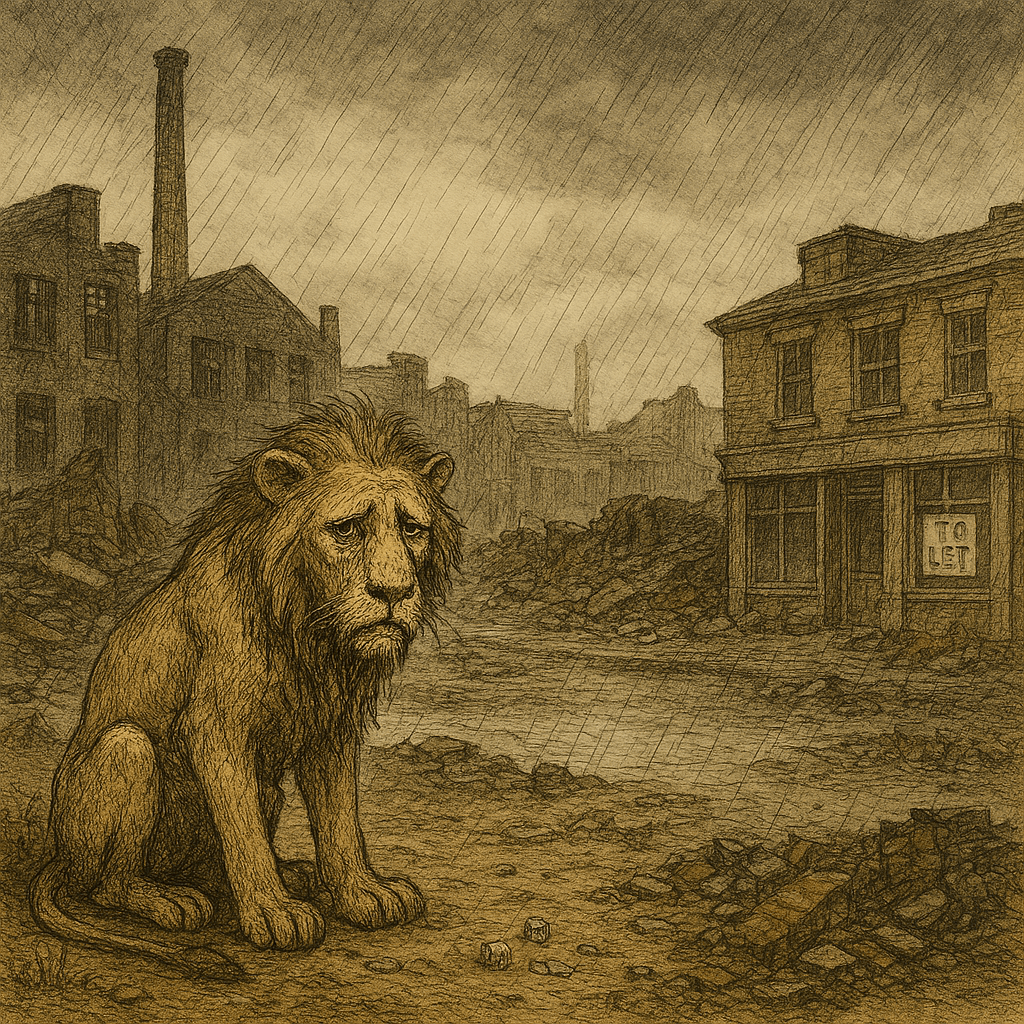
Underwritten by the short term unearned bonanza of North Sea Oil, this catechism was applied unchecked. With the results we see today. No British Government will ever again have the resources to satisfy the clamours of its citizens-for hospitals, for thriving high streets and clean water, nor create the booming economy they crave.  But, used to abundant wealth and easy answers, these citizens still think like spoiled heirs burning through the last remains of the family patrimony. So any sensible family lawyer like Starmer, who tries to utter the self-earned nature of their plight, will pass unheeded, or worse, actively scorned. Such people will always prefer a story teller to a truth teller. And for a way forward? Restore manufacturing, to which end Elliott has some policy  recommendations of course . But his real answer  is psychological, not economic.

The bottom line is that to rebuild manufacturing Britain has to see the world through the prism of a developing country not a developed one.

In other words -forget its pride.

[1] How can Britain regain its manufacturing power? Start thinking like a developing country | Larry Elliott | The Guardian

#economics #UK #China #Deng Xiaoping #Margaret Thatcher #manufacturing #politics

Narco Warriors: brilliant new podcast on the war that’s shaped two centuries

We’ve always been pretty much against the illegal drugs trade, if that is still a safe thing to say. For its reach and power give it the heft of many a nation. Its turnover is estimated to be between $300-$600 billion per year. If you throw in all the deaths-from assassinations, associated diseases and economic disruption, then these at 500 000 a year are more than many nations’ mortality statistics. And like any State, it has organised armed soldiers, trained and ready to kill. No wonder so much effort has gone in to controlling the sale and distribution of illegal drugs since the nineteenth century. when the Chinese attempted to control the illegal importation of opium. Narco Warriors, a podcast series from highly experienced journalist Lindsay Charlton is the latest attempt to chronicle the long decades of this deadly and interminable war.

Charlton and his team of researchers have assembled hardened veterans of the war-customs officers, investigators, police officers- as well as those who operate in its shadowy intelligence led nooks and corners. The listener is taken on a vast sweep of lands and seas, of shootings, confrontations, agency turf wars and many earnest intelligent brave people trying to do the best jobs they can for their countries. And we salute them, above all for their endless dedication to the public good: for its clear that people of this calibre could have made a lot more money a lot more safely in many other walks of life. And there we might end it. Except for one thought, which that old Devil has just come round and whispered into our ear.

What is a drug anyway? If you say that cannabis, cocaine and heroin are highly dangerous and addictive substances, then you must say the same for alcohol and nicotine. But these are sold openly on the streets in many western countries. Indeed the attempt by the United States to prohibit alcohol from 1919 to 1933 was one of the most unhappy and unsuccessful enterprises which that country ever undertook . For one thing, it was an object lesson in facilitating the rise of violent organised crime, a historical irony not without relevance to present policy. The real problem is that the appetite for cocaine, heroin and alcohol are all driven by human demand. Gangsters are simply those capitalists who supply the illegitimate part and operate according to the same laws of supply and demand as their peers in legal sectors of the economy. As for that demand -there is strong evidence that it is fuelled by rampant economic inequality and the associated poor housing and social and economic insecurity which that entails. In which case the State’s resources would be better spent on building homes, schools and raising the minimum wage rather than on all those flashy speedboats and burly types in uniforms. But: society made its choices long ago, and who are we to call them wrong? If you want to know the consequences of those choices, told by the people who were there, then listen to the first episode [1] And all the subsequent ones of course!

[1]https://audioboom.com/posts/8855552-narco-terrorism-the-forever-war

#drugs #addiction #narcotrafficers #law enforcement #police #transport #smugglingm #opium wars

Neo Liberalism to National Market Liberalism: is this a Great Global Transformation?

“The nine most terrifying words in the English language are: ‘I’m from the government, and I’m here to help.’”

These words of  Ronald Reagan were  the  best and most concise  summary ever of the creed of Neoliberalism, which he shared so avidly with Margaret Thatcher. They called themselves Conservatives: but their belief was utterly radical, dominating all public discourse and transforming the world at least until the Great Crash of 2007-2008.

The radical nature of that transformation is laid out by Branko  Milanović in The Great Global Transformation. We have two reviews for you, one via the inestimable Nature Briefing [1] and the other by Ivan Radanović for the equally prestigious London Review of Books [2] As ever we won’t spoil these excellent pieces, humbly begging you to read both.  However we  could not resist this  passage from Radanović’s review. For it highlights the contradiction at the heart of the Reagan led project which would ultimately bring it crashing down:

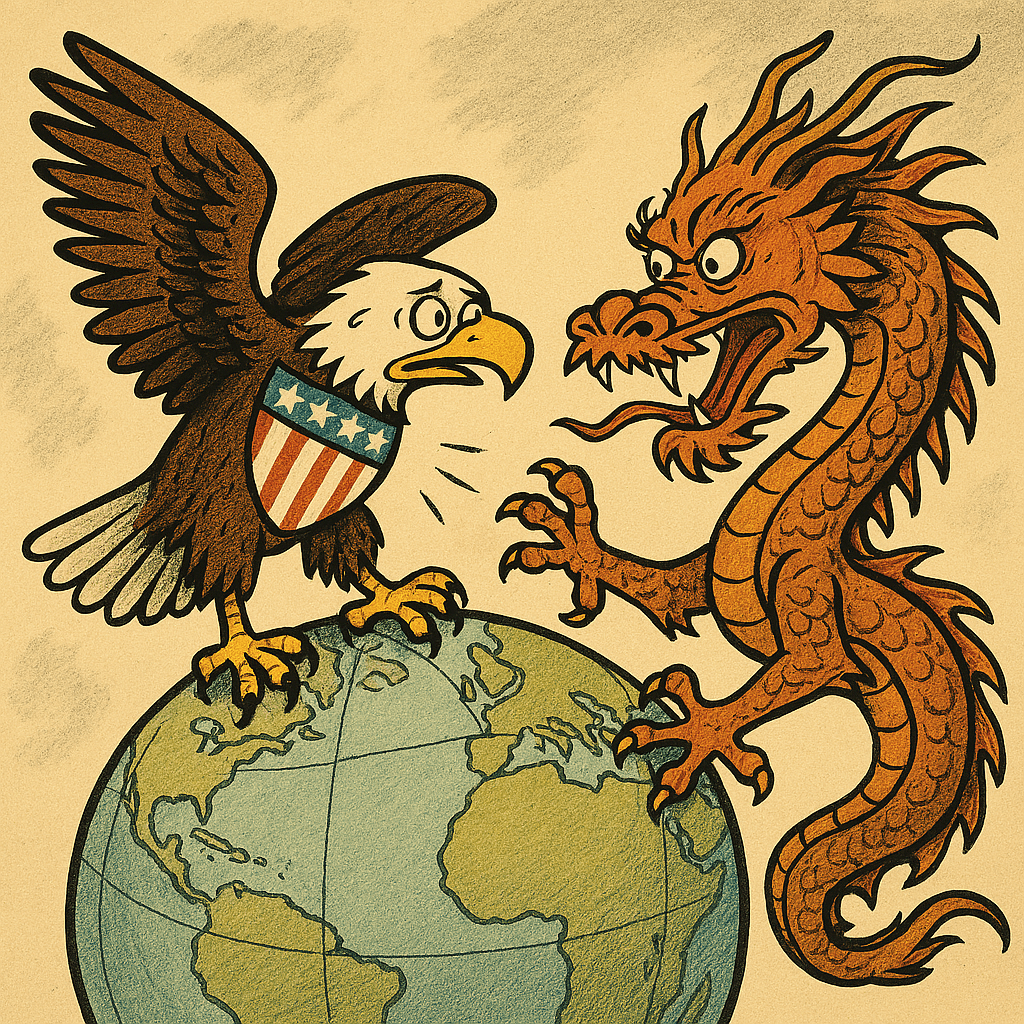
For Branko Milanović and many others, China is at the centre of the current ideological paradigm shift. China’s rise, enabled by global neoliberalism, also made the end of global neoliberalism inevitable, by growing too big to be integrated into a global order whose rules are written by the US and its allies.

The Chinese saw a blindspot which the complacent westerners had missed: if you build an economy where the private sector is good and the state bad, how do you cope when foreign governments act like private companies? In Britain many utilities privatised by Thatcher are owned by foreign governments: is that Socialism or Capitalism? The shrewd rulers of China simply flipped this conundrum: the State and the Communist Party oversee the activities of a thriving private sector. Is that Socialism or Capitalism? In which case, what do words like “Conservative”, “Liberal” and Neo Liberal” really mean?

 Milanović worthily joins a list of critics of the Neoliberal project including Wilkinson and Pickett, Thomas Piketty,  and Will Hutton. It is easy to see Neoliberalism’s faults now, but it was very popular once. And before we rejoice its final passing, what follows may be very much darker indeed.

[1]“Nationalism grows on the terrain of never-satiated mass plenty and greed,” writes economist Branko Milanovic in his new book, The Great Global Transformation. Milanovic argues that globalization benefited previously poor populations, notably those in China, and the already rich, but left the middle and lower classes in countries such as the United States behind. The result is “the exponential growth of ‘nationalism, greed and property’”, writes sociologist Roberto Patricio Korzeniewicz in his review. “For Milanovic, greed is the iron cage of our times, and our future is bleak.”

Nature | 7 min read

[2] Branko Milanović – is neoliberalism being replaced by something more capitalist? – LSE Review of Books

The Great Global Transformation: National Market Liberalism in a Multipolar World. Branko Milanović. Allen Lane. 2025.

#politics #economics #Ronald Reagan  #free markets #capitalism #socialism #communism

Has Donald Trump just brought a World Government much nearer?

Last year we ran a series exploring the pros and cons of a World Government.(LSS 8 1 25 et seq) The general consensus was that it was a nice idea in theory: but utterly unattainable in practice. And the reason our critics gave was very strong: the incredibly firm attachments of people to their national states, which had served them very well up until now. “Sovereignty-it’s all about sovereignty,” they averred, “the right to make our own laws, and defend our own frontiers.”

The recent  actions of Mr Trump in Venezuela have dealt that concept a heavy blow. We are ignorant of Mr Trump’s reasons, and lack the learning to judge the legality or the policy implications of his deeds. We know even less about Mr Maduro and his fitness to govern.  But we do know that it  is quite easy for a large power to enter the territory of a supposedly sovereign state. To take that state’s leader and to put him on trial for malfeasance in office, as though he were a provincial governor in an empire. And if this can happen to a country the size of Venezuela , it can happen to any nation. We ask: in such circumstances, what use is the concept of sovereignty as a practical guide to human action  For all except the three very largest powers, Russia, China and the United States of America.

Citizens of lands with incomplete sovereignty will notice this difference in practice. If a businessman wants a law changed, will he attempt to influence his local government-or save time and address the real centre of power? Will an ambitious lawyer   find her career served best in her native province? Or should she  change her dress, language and manners to thrive in the Imperial Capital? The same choices will confront many-soldiers, sports professionals, entertainers…..Each choice will weaken attachments to the local,  and strengthen the central. It will be slow at first, but the identity and culture of the old nation state will atrophy. At best they will be like the former City States of Italy, Venice and the others, venerable relics of lost dominion. . At worst, quaint tribal lands, endlessly repeating their plays and dances for the amusement of tourists, and selling quaint fabrics and pottery to make ends meet. No doubt ethnic jealousies and wars will flare between them, as they still do in lesser nations in various parts of the world. But these will be essentially tribal, and should suit the dominant Power.  For people fighting among themselves can never unite to threaten its overarching force.. But their days of commanding the unconditional loyalties of the brightest, the most hard working, the most ambitious, will be numbered.

We didn’t really believe our  World Government theory much ourselves after  we wrote it. .  But now the number of objections to our theory has suddenly  dropped from 193 to 3. Which of that three  finally brings it true remains to be seen; but has just become more  likely that  one of them will.

#united states of america #donald trump #china #russia #venezuela #sovereignty #international relations

Why taxes are good for you #6: The best thing for an Enterprise Economy

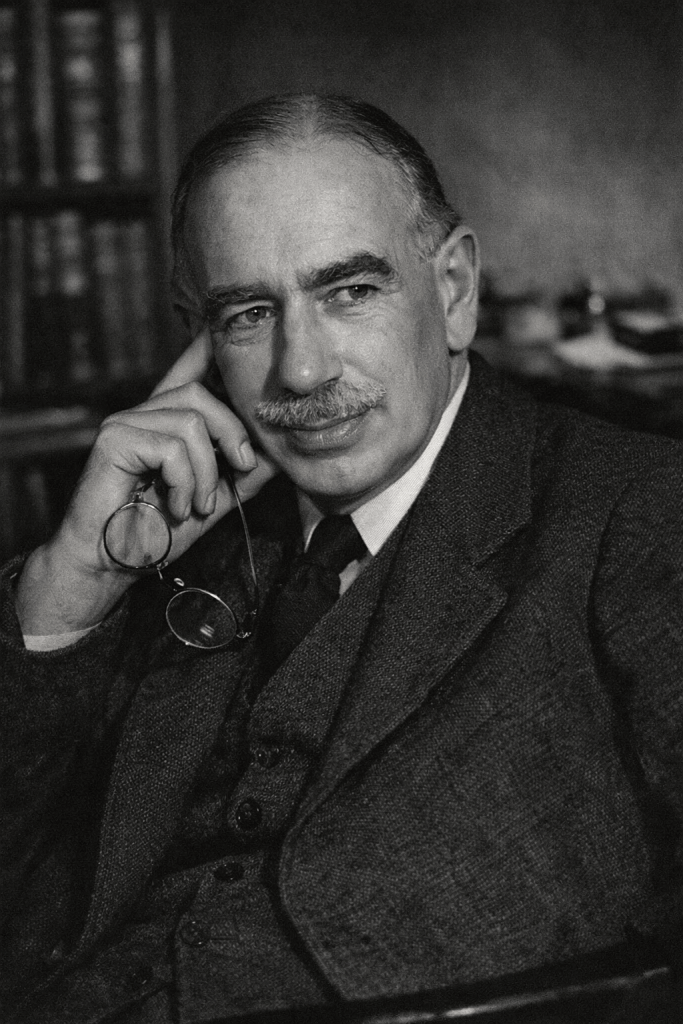
As we approach the end of this series, we could not resist two more arguments which have always irritated the “taxes are evil” lobby. If only because we haven’t met one of them who has come up with a convincing counter argument. And the first should be beloved of all: taxes are a superb way to control inflation. As Britain and the US began to gear up for the Second World War the sheer enormity of the spending needed ran the risk of runaway inflation. It was Keynes in How to Pay for the War who saw the answer. Taxes, he argued would not provide the money; they would suck excess cash from everyones’ wallets , thereby keeping prices on a relatively stable trajectory. The US applied a similar philosophy in its own way [1] The economy grew at unprecedented rate, bringing prosperity to all. And there was a an even more significant side effect, which led to prosperity lasting for decades thereafter.

Because in both Britain and the US, vast defence spending contracts generated an equally vast ecology of institutions, government departments, University research labs and the rest. All beavering away at new discoveries, new ideas and shiny technologies. No wonder the years 1945 -1970 are remembered so fondly as times of progress and prosperity . Names like Rolls Royce, Boeing and McDonnell Douglas are just the tiniest iceberg tips. If you want to know more, trying kicking off from the site of the US’ famous famous DARPA[2] a seed bed for an almost fractal cornucopia of new ideas. Even things we use today like GPS, the internet, and advanced semiconductors are all horses from this stable. By contrast, the economic ascendancy of western countries only really declined after the tax and regulation reforms of the Thatcher-Reagan years when Proud Finance finally crushed Humble Industry.

Why does this all work? Because ultimately the State is able to take a risk which private enterprise capital cannot. We don’t blame them: this is not a moral failing, just a question of numbers and distributed risk. Its true that in some countries private banks have a much more supportive relationship with their local industries: but these tend to be lands where such innovations as Regulations and Industrial Planning are celebrated, and not seen as wicked socialist evils. Leave aside the fact that taxes pay for the roads, hospitals and schools which provide entrepreneurs with a ready supply of able workers. Their real benefit is to create a vast pool of opportunity in which enterprise can afford to reach losses and profits in turn, and keep coming back for more. After all-what use is a football club without a League to play in? We will be revisiting these and other thoughts in the last of our series. Hold on to your seats.

[1]https://www.federalreservehistory.org/essays/wwii-and-its-aftermath

[2]https://www.darpa.mil/research

#fiscal #tax #financialisation #keynes #second world war #inflation #research and development #history #economics