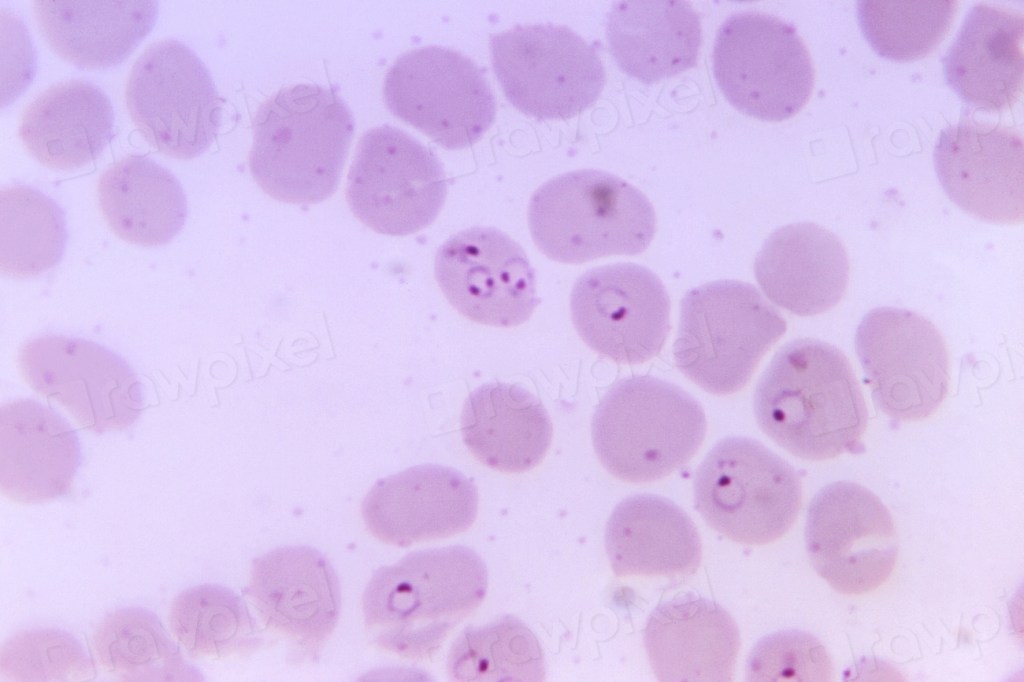
Last week, with the help of our doughty researchers, we published a small piece describing how Artificial Intelligence is being employed to design new generations of bacteriophages, some of which might be used to target antibiotic‑resistant bacteria (LSS 8.8.26). Hopeful, certainly — but intelligent readers will ask the old question: what’s the chance any of this will work anytime soon?
Well, you’ll be glad to know that human‑modified bacteriophages have already been in action, and successfully too, since the far‑off days of 2024. They weren’t using AI to design the phages then, merely modifying them using another LSS favourite: CRISPR‑Cas9 gene editing.
Our first trope concerns a report in The Lancet Microbe, a long but reasonably readable paper describing a safety and tolerability trial of SNIPR001 — a combination of four CRISPR–Cas‑equipped bacteriophages — in healthy human volunteers. Results were encouraging:
“SNIPR001 was safe and well tolerated in healthy participants, with signals suggesting targeted activity against E. coli, despite the absence of a statistically significant effect.”
Our second trope comes from the excellent Michael Le Page of New Scientist, who reports on the clinical use of the same SNIPR technology — not a trial in healthy volunteers, but in an actual patient. His piece, CRISPR‑armed phages help treat severe superbug infection, is unfortunately behind a paywall, but worth crossing. It tells the story of a 65‑year‑old man in California with a severe, antibiotic‑resistant E. coli infection whose condition markedly improved after receiving these engineered phages. The lesson is clear: artificially-modified phages can work.
Now, nobody is claiming miracle cures — not the authors of the paper, nor Michael, nor ourselves. But all of us, in our different ways, are pointing to extremely encouraging signs. And remember our original point: all of the above took place, before our famous AI‑designed bacteriophages have even gone into trial. What possibilities might open up when they are fully deployed?
Despite our occasional diversions into such recondite fields as History and Economics, this is still front and centre an Antibiotics resistance blog, gentle readers. Which is why when an article as good as the one we’re showcasing today called Antibiotic Resistant bacteria increasingly leaving children vulnerable to common infections, global study finds by the inestimable Melissa Davey of the Guardian, we drop all else in its favour.
And it’s packed with goodies, it touches so many bases: if you’re antibiotics fan get a load of this:
There’s a whopping great survey of 82 countries: 106, 581 samples, over 22 years, all controlled by some of Australia’s most prestigious learned bodies. If that isn’t great statistics then you can call us David Spiegelhalter [2]
Several of this blog’s sinister old favourites such as Acinetobacter baumanii, Klebsiella have their usual run out-don’t you love ‘em?
There’s a forward prediction to 2035 which ought to make anyone pause for reflection.
Despite the efforts of brilliant journalists like Melissa, learned scientists of all stripes and even dare we say our own humble efforts, antibiotic resistance is still the ignored elephant in the room of medical science. Sorry we meant human existence. Yep, we meant it.
Talking of which, the all too human failings of poor diagnosis and over prescription, agricultural misuse and poor public health are driving our collective squandering of this precious, once only ever, resource.
The less discussed economic aspects are touched on. Get this: there is sometimes a reluctance to run trials on children and developing treatments for them can be less lucrative for pharmaceutical companies There’s yer problem, guvnor.
The usual hero organisations such as the WHO get a mention, and rightly so given the Herculean task they face.
And a sad, sad story about a lad called Harry whose brief life will be utterly dependent on the rest of us finally doing something about this common peril
If we were to present a class of Freshpersons with a jumping off point which summarises just about every trope in the antibiotics story, then this article would be our choice. Well done Melissa, And keep ‘em coming.
Anyone visiting the South Coast towns of England will know we have a huge sepsis awareness campaign on at the moment, as every ambulance you see is plastered with messages on the subject. And rightly so: sepsis is the cause of enormous suffering and mortality, not to mention its toll on NHS resources. Which is why today we are showcasing the NHS sepsis framework (published only yesterday, gentle readers-we sure do scoop ‘em these days!) [1]. because down in the appendix is a little section which impinges directly on the fons et origo of this whole humble blog: microbial resistance to antibiotics, as if you haven’t guessed already. Because sepsis affords the physician the most awful, excruciating, dilemma.
It’s one of those medical emergencies where every hour counts, truly. When bacteria invade the bloodstream and the immune system spirals out of control, doctors just can’t wait days for laboratory cultures. Broad spectrum antibiotics must be thrown in immediately, because delay will be truly deadly. Maybe it’s sepsis, maybe it isn’t: but the only logical decision at that stage is to assume that it is.
Thereby creating an acute paradox. Because prescribing the antibiotics exerts evolutionary pressure on the bacteria, increasing the strain’s likelihood of developing resistance. And as we know here (LSS passim) every unnecessary course of antibiotics puts the bacteria one step ahead. Modern medicine is trying to perform two contradictory tasks: treat, but avoid overtreatment So although the report puts it in the calm precise language of an official report, sepsis management and antimicrobial resistance must be seen as two sides of the same coin.
And our thoughts? Firstly, we are full of admiration for the medical staff who are dropped into this agonising situation, recognising that they possess levels of emotional and intellectual intelligence far beyond our own limited capacities. Secondly that to shout for “more antibiotics“ is cheap rhetoric, as it just begs the question. And we’re always doing it anyway. A more fruitful answer might lie in things like better DNA sequencing, molecular diagnostics and AI assisted decisions, all of which might better identify the invading pathogen more quickly. Thus opening the possibility of a bespoke antibiotic to be delivered to the right patient at the right time. Now that would be a creative step indeed.
One thing we value here is a well‑written science story that tells us something we didn’t know — and does so in a trustworthy, responsible way. Not the sensationalist, attention‑grabbing material that flashes across our screens all too often. So when our researchers came across Colorectal Cancer and Childhood Exposure to a Common Gut Bacterium by Laura Tran in The Scientist[1], we decided to look at the source itself, to see whether it deserves a place among the canon of science‑news providers we consider worthy of your attention, gentle readers.
As you might expect, The Scientist specialises in clear, sober reporting: across the biosciences, speaking very broadly. The style is terse and informative, closely aligned in spirit with the journals and institutions it covers. There’s a strong news section, a quarterly print magazine, topic‑based browsing, and a generous set of resources. Our test search — naturally, Antibiotics — produced several well‑illustrated, highly informative pieces.
If pressed, we’d say the ideal reader is intelligent, graduate or postgraduate, and probably working somewhere in the life sciences. But there is plenty here for teachers preparing a good science lesson too. Or even two.
Our verdict: not as bite‑sized as Nature Briefing, nor as magazine‑like as New Scientist, The Scientist nevertheless earns a worthy place alongside them as a provider of news and ideas for the educated and reasonable community (that’s us, gentle readers). And in an age when so much content is shaped for attention rather than understanding, that’s a very important thing indeed.
And having satisfied ourselves that The Scientist is indeed a sober and reliable chronicler of the biosciences, we can turn to the story that brought us there in the first place. It is a quietly important one: evidence that early‑life exposure to certain strains of that perfectly ordinary gut bacterium — Escherichia coli carrying a particular genetic island — may leave a mutational fingerprint that shows up years later in colorectal tumours. No melodrama, no scare‑stories, just the steady accumulation of data: mutational signatures, epidemiology, and the slow, careful work of linking mechanism to disease. This is exactly the sort of thing the scientific enterprise does well, and exactly the sort of thing we like to bring to your attention.
CRISPR (Clustered Regularly Interspaced Short Palindromic Repeats) is a natural defence system found in bacteria, which scientists have turned into a programmable way to edit genes with extraordinary precision. In practice, it comprises two parts: a guide RNA that acts like a GPS to find the exact spot in DNA, and a Cas9 enzyme that acts like molecular scissors to cut the DNA. Once the DNA is cut, scientists can delete, fix, or replace genetic sequences inside a living cell. Our first Cover seems to have been over six years ago (LSS 23 11 20), since when we have noted a startling range practical applications from areas as diverse as horse breeding, and sickle cell medicine, to its relationship with blue sky techniques such as Base Pair editing, CART and programmable therapeutics (LSS passim).
How gratifying then to see CRISPR-based tools now partnered with epigenetics, that other old favourite of these humble pages! Once again the lead is taken by the indispensable Nature Briefing, now our go-to for all new things Scientific Their summary CRISPR’s next act: editing the epigenome tells you most of what you need to know. But some readers may well wish to click on the handy link too
A handful of start-up firms are testing therapies that target specific epigenetic markers — essentially chemical groups that sit on DNA and the proteins that it is wound around — to treat everything from high cholesterol to a rare muscular disorder. Changing these chemical markers can switch genes on or off. Some existing medications influence epigenetic markers, but these drugs act broadly and lack specificity. A new cadre of scientists has found ways to precisely alter the epigenetic signals that influence specific genes.
There is much here to gladden the hearts of all who believe in Reason and Learning. The technique seemingly so radical a few short years ago is not only becoming routine, it is embedding itself into the wider corpus of medical and scientific practice. Practicable applications are multiplying and the opportunities to reduce human and animal suffering are thereby multiplying. If anyone asks us “why do you take such an interest in the progress of the Arts, Sciences and Letters?” one answer we give is: because of things like this.
If you want to know more about epigenetics, or molecular biology in general, then we cannot do better than recommend the works of the great Professor Carey:
Carey, Nessa. The Epigenetics Revolution: How Modern Biology Is Rewriting Our Understanding of Genetics, Disease, and Inheritance.London: Icon Books, 2011. New York: Columbia University Press, 2012. ISBN: 9781848312920 (Icon Books); 9780231530712 (Columbia UP).
Carey, Nessa. Hacking the Code of Life: How Gene Editing Will Rewrite Our Futures.London: Icon Books, 2019. New York: Columbia University Press, 2019. ISBN: 9781785784972 (Icon Books); 9780231549769 (Columbia UP).
The idea of whole and unexpected possibilities in antibiotic research excites our highest hopes-and those of readers who have accompanied us on this journey for years. None more so than this report from Nature BriefingGene Megacluster boosts antibiotic arsenal. We’ve set up their usual summary, plus links: and then we’ll try to answer a few of your questions as best we are able
A newly discovered gene ‘megacluster’ in Streptomyces bacteria enables them to produce a variety of potent antibiotic compounds. These compounds act as a multi-pronged offensive weapon against other species, with each targeting different stages of the bacterial metabolic process. It’s more difficult for bacteria to develop resistance to attacks that hit several targets, so the discovery could lead to the development of new antibiotics, experts say. The research has “discovered something new in a system so extensively studied — hidden in plain sight,” says medicinal chemist Mark Blaskovich
So, what is this gene megacluster? An unusual stretch of DNA in Streptomyces that encodes four distinct families of natural-product antibiotics, including: one compound entirely new to science, another never previously recognised as an antibiotic, and two known families deployed in a new coordinated fashion. Not a bad haul for one discovery, we think.
What does it do in Streptomyces? All four molecules target biotin (vitamin B7)—a universal cofactor required for growth, cell division, and metabolic enzyme function in most bacteria. They attack different points in the biotin pathway: production, uptake, use, and availability, aided by flanking streptavidin genes that bind up free biotin.
Why is this discovery genuinely new? Well , all sorts of reasons: here are a few of the best
–Co-location is unheard of: Antibiotic biosynthetic pathways are usually scattered across the genome. Here, four unrelated antibiotic families sit side-by-side, implying intentional evolutionary selection.
–Coordinated multi-antibiotic strategy: Natural antibiotics typically act alone. This cluster encodes a team of molecules that hit the same vulnerability from different angles—something not previously documented.
–Hidden in plain sight :Streptomyces genomes have been mined for decades, yet this megacluster was overlooked because genome-mining tools historically focused on single-product clusters. We love this bit, as regular readers will have already discerned
–It appears to be widespread. The megacluster is present across multiple Streptomyces species, suggesting an ancient, conserved strategy rather than a rare curiosity.
Could similar clusters exist in other organisms? Likely, yes. The discovery provides a road map for genome mining that looks for coordinated multi-pathway clusters, not just single biosynthetic islands Early research might do better to focus on procaryotes rather than eucaryotes-but who knows?
How could it help us to develop new antibiotics? This is the Big One for us , isn’t it? Lots of ways potentially, but as of late June 2026 three practical routes suggest themselves:
1. Direct development of the four biotin-targeting molecules. Because they attack different steps in the same essential pathway, they could be: used individually, combined as a cocktail, or engineered into hybrid molecules. Multi-target antibiotics are inherently harder for pathogens to resist. So that will teach them we’re serious this time.
2. Synthetic biology reconstruction. The megacluster’s architecture can be transplanted into: Streptomyces strains, E. coli or yeast expression systems, or modular cell-free platforms, permitting all sorts of scaling and production advantages
3. Drug discovery by analogy The discovery provides a template: look for clusters that coordinate attacks on other essential pathways (e.g., folate, isoprenoid synthesis, lipid II). Genome mining guided by this logic could uncover dozens of new multi-pronged antibiotic families.
4. Biotin-pathway inhibitors as a new class Biotin metabolism is conserved across many pathogens, including Gram-negatives—historically hard to target. These molecules could seed a new class of antibiotics that bypass existing resistance mechanisms
At this blog we tend to rate discoveries by the possibilities they open rather than the questions they answer. By that metric, this one is big indeed-and we think you’ll al agree with that.
Why doesn’t evidence cut through? Why do reason and learning so often fail? They’re themes that have haunted this blog since its inception way back in the COVID‑19 days of 2020. Aren’t we supposed to be the heirs of the Renaissance, the Enlightenment, and all that? Maybe part of the answer lies in this story about the UK and Japan, and their startlingly different experiences with their respective HPV vaccination programmes, as detailed in this excellent Conversation article by Professor Justin Stebbing of Anglia Ruskin University [1].
On the face of it, vaccines are a winner: the biology is clearly understood, they save lives, and they have eliminated numerous diseases [2]. Which explains the success of the UK rollout of the HPV vaccine: Justin has a barrage of juicy statistics, but in his words the NHS now feels able to publish a plan to eliminate cervical cancer as a public health problem in England by 2040. Compare that with Japan, where following a reasonable start, the HPV vaccine campaign collapsed into desuetude. There were media stories, the government lost its nerve: the result is” that among girls born in certain years, coverage fell from around 70% to below 1%, and it remained at that level for years“. And Justin explains the dreary consequences at some length.
So why can’t we understand the difference between the two countries? In the end, vaccine hesitancy has very little to do with the science and everything to do with the stories people swim in. The biology stays constant; what shifts is the cultural weather around it. A rumour here, a misframed headline there, a neighbour’s anecdote, a politician’s stumble — tiny changes in narrative that can tilt whole communities from confidence to doubt. Vaccination succeeds or fails not in the laboratory but in the social world: in trust networks, identity cues, and the fragile ways humans decide whom to believe. It is anthropology, not virology, that explains why one hospital bed stays empty and another does not.
In other words, public health is really about anthropology, not biology. One person who understands this well is Gillian Tett, whose formidable book Anthro‑Vision [3] argues that the real drivers of human behaviour are rarely the numbers on the page but the cultural currents beneath them — the stories people trust, the tribes they belong to, the risks they feel rather than calculate. Public health often talks in data, but people decide in narrative. A stray rumour, a clumsy headline, a shift in group mood can undo months of scientific clarity, while a well‑placed story or trusted voice can restore confidence just as fast. And suddenly this becomes true of many of the things that preoccupy us here — climate change, economics, even the long arc of female emancipation. For all our “LSS are the heirs‑of‑the‑Age‑of‑Reason,” for all our Whiggish rhetoric, we’ve missed one important truth. People are not how we would like them to be. And this book tells us a lot about why.
When that paragon of unimpeachable virtue Richard Milhous Nixon announced the War on Drugs back in 1971, we counted ourselves among his most fervid supporters. It chimed with our most basic principle: people must be stopped from enjoying themselves wherever and when that is possible. And when some of those people are pot-smoking hippies or degenerate cocaine fiends, how much more satisfying still was that act of repression! But yet, as always, the Devil Whispered in Our Ear: If we were banning all that weed and charlie and smack and billy whizz because they altered minds and caused social problems, then what about nicotine and alcohol? Didn’t Jesus seem to take a relaxed view of the matter, both in the famous wedding at Cana (John 2 10 ), and in the Last Supper (Matthew 26:27–29) At least the company didn’t light up cigars at the end of the meal-but boy, did these passages pose us some problems!
Since when things have slipped still further. As if they didn’t have enough problems with fossil fuels and rising sea levels already, the nation of Palau has dropped another logic bomb upon the Comfortable nations of the world Read this Should Nicotine be regulated like drugs? from Nature Briefings
A call by the Pacific island nation of Palau for nicotine to be regulated like narcotics by the United Nations will trigger an assessment and a vote by member states. If nicotine were to be added to the UN Convention on Psychotropic Substances, it would effectively make it illegal to sell nicotine products that aren’t considered medicinal, says nicotine-treatment specialist Renee Bittoun. But tobacco-company lobbying makes it unlikely that nicotine will be added to the list, says Bittoun. Nature | 4 min read
Whatever next, gentle readers? Will they free up restrictions and red tape on the sale of tea and coffee? Will they start alleging the thrill people get from driving fast cars is like that from cocaine-and bring in speed restrictions? Or will some sect of uber – Free Market Liberals, followers of Adam Smith or something, seize power and then abolish all restrictions on all neurologically active substances? We can’t decide whether we are going to be oppressed by Communists or Capitalists: but we await our fate in trepidation.
A couple of years ago we did a piece called Did your long-ago BCG Vaccine save you from dementia? In which we reported that the famous BCG (Bacillus Calmette-Guérin) vaccine was also proving efficacious in cases of bladder cancer and certain types of dementia. (LSS 2 12 24) Well today things just became even more intriguing. Read this from Nature Briefing, Century Old Vaccine helps control diabetes;
A tuberculosis vaccine developed in the 1920s helps to regulate blood sugar in people with certain types of diabetes, enabling them to reduce their insulin use. The findings demonstrate yet another beneficial off-target effect of the Bacillus Calmette–Guérin vaccine, derived from a weakened form of the bacterium that causes tuberculosis in cows. The shot has been approved to treat bladder cancer in the United States and is being investigated against conditions such as Alzheimer’s disease. The results were presented at the American Diabetes Association meeting on 7 June.
And the Learning Point? When we did Training and Teaching, they always told us that we had to have a learning point. So we think it’s this:
Vaccines are one of civilisation’s quiet miracles:[2] you design them for one threat, and decades later they’re still paying unexpected dividends — BCG for TB, then bladder cancer, then dementia, and now hints of protection against diabetes. That’s what real science does: it compounds. You invest once, and the benefits echo for generations. But if you decide, like the climate denier or the old‑school smoker, that evidence is optional and expertise a nuisance, you’re effectively betting your long‑term future against the only tool that has ever reliably improved it. Reality is not something you can pick and choose.
Once again, the source for our blog today comes from the excellent Nature Briefing, who are always in the forefront of scientific research in every field. Today we are showcasing their piece AI is taking on antibiotic resistance because we think they’re picking up on some real game-changing developments, and we really want you to know about them.
Let’s start with their usual helpful summary, as it’s a good general overview. But this time we earnestly beg you to click on the link they have provided: read below to find out why.
Antibiotics are an effective, but somewhat indiscriminate solution to some gut infections. Helpful species of gut bacteria get caught in the crossfire, which increases the likelihood that drug-resistant bacterial strains will evolve. Researchers are now designing drugs to selectively target disease-causing species with the help of artificial intelligence. Some teams are using AI to screen drug molecules for the most promising candidates quickly and cheaply. Others have developed tools that predict how drug molecules bind to protein targets to reveal a drug’s mechanism of action, reducing the need for wet-lab experiments.
Because if you do, you will step into a world of research where Information Science and Biological Science are meeting: which of course is more and more these days isn’t it? You will learn about:
Jonathan Stokes of McMaster University in Canada who have pioneered the use of AI to test their newest molecule called enterololin and thereby strip out all kinds of old-skool testing processes.
Regina Barzilay of MIT who with her team have done much of the AI work to set this up for Jonathan She is a remarkable woman who has been hunting down the link between antibiotics and AI since 2018-how’s that for far sightedness, folks?
You’ll be able to name check tools like Diffdock , RdKit and Chemprop which these people use to do all this-how’s that going to sound in the pub?
And a woman called Molly Bartlett who’s something called a Chemical Informatician at London’s Imperial College. As we still have a tenuous connection to that august institution we sometimes write in to their alumnus mag and tell them what a good job they’re doing, knowing we speak for all of you, gentle readers.
And much more besides, Especially if you do the decent thing and sign up to go behind the paywall.
Funny, isn’t it? If our first name were Donald (it isn’t) we might note how much this progress a) seems to come from despised places like Canadia and Englandland b) how somehow these evil foreigners still find ways to work with Unitedstatespersons c) maybe if you want to find cures for important things you may have to look at other methods in addition to earnest prayer d) if I were getting bigly older, perhaps approaching my eightieth birthday for example, I might like to have a few antibiotics around. Just a thought.
# Antibiotic research #Artificial Intelligence ~medicine #health #bacteria