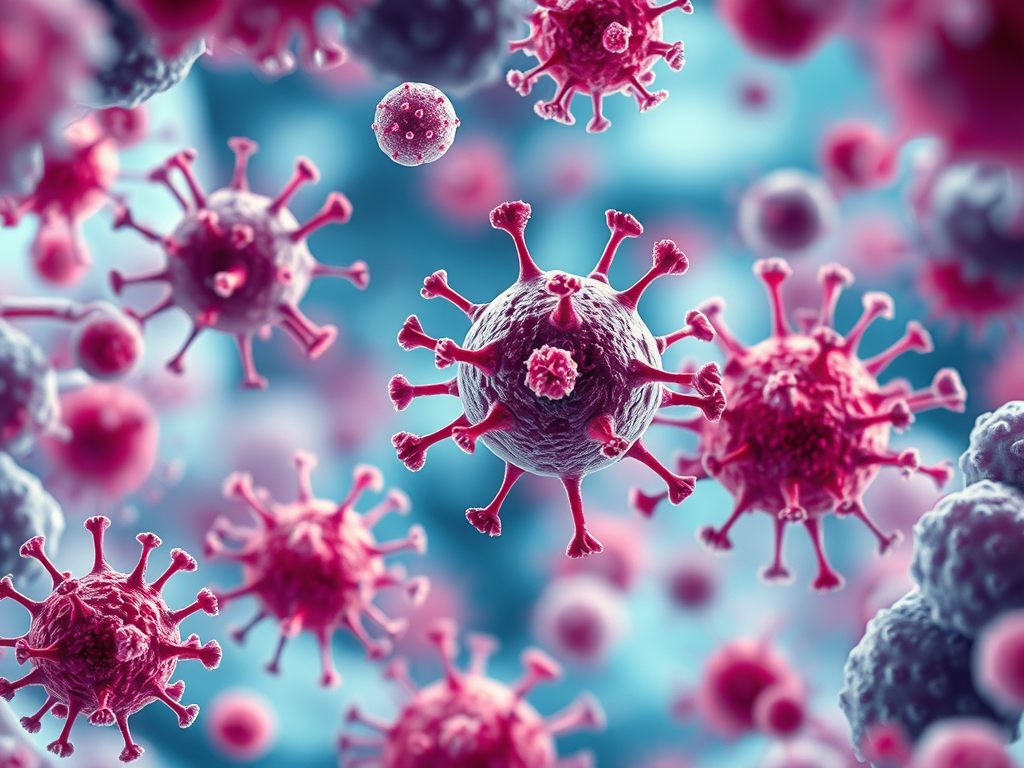
PERT: Next step in gene editing offers real hope for hereditary diseases

Almost a quarter of hereditary diseases can be put down to mutations which break an established pattern of DNA, so it can no longer be read. No wonder they are called nonsense mutations. Often these mutations are expressed as STOP codons: just a short three letter sequence that stops protein synthesis dead, like a bad piece of coding in a computer programme. Now a new technique called PERT (Prime Editing RNA Therapy)allows the cellular process to override glitch in the DNA and resume synthesis. The new technique equips cells with engineered tRNAs that override these stop signals, letting the ribosome continue translation and produce the full protein. Here once again is Nature Briefing with one of their excellent short explanations Versatile gene-editing tool fixes nonsense, plus hyperlinks if you wish to delve deeper.

A multipurpose gene-editing tool can correct several genetic conditions in mice by restoring proteins that have been cut short by disease-causing mutations. The method, called PERT, uses engineered RNA molecules that allow protein synthesis to continue even when a DNA mutation tells it to stop prematurely. These ‘nonsense mutations’ comprise nearly one-quarter of known disease-causing DNA variants. As such, if PERT proves effective in humans, it could overcome the need to design bespoke treatments for individual diseases.Nature | 5 min read
Reference: Nature paper

There’s a lot to like here. Firstly the prime editing is straight out of the same stable as the CRISPR and Base Pair Editing techniques which we have heralded here for years (LSS passim) Secondly, unlike most gene therapies, which must be tailored to each mutation, PERT could treat many different diseases with a single editing agent. This is a huge shift in scalability. And if the suppressor tRNA is permanently installed in the patients genome, it is possible that only one treatment may be needed. Once again we are reporting at the early stages (that’s our brief) so all parties are careful to emphasise we are nowhere near clinical applications yet. However, just as we learned during the COVID 19 pandemic , the ability to intervene at the RNA level, precisely between gene and protein, appears to be one of the most fertile areas in medical knowledge for years to come.

#hereditary disease #RNA #DNA #molecular biology #health #medicine
Making an end to Cervical Cancer, making a start on an end to Alzheimers- two stories of real hope

At a time when ignorance and anger are gleefully presenting themselves as the new norms, it’s heartening to see that some people are still active on our side. And achieving real, substantial progress. That’s why we’re proud to bring you two stories which show what educated minds, still employing the twin discipline of fact and reason, have achieved lately.

Repurposing old medicines. Regular readers will will recall our enthusiasm for lateral thinking, using old things which were there all along to do unexpected new ones. So Sharon Wooller of the Mail has a triple whammy for us this week.[1] After screening 80 commonly used drugs or vaccines , ingenious scientists at the University of Exeter selected three that might have a bearing on the terrible scourge of Alzheimers disease. They are: Viagra, which stops those pesky tau plaques from building up. Riluzole which may actually bring them down. And the shingles vaccine Zostavax which may also affect the immune system. Now we know the brain barrier frontier is pretty much down (LSS passim) this has to be a powerful runner, gentle readers. But best of of all is why these scientists set out to do this. To quote Sharon. in a nutshell:

Making drugs from scratch can take ten to 15 years and cost billions of pounds, with no guarantee they will work.

If you cant afford new ones, why not try a few old ones? Quod erat demonstrandum

Cervical success People can co-operate, even across national lines, when there is “cause sufficient”. One of these was cervical cancer, which not only blighted and destroyed lives, but effectively deprived the world of much of the better half of its workforce. Two releases today from GAVI and the WHO evince the remarkable strides in the vaccination programmes which have done do much to eliminate this disease. Hats off not just to the scientists, but also to the intrepid field workers who have combed the wildest, remotest corners of the earth, employing the most recondite means, to save lives and afford a brighter future to millions [2] [3]

When we read stories like these we know we are not alone. Our side is still out there. And unless they crush all universities and research institutes everywhere, we shall be back one day. For keeps.

[1]https://www.dailymail.co.uk/health/article-15298699/Viagra-Alzheimers-drugs-hope.html

[2] https://www.gavi.org/news/media-room/cervical-cancer-vaccines-save-over-1-million-lives-lower-income-countries

[3]https://www.who.int/news/item/17-11-2025-world-marks-cervical-cancer-elimination-day-as-countries-accelerate-action

#vaccine #drug #medicine #alzheimers #cervical cancer #women #health

Depressing Diptych for November #2:Falling vaccine rates

As the sun sets on the Americas, politically and economically, a new and insidious trend is only going to add to their problems. Read this from the ineffable Nature Briefing: Canada loses measles elimination status

Canada no longer holds measles elimination status after experiencing a cross-country outbreak that has persisted for more than 12 months. By default, this means that the entire Americas region has also lost its status. Infections took hold in undervaccinated Mennonite communities where the COVID-19 pandemic eroded already-shaky trust in the healthcare system — a shared source of recent measles outbreaks in the United States. The number of new cases is going down, but the loss is “a giant wake-up call that we have gaps in our public health infrastructure”, says physician-scientist Isaac Bogoch.CBC | 6 min read

If only it were just them! But it’s now a world-wide trend. According to a recent report by the WHO,[1] Measles cases rose to 10.3 million in 2023, a 20% increase from 2022, with outbreaks intensifying into 2024 and 2025. No less than 138 countries reported measles cases in the past year, with 61 facing large or disruptive outbreaks—the highest since 2019. Meningitis and diphtheria (horrid afflictions) are also re-emerging, particularly in regions with strained health systems and declining immunization coverage. And the causes? Funding cuts and humanitarian crises for one thing Access barriers, especially in marginalized communities, for another  But the prime one, and most baffling to us, is our old bugbear: Misinformation and vaccine hesitancy, A fact well illustrated by a similar  study from Europe which showed that vaccine hesitancy among adolescents and parents ranges from 12% to over 30%. We invite you to research more, gentle readers.

And so combining with the previous part of our Dreary Depressing Diptych of dispatches (that’s enough D’s-ed) we get a truly dismal picture of this species which has the barefaced cheek to call itself “sapiens.” If an tiger came to you an announced it was was giving up its stripes, you would counsel “don’t do it-if you throw away your principle evolutionary advantage, you will get no dinner!” Similarly if a spider monkey were to forego the use of its tail, or a real spider its web. But humanity seems determined to forego the use of its principal evolutionary advantage, its brain. Palaeontology will record what comes next.

[1]https://www.who.int/news/item/24-04-2025-increases-in-vaccine-preventable-disease-outbreaks-threaten-years-of-progress–warn-who–unicef–gavi

#vaccine #measles #diptheria #medicine #health #childhood disease

Antibiotic Resistance Rising: Part one of our Depressing Diptych for November

Five years of writing this blog, ten years of campaigning. But antibiotic resistance is still on the rise as this article by the indefatigable Hannah Devlin of the Guardian makes all too clear.[1] According to the UK Health Security Agency deaths due to antibiotic resistance went up by 17% in England in 2024 alone.[2] And England is not an outlier: investigations by our Fact Checking Department , Research Unit and and Data Team all showed comparable metrics for other G7 counties(sorry, no time to look wider!)

As might be expected from a fine journalist who has covered this topic so extensively, Hannah’s article is a cornucopia of useful statistics, data points and links. As for the England’s particular glitch, she offers this intriguing possible cause: an increase in private prescriptions following cuts to antibiotic prescriptions within the NHS. Time will tell on that one.

But all too depressingly believable in any case. In pubs, in shops in cafes, we hear the same dreary old reprise: “I’ve got flu and that (unprintable) (unprintable) of a Doctor wouldn’t give me an antibiotic!” An utter misunderstanding of causes, effects and consequence which leads to an ever-rising demand for antibiotics and consequently, an ever-rising rate of resistance mutations in the target organisms. Combine that with the disgraceful misuse of antibiotics in the farming industry, in order to produce megatons of unnecessary meat, and you can imagine a world in ten or twenty years’ time where there are no antibiotics as such at all. It’s not the antibiotics themselves, it’s not the bacteria, its the fact that so many people think they can ignore the findings of science -until it’s too late. It’s a theme we’ll return to in the next part of our Depressing Diptych for this November. Stay on line, it’s coming up.

[1]https://www.theguardian.com/society/2025/nov/13/deaths-linked-to-antibiotic-resistant-superbugs-rose-17-in-england-in-2024

[2]https://www.gov.uk/government/organisations/uk-health-security-agency

#microbial antibiotic resistance #health #medicine #prescriptions #NHS #farming

Suffer from Seasonal Affective Disorder? Here are some numbers that may cheer you up

Seasonal Affective Disorder (SAD), that debilitating melancholy that so many people report as autumn draws in is very real, according to Linda Geddes of the Guardian. [1]. It’s not just Linda’s article itself that intrigues, although it’s full of good facts and useful advice. Because the approach her scientists have taken illustrates one of the most exciting and hopeful trends in human learning since the Renaissance: the use of giant data sets combined with powerful IT tools to handle them.

The SAD researchers at the University of Edinburgh., led by the redoubtable Dr Cathy Wyse analysed four years of data, comprising records of 500 000 people from the UK Biobank,[2] a vast compendium of learning on all things medical in these islands To paste Linda’s killer quote

Large-scale resources such as the UK Biobank have transformed this area of research, allowing scientists to track seasonal patterns across hundreds of thousands of people over many years – something that was previously impossible.

It wasn’t long, gentle readers, before we found how this whole new area of learning, depending on whole new technologies such as AI, Cloud Computing and High Performance Computing is transforming our understanding in many areas such as medicine, biotechnology, meteorology, epidemiology…. remember our own praises for Deep Mind and its generation of the alpha fold proteins? (LSS passim). It is revolutionising human sciences like economics and can even help us understand more about the authorship of old texts such as The Bible and Greek Masters like Homer. Because only by looking at really huge data sets can you see patterns, meaningful patterns, which the close view of the human mind alone could never have detected.

Being the curious little monkeys we are, we couldn’t resist asking how this all works. It was like lifting the bonnet on a Rolls Royce when you don’t know what a variable valve timing system is-or anything else. For we were in an arcane mathematical world of Combinatories, Probabilities, Big O numbers, floating point approximations, Complexity, Catastrophe, and countless other recondite concepts which t will always remain beyond our comprehension. You try a few and see how far you get! But our admiration for the people who can handle such stuff, and use their computers to make all our lives richer, like the great Dr Wyse, grew even more limitless. Nevertheless, we will leave you with one fact hitherto unknown to us. If you shuffle one standard pack of 52 cards, there are 52! possible permutations: that’s 8.07x 1027. More than all the atoms in the solar system. Good job no one has tried it with two packs, we say: or they would have to move the Smaller Magellanic Cloud out of the way to make room for all the possibilities.

[1]https://www.theguardian.com/society/2025/nov/02/how-to-beat-the-winter-blues-seasonal-affective-disorder

[2]https://www.ukbiobank.ac.uk/

#SAD #health #psychology #mathematics #computing #complexity #HPC #big data #medicine

Nature Briefing on a brand new antibiotic(or was it there all along?)

Today, gentle readers, we bring you really good news in our joint quest to finally overcome the problem of antibiotic resistant micro organisms. And it comes of course from Nature Briefing, that indispensable source of all good science news and reporting. Let’s start with their summary Antibiotic was hiding in plain sight, and then briefly run through all the implications

Scientists have discovered a powerful antibiotic while studying the process through which a soil bacterium naturally produces a well-known drug. The compound — called premethylenomycin C lactone — is more than 100 times more active against bacteria than the final product, antibiotic methylenomycin A, which was first identified in 1965. Tiny doses of the surprise discovery killed strains of bacteria known to cause hard-to-treat infections.Nature | 5 min read
Reference: Journal of the American Chemical Society paper

Okay, so wanted the implications? Firstly for us at LSS. Great reassurance to see progress in our core area of real, old-skool antibiotics. Now, if these make a comeback, can they please be used sparingly, and in conjunction with therapies like vaccines and bacteriophages, so we are not in this whole mess again around the year 2065? Secondly, the new compound premethylenomycin C , though only a precursor is a hundred times more powerful than methylenomycin A. As Dr Challis, one of the co-authors of the work observes, that’s a turn up for the evolutionary book if ever there was one. But for us the Big One is how many years of painstaking research this all took, how many tiny detailed steps in the synthetic chain had to be weeded out. They started back in 2006 when one George W Bush was still President of the United States and everyone thought that Katy Perry was the way of the future. Blue sky abstract research; done as much out of intellectual curiosity as anything else. Which is odd. Because every so often one of our Right Leaning media outlets comes up with tropes such as WOI ARE VE WYESTIN ORL DIS TEXPAYUHS MUNNI ONNER RESURTCH WOT DON’T DO NUFFINK? SPEN IT ON SUMFIN USEFUL GUVNOR, INNIT! Which raises a deep question; how do you measure the value of research like premethylenomycin ? The costs are small but substantial enough to cash-strapped Universities. But the pay-off is almost infinite. That one we will leave to you, faithful readers of our words.

[1]https://www.nature.com/articles/d41586-025-03595-3?utm_source=Live+Audience&utm_campaign=f5bcecac99-

#antibiotics #biochemistry #microbio;ogy #medicine #health #antibiotic resistance

AI =New drugs and medicines 17 times faster

Good heavens, but it takes a long time to get a new medicine in use. To go from first concept to everyday pharmaceutical use in the high street can take from 10 to 15 years on average. There’s all that Discovery and Initial research: followed by Preclinical Testing, Clinical Trials, and Regulatory Review. Quite right too: we support all this red tape , as there no point in killing the people (or animals) we’re trying to cure. Occasionally things are permitted to speed up (think mRNA vaccines during the COVID-19 pandemic) But we admit the whole thing can be a tad frustrating, particularly for a blog like this one, ever campaigning for new forms of antibiotic and other ways to combat resistant micro-organisms,

Which is why we support every endeavour to speed the process of drug development up. None more so than when its exponents try fresh thinking, as the ingenious Dr Alex Shalek of MITI. Read this AI offers drug-screening shortcut from Nature Briefing

An artificial intelligence (AI) model trained on complex data from human cells could bypass the need for time-consuming drug-screening in the race to develop new medicines. The model, called DrugReflector, was trained on data about how each of nearly 9,600 chemical compounds perturbs gene activity in more than 50 kinds of cell. Researchers found that DrugReflector was up to 17 times more effective at finding compounds that could affect the generation of certain blood cells than standard screening, which depends on randomly selecting compounds from a chemical library.Nature | 4 min read
Reference: Science paper

Dr Shalek and his admirable team think they have accelerated the process by anything between 13 and 17 times, as you will discover if you drill down on the links which we have provided.

It’s easy to bemoan the modern trend for instant narcissistic gratification, where every want is satisfied by the click of a button and a funny little man showing up in a blue van a few hours later. Of course it is essential to test new drugs, and maintain the high standards which we in the educated community hold ourselves to. You can’t run a drugs company at the same moral and intellectual level that you run a popular newspaper. But anything that speeds things up safely, as this technique appears to do, will save many lives and much suffering. We hope we’ve cheered up your morning break.

#drug development #medicine #health #AI #research #mRNA vaccine

Are stress and trauma passed down the generations?

Does trauma pass down through the generations? Can someone who has been through a war, a genocide, or a famine in some manner pass that experience on to their children? Grandchildren, even? If so, how?  Are the effects purely physiological-or could they even be psychological? It’s a fascinating question for our current dark times. And fortunately we have a  carefully written article by Rodrigo Santodomingo of El País which thoughtfully assesses the current state of play [1] (English speaking readers-you are going to need your translator app for this one)

What impressed us  was intellectual rigour  of experts whom  Rodrigo consulted, like   Professor Isabelle Mansuy of the University of Zurich and Dr Anna García  Gómez, a professional psychiatrist. Professor Mansuy is particularly sharp “it’s not the trauma that’s transmitted, it’s the effects.” she notes. Clear distinctions like this allow us all to wade through a morass of strong evidence, weak evidence, hopeful claims and provisional findings. That something is happening, and that it’s epigenetic seems reasonably certain. Studies of rats indicate that parents subjected to trauma or prolonged stress do indeed have observable  consequences in subsequent generations. But-can these changes be genetic as well as epigenetic? The pioneering work of Dr Rachel Yehuda and on the survivors of concentration camps and their descendants is considered: but she always stresses that any alterations associated  with the FKBP5 gene are in expression, not its structure. As Professor Mansuy concludes: “we know almost nothing about the epigenetic transmission of trauma. This doesn’t mean its not there, but it’s extremely difficult to prove” (LSS translation)

Why are we raising all this? We can never forget our excitement upon learning that life  experiences can be transmitted down the generations even if only by epigenetic mechanisms (If you want to know more about this The Epigenetics Revolution by Professor Nessa Carey is a great place to start) [2] But at a deeper level, and as one presiding over a Whiggish sort of blog we want to live in a safer, more prosperous world where people are on the whole better educated and better off than their parents had been. If trauma from old wars and other catastrophes poisons minds and prevents future generations from achieving this  then it’s a form of pollution just  as evil as say plastics, pesticides or radiation. The Bible waxes lyrical in several places about the iniquity of sinners being inflicted on future generations. What a pity if the sinned-against must suffer the same fate!

[1] La alargada sombra del trauma: ¿Se transmiten sus efectos de padres a hijos? | Ciencia | EL PAÍS

[2] The Epigenetics Revolution: How Modern Biology is Rewriting Our Understanding of Genetics, Disease and Inheritance: Amazon.co.uk: Carey, Nessa: 9781848313477: Books

#genetics #epigenetics #stress #trauma #psychology #biology

How climate change drives the return of deadly diseases

We never thought we’d see it. But Malaria is making a comeback in the British Isles [1] According to the latest findings from the UK Health Security Agency(UKHSA) cases rose by a whopping 32% from 2022 to 2023 making them the highest in 20 years. More than 2000 cases in fact. Now some of this is due no doubt to travel bounce backs after the COVID 19 pandemic. But once put into a broader context. the real pattern becomes both clear and alarming. Global warming is driving a massive spread of insect vector diseases. Dangerous diseases that almost seemed under control until the oil companies unleashed climate change on an innocent world

Staying with Britain just for now, William Hunter of the Mail [2] reports on the appearance of two deadly mosquitoes in the UK: the Egyptian mosquito Aedes aegypti and the appropriately named Tiger mosquito Aedes albopictus. For now these are isolated events, and under current conditions their spread may even be containable. But every year the climate gets a little warmer. Every year brings a higher chance that these vectors will spread their deadly triple load: Dengue Fever, Chikungunya and Zika. With all the consequences which wel- seasoned readers of this blog will recall from our earlier outings on this theme (see LSS 25 3 25, 25 10 21 and many others)

We confess to becoming a little angry when we we write stories like this: such disasters could have been so avoidable. Once, not so long ago these diseases were unknown in this islands except as travellers’ tales, or as the province of medical specialists. Now a wave is crossing the world. We know what the remedy is. If by any chance you are a parent reading these lines: this story is one more line of evidence among many. Your children can never be truly safe until global warming is finally controlled and reversed.

[1]https://ukhsa.blog.gov.uk/2025/05/21/how-we-protect-the-uk-from-vector-borne-diseases/

[2]https://www.dailymail.co.uk/sciencetech/article-15151429/tropical-diseases-britain-mosquitoes-dengue-fever.html

[3]https://wellcome.org/news/how-climate-change-affects-vector-borne-diseases

#disease #malaria #dengue fever #climate change #g;obal warming #health

Two good news blogs: #2 The next pandemic is on BBC2

One thing we are quite proud of at this blog is that we have tried to warn you, gentle readers, of the several dreadful dangers that will confront you if you are not careful. Well aware of your tendency to find creative new ways to hate the neighbours wherever possible, we have, like faithful retainers, quietly sought to adduce the presence of other mortal perils. (LSS passim) Including massive volcanic eruptions, crashing asteroids, polar magnetic flips, toxic pollutants and climate change, which may also be lurking in wait. Nowhere have we been more assiduous than in adverting the threat of new pandemics to follow the COVID -19 epidemic. We have examined possible candidates such as antibiotic resistant bacteria, various viruses, and even fungi. We even speculated, following the work of the great Professor Harper, if such pandemics could lead our own society to share the dreadful fate of the once proud Roman civilisation which preceded us [1]

How gratifying then, when a man of learning and ability far greater than our own covers so much of the same ground, as Dr Chris van Tulleken does for BBC2 [2] In Disease X: Hunting the Next Pandemic. This polymathic Professor of Infectious Diseases at UCL makes a veritable tour de force of the worlds hotspots of deadly virus potential. Taking in such tragic examples as the Nipah virus which still represents a mortal peril in regions of Southern Asia [3] and of course considers the avian flu H5N1, a real old favourite of this blog. Its full of heartbreaking scenes, scarily secure suits and laboratories, and some really intelligent doctors and scientists talking knowledgeably, using reason instead of wild emotional overreaction.

And it may surprise you to learn that Dr van Tulleken ends the show on a cautious note of hope. We doubt that he is a regular reader of our blog. But he touts one of the same themes we have been pushing in the last year or so: using AI to design and synthesise new molecules-antibiotics, vaccines, what have you-to stay ahead of the genetic permutations and combinations thrown up in the organisms that are trying to make a meal of us . If there is hope, it lies in science and reasoned investigation. As certain Presidents of the United States of America should take note.

{1] Kyle Harper The Fate of Rome Princeton University Press 2018

[2] https://www.bbc.co.uk/iplayer/episode/m002jy6q/disease-x-hunting-the-next-pandemic

[3]https://en.wikipedia.org/wiki/1998%E2%80%931999_Malaysia_Nipah_virus_outbreak

[4]https://en.wikipedia.org/wiki/Influenza_A_virus_subtype_H5N1

#avian flu #pandemic #health #medicine #virus