Why the Crash of 2028 was worst of all-and why we should have seen it coming

Croydon January 11 2029

Looking back to the events of last autumn they were so very huge and happened so very fast it is still hard to believe they occurred at all, let alone been seen coming. But no  market crash happens out of the blue . The causes of had been building up for years And just like  1929 and 2008 they were centred on the property market. With one new deadly ingredient: climate change.

By 2024, 2025 at the latest, it was clear that accelerating climate change was posing a systemic risk to the balance sheets of insurance companies.[1] [2] Vast areas of housing and other real estate close to coasts and along river valleys were  becoming too vulnerable to justify the potential payouts, however astronomical the premiums .But spurred by President Trump’s tax cuts, house prices soared: and people extracted money to binge on one last great consumer boom. Yet  after the series of giant hurricanes in the Gulf in the summer of 2028 , it was  not surprising that several insurers went effectively bankrupt: and others required government help of such size as to seriously weaken the dollar and cast doubts on the value of US Treasuries. Suddenly everyone paused spending. And as potentially uninsurable houses represent no value at all the property market turned down. Just as in 1929 and 2008,a collapse in spending followed, turning the situation from downturn into recession and recession into depression in a few short months. Stock market crashes and massive bank failures  followed by the same inexorable logic as in those earlier years. And this time there was no way back

For unlike 2008 there’s no benign community of co-operating nations to pool resources to the rescue.  As much due to the efforts  Trump administration as anyone else , the world is now divided in to hostile trading blocks. It is in the interest of each to see others fail, as they accrue power and status thereby. So China laughed as its American rival staggers to final ruin , opening a sure and  bloodless way to Taiwan. But worse still, unlike previous recessions there can be no return via the normal business cycle. Climate breakdown is the norm: and the conditions it has produced cannot go away, at least in our lifetimes. We ignored the warnings because it was said to do anything about climate change would be bad for business and spoil our prosperity. How ironic that sounds in view of the poverty we must all now endure. Forever,

[1] https://www.mckinsey.com/industries/financial-services/our-insights/climate-change-and-p-and-c-insurance-the-threat-and-opportunity

this piece by pitilla clark of the Financial Times is well worth jumping the paywall:

[2]https://www.ft.com/content/9e5df375-650d-492e-ba51-fb5a34e6ddd6

#global warming #climate change #financial markets #stock market crash #investor #economics

Gold is King!: Did we actually get something right?

Last October (LSS 26 10 24) we published a fanciful piece which purported to come from June 2025. In it, we suggested that US President Donald Trump had raised tariffs to 60% on China and 20% on the rest of the world. (nah, impossible-ed)The resulting disquiet in the bond markets general loss of confidence in US assets and a fall in the dollar, seriously affected its status as the world’s reserve currency. In such circumstances we couldn’t in all honesty see any alternative to gold as the de facto reserve, with all the obvious disadvantages that brings. You will forgive us a modest cough, gentle readers, if we suggest that our little blog, for all it got wrong, seems oddly prescient if you fast forward( or back) to April 2025, a full month ahead of our crystal ball gazing!

Because the recent IMF report [1] suggests the very dangers to which we so modestly adverted you. are now real. Of course, the IMF is not perfect; it too will have its biases and unconscious assumptions like everyone else. But it is compiled by some of the sharpest and most knowledgeable financial minds on the planet, which is why their arguments should be at least engaged with respect. Which is why one aspect highlighted by the Guardian among others [2] has caused us particular disquiet. The writer points out that in the panic after COVID 19 got going back in March 2020, and the famous “dash for cash” it was only the Fed rescuing the US Treasury that prevented a total rout. However:

The real concern here is not technical dysfunction in treasury markets or the mechanics of the Fed, which are the bedrock of the global financial system. It’s about the politicisation of the monetary-fiscal nexus under a Trumpian regime that is fundamentally hostile to the norms of liberal-democratic governance. When even the dollar is no longer a safe haven, what – or who – can be?

There are signs already that gloom can be overdone. As we write these words, Mr Trump and his acolytes appear to be signalling a weakening of their stand on China. While his latest stance on Ukraine suggests bets on his resolve on any issue may be misplaced. In which case the world may breathe a little more easily. Stocks rose yesterday: and gold has fallen back, a little. We are not economic experts nor financial advisors. But as humble citizens with an eye for History we have to at least ask: how long can the dollar, and US Treasuries stay on top of this sort of thing goes on?

[1]https://www.imf.org/en/Publications/WEO/Issues/2025/04/22/world-economic-outlook-april-2025

[2] https://www.theguardian.com/commentisfree/2025/apr/22/the-guardian-view-on-the-imfs-warning-donald-trump-could-cost-the-world-a-trillion-dollars

#donald trump #USA #china #IMF #world trade #gold #bonds #equities #economics

Information Inflation: when the internet acts like a debased currency

Pump more money into the economy and you get inflation. It’s a lesson as old as time. The Roman Emperors of the Third Century successively put less and less silver into their coins, slowly debasing the currency. The result? Everyone needed more coins, and so the value of each unit fell. It was the same in the famous case of Weimar Germany where bank notes carried astronomically high face denominations, but were worth no more than than the paper they were made of.

Is it the same with information? The internet, news media, social media, feeds, all churn out a torrent of information. In such circumstances it becomes increasingly hard to know the value of any one piece and many people just give up trying. All information, any information, becomes worthless and people fall back on bartering local knowledge and techniques. We didn’t have this idea first of course: authors such as James Gleick [1] and Nicholas Carr have more than touched upon it. [2] Think how so many people choose to believe the facts that suit them. That is a perversion of the brain.

It’s interesting to see this convergence between information science and economics. If facts act like money, then they too can be debased. People who throw out streams of data, designed to flood, overwhelm and mislead are the greatest inflationists of all. If they can do it with data they can do it with currencies too.

[1] James Gleick Information: A History A Theory A Flood

[2] NIcholas Carr The Shallows: What the Internet is doing to our Brains

#inflation #information science #currency #economics

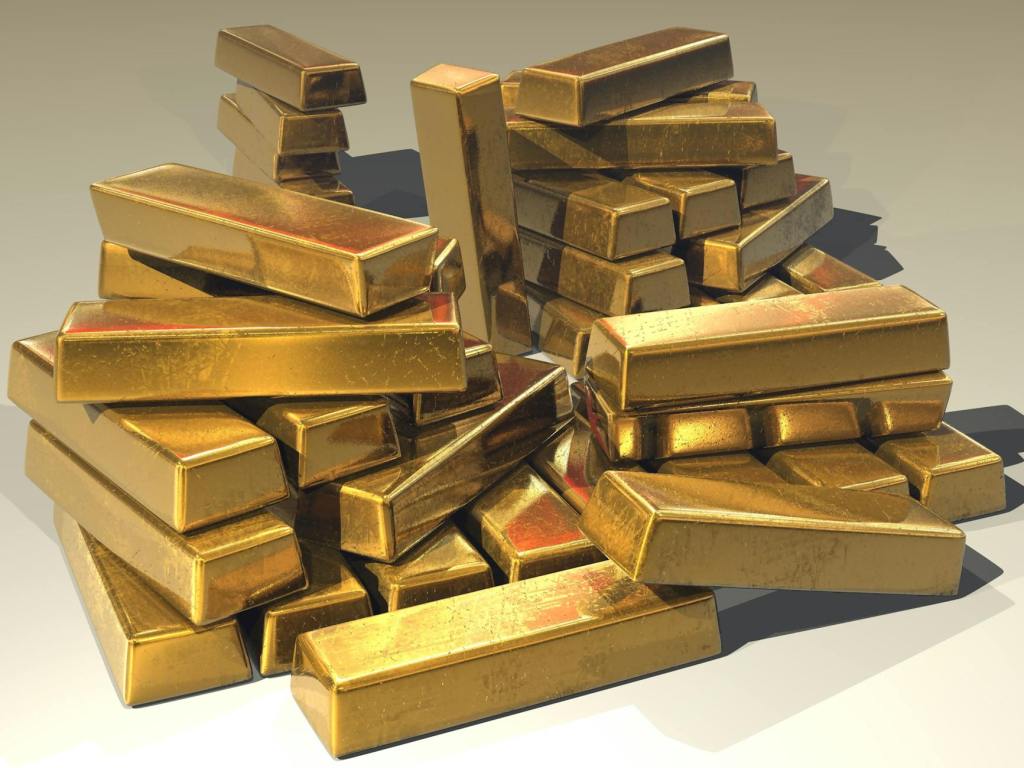
In a world without a reserve currency, Gold is King

It is June 2025, and the world has learned that it no longer has a reserve currency, a role hitherto held by the US Dollar. The chain of events which began with the election of Donald Trump by a disputed majority in the Electoral College (readers will recall he lost the popular vote) have now reached their logical conclusion. You will also remember how attempts to enforce the result by the US Supreme Court could not be accepted by some States who alleged, with some justification, that the Court was no longer an objective and unbiased institution, Their de facto secession, pending a recount, undermined the integrity of both the US Treasury and Federal Reserve. Meanwhile, attempts by the Provisional Trump Administration to impose import tariffs (20% on all comers, 60% on China) have only led to a retaliatory fire sale of Treasury Bonds and other US assets, which led to this morning’s news of the suspension of dollar convertibility. The United States of America (or rather the three new nations into which it seems to be splitting) is no longer at the centre of the world’s financial system.

But, as of this summer of 2025, do we still have a world financial system? Attempts by the BRICS nations to set up their own reserve must end in failure. The lack of transparency in their systems(one or two are more or less open kleptocracies) mean that no one dare trust them to hold their money . The Euro area is too small and fragmented to possibly bear such a role, and their can be other candidates. How can world trade now be anything more than a slightly sophisticated form of barter?

Yet there is one measure by which value is judged. And always has been. Gold has been prized as the ultimate yardstick of worth by humans, and has been by for millennia. It is transportable, it is tradeable, and its price is known at once by everyone in the market. History suggests that world trade works best when most reserves are held by a single, hegemonic power(think Britain before 1914 or the US before 1971) But even if the world’s gold is diffused across the vaults of many competing nations and empires, it can still provide a standard against which everyone can measure the value of their trades. Expect its price to rise now for the rest of 2025, and perhaps even more next year.

#US dollar #world trade #BRICS #reserve currency #gold

Time to Tax the Billionaires?

Imagine that every country was so prosperous that there was little need for migration. That the climate crisis was fixed, with wind turbines and electric cars in every land you visited. New drugs for every conceivable illness were not just freely available, but there were active substitutes for each of them waiting in laboratories. There were no hungry children at all, and everyone in the world had an old age pension. Would about $250 billion* a year about cover it?

That’s what could be obtained if there was a single world effort to fairly tax the planet’s 3000 or so billionaires, according to a report by Gabriel Zuchman, helpfully written up for us by Larry Elliott of the Guardian [1] At the moment this gilded class pays about 0.3% of their income in tax, which compared to most of us is nugatory indeed. But we’ll let Larry’s article cover the details-(you must read it), and instead riff on a theme of our own. The case for tax is not moral, nor Marxist nor religious, nor based on Natural Justice . It’s actually historical, and its about survival

The 18th century, or Enlightenment, or whatever, was full of learned economists who preached the gospel of lower taxes as the source of the wealth of their nations. The country that really put this in to practice was Imperial China, then the world’s largest economy. But the western barbarians-nations like England, Portugal and so on, kept their taxes high, despite all the domestic preaching. The result? Huge fleets and armies, able to dismember poor China’s attenuated defences, and open them to the enlightened benefits of trade. The chief result of which was a mass opium addiction. The moral? You need taxes if you are going to survive. remember that next time you read a bit of propaganda from a billionaire think tank or news outlet.

*in these pages billion=109

[1]https://www.theguardian.com/news/article/2024/jun/25/international-scheme-to-tax-billionaires-wealth-technically-feasible-study-finds

#china #opium war #tax #billionaire #G20 #Gabriel Zuchman