More pointers towards a coming crash(and this time it’s from someone much cleverer than us)

Over the years we’ve ventured a series of blogs (LSS 23 4 25;30 6 25 18 5 26) in which we suggested that another financial crash on the scale of 1929 or 2007-8 may be approaching. We shared our concerns about the long-term viability of US Treasuries, pointing to weaknesses in the property market and the effects this might have on general confidence and demand. We also speculated that rising tides of nationalism and protectionism vitiated the possibilities of co-operative global responses in the style of 2008. Our view alone; and we swiftly moved on to to other matters.

Yet the risks have not gone away. Eduardo Porter, in an excellent article for the Guardian, [1] does not dismiss the possibility of the AI stocks bubble bursting.  But for him:

The largest risk, at this moment, revolves around the federal government’s accumulation of debt, now in excess of 120% of the nation’s gross domestic product, a near unprecedented level. It is likely to keep on growing at a fast clip given massive built in budget deficits for the next decade……a global context: the US’s insatiable appetite for capital – to finance data centers or the federal deficit – is met by China’s export of capital to recycle its huge trade surplus. A coarse, schematic way to think of it is China sells stuff to the US and invests the proceeds in the US. Then, Americans take money from China and use it to buy Chinese stuff.

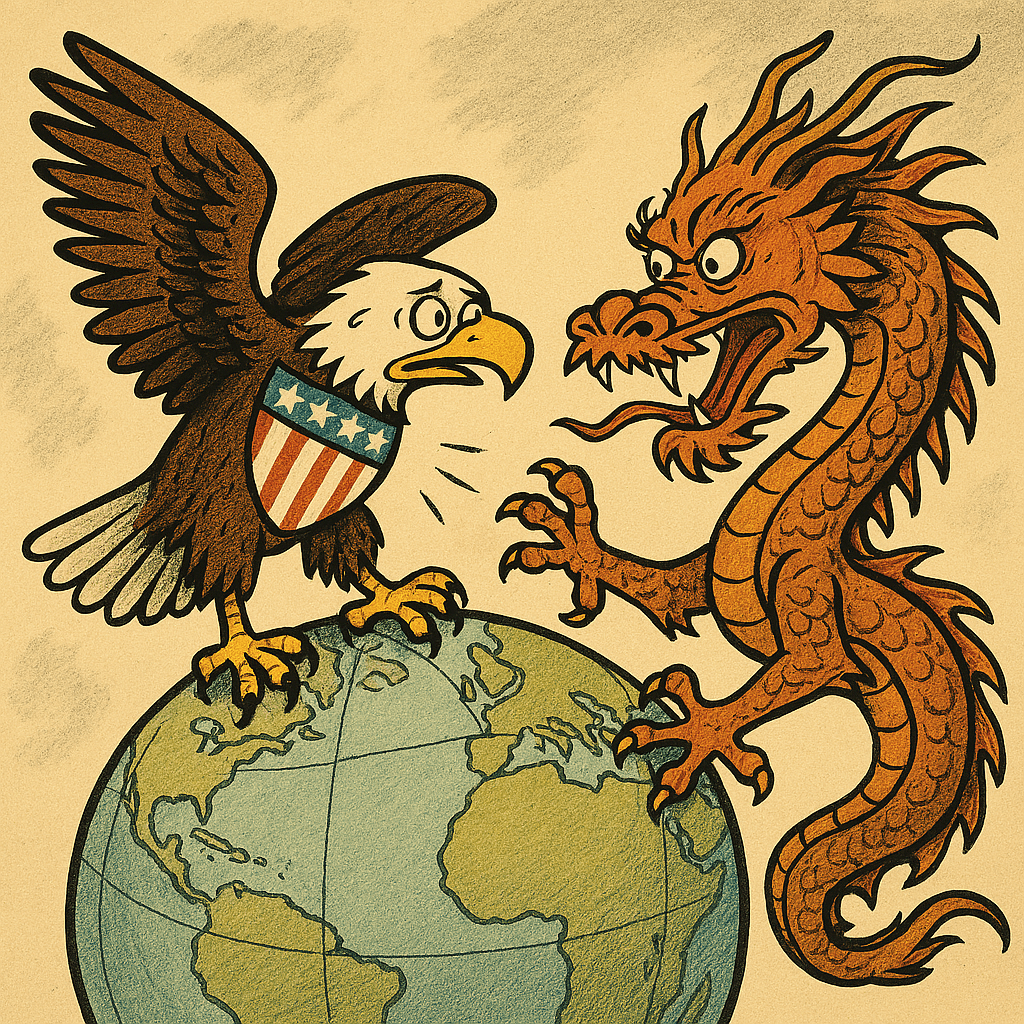
That’s how the world works in May 2026. What happens next? Now Porter gets really interesting, pointing to deep political risks which might trigger a sell off of US debt.[2] Astute readers will not be surprised to learn that many of them revolve around a the actions of President Donald J Trump. An invasion of Greenland? Stepping the war in Iran up again? Attempting to meddle with the Federal Reserve, sending the dollar into a tailspin? Mr Trump is a democratically elected politician and has every right to do these things. But if he does, the consequences will be global. And Porter is equally merciless on the shortcomings of other nations. Like us, he sees no collective escape this time. Ouch indeed.

[1] The world is heading toward a financial crisis – the state of US politics has left us ill-prepared | Business | The Guardian

[2] https://www.aei.org/economics/brewing-government-bond-market-crises/?_hsenc=p2ANqtz-8u2PIGjNg8Q6fBS5RzfUnOeM9txpv7fI9NjE9uC1veq4UgmUkPS-0YDGyIk7m_WiFx

#economics #politics #USA #Federal Reserve #economic crisis #dollar #world trade

The Crash of 2028-an old blog revisited

It’s our occasional habit here to make serious points in a light-hearted sort of way. So when last summer (LSS 30 6 25) we published a piece called Why the Crash of 2028 was so bad….. , we felt we’d made our peace with certain worrying trends in the insurance market, and duly moved on. Except-we must have hit a raw nerve with some of you, because you keep reading it. So what did that old blog say-and has anything changed to make its predictions more accurate?

It was based on some pretty reliable sources [1] [2] including McKinsey and the Finacial Times. In a nutshell, we argued that continuing destruction due to climate change would make property uninsurable in large areas. That this in turn would cause some insurers to go bankrupt, leading to demands for Government bailouts just as the US Government was running at the fiscal limit. Confidence, we said, would fall quickly. Leading to fire sales in asset prices of all sorts, especially Equities and Bonds.  Above all we predicted that recovery would be much more difficult than it had been in 2008, because nations had turned away from co operation and towards nationalist, tariff driven positions, a bit  like the autarchy that proceeded the Second World War How then have we shaped up? Have thing got worse, better or stayed the same?

One constant is the risk from climate change.[3] When something as staid, solid and utterly unexcitable as the Yale Law Journal publishes something like this [4] we know we’re in for a bumpy ride. As for International Co operation-ask them in the Middle East how that has changed since 2025. And Taiwan ? Nothing in the recent summit suggests Mr Trump has achieved anything to deter Mr Xi from his long term ambitions. But most worrying of all is all the warning lights suddenly flashing “Red” in the  Bond Markets today. [5] If you’re wondering why anyone should care about a so‑called “bond market rout”, the answer is simple: government bonds are the bedrock of the entire financial system. When their prices fall sharply, the cost of money rises everywhere else — mortgages, business loans, pensions, bank funding, all of it. A sudden jump in yields isn’t just market noise; it’s the system quietly saying it now trusts governments a little less than it did yesterday. And when the safest assets start to look less safe, everything built on top of them has to be repriced. That’s why experts twitch.

LSS does not give financial advice-we are not financially trained. But we have read our economics. And our History. And today, our worries have grown just that little bit more.

[1] https://www.mckinsey.com/industries/financial-services/our-insights/climate-change-and-p-and-c-insurance-the-threat-and-opportunity

this piece by pitilla clark of the Financial Times is well worth jumping the paywall:

[2]https://www.ft.com/content/9e5df375-650d-492e-ba51-fb5a34e6ddd6

#global warming #climate change #financial markets #stock market crash #investor #economics

New references

[3] There has been a sudden increase in the rate of sea level rise | New Scientist

[4]The Uninsurable Future: The Climate Threat to Property Insurance, and How to Stop It | Yale Law Journal

[5] Bond market rout deepens as investors fear ‘stagflationary shock’ from higher oil prices – business live

#global warming #insurance #property #bond market #finacial system #middle east #geopolitics

Farewell Robert Skidelsky. If you want to know more about the current mess, read this

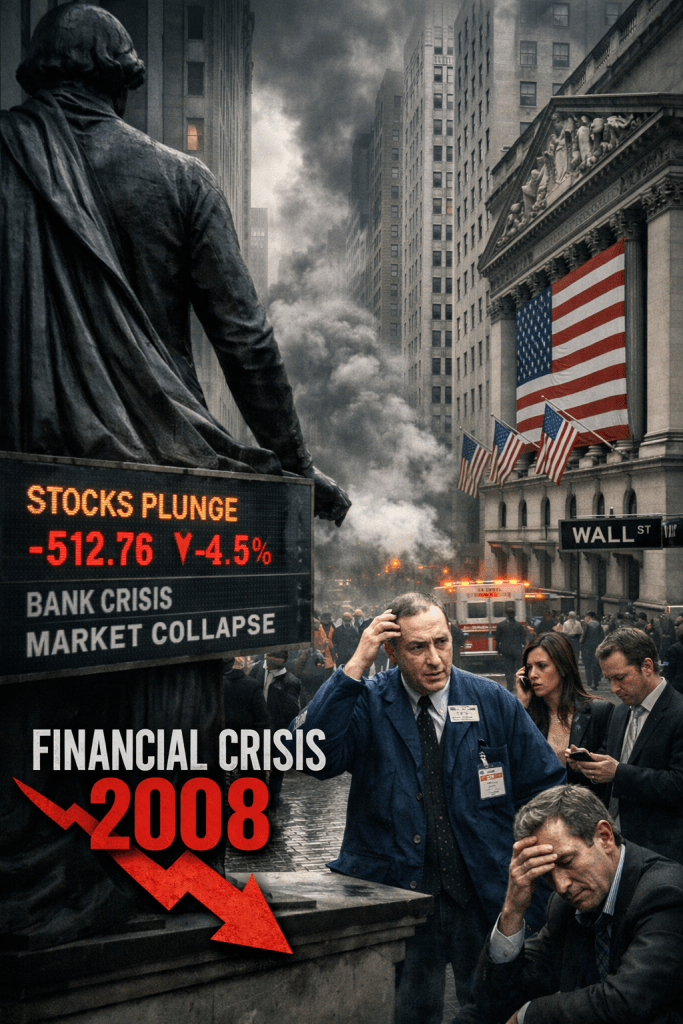
No one over thirty will forget the terrifying autumn of 2008. For on September 15th of that year the collapse of Lehman Brothers initiated the acute phase of a chronic financial crisis, tumbling the world economy towards final ruin. And as the indefatigable Larry Elliott [1] notes in  the Guardian, in his masterly obituary of Robert Skidelsky, the ruling classes of the west  were utterly bewildered:

…… there was almost universal disbelief that the crisis was happening. The entire economic establishment – politicians, bankers, Treasury officials, analysts and pundits – were caught unawares, because according to the free-market orthodoxy there was no chance of such a catastrophe occurring

Robert Skidelsky (1929-2026) might have known better. Having devoted a lifetime to studying the works of John Maynard Keynes, he presumably shared that thinker’s suspicion of the axiomatic beneficence of untrammelled Free Markets. Ironically by the summer of 2008 even he felt the Keynesian game was up, and was contemplating other projects, as Elliott points out. Then, as they say-It happened.

For a few fleeting months Keynes was in vogue again, so desperate was the plight of the Great and Good. Interest rates were cut. Money printed. Governments borrowed and spent, Catastrophe was averted. And then? Well, in Britain the Cameron government was elected and reverted to the via dolorosa of financial orthodoxy. Cutting the budget was all that mattered, as if a nation was like a grocer’s shop in a small market town. Keynes was firmly shown the door: and the consequences of poverty, lost growth, wasted lives and appalling political outcomes are with us to this day.

Like Keynes, Skidelsky was not a tribal Party man, having variously flirted with Labour, the SDP, the Tories, and even Jeremy Corbyn in his time. Both Keynes and Skidelsky preferred solutions that worked, reason and evidence over belief and emotion. And both knew that Keynes’ essential insight was that money is about a lot more than just cash, or even more sophisticated accountants’ tricks like stocks and shares. Money is really a network of obligations, contracts, promises and deliveries which facilitate the flow of energy through human societies and by which they live. Any system which depends ultimately on the unregulated competition of lone individuals will ultimately corrupt the information and break the trust on which all depend. A truth now lost in the declining plutocracies of the west, but which certain other parties have understood very well

[1] Lord Skidelsky obituary | Robert Skidelsky | The Guardian

[2] Skidelsky, Robert. John Maynard Keynes: 1883–1946: Economist, Philosopher, Statesman. London: Penguin Books.

#robert skidelski #JM Keynes #economics #politics #financial crash

Gold is King #3: How one of our old blogs really has come true!

Long standing readers (surely “long suffering”?-ed) will recall our two blogs Gold is King….(LSS 26 10 24) and ….Did we actually get something right?(LSS 23 4 25).Which severally predicted that a deteriorating security situation in general, and the policies of the Trump Administration in particular, would have two consequences. First that the dollar would start to lose reserve status. And that in the absence of any credible alternative, Gold would become the only reliable safe haven, and that its price had la way to rise. Now help has arrived from someone who really knows what they are talking about, the astute Richard Partington of the Guardian. Have a look at this killer quote from his succinct article The Dollar is losing Credibility: why Central Banks are scrambling for Gold: [1]

Investors – private and sovereign – believe their strategic reserves are no longer safe in dollar terms, as they can be confiscated overnight. The dollar is losing the credibility as the nominal anchor of the global monetary system because the Fed is losing credibility, and US Congress is losing its credibility.

And he explains how and why all the most astute and powerful people in the world can see nothing but gold as the only safe place in which to park their assets in the foreseeable future.

At the risk of blowing our own trumpet,(oh, come on!-ed) and in the sure and secure knowledge that we never offer financial advice, only economic commentary, and that wistful, we wish to adduce the following points:

1 Is LSS possessed of an eeerie mystic prescience? No. Even a stopped clock is right twice a day. But when real professionals like Partington confirm our thoughts, it means the facts are pretty grim indeed.

2 Isn’t this a lot of log rolling by the Guardian, which has a bit of a reputation for being a Lefty at times? No-all commentators are starting to agree, including a pretty astute lot at the Financial Times. And if you believe they are Lefties, then you might as well believe in a Flat Moon and the Abominable Yeti.

3 Is the dollar finished as the world’s reserve currency? Not yet. But its fall from 66% of global reserves to 57% in a single decade suggests all is not as healthy as it once was and that alone gives cause for concern.

4 So why has another currency not replaced the dollar? The experts we consulted think that Europe is too weak for the Euro to be a runner. While China’s yuan is just not convertible, and its political system is so different, that they rule it out altogether

5 What about all these ‘ere funny digital currencies, wotsit? We don’t even go there, we know nothing about them.

6 Is this more Trump-bashing? No. We think Mr Trump has a right to act in what he believes is America’s interests. We merely report the consequences of what happens when everybody acts like that.

7 Does LSS like what’s happening? No. we hate it. A world in which the principle economic activity becomes digging a metal out of the ground and then burying underground again somewhere else is operating far, far below its optimal economic potential. It would do much better with a single reserve currency, peaceful trade and stable international relations based on Law. But some of you will have found our thoughts on that matter elsewhere in our sequence of blogs.

[1]https://www.theguardian.com/business/2026/jan/16/the-dollar-is-losing-credibility-why-central-banks-are-scrambling-for-gold?CMP=Share_iOSApp_Other

#dollar #gold #economics #trade #currencies #international relations

Why Taxes are good for you #7: but why you still won’t want to pay them

It’s time to wrap up our counter-intuitive series Why Taxes are good for you. We started it as a slightly cheeky riposte to the massively funded and relentlessly intolerant opposition who insist that taxes must be, always and everywhere, a despicable evil. In the first part we met the industrious but not very knowledgeable Dave Watford who expounded upon the best of their arguments from his post at the bar of the Dog and Duck. We went on to learn the rather chilling truths about life in a low tax nirvana, where their are no laws, roads nor health services and violent death lies around every corner. Part three considered the little known but incredibly well documented story of 18th Century China whose low taxes led it to be conquered by the tax- funded armies of ruthlessly hypocritical western nations. Whatever else they are for, taxes are good for your health as we showed in part 4. We felt that part 5, despite being a historical argument, was crucial. No taxes equals no economy. And if you really do want to get rich, the best chance of doing it is by starting from a well-taxed society, as our part six concluded. We provided lots of links and books and that sort of thing for you to read in order to draw your own conclusions. And so we said ” Quod erat demonstrandum

Except it wasn’t. Isn’t. And probably never will be. Because we forgot one thing. The benefits of taxes are long term, and require an immediate short term loss. Think how Dave Watford sees it. Money taken from his pocket to pay for armies, nurses, roads is not there now. Indeed, some of those hospitals, schools and museums may not even have been built yet. But Dave feels that loss of money very personally. Money which he could spend here, and now on, any number of Bright Shiny Things. And it is no good telling him “Dave-most of these Bright Shiny Things, that you covet so desperately, will have no value in the long term. Remember how you longed for an Austin Healey, a record by the Bay City Rollers, Watneys Red Barrel, a bottle of Hirondelle, a quadrophonic stereo? All good in their day, no doubt-but are they quite what they were, have not other things come along to take their places?

But Dave knows things that we do not. Has studied authors that we have never heard of. Like Thorstein Veblen who as long ago as 1899 showed that people buy Bright Shiny Things not because those things are useful, but to signal the wealth, status and sophistication of the buyer. To consume conspicuously, ostentatiously, vainly, and emptily. To doom themselves thereby to domination by rich men, and to conquest by foreign ones. Oh well. We tried to warn.

Veblen, T: The Theory of the Leisure Class: An Economic Study in the Evolution of Institutions (1899).

#economics #taxes # finance #history #veblen #consumer society #production #marketing

Why taxes are good for you #6: The best thing for an Enterprise Economy

As we approach the end of this series, we could not resist two more arguments which have always irritated the “taxes are evil” lobby. If only because we haven’t met one of them who has come up with a convincing counter argument. And the first should be beloved of all: taxes are a superb way to control inflation. As Britain and the US began to gear up for the Second World War the sheer enormity of the spending needed ran the risk of runaway inflation. It was Keynes in How to Pay for the War who saw the answer. Taxes, he argued would not provide the money; they would suck excess cash from everyones’ wallets , thereby keeping prices on a relatively stable trajectory. The US applied a similar philosophy in its own way [1] The economy grew at unprecedented rate, bringing prosperity to all. And there was a an even more significant side effect, which led to prosperity lasting for decades thereafter.

Because in both Britain and the US, vast defence spending contracts generated an equally vast ecology of institutions, government departments, University research labs and the rest. All beavering away at new discoveries, new ideas and shiny technologies. No wonder the years 1945 -1970 are remembered so fondly as times of progress and prosperity . Names like Rolls Royce, Boeing and McDonnell Douglas are just the tiniest iceberg tips. If you want to know more, trying kicking off from the site of the US’ famous famous DARPA[2] a seed bed for an almost fractal cornucopia of new ideas. Even things we use today like GPS, the internet, and advanced semiconductors are all horses from this stable. By contrast, the economic ascendancy of western countries only really declined after the tax and regulation reforms of the Thatcher-Reagan years when Proud Finance finally crushed Humble Industry.

Why does this all work? Because ultimately the State is able to take a risk which private enterprise capital cannot. We don’t blame them: this is not a moral failing, just a question of numbers and distributed risk. Its true that in some countries private banks have a much more supportive relationship with their local industries: but these tend to be lands where such innovations as Regulations and Industrial Planning are celebrated, and not seen as wicked socialist evils. Leave aside the fact that taxes pay for the roads, hospitals and schools which provide entrepreneurs with a ready supply of able workers. Their real benefit is to create a vast pool of opportunity in which enterprise can afford to reach losses and profits in turn, and keep coming back for more. After all-what use is a football club without a League to play in? We will be revisiting these and other thoughts in the last of our series. Hold on to your seats.

[1]https://www.federalreservehistory.org/essays/wwii-and-its-aftermath

[2]https://www.darpa.mil/research

#fiscal #tax #financialisation #keynes #second world war #inflation #research and development #history #economics

Pity Rachel Reeves-but Britain’s problems are as dreadful as everyone else’s

Pity poor Rachel Reeves, Britain’s beleaguered Chancellor of the Exchequer (that’s what we call our finance minister). According to Larry Elliott of the Guardian, [1] she faces some agonising choices as she tries to prepare November’s Budget. Being a British Chancellor has never been all beer and skittles. And Larry’s dissection of the fiscal and financial constraints she faces , to say nothing of organisations like The Office for Budget Responsibility (OBR) or the Bank of England breathing down her neck is as succinct and percipient analysis as you will get of the economic landscape of Britain today.

Or any where else. All the advanced nations seem to be in dreadful trouble at the moment. The USA, France, Italy: even the once vaunted Germany and Japan seem be in the same mire of rising debt, financial constraint and  absolute inability to deliver the rising standards of living, education and health which their citizens had come to expect. Why do finance ministers suddenly seem so powerless?

They can still control some things of course: fiscal policy , debt issuance, regulatory frameworks and co-ordinating policy with Central Banks. What lie outside their control are immense things like global capital flows, stock market volatility, commodity prices and private investment decisions. At the time of writing over 80% of the world’s investment capital is in the hand of things like Hedge Funds, Sovereign Wealth Funds and Family Offices, as well as less shady entities such as pensions and mutual funds. And this has had very real consequences. For us Elliott’s key paragraph was this rather neat summary of the history of the world in the last twenty five years:

……..the big moves in inflation in recent decades have been globally rather than domestically driven. There was a long period in the 1990s and early 2000s when globalisation led to much cheaper imports, especially from China. More recently, the main reason inflation shot up above 10% was the sharp increase in gas and food prices caused by the war in Ukraine. Trying to hit a specific inflation target using the blunt instrument of bank rate is a mug’s game.

Which raises the question: is the Nation state still the best vehicle to deliver the thing its citizens really need? It’s a big question and the answer may not come down to a simple yes/no. But if it is to succeed, the nation must be immensely strengthened and reformed. Who will do it?

[1] Rachel Reeves is the face of this budget. But the really big decisions are not in Labour’s hands | Larry Elliott | The Guardian

#economics #history #inflation #rachel reeves #UK #Germany #France #finance #money #capital

Stock markets: a crash waiting to happen?

Predictions of imminent and terrible stock market crashes are as cheap and common as chewing gum. That’s why we wouldn’t take them seriously at all if they didn’t really happen sometimes. With dreadful consequences, like the ones of 1929 and 2007-2008 for example. And so when an expert as prescient as Larry Elliott of the Guardian offers a warning, we have to sit up and take notice. [1]

Elliott builds his case carefully, first noting that the chances of the next crash increase the further we move away from the last one. He points to slowing US job creation, rising unemployment and inflation as signs of underlying problems, while the stock market continues soaring away to record levels. We at LSS might have taken even that in our stride were there not so many worrying parallels with the situation in 1929 just before the Wall Street Crash. That summer the economy was starting to show signs of downswing too, while the markets reached giddy new heights Then, as now wealth was concentrated in relatively few hands, making the rich responsible for a disproportionate amount of consumer spending. As Elliott points out

30% of the wealth of Americans[is] accounted for by shares. Since share ownership is concentrated among the better-off, the US economy is relying on the Wall Street boom continuing, and for the rich to carry on spending their gains.

If they stop, the downturn will be very sharp indeed; as it was in 1929.

And this is where our take on Elliott’s article becomes slightly disquieting. He rightly notes that American policy is sharply divided over what to do. Jerome Powell and the Federal Reserve want to leave interest rates where they are, to bear down upon inflation. As President Trump rightly adduces, this could bring down the Stock Market at any time. However, although the President’s idea of cutting interest rates might preserve the equity boom a little longer, it risks dangerous problems with Bond markets as inflation takes hold. For US Treasuries are not just bits of paper. They are still the prime benchmarks for setting lending and borrowing rates around the world. If foreigners lose confidence in US Treasuries, their own bond and equity markets will fall too, In turn dragging Wall Street into the crash the President so badly fears. Damned if you do; damned if you don’t. We do not envy him his choices.

[1]https://www.theguardian.com/commentisfree/2025/sep/25/us-stock-market-trump-wall-street-financial-crisis-federal-reserve

#economics #finance #shares #bonds #wall street crash #markets #depression

If all the wealth in the world were shared out, what would happen?

Many decades ago, we often used to hear the argument “if all the money in the country were shared out, everyone would only get 20p” A tiny sum, which could not make any difference to daily life. This was the UK in 1973, Perhaps it was true then, there. Is it true of the world as a whole today?

The statement itself is a cognitive howler: because it equates wealth with money, carefully avoiding the inclusion of all the goods, capital infrastructure(IT systems, railways, etc.) and productive resources such as factories that make up the wealth of the world, which is best expressed as GDP. When we set out to find what that was, the best estimate was from the World Bank,[1] who put it at $105 trillion in 2023. Now, the population of the world is around 8 billion (8×10⁹) people. What would happen if we found a way to share that GDP among all of them? The answer is: everyone ends up with an an income of $13 125 a year. Which surprised us greatly. Instead of being insignificant, its actually quite a lot. Let us explain why.

That same world bank defines four categories of national income by GDP. Low: $1 135 or less. Lower Middle: $1 136-$4 465. Upper Middle: $4 466- $13 845. High: $13 846 and anything above. There is enough wealth in the world to raise everyone almost to the level of high income countries, certainly to the very top of the middle range.

Now there may be very good reasons why this cannot be done. Some are practical. Some are moral. But if it were done, what difference might it make to such issues as mass migration, educational attainment, and the overall level of demand in the world economy? Let alone health, security and basic nutrition. Just a thought.

[1]https://ourworldindata.org/grapher/gdp-worldbank

#wealth #GDP per capita #economics #inequality #migration #health #geography #economics

Is all the money in the world running out?

Is the United States of America about to go bust, the way that previous empires like Spain and Britain did? Critics point to astronomical levels of government debt ( it’s now a whopping 123% of GDP) and ballooning trade deficits. Exactly the opposite to the US position just over one hundred years ago when it elbowed aside Great Britain to make Uncle Sam the dominant world player. “Ah”, counter the critics” if you have the world’s reserve currency you can issue as much debt as you like. And the fact that America has independent institutions makes its bonds the safest bet in the world for foreign investors”. So-no problem then? Perhaps. The trouble with debt is that it’s OK until it isn’t. As interest rates start to rise (as they have been doing for some time) the rising costs crowd out all sorts of fiscal flexibility. Especially on crucial issues like defence, health and education. As for the United States much vaunted institutions- recent events have put their independence in very great doubt indeed. [1]

But before we heap all the opprobrium on poor old America, don’t forget everyone else is doing it too, Japan is running debt at an eye watering 250% of GDP: while in France things are so bad , there are even rumours that they are flirting with an IMF bailout[2] If stalwarts such as they are in such deep trouble, what hope for less prosperous nations? The answer, chillingly, is not much. According to a report by Schroders [3] the levels of sovereign debt around the world are so high that they represent a real risk to future investment, growth and healthy trade. In effect the repayments will come to stifle most normal economic activity. Though the authors are careful not to go quite this far, what worries us is that if this activity slows, then there may be a real risk that many nation states may become structurally unable to ever repay their debt. If sovereign bond markets cease to function there is no real stable credit, In effect. all the money in the world has run out. The political, social and military consequences of that would be interesting indeed.

[1]https://edition.cnn.com/2025/08/29/economy/trump-fed-turkey-argentina

[2]https://www.theguardian.com/world/2025/aug/27/france-on-the-brink-political-crisis-economic-francois-bayrou

[3]https://www.schroders.com/en-gb/uk/institutional/insights/sovereign-debt-dynamics-the-alarming-backdrop-to-rising-geopolitical-risk/

#sovereign debt #USA #japan #france #economics #finance