
Are YOU a cause of deforestation?

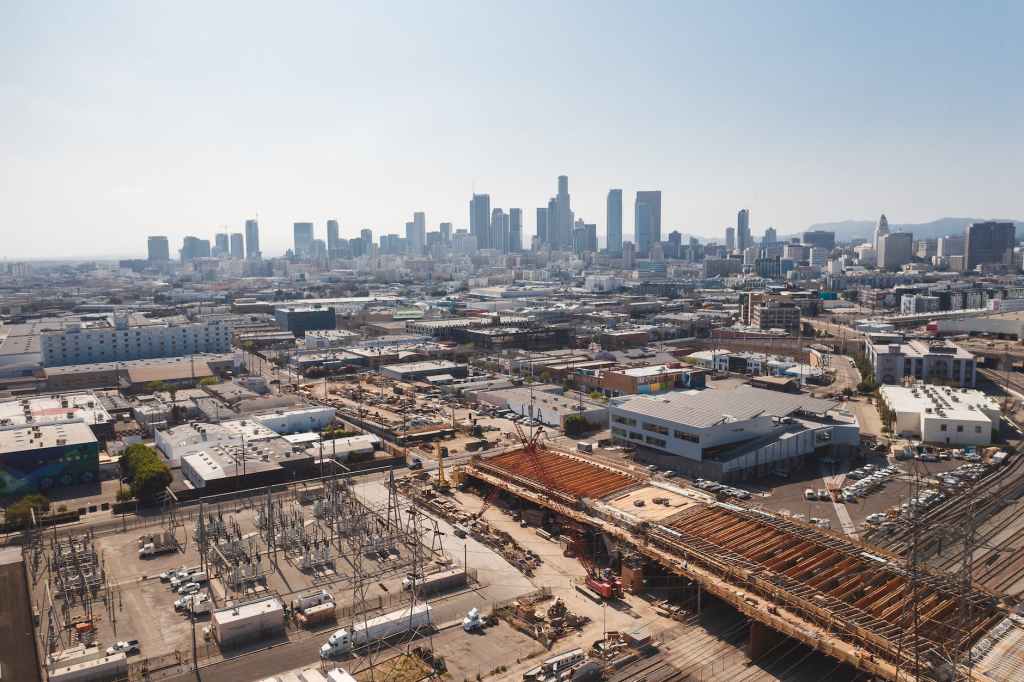
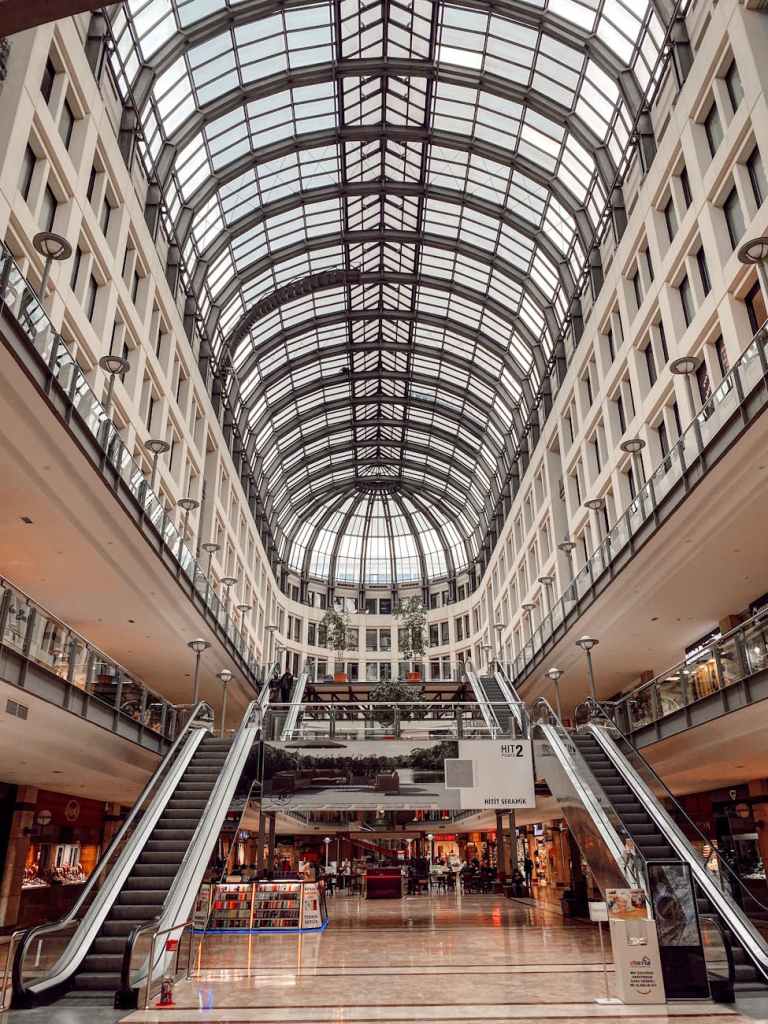
What could be more innocent this weekend than a brisk stroll through your local shopping mall? All air-conditioned and centrally-heated, antiseptically clean, and crammed full of shops with must-have frocks and trainers and clothes and make-up and jewellery and mobile phones and shirts and trousers and computers and chocolates and more clothes and shoes and cosmetics and toys and even more clothes and accessories and skirts and furniture and even more cosmetics…..might you, have you, contributed to the tearing-down of trees in some far-away rain forest?

According to Global Canopy, you probably have.[1] They are a non-profit company that tries to monitor the role of the world’s largest corporations in the sustainability of the planet, looking at production, supply chains transport- all the aspects of a modern operating firm, in fact. What impressed us was the way that they try to work with companies by providing data and feasible strategies instead of just standing outside in the rain with placards. But they are no patsies, either. Get this from their website

The 10th edition of the Forest 500( their regular survey-LSS) reveals that almost a quarter (23%) of the companies and financial institutions that have featured in each of the 10 annual assessments have still not published a single commitment on addressing deforestation…….Meanwhile, nearly two-thirds (63%) of companies that have set commitments are failing to publish adequate evidence of their implementation

They go on to name names, which we dare not here, for lack of a proper legal department. But you’ll see them tomorrow during the course of your excursion. And that’s before you stop off in the Food Concessions on level four………

Why is all this important? Well we at LSS think that deforestation if one of the major causes of the worlds ills. It not only contributes humongously to global warming, it interferes catastrophically with hydrological cycles, driving desertification and land degradation. (ever wondered where all those migrants come from?) It may even be releasing new pathogens such as respiratory viruses into the human ecosphere, as we have alluded to before in these pages (LSS Passim) The World Counts has a nifty little website here to bring you somewhat up to speed [2].

Now we at LSS are not urging you to give up the accoutrements of civilised life today. We are Whigs, not Cistercian Monks, and certain member of the Editorial Board might find immediate changes to their lifestyles very uncomfortable indeed. But look again at the way Global Canopy work; with the grain of corporate life (weak pun intended) Can you ,should you find ways to bring pressure on companies by investing differently? By purchasing a little more slowly, and perhaps a little more judiciously? By getting just one item a week from a charity shop? If you want to donate to, or help these people in some other way, we would applaud that, too. As Tesco used to say back in the 1990s; every little helps.

Thanks to G Herbert for this story

[1]https://globalcanopy.org/press/10-years-of-data-reveals-the-major-companies-persistently-ignoring-their-role-in-driving-deforestation/

[2] https://www.theworldcounts.com/challenges/planet-earth/forests-and-deserts/why-is-deforestation-a-problem

#deforestation #supply chains #palm oil #global warming #shopping malls #consumer

Global warming: five graphs to frighten anyone

Looks like we’ll need that carbon capture machine from yesterday’s blog (LSS 19 11 2024) Global warming is accelerating fast. An excoriating series of graphs, compiled by the industrious team of Helena Horton, Lucy Swan, Ana Paz and Harvey Symons, of the Guardian, punches the information right between your eyes. in a series of vivid clear and easy to grasp graphics [1] We thought that five in particular were especially noteworthy : Earth Surface Temperatures (up) Heat stress (up) Ocean surface temperatures (really up) and emissions(really, really up)

If you want to know why all this has been caused by human activity, click here [2]

But the consequences are feeding into our daily lives now, wrecking our political and social systems. For as people see their lands ravaged and turned uninhabitable by all this, they flee to the last surviving places where life may still be tolerable. It’s called migration. And so we close with a question. it’s particularly for the older sorts, who gripe and snipe at every effort to produce clean energy. How will you restore the ravaged lands of the south, and thereby stop the flow of migrants at source?

[1]ttps://www.theguardian.com/environment/2024/nov/20/the-climate-crisis-in-charts-how-2024-has-set-unwanted-new-records

[2]tps://www.climate.gov/news-features/climate-qa/how-do-we-know-build-carbon-dioxide-atmosphere-caused-humans

#climate change #migration #global warming #fossil fuels #carbon emissions #electric vehicles

6 Problems which require global response,and only a global response

“You can’t stop me smoking! It’s an assault on my liberty!” It was a common cry in the early days of trying to save the world from tobacco pollution. Somehow the smokers never considered that that the toxic fumes they spread might inflict upon the liberties of others. Smoking is the world in miniature. For the same self-centred mindset may be found in those who cannot think beyond the boundaries of their own religious or ethnic group. So here are 6 problems which affect us all, and each of which will only be solved by deliberate acts of collective action, however cognitively difficult that may prove for some people.

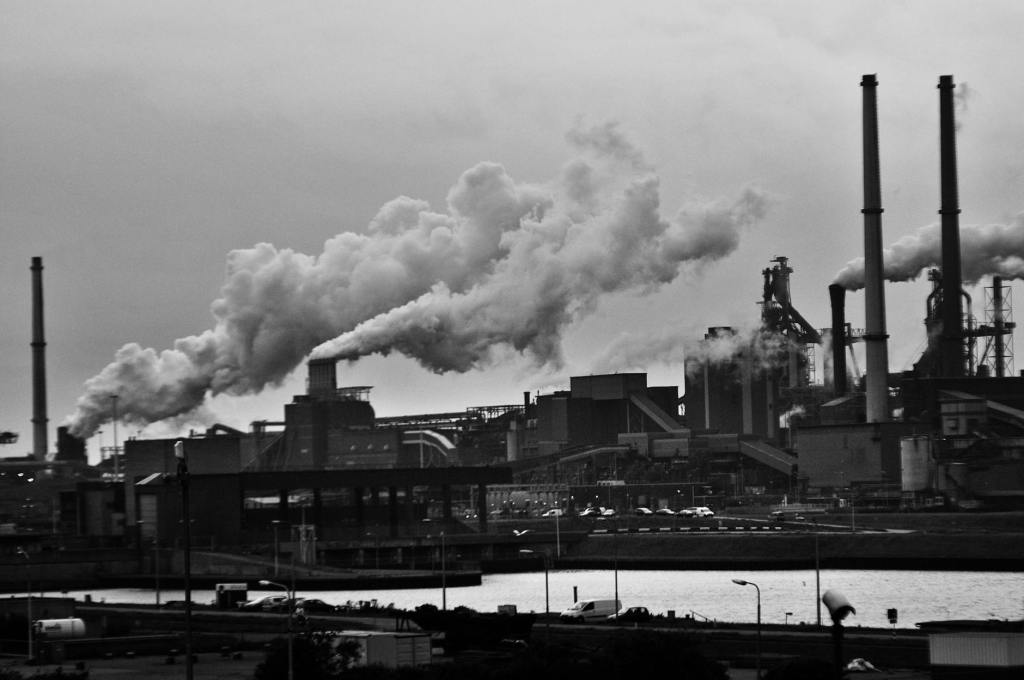
1 Pollution As my country pumps out toxic metals, sh*t, plastics or whatever, it will get into the water, air and land of surrounding countries, poisoning their unfortunate inhabitants. If you don’t want to breathe someone else’s smoke, ways will be have to be found of asking people to stop. And to keep them stopped. Agreements, anyone?

2 Global Warming A subset of pollution really, except that we are only talking about carbon dioxide and methane. But as the water levels rise and the ocean currents collapse, you will have the comfort of blaming someone else. And they can blame you. Will you feel better?

3 Migration As we have said before, the real cause of this is imbalances in living standards between different parts of the planet. Successful transfers of wealth to the areas where migrants come from will slowly but surely eliminate the problem. How many Germans migrate to Iraq, for example?

4 Knowledge and fakery Since the invention of the Interweb and the subsidiary technologies that feast upon it, the world has been plagued by a deluge of fakes. Fake news stories, fake scientific papers, fake images and the utterly uninformed opinions thereby generated. Only a single world reference library with the veracity of its contents contents carefully agreed by all will allow a single reliable point of reference. This won’t be perfect, but will allow a fresh starting point, and mimics the way that single standards of things like currencies and weights and measures slowly ameliorated the human condition

5 The next pandemic Everyone agrees it’s coming, the question is where and when does it start. IT will probably be a virus. But could our hoary old favourite, an antibiotic-resistant superbug, be the killer?

6 Inequality As long as the super-rich can move their money and their yachts from jurisdiction to jurisdiction, the rest of us will never see a fair share of the wealth which we have created. Hence the shortages of things like hospital beds, school places, decent roads, etc.A single world taxation and financial authority would not only eliminate this problem, it would rapidly provide the resources to deal with those discussed above.

National sovereignty, tribal identity or whatever are extremely powerful forces in human affairs. And we ignore them at our peril, as we have oft-times warned on these pages. But they are also licences to pollute. Are we clever enough to reconcile the the conflict?

#pollution #global warming #climate change #antibiotics #pandemic #poverty

Will Wetlands save the World?

Every so often we receive a well-meaning, but slightly plaintive communication from people who yearn for improved methods of carbon capture, by which they mean huge industrial undertakings not unlike the filthy power stations which they are meant to replace. “Good point!” we cry “but it’s going to take years to perfect the technology. Then scale it up. By which time it will all be much too late.” What if there are far more efficient carbon capture stations already out there, cheap to develop, quickly scalable, which might in addition act as huge natural flood defences. Before you reply “too good to be true” have a look at these two stories about wetlands which have recently crossed our screens.

Mangroves in Brazil Brazil has had more than its fair share of bad ecological news recently, what with chopping down massive swathes of the Amazon and so on. But now Mr Bolsonaro has gone, we are able to report a more hopeful story, by Maurice Saverese via Apple News.[1] A new project in the Guanabara Bay, near Rio De Janeiro has planted up to 30 000 mango trees. Not only will these act as a massive flood defence, stabilising the coastline against erosion, but will provide a valuable new source of income to local fisherman as crabs and other economically valuable species return to the healthy waters.

Wetlands in Washington Since the 1780s the USA has lost about half of its wetlands. Which is a shame because although wetlands comprise just 10% of the world’s surface, they contain perhaps 25% of its soil carbon. That at least is the estimate of a team from Washington University, who are investigating the potential of vast carbon-capturing wetlands beneath the rain forests of the Pacific Northwest [2] You’ll have to get past the paywall for this one from Natalia Mesa of the Atlantic, again via Apple News. but it’s well worth it. Because the rainy north west also includes parts of California, Oregon and much of western Canada. If the Americans can only keep out Trump and his supporters, then once again they might have saved the planet, this time on a massive scale.

Sometimes the answer lies not in doing new things, but adapting old ones to new uses.

thanks to P Seymour

[1] https://www.pbs.org/newshour/world/rio-de-janeiro-bay-reforestation-shows-mangroves-power-to-mitigate-climate-disasters

[2]https://www.theatlantic.com/science/archive/2024/05/wetlands-forest-unmapped-carbon-washington/678513/?utm_source=apple_news

#wetlands #carbon capture #mangroves #washington state #donald trump

Are Co operatives making a come back?

History: it’s a funny, cantankerous old thing. Any action seems to produce its opposite. It may be happening again. Starting in the South east London Borough of Lewisham.

As every schoolchild knows, the Industrial Revolution produced an atomised, nihilistic society where the overwhelming majority lived in slums, and worked every hour for pitiful wages. The new metropolises like Manchester drew waves of strangers into disease ridden slums. The results were far indeed from the hopes of the philosophers of the Enlightenment whose heady thoughts on free markets had kick-started the whole sorry mess. Yet somehow, in those desperate places, people began to come together. New community organisations began to thrive. Methodist Churches were one example. Trade Unions another. There were things like Working Mens clubs and libraries. Building Societies. And of course the Co operative movement, where poor people could club together to make their purchases at their own shops.(overseas readers might like to know it still exists today, but is barely differentiable from any other hight street grocer) Each in turn contributed to the foundation of the Labour Party. Fast forward one hundred years, what with the collective experience of wars and depressions and most people assumed that collective actions were the optimal solutions to most of our problems.

Following the world crisis of 1973-74,everything changed. Free marketeers saw their chance to exalt the individual above all else. Writers like Hayek and Friedman paved the way for politicians like Thatcher and Reagan. Even popular books like The Selfish Gene could be read in such a way as to exalt the cult of the sovereign individual . Down with the state! Taxes were an imposition on human liberty! Although the adherents of such doctrines could never explain how the National Health Service was Communist, but the Army was not, the individualistic tendency bit deep into our lives and culture. With the results we see today. Once again, atomised communities. Poverty. Capital in the hands of a very few, who invest with a grudging reluctance that would make Mr Gradgrind envious indeed. Pollution, rack rented slums, and growing poverty, especially among children.

Once again there seems to be a reaction setting in. Starting at the bottom, people are beginning to come together in groups to save what is important to them, from the all -dissolving solution of unrestricted free markets. As Kemi Alemoru explains in this article for The Standard [1], it seems to begin around the need to preserve collective things like music venues and pubs. Her piece treats the Southeast London area of Lewisham as a sort of living field experiment. But the thought strikes us. If it works for things like those, why not for bigger ones? Like housing. Controlling air pollution. Making roads safe. Even, whisper it, schools and collective education.

To borrow from another area of learning “every action produces an equal and opposite reaction. Maybe this is the start of one.

[1]https://www.standard.co.uk/homesandproperty/property-news/the-battle-for-lewisham-how-coops-are-reinvigorating-communities-b1157728.html

#free markets #collectives #cooperatives #hayek #keynes #methodist #coperative society #friendly society #trade union

Five Problems in the in-Box of a World Government

It’s election time in some of the world’s biggest democracies. This year India, the USA and UK all go the polls, and the EU has just done so (we don’t count the recent sham in Russia) All of these places face immense problems. And we don’t think they can solve them, because the root causes are global, making frontiers out of date. Imagine then, if a Global President were elected this year and took office on 1st January 2025. What would be the top five problems in their in-box?

1 Intractable conflicts. People draw imaginary lines and then fight bloody wars across them. The current conflicts between Russia-and -Ukraine and Israel- and- Palestine are current examples, with no obvious resolution, if the nation state remains the highest form of political organisation. Older readers will recall how the conflicts between Mercia and Wessex dwindled once they were combined into England. It was the same after France and Germany joined the EU. A World Presidency would imply that all these ancient hatreds are in fact futile.

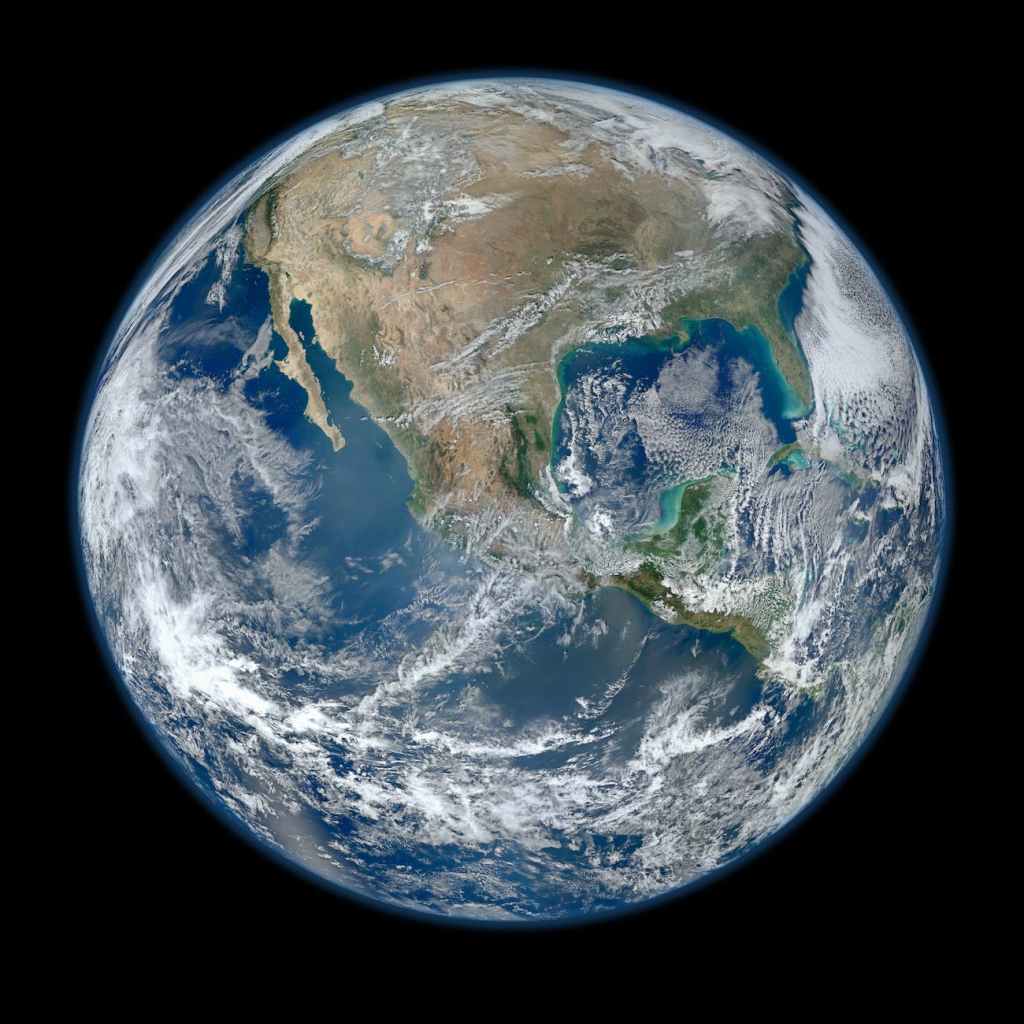
2 Climate Change/Global Warming What happens in the Antarctic, the Amazon Basin and the Great Barrier Reef affects us all equally. The existence of endlessly competing polities, each jockeying for its own advantage may fatally slow efforts to deal with this existential threat. A World Government would rapidly co-ordinate mitigation efforts and resource allocation, and it is likely that this one would indeed soon be a memory.

3 Migration and identity crisis People move from poor areas to richer ones according to the same irrevocable laws that govern the movement of ions in an electric field. Yet the deep crisis of identity this provokes has produced toxic political and intellectual consequences in the richer countries, which make it impossible to transfer resources to the poorer ones. By ordering this done, a World Government would have essentially removed the motivation to migrate at all, thus ending the crisis forever.

4 Pandemics Recent experience has shown that economy-shattering pandemics can spread with lightning speed. And, believe us, Covid-19 was mild compared to some viruses which are waiting in the wings. For some reason, those pesky viruses don’t respect frontiers any more than molecules of carbon dioxide do, suggesting that the whole idea of national solutions may be somewhat out of date.

5 Grasping the Opportunity If humanity is to survive, it would be judicious to give ourselves extra chances. Colonising the Moon or Mars would provide ample second homes, even if our local tribesmen blow this one up with their nuclear weapons. Such a colonisation would be faster, more efficient and more just if all were invited to participate and share in the consequences. A World Government would mean that the undertaking would not only be successful, but that existing squabbles were not exported among the planets.

We know this will be saying the unsayable, especially among certain classes of society. Yet there comes a point when a society is bulging in crises, bursting against the limits which constrain it. It’s our contention that these limits are artificial and self imposed. There can never be a return to the good times of the past. But with thought and effort, they may come again in the future.

#world government #nation state #pandemic #global warming #migration #inequality

The Hidden Dangers #3: Microplastics

It’s hard to convey now what plastics meant to us Space-Age children of the 1960s. Bright, cheap, coloured, light, clean and multipurpose, they were the material of choice for a democratic age. They were what your new Fireball XL5 rocket was made of. The tape recorder for your Beatles songs. The beakers for your free school milk. The fittings in your Dad’s new Ford Anglia. With them we would create a new heroic age, and get to The Moon.

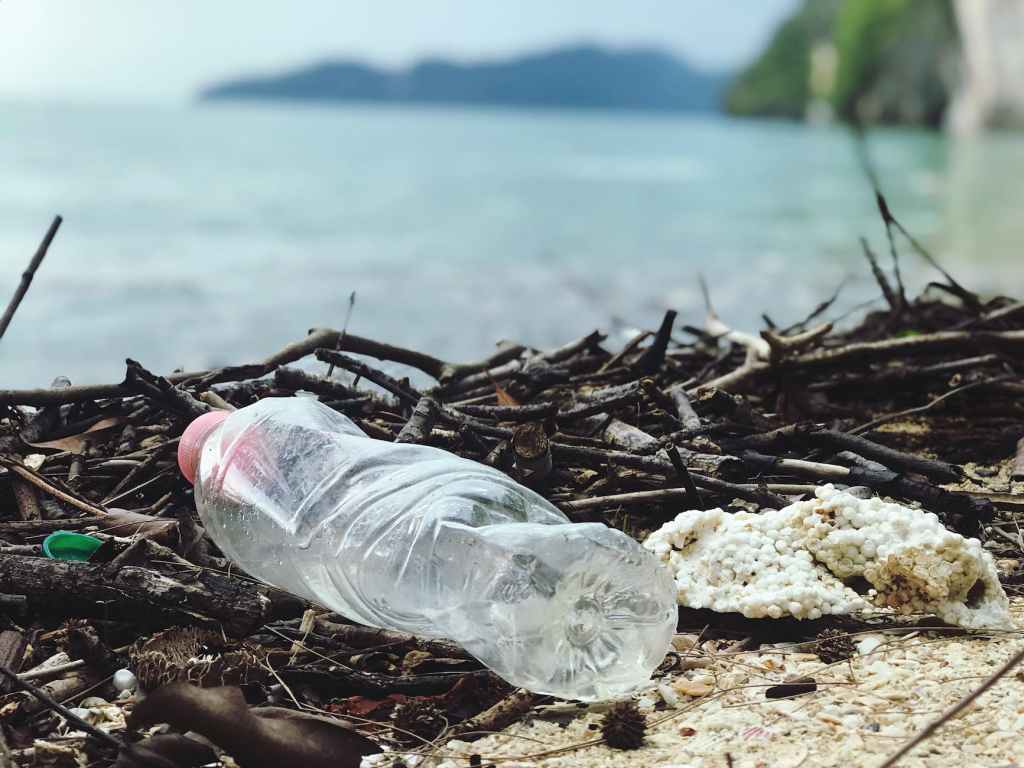
Sixty years on? Well, they’re just everywhere, aren’t they? Up on the top of Mount Everest. Deep at the bottom of the Marianas Trench. And everywhere, everywhere, in between. In the blossom in your garden. Blowing in the wind between the trees. In your water. In your food. In your bodies. And that last should afford pause for thought. Because the effects of all this plastic are not really understood. According to Anne Pinto-Rodrigues of Science News,[1] microplastics particles can be found in the gut biome; in the reproductive system; in breast milk; and in blood. What’s worse, some of the additives, such as BPA can act as endocrine disruptors (see LSS 26 3 24). There is even a chance that they may have a harmful effect on the immune system.

There’s lots more. Instead of summarising all the literature, which astute LSS readers will do for themselves, we’ll just point to one case study. It comes from Sue Hughes of Medscape, and though its primary focus is on cardio vascular disease, we think it’s a pretty good representative of what is to come, as more is found out in the next few years. And one other thought: how on earth do we clean this lot up?

with thanks to Gary Herbert

[1]https://www.sciencenews.org/article/microplastics-human-bodies-health-risks

[2]https://www.medscape.com/viewarticle/plastic-particles-carotid-plaques-linked-cv-events-2024a10004ge

#plastic #BPA #microplastics #health #pollution #contamination

Worms and trains gave us two unexpected shocks for the weekend

A philosophy derailed For more than fifty years, the Mail and its collaborators in the right wing media have been pushing one simplistic mantra “Private Sector Good. Private Sector Bad.” So it came as a surprise to see this candid admission of the appalling state of Britain’s privatised railway system.[1] It’s a story that’s repeated across swathes of our economy. Public Housing, water and sewage, Forensic Science, energy regulation… the attempt to privatise and create a market at all costs has often been a costly failure. Now, anyone who has y worked in the public sector and seen its inefficiencies close up cannot remain a socialist. Or not enjoy the delight of pompous civil servants being exposed to a little competition. But the invariable prescription of a single nostrum, whatever the circumstances, that so appalled us. Good to see a little honest admission of error.

[1]https://www.dailymail.co.uk/news/article-13172415/Rail-cancellations-Avanti-Northern-CrossCountry-TransPennine-Express.html

Immunity to radiation? When we were young we thought “radiation is an ineluctable killer. It so affects the genetic material that there’s no way back.” Wrong again! As this intriguing article from the Independent shows, to our extreme chagrin. Apparently the famous nuclear disaster zone of Chernobyl in Ukraine has nurtured a whole new type of radiation resistant worms. [1] The implications for life on earth are intriguing enough. But even more so in our quest to find living creatures both in our own stellar system and in more distant ones. What a way to end the week.

thanks to p seymour

[2]https://www.independent.co.uk/news/world/europe/chernobyl-worms-nuclear-power-plant-b2509161.html

#chernobyl #worms #radiation #privatisation #public sector

Kill Krill? You’ll pay a bill

Today we’re devoting our blog to Krill, those humble but immensely prevalent crustaceans which form the basis of immense and vital ocean food chains. [1]They even form the breakfast of the Blue Whale (Balaenoptera musculus), that mighty monarch of the sea. They may even play a role in carbon capture and sequestration [2 see part #9] and now, you’ve guessed it-they are under threat. From that brutal ignorant species that has the vanity to call itself Homo sapiens. Not only are they being massively overfished. But now the melting glaciers and ocean acidification, both caused by global warming, are starting to eat into their numbers at alarming rates. If that goes on happening then the whole ocean ecology will collapse, with incalculable consequences for the stability of human society.

“So-what can I do?” we hear you asking. It’s a perfectly good question. And in the last analysis, only you will know the answer, gentle reader. But here at LSS we know one thing. The days of living the quiet suburban lifestyle at sports ground and shopping mall are over. We’re not saying it wasn’t good while it lasted. But it can’t be sustained any longer, not at least without some major social and technological engineering. Could you at least help one organisation that is trying to do something? What about the WWF, who have supplied one of today’s links? What have you got to lose? Well you know the answer to that.

Thanks to Gary Herbert

[1]https://en.wikipedia.org/wiki/Krill

[2]https://www.wwf.org.uk/learn/fascinating-facts/antarctic-krill#:~:text=They%20are%20under%20threat,interest%20in%20the%20krill%20fishery.

#krill #crustaceans #ocean #food chain #blue whale #climate change #global warming #glacier #ice sheet

If the Gulf Stream collapses, you won’t need ice in your Gin and Tonic

According to the American writer Gore Vidal, one must choose between two missions in life. Either to Comfort the Afflicted; or to Afflict the Comfortable. Now, generally speaking, the Daily Mail is normally very much on the side of the Comfortable. Hardly a bunch of Islington Green Remoaner Marxist Liberals, you might say. So when they publish something which might in some way be slightly comfort-afflicting, we know it’s been through a pretty fine toothcomb first. And today we present just such a story by their admirable Jonathan Chadwick called The Real Life Day After Tomorrow. Not only does it speculate that the warming currents of the North Atlantic might collapse, plunging us into a new Ice Age. But there is a chance that it might happen rather soon. [1]

Most people know that the reason that Western Europe is tolerably warm is due to the fact that certain ocean currents move vast quantities of heat up from the warm waters of the Gulf of Mexico to these otherwise benighted shores. Thanks to global warming and melting ice caps, those currents could switch off as early as next year. We cannot hope to improve on the excellent explanations and top notch, easy-to-understand graphics in Jonathan’s article. But we could beg you to look at some of the comments. and the squeals and howls of outrage from those whose weltenschauung is horribly imperilled by Jonathan’s words. Denial, evasion and getting shouty are common psychological defence mechanisms of people who are often uncertain of their own case. Blaming the messenger can be another; although we are all guilty of that.

Perhaps the latter was on display in the case of climate scientist Michael Mann, who, because of his scientific work, became the subject of unpleasant personal attacks from those who objected to his findings. To us it all seems a bit reminiscent of what happened to Galileo in the 1640s. Fortunately Mann has won damages from some of his adversaries , and this may buy back some space for objective debate in some areas of science. We wait to see. Whatever happens, those who prefer to deny, for whatever reason, should remember. Reality, be it economic, physical or logical, will eventually come round to charge a price. The longer you leave it, the higher that price will be.

[1]https://www.dailymail.co.uk/sciencetech/article-13073449/Gulf-Stream-plunging-Europe-deep-freeze.html

[2]https://www.nature.com/articles/d41586-024-00396-y?utm_source=Live+Audience&utm_campaign=0f1db6493c-briefing-dy-20240212&utm_medium=email&utm_term=

#jonathan chadwick #climate change #global warming #ice caps #AMOC #climate denial