
Capturing Carbon from the sea-a new idea to contain global warming

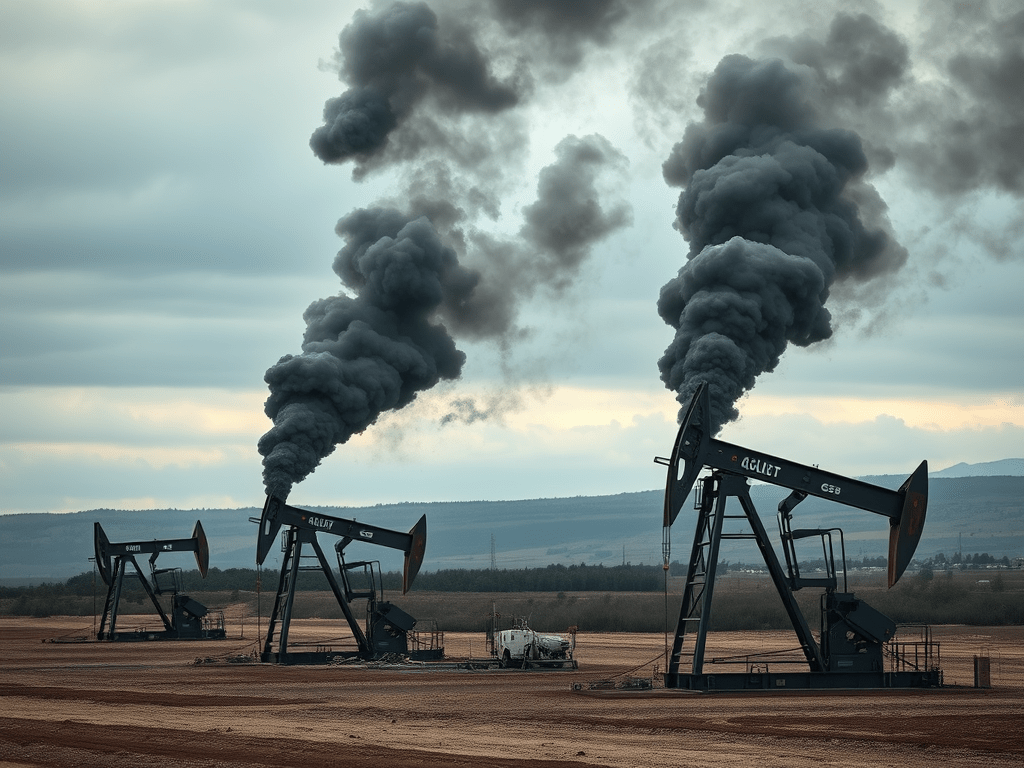
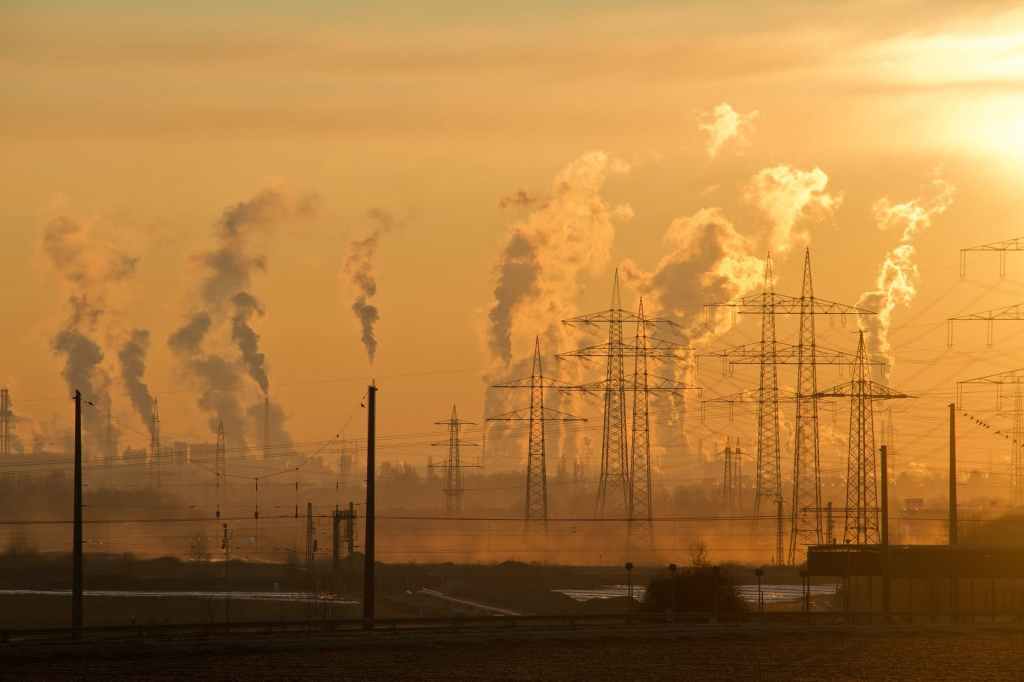
One thing we know for certain: the amount of carbon dioxide in the atmosphere isn’t going down any time soon. Last time we looked, it was about 420ppm, which is 50% higher than it was before the industrial revolution. [1] People are not cutting back fast enough. Natural “sinks” like oceans and forests are being destroyed. And despite all the valiant efforts to replace these natural systems with technologies that capture CO2 from the burning atmosphere, they are not happening fast enough. We are going to crash through the 1.5O safe limit. Is there any hope of a short cut which might give us a lifeline?

According to Professor Tom Bell of Exeter University there is indeed. Seawater holds 150 times as much carbon dioxide as air does. And so he and his teams have devised a Cunning Plan to start pulling all the extra deadly gas form the water, and putting it to safe storage. We’ve two versions of the story today. One from Jonah Fisher of the BBC[2] if you’ve only got time for a quick espresso. For the double latte and piece of cake crowd, there’s a really clear set of pages from Exeter University itself.[3] We found the graphics to be rather good on this one.. so give it a go.

All of which brings a wry smile to those of us with long memories. Notice, good reader, how the project is being funded by the UK Government. Back in the 1970’s it used to run hundreds of initiatives like this. Many of which later spun off into successful products which in turn founded the fortunes of many a successful export company. (An elderly member of our Editorial Board can bear personal testimony of this from the world of Forensic Science) Then along came the free marketeers, bleating their mantra “Private sector good; public sector bad” like so many sheep from Animal Farm. You can see the results of that “thinking” in the UK Trade Gap, which has been widening steadily ever since. Professor Bell thinks his project can be scaled to capture 14 billion tonnes of carbon dioxide a year. It could be a major industrial and export success for Britain. Surely this one should be left to the pragmatists?

[1]https://www.ibtimes.com/atmospheric-co2-more-50-percent-higher-pre-industrial-era-3529972#:~:text=Concentrations%20of%20carbon%20dioxide%20in%20the%20atmosphere%20in,

[2]https://www.bbc.co.uk/news/articles/cr788kljlklo

[3]https://sites.exeter.ac.uk/seacure/

#global warming #carbon capture #atmosphere #oceans

Sustainable building materials? UK Hempcrete shows the way ahead

For those of us who spend our working lives worrying if the next generations will even survive, the global building and construction industry is a source of some angst. Yes, all those people have got to have places to live, and work, and to get cured of diseases caused by lack of antibiotics (LSS ad nauseam) The trouble with Construction is that it’s so eye-wateringly carbon expensive. Here’s one long fact for one short blog: if you add all their carbon costs together (resource extraction, transport, construction, demolition, recycling, plus cooking all those enormous English Breakfasts they all eat), it all adds up to a whopping 37% of global emissions. Any ideas?

One way ahead is to make the materials they use for things like floors, ceilings, walls and so on, a lot more planet- friendly. Which is why we want to showcase the work of a British firm called UK Hempcrete. [1]Hempcrete is an exciting new type of biocomposite made from the stalks of hemp plants, as well as more traditional materials such as lime and sands. [2] But the new mix carries two key advantages. Firstly , and unlike traditional building materials it actually acts as a sink for CO2 over the course of its use. Secondly, it’s hygroscopic, allowing for much better moisture balance in buildings made from it. Every year we burn billions of tonnes of fuels trying to keep our buildings warm and damp- free. This new material gets around that problem almost entirely. But you can read a lot more about this company and its subsidiaries from their website and our other links; they’re much better at it than we are.

And, as you’re asking, do we have an interest in this company? Financially, no-we’d never even heard of them, or hempcrete, until our researchers flagged them up this morning. But we do have an interest in survival. And long ago we decided that it would not come from making people more virtuous, but by setting up ways to let people make money from progress. Which is why we plug, shamelessly, the work of all sorts of companies here, from net zero aviation folk to Biotechnology enthusiasts in the heart of the Cambridge Science Park. (LSS passim) Of course we keep the usual media/PR links to these outfits when we’ve finished. But that’s more on your behalf, gentle readers, not ours. Any attempt to get our construction industry onto a more sustainable, cleaner and rational footing will always earn the support of this blog. Good luck, UK Hempcrete-and keep it coming.

[1]https://www.ukhempcrete.com/

[2]https://en.wikipedia.org/wiki/Hempcrete

[3]https://www.ukhempcrete.com/services/material-supply/

#global warming #carbon emissions #ukhempcrete #sustainability #consrtuction industry #building

Is Carbon Dioxide already killing us? An old blog revisited

About five years ago we published this blog called is Carbon Dioxide the new Passive Smoking?

We already know that rising levels of carbon dioxide from global warming are bad for the planet. They are ruining the climate, causing floods raising sea levels, and making fertile areas uninhabitable. But are they already starting to kill us individually?

Before global warming, the average level of CO2 in the atmosphere fluctuated around 280 ppm (parts per million). Now it hovers around 410 ppm; by the end of the century it could be around 670 ppm or even higher.

The human body can sustain low levels of CO2 in the atmosphere-we’ve adapted to it. High levels are normally only a problem for people like building workers, astronauts and captains of nuclear submarines. Research shows that there is no question that the sorts of levels these people can meet will do you serious harm, but most of the work is concentrated around very high CO2 concentrations at thousands of ppm, with very short exposure times , both for obvious reasons.

But as CO2 levels rise, what happens to all of us as we breathe in steadily rising levels day in day out, without a break? Especially in places like offices, where it tends to become more concentrated.

Now a paper from Nature Sustainability by Tyler Jacobsen, Jasdeep Kler* and their co-workers looks at this question.   Some of their findings are disquieting, to say the least. Firstly chronic CO2 exposure does seem to have health risks. There’s a long list, but the main stand outs are on cognitive ability, kidney calcification and endothelial dysfunction. Secondly, this is a preliminary paper, as the authors admit. A very great deal of work remains to be done. And that will mean setting up research programmes, signing up scientists and re-budgeting whole departments.

There is a worrying historical parallel. When the first early papers on the effects of cigarette smoking were published, they were largely ignored. Which only gave the danger time to grow. And at least individual smokers were able to mitigate the risk by giving up. But for passive smokers the risk was everywhere. If you lived or worked or socialised with a smoker, you couldn’t help breathing the stuff in. It’s the same with carbon dioxide-there’s no getting away from it

We are aware of the dangers of crying wolf, and of course it’s perfectly possible that this may not be as serious as some of the other problems currently besetting the world. But isn’t it time we researched a little, just to make sure? (LSS 11 2 2020)

Since when very little has changed, Except perhaps that atmospheric levels of CO2 have almost certainly risen a little. Again, we stress that we don’t know the answer, and are calling for research, not immediate action. But this this blog has a lot more readers now. We include the reference below. Do you know anyone who thinks this ought to be investigated further, by practising scientists or doctors?

Direct Health Risks of Increased Atmospheric CO2

Tyler A Jacobson, Jasdeep Kler, Michael T Herneke Rudolf K Brown, Keith C Meyer and William E Funk

Nature Sustainability Review Article Vol 2 August 2019 pp 691-701

#globalwarming #climatechange #co2levels #health risks #environmental health #passive smoking #health #medicine

Clean, Green Copper?

One of the downsides of making the change to a clean, renewable economy is the enormous cost of some of the technologies. And we are talking energy and pollution here, not money. It’s an uncomfortable truth which enemies of progress gleefully point out wherever and whenever they can. Take copper for example. It’s going to be central to any green ecosystem, showing up as vital component of anything and everything from electric cars to eco power plants. But, as the superlative Robin McKie of the Guardian points out, mining it demands enormous quantities of energy. As for the waste left behind- we almost dare not think.

Yet Robin is nothing if not hopeful . In this article he reviews a whole set of hopeful new technologies which are designed to find cleaner, more sustainable ways of pulling out this vital metal. Demands of brevity force us to extract only one(no pun intended) as it fits with the vaguely biological ambience of this blog

 a company, RemePhy, has been started by Imperial PhD students Franklin Keck and Ion Ioannou……They have used GM technology to develop plant-bacterial systems that have an enhanced ability to extract metal from the soil. “Essentially, you will be able to grow these crops on land contaminated by waste left over from the mining of metals such as copper, and they will extract that metal,” (explainer-London’s Imperial College is nurturing many of these initiatives-ed)

The oldest trope on this blog is our admiration for when clever people tweak existing ideas and suddenly do something really useful in a new und unexpected way. Imagine the strategic benefits to a country that not only supplies itself with copper, but cleans itself up as it goes along. The benefits of Science and Reason, we suppose?

[1]tps://www.theguardian.com/global/2025/mar/02/copper-scientists-london-energy-electrical

#copper #metals #mining #pollution #imperial college #renewables #clean energy

Lung cancer rising again Plus: is all that plastic in your brain doing you any good?

One of the great achievements that we progressives can still chalk up is the gradual elimination of smoking. Ok it’s still out there. But in western countries it’s in steep decline, and cases of lung cancer were falling accordingly. Or so it seemed. But since about 2020 it seems to be on the rise again. Among non smokers. Among women non-smokers in fact. Odd, isn’t it? The reasons are discussed by Dr Pinar Oysal Ongoner of the prestigious University of Westminster[2] *for the Conversation.[1] She is particularly interested in the rise in adenocarcinoma. The cause ? It looks as if air pollution is a strong candidate, with a strong pointer to our old friend PM2.5 which is spewed out daily by millions of cars, lorries taxis and vans. Clean air zones, anyone?

As if one pollution story wasn’t bad enough, here’s another that may be worse. Ten years ago the idea of plastic micropollution getting into the brain was either ignored or scoffed at. Now we know better: Our Brains are full of plastic bits from Nature Briefings

Toxicologist Matthew Campen estimates that he can isolate about 10 grams of microplastics from a donated human brain; that’s about the weight of an unused crayon. Scientists are scrambling to understand how these tiny fragments, which have been found in every recess of our planet and our bodies, affect our health. They need clear data to communicate potential risks to policymakers, and with plastic production reaching new highs every year, they’re in a race against time. “It’s very scary to think the concentration of plastics in my brain will go up several percentage points before we have answers,” says Campen.Nature | 11 min read

A whole crayon’s worth of plastic in your brain? isn’t that, like, rather a lot? It took decades to discover the link between tobacco and lung cancer. And many more to overcome the vested interests and start saving lives. At that rate, how soon are we going to cope with this new plastic threat?

*The University of Westminster is not only famed for its academic excellence but also for the production of graduates of outstanding charm, good looks and modesty. Well, Postgraduates, actually

[1]https://theconversation.com/why-is-there-an-increase-in-lung-cancer-among-women-who-have-never-smoked-249406?utm_medium=email&utm_campa

[2]https://www.westminster.ac.uk/

#cancer #pollution #traffic #pm2.5 #plastic #drinking straws

Mura Technology brings real hope on plastic pollution

The other day, someone on the Board suggested a reprise piece on Plastics Pollution. But when we looked back to the archives, we’d done so many of them! Choking up the system like the plastics themselves. Unlike the plastics however, the old articles don’t choke up the waterways, poison the seas, kill wild life and damage our health. Real plastic waste does all of this and more, as this article from Wikipedia makes clear.[1]

There is no realistic, practicable way to ask mankind, particularly the more-erm, intellectually challenged-members of our species to give up plastics. Yet they are slowly but steadily killing us. So what is to be done. Mura Technology[2]think that the answer is to recycle them. They think what? Yes, we didn’t believe it at first. But with the right combination of heat and pressure they think they can resolve any plastic waste back to the original oily products they were made from. To be used again. Humankind imitating nature. Circular manufacturing and all that. It won’t get rid of all the horrible plastic already in the sea; but it will stop anymore going in. and that’s a start.

Now, we owe this infographic to the amazing website Nature Briefings. It’s our go-to website for up to date clearly explained developments in Science, technology and of course their impacts on society. We think you should too. so once again we have put in their link[3[ in the hope you will sign up. Because the more people that do it, the quicker reason and learning will re assert themselves and we will move from this dark place [3] And get this-it’s free!

Good, isn’t it?

[1]https://en.wikipedia.org/wiki/Plastic_pollution

[2]https://muratechnology.com/

[3]Enjoying this newsletter? You can use this form to recommend it to a friend or colleague — thank you!

#plastic pollution# #recycle #environment #nature #ecosystem

Are YOU a cause of deforestation?

What could be more innocent this weekend than a brisk stroll through your local shopping mall? All air-conditioned and centrally-heated, antiseptically clean, and crammed full of shops with must-have frocks and trainers and clothes and make-up and jewellery and mobile phones and shirts and trousers and computers and chocolates and more clothes and shoes and cosmetics and toys and even more clothes and accessories and skirts and furniture and even more cosmetics…..might you, have you, contributed to the tearing-down of trees in some far-away rain forest?

According to Global Canopy, you probably have.[1] They are a non-profit company that tries to monitor the role of the world’s largest corporations in the sustainability of the planet, looking at production, supply chains transport- all the aspects of a modern operating firm, in fact. What impressed us was the way that they try to work with companies by providing data and feasible strategies instead of just standing outside in the rain with placards. But they are no patsies, either. Get this from their website

The 10th edition of the Forest 500( their regular survey-LSS) reveals that almost a quarter (23%) of the companies and financial institutions that have featured in each of the 10 annual assessments have still not published a single commitment on addressing deforestation…….Meanwhile, nearly two-thirds (63%) of companies that have set commitments are failing to publish adequate evidence of their implementation

They go on to name names, which we dare not here, for lack of a proper legal department. But you’ll see them tomorrow during the course of your excursion. And that’s before you stop off in the Food Concessions on level four………

Why is all this important? Well we at LSS think that deforestation if one of the major causes of the worlds ills. It not only contributes humongously to global warming, it interferes catastrophically with hydrological cycles, driving desertification and land degradation. (ever wondered where all those migrants come from?) It may even be releasing new pathogens such as respiratory viruses into the human ecosphere, as we have alluded to before in these pages (LSS Passim) The World Counts has a nifty little website here to bring you somewhat up to speed [2].

Now we at LSS are not urging you to give up the accoutrements of civilised life today. We are Whigs, not Cistercian Monks, and certain member of the Editorial Board might find immediate changes to their lifestyles very uncomfortable indeed. But look again at the way Global Canopy work; with the grain of corporate life (weak pun intended) Can you ,should you find ways to bring pressure on companies by investing differently? By purchasing a little more slowly, and perhaps a little more judiciously? By getting just one item a week from a charity shop? If you want to donate to, or help these people in some other way, we would applaud that, too. As Tesco used to say back in the 1990s; every little helps.

Thanks to G Herbert for this story

[1]https://globalcanopy.org/press/10-years-of-data-reveals-the-major-companies-persistently-ignoring-their-role-in-driving-deforestation/

[2] https://www.theworldcounts.com/challenges/planet-earth/forests-and-deserts/why-is-deforestation-a-problem

#deforestation #supply chains #palm oil #global warming #shopping malls #consumer

Global warming: five graphs to frighten anyone

Looks like we’ll need that carbon capture machine from yesterday’s blog (LSS 19 11 2024) Global warming is accelerating fast. An excoriating series of graphs, compiled by the industrious team of Helena Horton, Lucy Swan, Ana Paz and Harvey Symons, of the Guardian, punches the information right between your eyes. in a series of vivid clear and easy to grasp graphics [1] We thought that five in particular were especially noteworthy : Earth Surface Temperatures (up) Heat stress (up) Ocean surface temperatures (really up) and emissions(really, really up)

If you want to know why all this has been caused by human activity, click here [2]

But the consequences are feeding into our daily lives now, wrecking our political and social systems. For as people see their lands ravaged and turned uninhabitable by all this, they flee to the last surviving places where life may still be tolerable. It’s called migration. And so we close with a question. it’s particularly for the older sorts, who gripe and snipe at every effort to produce clean energy. How will you restore the ravaged lands of the south, and thereby stop the flow of migrants at source?

[1]ttps://www.theguardian.com/environment/2024/nov/20/the-climate-crisis-in-charts-how-2024-has-set-unwanted-new-records

[2]tps://www.climate.gov/news-features/climate-qa/how-do-we-know-build-carbon-dioxide-atmosphere-caused-humans

#climate change #migration #global warming #fossil fuels #carbon emissions #electric vehicles

6 Problems which require global response,and only a global response

“You can’t stop me smoking! It’s an assault on my liberty!” It was a common cry in the early days of trying to save the world from tobacco pollution. Somehow the smokers never considered that that the toxic fumes they spread might inflict upon the liberties of others. Smoking is the world in miniature. For the same self-centred mindset may be found in those who cannot think beyond the boundaries of their own religious or ethnic group. So here are 6 problems which affect us all, and each of which will only be solved by deliberate acts of collective action, however cognitively difficult that may prove for some people.

1 Pollution As my country pumps out toxic metals, sh*t, plastics or whatever, it will get into the water, air and land of surrounding countries, poisoning their unfortunate inhabitants. If you don’t want to breathe someone else’s smoke, ways will be have to be found of asking people to stop. And to keep them stopped. Agreements, anyone?

2 Global Warming A subset of pollution really, except that we are only talking about carbon dioxide and methane. But as the water levels rise and the ocean currents collapse, you will have the comfort of blaming someone else. And they can blame you. Will you feel better?

3 Migration As we have said before, the real cause of this is imbalances in living standards between different parts of the planet. Successful transfers of wealth to the areas where migrants come from will slowly but surely eliminate the problem. How many Germans migrate to Iraq, for example?

4 Knowledge and fakery Since the invention of the Interweb and the subsidiary technologies that feast upon it, the world has been plagued by a deluge of fakes. Fake news stories, fake scientific papers, fake images and the utterly uninformed opinions thereby generated. Only a single world reference library with the veracity of its contents contents carefully agreed by all will allow a single reliable point of reference. This won’t be perfect, but will allow a fresh starting point, and mimics the way that single standards of things like currencies and weights and measures slowly ameliorated the human condition

5 The next pandemic Everyone agrees it’s coming, the question is where and when does it start. IT will probably be a virus. But could our hoary old favourite, an antibiotic-resistant superbug, be the killer?

6 Inequality As long as the super-rich can move their money and their yachts from jurisdiction to jurisdiction, the rest of us will never see a fair share of the wealth which we have created. Hence the shortages of things like hospital beds, school places, decent roads, etc.A single world taxation and financial authority would not only eliminate this problem, it would rapidly provide the resources to deal with those discussed above.

National sovereignty, tribal identity or whatever are extremely powerful forces in human affairs. And we ignore them at our peril, as we have oft-times warned on these pages. But they are also licences to pollute. Are we clever enough to reconcile the the conflict?

#pollution #global warming #climate change #antibiotics #pandemic #poverty

Will Wetlands save the World?

Every so often we receive a well-meaning, but slightly plaintive communication from people who yearn for improved methods of carbon capture, by which they mean huge industrial undertakings not unlike the filthy power stations which they are meant to replace. “Good point!” we cry “but it’s going to take years to perfect the technology. Then scale it up. By which time it will all be much too late.” What if there are far more efficient carbon capture stations already out there, cheap to develop, quickly scalable, which might in addition act as huge natural flood defences. Before you reply “too good to be true” have a look at these two stories about wetlands which have recently crossed our screens.

Mangroves in Brazil Brazil has had more than its fair share of bad ecological news recently, what with chopping down massive swathes of the Amazon and so on. But now Mr Bolsonaro has gone, we are able to report a more hopeful story, by Maurice Saverese via Apple News.[1] A new project in the Guanabara Bay, near Rio De Janeiro has planted up to 30 000 mango trees. Not only will these act as a massive flood defence, stabilising the coastline against erosion, but will provide a valuable new source of income to local fisherman as crabs and other economically valuable species return to the healthy waters.

Wetlands in Washington Since the 1780s the USA has lost about half of its wetlands. Which is a shame because although wetlands comprise just 10% of the world’s surface, they contain perhaps 25% of its soil carbon. That at least is the estimate of a team from Washington University, who are investigating the potential of vast carbon-capturing wetlands beneath the rain forests of the Pacific Northwest [2] You’ll have to get past the paywall for this one from Natalia Mesa of the Atlantic, again via Apple News. but it’s well worth it. Because the rainy north west also includes parts of California, Oregon and much of western Canada. If the Americans can only keep out Trump and his supporters, then once again they might have saved the planet, this time on a massive scale.

Sometimes the answer lies not in doing new things, but adapting old ones to new uses.

thanks to P Seymour

[1] https://www.pbs.org/newshour/world/rio-de-janeiro-bay-reforestation-shows-mangroves-power-to-mitigate-climate-disasters

[2]https://www.theatlantic.com/science/archive/2024/05/wetlands-forest-unmapped-carbon-washington/678513/?utm_source=apple_news

#wetlands #carbon capture #mangroves #washington state #donald trump