
Chinese success : some harsh lessons for many countries

We often showcase the Guardian’s Larry Elliott. not just because he’s good at economics (he is), but also because his articles have a way of illuminating a much broader range of human life including Geopolitics and History to name but a few. And we think today’s called China’s demise was gleefully predicted by the West-but meanwhile it’s built an AI Revolution Is a prime example. As usual, we provide a brief summary of Larry’s main points, accompanied by the earnest imploration for you to read it for yourself. Followed as ever by our own take: thoughts which the article has stimulated in the minds of the Editorial Board of LSS, its staff, and that contract bloke who does the cleaning.

LARRY SAYS

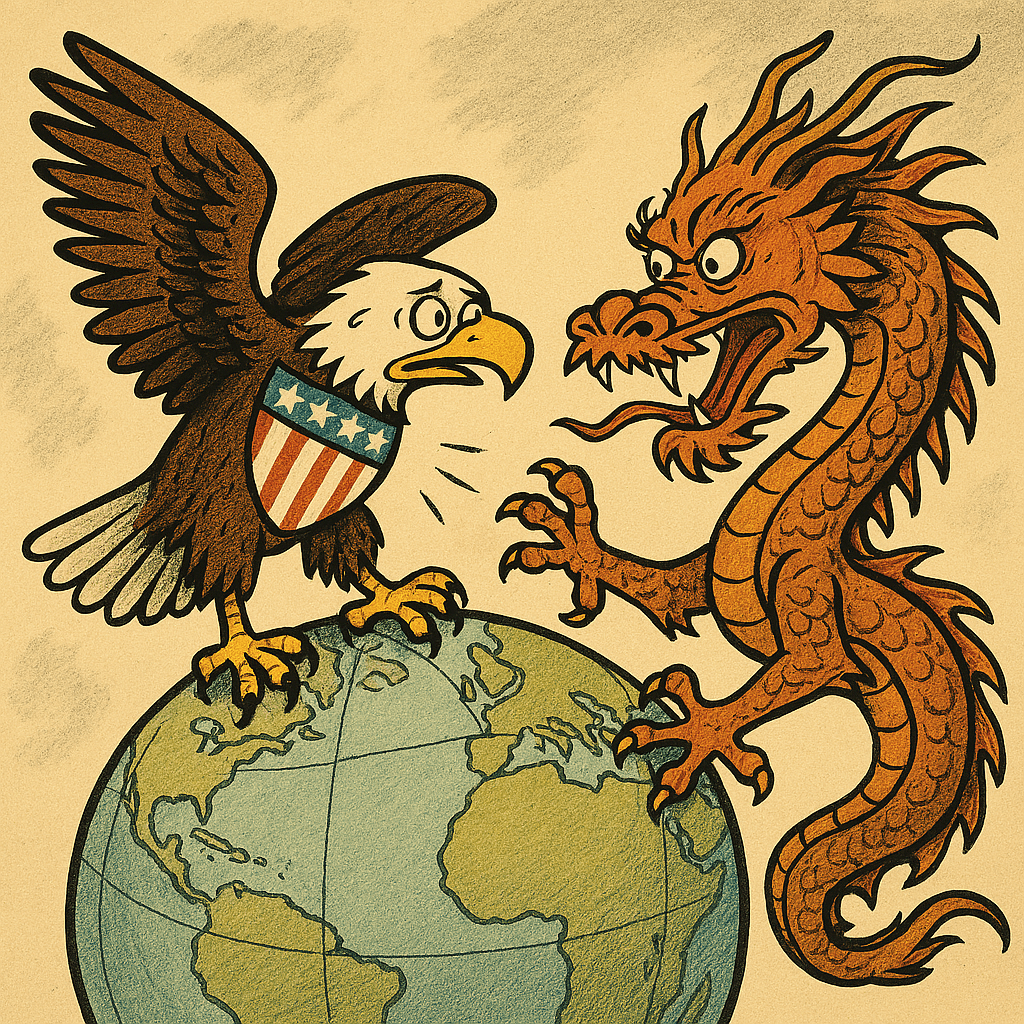
For decades, western experts have been confidently predicting the failure of the Chinese economic model. The Chinese, their wisdom ran, were overindebted, overinvested, over reliant on the property market and didn’t have enough democracy. Even when China began to do well at low level manufacturing it would never, they asseverated, catch the West’s lead in high tech manufacturing and industries of the future. But what has happened? Now the Chinese are leading the world on renewable energy technologies. They don’t even have to import machine tools from Germany, which we find especially significant. As for AI; their models and technologies are breathing down the necks of the leading American corporations. With dire risks to the current US stock market boom, perhaps even to the global balance of power itself. All in all, pretty significant stuff. Which leads us to think:

WHAT WE SAY

Let’s start by looking at how Larry thinks China achieved all this:

When China began to build up its manufacturing strength almost 50 years ago, it saw itself as a developing country. It had no illusions about the scale of the challenge but had a plan and stuck to it. There was no aversion to picking winners. Nor would the strategy be left exposed to the whims of speculators. Instead, there was a willingness to use all the policy tools available: subsidies, tariffs, exchange controls and state investment.

We remember how these were the very years western nations were taking the opposite route. Remember the Washington Consensus, Thatcherism, Monetarism, whatever you want to call it? Free markets were good, it held: and anything the State did was, by definition bad. So: cut taxes, cut regulations, abolish all industrial policy and above all keep labour costs low. If that meant outsourcing jobs to China, what the hey-it would keep those pesky unions in check, wouldn’t it? Nowhere was this policy more rigorously applied than in Great Britain, which has seen itself slide from manufacturing power base to a small offshore island living on tick, whose inhabitants wander bewilderedly through the remains of their past like the impoverished heirs to a squandered fortune.

Yet Britain’s story is the whole West’s really, only more so. We want the western nations to survive, really we do: they represent so much in the common patrimony of humankind. But if they are to do so they must stop thinking like spoiled brats, and start to think like developing nations once more. To learn a little humility, in fact.

China’s demise was gleefully predicted by the west – meanwhile, it built an AI revolution | Larry Elliott | The Guardian

#china #USA #UK #economics #technology #history #AI #manufacturing #trade #industrial policy

Bond market worries: is America beginning to go the way of Spain and Britain?

Good morning gentle readers and welcome to another week in which we shall together learn even more about Science and Society. We’ll concentrate on the Society bit today, via economics. Because when two minds as acute as Katy Martin of the Financial Times[1] and Heather Stewart  of the Guardian[2] coincide, we suspect that Society may be unravelling rather fast indeed.

WHAT KATY AND HEATHER SAY   Both highlight disquieting instability in  the US Bond Markets, particularly long term US Treasuries..Remember: this is the key metric by which foreigners judge a country’s future soundness and judgement, it filters out the short-term sound bites of spokespersons, and foxes the spins of friendly media. For US bonds, the outlook is becoming troubling. Yields are rising. And every intervention by Mr Bessent, however well intended, only seems to be making the markets ever more uneasy about US policy signals. What’s worse, all this worry seems to be bleeding into the dollar, the sheet anchor of the world financial system. We should be clear: Bessent is firefighting. The long‑term debt is not his creation, nor his remit. That belongs to Congress and the Presidency, and currently neither seems willing to confront the colossal $40 trillion IOU .Ok, financial ladies summarised :here follows our own gloss.

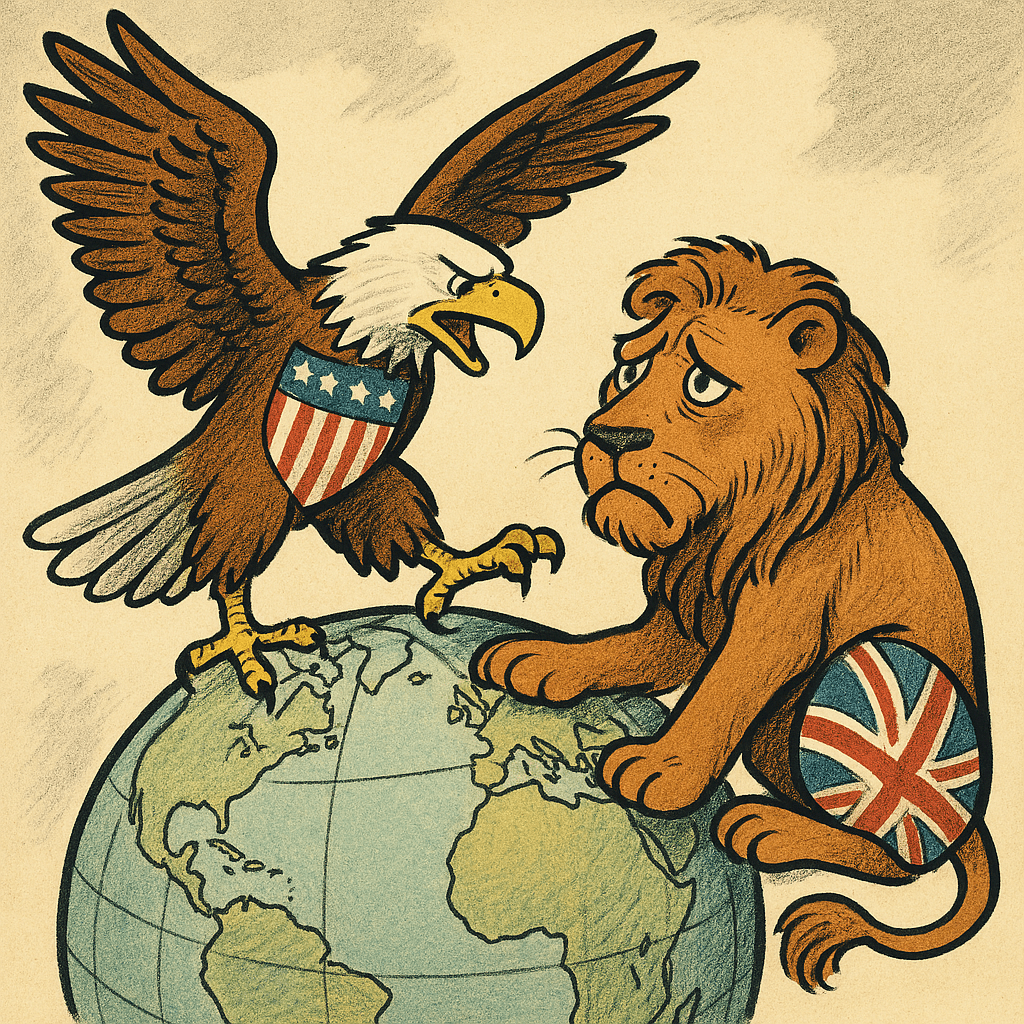
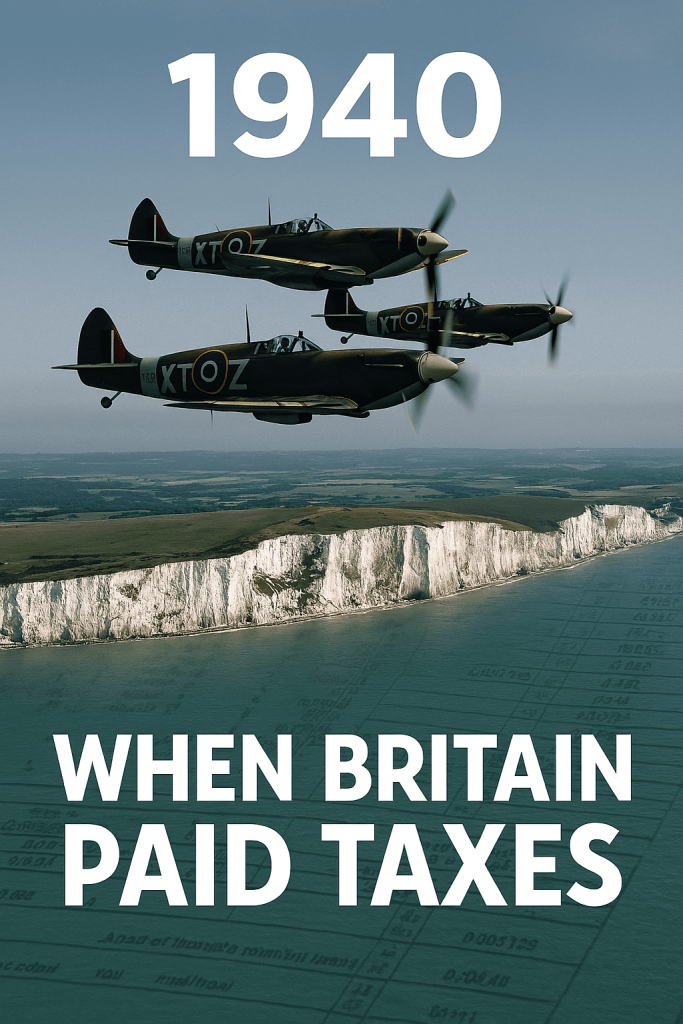
WHAT WE SAY    Well, ever since the 1890s US Treasuries and the dollar have been the rock-solid anchors  of the world economy. It’s like that when a superpower is at its peak. Everybody wants your currency: which in turn makes you strong because if you own the reserve currency, you can keep issuing in it long after everyone else runs out. Think the gold and silver backed currencies of Imperial Spain at its zenith, and the enormous role of Sterling and the Bank of England’s gold reserves before 1914. The first signs that these Empires were in decline was series of financial crises. Spain’s manifested themselves as a series of bankruptcies under Philip II and his successors. British readers will recall the interminable series of financial and balance of payments meltdowns -1914, 1931, 1940, 1947, 1956, 1967, 1976-are just the most outstanding as their own Empire declined from world hegemon to just another country in Europe.

Which begs the question: is America about to go the same way? Perhaps, but with some caveats. Firstly this is August and there are always some funny trades around in a quieter month. Secondly AI is competing mightily for funds in the capital markets, putting a squeeze on sovereign debt. And do not forget: this is still only a trend, America still has enormous economic potential. There is still time to elect a different Chief Executive and a different group of lawmakers to undo some of the damage of the last 20 months or so. But the warning from the ladies’ articles is clear: the margin for error is starting to narrow fast.

[1]Bossing the bond market around never works For once an FT article not behind a paywall, huzzah!

[2]Jumpy bond markets make it clear: Trump risks driving US into debt crisis | Heather Stewart | The Guardian

[3] Decline of Spain – Wikipedia

[4] British Empire – Wikipedia

#Scott bessent  #US treasury bonds #financial crisis #dollar #imerial spain #imperial Britain #economics #finance #geopolitics

Alternatives to a World Government #1: the deep disease of inequality

Get the diagnosis right, or the ill will never be cured.  Thus far, our LSS remedy for the current malaise– economic stagnation, mass migrations, ecological collapse, the utter alienation between rulers and ruled–is the institution of a World Government (LSS passim). But that is a Historian’s diagnosis. What if other viewpoints understand the problem better? If they are right and we are wrong, then our World Government will surely fail. Let’s look at some other possibilities then, starting with our number one candidate: economic inequality. And our Witnesses for the Prosecution, as t’were, are firstly,  Thomas Piketty [1] [2] and secondly Richard Wilkinson and Kate Pickett.

 In Capital in the Twenty‑First Century and Capital and Ideology, Piketty  shows that when the rate of return on capital outpaces economic growth — — wealth concentrates faster than societies can redistribute it. The long arc of history is one of repeated “regimes of justification” for inequality, periodically interrupted by shocks (wars, depressions) that force elites to accept progressive taxation and broader social investment. Since the 1980s, most advanced economies have dismantled the egalitarian tax and welfare structures built after 1945, allowing inequality to surge back to levels last seen in the Belle Époque. This produces political fragmentation, democratic fatigue, and a sense that the social contract has frayed. For Piketty, rising inequality is not merely an economic issue — it is a political destabiliser.
Wilkinson and  Pickett’s research focuses on the psychosocial consequences of inequality. Their central claim is that what matters for social wellbeing is not absolute wealth but relative position: societies with high income inequality exhibit higher rates of mental illness, mistrust, violence, poor health outcomes, and weakened community life. Inequality, they argue, acts as a chronic stressor, pushing individuals into status competition and eroding the sense of shared fate that healthy societies require They show that wealthy but unequal societies suffer from social pathologies that cannot be explained by poverty alone. Inequality corrodes the emotional infrastructure of everyday life — the ability to trust neighbours, feel secure, and imagine a common future. In their view, rising inequality is not just a symptom of malaise but a generator of it.

So any World Government that does not tackle these deep anomies would either become a castle built on sand, or quickly degenerate into a tyranny defending the same arrangements  which have brought the Nations to this present sorry pass. Not an easy argument to overcome, especially when we thought we had it all worked out. And guess what, gentle readers-more demolitions will be inflicted in upon us in the next few episodes of this new series : don’t miss it!

[1]Piketty, Thomas. Capital in the Twenty‑First Century. Cambridge, MA: Harvard University Press, 2014.

[2]Piketty, Thomas. Capital and Ideology. Cambridge, MA: Harvard University Press, 2020.

[3]Wilkinson, Richard, and Kate Pickett. The Spirit Level: Why More Equal Societies Almost Always Do Better. London: Allen Lane, 2009.

[4]Wilkinson, Richard, and Kate Pickett. The Inner Level: How More Equal Societies Reduce Stress, Restore Sanity and Improve Everyone’s Well‑Being. London: Allen Lane, 2018.

#inequality #economics #history #world government# #politics #society #government

G

More pointers towards a coming crash(and this time it’s from someone much cleverer than us)

Over the years we’ve ventured a series of blogs (LSS 23 4 25;30 6 25 18 5 26) in which we suggested that another financial crash on the scale of 1929 or 2007-8 may be approaching. We shared our concerns about the long-term viability of US Treasuries, pointing to weaknesses in the property market and the effects this might have on general confidence and demand. We also speculated that rising tides of nationalism and protectionism vitiated the possibilities of co-operative global responses in the style of 2008. Our view alone; and we swiftly moved on to to other matters.

Yet the risks have not gone away. Eduardo Porter, in an excellent article for the Guardian, [1] does not dismiss the possibility of the AI stocks bubble bursting.  But for him:

The largest risk, at this moment, revolves around the federal government’s accumulation of debt, now in excess of 120% of the nation’s gross domestic product, a near unprecedented level. It is likely to keep on growing at a fast clip given massive built in budget deficits for the next decade……a global context: the US’s insatiable appetite for capital – to finance data centers or the federal deficit – is met by China’s export of capital to recycle its huge trade surplus. A coarse, schematic way to think of it is China sells stuff to the US and invests the proceeds in the US. Then, Americans take money from China and use it to buy Chinese stuff.

That’s how the world works in May 2026. What happens next? Now Porter gets really interesting, pointing to deep political risks which might trigger a sell off of US debt.[2] Astute readers will not be surprised to learn that many of them revolve around a the actions of President Donald J Trump. An invasion of Greenland? Stepping the war in Iran up again? Attempting to meddle with the Federal Reserve, sending the dollar into a tailspin? Mr Trump is a democratically elected politician and has every right to do these things. But if he does, the consequences will be global. And Porter is equally merciless on the shortcomings of other nations. Like us, he sees no collective escape this time. Ouch indeed.

[1] The world is heading toward a financial crisis – the state of US politics has left us ill-prepared | Business | The Guardian

[2] https://www.aei.org/economics/brewing-government-bond-market-crises/?_hsenc=p2ANqtz-8u2PIGjNg8Q6fBS5RzfUnOeM9txpv7fI9NjE9uC1veq4UgmUkPS-0YDGyIk7m_WiFx

#economics #politics #USA #Federal Reserve #economic crisis #dollar #world trade

Farewell Robert Skidelsky. If you want to know more about the current mess, read this

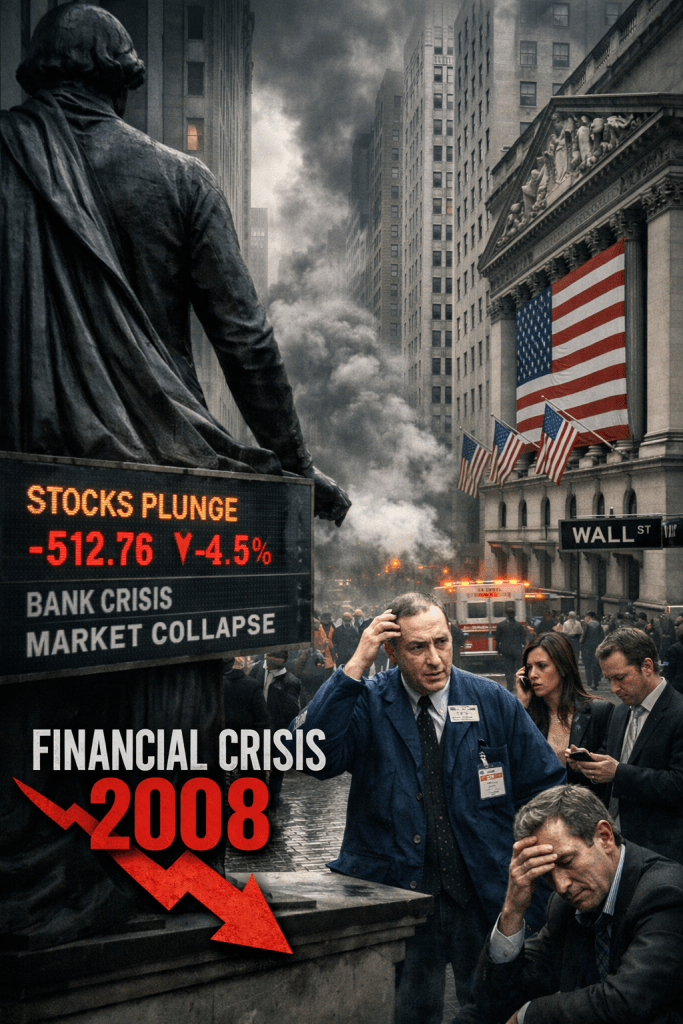
No one over thirty will forget the terrifying autumn of 2008. For on September 15th of that year the collapse of Lehman Brothers initiated the acute phase of a chronic financial crisis, tumbling the world economy towards final ruin. And as the indefatigable Larry Elliott [1] notes in  the Guardian, in his masterly obituary of Robert Skidelsky, the ruling classes of the west  were utterly bewildered:

…… there was almost universal disbelief that the crisis was happening. The entire economic establishment – politicians, bankers, Treasury officials, analysts and pundits – were caught unawares, because according to the free-market orthodoxy there was no chance of such a catastrophe occurring

Robert Skidelsky (1929-2026) might have known better. Having devoted a lifetime to studying the works of John Maynard Keynes, he presumably shared that thinker’s suspicion of the axiomatic beneficence of untrammelled Free Markets. Ironically by the summer of 2008 even he felt the Keynesian game was up, and was contemplating other projects, as Elliott points out. Then, as they say-It happened.

For a few fleeting months Keynes was in vogue again, so desperate was the plight of the Great and Good. Interest rates were cut. Money printed. Governments borrowed and spent, Catastrophe was averted. And then? Well, in Britain the Cameron government was elected and reverted to the via dolorosa of financial orthodoxy. Cutting the budget was all that mattered, as if a nation was like a grocer’s shop in a small market town. Keynes was firmly shown the door: and the consequences of poverty, lost growth, wasted lives and appalling political outcomes are with us to this day.

Like Keynes, Skidelsky was not a tribal Party man, having variously flirted with Labour, the SDP, the Tories, and even Jeremy Corbyn in his time. Both Keynes and Skidelsky preferred solutions that worked, reason and evidence over belief and emotion. And both knew that Keynes’ essential insight was that money is about a lot more than just cash, or even more sophisticated accountants’ tricks like stocks and shares. Money is really a network of obligations, contracts, promises and deliveries which facilitate the flow of energy through human societies and by which they live. Any system which depends ultimately on the unregulated competition of lone individuals will ultimately corrupt the information and break the trust on which all depend. A truth now lost in the declining plutocracies of the west, but which certain other parties have understood very well

[1] Lord Skidelsky obituary | Robert Skidelsky | The Guardian

[2] Skidelsky, Robert. John Maynard Keynes: 1883–1946: Economist, Philosopher, Statesman. London: Penguin Books.

#robert skidelski #JM Keynes #economics #politics #financial crash

Trump, Tariffs and the arc of History

Availability bias: it’s one of the great errors of the human mind, from selection of romantic partners to the decisions of statesmen on whether to enter major geopolitical wars. We get cross because a Minister says this, or a football manager makes that decision. So it’s  refreshing to come across an article that puts the  stories flickering across our screens into a broader context. And this(uncredited) opinion piece from the Guardian does exactly that. Weaving threads of tariffs, Supreme Courts, President Trump, China, and economics it finds a historical parallel for all that’s going on-and why it matters.[1]

The writer asseverates that Mr Trump is trying to restore a lost America of the 1970s when its manufacturing and technological capacities were unchallenged. Now China, which has concentrated on manufacturing, has obtained an edge which increasingly threatens the US global position. And once that happens, the consequences for powers that go down are not nice.  The historical parallel is clear: Britain neglected its manufacturing base from the 1870s onwards, relying on financial services and the strength of sterling to maintain its dominance. In the end it was displaced by the manufacturing strength of the USA, and the inevitable loss of reserve currency status was the final nail in the coffin of British Power.[2]

Unlike many, we do not question Mr Trump’s intelligence, nor patriotism by his own lights at least. But these qualities may not ensure optimal decisions. Nostalgia is a dangerous force. For often the golden ages it longs for were exactly the times when the fatal decisions were made. America chose the path of financialisaton over manufacturing in the 1980s : so to want to go back there is to want to repeat that mistake.  Mr Trump has come too late to arrest America’s decline, whatever he decides about tariffs, immigrants or anything else. The basic problem of the United States is a hopelessly skewed balance of money and  information between rich and poor, Until that is fixed, the trajectory will continue one way.

[1] The Guardian view on Donald Trump’s tariffs: a nostalgia that misreads a changed world | Editorial | The Guardian

[2] Barnett, Correlli. The Collapse of British Power. New York: William Morrow, 1972. ISBN: 0688000010

#economics #history #USA #china #great britain #reserve currency #financialisation #manufacturing

Tariffs are starting to bite-what next?

Despite everything you read, America still counts. So when it makes a move on something as big as tariff reform, as President Trump did almost a year ago, the rest of the world is affected, Big time: and responds accordingly. Veteran readers will recall our coverage of this trope (LSS 19 5 20) and subsequent riffs on the same theme. Our misgivings were pretty clear. But, how is the world really coping with all these tariffs, counter-tariffs and all the other red tape which has appeared in the last year or so?

At first sight: it’s coping: just. In an excellent article for the Conversation Umair Choksy cites reports from both the IMF and the WTO that world trade actually increased last year. But let’s not get carried away, he warns. In the short term companies can adapt, briefly, by dipping into reserve stock or changing supplier(always to a more expensive one) But both for companies and nations, this can only last so long:

But if costs and availability remain in doubt, these temporary fixes stop working. Stock runs out. Emergency suppliers cost more. And when margins are squeezed for long enough, businesses respond by raising prices, freezing hiring, cutting hours, delaying pay rises or shedding jobs altogether. 

The long term consequences are admirably summarised by this report from the Word 360 {2] In a nutshell, they are reduced trade volumes, higher inflation and reduced business confidence, which really does chime with the message of our earlier blogs. It’s quite simple really: if tariffs are such a good idea would Scotland do better by imposing them upon England? Or Kansas upon Arkansas? It was David Ricardo who summarised the benefits of free trade when he wrote:

Under a system of perfectly free commerce, each country naturally devotes its capital and labour to such employments as are most beneficial to each. This pursuit of individual advantage is admirably connected with the universal good of the whole.” [3]

We have written before on the possible advantages of a World Government. One would be the immediate abolition of all trade tariffs for they would be no longer necessary. The world would function as a single unit, with all the same internal tariff-free advantages currently enjoyed by the nations mentioned above. Time for serious consideration?

[1]https://theconversation.com/tariffs-might-seem-manageable-now-but-theyll-quietly-squeeze-households-later-274594?utm_medium=email&utm_campaign=Latest%20from

[2]https://theword360.com/2025/09/13/the-long-term-effects-of-global-trade-wars/


[3] David Ricardo, On the Principles of Political Economy and Taxation (1817), Chapter 7

#tariffs #wto #IMF #trade #economics #manufacturing #inflation

Gold is King #3: How one of our old blogs really has come true!

Long standing readers (surely “long suffering”?-ed) will recall our two blogs Gold is King….(LSS 26 10 24) and ….Did we actually get something right?(LSS 23 4 25).Which severally predicted that a deteriorating security situation in general, and the policies of the Trump Administration in particular, would have two consequences. First that the dollar would start to lose reserve status. And that in the absence of any credible alternative, Gold would become the only reliable safe haven, and that its price had la way to rise. Now help has arrived from someone who really knows what they are talking about, the astute Richard Partington of the Guardian. Have a look at this killer quote from his succinct article The Dollar is losing Credibility: why Central Banks are scrambling for Gold: [1]

Investors – private and sovereign – believe their strategic reserves are no longer safe in dollar terms, as they can be confiscated overnight. The dollar is losing the credibility as the nominal anchor of the global monetary system because the Fed is losing credibility, and US Congress is losing its credibility.

And he explains how and why all the most astute and powerful people in the world can see nothing but gold as the only safe place in which to park their assets in the foreseeable future.

At the risk of blowing our own trumpet,(oh, come on!-ed) and in the sure and secure knowledge that we never offer financial advice, only economic commentary, and that wistful, we wish to adduce the following points:

1 Is LSS possessed of an eeerie mystic prescience? No. Even a stopped clock is right twice a day. But when real professionals like Partington confirm our thoughts, it means the facts are pretty grim indeed.

2 Isn’t this a lot of log rolling by the Guardian, which has a bit of a reputation for being a Lefty at times? No-all commentators are starting to agree, including a pretty astute lot at the Financial Times. And if you believe they are Lefties, then you might as well believe in a Flat Moon and the Abominable Yeti.

3 Is the dollar finished as the world’s reserve currency? Not yet. But its fall from 66% of global reserves to 57% in a single decade suggests all is not as healthy as it once was and that alone gives cause for concern.

4 So why has another currency not replaced the dollar? The experts we consulted think that Europe is too weak for the Euro to be a runner. While China’s yuan is just not convertible, and its political system is so different, that they rule it out altogether

5 What about all these ‘ere funny digital currencies, wotsit? We don’t even go there, we know nothing about them.

6 Is this more Trump-bashing? No. We think Mr Trump has a right to act in what he believes is America’s interests. We merely report the consequences of what happens when everybody acts like that.

7 Does LSS like what’s happening? No. we hate it. A world in which the principle economic activity becomes digging a metal out of the ground and then burying underground again somewhere else is operating far, far below its optimal economic potential. It would do much better with a single reserve currency, peaceful trade and stable international relations based on Law. But some of you will have found our thoughts on that matter elsewhere in our sequence of blogs.

[1]https://www.theguardian.com/business/2026/jan/16/the-dollar-is-losing-credibility-why-central-banks-are-scrambling-for-gold?CMP=Share_iOSApp_Other

#dollar #gold #economics #trade #currencies #international relations

Why taxes are good for you #6: The best thing for an Enterprise Economy

As we approach the end of this series, we could not resist two more arguments which have always irritated the “taxes are evil” lobby. If only because we haven’t met one of them who has come up with a convincing counter argument. And the first should be beloved of all: taxes are a superb way to control inflation. As Britain and the US began to gear up for the Second World War the sheer enormity of the spending needed ran the risk of runaway inflation. It was Keynes in How to Pay for the War who saw the answer. Taxes, he argued would not provide the money; they would suck excess cash from everyones’ wallets , thereby keeping prices on a relatively stable trajectory. The US applied a similar philosophy in its own way [1] The economy grew at unprecedented rate, bringing prosperity to all. And there was a an even more significant side effect, which led to prosperity lasting for decades thereafter.

Because in both Britain and the US, vast defence spending contracts generated an equally vast ecology of institutions, government departments, University research labs and the rest. All beavering away at new discoveries, new ideas and shiny technologies. No wonder the years 1945 -1970 are remembered so fondly as times of progress and prosperity . Names like Rolls Royce, Boeing and McDonnell Douglas are just the tiniest iceberg tips. If you want to know more, trying kicking off from the site of the US’ famous famous DARPA[2] a seed bed for an almost fractal cornucopia of new ideas. Even things we use today like GPS, the internet, and advanced semiconductors are all horses from this stable. By contrast, the economic ascendancy of western countries only really declined after the tax and regulation reforms of the Thatcher-Reagan years when Proud Finance finally crushed Humble Industry.

Why does this all work? Because ultimately the State is able to take a risk which private enterprise capital cannot. We don’t blame them: this is not a moral failing, just a question of numbers and distributed risk. Its true that in some countries private banks have a much more supportive relationship with their local industries: but these tend to be lands where such innovations as Regulations and Industrial Planning are celebrated, and not seen as wicked socialist evils. Leave aside the fact that taxes pay for the roads, hospitals and schools which provide entrepreneurs with a ready supply of able workers. Their real benefit is to create a vast pool of opportunity in which enterprise can afford to reach losses and profits in turn, and keep coming back for more. After all-what use is a football club without a League to play in? We will be revisiting these and other thoughts in the last of our series. Hold on to your seats.

[1]https://www.federalreservehistory.org/essays/wwii-and-its-aftermath

[2]https://www.darpa.mil/research

#fiscal #tax #financialisation #keynes #second world war #inflation #research and development #history #economics

Why taxes are good for you #5: No taxes= no economy

Let’s go back to part one of this series where our old friend Dave Watford is leaning on the bar of the Dog and Duck. Complaining how the government takes all his money in taxes and” if he ditnt ‘av ter pay no (expletive deleted) taxes his wife wouldn’t ‘av ter (expletive deleted) work at all!” It’s a widely held view, assiduously promoted by certain very well funded “think” tanks. In fact it’s the exact opposite of how a real economy works. Or exists at all. All the evidence suggests that without taxation, and the government to enforce it, there could have been no economy.  Humanity would have frozen at the level of sheep grazers and dirt farmers.

It worked something like this Once there was a King somewhere in old Mesopotamia: and he invented something called an Urg, No one wanted it much at first. Until the King said: ”everyone has to pay ten  Urgs a year in taxation. Which I will enforce.” Suddenly the Urg had value because-everyone needed it to pay the taxes. They started to work and trade to earn and swap all the Urgs they needed to pay the King. Who helpfully kept the whole process going by creating more Urgs which he issued  to people in order that they could pay their taxes…….suddenly roads were built, trade networks flickered into life, and huge buildings like ziggurats started going up. “Ah!”. cry the detractors, “all these things were gong on before there was money!” It was Keynes who nailed this fallacy. Money is about much more than coins, and came much earlier, he said. Money is all about the network of obligations, debts and credits, which by their redemption make trade possible. The whole point of the king was to ensure that these contracts were enforced. Coins came much later in the archaeological record, as a convenient  technological advance to the system. . The electronic banking of their day, if you like.[1] [2]

We’ve talked before how kings use taxes to pay for armies and policemen and courts and other things to keep its citizens safe. But below that level, they are even more fundamental to the very existence of an economy. Without them there would be no Dog and Duck bar for Dave to lean on. He would depend on home brewed beer and home spun clothes. And, as it was mainly women who produced all those sorts of things (they do most of the work in agricultural societies), think of this Dave:-she would indeed ‘av ter work, mate. Innit.

[1] The History Of Taxation In Ancient Civilizations: A Comprehensive Overview Of Early Fiscal Systems And Their Impact

[2] The Shocking Origins of Money Hidden in 1,000-Year-Old Artifacts

[3] Kelton, S The Deficit Myth John Murray 2021  see especially pp 25 et seq

#archaeolgy #economics #history #taxes #money #coins