If all the wealth in the world were shared out, what would happen?

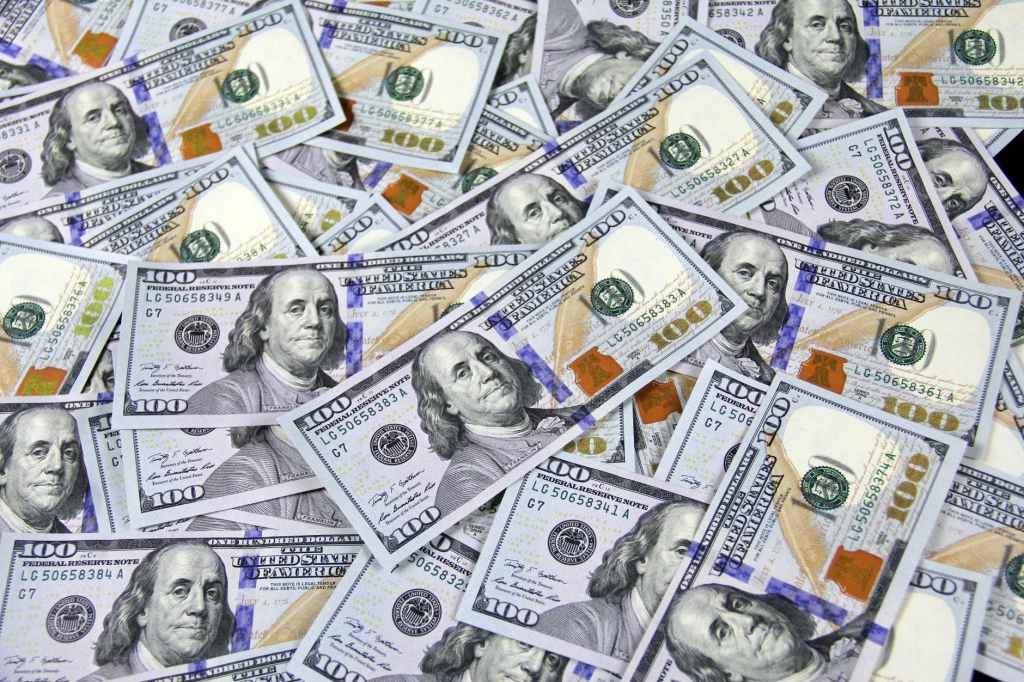
Many decades ago, we often used to hear the argument “if all the money in the country were shared out, everyone would only get 20p” A tiny sum, which could not make any difference to daily life. This was the UK in 1973, Perhaps it was true then, there. Is it true of the world as a whole today?

The statement itself is a cognitive howler: because it equates wealth with money, carefully avoiding the inclusion of all the goods, capital infrastructure(IT systems, railways, etc.) and productive resources such as factories that make up the wealth of the world, which is best expressed as GDP. When we set out to find what that was, the best estimate was from the World Bank,[1] who put it at $105 trillion in 2023. Now, the population of the world is around 8 billion (8×10⁹) people. What would happen if we found a way to share that GDP among all of them? The answer is: everyone ends up with an an income of $13 125 a year. Which surprised us greatly. Instead of being insignificant, its actually quite a lot. Let us explain why.

That same world bank defines four categories of national income by GDP. Low: $1 135 or less. Lower Middle: $1 136-$4 465. Upper Middle: $4 466- $13 845. High: $13 846 and anything above. There is enough wealth in the world to raise everyone almost to the level of high income countries, certainly to the very top of the middle range.

Now there may be very good reasons why this cannot be done. Some are practical. Some are moral. But if it were done, what difference might it make to such issues as mass migration, educational attainment, and the overall level of demand in the world economy? Let alone health, security and basic nutrition. Just a thought.

[1]https://ourworldindata.org/grapher/gdp-worldbank

#wealth #GDP per capita #economics #inequality #migration #health #geography #economics

Is all the money in the world running out?

Is the United States of America about to go bust, the way that previous empires like Spain and Britain did? Critics point to astronomical levels of government debt ( it’s now a whopping 123% of GDP) and ballooning trade deficits. Exactly the opposite to the US position just over one hundred years ago when it elbowed aside Great Britain to make Uncle Sam the dominant world player. “Ah”, counter the critics” if you have the world’s reserve currency you can issue as much debt as you like. And the fact that America has independent institutions makes its bonds the safest bet in the world for foreign investors”. So-no problem then? Perhaps. The trouble with debt is that it’s OK until it isn’t. As interest rates start to rise (as they have been doing for some time) the rising costs crowd out all sorts of fiscal flexibility. Especially on crucial issues like defence, health and education. As for the United States much vaunted institutions- recent events have put their independence in very great doubt indeed. [1]

But before we heap all the opprobrium on poor old America, don’t forget everyone else is doing it too, Japan is running debt at an eye watering 250% of GDP: while in France things are so bad , there are even rumours that they are flirting with an IMF bailout[2] If stalwarts such as they are in such deep trouble, what hope for less prosperous nations? The answer, chillingly, is not much. According to a report by Schroders [3] the levels of sovereign debt around the world are so high that they represent a real risk to future investment, growth and healthy trade. In effect the repayments will come to stifle most normal economic activity. Though the authors are careful not to go quite this far, what worries us is that if this activity slows, then there may be a real risk that many nation states may become structurally unable to ever repay their debt. If sovereign bond markets cease to function there is no real stable credit, In effect. all the money in the world has run out. The political, social and military consequences of that would be interesting indeed.

[1]https://edition.cnn.com/2025/08/29/economy/trump-fed-turkey-argentina

[2]https://www.theguardian.com/world/2025/aug/27/france-on-the-brink-political-crisis-economic-francois-bayrou

[3]https://www.schroders.com/en-gb/uk/institutional/insights/sovereign-debt-dynamics-the-alarming-backdrop-to-rising-geopolitical-risk/

#sovereign debt #USA #japan #france #economics #finance

Calling all Billionaires: Please read this blog

John Caudwell[1] is no fool. Anyone who has started a company like Phones4U and turned it into a multibillion pound company must be pretty well endowed in the brains department. Yet he has one particularly intriguing belief. He believes in meritocracy: he is deeply suspicious of the idea of inherited wealth. If you want to know more about why you can hear home talking to Tony Hawks in this podcast [2] Tony Hawks is Giving Nothing Away on the BBC. But essentially Caudwell thinks that in the long run his children will lead healthier, happier lives if they have to make their own way. Like he did.

We don’t know about individuals. But we know societies function better if the follow Caudwell’s prescriptions. Old LSS hands will recall our long time advocacy of the works of Thomas Piketty [3] and Wilkinson and Pickett. [4]Who show that societies with more equal economic structures have better health outcomes, lower crime, more scientific innovation and much higher social mobility, than less equal peers. One of their key findings was that wealth hoarded into family dynasties is one of the key blockers of healthily mobile societies.

Which is why Caudwell has joined the Giving Pledge. [5]No it’s not a marxist commie plot: it’s run by some of the richest people on the planet. In the words of the organisation’s own website:

Pledgers support a wide array of issues in every corner of the globe and give in a multitude of ways. What unites them is a shared promise and a commitment to creating an impact.

Wealth can be spent in two ways. It can be wasted in endless competitions as to who drinks the best bottle of wine, drives the fastest Rolls Royce or has the biggest yacht. Or it can be re invested like this creating a healthier better world, with-who knows?-maybe even enough antibiotics. if you really want to spend your money to make your children safe, this is the way to do it. If you are a billionaire, thank you for reading. If you are not-find one gentle readers, and press the works of the Giving Pledge into their hands.

[1]https://en.wikipedia.org/wiki/John_Caudwell

[2]https://www.bbc.co.uk/sounds/brand/m002fj92

[3] Thomas Piketty Capital in the 21st Century Harvard University Press 2014

[4] Richard Wilkinson and Kate Pickett The Spirit Level Penguin 2009

[5]https://www.givingpledge.org/pledger/john-caudwell/

#john caudwell #the giving pledge #economics #philanthropy # equality #social mobility

Why a falling population will solve most of our problems

Back in the 1970s we used to worry about rising population the way we worry about antibiotics now. Problems like pollution, energy shortages and even climate change were being discussed in the better pubs in the area where we grew up. Birth rates were soaring around the world. Everyone agreed that by 2010 there were going to be far,far too many people for the planet to support (and you wondered why you weren’t invited to more parties?-ed)Since when the situation has changed. Rulers, particularly of the more authoritarian sort, are fretting that their populations are actually starting to fall. The reason this keeps them awake at night, they asseverate, is that thereby there will not be enough young workers to keep pensioners in the style of living to which they have become accustomed (although we privately suspect they have darker motives) “Make women have more children!” is their cry. How about “the pram is the tank of the Home Front!” Or has that one been used already?

The reality is rather different as Larry Elliott points out so limpidly in this short piece for The Guardian [1] A falling population means less pressure on oceans, air and land. Less need for antibiotics! More seats in cinemas and restaurants! And, quite quickly, a rising GDP per head of population. As for the economic thing: a single modern worker produces and consumes far more GDP and products than a hundred medieval farm hands. To keep the economy growing you just need to raise the standard of living, you don’t need more workers

But as committed feminists we have another sort of worry. If you really want women to have more children, you will have to take them out of universities and higher education generally. Re- structure the wage market so men are again the main breadwinners. Recreate ideologies of patriarchy and submission, a bit like those currently popular in Afghanistan. is that what you really want?

[1]https://www.theguardian.com/commentisfree/2025/jul/02/britain-falling-birthrate-economy-politics

#feminism #pollution #population #economics #ecology

No that last blog does not make us a bunch of Communists

Every so often one of our blogs engenders some intriguing feedback . Alongside the usual welcome comments with all their nods and frowns, we occasionally get one that is a little-uh- longer, yet expresses its views with passionate clarity, to push euphemism to its limits. Such was the case today, when a reader alleged that our criticism of fossil fuel and tobacco companies was a sure sign that we were under the influence of Communists, who aim to tear down the free market system and replace it with a “nightmare of bureaucratic state socialism” of the sort found in places like Venezuela and North Korea. In particular the reader observed:

What you’ve got to remember is that markets not governments are best at allocating resources. Intervening in fossil fuel markets is crypto socialism- it will only distort price signals, stifle innovation and lead to unintended consequences”

When we asked if this was true for immigration control as well, they replied

“Absolutely! Free markets mean the free movement of labour. Anything else is protectionism in disguise.

So, where does that leave us at LSS? Having worked for many years in the Government Employ and thereby known the ways of Civil Servants, we can more and more share the view that Free Markets really do work better. No, it’s the “unintended consequences” that pulls us up. Free markets can have those too. Totally unregulated sales of tobacco produced an epidemic of cancer. We suspect that over enthusiastic marketing of certain foods and drinks will one day produce an epidemic of obesity. As for gushing out vast quantities of poisonous mineral oil and burning it with heedless abandon-well we wish people had been better informed before this was started. To call for better product information, and to ask that consequences of free markets are cleaned up, or at least controlled, does not make one a Communist. Or anything like it.

Thanks for the feedback, and we appreciate that in view of this respondent’s employment, they must remain anonymous

#climate change #free markets # global warming #immigration #communism #socialism #capitalism #hayek #marx

Gold is King!: Did we actually get something right?

Last October (LSS 26 10 24) we published a fanciful piece which purported to come from June 2025. In it, we suggested that US President Donald Trump had raised tariffs to 60% on China and 20% on the rest of the world. (nah, impossible-ed)The resulting disquiet in the bond markets general loss of confidence in US assets and a fall in the dollar, seriously affected its status as the world’s reserve currency. In such circumstances we couldn’t in all honesty see any alternative to gold as the de facto reserve, with all the obvious disadvantages that brings. You will forgive us a modest cough, gentle readers, if we suggest that our little blog, for all it got wrong, seems oddly prescient if you fast forward( or back) to April 2025, a full month ahead of our crystal ball gazing!

Because the recent IMF report [1] suggests the very dangers to which we so modestly adverted you. are now real. Of course, the IMF is not perfect; it too will have its biases and unconscious assumptions like everyone else. But it is compiled by some of the sharpest and most knowledgeable financial minds on the planet, which is why their arguments should be at least engaged with respect. Which is why one aspect highlighted by the Guardian among others [2] has caused us particular disquiet. The writer points out that in the panic after COVID 19 got going back in March 2020, and the famous “dash for cash” it was only the Fed rescuing the US Treasury that prevented a total rout. However:

The real concern here is not technical dysfunction in treasury markets or the mechanics of the Fed, which are the bedrock of the global financial system. It’s about the politicisation of the monetary-fiscal nexus under a Trumpian regime that is fundamentally hostile to the norms of liberal-democratic governance. When even the dollar is no longer a safe haven, what – or who – can be?

There are signs already that gloom can be overdone. As we write these words, Mr Trump and his acolytes appear to be signalling a weakening of their stand on China. While his latest stance on Ukraine suggests bets on his resolve on any issue may be misplaced. In which case the world may breathe a little more easily. Stocks rose yesterday: and gold has fallen back, a little. We are not economic experts nor financial advisors. But as humble citizens with an eye for History we have to at least ask: how long can the dollar, and US Treasuries stay on top of this sort of thing goes on?

[1]https://www.imf.org/en/Publications/WEO/Issues/2025/04/22/world-economic-outlook-april-2025

[2] https://www.theguardian.com/commentisfree/2025/apr/22/the-guardian-view-on-the-imfs-warning-donald-trump-could-cost-the-world-a-trillion-dollars

#donald trump #USA #china #IMF #world trade #gold #bonds #equities #economics

Declining Life Expectancy: a sure sign of a declining civilisation

You , your children and your grandchildren are going to live a lot less than you should have done. That’s the stark message from Andrew Gregory of the Guardian,[1] who has been busy reviewing a major study of life expectancies across 20 European nations. It’s a topic which has concerned us before here(LSS 21 12 21) and not only is it not going away but we think it is a sign of something deeply general going wrong.

The first signs that the old Soviet Union was in real trouble came in the 1970s when astute researches suddenly realised they weren’t returning their annual health figures to the WHO and other bodies. Their economy was no longer delivering, people were going hungry: and you just can’t spin health statistics over the long term. Within a few years the system had fallen in on itself. According to a study by the University of East Anglia the long rise in life expectancy which we have taken for granted for centuries has now stalled. Worried? You should be.

Greece(lashed by cataclysmic economic woes 15 years ago) is second worse. But it is the countries of the UK, one of the most unequal societies in the western world, which are doing worst of all. And we think we know why. Our old friends Richard Wilkinson and Kate Pickett [2] long pointed to inequality as the root causes of many evils such as obesity poor health bad diets over work and chronic illness[2] And -surprise, surprise! These are exactly the factors which the authors cite to be dragging UK statistics so drastically backwards. But can you forgive us one more observation, gentle readers? One country bucking the trend is Norway. Which some readers will recall set up a sovereign wealth fund with their share of North Sea Oil back in the 1980s of the last century.(LSS 6 7 20) While the British in the same years splurged theirs on new cars, shopping, time share villas and an utterly botched programme of de-industrialisation. Here are the consequences.

[1]https://www.theguardian.com/society/2025/feb/18/european-countries-experience-life-expectancy-slowdown-research-shows

[2] R Wilkinson K Pickett The Spirit Level Penguin 2010

#inequality #life expectancy #sovereign wealth fund #public health

Information Inflation: when the internet acts like a debased currency

Pump more money into the economy and you get inflation. It’s a lesson as old as time. The Roman Emperors of the Third Century successively put less and less silver into their coins, slowly debasing the currency. The result? Everyone needed more coins, and so the value of each unit fell. It was the same in the famous case of Weimar Germany where bank notes carried astronomically high face denominations, but were worth no more than than the paper they were made of.

Is it the same with information? The internet, news media, social media, feeds, all churn out a torrent of information. In such circumstances it becomes increasingly hard to know the value of any one piece and many people just give up trying. All information, any information, becomes worthless and people fall back on bartering local knowledge and techniques. We didn’t have this idea first of course: authors such as James Gleick [1] and Nicholas Carr have more than touched upon it. [2] Think how so many people choose to believe the facts that suit them. That is a perversion of the brain.

It’s interesting to see this convergence between information science and economics. If facts act like money, then they too can be debased. People who throw out streams of data, designed to flood, overwhelm and mislead are the greatest inflationists of all. If they can do it with data they can do it with currencies too.

[1] James Gleick Information: A History A Theory A Flood

[2] NIcholas Carr The Shallows: What the Internet is doing to our Brains

#inflation #information science #currency #economics

Larry Elliott’s balanced view on immigration. A Must-read

Nothing releases passion like the subject of immigration. Nor is anything so certain to unleash binary thinking, with defenders and attackers of this essentially economic phenomenon dividing into mutually hostile camps, high on their own anger and righteousness. It’s time for some balanced nuanced thinking. As ever, Larry Elliott of the Guardian is here to provide it, [1] In an article titled It’s not bigotry to worry about immigration

We won’t steal his thunder. You should read it. No, really, this time. it applies to your country too. But we will dare to adduce the two essential points

1 Immigration isn’t all bad-it has serious economic advantages

2 Immigration isn’t all good- it has serious economic disadvantages

Our thoughts? Those who call themselves leftists should be passionately against immigration, as it’s a classic example of a free market mechanism disrupting society. Those who call themselves rightists should be passionately in favour of immigration as it’s a classic example of a free market mechanism disrupts society, which is always the price for economic efficiency. Can we go back to some science now?

https://www.theguardian.com/commentisfree/2024/dec/11/migration-figures-britain-economy-keir-starmer

#economics #immigration #migration #poverty #economic development

From American Decline to World Government: fasten your seatbelts for a bumpy ride

When did America’s Decline end, and the Fall begin? Although future historians will debate, Tuesday November 5th 2024 will be as good as any other point to start from. For it was on this date that a concatenation of forces-economic, political, social-produced the re-election of Donald Trump, and all that was to follow. These forces included an irresolvable racial rancour dating back to slavery; a deep pollution of information in the public sphere; a chronic failing in public education and the ethos to support it. But above all it was the worship of money, and the catastrophic, merciless social and economic inequalities that this engendered, that brought everything low. Writing for The Nation, Tom McCoy details these rather well in the first part of his article [1] (Don’t read the second bit until we say you can) To cut a long story short, we could call this obsession with cash NeoLiberalism.

Let’s just jump across the Atlantic for a moment to say goodbye to Larry Elliott who quits his post at the Guardian after 36 years {2] He too is eloquent on the many things he has witnessed. Among them is this observation on this same cocky, self-satisfied NeoLiberalism

…… the free-market experiment has failed, as some of us said it would all along. Wealth did not trickle down, and instead the gap between the haves and the have-nots widened. The workers laid off when the factories closed in northern England and the US midwest did not find new well-paid jobs but were either thrown on the scrapheap or found low-paid insecure work …………

Financial speculation ran rife once controls on capital were removed, but growth rates in the west were slower than in the postwar heyday of social democracy. Warnings of trouble ahead were ignored until the world’s banking system came close to collapse in the global financial crisis of 2008. [2]

Producing an alienated and impoverished group of vast voting power) which was impervious to the imploring of reason, fact and education. And who could blame them? The exalted free markets have produced such insecurity that a nationalist backlash was inevitable. It is now tearing down every shibboleth that the neoliberals held dear. Low tariffs, free movements of capital and labour, cultural and intellectual exchange are going to the wall, and we can see nowhere that this process can now stop..

Except one. Because while Larry’s article closes with a final nod to the re-emergence of the Nation State, Tom’s goes further and look to the future.(OK, click on his article again) The problem with the Nation State is Pride. It is national Pride which will cause Donald Trump and his friends to start drilling for oil again. By which means all combined attempts to prevent global warming will collapse, as each nation looks to its own interest. Runaway global warming will produce such desolation that any economy and any body politic will become unsustainable, probably as early as the next decade. The resulting chaos will make a world Government essential for human survival. And tom details how this may come about, perhaps in the sixties or seventies.

The American hegemony is now certainly over, How ironic that this was hastened by an arch nationalist such as Trump!

[1]https://www.thenation.com/article/world/american-hegemony-climate/

[2]https://www.theguardian.com/business/2024/nov/10/from-thatcher-to-trump-and-brexit-my-seven-lessons-learned-after-28-years-as-guardian-economics-editor

#global warming #economics #climate change #donald trump #neoliberalism #free trade #protectionism