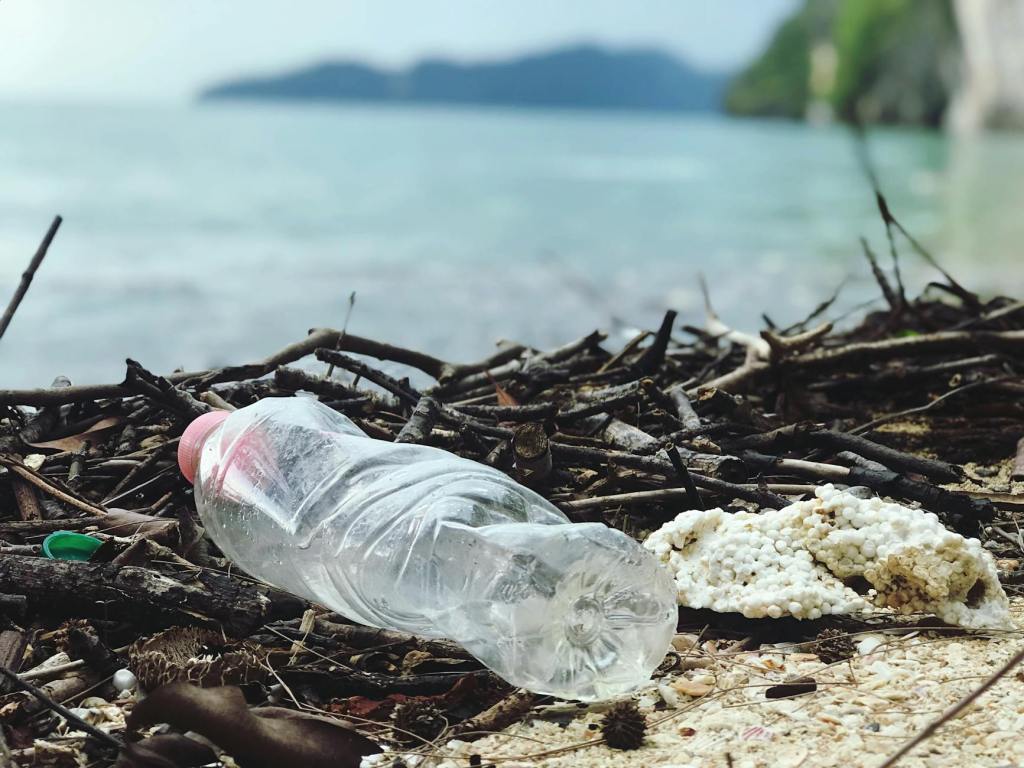
Microplastics: Let’s be cautious with the data

Read not to contradict and confute, nor to believe and take for granted, nor to find talk and discourse, but to weigh and consider

It was Francis Bacon , the founder of the scientific method who recorded those words in his famous work Of Studies. We have always followed them assiduously, as you know well gentle reader. So today we present a diptych of stories on our old bugbear microplastics pollution, because togethe, they illustrate the Baconian approach very well.

All of you share our worries about the dangers of microplastics. We tried to count the blogs we’ve done on it but ran out of patience early on. And today’s first story, from the learned Damian Carrington of the Guardian fits well into the gloomy canon.[1] Damian reports some truly alarming studies which suggest that microplastics are seriously threatening photosynthesis among our most vital food crops, such as wheat and rice. Get this for a killer quote

Asia was hardest hit by estimated crop losses, with reductions in all three of between 54m and 177m tonnes a year,

Although they are hitting food production everywhere and not just crops: seafoods are particularly vulnerable as well. Case proven again: microplastics are hell, right?

But we would not be LSS, we would not be Baconians, if we didn’t then go to this story in Nature Briefings Micoplastics Research Needs Ironing Out

Last month, Briefing readers recoiled from the news that human brains seem to be full of plastic bits — with a recent study of autopsied bodies finding our brains might contain as much as 4.5 bottle caps’ worth of plastic. But some of the most shocking studies about microplastics in human tissues rely on small sample sizes, lack appropriate controls or “are not biologically plausible”, write four health researchers. “Without more rigorous standards, transparency and collaboration — among researchers, policymakers and industrial stakeholders — a cycle of misinformation and ineffective regulation could undermine efforts to protect both human health and the environment,” they argue.Nature | 8 min read
Reference: Nature Medicine paper

And the point? It’s this need for our side to be rigorously scrupulous wherever and whenever we can. When climate scientists offered the slightest room for doubt, Big Oil and its well-funded armies of deniers and manipulators pounced, casting doubt, insinuating, opening the door to denial. We are the smaller, weaker side and must tell the truth if we are to be believed. During the Second World War, Goebbels and the Nazis flooded the media with and endless stream of new claims, false facts, non sequiteurs and fake news. And at first it worked. But the BBC played a different game. Carefully to admit Allied losses and defeats as well as victories they slowly built trust among even their German audiences. In the end, their radio broadcasts were the main source of news for millions of Hitler’s followers.

We will play the long game,. And reality will justify us.

[1]https://www.theguardian.com/environment/2025/mar/10/microplastics-hinder-plant-photosynthesis-study-finds-threatening-millions-with-starvati

#microplastics #francis bacon #pollution #hunger #food production

Clean, Green Copper?

One of the downsides of making the change to a clean, renewable economy is the enormous cost of some of the technologies. And we are talking energy and pollution here, not money. It’s an uncomfortable truth which enemies of progress gleefully point out wherever and whenever they can. Take copper for example. It’s going to be central to any green ecosystem, showing up as vital component of anything and everything from electric cars to eco power plants. But, as the superlative Robin McKie of the Guardian points out, mining it demands enormous quantities of energy. As for the waste left behind- we almost dare not think.

Yet Robin is nothing if not hopeful . In this article he reviews a whole set of hopeful new technologies which are designed to find cleaner, more sustainable ways of pulling out this vital metal. Demands of brevity force us to extract only one(no pun intended) as it fits with the vaguely biological ambience of this blog

 a company, RemePhy, has been started by Imperial PhD students Franklin Keck and Ion Ioannou……They have used GM technology to develop plant-bacterial systems that have an enhanced ability to extract metal from the soil. “Essentially, you will be able to grow these crops on land contaminated by waste left over from the mining of metals such as copper, and they will extract that metal,” (explainer-London’s Imperial College is nurturing many of these initiatives-ed)

The oldest trope on this blog is our admiration for when clever people tweak existing ideas and suddenly do something really useful in a new und unexpected way. Imagine the strategic benefits to a country that not only supplies itself with copper, but cleans itself up as it goes along. The benefits of Science and Reason, we suppose?

[1]tps://www.theguardian.com/global/2025/mar/02/copper-scientists-london-energy-electrical

#copper #metals #mining #pollution #imperial college #renewables #clean energy

World Government #2: the end of mass migrations

The world heats, driving waves of refugees in search of survival. Nationalism, religious identitarianism, ethnic exclusion grow. The resulting conflicts throw more waves of refugees onto the shores of societies with neither the psychological nor economic means to cope. Those societies in turn experience fear and destabilisation, as people understandably try to cling to the mental assurances of the past, leading to more nationalism, identity politics………… This spiral downwards will require big thinking indeed if we are to survive at all as a species.[1]

The problems we have identified-(climate change and mass migration) are closely connected. They are rooted in deep inequality. People migrate along economic lines from poor to rich, just like ions in an electric field. They always have done. The solution is a mass transference of sufficient wealth from richer countries to poorer ones  to build up their economies. This would  not only reduce the incentive to migrate. It would also slow the endless production of status goods like luxury cars and fashionable clothes in the rich countries. The ending of such frivolous production, distribution and consumption  would enable an enormous reduction in carbon emissions.

Yet how can a world constructed on hundreds of lines of sovereign and religious identities ever achieve this transfer? There is too much incentive to cheat. To let other nations make the transfers, while guarding local advantage. To allow funds to be hidden in “sovereign” jurisdictions. To allow quick fossil fuel booms to grab short boosts of wealth. To think short term, to think parochially. Perhaps future generations will even decide it was criminally, like the Slave-owning Planters of the US South in the nineteenth century. Whereas a single world Government would cut through all these problems at once. And we haven’t begun to mention the advantages in things like health, space exploration and cleansing pollution, which would follow easily.  Once again, the situation is now so desperate, that it’s time to consider something utterly different. We begin to suspect that something to be a World Government, however bizarre that sounds.

In the next post in this series we shall look at the history of the idea of world government, and find it’s not such a new idea after all.

[1] Is the world ready for mass migration due to climate change? – BBC Future

#world government #migration #climate change #pollution #inequality

Hollywood Fires: Global warming on a screen near you

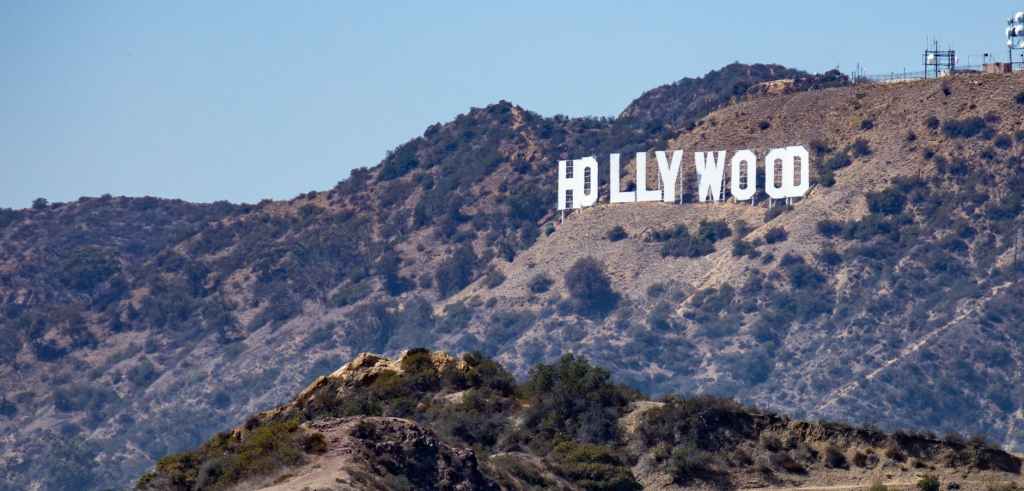
We confront the endless coverage [1] of the fires raging through Hollywood in California with nothing but profound melancholy. For we had two of our most enjoyable holidays ever in that distant State of America, and many times experienced the kindness and intelligence of enlightened people. The trouble is that they were motoring holidays. We toured around vast areas, heedlessly filling the atmosphere with carbon dioxide and other pollutants, and thereby contributed to the disaster that has befallen these unfortunate people.

And more disaster is to come. Any hopes that this trouble is exceptional and can be put down to an El Niño event, now look forlorn. Read this from Nature Briefings; and click on their link if you dare:

Is Global Warming Speeding Up? Earth shattered heat records in 2023 and 2024, with temperatures rising further than expected on the basis of previous trends and modelling. A mysterious reduction in cloud cover, combined with an El Niño weather pattern, could be responsible for temperature increases in 2023. However, scientists expected temperatures would decrease again in June 2024 when the El Niño subsided, which didn’t happen. Now they are racing to work out whether this sudden spike is just a blip in the climate data, or an early indicator that the planet is heating up at a faster pace than they thought.Nature | 6 min read
Reference: Science paper

Why, and how, are we bringing this catastrophe upon ourselves? One man who seeks to understand is John Vaillant. Fire Weather is his his study of the catastrophic fires that raged for a year in certain regions of northern Canada, regions that had devoted themselves to the extraction of fossil fuels. You can read a review of his work here from Wired [3] But it’s a weary chronicle of greed, short termism, butch manliness and wilful destruction; the substrates in which climate denialism thrives.

However we cannot close without a slightly hopeful thought. Every so often one still comes across, at least in this country, members of the proletariat who ask questions like”this climate chinge fing-der yew fink iss rilly ‘appenin?” Such people, hypnotised as they are by all things American, Celebrity and Hollywood, may now have to confront a reality. Yes, it really is.

[1]https://www.bbc.co.uk/news/live/c5y81zyp1ext

[2]https://www.wired.com/story/fire-weather-book-canadian-wildfires/

[3]https://www.wired.com/story/fire-weather-book-canadian-wildfires/

#california #hollywood #global warming #fire weather #fossil fuels

Are YOU a cause of deforestation?

What could be more innocent this weekend than a brisk stroll through your local shopping mall? All air-conditioned and centrally-heated, antiseptically clean, and crammed full of shops with must-have frocks and trainers and clothes and make-up and jewellery and mobile phones and shirts and trousers and computers and chocolates and more clothes and shoes and cosmetics and toys and even more clothes and accessories and skirts and furniture and even more cosmetics…..might you, have you, contributed to the tearing-down of trees in some far-away rain forest?

According to Global Canopy, you probably have.[1] They are a non-profit company that tries to monitor the role of the world’s largest corporations in the sustainability of the planet, looking at production, supply chains transport- all the aspects of a modern operating firm, in fact. What impressed us was the way that they try to work with companies by providing data and feasible strategies instead of just standing outside in the rain with placards. But they are no patsies, either. Get this from their website

The 10th edition of the Forest 500( their regular survey-LSS) reveals that almost a quarter (23%) of the companies and financial institutions that have featured in each of the 10 annual assessments have still not published a single commitment on addressing deforestation…….Meanwhile, nearly two-thirds (63%) of companies that have set commitments are failing to publish adequate evidence of their implementation

They go on to name names, which we dare not here, for lack of a proper legal department. But you’ll see them tomorrow during the course of your excursion. And that’s before you stop off in the Food Concessions on level four………

Why is all this important? Well we at LSS think that deforestation if one of the major causes of the worlds ills. It not only contributes humongously to global warming, it interferes catastrophically with hydrological cycles, driving desertification and land degradation. (ever wondered where all those migrants come from?) It may even be releasing new pathogens such as respiratory viruses into the human ecosphere, as we have alluded to before in these pages (LSS Passim) The World Counts has a nifty little website here to bring you somewhat up to speed [2].

Now we at LSS are not urging you to give up the accoutrements of civilised life today. We are Whigs, not Cistercian Monks, and certain member of the Editorial Board might find immediate changes to their lifestyles very uncomfortable indeed. But look again at the way Global Canopy work; with the grain of corporate life (weak pun intended) Can you ,should you find ways to bring pressure on companies by investing differently? By purchasing a little more slowly, and perhaps a little more judiciously? By getting just one item a week from a charity shop? If you want to donate to, or help these people in some other way, we would applaud that, too. As Tesco used to say back in the 1990s; every little helps.

Thanks to G Herbert for this story

[1]https://globalcanopy.org/press/10-years-of-data-reveals-the-major-companies-persistently-ignoring-their-role-in-driving-deforestation/

[2] https://www.theworldcounts.com/challenges/planet-earth/forests-and-deserts/why-is-deforestation-a-problem

#deforestation #supply chains #palm oil #global warming #shopping malls #consumer

Global warming: five graphs to frighten anyone

Looks like we’ll need that carbon capture machine from yesterday’s blog (LSS 19 11 2024) Global warming is accelerating fast. An excoriating series of graphs, compiled by the industrious team of Helena Horton, Lucy Swan, Ana Paz and Harvey Symons, of the Guardian, punches the information right between your eyes. in a series of vivid clear and easy to grasp graphics [1] We thought that five in particular were especially noteworthy : Earth Surface Temperatures (up) Heat stress (up) Ocean surface temperatures (really up) and emissions(really, really up)

If you want to know why all this has been caused by human activity, click here [2]

But the consequences are feeding into our daily lives now, wrecking our political and social systems. For as people see their lands ravaged and turned uninhabitable by all this, they flee to the last surviving places where life may still be tolerable. It’s called migration. And so we close with a question. it’s particularly for the older sorts, who gripe and snipe at every effort to produce clean energy. How will you restore the ravaged lands of the south, and thereby stop the flow of migrants at source?

[1]ttps://www.theguardian.com/environment/2024/nov/20/the-climate-crisis-in-charts-how-2024-has-set-unwanted-new-records

[2]tps://www.climate.gov/news-features/climate-qa/how-do-we-know-build-carbon-dioxide-atmosphere-caused-humans

#climate change #migration #global warming #fossil fuels #carbon emissions #electric vehicles

How to help viruses live longer and kill more of us

Illness is like gambling. It’s all about statistics. The longer you stand near a virus/bacteria/fungus, or whatever, the higher are your chances of contracting it. So what if the air we breathe becomes ever more virus-friendly, helping them to live longer and infect more people? No, we hadn’t thought of that either. But read this CO2 boosts airborne Viruses from Nature Briefings:

Carbon dioxide is often used as a proxy for healthy air — such as when CO2 monitors are deployed to determine COVID risk. Now it seems that high levels of CO2 actually help viruses to survive in the air. Using an innovative instrument to study airborne pathogens in unparalleled detail, researchers determined that CO2 appears to help keep the particles we exhale at a pH-level that is more hospitable to viruses. “By increasing the CO2 in the air, we’re getting rid of a natural means by which viruses become inactivated,” said environmental chemist Allen Haddrell, who led the new work. “It’s fascinating, but it’s also horrifying.”STAT | 10 min read

The link from Stat, by the admirable Megan Molteni is so good that we’ve provided a double link [1]

Are all crises interlinked? We’ve run other blogs here suggesting, for example ,the link between habitat destruction and the release of new infectious diseases. How the floods brought on by global warming have acted as huge artificial vectors for old diseases like malaria. Or even that a steady rising background level of CO2 could have disastrous consequences for health (LSS passim) This is just a further indication that this gloomy thought may be right. But any parent or grandparent reading this would do well to find out more.

[1]https://www.statnews.com/2024/06/04/co2-ventilation-research-virus-airborne-life-haddrell-celebs/?utm_source=Live+Audience&utm_campaign=2a53b9910b-nature-briefing-d

#global warming #climate change #disease #public health #virus #bacteria

Five Problems in the in-Box of a World Government

It’s election time in some of the world’s biggest democracies. This year India, the USA and UK all go the polls, and the EU has just done so (we don’t count the recent sham in Russia) All of these places face immense problems. And we don’t think they can solve them, because the root causes are global, making frontiers out of date. Imagine then, if a Global President were elected this year and took office on 1st January 2025. What would be the top five problems in their in-box?

1 Intractable conflicts. People draw imaginary lines and then fight bloody wars across them. The current conflicts between Russia-and -Ukraine and Israel- and- Palestine are current examples, with no obvious resolution, if the nation state remains the highest form of political organisation. Older readers will recall how the conflicts between Mercia and Wessex dwindled once they were combined into England. It was the same after France and Germany joined the EU. A World Presidency would imply that all these ancient hatreds are in fact futile.

2 Climate Change/Global Warming What happens in the Antarctic, the Amazon Basin and the Great Barrier Reef affects us all equally. The existence of endlessly competing polities, each jockeying for its own advantage may fatally slow efforts to deal with this existential threat. A World Government would rapidly co-ordinate mitigation efforts and resource allocation, and it is likely that this one would indeed soon be a memory.

3 Migration and identity crisis People move from poor areas to richer ones according to the same irrevocable laws that govern the movement of ions in an electric field. Yet the deep crisis of identity this provokes has produced toxic political and intellectual consequences in the richer countries, which make it impossible to transfer resources to the poorer ones. By ordering this done, a World Government would have essentially removed the motivation to migrate at all, thus ending the crisis forever.

4 Pandemics Recent experience has shown that economy-shattering pandemics can spread with lightning speed. And, believe us, Covid-19 was mild compared to some viruses which are waiting in the wings. For some reason, those pesky viruses don’t respect frontiers any more than molecules of carbon dioxide do, suggesting that the whole idea of national solutions may be somewhat out of date.

5 Grasping the Opportunity If humanity is to survive, it would be judicious to give ourselves extra chances. Colonising the Moon or Mars would provide ample second homes, even if our local tribesmen blow this one up with their nuclear weapons. Such a colonisation would be faster, more efficient and more just if all were invited to participate and share in the consequences. A World Government would mean that the undertaking would not only be successful, but that existing squabbles were not exported among the planets.

We know this will be saying the unsayable, especially among certain classes of society. Yet there comes a point when a society is bulging in crises, bursting against the limits which constrain it. It’s our contention that these limits are artificial and self imposed. There can never be a return to the good times of the past. But with thought and effort, they may come again in the future.

#world government #nation state #pandemic #global warming #migration #inequality

If the Gulf Stream collapses, you won’t need ice in your Gin and Tonic

According to the American writer Gore Vidal, one must choose between two missions in life. Either to Comfort the Afflicted; or to Afflict the Comfortable. Now, generally speaking, the Daily Mail is normally very much on the side of the Comfortable. Hardly a bunch of Islington Green Remoaner Marxist Liberals, you might say. So when they publish something which might in some way be slightly comfort-afflicting, we know it’s been through a pretty fine toothcomb first. And today we present just such a story by their admirable Jonathan Chadwick called The Real Life Day After Tomorrow. Not only does it speculate that the warming currents of the North Atlantic might collapse, plunging us into a new Ice Age. But there is a chance that it might happen rather soon. [1]

Most people know that the reason that Western Europe is tolerably warm is due to the fact that certain ocean currents move vast quantities of heat up from the warm waters of the Gulf of Mexico to these otherwise benighted shores. Thanks to global warming and melting ice caps, those currents could switch off as early as next year. We cannot hope to improve on the excellent explanations and top notch, easy-to-understand graphics in Jonathan’s article. But we could beg you to look at some of the comments. and the squeals and howls of outrage from those whose weltenschauung is horribly imperilled by Jonathan’s words. Denial, evasion and getting shouty are common psychological defence mechanisms of people who are often uncertain of their own case. Blaming the messenger can be another; although we are all guilty of that.

Perhaps the latter was on display in the case of climate scientist Michael Mann, who, because of his scientific work, became the subject of unpleasant personal attacks from those who objected to his findings. To us it all seems a bit reminiscent of what happened to Galileo in the 1640s. Fortunately Mann has won damages from some of his adversaries , and this may buy back some space for objective debate in some areas of science. We wait to see. Whatever happens, those who prefer to deny, for whatever reason, should remember. Reality, be it economic, physical or logical, will eventually come round to charge a price. The longer you leave it, the higher that price will be.

[1]https://www.dailymail.co.uk/sciencetech/article-13073449/Gulf-Stream-plunging-Europe-deep-freeze.html

[2]https://www.nature.com/articles/d41586-024-00396-y?utm_source=Live+Audience&utm_campaign=0f1db6493c-briefing-dy-20240212&utm_medium=email&utm_term=

#jonathan chadwick #climate change #global warming #ice caps #AMOC #climate denial

Attack of the Killer Zombie Virus

Sounds like one of those old 1950s B movie titles, doesn’t it? But according to Robin McKie of the Observer, the threat is all too real.[1] According to Robin:

Humanity is facing a bizarre new pandemic threat, scientists have warned. Ancient viruses frozen in the Arctic permafrost could one day be released by Earth’s warming climate and unleash a major disease outbreak, they say.

No, despite our apparent credentials gained in monitoring the medical and science newsfeeds, we didn’t see this one coming either. We were more concentrating on the day that all that methane locked up in the permafrost spills out, and propels us all back to the Great Permian Extinction.[2]

And before you go, remember this. Firstly even the best antibiotics in the world will be of no use against viruses. Secondly, these viruses are likely to be of unknown types, and it will take time to run up meaningful vaccines against them. And above all, don’t think it won’t happen-remember what they were saying about global warming only twenty years ago?

[1]https://www.theguardian.com/society/2024/jan/21/arctic-zombie-viruses-in-siberia-could-spark-terrifying-new-pandemic-scientists-warn

[2]https://en.wikipedia.org/wiki/Permian%E2%80%93Triassic_extinction_event

#permafrost #climate change #global warming #virus #pandemic #vaccine #antibiotic