24 Deadly Diseases that could land on our shores

Of all the ways to go, Ebola Fever is one we’d prefer to avoid. First, your temperature shoots up to an unhealthy 39 C. This is followed by agonising bowel cramps and uncontrolled bloody diarrhoea. Finally the patient starts vomiting blood. Death, which usually follows in 80-90% of such cases, may begin to seem a mercy. Readers with long memories may recall an epidemic of this disease in Africa between 2013 and 2016. Fortunately it was contained, due the efforts of public health officials and brave, skilful medical professionals. Who managed-just- to confine the death rate to 11 323 unfortunate souls. It doesn’t bear thinking about what might have happened had they failed. But according to Professor Harper, a pandemic caused by a similar disease broke the back of the Roman Empire and effectively ended the civilised world[1]

Now a report by the UK Health Security Agency[2] [3] lists Ebola as one of a group of 24 deadly diseases which could land on the shores of this sceptr’d isle at almost any time. As most readers will recall, Ebola is part of the Filoviridae family(an honour shared by the mortiferous Marburg virus) But travelling companions include the Flavoviridae (dengue, zika) Coronaviridae and all sorts of bacteria including the ones for bubonic plague and anthrax. Kat Lay of the Guardian has a nice quick take on the story. And its proximal causes, most of which come down to climate change and habitat destruction.

And our take? It’s good to have some sort of professional public health body that can at least take note of, and warn about, these sorts of things. But the poor old UKHSA has been starved of funds, largely to finance tax cuts to pay for the purchase of Bright Shiny New Things. The production of which leads to climate change, habitat destruction, and…………….you get the picture. If today’s seems a bit of a UK-centric blog, so be it. We are a pretty representative average sort of country, and you face the same threats that we do. If these diseases are appearing on our threat list. they’ll be coming up on yours soon. They have the same ultimate causes.

[1] Kyle Harper The Fate of Rome Princeton UP 2017

[2]https://www.theguardian.com/science/2025/mar/25/uk-experts-urge-prioritising-research-into-24-types-of-deadly-pathogen-families

[3] https://www.gov.uk/government/news/ukhsa-highlights-pathogens-of-greatest-risk-to-public-health

#pandemic #virus #bacteria #epidemic #climate change #global warming

Sustainable building materials? UK Hempcrete shows the way ahead

For those of us who spend our working lives worrying if the next generations will even survive, the global building and construction industry is a source of some angst. Yes, all those people have got to have places to live, and work, and to get cured of diseases caused by lack of antibiotics (LSS ad nauseam) The trouble with Construction is that it’s so eye-wateringly carbon expensive. Here’s one long fact for one short blog: if you add all their carbon costs together (resource extraction, transport, construction, demolition, recycling, plus cooking all those enormous English Breakfasts they all eat), it all adds up to a whopping 37% of global emissions. Any ideas?

One way ahead is to make the materials they use for things like floors, ceilings, walls and so on, a lot more planet- friendly. Which is why we want to showcase the work of a British firm called UK Hempcrete. [1]Hempcrete is an exciting new type of biocomposite made from the stalks of hemp plants, as well as more traditional materials such as lime and sands. [2] But the new mix carries two key advantages. Firstly , and unlike traditional building materials it actually acts as a sink for CO2 over the course of its use. Secondly, it’s hygroscopic, allowing for much better moisture balance in buildings made from it. Every year we burn billions of tonnes of fuels trying to keep our buildings warm and damp- free. This new material gets around that problem almost entirely. But you can read a lot more about this company and its subsidiaries from their website and our other links; they’re much better at it than we are.

And, as you’re asking, do we have an interest in this company? Financially, no-we’d never even heard of them, or hempcrete, until our researchers flagged them up this morning. But we do have an interest in survival. And long ago we decided that it would not come from making people more virtuous, but by setting up ways to let people make money from progress. Which is why we plug, shamelessly, the work of all sorts of companies here, from net zero aviation folk to Biotechnology enthusiasts in the heart of the Cambridge Science Park. (LSS passim) Of course we keep the usual media/PR links to these outfits when we’ve finished. But that’s more on your behalf, gentle readers, not ours. Any attempt to get our construction industry onto a more sustainable, cleaner and rational footing will always earn the support of this blog. Good luck, UK Hempcrete-and keep it coming.

[1]https://www.ukhempcrete.com/

[2]https://en.wikipedia.org/wiki/Hempcrete

[3]https://www.ukhempcrete.com/services/material-supply/

#global warming #carbon emissions #ukhempcrete #sustainability #consrtuction industry #building

Is Carbon Dioxide already killing us? An old blog revisited

About five years ago we published this blog called is Carbon Dioxide the new Passive Smoking?

We already know that rising levels of carbon dioxide from global warming are bad for the planet. They are ruining the climate, causing floods raising sea levels, and making fertile areas uninhabitable. But are they already starting to kill us individually?

Before global warming, the average level of CO2 in the atmosphere fluctuated around 280 ppm (parts per million). Now it hovers around 410 ppm; by the end of the century it could be around 670 ppm or even higher.

The human body can sustain low levels of CO2 in the atmosphere-we’ve adapted to it. High levels are normally only a problem for people like building workers, astronauts and captains of nuclear submarines. Research shows that there is no question that the sorts of levels these people can meet will do you serious harm, but most of the work is concentrated around very high CO2 concentrations at thousands of ppm, with very short exposure times , both for obvious reasons.

But as CO2 levels rise, what happens to all of us as we breathe in steadily rising levels day in day out, without a break? Especially in places like offices, where it tends to become more concentrated.

Now a paper from Nature Sustainability by Tyler Jacobsen, Jasdeep Kler* and their co-workers looks at this question.   Some of their findings are disquieting, to say the least. Firstly chronic CO2 exposure does seem to have health risks. There’s a long list, but the main stand outs are on cognitive ability, kidney calcification and endothelial dysfunction. Secondly, this is a preliminary paper, as the authors admit. A very great deal of work remains to be done. And that will mean setting up research programmes, signing up scientists and re-budgeting whole departments.

There is a worrying historical parallel. When the first early papers on the effects of cigarette smoking were published, they were largely ignored. Which only gave the danger time to grow. And at least individual smokers were able to mitigate the risk by giving up. But for passive smokers the risk was everywhere. If you lived or worked or socialised with a smoker, you couldn’t help breathing the stuff in. It’s the same with carbon dioxide-there’s no getting away from it

We are aware of the dangers of crying wolf, and of course it’s perfectly possible that this may not be as serious as some of the other problems currently besetting the world. But isn’t it time we researched a little, just to make sure? (LSS 11 2 2020)

Since when very little has changed, Except perhaps that atmospheric levels of CO2 have almost certainly risen a little. Again, we stress that we don’t know the answer, and are calling for research, not immediate action. But this this blog has a lot more readers now. We include the reference below. Do you know anyone who thinks this ought to be investigated further, by practising scientists or doctors?

Direct Health Risks of Increased Atmospheric CO2

Tyler A Jacobson, Jasdeep Kler, Michael T Herneke Rudolf K Brown, Keith C Meyer and William E Funk

Nature Sustainability Review Article Vol 2 August 2019 pp 691-701

#globalwarming #climatechange #co2levels #health risks #environmental health #passive smoking #health #medicine

Microplastics: Let’s be cautious with the data

Read not to contradict and confute, nor to believe and take for granted, nor to find talk and discourse, but to weigh and consider

It was Francis Bacon , the founder of the scientific method who recorded those words in his famous work Of Studies. We have always followed them assiduously, as you know well gentle reader. So today we present a diptych of stories on our old bugbear microplastics pollution, because togethe, they illustrate the Baconian approach very well.

All of you share our worries about the dangers of microplastics. We tried to count the blogs we’ve done on it but ran out of patience early on. And today’s first story, from the learned Damian Carrington of the Guardian fits well into the gloomy canon.[1] Damian reports some truly alarming studies which suggest that microplastics are seriously threatening photosynthesis among our most vital food crops, such as wheat and rice. Get this for a killer quote

Asia was hardest hit by estimated crop losses, with reductions in all three of between 54m and 177m tonnes a year,

Although they are hitting food production everywhere and not just crops: seafoods are particularly vulnerable as well. Case proven again: microplastics are hell, right?

But we would not be LSS, we would not be Baconians, if we didn’t then go to this story in Nature Briefings Micoplastics Research Needs Ironing Out

Last month, Briefing readers recoiled from the news that human brains seem to be full of plastic bits — with a recent study of autopsied bodies finding our brains might contain as much as 4.5 bottle caps’ worth of plastic. But some of the most shocking studies about microplastics in human tissues rely on small sample sizes, lack appropriate controls or “are not biologically plausible”, write four health researchers. “Without more rigorous standards, transparency and collaboration — among researchers, policymakers and industrial stakeholders — a cycle of misinformation and ineffective regulation could undermine efforts to protect both human health and the environment,” they argue.Nature | 8 min read
Reference: Nature Medicine paper

And the point? It’s this need for our side to be rigorously scrupulous wherever and whenever we can. When climate scientists offered the slightest room for doubt, Big Oil and its well-funded armies of deniers and manipulators pounced, casting doubt, insinuating, opening the door to denial. We are the smaller, weaker side and must tell the truth if we are to be believed. During the Second World War, Goebbels and the Nazis flooded the media with and endless stream of new claims, false facts, non sequiteurs and fake news. And at first it worked. But the BBC played a different game. Carefully to admit Allied losses and defeats as well as victories they slowly built trust among even their German audiences. In the end, their radio broadcasts were the main source of news for millions of Hitler’s followers.

We will play the long game,. And reality will justify us.

[1]https://www.theguardian.com/environment/2025/mar/10/microplastics-hinder-plant-photosynthesis-study-finds-threatening-millions-with-starvati

#microplastics #francis bacon #pollution #hunger #food production

Clean, Green Copper?

One of the downsides of making the change to a clean, renewable economy is the enormous cost of some of the technologies. And we are talking energy and pollution here, not money. It’s an uncomfortable truth which enemies of progress gleefully point out wherever and whenever they can. Take copper for example. It’s going to be central to any green ecosystem, showing up as vital component of anything and everything from electric cars to eco power plants. But, as the superlative Robin McKie of the Guardian points out, mining it demands enormous quantities of energy. As for the waste left behind- we almost dare not think.

Yet Robin is nothing if not hopeful . In this article he reviews a whole set of hopeful new technologies which are designed to find cleaner, more sustainable ways of pulling out this vital metal. Demands of brevity force us to extract only one(no pun intended) as it fits with the vaguely biological ambience of this blog

 a company, RemePhy, has been started by Imperial PhD students Franklin Keck and Ion Ioannou……They have used GM technology to develop plant-bacterial systems that have an enhanced ability to extract metal from the soil. “Essentially, you will be able to grow these crops on land contaminated by waste left over from the mining of metals such as copper, and they will extract that metal,” (explainer-London’s Imperial College is nurturing many of these initiatives-ed)

The oldest trope on this blog is our admiration for when clever people tweak existing ideas and suddenly do something really useful in a new und unexpected way. Imagine the strategic benefits to a country that not only supplies itself with copper, but cleans itself up as it goes along. The benefits of Science and Reason, we suppose?

[1]tps://www.theguardian.com/global/2025/mar/02/copper-scientists-london-energy-electrical

#copper #metals #mining #pollution #imperial college #renewables #clean energy

World Government #2: the end of mass migrations

The world heats, driving waves of refugees in search of survival. Nationalism, religious identitarianism, ethnic exclusion grow. The resulting conflicts throw more waves of refugees onto the shores of societies with neither the psychological nor economic means to cope. Those societies in turn experience fear and destabilisation, as people understandably try to cling to the mental assurances of the past, leading to more nationalism, identity politics………… This spiral downwards will require big thinking indeed if we are to survive at all as a species.[1]

The problems we have identified-(climate change and mass migration) are closely connected. They are rooted in deep inequality. People migrate along economic lines from poor to rich, just like ions in an electric field. They always have done. The solution is a mass transference of sufficient wealth from richer countries to poorer ones  to build up their economies. This would  not only reduce the incentive to migrate. It would also slow the endless production of status goods like luxury cars and fashionable clothes in the rich countries. The ending of such frivolous production, distribution and consumption  would enable an enormous reduction in carbon emissions.

Yet how can a world constructed on hundreds of lines of sovereign and religious identities ever achieve this transfer? There is too much incentive to cheat. To let other nations make the transfers, while guarding local advantage. To allow funds to be hidden in “sovereign” jurisdictions. To allow quick fossil fuel booms to grab short boosts of wealth. To think short term, to think parochially. Perhaps future generations will even decide it was criminally, like the Slave-owning Planters of the US South in the nineteenth century. Whereas a single world Government would cut through all these problems at once. And we haven’t begun to mention the advantages in things like health, space exploration and cleansing pollution, which would follow easily.  Once again, the situation is now so desperate, that it’s time to consider something utterly different. We begin to suspect that something to be a World Government, however bizarre that sounds.

In the next post in this series we shall look at the history of the idea of world government, and find it’s not such a new idea after all.

[1] Is the world ready for mass migration due to climate change? – BBC Future

#world government #migration #climate change #pollution #inequality

Hollywood Fires: Global warming on a screen near you

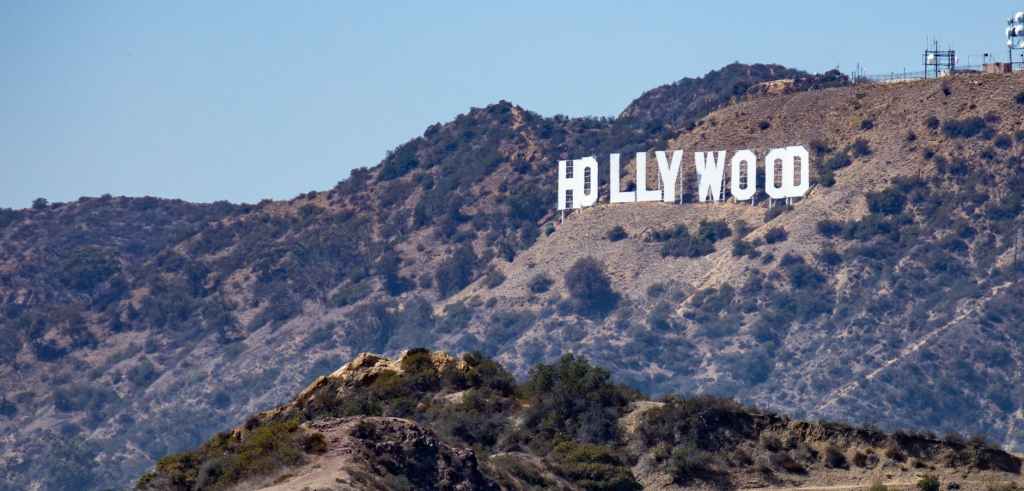
We confront the endless coverage [1] of the fires raging through Hollywood in California with nothing but profound melancholy. For we had two of our most enjoyable holidays ever in that distant State of America, and many times experienced the kindness and intelligence of enlightened people. The trouble is that they were motoring holidays. We toured around vast areas, heedlessly filling the atmosphere with carbon dioxide and other pollutants, and thereby contributed to the disaster that has befallen these unfortunate people.

And more disaster is to come. Any hopes that this trouble is exceptional and can be put down to an El Niño event, now look forlorn. Read this from Nature Briefings; and click on their link if you dare:

Is Global Warming Speeding Up? Earth shattered heat records in 2023 and 2024, with temperatures rising further than expected on the basis of previous trends and modelling. A mysterious reduction in cloud cover, combined with an El Niño weather pattern, could be responsible for temperature increases in 2023. However, scientists expected temperatures would decrease again in June 2024 when the El Niño subsided, which didn’t happen. Now they are racing to work out whether this sudden spike is just a blip in the climate data, or an early indicator that the planet is heating up at a faster pace than they thought.Nature | 6 min read
Reference: Science paper

Why, and how, are we bringing this catastrophe upon ourselves? One man who seeks to understand is John Vaillant. Fire Weather is his his study of the catastrophic fires that raged for a year in certain regions of northern Canada, regions that had devoted themselves to the extraction of fossil fuels. You can read a review of his work here from Wired [3] But it’s a weary chronicle of greed, short termism, butch manliness and wilful destruction; the substrates in which climate denialism thrives.

However we cannot close without a slightly hopeful thought. Every so often one still comes across, at least in this country, members of the proletariat who ask questions like”this climate chinge fing-der yew fink iss rilly ‘appenin?” Such people, hypnotised as they are by all things American, Celebrity and Hollywood, may now have to confront a reality. Yes, it really is.

[1]https://www.bbc.co.uk/news/live/c5y81zyp1ext

[2]https://www.wired.com/story/fire-weather-book-canadian-wildfires/

[3]https://www.wired.com/story/fire-weather-book-canadian-wildfires/

#california #hollywood #global warming #fire weather #fossil fuels

Are YOU a cause of deforestation?

What could be more innocent this weekend than a brisk stroll through your local shopping mall? All air-conditioned and centrally-heated, antiseptically clean, and crammed full of shops with must-have frocks and trainers and clothes and make-up and jewellery and mobile phones and shirts and trousers and computers and chocolates and more clothes and shoes and cosmetics and toys and even more clothes and accessories and skirts and furniture and even more cosmetics…..might you, have you, contributed to the tearing-down of trees in some far-away rain forest?

According to Global Canopy, you probably have.[1] They are a non-profit company that tries to monitor the role of the world’s largest corporations in the sustainability of the planet, looking at production, supply chains transport- all the aspects of a modern operating firm, in fact. What impressed us was the way that they try to work with companies by providing data and feasible strategies instead of just standing outside in the rain with placards. But they are no patsies, either. Get this from their website

The 10th edition of the Forest 500( their regular survey-LSS) reveals that almost a quarter (23%) of the companies and financial institutions that have featured in each of the 10 annual assessments have still not published a single commitment on addressing deforestation…….Meanwhile, nearly two-thirds (63%) of companies that have set commitments are failing to publish adequate evidence of their implementation

They go on to name names, which we dare not here, for lack of a proper legal department. But you’ll see them tomorrow during the course of your excursion. And that’s before you stop off in the Food Concessions on level four………

Why is all this important? Well we at LSS think that deforestation if one of the major causes of the worlds ills. It not only contributes humongously to global warming, it interferes catastrophically with hydrological cycles, driving desertification and land degradation. (ever wondered where all those migrants come from?) It may even be releasing new pathogens such as respiratory viruses into the human ecosphere, as we have alluded to before in these pages (LSS Passim) The World Counts has a nifty little website here to bring you somewhat up to speed [2].

Now we at LSS are not urging you to give up the accoutrements of civilised life today. We are Whigs, not Cistercian Monks, and certain member of the Editorial Board might find immediate changes to their lifestyles very uncomfortable indeed. But look again at the way Global Canopy work; with the grain of corporate life (weak pun intended) Can you ,should you find ways to bring pressure on companies by investing differently? By purchasing a little more slowly, and perhaps a little more judiciously? By getting just one item a week from a charity shop? If you want to donate to, or help these people in some other way, we would applaud that, too. As Tesco used to say back in the 1990s; every little helps.

Thanks to G Herbert for this story

[1]https://globalcanopy.org/press/10-years-of-data-reveals-the-major-companies-persistently-ignoring-their-role-in-driving-deforestation/

[2] https://www.theworldcounts.com/challenges/planet-earth/forests-and-deserts/why-is-deforestation-a-problem

#deforestation #supply chains #palm oil #global warming #shopping malls #consumer

Global warming: five graphs to frighten anyone

Looks like we’ll need that carbon capture machine from yesterday’s blog (LSS 19 11 2024) Global warming is accelerating fast. An excoriating series of graphs, compiled by the industrious team of Helena Horton, Lucy Swan, Ana Paz and Harvey Symons, of the Guardian, punches the information right between your eyes. in a series of vivid clear and easy to grasp graphics [1] We thought that five in particular were especially noteworthy : Earth Surface Temperatures (up) Heat stress (up) Ocean surface temperatures (really up) and emissions(really, really up)

If you want to know why all this has been caused by human activity, click here [2]

But the consequences are feeding into our daily lives now, wrecking our political and social systems. For as people see their lands ravaged and turned uninhabitable by all this, they flee to the last surviving places where life may still be tolerable. It’s called migration. And so we close with a question. it’s particularly for the older sorts, who gripe and snipe at every effort to produce clean energy. How will you restore the ravaged lands of the south, and thereby stop the flow of migrants at source?

[1]ttps://www.theguardian.com/environment/2024/nov/20/the-climate-crisis-in-charts-how-2024-has-set-unwanted-new-records

[2]tps://www.climate.gov/news-features/climate-qa/how-do-we-know-build-carbon-dioxide-atmosphere-caused-humans

#climate change #migration #global warming #fossil fuels #carbon emissions #electric vehicles

How to help viruses live longer and kill more of us

Illness is like gambling. It’s all about statistics. The longer you stand near a virus/bacteria/fungus, or whatever, the higher are your chances of contracting it. So what if the air we breathe becomes ever more virus-friendly, helping them to live longer and infect more people? No, we hadn’t thought of that either. But read this CO2 boosts airborne Viruses from Nature Briefings:

Carbon dioxide is often used as a proxy for healthy air — such as when CO2 monitors are deployed to determine COVID risk. Now it seems that high levels of CO2 actually help viruses to survive in the air. Using an innovative instrument to study airborne pathogens in unparalleled detail, researchers determined that CO2 appears to help keep the particles we exhale at a pH-level that is more hospitable to viruses. “By increasing the CO2 in the air, we’re getting rid of a natural means by which viruses become inactivated,” said environmental chemist Allen Haddrell, who led the new work. “It’s fascinating, but it’s also horrifying.”STAT | 10 min read

The link from Stat, by the admirable Megan Molteni is so good that we’ve provided a double link [1]

Are all crises interlinked? We’ve run other blogs here suggesting, for example ,the link between habitat destruction and the release of new infectious diseases. How the floods brought on by global warming have acted as huge artificial vectors for old diseases like malaria. Or even that a steady rising background level of CO2 could have disastrous consequences for health (LSS passim) This is just a further indication that this gloomy thought may be right. But any parent or grandparent reading this would do well to find out more.

[1]https://www.statnews.com/2024/06/04/co2-ventilation-research-virus-airborne-life-haddrell-celebs/?utm_source=Live+Audience&utm_campaign=2a53b9910b-nature-briefing-d

#global warming #climate change #disease #public health #virus #bacteria