Brexit: how two Rights made a wrong

Brexit could have worked. Read those words slowly, from an honest Remainer. Because as some of us always knew, there were pragmatic arguments from the other side, which we feared greatly, because they were exceedingly strong. So how is that most successful political project in recent British History now seems to have fallen so flat? Why, ten years on, do the memories of Brexit feel far from triumphant?  We repeat, so that no one gets us wrong: Brexit could have worked. And this is why we think it didn’t.

The overarching problem was that the Leave coalition was built from two groups who wanted entirely different futures.  Both were impeccably Right Wing. Both were possessed a vision of a  future that could well have worked.  But both pressed the same “Brexit “ button for opposite reasons. Because they belonged to two quite different right-wing tribes.  One tribe, The Free‑marketeers dreamed of a Britain unshackled from Brussels, a nimble “Singapore‑on‑Thames”: low taxes, light regulation, capital flowing freely, goods moving frictionlessly, and a labour market kept competitive by high mobility. Their model required openness — to investment, to trade, and, crucially, to people. What can be more red tape than Immigration controls? But it might have been very, very prosperous.

The other half of the coalition wanted the exact reverse. The Nationalists imagined their Brexit as a chance to pull up the drawbridge: to instigate tighter immigration rules, more insulation from global competition, to achieve a more interventionist state protecting industries and communities. Some were driven by economic insecurity, some by cultural anxiety, and yes — some by outright hostility to outsiders, seeing Brexit as a way to begin a purge of “foreigners” from public life. Their model required barriers, buffers, and a powerful State willing to police identity as much as borders. It was a vision of national retreat, not global acceleration. But it might have been very, very stable.

These two projects could not coexist beyond Brexit day. You cannot believe in the free movement of capital and goods while fleeing, like a child at bathtime, from the free movement of labour. Markets do not work that way. Block labour and capital simply moves instead; block people and goods compensate; block both and you get the stagnation we now inhabit. Brexit tried to fuse two rights — the right to globalise and the right to barricade — and produced a wrong. A decade later, the contradiction still sits at the heart of British politics, unresolved and unresolvable, because the country cannot be both fortress and freeport at the same time. Deep, deep down, the question is not about Europe, nor taxes nor even immigration rules: all are details  It is What do you want to be going forwards?

‘I feel entirely vindicated’: three Guardian columnists debate Brexit and its legacy | Aditya Chakrabortty, Polly Toynbee and Simon Jenkins | The GuardianThe Economic Impact of Brexit | NBER

#brexit #united kingdom #european union #economics #history #nationalism #free markets

Torsten Bell’s prescription: but will the British take his medicine?

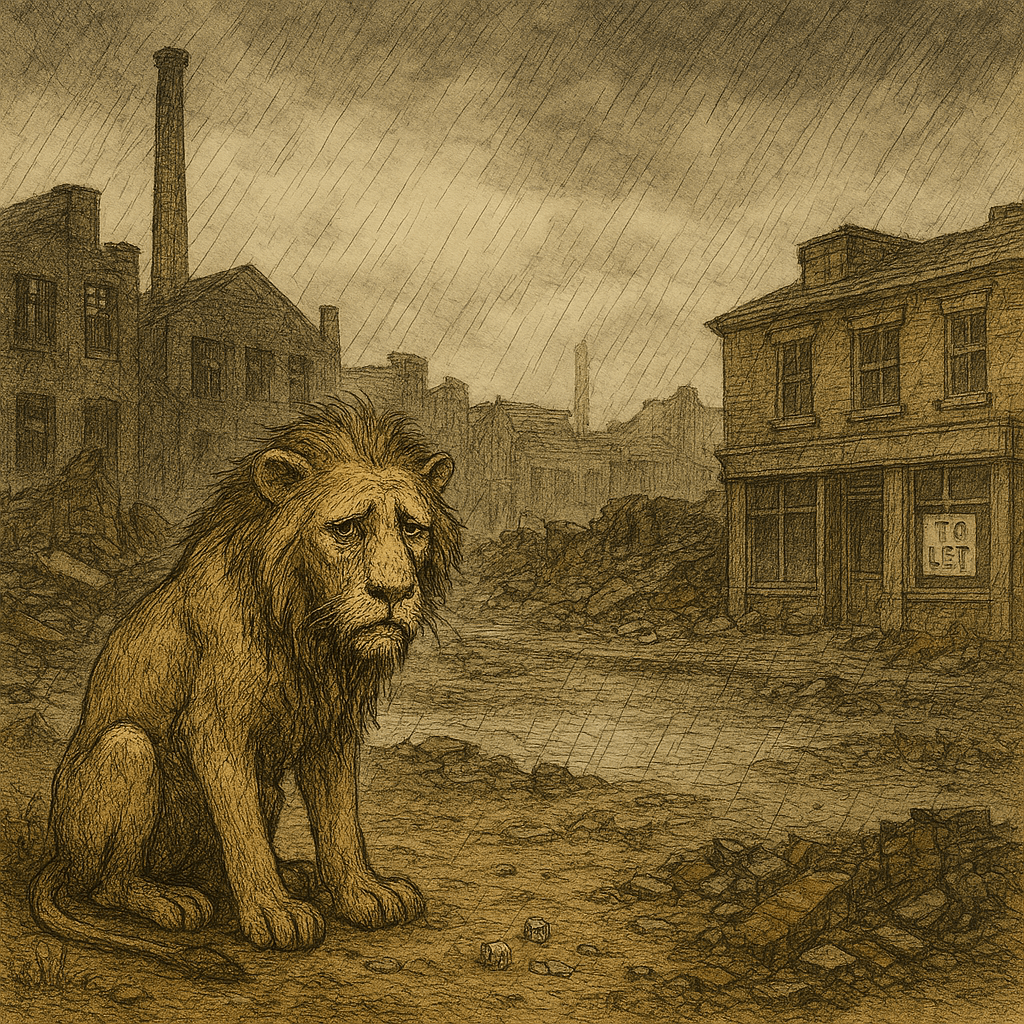
Here’s a telling statistic about the United Kingdom.  Between 1850 and 1992 more than 200 reservoirs were regularly opened across the country, even during World War Two: seven were dug in 1955 alone. Since 1992, not one has been constructed. What goes for reservoirs goes for every other conceivable aspect of infrastructure.  Britain is a country living off its past like fallen aristocrats, in deadly hock to nostalgia and expecting a comfort of life way beyond its means.

Such is the thesis of Torsten Bell  (Judd School, PPE Oxford, Resolution Foundation and now Labour MP)  He presents his thesis in a work of immense detail and careful scholarship called Great Britain? How We Get Our Future Back. He details the consequences of our doleful mismanagement in terms of education, poverty wages, health, and a tax-and-benefits system of Byzantine complexity and contradiction.  Yet it is chapter five on investment which diagnoses the root causes of British woes. Compared to other OECD countries, the British are terrible at it, both public and private. This in turn leads to appalling weaknesses in productivity, entailing less investment, and so on etc, etc. Downwards. The consequences of this economic stagnation will be a rise in political extremism as different ethnic and cultural groups fight over the shares of a declining national cake.

His analysis and prescriptions read like the DNA of the present Labour Government. It fits into a long tradition of well-meaning analyses of what’s wrong with Britain. Yet he  cautions against the pat solutions of Centre Left bien-pensants (our problems are much deeper than membership or not of the EU) He calls for a new patriotism, based on our undoubted strengths in things like service industries. In this and many other recommendations, he has much good to say.  But will the British want his, and his party’s, medicine? Consider this:

Anyone serious about governing Britain should plan on taxes remaining at higher levels than we are used to (p189)

Paying taxes is the litmus test of patriotism: if you won’t put your hand in your pocket, how serious are your protestations of national love?  Our fellow countrymen grumble about health and roads: but they hate, viscerally hate, paying taxes, as we know from our lived experience of them.  So any new ethos based on shared experience will die stillborn; there are still too many comfortable with the mental furniture of our decline, at least among the English.

Great Britain PLC is a failing company: underinvested , indebted, overdrawn and still overpaid in many grades. A merger was tried between 1973 and 2016, but it failed. Now the only option is a foreign takeover. How hostile shall it be?

We have one criticism of the hardback The graphs are printed in weak grey ink, thereby making comprehension difficult at times, and spoiling the hard work of the author and his researchers

Torsten Bell Great Britain? How We Get Our Future Back The Bodley Head 2024

#great britain #uk #economics #politics #social democracy

Has Brexit really failed? It’s too early to say

According to one tale, the great Chinese statesman Zhou Enlai was asked “What are the consequences of the French Revolution?” To which he replied “it’s too early to say.” Like many good stories, it’s probably apocryphal; but it illustrates a wise truth. Don’t rush to judgement. In historical terms, the UK decision to quit the EU in 2016 was a seismic event at least as big as the French Revolution, or China’s own Cultural Revolution. Nine years on from the ballot, and three from that final sundering, can we make out anything at all?

Superficially, the case against Brexit appears to be overwhelming. GDP is down by anything between 2-5% each year.[1] Business investment and capital formation have taken a severe hit [2] Life expectancy, that key indicator of a thriving society, has actually started to fall is some areas. As for the much wished-for trade deals with the Leavers’ beloved White Commonwealth, these are either highly disadvantageous the to UK (Australia, New Zealand) or non- existent (Canada). Meanwhile the UK Government rushes to subsidise factories here, there and everywhere, with money which might be better spent on Defence or transport, all in the name of keeping a residual manufacturing presence. Case closed? No. Firstly because the analysis is too simple. Secondly, because we think that humans are not, primarily economic animals.

For starters, the above-quoted statistics are UK-wide. They disguise the fact that certain regions have weathered the Brexit storm better than others. Northern Ireland (membership of Single Market) and London and the South East ( residual proximity to the Continent) are two cases against. As for the life expectancy figures-these are a long term trend, and probably owe their origin to the years after 2010 when Remainers Cameron and Osborne introduced their programme of austerity.

For the second argument: let’s go back to basics. The European Union was founded first as a peace project, and only secondarily as an economic one (it was the failure to grasp this which led to the UK’s disastrous negotiating strategy-but that’s another story). The EU has indeed kept the peace between those ancient enemies Germany and France. But with the rise of Vladimir Putin, the days of peace are over-everywhere. As for prosperity-was it really all it was cracked up to be? More food seems mainly to have led to higher obesity. More money meant more fast cars, more items of throw-away fashion and easily- forgotten holidays. All of these may have to be dispensed with if our economies have to be diverted to defence. So-was Brexit simply an act of foresight, preparing the British people for the hard times that lay ahead? And there is one other factor, which we think is more important still.

When the UK coal miners struck in their bitter dispute of 1984-1985, they firmly declared one thing. It was not about money. It was, they said, about preserving community, belonging and their sense of identity.[3] And these feelings are rooted very deeply in the human psyche. Probably far deeper than a desire for shiny kitchens or luxurious furniture. These are the profound sentiments that Brexit touched upon-and we ignore them at our peril. History has not been kind to those mineworkers and the children, it is true. But it still remains to pass its judgement on the children of the Brexiteers. Let’s wait and see.

[1]https://www.economist.com/britain/2023/01/03/the-impact-of-brexit-in-charts

[2] https://www.ons.gov.uk/economy/grossdomesticproductgdp/bulletins/businessinvestment/apriltojune2021revisedresults

[3]https://www.channel4.com/programmes/miners-strike-1984-the-battle-for-britain/on-demand/73990-001

#UK #EU #brexit #gdp #miners strike #identity #trade