

Our thoughts for the New Year: a little works better than a lot

The first few days of the year are always filled with a media barrage of advice. You can’t go on the interweb, open a magazine or turn on the telly, without some omniscient panjandrum telling you to do a dozen worthy things. Eat less, until you look like a prisoner in the Soviet Gulag. Run like a marathon athlete. Fill your mind with worthy moral projects and take on so many new tasks that you become a Different Person. All by January 10th. We know none of this ever works, because if it did the experts would not have to repeat themselves every year. And the reason it doesn’t work is because it’s asking too much of people.

It was the late great Dr Michael Mosley who realised this. In his eminently readable work Just One Thing: How simple changes can transform your Life [1] He sets out a whole slew of small ideas which people can achieve rather than big things which they can’t. If you want to discover what they are read the book. But it inspired us to go around the mighty offices of the Learning Science and Society Headquarters here in beautiful Croydon and ask people about their ideas for New Years resolutions which will stick. Here are our findings:

Commuting get off one stop earlier than normal, and walk. OK if your stops are only a quarter of a mile apart But what if you live in Haywards Heath and work in Croydon? You’d have to walk from Gatwick. Our verdict: good if sensibly applied

Dry January which most people interpret as no booze from New Years day until Valentines Day. Feasible and- we have actually done it. But what if your local Toby Carvery is offering a crazy special at £6 a head? Are you really going to sit there and drink water?

Declutter a cupboard Makes space and is exercise of a sort provided you don’t gash your head on an exposed door and have to have the splinters removed in Croydon General Hospital. Plus the local charity shops will just love all those old mini discs, pencils, tatty files , keyboards, adding machines, unused 1997 diaries, abacuses and stone tools which you find. But what if you don’t have a cupboard?

Learn the name of a colleague whose monniker you have forgotten/never knew anyway Ok as far as it goes but could be creepy. Being on the Board, we are used to this all the time and with practice it’s not as tricky as it looks.

Read one page from a book each day Ok slows you down and broadens the mind But what if the book is Mein Kampf or the Croydon Trades Directory for 1989 ? Verdict: choose carefully

Give someone your full intention for 60 seconds Oh come on, these are meant to be achievable!

So here are our conclusions, to sit alongside those of the great Dr Mosley. Da quod jubes et jubes quod da, we say (give what you command and command what you give) A favourite catchphrase which we share with St Augustine of Hippo. On which note we will simply wish you all a successful 2026.

Our thanks to the staff of Croydon General Hospital and apologies for the extra work we caused them

[1]Mosley, Michael. Just One Thing: How Simple Changes Can Transform Your Life. Short Books / Hachette UK, 2022.

#health #diet #New Year

The Fisher King: an ancient legend for our sad modern times

I sat upon the shore/Fishing, with the arid plain behind me/Shall I at least set my lands in order?

Thus TS Eliot sets out his stall: The Waste Land  (1922)is all about the legend of the Fisher King. His take on a world trying to recover from the traumatic wounds of World War. The what King? What’s a modern shiny AI powered  science-and-business blog like LSS doing with some crusty old Medieval legend, reworked not only by the saintly Eliot but by such questionable characters as Richard Wagner? The answer is very much indeed. For if we do not confront the message which the King encodes, all our technology will bring us to less than nothing indeed.

For all its tellings, the central myth of the Fisher King hasn’t changed much The King is a wounded guardian of the Holy Grail whose injury renders his kingdom a barren wasteland. He cannot heal himself, and his land suffers with him—infertile, desolate, and spiritually dry. He spends his days fishing, a symbol of passive hope and suspended vitality. According to Grail legend, only a pure-hearted seeker(Parsifal) who asks the right question can heal the king and restore the land. The myth embodies themes of spiritual  paralysis, inherited trauma, and the redemptive power of inquiry and compassion.

Festering trauma, unhealed wound. There must have been lots of those around after the First World War, as Freud knew well. And we have plenty  today. As money moves at light speed across the world, dragging goods and people after it, familiar landscapes are shattered. Shops close; factories are shuttered and streets fill with strangers. All too many suffer a psychic wound like the Fisher King’s.   Trauma that renders the  landscape barren. The soul, unable to heal itself, turns to ancient identities, mythic lineages, and cultural relics as if they were sacred springs. Or Fentanyl. And the name of that wound is Loss. Of empire, of power, of innocence, identity: of the essence that they were.    But nostalgia kills the future, and with it all hope. The healer must come, and find the right words, soon. For the next war is very close. Perhaps it will feel, briefly, like these other words from The Wasteland

What is that sound high in the air/Murmur of maternal lamentation

Who are those hooded hordes swarming/Over endless plains, stumbling in cracked earth?

Ringed by the flat horizon only/What is the city over the mountains?

Cracks and reforms and bursts in the violet air?/Falling towers

Jerusalem Athens Alexandria Vienna London

Unreal

All quotes from The Poetry Foundation a marvellous source of learning and wisdom if ever there was one

.

[1]https://en.wikipedia.org/wiki/Fisher_King#:~:text=The%20Fisher%20King%20%28French%3A%20Roi%20P%C3%AAcheur%3B%

[2] The Waste Land | The Poetry Foundation

##economics #politics #poetry #parsifal #TS Eliot #Wagner #The Fisher king #legend

Heroes of Learning: Alexandra David-Neel

Today we celebrate the life, travels and accomplishments of Alexandra David-Neel (1868-1969) who died tragically young, one month short of her 101st birthday. Yet in that time managed to pack in as varied a CV as anyone ever has. Explorer, feminist, writer, mystic, opera singer, anarchist and first westerner to enter the forbidden city of Lhasa. [1]

Her exposure to the world started early when her father took her to visit the memorial to the recently executed Communards in1871. Whether this troubled her we cannot say. But her teenage years were certainly feisty. By the age of 18 she had clocked up travels to England Switzerland and Spain, on the way encountering controversial characters like Madame Blavatsky and getting herself enrolled in the 30th degree of Scottish Freemasonry.By 1899 she had written her first books and converted to Buddhism. But it was only as the curtains lifted on the twentieth century that she really got going. The next 46 years read like a whirlwind of adventure which would leave Indiana Jones green with envy. She got out East by becoming a successful opera singer in what was then called Indo China. After that her perambulations included vast stretches of India, Sikkim(where she lived as an anchorite in a cave) China, Mongolia, Tibet (hence the Lhasa episode), interspersed with marriage and a peaceful interludes in Digne-les-Bains in Provence.

It was here she finally retired for last decades of her life, . as the burden of her exertions caught up with her. It is interesting to recall that this quintessential nineteenth century explorer actually died after Neil Armstrong had placed his famous first step on the Moon. But we guess that she must have approved. We hope our links will tell you more about this energetic, learned and above all courageous woman. A beacon of learning indeed in dark times.

[1]https://en.wikipedia.org/wiki/Alexandra_David-N%C3%A9el

[2]https://avauntmagazine.com/alexandra-david-neel

#tibet #buddhism #lhasa #dalai lama #provence #china #sikkim #neil armstrong

Heroes of Antibiotics: Liam Shaw and his Dangerous Miracle

Today, gentle readers, we combine two of the favourites topos of this blog: Heroes of Learning and Antibiotics research latest. For Liam Shaw is a mighty contributor in both fields. Who is he? Well here is a brief summary of his life ant times from Penguin Books, the publishers of his book Dangerous Miracle: (which of course we urge you to rush out and buy) [1]

Liam Shaw is a biologist researching the evolution and spread of antibiotic resistance. For the past four years he has been a Wellcome funded research fellow at the University of Oxford, and he is also currently an honorary research fellow at the University of Bristol.
His writing has appeared in the London Review of Books, Morning Star, and Private Eye. Dangerous Miracle is his first book
.

That’s quite a CV for a very learned man, and we take all he says most seriously indeed. So seriously in fact that we direct your earnest attention to his further thoughts laid out in this admirable article which he has just penned for the Guardian[2] For Liam has a key insight: antibiotics are like fossil fuels. They are OK in themselves: they may even bring great benefits to the comfort and quality of our lives. But both have fallen into the hands of a group of reckless, short term, pleasure seeking, greedy, violent hominins that call themselves Homo sapiens ( a laughable act of vanity) with all the disastrous consequences we face today. Rather wickedly, he points out the hypocrisy of rich nations, who have benefitted so abundantly from a surplus of both fossil fuels and antibiotics now earnestly entreating the poorer nations of the world to be good chaps and cut down on their use. Nice one!

We at LSS still think there is room for hope on the antibiotics question, as out recent blogs have hinted. If the situation has indeed improved since we started, much is due to the work of Liam, Professor Sally Davies and others whose tireless research and campaigning has done so much to slow the decline and possibly turn us around. But we can see no reason to slack up yet, gentle readers. Neither should you.

[1]https://www.penguin.co.uk/books/455232/dangerous-miracle-by-shaw-liam/9781847927545

[2] https://www.theguardian.com/books/2025/aug/17/why-antibiotics-are-like-fossil-fuels

#microbial antibiotic resistance #medicine #health #microbiology #fossil fuels #global warming #pandemic

Simon Kuper on how to Make the Transition to Intelligence and Wisdom

One of Saturday morning’s great pleasures, an hour or so before Spanish class, is to settle down in Costa with a coffee and a hard copy of the Financial Times. And one of the best writers in that journal is Simon Kuper. He’s clear, he’s brief, he deals in the currency of short sentences and defined concepts. He’s also a polymath, covering subjects as diverse as politics, urban planning and football(he’s even done a very workmanlike guide to the affairs of Barcelona FC . [1] In fact, he’s exactly the sort of writer we ought to showcase here, because he believes in our core LSS values of evidence, reason, and reserved judgement.

How appropriate therefore that his last column was called Seven Intellectual Habits of the best thinkers., for there can be no better short guide. [2] The problem is that access is behind a paywall. As LSS is such an important institution, and our readers so avid for wisdom, we rang the Editor of the Financial Times a to demand that this be lifted as a Special Case., and that he/she/ they might like to buy us lunch to discuss the matter further. The young person on the switchboard thanked us very much and promised they would call us back. So far they have not done so(that was three days ago) but doubtless there were other callers. So, while we are waiting, we thought that we could offer you a distilled reproduction of Simon’s thoughts:

1 Read Books ” Their complexity is a check on pure ideology” People who simplify the world are the ones who fall for conspiracy theories or the offers of charlatans.

2 Don’t use screens much Apparently, biochemist Jennifer Doudna, who invented CRISPR technology gets her best insights when she’s out weeding her tomato plants. Obviously you have to use screens a bit, or you couldn’t read this! But we get Simon’s drift: a little screen time is a lot.

3 Do your own work, not the world’s The same Doudna got a gig at Genentech, leading their research. She lasted two months before hightailing it back to Berkeley where the true intellectual freedom led her to the Nobel Prize. We agree: people who spend all their time on office politics actually accomplish very little that is either interesting or of value.

4 Be multidisciplinary Kuper cites the examples of Hayek, Godel, Van Neumann and others who all studied one thing, trained in another and did their best work in a third. Daniel Kahneman is cited as another multi-disciplinarian polymath of formidable intellectual power. Rather worryingly, our AI system has set his book as homework for us. Where’ are John and Sarah Connor when you really need them?

5 Be an empiricist who values ideas Kuper cites the case of Isaiah Berlin and his marvellous work the Hedgehog and the Fox , a masterpiece of political philosophy. Incidentally Winston Churchill got him mixed up with Irving Berlin and invited the wrong one to dinner.”My British Buddy” as Berlin himself would later remark in song.

6 Always assume you might be wrong Yep: in this country we are still trying to repair the effects of the blissful certainties of Brexit. You will doubtless have examples from your own lands

7 Keep learning from everyone “Only mediocrities boast as adults about where they went to University at 18.They imagine that intelligence is innate and static. In fact people become more or less intelligent through life depending on how hard they think. The best thinkers are always learning from others, no matter how young or low status” We quote Kuper rather fully here as the first part seems one of the most admirable and accurate summaries of the sorts of people one met on a daily basis during long decades in the Scientific Civil Service. Now there’s intelligence indeed.

[1]https://www.worldofbooks.com/en-gb/products/barca-book-simon-kuper-9781780725543?sku=NGR9781780725543&msclkid=6c7699156a7f1cc4c9f2f1238

[2]https://www.ft.com/content/c42cb640-a03c-441b-868f-d1a92d78bcb7

#wisdom #intelligence #FC Barcelona #isaiah berlin #daniel kahneman #thinking #financial times #simon kuper

Another big Thank you-and a small musing

Another big thank you to readers, commentators, and the indefatigable ideas people including our researchers and fellow members of the Editorial Board. We are indeed getting mote readers, more followers and above all more likes and comments. All of which keep us in mid season form, as Wodehouse would have it: full of the joys of nature’s second season, with the old ginger whacked up absolutely to the top of the tank.

If you can bear it, we thought we’d throw away a couple of lines on who is reading, and about what. Unitedstatespersons make up the biggest contingent. Odd when you think this stuff is tapped out in England. Astute readers will not be much surprised to note that English speaking countries such as the United Kingdom, Canada, Australia etc joining the line up roughly in proportion to the old demographics. By the time we get down to the more far flung outposts however, the figures do not look so good. Why so few responses from St Helena or Pitcairn Island? We don’t know. But we’re working on it. As for the rest of the world: India always big- a country on the rise with a strong science base, and a large number of English speakers. We had hoped for more from the Spanish Speaking world. Sadly our command of that language is not quite good enough to write articles in it. But if any of you amigos want to comment in the language of Cervantes, we’d love to hear from you. After that, many countries. China figures above the random level; we’d love to know which latter day Kong Qiu peruses our offerings, and where they work.

And what are you reading? The one where we suggested that the President of the United States was a closet Socialist is cantering in at the top of the field everyday. It was meant to be more wry and ironic than a serious discourse on Political Economy. But some like it- a lot. After that- human evolution seems quite popular. Our own idees fixees of antibiotic resistance and climate change are high in the betting, but not always favourites. We need to do more there, we think.

Overall, since we started-progress. Like that new bloke they have at Manchester United, who is being given time. Give us some more too, The world is a big bad place, and once again to paraphrase the Immortal Wodehouse; we thinking Johnnies need to stick together.

THE BOARD

#United States #United Kingdom #China #india #antibiotics #climate change #science

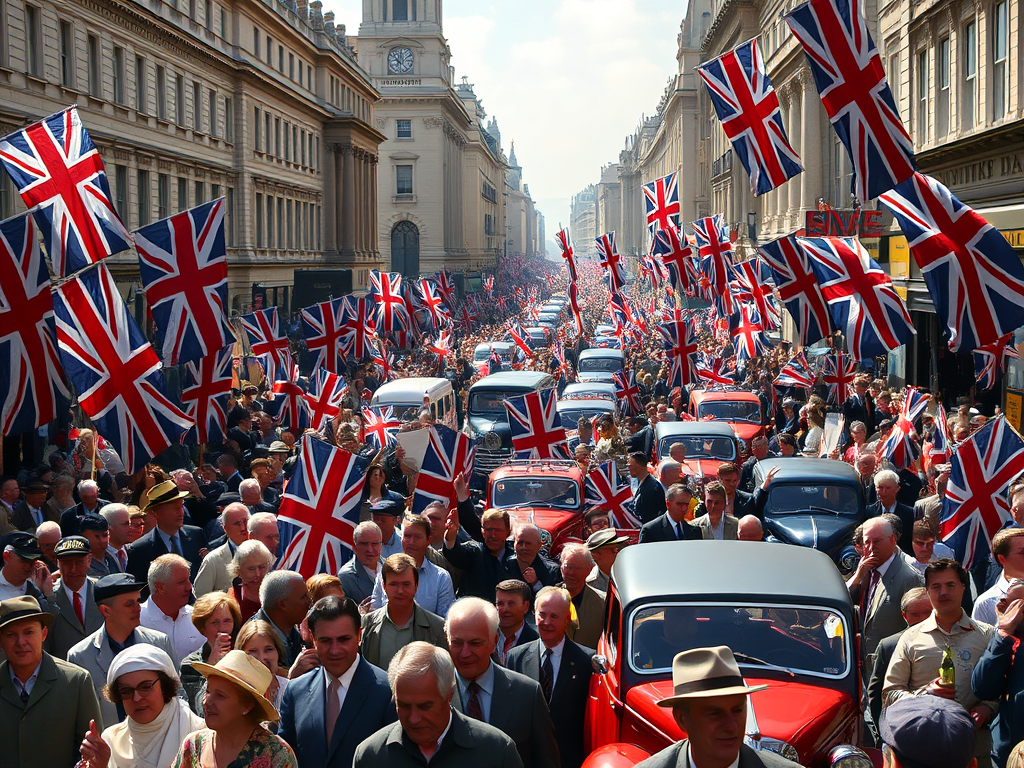
Friday Night Feast of Fun: VE day

The 80th anniversary of VE Day has bought an immense outpouring of celebrations. Millions who were not there will tell you how they long to put on a zoot suit and jive the night away to Vera Lynn, or roam the streets of London getting up to goodness knows what with perfect strangers on bomb sites (wasn’t it a bit cold?-ed)

But-how much would you have enjoyed it? For those who advocate free markets and liberal trade as the best cures for human ills, the Second World War makes very difficult reading indeed. The Government seized control of the nation’s food supplies in 1939,introducing an utterly comprehensive system of rationing, backed by bulk buying and ruthless imposition of standards. By VE Day on 8 May 1945 the nation was thinner, heathier, fitter and better fed that it had ever been before. Or would be ever again. But Civil Servants are not chefs, and the menus available on that famous date may seem very spartan indeed to the modern palate. We thought we’d offer the kinds of things which might have been served up. With the help,naturally, of one of the most likeable books in our collection: The Ration Book Diet [1] And follow it up with what you could drink.

First Course There isn’t one Both shipping and fuel were in short supply, making this stage a superfluous luxury. Now you know why they were so healthy. Wanna try it?

Main Course In their spring section, Brown et al suggest recipes for Kidney with Mustard and Madeira Gravy(p76) Vinegar and mustard baked chicken(p78) or broad beans with minted salsa verde (p80 ) Other things served up might have been Ham and pickle pie monkfish and bacon casserole or salad of some sort. Everything grown locally, or sourced form the nations own fields and fishing grounds. Should we go that way again?

Dessert They would probably have called it “afters” or “pudding”. Apricot compote , rhubarb bread pudding or rhubarb fool might have graced many a VE Day table . For treats as the night drew in: oatmeal scones. And that really is it. There were things about like spam, corned beef and even cheese(heavily on the ration) But you’ll have to read the book iof you want to know more about them.

Happy so far? Let’s pour a drink , or go to the pub

Popular beers of the day included Bass, Guinness and Trumans At home, these would have come in bottles. There were no fridges of course. The Ministry had strained every nerve to ensure the pubs were well stocked with much the same. We also found a cocktail list from a site called Bistrot Pierre. For us, the Gin Fizz stands out as an iconic component of the war-time vocabulary. At least from the films and TV programmes we’ve seen.

And wine? Oh come on. It all came from the continent, which had been under enemy occupation for four years. You had about as much chance of finding a mobile phone as bottle of chardonnay in London in 1945.

Still want to go there?

[1] The Ration Book Diet Mike Brown Carol Harris CJ Jackson The History Press 2010 https://www.amazon.co.uk/Ration-Book-Diet-C-Jackson/dp/1803993448

[2]https://www.bistrotpierre.co.uk/propeller/uploads/2020/04/VE-Day-cocktails.pdf

#food #drink #VE day #world war two #diet #health

Academia has its Robbers Caves too, you know

Here at LSS we’re always praising the learned. Exalting the scientists, doctors and philosophers who would unleash a trouble-free prosperous world, if only we were given the chance. Instead all those nasty hypermacho builders, farmers, football supporters and military types have imprisoned us in a hopeless nihilistic trap of warring tribes which we called The Robbers; Cave(LSS 1 4 2025)

There may be some truth in it. But before we hand over the world to a bunch of Professors and nerdy Civil Servants, let’s flag down a large black cab and ask it for a journey to the Reality Hilton Hotel. Because, we ask-are all these brainy types so immune from Robberscavism, to coin a phrase? Anyone like us who has followed Arts, Sciences and Letters for fifty years or so will notice at once how its practitioners have a tendency to divide themselves into warring camps, like so many followers of certain East London Football teams. Back in the Middle Ages there were the Nominalists versus the Realists. In economics you get Behaviouralists going toe to toe with the Rational Choice Theory crowd, while Linguistics seems to have more warring schools than practitioners. It’s the same for us fans of the Neolithic revolution, where opinion is hopelessly divided too. One lot asseverate that the Neolithic way of life was carried out from the fertile crescent by a single contiguous culture, who replaced(exterminated?) those unfortunate hunter-gatherers who got in the way. Their opponents counter that farming, sheep herding and all those Neolithicky -type things were learned, picked up by enthusiastic locals from traders and traders and adopted with the enthusiasm reserved for certain types of computers and mobile devices in our own age. And the truth? According to studies by the learned Drs Javier Rivas and Alfredo Cortell, writing in the Conversation, [1] it was a bit of both. At one place, at one time the incomers seem to have bludgeoned in and extirpated the natives, as the English did in Tasmania. Elsewhere the locals seem to have picked up the new hoes, made better ones and then jolly well got on with life down on the farm.

And the moral in all this? For practical people, especially those who hand out grants and bursaries, always take one step back. Sometimes you have to make decisions(think of Courts and Forensic Scientists here) But the real joy of learning isn’t in constructing theories and and then fighting to impose them on everyone else. It’s in the journey of discovery itself: gathering the facts, weighing the evidence and above all talking with the people you meet on the way. The ancient virtues of humility and suspended judgement are the most settled and non controversial of all.

[1]https://theconversation.com/how-human-connections-shaped-the-spread-of-farming-among-ancient-communities-254852?utm_medium=email&utm_campaign=Late

#learning #science #neolithic #academic controversy #tribalism #robbers cave experiment #whig

Is Donald Trump a Socialist?

Is Donald Trump a socialist, or is he just governing like one? For a man who made his money in the freewheeling and dealing Manhattan property market, it seems an odd term to use. And doubtless he and his supporters would reject it vehemently. But let’s go back to first principles and look at what he does, not what he says.

The very essence of a socialist policy is that an economy should not be run by free market methods. It can and should be run on others, designed to support the welfare of all the groups living in it. If they are poor, money must be found through taxes to alleviate that. If their communities depend on certain industrial conglomerations. such as steel making for example, then money must be found to sustain those industries, to avert the social damage which would ensue/ In Britain the key exponents of this view were people like Arthur Scargill and Tony Benn, who felt public money should be found to support the mining industries, even if those industries operated at less than optimum economic efficiency. In the 1970s Benn went further, suggesting a siege economy protected by tariffs as an alternative to joining the European Community, forerunner of the EU.

The alternative view was pioneered by thinkers such as Adam Smith and David Ricardo. The unhindered operation of free markets, with the lowest possible levels of tax and tariff would facilitate the best possible social outcome. Ricardo developed this in his theory of comparative advantage. By which countries or regions specialising in different products would trade in these to their mutual benefit. His example was Britain and Portugal, which mutually traded manufactured goods and port wine. The same principle holds today.

The key political exponents of this view were Ronald Reagan and Margaret Thatcher, whose most memorable declaration was “you can’t buck the markets”. As we write, Mr Trump’s policies seem to be doing exactly that. Unlike others, we judge him to have an honesty of purpose: he is trying to protect the communities that voted for him. Communities whose social structure and very identity depend on the old smokestack industries around which they cluster. Time will tell if he will be successful. But two things worry us. Firstly even if factories are attracted back to the rustbelt, it is unlikely that modern automated plants will need many factory hands. And second: the last twenty years or so of the Communist bloc were spent trying to keep these same sort of plants going. History did not judge that enterprise kindly.

#free markets #socialism #communism #adam smith #david ricardo #margaret thatcher #donald trump #united states of america

Heroes of Learning: Colin Renfrew

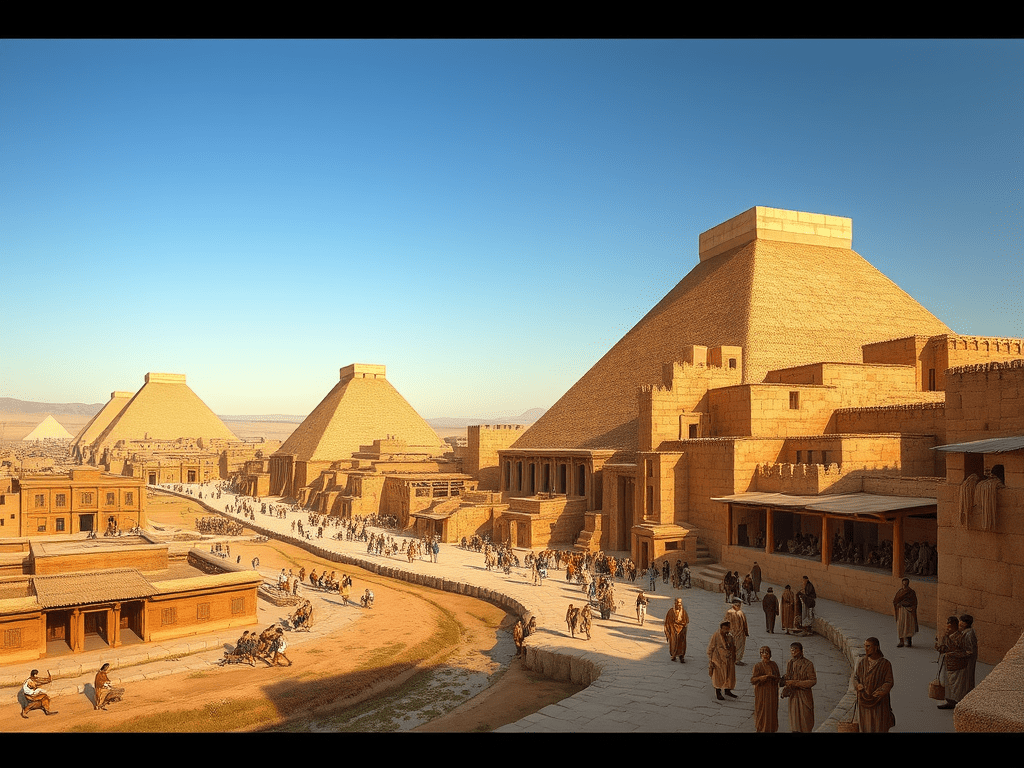
Anyone with the slightest interest in early civilisation must pay tribute to the work of Professor Colin Renfrew. That fascinating period spanning the Neolithic to the early Iron Age witnessed the transformation of humanity from hunter gatherers subsisting barely above the animal level to the first technological civilisations, deploying writing, building, pottery, roads and all the other appurtenances that set us above the beasts. This was Renfrew’s territory. And it encompassed a vast sweep from Cycladic figurines to the immense migrations of the Indo European speakers and the changes they wrought With a few Anatolians thrown in for good measure

So today we throw this blog open to the likes of Nature Briefings (see below) and Wikipedia [1] to tell you about his life and accomplishments. For Renfrew had all the marks of the true scholar. His learning was vast, his methods empirical, his conclusions provisional. He knew the real value of learning to is prompt further investigations, not to provide easy answers. If someone had provided clear and unequivocal evidence that the Indo Europeans had originated in Sutton Coldfield and not the Steppes, he would have been the first to agree. If ever you have travelled the sunny lands of the Mediterranean or Levant, gazed in wonder at the ruins still there, or tried to understand the guide book, remember :you are in Renfrew territory. Tread with respect.

Archaeology’s Closest thing to a household name Colin Renfrew, who helped to transform archaeology as a scientific discipline, died last November, aged 87. In the 1960s, researchers discovered that tree rings from bristlecone pines (Pinus longaeva) — which are among the oldest living things on Earth — could be used to redate artefacts in Europe. Prompted by these developments, Renfrew helped develop a fresh understanding of how European and Near Eastern civilizations developed, alongside new models for how societies change. “Renfrew’s ideas were decades ahead of available computational modelling power,” writes his colleague, archaeologist Cyprian Broodbank.Nature | 5 min read

[1]https://en.wikipedia.org/wiki/Colin_Renfrew

#colin renfrew #neolithic #bronze age #iron age #fertile crescent #middle east #indo europeans #archaeology #language