Recycling the way to new antibiotics

If there was one thing that has always been too much for us, it is trying to understand the fiendish complexity of the immune system. At school, at our various universities, trying again during the COVID pandemic…..we have never really got past T and B. So when the BBC announced this morning that a whole new part of it had been discovered,[1][2] you might have expected us to hold our collective heads in our hands and groan.

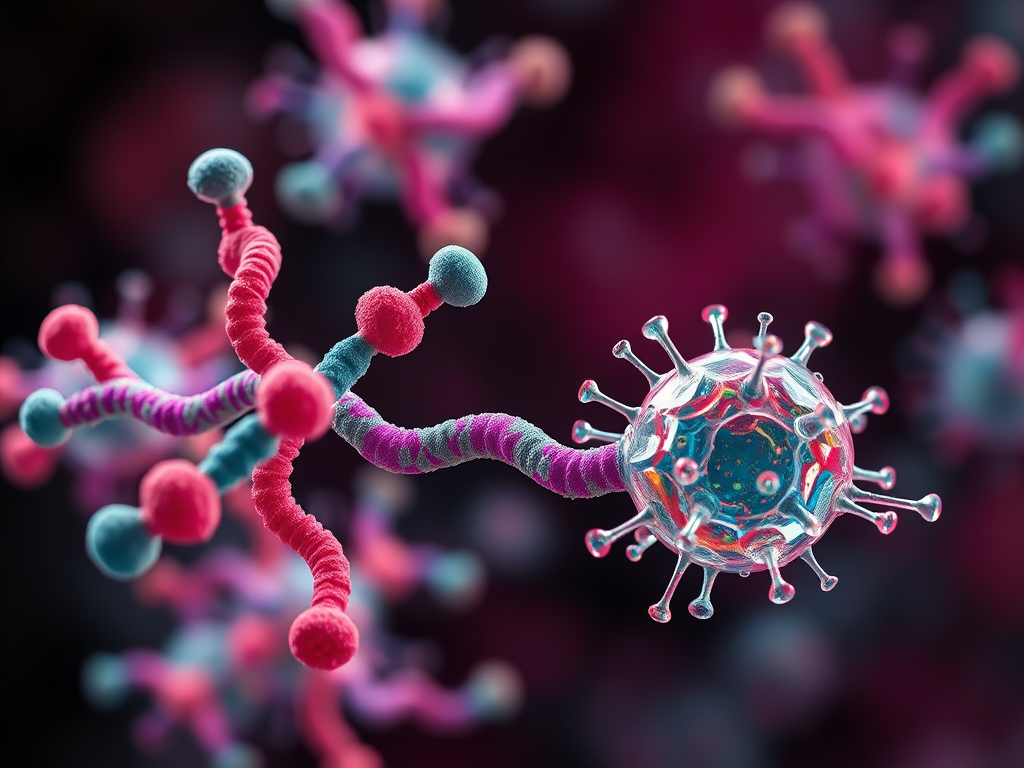
Far from it, gentle reader. For the new discovery has opened the possibility of a whole new class of antibiotics sitting right there in every cell of the body. An astute group of scientists led by Professor Yifal Herbl at Israel’s prestigious Weiszman Institute of Science have found that proteases, a regular part of cell function, may be able to unleash significant antibacterial function. A protease normally functions like the recycle department of your local council, chopping down old proteins and getting them ready for use. But the team found that many of the little peptides produced have strong antibiotic properties. Like the good scientists that they are, they then ran two objective tests. Do the proteases work as well as conventional antibiotics? And if you disable them, does the cell become more vulnerable to infection? To which the answers, broadly speaking, are Yes and Yes.

Once again we stress that this research, and its development into useful therapies, is still at early stages. Which we always do when we cover new points of departure like this. Yet it is, indubitably, a new departure, And it has been sitting there unnoticed until now. Something which has always tickled our fancy here, as regular readers will know. Hats off to Professor Herbl and her team. And-readers! Every tome a journalist publishes on the antibiotics crisis, why not write a very short e mail of thanks to them? They’ll love you for it.

with thanks to Gaynor Lynch

A note on today’s links We have two straight news stories and a link to the Weiszman Institute, to give you staring points. However, we could not get past paywalls to the Nature articles, and we doubt you will be able to as well

[1]https://www.bbc.co.uk/news/articles/cpv4jww3r4eo

[2]https://phys.org/news/2025-03-cellular-trash-reveals-immune-defense.html

[3]https://www.weizmann.ac.il/pages/

#antibiotics #proteases #immune system #peptides #microbes #bacteria #ealth #medicine

Human Genome Editing: A Frankenstein Future?

Technology always advances faster than ethics. Leaving society and individuals floundering in it wake. The printing press transformed European society in the sixteenth century. The cotton gin transformed the economy of the US South, arguably deepening Slavery, and instituting a pattern of violence and cultural wars which have lasted to this day. In the last century, the development of nuclear fission and computing have effected changes as profound as any known in History. It is with these examples in mind that we approach the subject of Human Genome Editing, which may make everything before look silly.

This has been a decade in which the effective manipulation of nucleic acids in living systems has become routine. We have covered such exciting techniques as CRISPR Cas-9 and Base Pair Editing. While all educated people stand in awe of the rapid advance of mRNA vaccine technology, which did so much to stem the COVID-19 pandemic and now offers real hope of new cancer treatments. But, without disparaging the intellectual brilliance or immense hard work of their creators, these technologies are relatively small scale in the size of the biological interventions which they entail. So now read this from Nature Briefings:

Brace for the arrival of Gene editing Modifying multiple DNA variants in human embryos at the same time, a process called polygenic genome editing, could substantially reduce the likelihood of certain diseases occurring. But it also raises concerns, say the authors of a Nature analysis — not least the renewed threat of eugenics. “This is not a hypothetical issue,” argues an accompanying Nature editorial. While such genome editing might be decades off, societies need to consider its possible benefits and risks now to avoid having to play regulatory catch-up when the technology becomes available.Nature | 4 min read
Reference: Nature paper

Imagine a society where the very richest may edit the DNA of themselves and their offspring so that they, and they alone form a race of superbeings. The future for the rest of human kind, the untermenschen if you will, looks grim, and may be very brief. Such evolutionary bottlenecks have occurred in the past; and those on the wrong side(always the majority) “fly forgotten as a dream, flies at the end of day” as the old hymn puts it. Time to consider this very seriously indeed we think. Nature thinks you may have 30 years: we suspect it to be much shorter than that.

#gene editing #dna #biology #biochemistry #CRISPR #Base pair editing #genetics

Apologies for big mistake in that last blog!

Oh God, oh God, why do we keep doing this? In last week’s blog Plastic Pollution, killed by neo liberalism and how we can’t keep up, we forgot to include anything that covered that last bit! Tiredness, information overkill, whatever the reason we apologise utterly un-reservedly. This is what we were going to say:

There has been yet another discovery in Biochemistry. A noble and intriguing discovery no doubt. But one which has left us reeling, longing for the simplicity of earlier times. Before we start, read this: The study of RNA’s strangest form, from the admirable Nature Briefings

Circular RNAs (circRNAs) — molecules in which an unusual version of the standard RNA-splicing process folds the strand back on itself — are implicated in diseases from cancer to Alzheimer’s, but exactly what they do is still a mystery. This is in part because circRNAs are so rare, and distinguishing their impact from that of their linear cousins isn’t easy. Fortunately, researchers are quickly assembling a toolbox of materials and methods to recognize, quantify and uncover the functions of these puzzling loops. The database circAtlas is helping to clarify the landscape by requiring listed circRNAs to be identified by two tools, and biotech company Arraystar is designing microarrays to hunt for circRNA in human samples.Nature | 11 min read.

Admirable indeed. But we couldn’t help an odd nostalgia for an age when RNA came in two forms. When there were only three TV channels(in the UK) There was only beer to drink. Do you sometimes, just sometimes, feel the same?

There, Happy Now?

https://en.wikipedia.org/wiki/RNA

#rna #biochemistry #information #nostalgia

Reason or Unreason: which will give you a better life?

What happens when you apply reason to solve your problems? And what happens when you give way to emotions, like fear or anger? Two stories from Nature Briefings illustrate the consequences rather nicely, we think.

Reason: New developments in RNA therapies Older readers, who remember as far back as the Covid-19 pandemic of 2020, may recall how a little thing called an RNA vaccine began to make a big difference. Since when a lot of time has passed, and RNA medical technology has come on leaps and bounds. Don’t take our word for it, read this, RNA treatments nearing reality

As early as the mid-1990s, scientists suggested editing molecules of RNA as a treatment for certain diseases, but at the time, they lacked the tools to do so. Around thirty years later, those tools are at our disposal. Editing RNA instead of DNA has several advantages. It’s a process that cells perform naturally, it doesn’t risk permanently altering a person’s genes and it doesn’t introduce bacterial enzymes to human cells as CRISPR-Cas9 gene therapies do. The field of RNA editing may be in its infancy, but pharma companies are already testing its use in some types of eye disease and cancer.Science | 13 min read

For the record, it’s worth clicking on the link, because the article is very clear, with some truly awesome graphics

Unreason: Let’s chuck foreigners out of our Universities Now try this:

A surge in far-right parties entering governments across Europe is raising concerns for science. Policy experts warn that these parties typically show no interest in research and innovation, leaving scientists vulnerable to budget cuts. In the Netherlands, researchers are bracing for €1 billion (US$1.1 billion) in cuts to the university and research budget under a coalition government including the anti-Islam Party for Freedom. The coalition also wants to limit the intake of international students and implement rules that would require universities to apply for permission to teach courses in English, which could trigger an exodus of foreign academics who don’t want to, or can’t, teach in Dutch.Nature | 5 min read

Chuck out foreigners! Don’t let those evil English speakers corrupt the purity of our language! The really odd thing about this for us is the parallel with football . The most successful Universities are like the most successful clubs(compare the Imperial College with Manchester City, if you like) The trick is to create centres of excellence, drawing in the very best talent you can find, and taking a relaxed view of things like native language, dress sense and marital customs. There is often a strong overlap between certain types of football fan and support for right wing parties. Do they really want their favourite team to send home all the foreign players?

#football #university #learning #reason #unreason

Round Up: New Brains for old, Fungal resistance, do we need growth?

Could CRISPR Cas-9 Rebuild your brain? As the brain ages, cells and circuits die off. Hence the unprecedented rise of neurodegenerative diseases in our ageing populations. Hope that this could one day be treated comes from several sources. None more so than this new development in CRISPR Cas 9 gene editing, a much touted favourite on these pages, we admit. Here’s the inimitable Nature Briefings:

Reducing the activity of one particular gene in ageing mice rejuvenates brain stem cells, allowing them to proliferate and provide a supply of fresh neurons. Researchers used CRISPR-Cas9 genome editing to systematically disrupt 23,000 genes and test the effects on neural stem cells. Messing with one such gene, Slc2a4, reduced stem cells’ glucose intake and increased their power to proliferate in old animals, but didn’t affect the cells in young mice. The results provide crucial information for the design of cell therapies that might one day treat neurodegenerative conditions, says neuroscientist Saul Villeda.Nature | 5 min read
Reference: Nature paper

Fungal resistance: a growing problem. Regular readers of these illustrious pages could be forgiven for thinking we spend too much time on antibacterial resistance among bacteria, and not enough on fungi. We hope this very prescient article from The Conversation may go some way to correcting this imbalance

https://theconversation.com/antifungal-resistance-is-not-getting-nearly-as-much-attention-as-antibiotic-resistance-yet-the-risks-to-global-health-are-just-as-serious-239677?utm

Good Growth/Bad Growth The difference in utility between having a small family car, such as a Vauxhall Corsa, and no car at all, is very great indeed. The differences between having that same Corsa and a Rolls Royce are, we humbly submit, rather marginal. Unless you count the awe-inspiring status statement which the latter brings. Growth is good for raising people out of poverty. Yet for centuries it has been based on the production and consumption of status goods rather than useful ones. The complexities of this issue are so fiendish, that we have never known where to begin to understand it. But Larry Elliott of the Guardian makes a brave first try at untying the Gordian knot:

https://www.theguardian.com/business/2024/oct/20/degrowth-image-problem-solve-planet-climate

#veblen #growth #status #antimicrobial resistance #CRISPR Cas 9 #alzheimers #medicine #health

Round up: Stem Cells, Venezuela, allergies, goodbye to Old King Coal, and the second-most-famous Austrian of all time

stories that caught our eye

Adios, Venezuela, Stage Left : It has always been a conceit on the Left that somehow, whatever bad things we do, we are still somehow the exclusive guardians of the flame of human progress. Whereas the Right, poor dears, are steeped in superstition and ignorance. But Left-wing Governments, at least extreme ones, can do just as much damage to the scientific culture of their country as any Right-wing theocracy, as this piece form Nature Briefings makes clear

Some researchers in Venezuela fear that science in the country is “going down the drain”. The country’s economy has been in crisis and national science funding is proportionally smaller than in comparable countries, leaving research institutions and universities struggling to stay open. Young scientists have left in droves seeking out high-quality education or stable career prospects. And an ‘anti-NGO’ law now requires non-governmental organizations to share information about their funding with the Venezuelan government. Researchers, who sometimes look to NGOs for support, worry that this gives the government discretion to prosecute anyone whose motives it does not agree with.Nature | 6 min read

Every Breath you take: We hear a lot about microplastics in water and food. Now it seems we are breathing them in from the very air itself. And what’s really scary is that the risks of this are quite, quite uncharted, a bit like tobacco in 1924. Here’s Michael Richardson and Meiru Wang for The Conversation:

Stem Cells give hope for diabetics About twenty or so years ago, we had the privilege of a few words with one of the greatest scientific entrepreneurs of this generation. And he told us that Stem Cells were going to be in the in thing for the future. Proof of this foresight comes in this second piece from Nature Briefings

A woman with type 1 diabetes started producing her own insulin less than three months after a transplant of reprogrammed stem cells. This case represents the first successful treatment for the disease using stem cells from the recipient’s own body, which could avoid the need for immunosuppressants. She was injected with the equivalent of 1.5 million stem-cell-derived islets in June 2023. While promising, the woman’s cells must continue to produce insulin for up to five years before considering her ‘cured’, cautions endocrinologist Jay Skyler.Nature | 6 min read
Reference: Cell paper

Allergies Rising? One of the few good things about the Covid-19 pandemic was the rise to prominence of Professor Devi Sridhar, that most clear-sighted of thinkers. So when she says: “allergies are really on the rise, this is not just a sampling error”, we sit up and take notice. So should you, via her article for The Guardian.

https://www.theguardian.com/commentisfree/2024/sep/30/food-allergies-children-england

Goodbye Coal and steel No one gloats at the loss of great workplaces and the terrible social changes their workers must now endure. And no one more than us, blissed-out children of the Enlightenment/Industrial Revolution can deny that coal and steel were really big steps forward in their day. But their comes a time both for individuals and societies when they really must move on, because it’s the future where reality lies. So Britain closes its last coal power station and blast furnaces. It is a brave step, and one day it will pay off.

https://www.bbc.co.uk/news/articles/ckgn4gg5y2yo

https://www.bbc.co.uk/news/articles/c8vdq6y56v0o

Mozart Rise and Fall of a genius few years ago we saw a rather nifty series called Rise of the Nazis. It was one of those drama documentaries where they mix a narrator over pictures of actors depicting real people, including such luminaries as Heinrich Himmler, Herman Goering and a certain Mr A. Hitler. It looks like the producers must have sat down and asked themselves; “Who’s the next most famous Austrian everyone’s heard of we can do?” No it wasn’t Arnold Schwarzenegger: instead they came up with this excellent series on Wolfgang Amadeus Mozart. We have always put him right up there in the top five or so musicians of All Time. So we loved it, and hope you will too Here’s a link which we hope works to the BBC i Player. Hasta la vista, baby!

https://www.bbc.co.uk/iplayer/episodes/m0021zdr/mozart-rise-of-a-genius#:~:text=Mozart:%20Rise%20of%20a%20Genius.%20Child%20prodigy,%20flawed

#allergies #microplastics #mozart #president maduro #venezuela #climate change #fossil fuels #stem cells #diabetes #medicine #health

Molecular Paleontology sheds light on our universal common ancestor

Once upon a time all we had to go on was bones. Comparing them appeared to show a tree of life stretching back to a common ancestor, at least of all animals. Disciplines like embryology helped of course. However, apart from a few woolly traces of bacteria like things in old rocks like the Gunflint Cherts, most early organisms were too small and too fragile to fossilise well. It was a nice idea but the proofs were all a bit shaky.

Enter Molecular Biology. Using the comparative analyses of proteins and nucleic acids, and the rates of change and mutation over time, we have had amazing insights into how all different living organisms are related. Plants, bacteria, fungi, archaea and animals may now be all cross related, which of course means going back in time. Read this article Meet the Parents from Nature Briefings

The shared forebearer of all life — known as the last universal common ancestor (LUCA) — lived around 4.2 billion years ago, ate carbon dioxide and hydrogen, and produced acetate that might have fed other life. Researchers inferred information about our great-great-grandblob’s genetics and biology by tracing duplicated, lost and mutated genes back up the family tree. LUCA probably possessed an early immune system, too — hinting that it lived in an established ecosystem full of microbes and pathogens.Science | 6 min read
Reference: Nature Ecology & Evolution paper

We would not dare to improve on Nature Briefings, our go-to website for science news. We would however draw your attention to two talking points, as t’were, which have accorded us some pause for considerable thought.

The molecular regression analysis suggests that these things lived about 4.2 billion years ago. Which is incredibly early, as best estimates for the age of the planet come in at around 4.5 billion years[1] That seems a vey short time for so much evolution. What was happening?

The second point is a bit more philosophical. Like one of those fiendish brain teasers about barbers and shaving that Bertrand Russell used to set his brightest students. The authors suspect the LUCA lived in an ecosystem of microbes and pathogens. So was it not ancestor to them too? If not, what was?

[1]https://en.wikipedia.org/wiki/Age_of_Earth

[2]https://en.wikipedia.org/wiki/Barber_paradox

#LUCA #molecular biology #dna #rna #protein #precambian #origin of life #origin of earth

Goodbye CRISPR and epigenetic medicine. Two genuinely exciting developments in one day

Far in the future when the current crop of elections in France, the UK, Iran and the USA are lost in the dusty pages of history books, people will remember this sunny weekend . For it was when Nature Briefings published not one but two stories (count ’em!) about learning and technologies which will still be shaping the lives of those yet unborn. And you read about them here, gentle reader!

Epigenetic Advance From one time Cinderella to starring role, the science of Epigenetics(all that stuff hanging around DNA but isn’t your honest to goodness genome)[1] has started to come of age. Proof of this lies in the fact that it’s starting to become the basis of real cures, in this case for Prion-based diseases “Epigenome Editor” blocks bad proteins

A molecular-editing tool that’s small enough to be delivered to the brain shows promise for warding off prion diseases, a rare but deadly group of neurodegenerative disorders. The system — known as coupled histone tail for autoinhibition release of methyltransferase (CHARM) — changes the ‘epigenome’, a collection of chemical tags that are attached to DNA and that affect gene activity. In mice, CHARM silenced the gene that produces the disease-causing proteins in most neurons across the brain without altering the gene sequence. This system is the first step towards developing a safe and effective ‘one and done’ treatment for reducing the levels of harmful proteins that cause prion disease, says bioengineer Madelynn Whittaker.Nature | 5 min read
Reference: Science paper

Goodbye CRISPR, welcome Bridge RNA Remember how this blog used to wax lyrical about CRISPR back in the ancient days of 2022? Well, there’s a new kid on the block “Jumping Gene” enzyme edits genomes

A technique that harnesses ‘jumping genes’ — mobile genetic sequences naturally found in bacteria that can cut, copy and paste themselves into genomes — could hold the key to redesigning DNA at will. Guided by an RNA molecule called a ‘bridge’ RNA or ‘seekRNA’, the system has been shown to edit genes in a bacterium and in test-tube reactions, but it is still unclear whether it can be adapted to work in human cells. If it can, it could be revolutionary, owing to its small size and its ability to make genetic changes that are thousands of bases long — much larger than is practical with the CRISPR — without breaking DNA.Nature | 6 min read
Reference: Nature paper 1Nature paper 2 & Nature Communications paper

You’re a funny old species, aren’t you? When you use your inherent qualities of curiosity and intelligence you can achieve things like this. The rest of the time you divide yourselves into imaginary groups and spread destruction, holding yourselves back by centuries from a better life. Will someone pray tell us why you do it?

[1]https://www.wob.com/en-gb/books/nessa-carey/epigenetics-revolution/9781848312920?msclkid=f5800b66adbb110d62696d196c3d84a0&utm_source=bing&utm_m

#medicine #epigenetics #genetics #prions #gene editing

Nature Briefings upsets the apple cart. Big Time

What if everything you learned forty and fifty years ago was wrong? Where would you be then. Something a bit like that happened to us this week when we read this piece from Nature Briefings, Bizarre bacteria scramble workflow of life

Bacteria have stunned biologists by reversing the usual flow of information. Typically genes written in DNA serve as the template for making RNA molecules, which are then translated into proteins. Some viruses are known to have an enzyme that reverses this flow by scribing RNA into DNA. Now scientists have found bacteria with a similar enzyme that can even make completely new genes — by reading RNA as a template. These genes create protective proteins when a bacterium is infected by a virus. “It should change the way we look at the genome,” says biochemist and study co-author Samuel Sternberg.Nature | 4 min read
Reference: bioRxiv preprint (not peer reviewed)
For more coverage of the most abundant living entities on our planet — microorganisms — and the role they play in health, the environment and food systems, update your preferences to sign up to our free weekly
 Nature Briefing: Microbiology

When we were young, there was a central doctrine in biology. Information was stored in genes, deep in the cell nucleus. These were made of DNA. This information was turned into RNA, then used to make proteins. The DNA code was unchangeable, inviolate which made the operations of natural selection all the easier to facilitate. If a large cat suddenly developed DNA to give it stripes, then it could hide better in the jungle, and pass on more copies of the DNA. Hence tigers evolved. Job done. To think the DNA could be modified by some environmental feedback was not only Lamarckian heresy, there was no obvious mechanism by which it could come about.

Now we are Not saying that the above discoveries overthrow the central tenet. Not yet. But remember how the Michelson Morley experiment in the 1880s posed a deep, unanswerable question at the heart of physics which was not fully resolved until Einstein came along a generation or so later. And we are certainly not going to make impulsive conclusions . But our story today, combined with all the recent advances in Epigenetics, do suggest however that the old model is now awaiting a major rethink.

[1]michelson morley experiment##biology #cell biology #dna #rna #darwin #lamarck #bacteria #protein #gene

What if you could detect cancer before it was cancer?

If you want to cure a cancer, identify it as soon as possible. That’s long been a truism among medical experts. But what if your techniques were so advanced that you could identify the precursor steps to cancers before they had even started to initiate a tumour in someone’s body? According to an article by Anna Bawden and Nicola Davis of the Guardian, the first steps to do just that are now feasible, as two studies suggest.

Instead of simply rehashing their excellent prose[1] upon which we urge you to click, we’ll provide a brief summary, and raise some interesting and rather hopeful observations. The first looked at 44000 samples from the UK Biobank. 618 proteins were identified, which could then be linked to 19 different types of cancer. In a different take on the same trope, a second study using a whopping 300 000 samples came up with 40 different proteins linked to 9 different types of cancer. We dare not comment, but dare to observe:

1 It’s amazing the amount of new discoveries you can make just by crunching data. As AI comes into its own, it should be able to handle bigger and bigger numbers. Think of alpha-fold, if you don’t believe us-and that quite old hat by now!

2 Talking of hats, let’s all take ours off to Cancer Research UK, whose steady, patient work down the decades has not only provided a congenial ecosystem for researchers, but also a steady stream of reliable income for the planners and the finance people. Come on, hands in pockets, please! [2]

3 We were impressed that the results were already identifying different types and subtypes of cancers. It suggests a subtlety of technique which has probably only just got going.

and, finally:

4 The bigger the database, the better. Without belittling today’s researchers and journalists, these are still relatively small numbers. Imagine an AI supercomputer tirelessly combing the biological samples of every human on the planet. And maybe their pets. Would might it not find.

Oaks and acorns times, gentle readers. Keep donating.

[1]https://www.theguardian.com/society/article/2024/may/15/proteins-blood-cancer-warning-seven-years-study

[2]https://donate.cancerresearchuk.org/donate?gclid=cf2827b39f4311a97ff841f589e5c887&gclsrc=3p.ds&utm_source=bing&utm_medium=cpc&utm_campaign=IMP%20%

#database #cancer #medicine #AI #protein #gene #prediction