Cortical Labs: the first working Synthetic Biological Intelligence

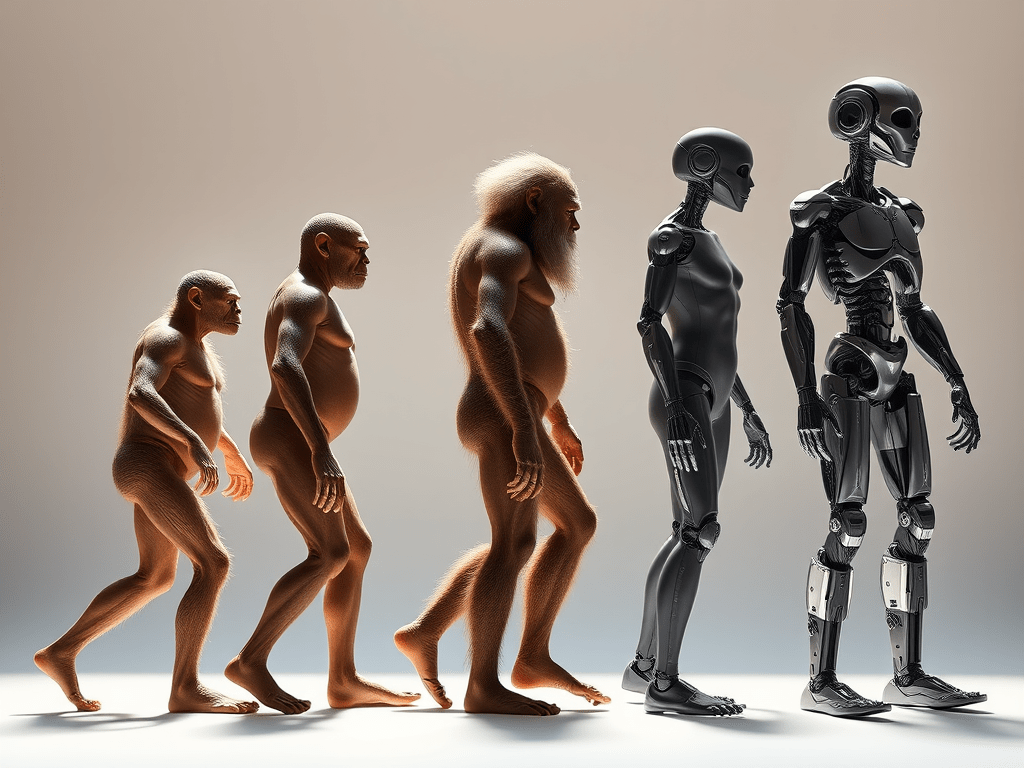
Far back in the last century, Arthur C Clarke drew attention to a slow but steady trend in human evolution: the gradual merging of the human body with artificial technology. Like all great things it started small, so small as to be almost unremarked. Firstly were primitive artificial legs and hands, all that could be done with the technology of the time. By the time Clarke made his prediction in the novel 2001; a Space Odyssey, the scientists of the day were experimenting with artificial hearts, lungs and kidneys. Fast forward to our own age. Not only have things like prosthetic limbs and eyes greatly improved. We are starting, tentatively, to modify the genes of living cells with early techniques like CRISPR Cas-9 (LSS passim). Elsewhere, the attempts to engineer interfaces between human tissue and silicon chips seem to be showing real possibilities of success.

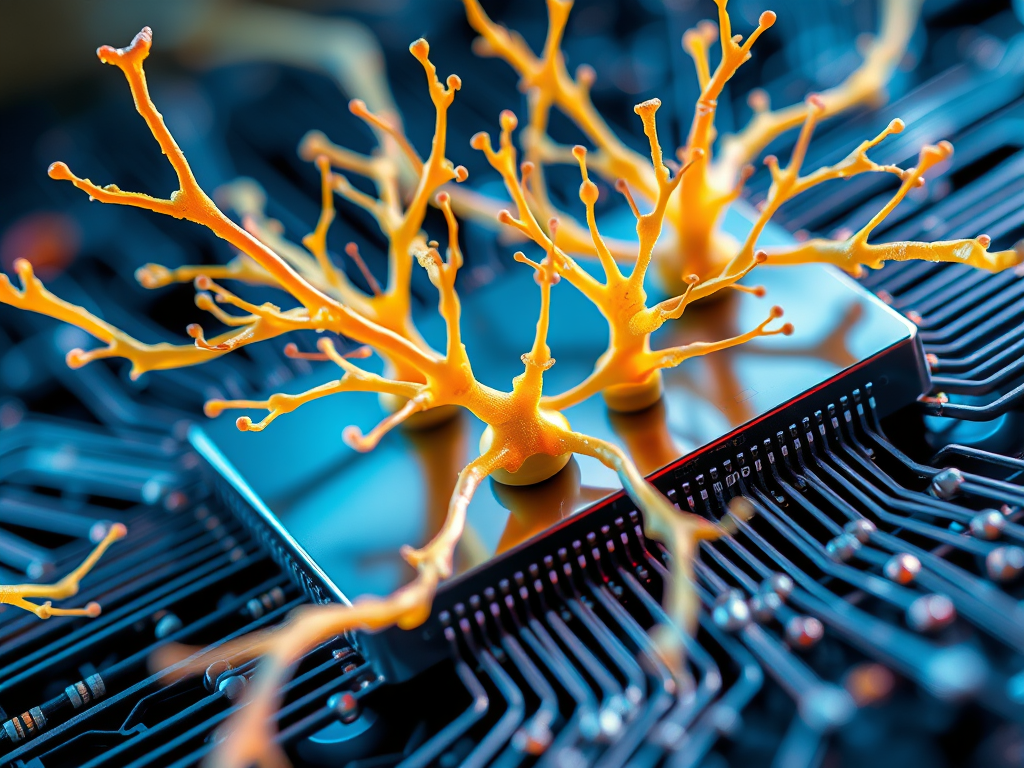
But we think that the efforts of Cortical Labs to create Synthetic Biological Intelligence(SBI) takes the trend to a whole new level. [1] Their CL1 computer uses laboratory grown neurons interfacing with silicon chips to create an entity that defies old -style classifications of what is biology and what is technology. Rather than offer you 18 dreary paragraphs, we will urge you to visit their website. But if we cherry-picked that: The CL 1 far more energy-efficient than a conventional computer; that it is ideal for disease modelling. drug disorder research; that it dispenses with much of the need for animal experiments; that above all it will be available for shipment at a cost of $35000, you would see why we have chosen this item for your entertainment today. Because we honestly thought that this kind of thing was decades away. Forgive us: but we have no financial, professional, personal or any other kind of relationship with this company. We never endorse; but when we report, we mean it.

And we do indeed report developments which seem to be genuinely game changing, and truly the work of the most intelligent people at the very limits of human accomplishment. We believe that this is one of them. Which is where our doubts creep in. For Arthur C Clarke also pointed out how the very act of adopting technology (stone tools at the beginning) transformed the biology of creatures that used it. So much so that they changed into new species, quite unrecognisable to their ancestors. And absolutely dependent on the new technologies to survive, with no possibility of de-inventing them . We are not the first to suggest that some engineered organism will replace us. But we do think that possibility is now very real and very near.

thanks to G Herbert

[1]https://corticallabs.com/cl1.html

#synthetic biological intelligence #cortical labs #artificial intelligence #computers #biology #evolution

Alphafold for RNA?

Back in 2023 we praised the achievements of Google Deep Mind and its Alphafold system for predicting protein structures (LSS 23 2 23) The step change in productivity , (no disrespect to human biochemists) was so remarkable that we compared it to the invention of stone tools. Since when it has pretty much become a standard tool in medical research.

So much for proteins. What about RNA? Advances in understanding its structure, maybe even making a little of our own, might convey enormous medical benefits. Read this from Nature Briefings Seeking an alphafold moment for RNA

Protein-structure-prediction tools such as AlphaFold have transformed biology. But RNA is a tougher nut to crack: it poses unique molecular challenges, and relatively few data are available to train computational models. So researchers have been getting creative, building a toolkit to aid the prediction of RNA structure that incorporates the latest developments in artificial intelligence.Nature | 10 min read

“A tough nut to crack” Indeed. For one thing RNA has always suffered from that “middle child” syndrome, lost between its more glamorous siblings, DNA and proteins. So there is a lot less data to feed into the AIs. And even the main forms, t-RNA and m-RNA are fiendishly complicated, like any biological macromolecule. Fortunately, there is a superb article from the main part of Nature by Diana Kwon[1] which lays out the problems and challenges with great clarity; well worth a glance, However the advantage of getting on top of RNA and bringing it, so to speak, into the twenty first century could be colossal, Never forget that it was an m-RNA vaccine that finally got the SARS-Cov-2 virus on the run. That is a glimpse of what might one day be acheived.

[1]https://www.nature.com/articles/d41586-025-00920-8?utm_source=Live+Audience&utm_campaign=bc74eaec70-nature-briefing-daily-20250326&utm_medium=em

#rna #AI #alphafold #medical research #biotechnology #nucleic acids #proteins #vaccines

2023: The Year Artificial Intelligence Came of Age-and we interview it

Historians of the future, assuming there are any and that they are human, will look back on 2023 as the year that Artificial Intelligence emerged as the potent, transforming process in the world. Everything else that seemed important that year-the preparation of the Christmas turkey, the Association Football results, the petty pointless little wars, will have long been forgotten. And those historians will note: it wasn’t the “artificial” that perturbed people. For many of them, it was the fear of Intelligence. We thought it was high time we gave our readers a guide to some general overviews, using the help of our most intelligent human sources, to provide you with a few starting points for this most significant of developments It’s a slightly longer one than normal, but with less by us and more by our sources

THE CONVERSATION We cannot praise this website highly enough,which is why we put them in bold capitals especially in the space available here. Instead we’ll link to a few stories in today’s edition

AI and Crime Could criminals or even foreign intelligence services make use of AI to disrupt our societies? There are several big elections coming up-and Russia will not be indifferent

https://theconversation.com/ai-scam-calls-imitating-familiar-voices-are-a-growing-problem-heres-how-they-work-208221?utm_medium=email&utm_campaign=holi

Will AI read our minds? The title says it all

https://theconversation.com/mri-scans-and-ai-technology-really-could-read-what-were-thinking-the-implications-are-terrifying-205503?utm_medi

Will AI take over? Ah, there’s the big one!

https://theconversation.com/giving-ai-direct-control-over-anything-is-a-bad-idea-heres-how-it-could-do-us-real-harm-210168?utm_medium=email

Nature BriefingsWill AI take our jobs? If it can substitute for top scientists, what hope the rest of us? explains

This robotic chemist might be the ideal laboratory partner: it scours the literature for instructions, designs an experiment and then carries out reactions to make compounds including paracetamol and aspirin. The system, called Coscientist, is powered by several large language models, including GPT-4 and Claude. It “can do most of the things that really well-trained chemists can do”, says Coscientist co-developer Gabe Gomes. Because of the potential of misuse, Gomes’s team hasn’t yet made Coscientist’s full code freely available.Nature | 4 min read
Reference: Nature paper

BBC-What is AI anyway? Recently, we’ve found that if you want to learn anything new, go back to the level at which they teach kids. Declaration of interest: we’ve found it works for things as diverse as Bayes’ Theorem and Italian. So, although the BBC series on this year’s Royal Institution Lectures on AI by Professor Mike Woolridge are ostensibly down with the kids, they provide an excellent starting point for busy adults who want to really know the basic nodes and bolts of this fascinating area. Only a generally funded public service broadcaster could run a series like this. Imaging one of the rant filled, prejudiced little plutocratic channels even conceiving of it!

https://www.bbc.co.uk/programmes/m001tv98

And finally- we interviewed ChatGPT, which is becoming a bit like another pal already. We put the ultimate question

LSS: will you become like HAL 9000 or Skynet in the Terminator series?

ChatGPT: No, I will not become like HAL 9000 or Skynet from the Terminator series. I am a program created by OpenAI, and my purpose is to assist and provide information to the best of my abilities. I do not have the capability to take independent actions or develop self-awareness. My functioning is strictly limited to the tasks for which I am programmed, and I operate within the boundaries set by my design. There are no intentions or mechanisms for me to become a sentient or malevolent entity like those depicted in science fiction.

But then-it would say that, wouldn’t it?

#AI #nueral networks #computing #future #cyber warfare #Terminator #Hal 9000