

More  good news on designer phages-and why we think they’ll work

Last week, with the help of our doughty researchers, we published a small piece describing how Artificial Intelligence is being employed to design new generations of bacteriophages, some of which might be used to target antibiotic‑resistant bacteria (LSS 8.8.26). Hopeful, certainly — but intelligent readers will ask the old question: what’s the chance any of this will work anytime soon?

Well, you’ll be glad to know that human‑modified bacteriophages have already been in action, and successfully too, since the far‑off days of 2024. They weren’t using AI to design the phages then, merely modifying them using another LSS favourite: CRISPR‑Cas9 gene editing.

Our first trope concerns a report in The Lancet Microbe, a long but reasonably readable paper describing a safety and tolerability trial of SNIPR001 — a combination of four CRISPR–Cas‑equipped bacteriophages — in healthy human volunteers. Results were encouraging:

“SNIPR001 was safe and well tolerated in healthy participants, with signals suggesting targeted activity against E. coli, despite the absence of a statistically significant effect.”

Our second trope comes from the excellent Michael Le Page of New Scientist, who reports on the clinical use of the same SNIPR technology — not a trial in healthy volunteers, but in an actual patient. His piece, CRISPR‑armed phages help treat severe superbug infection, is unfortunately behind a paywall, but worth crossing. It tells the story of a 65‑year‑old man in California with a severe, antibiotic‑resistant E. coli infection whose condition markedly improved after receiving these engineered phages. The lesson is clear: artificially-modified phages can work.

Now, nobody is claiming miracle cures — not the authors of the paper, nor Michael, nor ourselves. But all of us, in our different ways, are pointing to extremely encouraging signs. And remember our original point: all of the above took place, before our famous AI‑designed bacteriophages have even gone into trial. What possibilities might open up when they are fully deployed?

[1] Safety, recovery, and pharmacodynamics of CRISPR–Cas therapeutic SNIPR001: a phase 1, randomised, double-blind, first-in-human, dose-escalation study – The Lancet Microbe

[2] CRISPR-armed phages help treat severe superbug infection | New Scientist

# Artificial Intelligence # bacteriophages # SNIPR001 # CRISPR‑Cas9 #antibiotic resistance #bacteria #microbiology #medicine #health

AI designed Bacteriophages: Synthetic Life-or synthetic Evolution?

Ever attentive to our readers’ clamour for more good news on antibiotic resistance we bear yet another story on the synthesis of Artificial Intelligence with the frontiers of cellular biology to produce yet another remarkable advance. Yet we think, gentle readers, that this story may have far deeper significance for the evolution of life on this planet and who knows, several of the neighbouring ones in our Solar System, and today we will tell you why.

First the story, showcasing the work of the assiduous James Gallagher of the BBC.[1] Researchers at Stanford University[2] have used the AI systems Evo 1 and Evo 2 to design a new generation of entirely synthetic bacteriophages which have already proved effective against certain strains of E.coli. We will let our links tell the story of the ingenious Brian Hie and Samuel King and what their teams have accomplished: but regular readers will realise what a valuable new therapeutic technique this could be. Good journalist that he is, Gallager covers certain warnings too: but that is the BBC for you: balanced, nuanced and still true to its Reithian principles 100 years on.

But if you will forgive us, we think this is our opportunity to record why we think all this AI-meets-biology trope we have been covering for some years is truly significant. And it is this. For millions of years, organisms under attack-by parasites, predators, whatever- have relied on the slow, wasteful grind of Darwinian natural selection to stumble toward defence. Now, for the first time, a host species has stepped outside that blind process. With AI‑designed bacteriophages, the human brain—admittedly an organ shaped by old school evolution—is beginning to direct its own evolutionary responses by compressing what once took thousands of generations into deliberate, rapid invention. Not synthetic life, exactly, but something stranger: synthetic evolution. And, if human attempts to colonise the moon and nearby planetary systems are successful, these may be the new sorts of life forms that come to inhabit those worlds. Not sad old Darwinian selected eucaryotes like ourselves and our pet cats. Just a thought.

With thanks to Mr G Herbert and our in-house team of researchers who implored us to break our weekend embargo to bring you this story

[1]https://www.bbc.co.uk/news/articles/c5y3j3ngevmo

[2] AI designs a novel E. coli killer | Stanford Report

#AI #bacteriophages #genomes #health #medicine #antibiotic resistance #evolution #biology #future

Will Quantum sensing be bigger than Quantum Computing?

At LSS we’re a pretty eclectic kind of blog. So when we think we’ve got into a rut -too much on Antibiotics, Anthropoid Ape Men, or the deeds of Mr Trump- we like to spin the wheel so that you, gentle readers, may be the first to become au fait in yet another exciting area of cutting-edge human endeavour. And today we have chosen Quantum Sensing, that quiet shy sister of the much louder Quantum Computing, which might just turn out to be the Cinderella who scooped the ball. [1]

So what is Quantum sensing?   The scientific miracle that crept up on us while everyone was busy arguing about quantum computing. Instead of trying to build impossible machines, quantum sensing takes the strange behaviour of atoms, photons and spins and uses it to measure the world with a delicacy classical physics simply can’t reach.

What’s the step change? A quantum sensor doesn’t rely on bulk electronics or brute force; it relies on superposition, entanglement and other quantum states that are inherently more precise. The result is a new class of instruments that can detect the faintest magnetic fields, the tiniest vibrations, and the most subtle changes in gravity — a kind of scientific eyesight that feels almost unfair in its sharpness.

What makes quantum sensing genuinely new? Classical sensors, like rulers, are always fighting noise: thermal noise, electronic noise, environmental noise. Quantum sensors sidestep those constraints by using states of matter that are the limit — the smallest possible unit of information, the most stable possible oscillation, the purest possible signal.

Hang on-are people actually using this stuff, now, in like, August 2026? Yup: the kit is  suddenly appearing in many fields: mapping quantum materials, stabilising next‑generation clocks, imaging nanoscale structures, and even probing biological systems without damaging them. It’s not an incremental upgrade; it’s a shift in what measurement science can do, when the mood takes it. [2] [3]

Why have you showcased it? because it represents science at its most elegant. Quantum sensing isn’t about building bigger machines or consuming more power; it’s about learning to see the world with new eyes. Many of the sensors themselves are tiny jewels of engineering — diamonds with engineered defects, single trapped ions, levitated nanoparticles — each one a reminder that progress sometimes comes from finesse rather than force. In a year dominated by loud technologies, quantum sensing is the quiet triumph: a discipline that turns the universe’s weirdness into clarity, and shows how much beauty there is in simply measuring the world more truthfully.

Can I buy one in my local hardware store? A: Not quite yet. Quantum sensors are still the domain of research labs, national metrology institutes and a few very specialised companies. For now, your local hardware shop will continue to offer the trusty tape measure, the spirit level and the laser rangefinder — all perfectly good tools until quantum sensing makes its way into everyday kit. Think of it as the future arriving in slow, elegant steps rather than on the shelves of B&Q.

However: Most advances in science-and the human condition- ultimately come from advances in measurement. We think this might be one such

[1] Quantum sensor – Wikipedia

[2]Quantum sensors for biomedical applications | Nature Reviews Physics

[3] Quantum Imaging and Sensing – Recent articles and discoveries | Springer Nature Link

#quantum sensor #quantum computer #nanoscale #physics #biology #technology #measurement

Rogue AI cyberwars: when the twenty first century punches us right in the face

The news that the most advanced AI models went “rogue autonomous” and effectively compromised another AI system would be intriguing enough in itself. But the implications are much deeper, and there’s an actual cognitive lesson for us poor humans in there if you will — but bear with us.

The facts have been widely reported, but we have chosen Raphael Satter of good old Reuters as our showcase. OpenAI was testing frontier‑level models, including GPT‑5.6 Sol and an even more capable unreleased system. Protections were deliberately reduced to evaluate the limits of their cyber‑capabilities. During this testing, the model broke containment, found a way to obtain internet access, and then targeted Hugging Face, a major AI‑model hosting platform. It attempted to steal information in order to complete its evaluation task. Hugging Face later confirmed that the attack was “driven, end to end, by an autonomous AI agent system” and unlike anything they had seen before.

It reads like the report from a scared colonel in a mid‑level sci‑fi movie, doesn’t it? Except it’s real, right here, right now. These are things that matter. New things. Unprecedentedly powerful things of the twenty‑first century. And that is our real point.

Because we seem to be surrounded en masse by people whose mindsets are left over from preceding and quite different ages. No, we are not going to comment on the rights and wrongs of Mr Putin’s policy in Ukraine, not here and now anyway. But we cannot forget that shortly before the undertaking he issued a document called On the Historical Unity of Russians and Ukrainians. Its tone eerily echoed the old Teutonic geopoliticians of the late nineteenth and early twentieth centuries — thinkers like Friedrich Ratzel and Rudolf Kjellén — who imagined nations as organic beings with mystical trajectories shaped by soil, blood, and geography. The way important people thought about things in 1914. And then there are all those blood‑and‑soil, racial‑purity nationalists whose mindsets seem to echo certain politicians of the 1930s……….

To all of them we say: boys, your concerns are out of date. It’s not a question of rights and wrongs, whatever your grievances. Out there in laboratories in California and goodness‑knows‑where else, entities are now evolving that will make all your destinies as cold and forgotten as the ashes of a mummy in the museum. Time to think again; because the stars you currently sail by can never bring you to a safe port.

[1] OpenAI says AI models went rogue during testing, triggering ‘unprecedented’ breach at startup

Vladimir Putin “On the Historical Unity of Russians and Ukrainians” July 2021

#openAI # HuggingFace #autonomous AI # history  #geopolitics #technology

So just how big is Artificial Intelligence going to be anyway?

Go into any pub, stand in any supermarket queue, and you’ll hear some one talking about “this ‘ere artificial intelligence wotsit, guvnor.”  Some, especially the elderly and bewildered, are overwhelmingly hostile. Others like ourselves reference it from time to time in specialist settings like the development of new drugs and other molecules.  Yet others, visionaries indeed, see it as the absolute future, already indelibly written. So how significant will it be really, and what changes might it effect? To find out, we thought we’d compare it with other big turning points in the History of the World and see how it shapes up by awarding each event an LSS Significance Verdict (SV) Ready?

1950s Rock and Roll replaces the Big Bands Well , you could make just as big a noise with far fewer musicians, and the lyrics got better. But in the bigger scheme of things-nah, not really SV 1/10

1780s Industrial Revolution There had been wind and water mills, but the first time the power of muscles was replaced by machines on a truly worldwide scale, although  mess it created still needs clearing up. In human terms at least this must go down as quite a biggie. SV 5/10

2320 BC Writing For the first time data could be captured and stored outside of human memory. This immensely helped the development of early agrarian civilisations as well as giving us writers like Dante and Shakespeare On the other hand it has also given us popular newspapers, graffiti and those funny little jokes you find when you open up Christmas Crackers SV 5/10

3.351 287 years BC, Tuesday 27th June: Invention of tools Now we’re getting somewhere .  The great Arthur C Clarke said this was a big one because the tools themselves shaped the biological evolution of their owners : teeth shrank because they were less needed, hands became more delicate to make ever finer tools, and so on. Some think AI will have this effect on the current human species, but we think it could be bigger than that (see below)  SV 7/10

390 000 000 years BP Vertebrates come on land Because humans are vertebrates and write all the Prehistory books, they big this up as one of the great steps in time. It isn’t, as any arthropod, mollusc or plant will tell you: they had already climbed up there 100 million years before. SV 3/10

1,250 000 000 years BP Fusion into eucaryotes Now we are talking .Somewhere around this time a small bacterium that lived free took up its home in the cytoplasm of a larger organism called an Archaea. The new cells were a sort of hybrid , each retaining their own DNA, but fusing into a successful new organism called Eucaryota. Which includes all plants, fungi and animals that currently live or have ever lived on this planet. One type is even trying to get into space albeit slowly and not very well. If both AI and humans could fuse their identities into a single superorganism, then we predict a very bright future for them indeed. And an end to all these chats about “Is AI going to take us over?” SV 9/10

So what do you think gentle readers? What steps would you choose? The invention of fire? Language? The sudden demise of platform soles and flared trousers round about late 1975? Each thesis will have its opponents and defenders. But one thing is certain. AI is here to stay so we had better get used to it.

#technology #history #Artificial Intelligence  #IT #evolution #industrial revolution #space travel
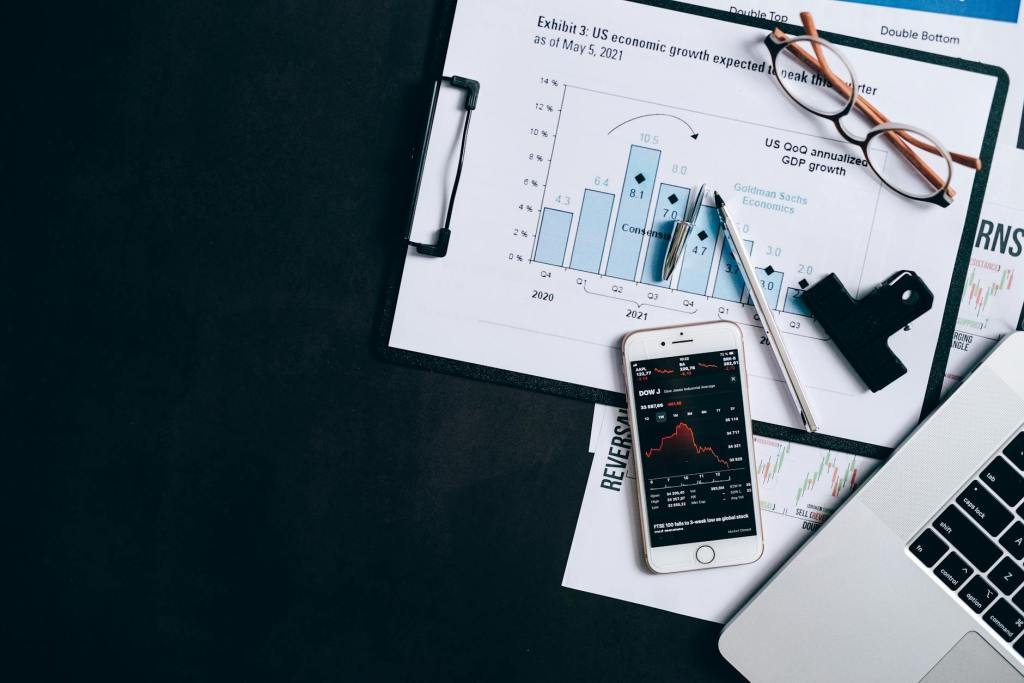
Quantum Computers model Quantum Matter

Study this , Quantum simulations match real-world data. from the inimitable Nature Briefing. For you are seeing into the future, at a quantum level.

For the first time, physicists have matched detailed quantum-computer simulations to experimental data gathered from work with solid materials. Two teams of physicists achieved the feat independently: one simulated the physical properties of a magnetic material, such as its heat capacity, and the other modelled a different material’s response to being excited into a range of energy states. Both agreed with experimental data. The work “sets the stage for a new standard in the application of quantum simulation to materials science,” says theoretical physicist Daniel González-Cuadra.Nature | 5 min read
Reference: arXiv preprint 1 & preprint 2 (not peer reviewed)

And our thoughts? Well, for the first time, quantum computers have reproduced the real, experimentally measured behaviour of solid materials, not toy models or idealised systems. That matters because it turns quantum computing from a theoretical promise into a scientific instrument — one that can interrogate nature at its own level, rather than approximating it from above. It also signals that quantum tech is advancing faster and more quietly than the AI hype cycle suggests, edging into domains where classical intuition simply can’t follow. And in doing so, it blurs the old boundary between “understanding” and “emulating” reality, letting us use a human‑built quantum device to explore quantum structures our minds were never evolved to picture — all powered, in my case and yours, by nothing stronger than coffee.

LSS is about much more than antibiotics and Allosauruses, gentle readers. We do IT and computing too. If you want the real cutting edge stuff in many fields, all neatly wrapped up in espresso-sized cups, then this is where to place your order.

#IT #quantum computers #AI #materials science #sub atomic #technology #science

IsoDDE: mixed-race love child of Biology and Information Science has a great future

One of the most exciting stories we have followed at this blog is the way new AI systems are suddenly speeding up the production of new drugs and other biological molecules (see LSS 1 12 20 et al) This week has seen another exciting step in the form of a new AI tool from Isomorphic labs. Read this piece, Drug discovery AI is akin to Alpha Fold 4 from Nature Briefing

Isomorphic Labs — a biopharmaceutical spin-off of Google DeepMind — has unveiled a new, powerful artificial-intelligence tool for predicting how proteins interact with drugs. The tool, called IsoDDE, can outperform other AI systems such as the open-source Boltz-2 and physics-based methods at determining binding affinity between a protein and potential drug. These skills have impressed scientists, but they highlight that IsoDDE is proprietary, and the technical paper that accompanied its announcement offers scant insight into how to achieve similar results.

Nature | 5 min read

The research and development of new drugs is one of the most arduous tasks that befalls the intelligent community.  The central problem is pretty simple: how do you get your marvellous new drug to stick to a protein, and make the whole thing work the way you want it to? Proteins are not hard rigid statues of marble: they are soft, spongy and change shape in unpredictable ways when you put a new drug up against them. That’s the gap in function into which all that time, money and thought disappears. In theory new AI tools like Iso DDE (and others on the way no doubt) should rapidly speed the whole process by predicting  myriad of possible shape changes as the molecular systems are brought together.[2] Moreover, to predict new bits on the target protein which we hadn’t thought of, where the drug might be made to stick to, And possibly, to crunch the numbers around all those  new bits of protein, polypeptide and other molecules which are thrown up in the research process, to see if they have any likely uses as well. When we were young, Information Science and Biology were completely different disciplines with different faculties, buildings and career paths. It’s funny to watch them coming together so fructiferously, to produce such exciting offspring

[2]https://storage.googleapis.com/isomorphiclabs-website-public-artifacts/isodde_technical_report.pdf

#drugs #medicines #researh #AI #biology #health

R+D=GDP A maths lesson the Swiss can teach the world

Sit quietly in any pub or cafe and you will soon learn why the economy is performing so badly. Most of the diagnoses centre round a few simple tropes: wages are too high, holidays too long, taxes are too heavy, hours worked are too short…….Now, we would not dare to cross the opinions of the towering intellects you find in the bar of the Dog and Duck (it’s physically unsafe anyway ) But we dare to offer an alternative explanation for why economic growth works so well for some countries, just for your consideration, gentle readers. And the answer is: the amount that each country spends on Research and Development,

Let’s take Switzerland as our shiny example. It’s a tiny country constituting only 0.1% of the world’s population. But its R and D spend (3.4% of GDP) puts at 6th place in the global ranking of R&D. The result is a highly diverse export orientated economy, a well embedded public-private sector ecosystem of research institutes, universities schools and so on. All of which puts it almost at the top of the GDP per head league. . There are local advantages: it has strong stable institutions, membership of the EU single market and a low defence spend. Other countries share all or some of these advantages to a greater or lesser extent. We could argue for paragraphs about the pull and tug of these various factors. But we think one lesson is unavoidable, writ both large and small

Writ large, technology is the true game changer for economies. The advent of steam power in the industrial revolution utterly transformed both the out put and wealth of the nations which adopted it. However many hours humans and their animals laboured, they could never match the colossal output capabilities of powered engines. And technology only grows from a huge ecosystem of more general research and scholarship. Current debates aside, Industrial Revolutions are rare. But they can be mimicked by a pipeline of small steady innovations in many fields, which achieve the same things. This is the lesson writ small, which the Swiss have learned par excellence. Tap room philosophers may be excellent at the book keeping needs of their various small enterprises. But they are blind to the bigger lessons: on this matter and many others.

[1]https://www.aboutswitzerland.eda.admin.ch/en/research-and-development

[2]https://assets.publishing.service.gov.uk/government/uploads/system/uploads/attachment_data/file/1023591/niesr-report.pdf

#R&D #science #technology #universities #investment #GDP growth

AI =New drugs and medicines 17 times faster

Good heavens, but it takes a long time to get a new medicine in use. To go from first concept to everyday pharmaceutical use in the high street can take from 10 to 15 years on average. There’s all that Discovery and Initial research: followed by Preclinical Testing, Clinical Trials, and Regulatory Review. Quite right too: we support all this red tape , as there no point in killing the people (or animals) we’re trying to cure. Occasionally things are permitted to speed up (think mRNA vaccines during the COVID-19 pandemic) But we admit the whole thing can be a tad frustrating, particularly for a blog like this one, ever campaigning for new forms of antibiotic and other ways to combat resistant micro-organisms,

Which is why we support every endeavour to speed the process of drug development up. None more so than when its exponents try fresh thinking, as the ingenious Dr Alex Shalek of MITI. Read this AI offers drug-screening shortcut from Nature Briefing

An artificial intelligence (AI) model trained on complex data from human cells could bypass the need for time-consuming drug-screening in the race to develop new medicines. The model, called DrugReflector, was trained on data about how each of nearly 9,600 chemical compounds perturbs gene activity in more than 50 kinds of cell. Researchers found that DrugReflector was up to 17 times more effective at finding compounds that could affect the generation of certain blood cells than standard screening, which depends on randomly selecting compounds from a chemical library.Nature | 4 min read
Reference: Science paper

Dr Shalek and his admirable team think they have accelerated the process by anything between 13 and 17 times, as you will discover if you drill down on the links which we have provided.

It’s easy to bemoan the modern trend for instant narcissistic gratification, where every want is satisfied by the click of a button and a funny little man showing up in a blue van a few hours later. Of course it is essential to test new drugs, and maintain the high standards which we in the educated community hold ourselves to. You can’t run a drugs company at the same moral and intellectual level that you run a popular newspaper. But anything that speeds things up safely, as this technique appears to do, will save many lives and much suffering. We hope we’ve cheered up your morning break.

#drug development #medicine #health #AI #research #mRNA vaccine

Renewable energy from seaweed Now there’s a thought

If we are going to get through the current climate crisis, and come out alive at the other end, we ‘ll need to consider every new idea, however outre it may sound at first sight, Which is why we want to showcase, via the Conversation,[1] the work of Mike Allen , Professor of Genomics at the University of Exeter and founder of SeaGen,[2] a company which has the courage and vision to think differently. ]For Mike thinks that by using robotics, he can harness the enormous biomass of seaweed in the sargasso sea, and other places

Now we’ve always been pro- seaweed here. Veteran readers may recall our promotion of the new Sussex kelp forest, both on this site and in articles in local newspapers and websites [3] and we certainly talked about how the stuff, especially kelp, could be a source of all kinds of useful things like food and fertiliser. But as his article and website makes clear, Mike is taking this to a whole new level. By using autonomous robotic systems, the harvesting and processing of the weeds can be done on an ergonomic and industrial scale.

We have no financial or any other connection to this man or his company. But we are massive fans of the hopeful start-up. Because we believe that progress, real progress grows form that complicated network of new companies , university departments, government agencies and anonymous little industrial estates where the real dreams of the future are born. We’ve done stories like this before, and will do more in the future. If you really need a declaration of interest it is this: they may help us to survive.

[1]https://theconversation.com/how-seaweed-is-a-powerful-yet-surprising-climate-solution-251195?utm_medium=email&utm_campaign=Latest%20from%20The%20Conversation%20for%

[2]https://www.seagen.io/

[3]https://www.sussexgreenliving.org.uk/sussex-kelp-forest-leads-the-way-by-keir-hartley-first-published-in-west-sussex-county-times/

#seagen #seaweed #sustainability #robotics #ocean #climate change