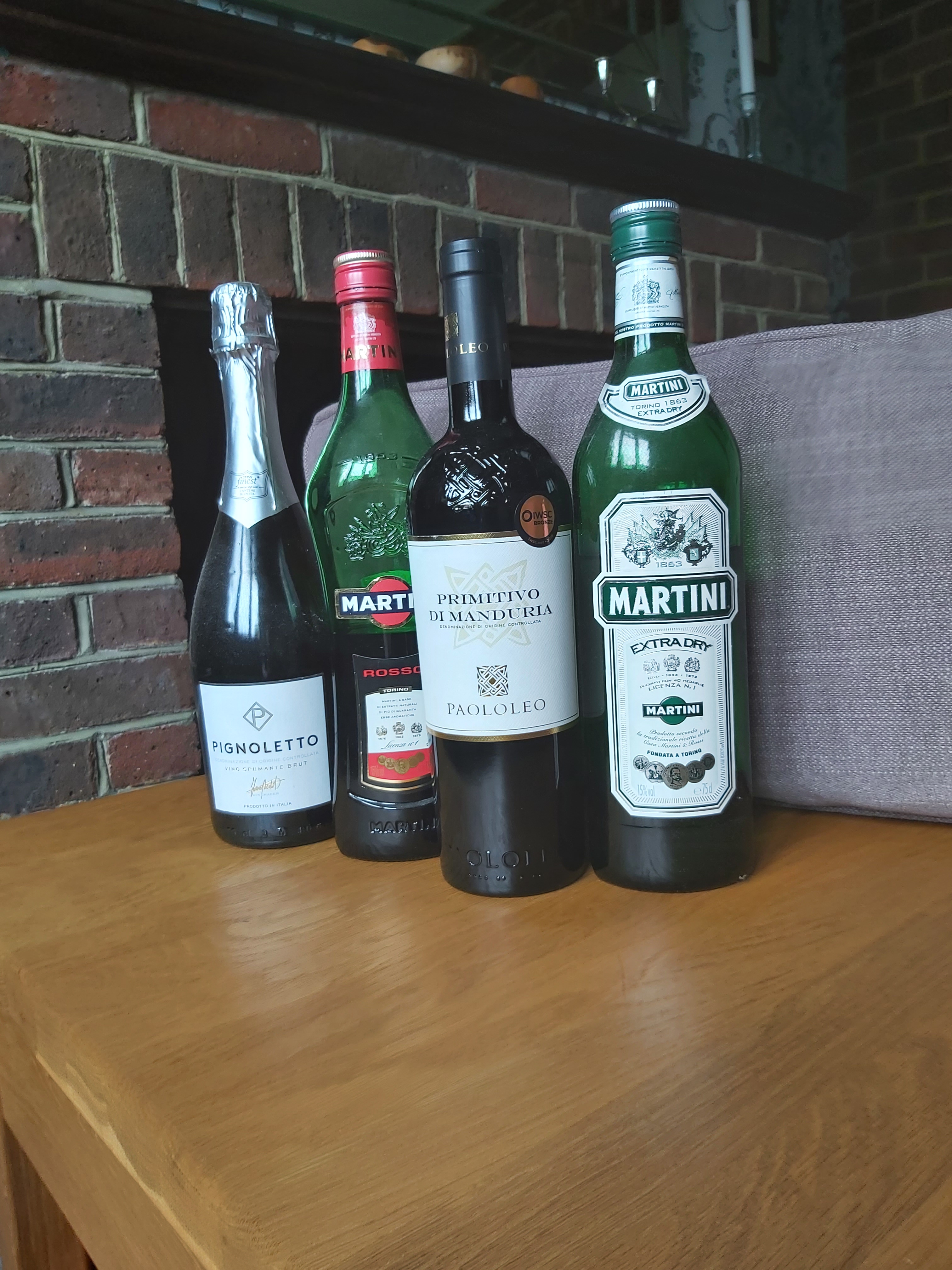
Gentle readers, we do not wish to be gloomy. But the prospect from our window is a bit depressing. Wars, inflation, hunger, quarrels….we desperately need something to bring us all together, don’t we? Something to find our common humanity. What better than a really good cocktail?
To this end we are proud to help celebrate World Cocktail Day, 13th May. And no better website could there be than NDTV food and its excellent writer Neha Grover who clearly knows one end of a shaker from another. (we forgot this once and you should have seen the mess!) Neha not only has ten lip-smacking concoctions for you, but they can all be made in less than 15 minutes, or so it is claimed. How much drinking time does that free up?
So get into your bar tonight and mix up something from Neha’s list [1] Then sit back amd join, spiritually at least, with your cocktail confreres all over the world. Happy Friday!
One of the great dividing lines in human history was the discovery of the one-cause-one-disease moment. When pioneers like Pasteur and Semmelweiss worked out that a single, easily identifiable microorganism causes a single, well-defined disease. For example the Trypanozoma protozoan causes Chagas disease. Of course the people who work in this field are experts. But even someone like Michael Gove would agree that there work has immeasurably improved the quality of our lives.
Yet when we come to mental illnesses, the picture is sadly different. Despite the tireless work of many ferociously intelligent people, the origins of mental disorders are not understood in simple cause and effect ways. The link we post here to that admirable charity Mind, makes this all too clear.[1] Our view? We can’t help thinking that a little more spending on research could pay enormous dividends for us all, not just the poor sufferers and their families. But might this happen?
Take the example of a moderately sized, moderately prosperous country such as the UK. (we bet that it is representative of many such) Currently the spend on mental health services in England was about £12.2 billion($14.6bn, Eu14.27 bn) in 2018-2019.[2] Now, you have to boost that up a bit for 2022, as the Government has increased budgets, and there would be the smaller but still significant budgets of the devolved Governments of Scotland, Wales and Northern Ireland to take into account. However, we doubt the grand total can be grazing anywhere near £20bn ($24.6 bn, Eu 23.4bn).
Now compare that to the overall UK defence spend. For 2021-2022 this is estimated to rise to £57.7 bn($71.6bn, Eu 67.57 bn).[3] Understandably; the UK considers that itself and its allies are under dire existential threat from aggressive powers such as President Putin and his Russian Federation. Because of people like Putin, no country dare drop its guard, for fear of inviting attack. And herein lies the tragedy for mental health. Imagine if the budgets spent on it could approach those spent on defence! Would causes, and total effective cures be just around the corner? Probably. Perhaps it could even be a form of defence, for good mental health services might even preclude the rise of people like Putin before they got anywhere near the leadership of major nuclear powers.
at LSS we use the term “billion” to mean 109, i.e. 1000 000 000
We don’t often strike a personal note in the webpages of LSS, but sometimes our experiences are so vivid they cannot be easily forgotten. Unfortunately. Last week we walked with a friend across the countryside in one of the more opulent parts of Kent. It was a landscape to envy. Deep green fields with horses nodding peacefully over lush hedgerows. Oasthouses peeping against a shock blue sky . And the rivers? Lifeless. Dead. No fish. No plants. No darting insects. Just a kind of dirty blueish fetid open drain. And it’s the same across the whole of this sceptered isle, especially in England.
A little digging revealed why. We’ve got a number of links for you, tell you why in a minute, but they give a pretty good spread of the reasons. George Monbiot of the Guardian [1] zooms in on the River Wye in the west of England. He stresses industrial farming as a major culprit. Esme Stallard [2] widens the national picture for the BBC. Meanwhile, for our more elderly and excitable English readers who might find the above sources a little political, Scott Rotherham for the entirely politics free trade site Pipe Repair tells the same depressing story.
LSS is indeed and Anglocentric blog, mainly because of where we live. But is England so different from your country? Remember all this stuff goes down the stream into the rivers. And from the rivers into the sea. Where the fish get it-plenty. Somewhere, somehow, some way, you are going to drink or eat it.
things we thought were of more than passing significance
Carbon capture is complicated UK soil is now capturing carbon dioxide 7% more efficiently than it did 300 years ago. So that’s a good thing right? Well, the real situation is more complex and nuanced, as this article for the Conversation by Victoria Janes-Bassett and Jess Davis makes clear. But what we really like about this: it’s a prime example of the tangled, complicated nature of most issues that require serious thought. Beware the fools who think in simple soundbites-they’re always wrong
Sleep soundly? One thing about the real genius go getters we’ve come across-they seem to need less sleep than us mere mortals. So how much do you need to stay healthy and still buy that Superyacht at Antibes? Here’s a whole clutch of sleep experts for The Conversation
Global warming-what’s the beef? According Nature Briefings, just cutting 25% of our beef consumption might do a lot to cut down carbon emissions. Today we are trying to link to one of their excellent podcasts, which we haven’t really done before. Let us know how you got on
eplacing just one-fifth of global beef consumption with a meat substitute within the next 30 years could halve deforestation and the carbon emissions associated with it. Researchers modelled the effects of swapping beef with a fungus-based meat substitute called mycoprotein — familiar to many as Quorn. Replacing 80% of beef with mycoprotein would eliminate about 90% of forest loss. “It should not be seen as a silver bullet,” says sustainability scientist and co-author Florian Humpenöder — but it could be a part of the solution.Nature | 4 min read Reference: Nature paper
Remember -we the ask is to cut down, not cut out. We are regular patrons of our excellent local Toby Carvery, a habit we have no intention of changing (it’s Whig cult food) But we are just going to be sensible and measured from now on. Are these bad qualities? See you next week
But buddy-buddy road movies are meant to be about men, goddammit! From Eastwood and Bridges via Laurel and Hardy to Pine and Foster, it’s jobs for the boys! The idea of subverting the genre and turning into a feminist message movie could only occur to people of real distinction. Like Ridley Scott and his writer Callie Khourie. So came Thelma and Louise (1991)
And feminist movie it is. It should be shown to all girls, compulsorily, at the age of ten and a half as Terrible Warning of the types of men they are about to meet. The tyrant husband ( played by Christopher McDonald), the bonehead ( played by Michael Madsen) the charming rapist (played by Tim Carhart), gorgeous sociopath ( played by Brad Pitt), and leering brute ( played by Marco St John), Thelma (Geena Davis) and Louise (Susan Sarandon) meet them all in the course of one rather exciting girls’ weekend. It’s the sort of educational experience you will never get in Harvard, however many books you read. And all against the background of the American West, which as ever tries to steal the show as only it can.
The male of the species is redeemed by the inimitable Harvey Keitel, who plays a Detective who sympathises with the ladies’ plight, as it grows more and more acute by the hour. For this is no agit-prop-all-men-are-bad radfem diatribe. Its ultimate plea is for human, not feminist solidarity. It’s Keitel’s tragedy that he ultimately fails-but then, we don’t want to spoil the ending for anyone who hasn’t seen it.
The the only vindication, of a work of art is that it stands the test of time. And Thelma and Louise does this admirably. With a hypnotic soundtrack, two of Hollywood’s most intelligent actresses (we dare say no more) and luminous cinematography, we promise you an experience of living hard. If only they dared to make them this edgy any more.
#great films #thelma and louise #ridley scott #road movie #feminist
War between China and Russia? Are we mad? Surely the two totalitarian powers are cheerfully united in a new Axis, solid against the democracies forever? But once you look at the two studies we list below, you might just want to think again.
Wars start for two reasons. First, a growing imbalance of power between two nations (think Britain and Germany after 1900). Secondly when one side sees its overwhelming opportunity to attack. (Hitler in 1941 is instructive here). The imbalance argument writes itself. China, a growing highly successful nation must expand to satisfy the needs of its hungry, industrious billions. True: they could head south into the Pacific. But nations like Taiwan, Japan and India seem increasingly aware of their giant neighbour. They could make any Chinese moves increasingly costly. Now look north. Siberia is a vast, thinly-populated land full of oil, minerals and other riches. All of it corruptly and incompetently administered from distant Moscow.
And the opportunity? Russia has become increasingly embroiled in an unnecessary and expensive war that threatens to break its army, and its economy. The mere fact of launching it raises questions about the competence of its ruler and his underlings. While its value as an ally declines in proportion to its economic strength. If China has given Russia a sort of mortgage on its great power status , now might be the time to foreclose, as some will no doubt argue in Beijing.
How ironic indeed for Putin to find that his attempt to restore Russia’s imperial might results in its final dismemberment. As the old saying has it “Be careful what you wish for.”
Pravin Jethra, for the BESA centre, looks in detail at the hidden tensions between the two powers
The right to a healthy swim What’s more fun than a sea swim on a Bank Holiday? But if you think it’s good for your health, think again. According to those doughty campaigners Surfers Against Sewage and Top of the Poops, our coastal waters have suffered an avalanche of sewage discharges, and it’s getting worse. Yet we guess the problem isn’t confined to the waters of one little country! If you can help, try these organisations below
The right to clean air So, you get out of the water-and you still can’t get clean! Because according to Shivali Best of the Mail , 97% of UK addresses breach the limit for at least one toxic pollutant. Once again, we doubt the problem is unique to these islands:
Hidden dangers of climate change Can sudden changes in environment such as climate or deforestation spark new waves of pandemic disease? According to the authors of this study in Nature, the danger is a very real one. Some authors, such as Professor Harper think this has brought down mighty civilisations in the past. Are you sure it won’t happen again?
Climate Change will boost viral outbreaks
Over the next 50 years, climate change could drive more than 15,000 new cases of mammals transmitting viruses to other mammals, according to a study published in Nature. The research predicts that many of these transmissions will happen when species end up together in cooler locales as temperatures rise. And it projects that this will occur in species-rich ecosystems at high elevations, particularly in areas of Africa and Asia, and in areas that are densely populated by humans, including Africa’s Sahel region, India and Indonesia. “This work provides us with more incontrovertible evidence that the coming decades will not only be hotter, but sicker,” says disease ecologist and co-author Gregory Albery.Nature | 5 min read Reference: Nature paper
Harper, Kyle: The Fate of Rome Princeton 2019
Heart Warming kittens An old friend ,and regular contributor to the creative side of this blog, has sent us this picture of some kittens who have recently become members of his family. How could we resist?
Well, that’s quite a reading list for you on a day of leisure, so we’ll leave it there. Enjoy
“Words are the tokens current and accepted for conceits, as moneys are for values”-Bacon
LSS is a passionate blog-why do it if we don’t believe in it? Yet sometimes the depths of human folly excite our scorn so much that our feelings escape the bounds of civilised language. We don’t mean to, but we do. Such was the case with our little post last Monday (LSS 26 4 2022) when we railed against the feckless squandering of antibiotics.
Well, the post has excited strong feelings. A lot of likes. But one with raised eyebrows from a supporter whose opinions we have valued for five decades. Thoughtful, it was-and valid. Because in its humble, LSS way it goes straight to the heart of what is happening in England and around the world right now.
Our correspondent objected to our use of the language we used to describe over eaters, characterising it as “fat-shaming” Aggressive, judgemental language, she said, which failed to address the real issues by sliding into schoolboy abuse. And then we had our lightbulb moment. Currently a prominent female Labour Politician has been accused by a powerful Tory newspaper of using her charms to distract our Prime Minister during his duties in the House of Commons. The attacks, which allude to an actress called Sharon Stone (who she?-ed) seemed to us at once puerile, witless and venal. They are an example of the ad hominem attack, a common logical fallacy to which we link here [1] Ad hominem is just Latin for calling names and is used when the speaker has no idea of how to counter his adversary’s facts and arguments (for the record, the politician in question regularly bests the Prime Minister in debate) And the matter goes deeper. For now that Elon Musk has bought Twitter, his opponents allege that the adhominem style will now take over this huge platform, rendering it useless for intelligent debate.
Time will tell. But we at LSS have no time for intellectual laziness. As long as we go out on Twitter or anywhere else, we shall eschew the ad hominem style, and any other logical errors we can think of. And so-thanks to everyone who read Monday’s post. We welcome any further comments. Our first duty is to be read, true. But to be read intelligently. We leave the rest to the tabloids.
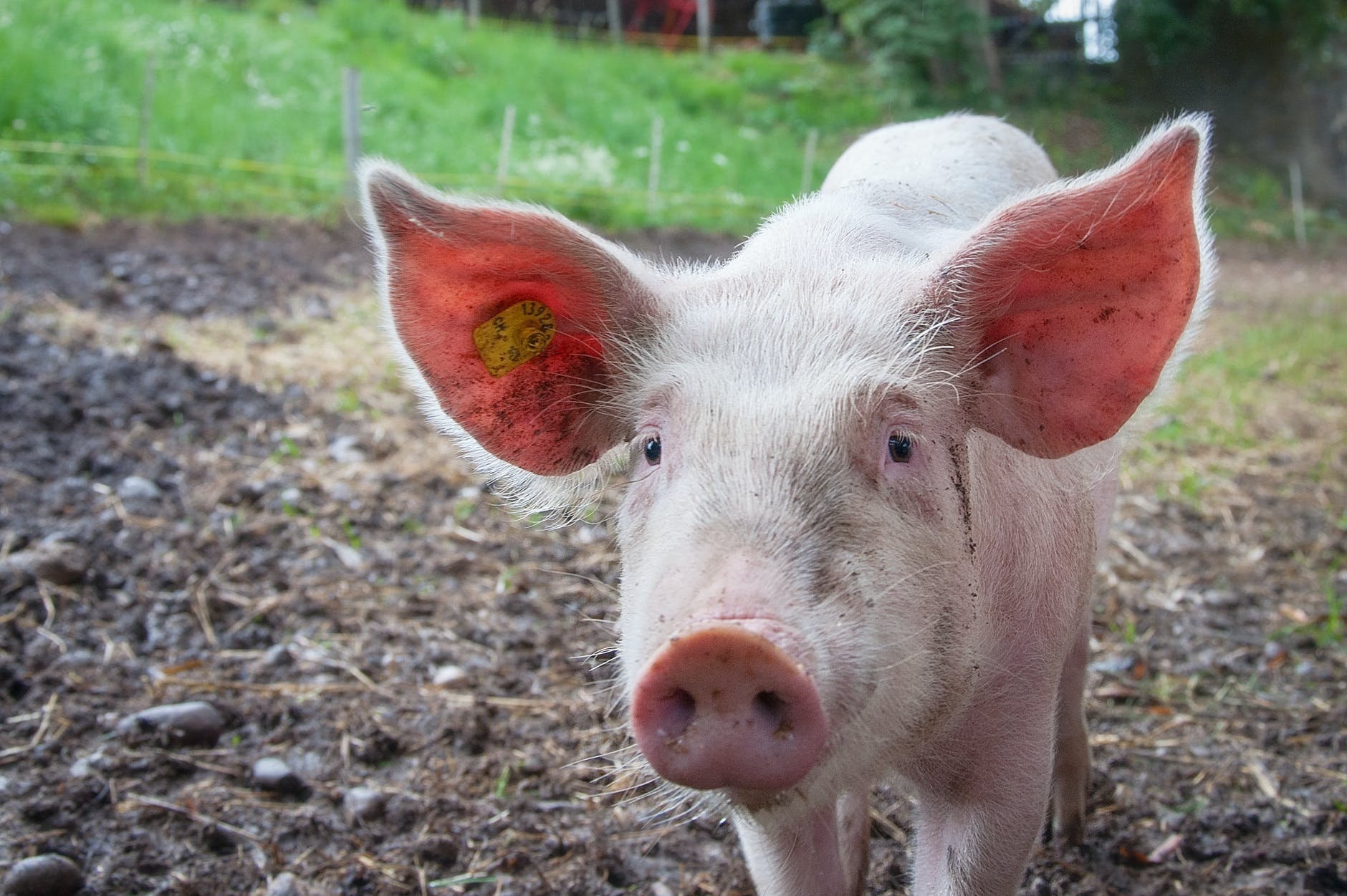
Humanity has a mental problem. We are thick. Stupid. Dumb. And vain, vain vain. Proof of this comes in a recent article by Robin McKie for the Guardian.[1] To get better yields (in this case, pigs) farmers are drenching their livestock in antibiotics. As you might guess this practice has led to a colossal rise in antibiotic-resistant organisms . Robin highlights one particular nasty called Clostridioidesdifficile which has now evolved to be resistant to all but three antibiotics. The last three, that is. After they fall, it will kill and kill and kill. Horribly.
And the stupid bit? All this over antibiotic-ing is in the name of short term yields to farmers. So they in turn can sell on cheap meat to fat bloated consumers for whom these colossal levels of protein and fat consumption are positively harmful. Please tell us: where is the intelligence in all this? And: have you ever watched a group of fatties tucking in at your local fast food outlet? Edifying, isn’t it?
Robin concentrates on C. difficile and the pig industry; but antibiotic squandering is widespread across all kinds of farming, and all kinds of resistant organisms are springing up, which you can read about here [2] in this introduction from the charity antibiotic resistance uk. There are many types of mental disorders, and we feel sorry for the individuals who suffer from them. But the worst disorder of all is plain stupidity; and we all suffer from that.
some stories which we hope will be important in the long term
Closing in on Cancer The more research we do, the closer we get to dealing with the threat of cancer. Serena Nik Zainal and her team at Cambridge University in the UK are now looking incredible detail at genomes for early warning signs of cancer. It’s a big step forward, as reported by the PA via the Guardian.
Muddy waters It’s a media cliche that England’s rivers have morphed into lifeless sewers since 2010. Maybe so; but it doesn’t have to be like that everywhere, as this optimistic report on the Thames shows. Veronica Edmonds Brown for the Conversation
Womens’ Football-Equality is the goal We’ve been reading Simon Kuper‘s excellent book about Barcelona FC. [1] For understandable historical and cultural reasons, the ladies’ section there is still a bit of a Cinderella. But, worldwide, the womens’ game is coming out of the tunnel and if the author of the next piece is to be believed, one day a ladies Barca eleven will take its proud first step onto the hallowed turf of the Camp Nou. Keith Parry for the Conversation
Could Brain Implants help the disabled? This is one we have dreamed of for a long time: artificial implants which will let apparently hopeless cases walk and talk again. We’ll pass you over at once to Nature Briefings, that most excellent of publications The Big Promise of Brain Reading Implants
Interest is surging in brain–computer interfaces (BCIs): implants that have shown promise for helping paralysed people to move, talk and touch. “I am always stunned at what we are able to do,” says trial participant James Johnson of his ability to control a computer, drive a simulated car, operate a robotic arm and play video games using his BCI. “It’s frigging awesome.” Bringing a BCI to market will, however, entail transforming a bespoke technology, road-tested in only a small number of people, into a product that can be manufactured, implanted and used at scale. Large trials need to show that BCIs can work in non-research settings and demonstrably improve the everyday lives of users — at prices that the market can support.Nature | 15 min read
These thing are what we can achieve to make life better when we put our minds to it. How much more might be possible if we did not waste all our time and money fighting stupid senseless wars over lines on maps,
[1] Barca: the Inside Story of the World’s Greatest Football Club by Simon Cooper Octopus 2022















 Learning, Science and Society