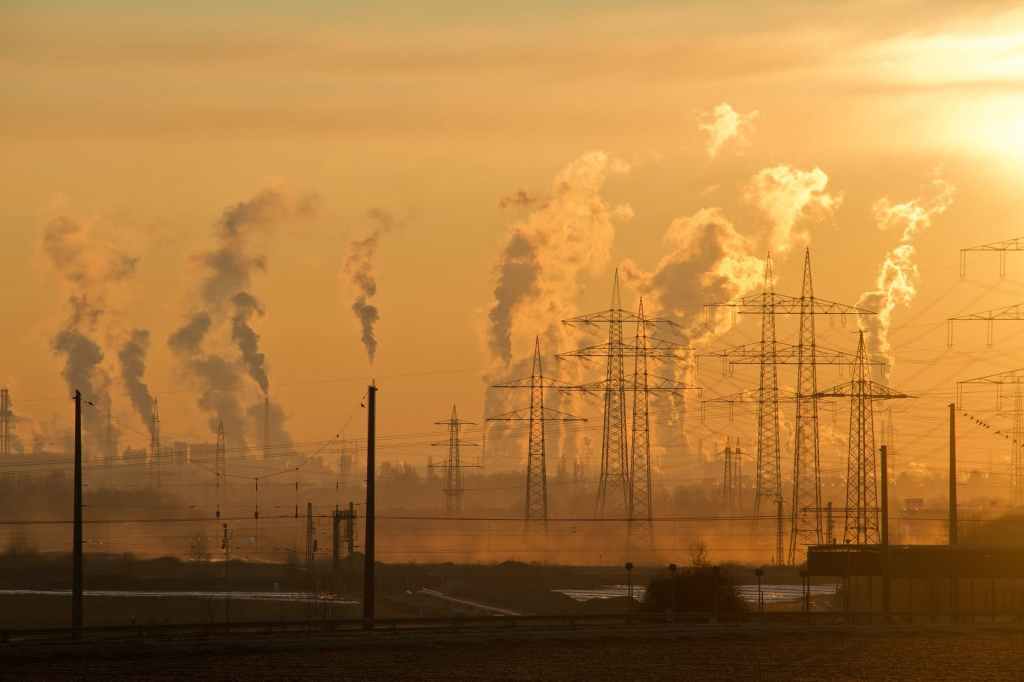
When does Democracy become Plutocracy? When there’s a SLAPP

Freedom of speech is touted a lot on social media, usually in regard to disputes over personal identity and who gets to use the bathroom. But if these keyboard tribunes are serious, why do they never mention SLAPPS and their use by the agents of foreign powers to silence the efforts of journalists and other investigators?

A little background. A Strategic Lawsuit Against Public Participation (SLAPP) is a device used by very rich men who can afford very expensive lawyers against rather poor journalists who can’t afford anything much at all. We’ve got an article from the Guardian as your first link. It’ slightly old because it mentions someone called Liz Truss (who she?-ed),but it gives a nice grounding [1] But we want to zoom in on a particular case today. It involves a man called Yevganny Prigozhin and his attempts to silence Bellingcat and its journalists. In view of Prigozhin’s current activities in Ukraine, we think the matter is especially relevant. [2]

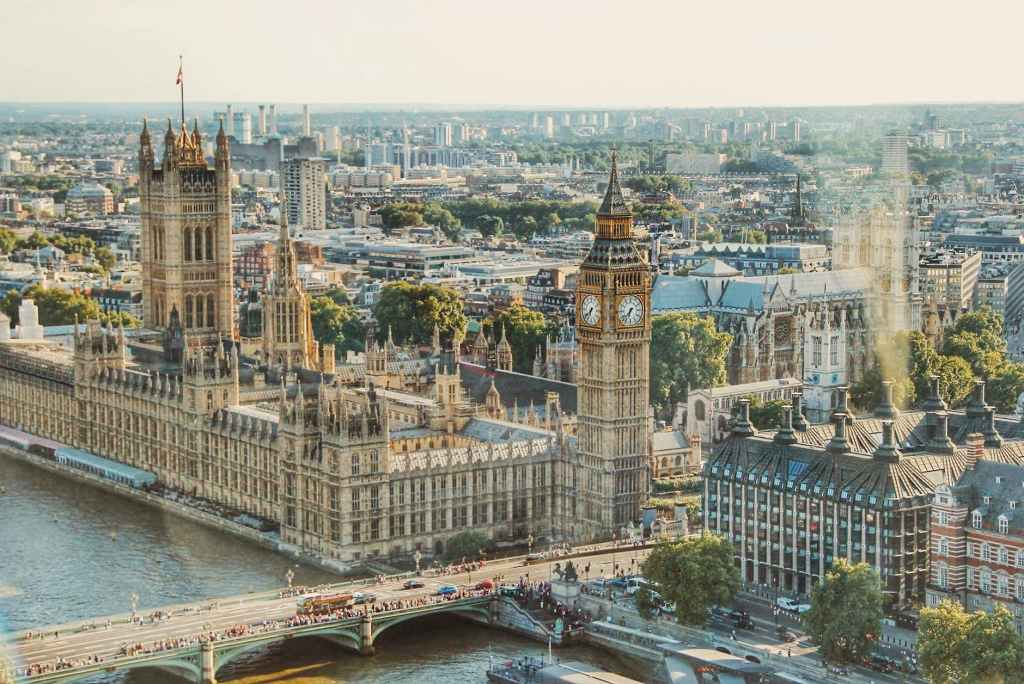
And at the risk of being Anglocentric, why London? Well, since about 2010 that city has developed an elaborate ecosystem of lawyers, fund managers, estate agents, car dealers, escort agencies and many other service industries all designed to serve the whims and needs of iterant oligarchs and their entourages. The upper layers of London society are a network of relationships, linked by common attendance at certain schools and universities, with tentacles reaching deep into government, legal system and the think tanks and media outlets that provide cover for the whole system. All that Putin and his cronies did was to seize this opportunity to make war on the west long before 2014.[3]

So let the bores on both sides of the identity debate sound off, and shout, and decry and posture, and all the other things people do in schools and universities. And long may they continue. While their freedom lasts, that is.

[1] https://www.theguardian.com/law/2022/mar/04/what-are-slapps-and-how-are-they-connected-to-russian-oligarchs

[2] https://www.opendemocracy.net/en/prigozhin-government-russia-ukraine-hack-libel-slapp/

[3]https://www.opendemocracy.net/en/yevgeny-prigozhin-putin-sanctions-oliver-bullough-eliot-higgins-bellingcat/

#putin #prigozhin #SLAPP #freedom of speech #bellingcat #opendemocracy

If you want to know more about Bellingcat, click here

ttps://www.bellingcat.com

and Open Democracy are here:

ttps://www.opendemocracy.net/en/uk/

Big data suggests link between viruses and neurodegenerative disease

Veteran readers of this blog will recall our interest in a possible link between viral infections and terrible neurodegenerative diseases such as MS and MNR.(LSS 17 1 22 et al) Now a rather exciting new study, reported in Nature Briefings, has used some big data studies to push the conjecture along just a little further. We think there’s a couple of things to be learned today, but first one of their excellent summaries, if only because it links to the main paper And it’s a good one, folks.

Researchers have found a link between common viral infections and an elevated risk of having a neurodegenerative condition, such as Alzheimer’s or Parkinson’s disease, later in life. Such links have been found between single viruses and diseases before — for example, between Epstein–Barr virus and multiple sclerosis. The new study looked more broadly, analysing about 450,000 electronic health records from Finland and the United Kingdom. Researchers caution that the data show only a possible connection, and that it’s still unclear how or whether the infections trigger disease onset.Nature | 5 min read

It’s a thorough study, because the database comprises 450 000 medical records. And those are spread over two countries. The researchers found 22 significant linkages, which constitutes 22 grounds for 22 research projects. So that’s someone off the streets. The whole thing is written up very judiciously, with plenty of criticisms and questions fairly acknowledged. Like; this is only a European study, so what about the rest of the world, where they have things such as Zika? And: what happens if you included reports from people who only had mild cases of flu, and so never went to the doctor? Does the virus cause the disease, or just trigger it? All of which proves that its early days, too early to jump to vast conclusions. But it is intriguing.

There’s a more general point as well. This research could not have happened without the use of advanced computer systems, originally developed for things like banking, mobile phones or even the military. Which only goes to show how research in one area can turn out to be ten times as useful somewhere else. Remember that the next time some slippery think tank tries to sell tax cuts as the panacea for all our woes.

#multiple sclerosis #motor neuron disease #epstein-barr virus #medicine #research

No more Antibiotics? That’ll be the last of us

Confession: we on the Editorial Board of LSS don’t do a lot of TV. But when our researchers drew our our attention to popular series called The Last of Us,[1] we sat up sharp and paid attention. Apparently the show depicts a world which has been devastated by a killer fungus. Which cannibalises its human victims from within, turning them into plague-spreading zombies. Far fetched? Improbable? Actually, such organisms already exist, as this chilling article by Fiona Jackson of the Daily Mail makes all to fearsomely clear[2]

We won’t spoil your enjoyment of Fiona’s excellent writing. But read as she riffs on one particularly macabre organism called Entomophthora moscae, which specialises in eating houseflies. Alive.

. Muscae first penetrates through the skin of the housefly before growing its way through the body, infecting its nervous system.After about a week of digesting its guts, the fungus forces the fly to ascend to a high point and spread out its wings before it dies .Next, the fungi grows an array of micro-sized stalks on the corpse, each one a pressurised cannon of liquid with a spore that can be ejected outwards. It also releases a chemical signature that acts as pheromones to lure unsuspecting males to come and mate with the infected female corpse.The males trigger the cannons, and end up coated in a spray of infectious spores which will, eventually, also turn it into a zombie housefly.

But could it happen to us? The frightening possibility is-yes, at least if we carry on the way we live now. Because human abuse of the golden treasury of antibiotics has led to the rise of series of resistant fungi. All are strongly adapted to infect Homo sapiens. And theoretically, each and any could mutate into the kind of pandemic superkiller depicted in the TV series.[3] And what is being done? Research experts are starved of funds, their efforts denigrated by politicians like Michael Gove (LSS passim) Existing antibiotics are poured into farms, to produce food no one needs. Truly we squander our inheritance like degenerate heirs, while fate creeps up, its slimy fungal fingers already closing round our throats……..(ok, that’s enough doom-ed)

But you can do something about this , gentle readers. You could pressure your local politicos to put a bit more money into research and a bit less into pointless new roads. You could even donate to organisations like Antibiotics Research UK, [4] whose volunteers are gallantly attempting to stave off the apocalyptic scenario of a world without antibiotics. But you’d better be quick. Because time is running out

[1]https://en.wikipedia.org/wiki/The_Last_of_Us_(TV_series)

[2] https://www.dailymail.co.uk/sciencetech/article-11645471/The-zombie-infection-REAL-infect-humans-experts-warn.html

[3]https://www.cdc.gov/fungal/antifungal-resistance.html

[4] https://www.antibioticresearch.org.uk/support-us/

#the last of us #fungi #antibiotic resistance #pandemic

Weekly Round Up: Is China the next Japan, integrity, blood pressure-and more antibiotic resistance

Interesting stories from the week

Japan on the wane Remember 1985, when Japan was going to take over the world? And the whole tribe of western commentators, journalists and bien-pensants in general were wringing their hands. and gnashing their teeeth and telling us the West was On the Wane? Even Milton Keynes got in the act, advertising itself by implying they were more Japanese than anywhere else. Not anymore, as this piece from Rupert Wingfield-Hayes of the BBC makes clear.

https://www.bbc.co.uk/news/world-asia-63830490

China on the wane Remember 2020 when China was going to take over the world, and western commentators, journalists and………..here we go again. At least Milton Keynes hasn’t got in on the act yet. It seems that this once unstoppable Asian giant has its woes too, and maybe world conquest may have to be equally deferred for a bit. Worrying thought: what if everybody, everywhere is in decline…….who’s actually flying this thing? Two for you on this

https://www.reuters.com/world/china/view-chinas-q4-growth-slows-29-yy-beats-expectations-2023-01-17

https://theconversation.com/why-chinas-shrinking-population-is-a-big-deal-counting-the-social-economic-and-political-costs-of-an-aging-smaller-society-198056?ut

thanks to P Seymour

Scientific Integrity on the wane Imagine if you could have approached Watson and Crick and bought yourself an author’s credit on their groundbreaking DNA paper. You could have dined out for life. Nature is worried that something like this might be starting to happen. Imagine if the same practice were extended to celebrity mags, fashion, and the sports press! Then we really would be in decline. Authorship Sale has become big Business

Research-integrity sleuths have discovered hundreds of online adverts selling authorship on papers that are about to be published in reputable journals. This trade is big business: a preprint analysis of more than 1,000 author-position offers from one website valued them at an estimated US$6.5 million. Journals have begun investigating and retracting papers that seem to be linked to adverts. The problem will grow, says economist Anna Abalkina. The market for authorships has developed because, in many countries, researchers are still promoted on the basis of the number of papers they publish.Nature | 5 min read
Reference: arXiv preprint (not peer-reviewed)

Blood Pressure-are you on the wane? Getting your blood pressure wrong is a sure way of doing yourself no good. Now some ingenious doctors have come up with a way of not only measuring, but may be even curing, it. Good news. Is the Mail trying to make up for its performance on MMR?

https://www.dailymail.co.uk/wires/pa/article-11640999/10-minute-scan-detect-cure-common-cause-high-blood-pressure.html

At last! One about not being on the wane! We’re still worried in these offices about the hoary old problem of microbial resistance to antibiotics. Now a technique has come along using genetically modified bacteria which may offer some hope. Hannah Devlin for the Guardian

https://www.theguardian.com/society/2023/jan/19/gm-bacteria-could-combat-antibiotic-resistance-study-suggests

Marrakesh Memories Younger readers will recall their grandparent’s tales of the 1960s and what it was like to be a hippy. So in the week David Crosby died, we’ll pick out the old anthem Marrakesh Express, with this question. Was he related to Bill? Or Bing? Or Crosby in Lancashire. We’d like to know

#blood pressure #antibiotics #china #japan

Friday Night Cocktails: South of the Border….

…….down Mexico way, /that’s where I fell in love, when stars above came out to play/And now as I wander, my thoughts ever stray/South of the Border, Down Mexico way………………

So ran the 1939 Gene Autry hit which older readers will still remember with nostalgia (we’ll come to that infamous puzzling last verse later) Because tonight’s cocktail choice is Tequila. We chose this to celebrate a bottle of it which we bought in Islington twenty years ago and which still remains unfinished (LSS is not an alcoholic website). Tequila is the national drink of the sunny land of Mexico. Its provenance its strictly protected by all kinds of laws, as you might expect. And it has kicked off many a fine start in those cheerfully themed restaurants which are guarantee a wild Friday night out across many of the great cities of the world. And a huge hangover on Saturday morning. We link to Wikipedia for those interested in the history of this famous beverage.[1] But to close down one question: no, that funny little worm is not de riguer, it’s just a marketing ploy introduced by certain brands and suppliers to beef up their street cool. Meanwhile we’ve got three of our favourite recipes for all you, all adapted from our old Favourite , Hamlyn’s The Ultimate Cocktail Book, which oddly enough dates back to the same age as the aforementioned bottle.

Tequila Sunrise Let’s start with the big one, made even more famous by the Eagles in their evocation of the sybaritic Californian lifestyle. Take 6 ice cubes and pop them into your shaker. Add 2 measures of tequila, 3 measures of fresh orange juice (try not to use Spanish, in case the Mexicans are still sensitive about their former colonial status) Shake ’em, but don’t break ’em. Add to a tall glass which already contains ice. Now add 2 teaspoons of grenadine (you can nearly always find it in Waitrose) stir gently, and serve it up.

Margarita Our Spanish is a little shaky, but we think this means “Margaret” which sounds decidedly less exotic. Anyway add mucho hielo (plenty ice) to your shaker, followed swiftly by 1.5 measures of fresh lime juice, 2 measures of Cointreau and 2.5 measures of tequila. Shake and put to one side, briefly Now take one of those funny margarita glasses and spread salt around the rim before adding the contents of your shaker, Serve with a straw and decorate with a slice of lime. Well, that’s better than stuffing it into the neck of a corona bottle. Why do people do that?

Tequila Cocktail Put 4 ice cubes in a shaker. Add 2 measures of tequila, 1 of port, 0.5 measures of fresh lime juice and flick in two dashes of Angostura. Shake and serve over the ice, decorating again with a slice of lime.

Okay, so now back to Gene and his song. 1939 was still a pretty straight-laced, buttoned up sort of time when certain things were just never mentioned. So what did he mean by:

For it was Fiesta, and we were so gay/south of the border, down Mexico way

?

We leave it for you to speculate

[1]https://en.wikipedia.org/wiki/Tequila

#mexico #tequila #cocktail

Neanderthals show us how to fight off Alzheimers (with some help from Jimmy Osmond)

It’s January and the media is full of New Year Resolution tropes. How to Manage your Money better. How to Lose Weight. How to Drink Less. (that’s a bit cheeky from a journalist!) A big favourite this year is how to ward off dementia and Alzheimers, which we found in the Daily Mail. Though why their readership might be interested we cannot imagine. And one of the tips we found in there was: keep your brain alive. Challenge it with new things. So dare we, gentle readers, add our own voice, a sort of friendly suggestion, in this general spirit of helpfulness?

If you really want to keep your brain alive, remember that everything you learned fifty years ago is probably wrong, or at least stands in need of serious revision. Let’s take Neanderthals as an example. Fifty years ago they had a terrible press. Nasty, stupid, primitive and utterly without learning in Sciences or the Liberal Arts was how they came across. The very word “Neanderthal” was used as a term of abuse. To describe the supporters of certain football clubs in South East London, for example. Now all this prejudice has been upended, as this article [1] by Paul Pettitt of The Conversation explains. Alright, there were no galleries, art critics or summer shows. But there was plenty of art for art’s sake, and that’s what really counts. Combine that with the genetic discoveries of the ingenious Dr Paabo and you get the picture of a close relative that was hardly different at all.

What’s true in Paleontology is probably true for most things: Economics. Information Technology, Medicine, anything really. Take music for example, and look at our link to the UK chart from this day in 1973 [2] Did Little Jimmy Osmond really say the last word in music? Do you still listen to Blockbuster by The Sweet? If so, how often? Do your grandchildren, and great grandchildren, greet Wizzard‘s Ball Park Incident with the same enthusiasm as you do? If you really want to keep those old grey cells alive, start by questioning everything you know. And keep going.

[1]https://theconversation.com/neanderthals-the-oldest-art-in-the-world-wasnt-made-by-homo-sapiens-194113?ut

[2] https://www.officialcharts.com/charts/singles-chart/19730114/7501/

#dementia #alzheimers #neanderthal #art #little jimmy osmond

Poverty and mental health: the implications are enormous

We’ve always suspected a connection between stress and health on these pages (LSS passim). And sharper minds than our own have long advocated a link between the stresses of poverty (hunger, violence, cold etc) and later mental health outcomes. A flick through the literature reveals a torrent of studies; this example from Sage is just a jumping-off point [1] But this excerpt from it summarises the situation admirably:

While a link exists between poverty and mental health, little is known about how experiencing material hardship, such as insecurity of food, housing, utilities, and medical care, throughout early childhood affects adolescent mental health.

So far, our learning is statistical and inferential, and those with a vested interest in maintaining these deep inequalities can hade behind the fact that no individual case can be causatively linked to the general problem. Much as they did with tobacco addiction and climate change, in fact.

But researchers in the United States are on the verge of establishing a direct and demonstrable neural pathway which explains the phenomenon. Writing in New Scientist, Grace Wade explains how researchers at UC Irvine are working on a direct link between the basolateral amygdala, the brain organ that mediates stress stimuli, and the Nucleus accumbens, the region that deals in pleasure reward all things dopamine-related. [2] It’s early days and so far the studies have only been done in mice. But if proved the implications for how we organise our societies are profound indeed.

Because up to now, the dominant political modality has been that tolerating enormous inequalities is worth it, because of the favourable outcomes it produces. Let the rich get as rich as they possibly can: if the rest exist in a hungry, stressed-out netherworld, that’s too bad- they’re still better off than they would have been otherwise. But if all society can do is turn out a race of stunted, damaged individuals, what quality of life is that? What’s more: a provable demonstrable pathway gives grounds for legal suits against the advocates and operators of such systems. Those who own right wing news channels, newspapers or fund “free market” think tanks will need to act quickly to suppress this research, discredit its authors and distract attention from it as quickly as possible. Where would they be if we solved poverty and global warming?

Warning: some of these links are a bit paywalled, and may require registering or other fiddly stuff

[1]https://journals.sagepub.com/doi/10.1177/0044118X211001896

[2] https://www.newscientist.com/article/2353702-we-may-now-know-how-childhood-adversity-leaves-its-mark-on-the-brain/

[3] https://www.biorxiv.org/content/10.1101/2021.07.28.454015v1

for a general read on the effects of inequality and poor health we recommend The Spirit Level byRichard Wilkinson and Kate Pickett Penguin 2009, which we’ll link to via Goodreads, to keep things fair and equal, as t’were

https://www.goodreads.com/book/show/6304389-the-spirit-level

#mental health #environment #poverty #inequality #neurology #dopamine

Will 2023 be the last year you enjoy privacy?

Remember 1999? The internet was pretty cool then wasn’t it? Everyone went on to show how advanced they were over fuddy-duddy old newspapers and holiday bookings, or to look for lost loves, who turned out be a little tired and aged-looking, to put it mildly. Since when, we have all blithely loaded everything-bank and financial records, medical reports, legal documents, and gigabytes of sensitive commercial information. A whole technology has grown up to support this need, with bits like satellites, clouds, servers, cables and all kinds of tecchy stuff that only people with serious deficits in their social lives can understand. And all of it protected by cryptographic algorithms, which are entirely proof against hacking and cracking. Or so their creators blithely assure us.

Up to now, that is. Because the power of Quantum Computing [1] is soon going to be so awesome that it will slice through current defences faster than a journalist through a bottle of gin. We’ve a couple of links to bring you up to speed today, including an excellent baseline articles by David Castelvecchi for Nature. [2] We’ll let our experts expound on the technical stuff, because what we want to do here is concentrate on the social implications. Clearly no company, institution or Government Department is going to be safe. As for individuals- your bank accounts savings and identity documents will all be wide open. So will e mails and posts on things like whatsapp. You may have undergone medical procedures which are unknown to current partners or employers. Visited web sites or carried out searches which were entirely private. They will not be so any longer. Intimate pictures of friends and family, even addresses will be public. And if you’re thinking “I’ll be careful in the future, but no one will see what I’ve done up to now”, think again. As David points out, teams of hackers are already gathering data on everything that’s already going on, so they can break it when the quantum algorithms become available. And when we consider that the best and most ruthless hacking teams are based in Russia and its satellite nations, we cannot assume this power will be used for the good.

Could any good come of this? According to a leading entrepreneur in computer technologies told us that 25% of the world’s power consumption goes on the internet. If it collapsed, that might get us a long way nearer our targets on global warming. Something to think about indeed.

[1]https://en.wikipedia.org/wiki/Quantum_computing

[2] https://www.nature.com/articles/d41586-022-00339-5

#quantum computing #algorithms #encryption #privacy #hacking #cyber security

Weekly Round Up: Predictions, Essays, Conspiracies, Bees

interesting items from a week of news

Saw it coming? Did Exxon Mobile know all along about climate change? Could they, should they, have said “hey, guys-there might be a problem here!” a little more loudly? Try this from the BBC

https://www.bbc.co.uk/news/science-environment-64241994

Write me a thousand word essay.….ever since the dawn of time, schoolchildren everywhere have groaned beneath the burden of those dread words. Even when they took you for a day out at the Natural History Museum or Sandown Races, the teachers at our school could not resist spoiling everything with that baleful command. Now comes a machine which ends all that drudgery. We say: what’s not to like? The Guardian is a little more nuanced, however:

https://www.theguardian.com/technology/2023/jan/13/chatgpt-explainer-what-can-artificial-intelligence-chatbot-do-ai

Conspiracy Antidote? It’s not what people say they believe. it’s the deep psychological reasons about why they try to believe it that is the problem. A truth George Orwell realised more than eighty years ago. The Conversation has ideas about how we might start to tackle this major problem of out time.

https://theconversation.com/bullying-power-and-control-why-people-believe-in-conspiracy-theories-and-how-to-respond-194227?utm_med

Bee aware No bees equals no pollination equals no crops equals starvation. It’s as stark as that. Now at least there is some hope that humanity is paying attention to the plight of our buzzing friends,to whom we have done so much to harm. Here’s Nature, First Vaccine for Bees

The world’s first honeybee vaccine has been approved in the United States. It prevents American foulbrood, a highly contagious bacterial disease that reduces larvae to brown goo. The vaccine contains a dead version of the bacteria, and is incorporated into the royal jelly that worker bees feed to the queen. The queen deposits the vaccine in her ovaries, which gives the developing larvae immunity.The New York Times | 5 min read

Medical Disputes As the UK is racked by disputes between Government and medical unions, we thought that Mr Rishi Sunak might like this one from Robert Palmer, before he and they go into the negotiations, or get round the table, or whatever it’s called. “doctor, doctor, give me the news” the PM might well say

#chatbot #global warming #climate change #big oil #AI #bees #agriculture #conspiracy

Drinks Night: St Benedict and Moist January

LSS is not an influencer website and receives no reimbursement, financial or otherwise, from products mentioned herein

When St Benedict of Nursia founded his Order around AD 500, he did so in an intensely practicable way As Professor Davis[1] tells us, before Benedict had his way monasticism was more like a reckless competition for feats of endurance among lonely ascetics, with little regard for the practical aspects of life , or how it might benefit the wider community. But by reducing the severity of the rules, and making community life more agreeable, Benedict founded an order which became the guardian of learning, and a considerable refuge of economic know-how, throughout the Middle Ages.

There was in fact a spirit of humanity in St Benedicts Rule: it did not attempt to make the monastic life more difficult than was necessary (p71)

Now all of us know we must cut back from the excesses of the recent holiday period. And there has been much discussion of the so-called “dry January” whose acolytes are enjoined to eschew the demon booze for the whole calendar month. But-is it feasible? Is it practicable? What would St Benedict have said? It is in his spirit therefore that we avow the institution of a moist January, when drinks are modest and restraint at a premium. And we instituted a survey of friends and readers to see what they thought and suggested.

A number of Christian readers opined that there was no need for a dry January at all, citing the Miracle at Cana (John 1:32) as proof that wine may be enjoyed in moderation at all seasons. Those of other faiths, or none, had thoughts as well. Bill from Kent recommended Schonhoffer wheat Beer at a modest 2%. Lindsay, who also hails from England’s garden, offers the whole Majestic Wines website https://www.majestic.co.uk. They seem to have a whole range of low alcohol stuff. Jill of Fulham points us to the free newspaper put out by the Waitrose chain of supermarkets, tps://www.waitrose.com/ecom/shop/browse/groceries/beer_wine_and_spirits/low_alcohol_and_alcohol_free_drinks A view at least partially endorsed by Morag of West Sussex. Margaret of Dorset liked Beck’s Blue lager. If you must “Go Total” then Gaynor of London suggests Badoit water, while Nigel of Sutton Coldfield suggested Gordon’s Alcohol free Gin. Alcohol free Gin and Tonic ? To us it’s like the Himalayas with no Yeti. Something rather special is missing, however good the other parts might be. Finally Karen of Sussex chimes in the two beers: Erdinger and Bud Light.

Well ,that is just a cut-down version of our vast international intercontinental survey. Whichever Rule you decide to follow, Dry, Moist or Standard, we wish you a happy weekend and welcome to the First Friday Night of this New Year.

[1] RHC Davis A History of Medieval Europe Longman 1989

#dry january