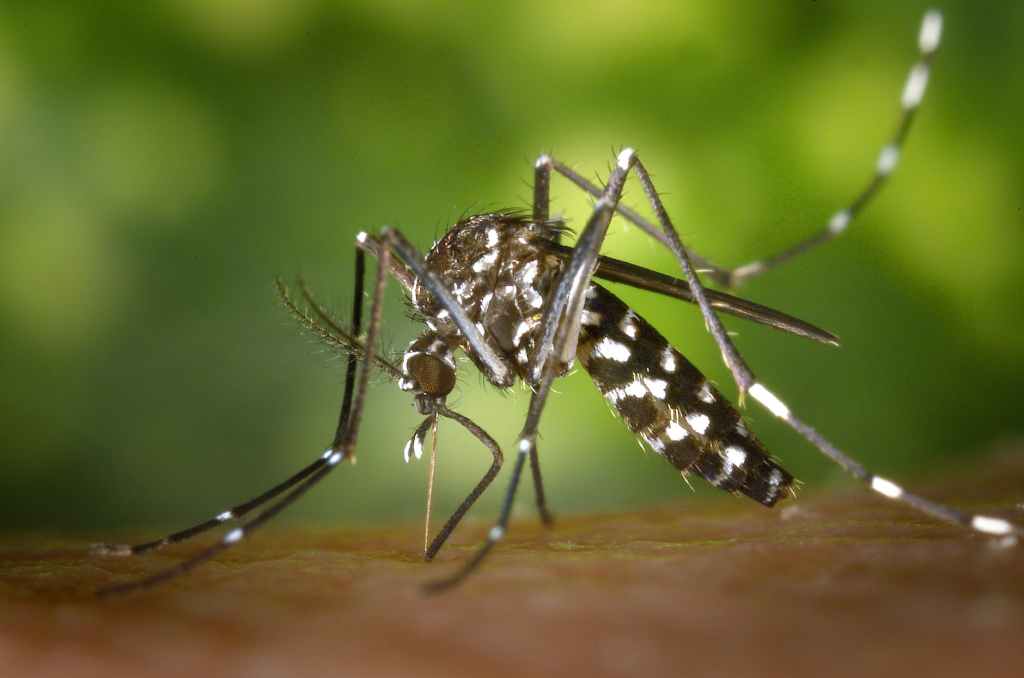
Dengue fever. Chikungunya. West Nile Fever, and many more. When we were young, they were things you read about in geography text books, or heard in tales told by old Empire hands returning from a working life in the tropics. Not any longer. There’s pretty strong evidence that, thanks to our old friend climate change, these diseases are spreading north. So are the insects that spread them, both into Europe and into the United States. [1]
Our base line reference today is Nature Briefings which links to an excellent article from their main Journal. [1] Here is an excellent summary from Briefings
Climate change, international trade and travel are bringing the vectors of debilitating and sometimes deadly pathogens to Europe. And other parts of the non-tropical world that have previously had the luxury of not worrying about neglected tropical diseases — including the Gulf Coast of the United States — are experiencing similar issues. (Nature | 11 min read)
But the real joy of both these pieces is the infographic which they have provided, which lets you follow the progress of these organisms over the last few years.
Now, it’s not all gloom and doom- yet. Only West Nile Fever seems to have established itself so far. Other nasties like Chikungunya and Dengue are still only occurring as isolated incidents, although the trend is undoubtedly worrying. And there are steps we could take, like developing new vaccines. But the real answer is simple. Get rid of fossil fuels. As soon as possible.
We love it here when someone shows us a truth we’ve missed. One that was staring us in the face all along. And Professor Erwin Reisner of Cambridge University is just such a man.
We all know that burning fossil fuels is starting to kill us. We all know we’ve got to look for new technologies-fusion, solar, wind, that sort of thing. And we all know how difficult it will be for certain industries, especially transport, to make that transition. Because nothing is quite like breaking carbon bonds to release the sudden bursts of energy you need to push a planeload of people from Paris to New York. What if there were a way to make combustible fuel, at least enough for say aviation and shipping, without producing vast tonnes of CO2 as a by product?
Well, the Professor and his team appear to have done just that, according to Robin McKie of the Observer[1]. By using materials called perovskites [2], they hope to create huge floating leaves, a bit like those giant water-lilies you see in Kew Gardens, which will convert sunlight and carbon dioxide into precursors of combustible fuels. We won’t spoil Robin’s article-it’s a great read, and he once replied to one of our fan letters! But get this killer quote:
……..”we use sunlight to power these transformations,” said Reisner. “And the chemicals that we make this way have already been used to manufacture feedstocks, though it is fuel – like diesel or petrol – that we really want to target. One goal would be to make green sustainable kerosene for the aviation market”.
It’s clean. it’s green and it’s already been tried. Obviously we would like to know about things such as safety, scalability, toxicity and the resilience of the systems in a strong coastal storm. But never say we spend all our time here gloomily preaching doom, like some latter-day Salvian. For here is real hope.
Simon Kuper At last common sense on the interminable conflict in the Middle East! Fortechno/ legal reasons, we may not adduce a direct link to his article What George Orwell could teach us about Israel and Palestine (those are the names the combatants have chosen for themselves). But we can praise its cool objectivity, and have dared to offer this tiny extract in the hope it will whet your appetites
…….”Those now treating the Israel-Palestinian conflict as an emanation of themselves aren’t seeking truth. They know the truth before it happens, because they picked their team long ago. Everyone on Team Israel is sure Israel didn’t bomb the Gaza hospital; Team Palestine is sure it did……….
we urge you instead to put “SIMON KUPER ISRAEL FINANCIAL TIMES” into Google or a similar search engine and it should give you unfettered access to his full text
We feel pity for the sufferings of those on both sides. But we feel greater pity for the lost opportunities and the utter retardation of economic and intellectual progress which their mutual quarrel has inflicted on them both. It’s a twentieth century conflict in a twenty first century world.
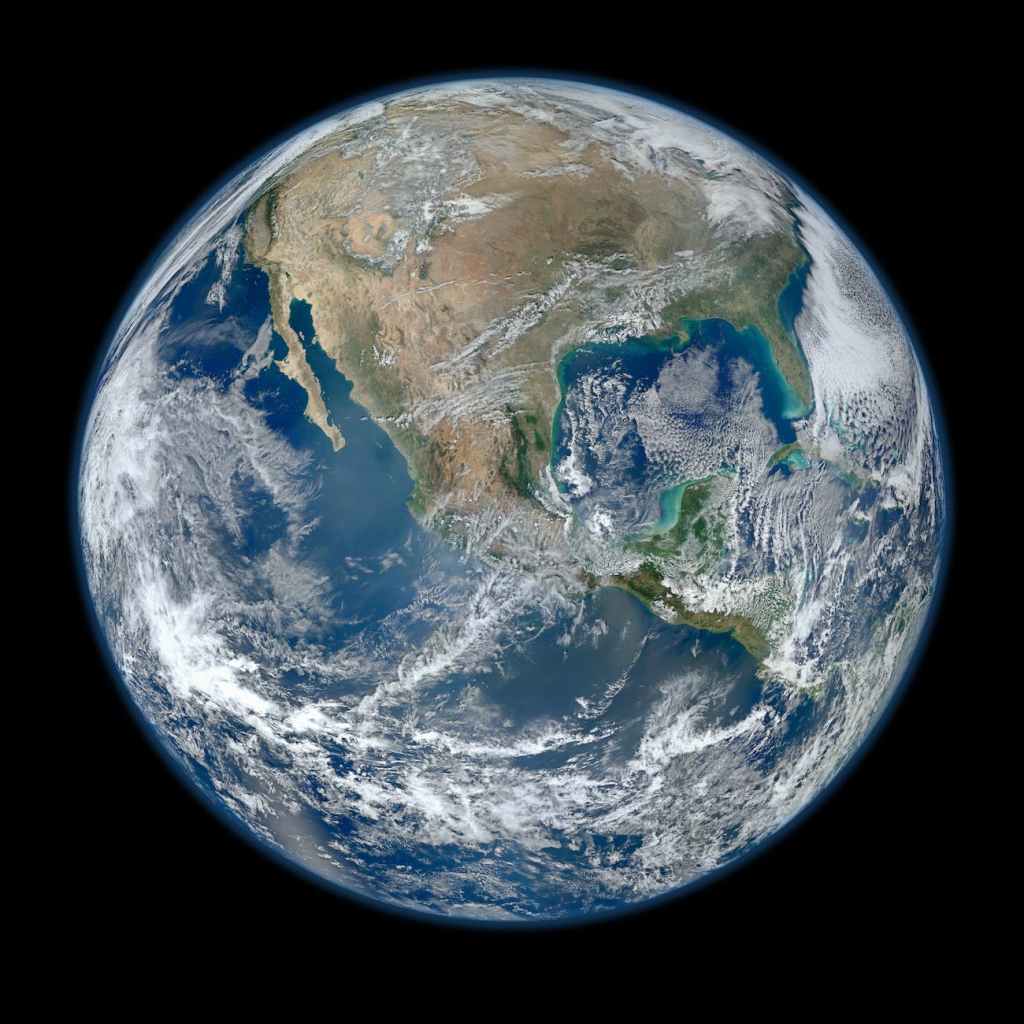
Frank Borman For those who were alive, and watching TV, during that fate charged Christmas of 1968, the voyage of Apollo 8 will remain one of the most moving memories of their lives, as Frank Borman, William Anders and James Lovell broadcast their message in one of the earliest collective experiences which technology had gifted to humankind. Yet the best was yet to come. On returning to earth, it turned out that Anders had snapped what has been generally acknowledged to be the greatest photograph ever made. Sitting at what was then the pinnacle of human achievement, it showed a distant world: at once small, vulnerable, crowded and incredibly precious. It is still the symbol of hope that one day reason may prevail, and we could yet achieve that sunlight world which human learning offers us.
What do people really want? One answer is to live as long as possible-and to have that time free of pain and illness. Alright, it won’t please every philosopher and wannabe theologian, but it’s a good rule of thumb for practical people. And is it achievable? Sometimes yes-if we follow the following rules. 1 Find evidence. 2 Analyse it logically. 3 Spend money on #1 and #2, and apply the results. Our researchers have come up with two examples for you this week.
Diabetes is a terrifying disorder that keeps its sufferers only a few hours from death-at all times. Think about that one. The advent of insulin was certainly a game changer, but that was over 100 years ago. Now sufferers are to be offered an artificial pancreas which not only monitors blood sugar levels, but delivers just the right amount of insulin exactly when needed. In the UK it should soon be available on the NHS, and we hope it will be coming soon to your country, gentle reader. Don’t take our word for it- try the thoughts of Stephen Matthews of the Daily Mail
Nothing is worse than seeing a woman’s life torn apart by breast cancer. Years of research have been poured in, and at last we are seeing results. Anastrozole is not only to be used as treatment, it is about to take its place in the UK as a preventative drug, which could avoid the condition in thousands of women. Emily Stearn of the Mail gets the credit for this one
Lets pause to thank all the scientists, IT experts, health workers and charity donors who made this possible. What would have happened instead if we had told them they hated each other, put them in uniform, and sent them off to war?
Will they read this in the Middle East?
diabetes #insulin #pancreas #breast cancer #anastrozole
Old hands on the LSS website will recall our constant advocacy of bacteriophages as a complement to the development of new chemical antibiotics. Just one of our little hobbyhorses, and like all hobbyhorses, it comes with limitations. One of which is that many diseases, both of humans and other living things, aren’t caused by bacteria. They’re caused by viruses.(Remember Covid-19, anyone?)
Up to now the best way to deal with viruses is by vaccination. But what if we could open a second front, as t’were? If viruses can attack bacteria and take them out for us, could they do the same job on other viruses? Fortunately the answer seems to be “yes”. We have two pieces for you today, gentle readers. One from the indefatigable Stacey Liberatore of the Mail, and one from National Geographic, which more than hint at the possibility of developing virus hunter killers, “virophages”, if you will, that will provide a true 21st century addition to our pharmacoepia.[1] [2]
One thing is certain; very little progress on this will come from the Middle East, where they spend all their time and money on ancient intractable feuds. The rest of us will have to take up the slack.
Whisper it, but the United States is closer to collapse than you think. News that Joe Biden is now polling behind the execrable Trump in five key states suggests that by 2025 that nation will experience a series of political and constitutional convulsions unequalled since their Civil War. We might regret this bitterly for our many American friends, and for the loss to humanity of its “last, best, hope.” But we here must look to out own interest. Frankly, the outlook is bleak.
Since 1940 (many would argue 1917), the UK has looked to the USA as the ultimate guarantor of both its frontiers and economic sufficiency. The comfortable classes quietly traded their sovereignty for the possession of their fine lawns and houses. The lower orders enjoyed a continuous supply of cheap hamburgers, garish films and narcotics. For the governing classes, the illusion of importance afforded by participation in military enterprises and things like Five Eyes. Yet it would be insane to get into bed with an authoritarian Trump regime, which in any case might soon find itself embroiled in a nuclear war with Iran and its backers. So-what to do?
The UK is now a small, rather insignificant island, in a world of giants. Yet for the first time since 1940 it would be truly able to consult its own interest. Our governing classes(by which we mean politicians, civil servants, academics, and maybe even a few journalists) must now think the unthinkable. They must answer, at least in theory, these questions. Who are our best possible allies? Where are our best trade routes, and how might these be secured? Which nations or religious groups offer the principle threats, both internally and abroad? How might the UK economy be best tuned to ensure maximum chances of survival? Let us hope that they can rise to the challenge
A huge mass grave in Alava, Spain appears to mark the site of one of the first great battles. Not in History, but Prehistory. For this was the Neolithic, 5400 years ago when there were no books or Youtubers. According to Miguel Criado of El Pais,[1] there are hundreds of jumbled skeletons many bearing trauma wounds; many others probably died of bleed wounds which left no mark on the bones, according to the experts. No monument marks their passing. The Cause for which they died remains unknown.
Did they march to battle singing tribal songs, marking the rhythm of that last journey? Were there elite units of spearmen and bowmen, eager to win glory? Were there reluctant recruits, thinking of families and the girl they left behind? Were the words of the tribal elders still echoing in their minds, with tales of the enemy’s iniquity, and of their own righteousness and good? Let’s hope the tales were worth dying for, so it wasn’t all in vain.
That war is over now, Whatever it was about-land rights, grazing, religious practices- must have been forgotten thousands of years ago. By the time the Iberians of the Iron age arrived, the graves were long overgrown, and they never knew what had happened. And so it was with Phoenicians, Carthaginians, Romans, Visigoths, Moors, Castillians, and moderns who passed over the land in utter ignorance of that day of fear and savagery so long before. Gone. Forgotten. Blown away in the dust of history. Actually, it doesn’t seem to have mattered much at all in the bigger scheme of things.
Bankman Unfreed A very experienced fund manager once told us “Cryptocurrencies are more like a special type of derivative than another sort of money” If his advice had been followed, maybe investors would have approached this new market in very different ways, and a whole lot of trouble like the FTX Sam Bankman-Fried imbroglio could have been avoided. We don’t give investment advice, but one long-held theory of ours seems to have been born out: dressing down like the kids does not automatically confirm that you are a disruptive genius
Four Stunning Birds A good news story for once. According to the UK Rare Birds Breeding Panel, four iconic species are making a comeback. They are Ospreys, White Tailed Eagles, marsh harriers and goshawks. A rare boost in a country whose natural environment is so shamefully depleted
I’m Free to do what I want, any old time sang the Soup Dragons in their memorable 1988 hit. But-how free are you really? An interesting question for Robert Sapolsky in the Atlantic If you doubt the authors Bona fides, just remember what you said last time someone offered you a chocolate biscuit.(warning: you may have to jump a couple of those free trial hurdles to get at the whole of this one)
Ghost Planet We have always been fascinated by the hypothesis that the moon is the result of a cataclysmic collision between Earth and another large planet. Further support comes from reports that bits of the intruder are lying deep in our mantle. Real George Pal stuff! Strange Mantle Blobs are relics of our collision
Two mysterious blobs of rock in Earth’s mantle could be remnants of the planetary smash-up that formed the Moon. The formations sit in the layer between the crust and the core, are thousands of kilometres long and are slightly denser than their surroundings. Computer simulations suggest that they are from the protoplanet Theia, which smashed into Earth 4.5 billion years ago. Some of Theia’s remnants were flung into orbit, where they coalesced into the Moon.Nature | 4 min read Reference: Nature paper
Winds of Change Thirty years ago and more, climate experts predicted that we would see a growing frequency of ever more severe storms. That’s the thing about science-it makes predictions that you can test. Sadly, they were right:
Two from the Zoo AI isn’t all bad, as it may help the Zoological Society of London in its efforts to conserve a few fragments of our planet’s heritage. Here’s how:
Meanwhile, ZSL’s decision to set up Whipsnade in 1931 was one of the most humane and progressive in Science. So we thought we’d give them a free plug. If you live anywhere within 200 miles of that magnificent park on the Chilterns, read this:
Talk to young people today (sometimes we have to) and the first thing out of their mouths is “Cool it, Daddy-oh! CRISPR Cas-9 is so, like, square! These days, all the Real Cats are heppin’ to Base Pair Editing!”
Not so fast, young friends! For news reaches us the the Food And Drug Administration of the United States may soon give the go ahead to the first treatment using CRISPR Cas-9. We follow the story from Iker Seisdedos of El País,[1] and it’s a good one. For what the creators are offering us is nothing less than a potential, once and for all cure for sickle anaemia, that painful and debilitating disease which has afflicted so many of us for thousands of years. The companies, Vertex and CRISPR Therapeutics put their case yesterday and it looks as if the FDA will give the go ahead for the next stage of trials. Possibly as early as December.
The technique is both simple and ingenious. As every school child knows, sickle cell is caused by a defect in gene BCL11A which controls the production of vital haemoglobin proteins. The trick is to extract stem cells from the patient’s bone marrow and edit the gene using standard CRISPR Cas-9 techniques, so they can now produce the correct form. The edited cells are returned to the patient where they will take over in the marrow, and start producing the good protein. And get this-once set up, it ought to stay established for life.
How well we achieve when we use the tools of observation and reason! Compare that with the destruction and waste effected in certain parts of the world by ancient religions and emotionally driven behaviours. And ask yourself “where will my true interested best be served?”
Our link today is in Spanish. so you’ll need a translator. But if you really are a lazy monoglot old anglophone, well, here’s one just for you. [2]
High Streets: A death foretold? We’ve done a couple of pieces about the slow decline of High Streets, as shops give way to the Internet. But all is not doom and gloom-maybe these places can rediscover their mojo as community centres, which we think is the really important bit. Here’s the Conversation:
Red is not dead We kind of took it for granted that Mars was devoid of geological activity, which explained the feckless way they lost their atmosphere. Not So! cries Nature Briefings. Planetary Science always has a surprise in store, as does everything else. Unfortunately!
In the interior of Mars, a layer of molten rock envelops the liquid-metal core, which is smaller than previously thought. Scientists discovered the unique layer by analysing the seismic energy that vibrated through the planet after a meteorite impact. The seismic waves’ speed depends on the types of material that they are travelling through. The molten-rock layer might be left over from a magma ocean that once covered the planet.Nature | 5 min read References: Nature paper 1 & paper 2
Two steps forward, one back…. Remember all those scare stories that renewables were never going to be a practicable proposition, and we would be stuck with filthy mineral oil forever? It was all rubbish, and at last renewables seem to be getting the edge. Just not fast enough, according to this story from the BBC
Only the Lonely Spare a last thought for this poor Scottish sheep, apparently marooned without a flock of fellow creatures, or humans. Will anyone claim her? The Guardian


















 Learning, Science and Society