Air Pollution: what’s the worst bit?

We do quite a lot of pollution stories here. Too much carbon dioxide and methane are wrecking the climate. Too much sewage is turning the seas toxic. But there’s one area we haven’t covered enough. The effect of air pollution directly on our lungs. According to the latest report from the UK Government (which, after 14 years of Conservative rule can hardly be a bastion of woke tofu-eating commie liberals):

Epidemiological studies have shown that long-term exposure to air pollution (over years or lifetimes) reduces life expectancy, mainly due to cardiovascular and respiratory diseases and lung cancer. Short-term exposure (over hours or days) to elevated levels of air pollution can also cause a range of health impacts, including effects on lung function, exacerbation of asthma, increases in respiratory and cardiovascular hospital admissions and mortality.[1]

It is estimated that air pollution in the UK may be causing up to 36000 excess deaths per year. 

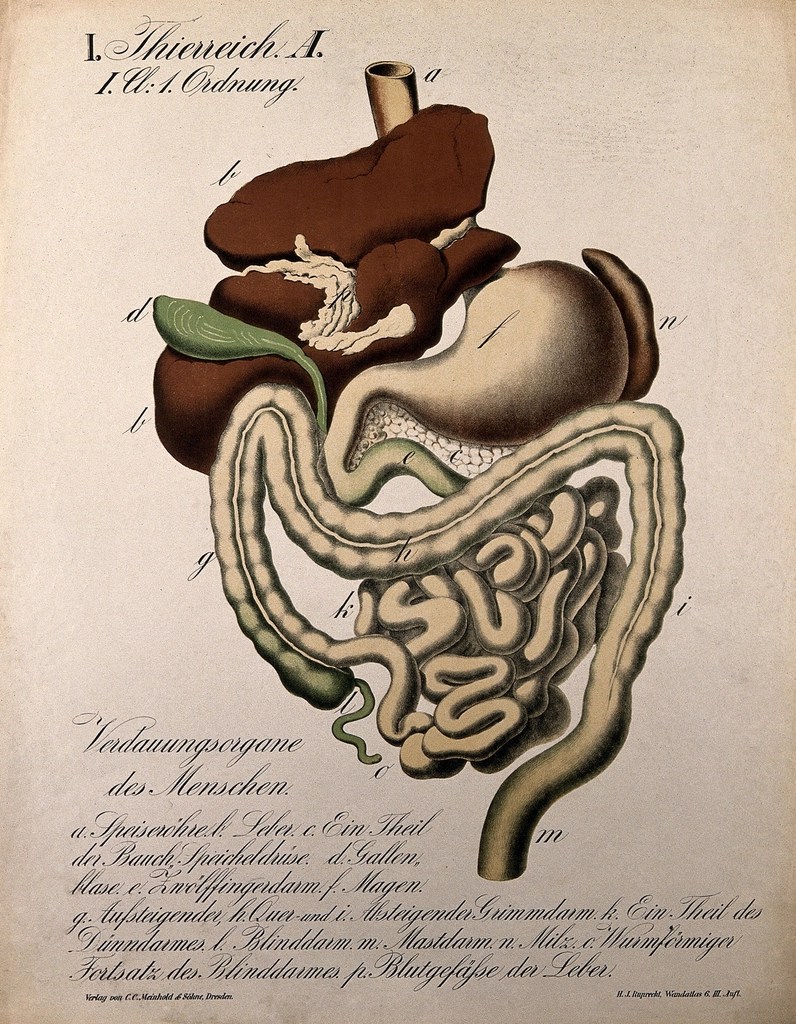
The combined effects of all those cars, lorries, aeroplanes, factories, fossil fuel power stations and goodness-knows-what-else, produce quite a cocktail of potentially deadly things for us to breathe. But most experts agree that the Two Big Killers are particulate matter, the so-called PMn series and nitrates, mainly NO2. But which is worse? If we got rid of PM2.5 for example, would the NO2 still be murdering us? An ingenious study by Joshua Bateman and Martin Clift, reported in the Conversation, seems to suggest an answer. The researchers have created laboratory models of the alveolar epithelium, the key tissue of the human lung which interacts with the atmosphere. For the first time it was possible to expose these cells to different levels of pollutants, both singly and together.

The results suggest the Two Big Killers are at their worst when they act together. And this has a important implications in the struggle for clean air. Just like early attempts to reduce smoking, attempts to clean up the air have run into enormous resistance, which can be bolstered by generous funding from various interest groups which seem to have little interest in clean air. Might it be possible to concentrate first on reducing one of the Big Two Killers first? That would not save as many lives as eliminating both. But it is a much more achievable, and feasible, start.

[1]https://www.gov.uk/government/publications/health-matters-air-pollution/health-matters-air-pollution

[2]https://theconversation.com/air-pollution-we-recreated-the-deepest-sections-of-your-lung-in-a-laboratory-to-understand-how-polluted-air-can-affect-your-health-2220

#nitrates #particulate matter #air pollution #cancer #cardio vascular disease

The Day John Stuart Mill read our blog

A couple of days ago we published a little blog which tried to kick around ideas like “is it right to ban things like alcohol?” (Will the real Conservative Party please stand up, LSS 30 1 24) One reader was the great political thinker John Stuart Mill. (he must have read it pretty early, because he died in 1873). However ,we know he did so it because today he popped up on Radio 4, ably assisted by Amol Rajan and Nick Robinson in one of their ingenious podcasts. A podcast which riffs on the very same theme-the Nanny State. [1]

Without raking over the same ground as Monday, we are going to give you a few more ideas on further reading, which also allows us to correct a terrible blunder we made on Monday (apologies to Adam Smith Institute-we messed up their hyperlink) And then just leave you with a few questions [2] [3] [4]

Given that cannabis and caffeine are psychoactive substances, why is right to restrict the sale of one, and allow the almost unlimited distribution of the other?

Does a State have a duty to protect its citizens?

If a free market comprising private individuals is the surest way to general prosperity, is any attempt to restrict it wrong?

If personal freedom and liberty are the ultimate good, should individuals have the right to invest and work where they choose?

Does the State have a role in promoting best economic outcome?

Is the state a community bound by laws, or an association of the most powerful people in a society?

If a State has some role to play in the general good, who decides where is the correct limit of its actions?

Are laws restricting the free sale of cannabis an example of the nanny state?

Are laws restricting immigration an example of the nanny state?

Are laws restricting working hours an example of the nanny state?

If you answered “don’t know” to any of the above, go back and try again.

[1]https://www.bbc.co.uk/sounds/play/m001vskd

[2] https://www.adamsmith.org/blog/eight-reasons-to-legalise-cannabis (this was the one we failed on Monday-sorry!)

[3] The Conservative paradox John Gray New Statesman 31 1 24

[4] The surprising truth about Nanny State Britain James Kirkup Spectator 30 1 24

#jonn stuart mill #nanny state #bbc #new statesman #spectator #taxation #immigration

Will the real Conservative Party please stand up?

In his masterwork Reflections on the Revolution in France, Conservative philosopher Edmund Burke identified the dangers of fast, uncontrolled change.[1] He also laid out the well-run, well- policed state as the only basis for a secure and prosperous life. The imperfection of human nature required that all should be safeguarded from each other. That in turn requires armies, police forces, and where necessary laws to safeguard the existing moral and social order. It is an honourable tradition; the experience of the French Revolution showed that it worked. And many contemporary Conservatives can site it- justifiably, for example in the restriction or even prohibition of seriously dangerous substances, such as alcohol, nicotine or cocaine. And for this reason, millions of ordinary, decent Conservative voters trust only this party to restrict the highly dangerous, possibly addictive drug cannabis. Read the Daily Mail if you don’t believe us.

Which is why it seems odd at first site that former Conservative Prime Minister Liz Truss should seem so opposed to a Conservative Government’s attempt to restrict the sale of vapes. [2] The explanation is, of course, that Truss belongs to a second Conservative tradition. That free markets are the only certain guarantee of human happiness. That restrictions and red tape are not only the sure brakes on enterprise, they are an immoral intrusion on the freedom of the individual. Again, an honourable tradition, rooted essentially in the works of Smith, Ricardo and Hayek. And proved right in the experience of the Russian Revolution and the tragic, genocidal decades which followed it. Which is why think tanks like the Adam Smith Institute advocate the legalisation of cannabis [3] Impeccably Conservative-well they were such inspirations not only for Truss, but for her predecessor Margaret Thatcher as well.

For any law, however much it claims to be for the public good, is also Red Tape. Any regulation is a restriction on someone’s freedom somewhere. To exalt the monarchy, as many Conservatives do, is at once to exalt the state. and thereby an endless flow of taxes, regulations and laws. Someone has to pay for the Monarch’s dinner-so why not everyones? A true belief in the efficacy of markets would allow the universal sale of vapes everywhere, to anyone. To oppose that is to admit that the goodness of free markets is not true everywhere, at all times. And a law that is not universal at all times cannot be true, as science shows. (Example: the atomic number of Iron is the same wherever you go in the Universe) So-should a Conservative before or against the free sale of vapes?

[1]https://en.wikipedia.org/wiki/Reflections_on_the_Revolution_in_France

[2]https://www.theguardian.com/commentisfree/2024/jan/29/rishi-sunak-smoking-ban-liz-truss-vapes-tobacco-sales

[3]https://en.wikipedia.org/wiki/Reflections_on_the_Revolution_in_France

#vapes #nicotine #cannabis #caffeine #alcohol edmund burke #adam smith #liberty

Newsweek’s startling revelation about Donald Trump

“He’s going to be your President too.” These wise words were spoken to us by a much older cousin concerning the US Elections of 1968. And they have stayed with us ever since. Even if you are British, German, French or Australian, the forthcoming US Presidential election concerns you very closely. Which is why this article by Robert B Reich of Newsweek has caused us considerable disquiet. All the more so, because Newsweek has always been scrupulously neutral in its reporting, if anything leaning right of centre. [1]

It acknowledges just concerns about Biden‘s apparent physical frailty (well covered already), but then tuns to a considerable evidence list that suggests that the 45th President of the United States, and current Republican frontrunner has some substantial questions to answer about his own health, to say the least. Without stealing Robert’s thunder (we ‘ve given you the click) we will make this tiny crib as a taster

“………….In October, Trump warned his supporters that Biden will lead America into World War Two. He has also claimed that Hezbollah, the Iranian-backed militant group, is “very smart.” That whales are being killed by windmills.………. 

World War Two?-uh, haven’t we sort of had that already? Whales and windmills? You don’t need a PhD in either Zoology or physics to question that one.

Yes, this blog is written in England, by persons who do not hold US citizenship. But we do share the planet with a country which holds a colossal nuclear arsenal, one which could destroy the world many times over if it were activated in a moment of narcissistic rage. We humbly beg our friends over the pond to please, please think very carefully, both now and in November.

We thank Mr P Seymour for this story

[1]https://www.newsweek.com/stop-talking-about-bidens-mental-acuity-start-talking-about-trumps-signs-dementia-opinion-1853741

[2]https://edition.cnn.com/2023/11/13/opinions/trumps-mental-gaffes-obeidallah/index.html

#Donald J Trump #dementia #alzheimers #paranoia #narcissism #presidential elections

Has Brexit really failed? It’s too early to say

According to one tale, the great Chinese statesman Zhou Enlai was asked “What are the consequences of the French Revolution?” To which he replied “it’s too early to say.” Like many good stories, it’s probably apocryphal; but it illustrates a wise truth. Don’t rush to judgement. In historical terms, the UK decision to quit the EU in 2016 was a seismic event at least as big as the French Revolution, or China’s own Cultural Revolution. Nine years on from the ballot, and three from that final sundering, can we make out anything at all?

Superficially, the case against Brexit appears to be overwhelming. GDP is down by anything between 2-5% each year.[1] Business investment and capital formation have taken a severe hit [2] Life expectancy, that key indicator of a thriving society, has actually started to fall is some areas. As for the much wished-for trade deals with the Leavers’ beloved White Commonwealth, these are either highly disadvantageous the to UK (Australia, New Zealand) or non- existent (Canada). Meanwhile the UK Government rushes to subsidise factories here, there and everywhere, with money which might be better spent on Defence or transport, all in the name of keeping a residual manufacturing presence. Case closed? No. Firstly because the analysis is too simple. Secondly, because we think that humans are not, primarily economic animals.

For starters, the above-quoted statistics are UK-wide. They disguise the fact that certain regions have weathered the Brexit storm better than others. Northern Ireland (membership of Single Market) and London and the South East ( residual proximity to the Continent) are two cases against. As for the life expectancy figures-these are a long term trend, and probably owe their origin to the years after 2010 when Remainers Cameron and Osborne introduced their programme of austerity.

For the second argument: let’s go back to basics. The European Union was founded first as a peace project, and only secondarily as an economic one (it was the failure to grasp this which led to the UK’s disastrous negotiating strategy-but that’s another story). The EU has indeed kept the peace between those ancient enemies Germany and France. But with the rise of Vladimir Putin, the days of peace are over-everywhere. As for prosperity-was it really all it was cracked up to be? More food seems mainly to have led to higher obesity. More money meant more fast cars, more items of throw-away fashion and easily- forgotten holidays. All of these may have to be dispensed with if our economies have to be diverted to defence. So-was Brexit simply an act of foresight, preparing the British people for the hard times that lay ahead? And there is one other factor, which we think is more important still.

When the UK coal miners struck in their bitter dispute of 1984-1985, they firmly declared one thing. It was not about money. It was, they said, about preserving community, belonging and their sense of identity.[3] And these feelings are rooted very deeply in the human psyche. Probably far deeper than a desire for shiny kitchens or luxurious furniture. These are the profound sentiments that Brexit touched upon-and we ignore them at our peril. History has not been kind to those mineworkers and the children, it is true. But it still remains to pass its judgement on the children of the Brexiteers. Let’s wait and see.

[1]https://www.economist.com/britain/2023/01/03/the-impact-of-brexit-in-charts

[2] https://www.ons.gov.uk/economy/grossdomesticproductgdp/bulletins/businessinvestment/apriltojune2021revisedresults

[3]https://www.channel4.com/programmes/miners-strike-1984-the-battle-for-britain/on-demand/73990-001

#UK #EU #brexit #gdp #miners strike #identity #trade

The Startling Truth about early-onset dementia

Of course it’s terrible when a family hears the dread news that Alzheimer’s disease, or dementia, has started to afflict one of their members. But until today, when we spoke with a most educated young woman from Alzheimer’s Research UK, we thought it was a disease of the elderly. We had no idea that it can affect relatively young people, that is to say, in their thirties or forties.

But it can and does, as our links for you make abundantly clear. [1] [2]. We apologise for using UK statistics, but Alzheimers UK estimate that there are 70, 800 cases of one of the various dementias in people who are under 65. You can scale that up or down according to the size of your own country with a simple calculator app (UK population 2024=67.33 million) Meanwhile, we invite you to browse the links, as you will be riding on the frontier of one of the great unresolved research questions of our time.

And what to take away from all this? Firstly, you never know when you will learn something unexpected. Especially when you have access to intelligent people. (If you can’t find any to hand right now, we hope this blog will go some way to ameliorating the deficit) Secondly, keep your brain alive. Puzzles, maths, learning a foreign language or even studying the rules of logic might help. Or at least stave the thing off, for a while [3]. So might keeping fit. And finally-if by some miracle we save the scientific method from the various fanatical culture warriors who are currently afflicting the globe, we might just one day find a method to find that no one ever has to live with it again.

[1]https://www.alzheimersresearchuk.org/dementia-information/types-of-dementia/young-onset-dementia/

[2]https://en.wikipedia.org/wiki/Early-onset_Alzheimer%27s_disease

[3]https://www.health.harvard.edu/blog/can-physical-or-cognitive-activity-prevent-dementia-202109162595

#Alzheimer’s disease #dementia #Alzheimer’s Research UK #scientific method #neurology #age

Nature Briefings gives us seven technologies to watch this year

article of the week

It’s funny how different people deal with reality. Some seem to think that whatever is right here and now is transcendentally important. They devote every minute they have to finding someone to disagree with, and invest immense amounts of nervous and physical energy pursuing the consequent feuds to the last possible opportunity. Elsewhere, someone else is quietly getting on with new ideas which render everything we do now backward and irrelevant. Who worries now about the quarrels of the Babylonians and the Assyrians, or the ridiculous chariots and spears they used to carry around?

We at LSS, being Whigs or Enlightenments or progressives, or whatever, are very much interested in the “someone elses” mentioned above . And with the help of the inestimable Nature Briefings, we’d like to raise your eyes from the endless disputes around the narcissism of small differences. And let you look at what’s really happening. Changes in the climate, not the weather, if you want to put it that way.

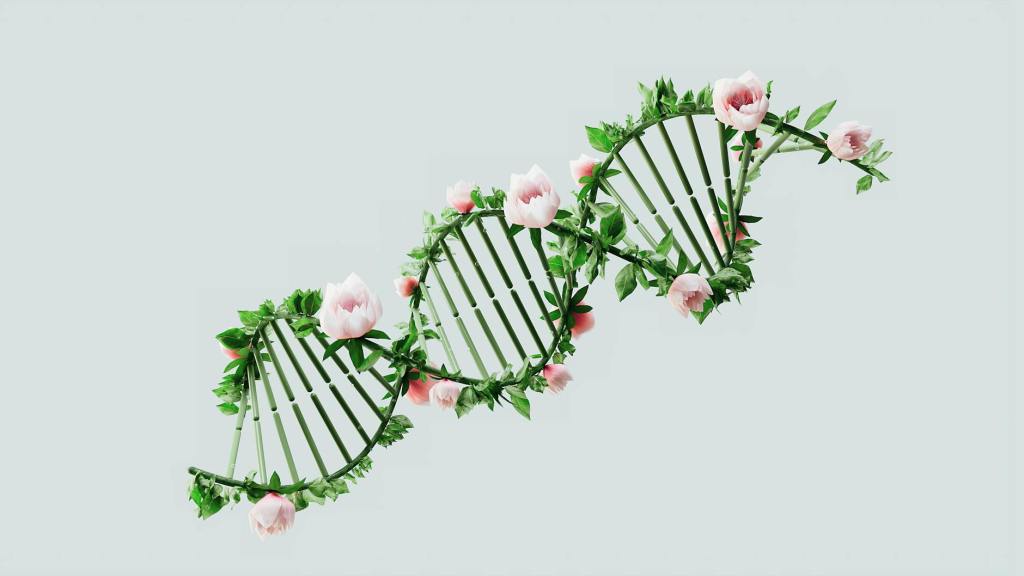
The technologies that Nature will be watching this year include protein design using algorithms similar to those underlying image-generators such as DALL-E, deepfake-detection tools and gene-editing systems that can modify DNA sequences much larger than the single-site edits possible with regular CRISPR–Cas. One advance that didn’t make the cut: ChatGPT. Its applications are “labour-saving gains rather than transformations of the research process”, says the feature.Nature | 15 min read

And imagine a child in 2124 saying to its Dad “what did they do one hundred years ago?” The answer will be in the link above. The endless, futile, indescribably stupid disputes of today will have been forgotten.

#gene editing #AI deep fakes #protein #nature briefings

Why the origins of this blog go back to 1687

We have made no secret of it. This is a Whig blog, written, researched, and edited by a senior staff whose political and philosophical affiliations are all to that most progressive and enlightened segment of mankind. (what the rest of them in this building think, we have no idea) But where did the name come from-and what about that of the Tories, the very antithesis, nemesis and inveterate opponents of all that we hold most dear?

According to the admirable Lord Lexden, writing in House magazine [1], the earliest origins of the word “Whig” go back to the bitter constitutional debates which followed the English Civil War. The “Whigs” were generally in favour of some kind of Constitutional Monarchy along modern lines, and feared the autocratic tendencies of the Papacy. Their opponents (unjustly, of course) mocked them as “Whiggamaires” a kind of horse rustler from the wilder lands of Scotland. They labelled their opponents, who wished to see the succession of the devoutly Catholic James as “Tories” after lawless Irish thieves, whom they described as

popishly affected, outlaws, robbers, such as our law saith have Caput Lupinum, fit and ready to be destroyed and knocked on the head by any one that could meet with them”. 

A little strong,perhaps.

Now you might say that the programmes of both parties have changed a bit since then. But, is there just an underlying kernal of truth somewhere in the recondite reaches of History? Perhaps of psychological type and preference?. To be a Whig was to be essentially looking to the future, and to reach, gropingly, towards new ideas in governance, science and belief. To be a Tory was to cling to what was, toexalt Authority and Custom as the supreme arbiters. Has anything changed?

[1]https://www.politicshome.com/thehouse/article/tale-two-parties-origin-tory-party

#tory #whig #liberal #new labour #parliament

Attack of the Killer Zombie Virus

Sounds like one of those old 1950s B movie titles, doesn’t it? But according to Robin McKie of the Observer, the threat is all too real.[1] According to Robin:

Humanity is facing a bizarre new pandemic threat, scientists have warned. Ancient viruses frozen in the Arctic permafrost could one day be released by Earth’s warming climate and unleash a major disease outbreak, they say.

No, despite our apparent credentials gained in monitoring the medical and science newsfeeds, we didn’t see this one coming either. We were more concentrating on the day that all that methane locked up in the permafrost spills out, and propels us all back to the Great Permian Extinction.[2]

And before you go, remember this. Firstly even the best antibiotics in the world will be of no use against viruses. Secondly, these viruses are likely to be of unknown types, and it will take time to run up meaningful vaccines against them. And above all, don’t think it won’t happen-remember what they were saying about global warming only twenty years ago?

[1]https://www.theguardian.com/society/2024/jan/21/arctic-zombie-viruses-in-siberia-could-spark-terrifying-new-pandemic-scientists-warn

[2]https://en.wikipedia.org/wiki/Permian%E2%80%93Triassic_extinction_event

#permafrost #climate change #global warming #virus #pandemic #vaccine #antibiotic

An addiction to easy answers will bury us all

articles of the week

After the Renaissance, the Reformation. The sunny days of progress transformed to stormy years of relentless religious and political conflict. The link between them of course was the printing press, and the sudden explosion and dissemination of thousands of conflicting ideas and nostrums. The development of the Internet has proved to be the same dangerous catalyst for our own times. So it’s worth considering carefully what is going on. This week we showcase two articles from the Conversation which do exactly that.

The first by Rotem Perach, Deborah Husbands and Tom Buchanan, from the prestigious University of Westminster highlights this wave of misinformation. Most chillingly, how people cheerfully spread it even when they know it to be false. The second by Dorje C Brody[2] looks at why. The basic problem is confirmation bias-when people are asked to make a difficult choice between two conflicting stories, and find it hard to sift the evidence they will choose the one that confirms their existing beliefs.

Is all this dangerous? Yes, it can be. We still recall people who declared in 2015 “I think all this country’s problems are caused by membership of the EU” They weren’t of course as we have since discovered. Now one could, some did, make a reasoned case for leaving the EU. But this kind of thought-excluding confirmation bias made all attempts to impose reason and evidence impossible. Bad choices followed; and they have been coming ever since. 

Which in turn raises a deeper thought, which we hesitate to write. Only because this is a site utterly open to all reasonable ideas do we broach it. Can people really be trusted with their own decisions? Or must we now consider return to rule by a governing elite, if only for the sake of social peace and order? It is a subject we will return to in due course.

[1]https://theconversation.com/some-people-who-share-fake-news-on-social-media-actually-think-theyre-helping-the-world-215623?utm_medium=email&utm_campaign=

[2]https://theconversation.com/the-maths-of-rightwing-populism-easy-answers-confidence-reassuring-certainty-221355?utm_medium=email&utm_campaig

#populism #confirmation bias #cognitive functions #fake news #internet #memes