1921,2021. Alarming parallels

In 1920 Britain enjoyed a post war boom. All the savings and bonds locked up in the war years, and Spanish flu pandemic, came pouring out of pockets and into the tills of shops and pubs. Lloyd George‘s Government embarked on a massive programme of house building to produce Homes fit for Heroes. Europe lay stricken by war. Imperial conflicts in Iraq, India and Ireland were grave, but seemed manageable. Yet by 1921 the country had fallen into a dire economic slump. GDP fell by around 8.4%: unemployment rose to 17%; manufacturing, saw a hurricane of closures. What went wrong?

In a nutshell, it was the ancient British disease of failing to invest while trying to live beyond one’s means, which the First World War accentuated sharply. During the war, British access to traditional markets was lost to competitors. It was never regained, leaving a permanent hole in our national book-keeping. One result was that London lost its preeminence as the financial centre of the world, primarily to New York. From that point on, there was never enough money to finance Britain’s global commitments. Down the road lay the first Imperial loss (Ireland 1922) Winston Churchill‘s disastrous return to the Gold Standard in (1925) and the General Strike of 1926, which could have lead to revolution. The point of History is to provide lessons for today; are there any for the British of 2021?

Larry Elliott of the Guardian * summarises our dilemma today. Everything ahead points to nice little boom. Masses of savings piled up in the pandemic are about to be spent. Interests rates will be low, and the Bank of England will be deeply reluctant to raise them soon.The housing market is rising steeply. Everything could be back to a rough normal by July, except that elsewhere LSS has seen mouth-watering GDP growth forecasts of up to 5.2% for the third quarter. What’s not to like?

Problems start in the business sector, especially SMEs. Up to now they have got through COVID on a mix of Government loas, furlough schemes and tax brakes. Many have piled up debts. The result is massive problems in balance sheets. Elliott quotes Ian Kernohan of Heteronomics:

many businesses now lack the working capital that will be needed to allow them to expand as demand picks up in the coming months. “

A short, heady boom will cause grave mismatches in supply and demand, in turn leading to massive trade deficits and rising inflation. Think of the British economy as a runner about to go into a major event without having the necessary muscles or stamina. It was exactly the same in 1921 and the likely outcome is equally poor.

As the grip of Covid eases, the UK looks set for a classic short-lived boom | Economic growth (GDP) | The Guardian

#postwarslump #1921 #lloydgeorge #winstonchurchill #covid-19 #britisheconomy#larryelliott #generalstrike


Round up of the week: hope on climate change,cults, AI and DNA.

We’re overwhelmed with candidates for round up, and we know that busy readers have to be selective. All we could do was to say “we think this will still be relevant in five years’ time.” So come back on April 10 2026 and find out.

Hope on Global warming. It’s not just carbon dioxide; lurking perilously in the background is methane, which has 80 times the warming power of CO2. We need to soak it up fast, and these Australian researchers may have found a bacterium which does just that. Thanks to The Conversation and Nature Communications

https://theconversation.com/we-found-methane-eating-bacteria-living-in-a-common-australian-tree-it-could-be-a-game-changer

Opening closed minds. What’s it like to come back from a cult? Can you? Here’s Buzzfeed with a fascinating piece on the reactions of Q Anon followers to the dashing of their hopes back in January. Don’t expect one dimensional responses.

We thank Mr P Seymour of Hertfordshire for this lead

https://www.buzzfeednews.com/article/scaachikoul/qanon-believers-turning-away-from-trump?utm_source=pocket-newtab-global-en-GB

AI might be good! Mention AI and everyone goes into meltdown about “the machines are taking over.” Maybe they’ve been watching too many Terminator movies. We’ve long advocated using AI for medical research. Now a team in California are showing how it can be used to map, predict, and who knows, maybe even prevent natural disasters like wildfires. And-remember our piece on Goethe and the tyranny of specialisation? (LSS 6 April 2021) AI may even let us rebuild multidisciplinary teams again. Has to be worth a look.

We thank Mr G Herbert of Buckinghamshire for this lead

https://blogs.nvidia.com/blog/2021/04/01/spaceml-taps-satellite-images-to-help-model-wildfire-risks/

Who’s the Daddy now? We wrote to Nature Briefings demanding more articles on early humans. Looks like they’ve obliged. This is cutting edge stuff, implying that humans and Neanderthals may be very mixed,and we expect a lot more turn ups for the book in the next five years:

Scientists have sequenced the oldest Homo sapiens DNA on record, which showed that many of Europe’s first humans had Neanderthals in their family trees. All present-day people whose ancestry isn’t solely African carry Neanderthal DNA, but there are questions about when and how the genetic mixing occurred. Three individuals found in Bacho Kiro Cave in Bulgaria, dated to between 45,900 and 42,600 years old, had “huge chunks” of Neanderthal DNA and probably had Neanderthal ancestors as recently as the past six or seven generations. A woman found in the Zlatý kůň cave in the Czech Republic is thought to be well over 45,000 years old and has Neanderthal ancestry going back considerably longer: 70–80 generations. None of the individuals are related to later Europeans, but the Bacho Kiro people shared a connection with contemporary East Asians and Native Americans. The research adds to growing evidence that modern humans mixed regularly with Neanderthals and other extinct relatives.Nature | 5 min read

Devilish Bacteria resist antibiotics-again. Long standing readers will know of our obsession with antibiotic resistance and how it will kill us all unless something is done. Here’s a Conversation piece about how they do it. It’s interesting to compare the survival tricks of the two organisms. Humans thinkwith their brains. Bacteria “think” with numbers. Numbers usually win in the long run.

https://theconversation.com/bacteria-shuffle-their-genetics-around-to-develop-antibiotic-resistance-on-demand-156439?

A message to the people of Northern Ireland: While you’re busy throwing stones at each other over your petty little differences, people like those mentioned above are creating the real future. Isn’t there a danger you are going to get left behind? Here’s a clue- you can do AI research whether you’re a Protestant or a Catholic.

#AI #DNA #Neanderthal #humans #disasterpredictions #northernireland #globalwarming #climatechange #antibiotics #cult #qanon #catholic #protestant

Ale? Yeah!

This week our guest columnist is renowned journalist and entrepreneur Mr Lindsay Charlton

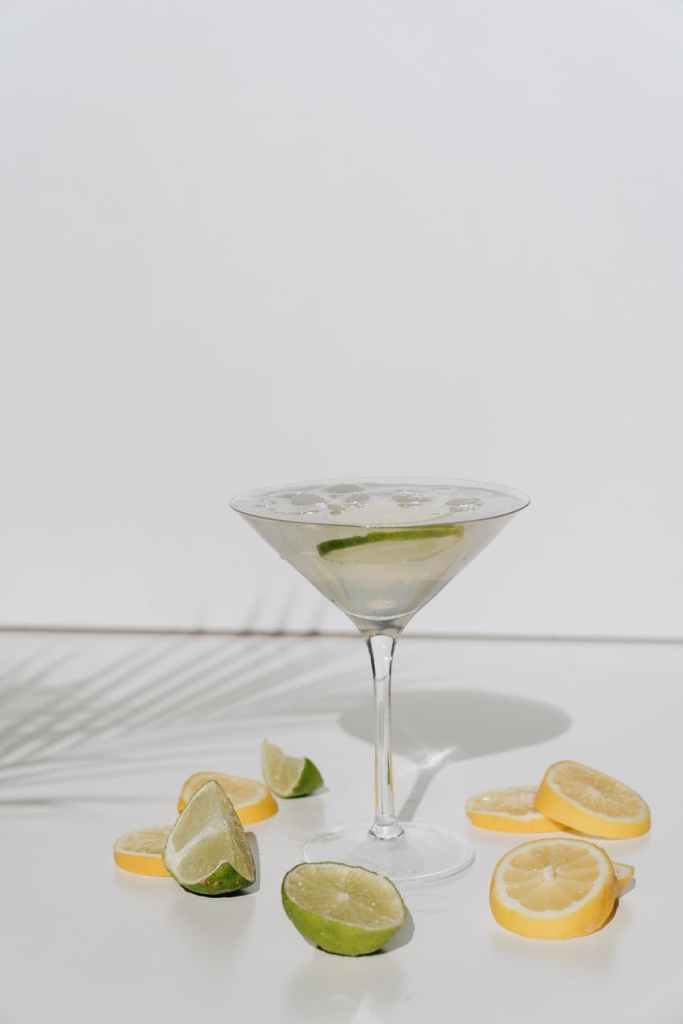
The Editor of this renowned organ, usually reserves Friday for his witty reflections on cocktails, but for this auspicious weekend, I wish to propose a vote for beer, and lots of it. On Monday, hard-pressed victuallers across the land, will at last be able to pull a pint and serve it to chilly customers, sitting in their garden, marquee, car park or specially designed boozing gazebo. The British pub has had a difficult time these past 20 years, magnified by the colossal assault on business caused by the pandemic. In 2000 there were 60,000 public houses across the UK, by 2020 that number had shrunk by 13,600 and according to The Morning Advertiser, the traditional publican’s bible, 2500 shut their doors last year alone.

Weary landlords have had to watch shoppers transport cut price beers from supermarkets to their homes, while being forbidden to sell takeaway pints themselves. And there is a tidal wave of the stuff ready to be unleashed. UK consumption totals 28 million barrels each year, produced by 2273 breweries Indeed, according to more research by The Morning Advertiser 8.5 billion glasses of beer were served across oaken bars and zinc tops in 2018 surpassing sales of wine that came in at 7.4 billion glasses.

But then it is more than beer that draws us to the pub. William Blake put it well: “A good local pub has much in common with a church except that a pub is warmer and there’s more conversation”. Also, much more alcohol.  Dylan Thomas, who loved pubs almost as much as he loved woman and poetry said: “I’ve had 18 straight whiskies, I think that’s a record,” and died shortly afterwards.

Yes, simple human contact, chatter, laughter, dispute, humour, yelling at your football team on the TV above the optics, a chance to meet a stranger, sometimes planned, often not. The atmosphere oiled, usually improved and made convivial by a well pulled pint.

There’s another intangible quality about a wood panelled bar in a country pub, summed up by a young man in Shakespeare’s Henry V shortly before the Battle of Agincourt: “I would give all my fame for a pot of ale and safety”. He meant surviving the coming battle, but it hints at another fundamental attraction offered by pubs at their best. They provide a sanctuary, somewhere to feel protected, if only for a few fleeting hours. Blake had a point about pubs and churches.

The pub, the bar, the alehouse, have been foundation stones of British culture for more than a thousand years, and like me, I suspect you’ve missed them. But like other endangered species, their habitat and customers will be released and renewed on Monday. So visit your local, raise a glass and salute an institution which, unlike so much else in life, feels permanent. But do take a jumper, as you can’t go for inside until May 18!

About the Author

Lindsay Charlton, then a teenage baby boomer, drank his first pint of brown ale aged 14 in a pub somewhere in South London, in 1967. It was shared with three close mates, because they could only afford the one drink. These days he usually consumes a full pint on his own unless someone else is buying in which case he may have three or four.

#pub #beer #ale #lockdown #covid-19 #coronavirus #pandemic

The secret of the universe is 1/137

What did Paul Dirac describe as “the most fundamental problem of physics?”. What did Richard Feynman call ” a magic number that comes to us with no understanding?” The answer is the Fine Structure Constant or α- constant, which works out at close to 1/137 (see below)

Today we’ve got a piece of really good, clear science journalism for you by Natalie Wolchover of Quanta magazine. * For over a hundred years now physicists working over a whole range of advanced problems- light, electromagnetism, the structure of matter, you name it, keep finding that the calculations keep coming back to this strange, mysterious and recurring number. Because its so important, the race is on to measure it more and more precisely. Good science journalism makes the work of really clever people easy for us ordinary mortals. Natalie takes us lightly through a tour de force of work by scientist Saida Guellati-Khélifa and her team,who have fine-tuned it down to 1/137.035999206, with an uncertainty of 0.000000011. Was that about what you were expecting? Natalie has the first link, but we’ve posted another, just in case you want to dig deeper.* Passé Criswell, we predict: with all these new forces and theories turning up, the world of physics is in for an exciting ride in the next decade.

we thank Mr Gary Herbert of Buckinghamshire for this story

https://www.quantamagazine.org/physicists-measure-the-magic-fine-structure-constant-20201202/?fbclid=IwAR2W

https://science.howstuffworks.com/dictionary/physics-terms/why-is-137-most-magical-number.htm

#finestructureconstant #physics #quantumphysics #universe #speedof light #time #space #measurement

All the best with 30/30, wildlife trusts

We always love it when someone comes up with a different idea for the better. Up to now, conservation organisations like the Wildlife Trusts in the UK have concentrated on buying the very best examples of nature to save from developers. Now they’ve had a brainwave-why not buy up bits of abandoned or underused land and transform them into thriving ecological communities? Their target is amazingly ambitious-they want to get 30% of UK land back to the wild by 2030. But they’ve got the wind in their sales, they’ve raised £8m in six months and today are pushing their flagship project across the media. It’s a former golfcourse in Carlisle which will be transformed into a nature reserve comlete with 1500 new trees and shrubs. Have a look at the link *, but explore the site-it’s full of good projects and pictures.

And this is important for people too. Anyone who has lived in a densely crowded environment such as southern England will know how precious these tiny oases of wildland are. We’ll let William Cook of The Spectator wax lyrical on the joys of walking through Ruislip Woods, a tiny fragment of green on the western edge of London. We guess that a developer somewhere can’t wait to smash it to pieces so they can erect a wasteland of concrete and metal in its place. The Wildlife Trusts are fighting everyone’s battle against these destroyers. Please help them if you can.

Almost £8 million raised in 6 months for The Wildlife Trusts’ nature recovery plans | The Wildlife Trusts

#wildlifetrusts #30/30 #conservation #globalwarming #nature #climatechange

Only everybody can know the truth

One of the most frustrating things about going on to a higher education is to find yourself forced into narrower and narrower channels of specialisation. At fifteen a wonderful world of sciences, arts and humanities lies at your feet. At twenty they’ve cut you down to a biologist. Your doctorate will be in some tiny enzyme system in one obscure organism, and if you’re doing your job properly you will only know as much about art, history,other sciences or the racing results as the bloke next to you on the train. The brain works, but the heart and soul have long since shrivelled.

The last person to defy this tyranny was the German thinker Johan Wolfgang von Goethe (1749-1832). Owner of a life so long he encompassed most of the Enlightenment and Romantic periods, he was a successful playwright, novelist, politician, theatre director and lawyer. In science he made important contributions in geology, botany and optics. If everything else he did was burned, Faust alone would stand as a literary milestone for the ages. Either he was the most intelligent and hard working man who ever lived, or he was great at delegating. We’ll leave you to find out. *

But ultimately, he it was who answered the specialisation problem. “Only everybody can know the truth” he said. He recognised that the specialist, beavering away in their laboratory, has a vital, but limited role. There is just too much to learn for anyone to be good except at a tiny part of it. And even the specialist’s knowledge, be it of poker moves or forensic DNA analysis will be partial and subjective. Because they are human, too. But by creating a collective science mobilising everybodies’ experience and work, then the best of everything is available to everyone. You only have to go to the journals or on the internet to ask. Good criminal justice is an example of this, where a court will use enough of the learning of lawyers, scientists, witnesses and ordinary people on the jury to arrive at a satisfactory outcome. We can never have another polymath as awesome as Goethe. But if we educate enough people, we won’t need them.

Here’s your jumping off point, but be warned-you could spend a lifetime with this guy

Johann Wolfgang von Goethe – Wikipedia

#goethe #polymath #faust #science #specialisms #enlightenment #romanticmovement

Decline of the Religious Right?

Readers of LSS, tending to come from the intelligent, informed section of the population, will be assailed daily by streams of news from platforms, media, websites and plain old gossip in the supermarket. That’s why we think this little forum should be used to pick out things which may-may-have a longer term significance. Please indulge us, because we think we’ve found one.

You may have noticed that we at LSS make no judgements on the rights and wrongs of someone’s beliefs. We welcome all faiths, and none. But we reserve the right to observe the consequences of those beliefs, just like events in the weather, the stock market, or geology. Particularly when they play out in the political arena. And nowhere has faith played out so strongly as in the last few decades in the United States of America. Since at least the late Carter years, the power of the Religious Right has been taken for granted. For better or worse it has undeniably delivered a huge voting block for Republicans. This in turn has consequences in the economy, pulling the equilibrium towards a general pro-business, low tax, anti government agenda. The social and intellectual consequences are subtle but profound, with persistent hostility towards things like evolution, abortion and environmental regulation. Preachers like Billy Graham, Jerry Falwell and Jimmy Swaggart can catch the ears of Presidents and the allegience of powerful media barons.

But has the movement has passed its peak? Writing in The Guardian, Adam Gabbat * describes how Americans are starting to turn away from religion. The reasons are complex. But one is particularly fascinating. The Religious Right has been overplaying its hand, angrily forcing its agenda on groups like the LGBT minority, which has particularly offended millenials. It’s a funny thing, but have you ever worked in a place where the power of the bosses’ favourite is starting to wane? Feeling insecure, they lash out more and more, looking for tokens of submission. Which just makes it worse for them. It’s a lesson that could be learned in certain other countries. How ironic if one of those countries was Iran.

‘Allergic reaction to US religious right’ fueling decline of religion, experts say | Religion | The Guardian

#evangelical #religiousright #unitedstates #religion #secularism #ethnonationalism #religiousright #christianity #islaam #iran #fundamentalist

Round up of the week: one mystery solved, one investigated, and a bronze age lunch

A short weekly round up so you can enjoy a long weekend!

The mystery of sports greats: For years we have racked our brains on the same intriguing mystery: what makes a truly great sports champion different to their peers-and the rest of us? After all, they’re still nerves, blood, muscles, bone, just like the rest of us. Now for the first time we think we have found and answer we like from Amit Katwala of Wired, via Apple News

Look at this quote

At the elite level, sporting success comes down to three factors: anticipation, high-speed decision-making, and the ability to perform under pressure. The best athletes in the world seem to have more time than everyone else not because they’re quicker or stronger (although it helps) but because they’ve honed their sensory systems through thousands of hours of practice – they pick up on advance cues like the shape of an opponent’s body, or the sound of the ball leaving a tennis racket to predict where it’s going to end up. 

There’s more, but we think this goes to the heart of the matter

Lewis Hamilton opens up about activism and life beyond F1 | WIRED UK

Origin of covid Nature Briefings is still hot in the trail What’s next in the Sars-Cov-2 origins search. Lots of good references here too so you can become really well informed

A World Health Organization (WHO) report on the pandemic’s origins makes a reasonable start, scientists say, but there is much left to do. The report highlighted the possible role of live-animal markets, including the Huanan market in Wuhan, to which many of the first known COVID-19 cases are linked. It also concluded that the virus probably didn’t spread widely before December or escape from a laboratory. But it left readers hungry for more answers to questions such as which animal carried the virus from bats to humans and how that spillover occurred. Nature spoke to scientists about what needs to come next.Nature | 8 min read
Read more: WHO report into COVID pandemic origins zeroes in on animal markets, not labs (Nature | 6 min read)
Reference: WHO report: Origins of the SARS-CoV-2 virus

Eating at your desk: Are you one of those people whose day is so frantic that you can’t even pop out for lunch? So you scoff down sandwiches at your desk while flicking through your e mails? Apparently they were doing it in the bronze age too, or sort of. According to El Pais these early Austrian miners were go getting workaholics who snatched thie lunches at the doors to the mine before rushing back in for another bust afternoon of super productivity. Uber eat your heart out.

warning to English speakers-this one needs a translator app

https://elpais.com/ciencia/2021-03-31/los-trabajadores-de-la-edad-de-bronce-llevaban-comida-preparada-a-su

#productivity #sars-Cov-2 #covid19 #sports

Warning-this article contains material that may be intellectually disturbing

Early on, researchers in odd corners of animal behaviour noticed some funny things. Birds learn their amazing songs from other birds, albeit of the same species. Groups of animals seeme to have small but steady differences in the way they did the same things-for example, the way different sets of chimps used their primitive tools. And so it went. Now a major study reported by Ryan Morrison for the Daily Mail * reports that the idea of animal learning, and animal cultures is extremely widespread, and is certainly not confined to our rather clever nearer relatives. It’s been around for a very long time according the study author Professor Andrew Whiten of St Andrews University.

Why is all this important? Well, because it upsets a lot of apple carts. For a start, there was the confident assunption that only humans had culture, and animals were robots, blindly carrying out the relentless programmes of their genes. That’s desperately over-simple. Secondly, that the genetic material (DNA in all higher organisms) was the sole and only mediator of evolution, and its selection by the vagaries of Fortune was the only determinant of who and what we were. (An idea once very popular with fans of The Selfish Gene, but we’ll go into that another day) Yet, if learned ways of behaving are passed down and selected in the harsh school of nature,are we not talking about a second evolutionary system? One that might be called “culture?”

No one can deny the central importance of natural selection on genomes. Ask any expert on antibiotic resistance if you doubt that. For some time now we have suspected that epigenetics, the life of proteins and RNA associated with genes may be playing a role too. Now comes strong evidence of a third, cultural factor. It makes life much more complicated and interesting, both for living organisms, but above all for the scientists who study them. Time for a strong drink, everyone?

https://www.dailymail.co.uk/sciencetech/article-9428089/Animals-create-cultures-pick-traditions-parents-study-finds.

#dna #naturalselection #culturalevolution #epigenetics

Xenobots break the boundary between biology and robotics

Imagine if you were reading a newspaper in about April 1771. It would have been a confusing jumble of adverts, news and features. You might have seen a story about a new Bill in the House of Commons. A ship bearing new calicos had arrived from the East. A man called William Wilberforce was suggesting it might be a good idea to be a bit less beastly to black people. All very intriguing no doubt. But buried away on page 6 might have been a small item about a bloke called James Watt, who had invented some sort of new kettle that made things go round faster. And this was the real story, that one that would change the world forever.

So it is, we believe, with the new story about xenobots. Developed from the cells from the frog Xenopus laevis, they are microscopic robots which can be programmed to move, remember, report to control and carry out tasks at levels of precision which would have bben unimaginable back in the last century. We have two links for you; one to Stacey Liberatore of the Mail * and one to the original researchers at Tufts University. *

The potential step change in what we could do is immense. The researchers talk of drugs being delivered to the precise locations needed in the body. Teams of microrobots programmed to hack through soil, cleaning up radiation and industrial pollution. Is it fantasy to imagine them one day engineering the nucleic acids of individual cells, to remove harmful mutations? All of these possibilities and more are implied, transforming the world in the same way as Mr Watt and his collaborators. Sometimes the big stuff isn’t on the front page.

https://www.dailymail.co.uk/sciencetech/article-9424159/Microscopic-living-robots-created-frog-embryo-stem-cells-

Scientists Create the Next Generation of Living Robots | Tufts Now

#xenobots #nanotechnology #ai #pollution #medecine #robotics #biology