Antibiotics: Afraid it’s still not getting better

Sorry readers, but the old problem of microbial resistance to antibiotics just isn’t going away. As it’s popped up four times in the news this week, we’d thought we’d give you a summary outside of the bounds of our weekly roundup, and suggest at least one thing you could do to help.

Sky News got the ball rolling with this piece on Monday. [1] OK, it’s UK-centric, but the same deadly pattern applies everywhere. dear readers. The stone in the shoe is simple: the bad news is up, again. If you want some base line figures to convince people in the pub/school/supermarket, this is a good jumping-off place.

The squandering of antibiotics in lazy farming practices would be bad enough. But now the antibiotics from farms are leaking into the water table, massively increasing the chances of resistance appearing in nature. This piece by Adam Vaughn for the Times looks at studies in rivers in Britain. But once again the chances are it could be a river near you. [2]

Asking people to do it less has been a preoccupation of religious fundamentalists, educationalists, malthusians and party hosts for centuries. We never dreamed that we, as a kind of sciencey, rationalist style blog would join them. But what if they don’t do it less? Once answer is to hand out massive morning after doses of antibiotics. With the grim potential consequences which Nature Briefings makes clear: Concern over Preventive Antibiotics for STIs

A health department in the United States has become one of the first to recommend that people who are at high risk of getting a sexually transmitted infection (STI) take a preventive dose of antibiotics after unprotected sex. Clinical trials have shown the strategy can reduce infections such as chlamydia, syphilis and gonorrhoea. But some researchers worry it will contribute to antibiotic resistance. Researchers say guidelines about use are important for informing people about the safety of a strategy they might already be using. “People should have access to this tool, if it makes sense for them and their lifestyle,” says sexual-health physician Jenell Stewart.Nature | 6 min read

The reason we bang on about all this is made clear by a second piece from Nature Briefings Bacterial Infections the Second Biggest Killer Globally. That’ s even more than Vladimir Putin‘s wildest dreams! Well, the headline says it all, but just in case, here’s the text. And plenty of references for you to click on in your coffee break.

Bacterial infections were associated with close to 8 million deaths in 2019, making them the second biggest killer globally after coronary heart disease. Death rates differed widely by region, from 230 deaths per 100,000 people in sub-Saharan Africa to 52 deaths per 100,000 across western Europe, North America and Australasia. “These new data for the first time reveal the full extent of the global public health challenge posed by bacterial infections,” says study co-author Christopher Murray.AFP | 3 min read
Reference: The Lancet paper

Well, some decent people are refusing to let all this go. In the UK we have a charity called Antibiotics research UK who try to fund new research raise awareness and try to do all the things they can to stem the tide. But they’re small, and they need money. They have lots of international connections, so if anyone can donate, you’re helping your own country too. Go on, have a bang on this one, mate, [3] to paraphrase the actor Ray Winstone. In the long run, it’s a much better bet than a World Cup match.

With thanks to Mr John Read of Henley-on-Thames for the first two parts to this story

[1] https://news.sky.com/story/antibiotic-resistance-not-a-problem-we-can-ignore-as-even-new-medications-fail-to-tackle-infections-12752398

[2] https://www.thetimes.co.uk/article/antibiotic-resistant-bacteria-found-in-rivers-near-pig-and-poultry-farms-x38gl3x0n?shareToken=e13a9b2

[3] https://www.antibioticresearch.org.uk/small-research-grants/reports-from-2018/

#antibiotics #microbial resistance #superbugs #vladimir putin #world cup

Health warning: Poverty is bad for your genes

Older readers may recall their parents’ and grandparents’ tales of The Depression. That enormous economic disater between 1929 and 1933, caused by the dodgy dealings of financiers, free market fundamentalists and complicit politicians (shorten this to Republican Party?-ed). Internationally it led to the rise of Hitler and Japanese militarism, and we all know where that led. Domestically, it led to homelessness, unemployment and grinding poverty.

The effects of poverty on things like learning attainment, physical development and general health are well established, But can it actually affect your genetic make-up, your DNA-and thereby say with you for life? Unfortunately, the answer is beginning to look like “Yes”. Nature Briefings has showcased an intriguing study which looked at the genetic material from people born between 1929 and 1939, the key years for the poverty caused by the Depression and its aftermath. We reproduce their lead here as usual, but truly urge you to click on the link they provide and see the main report. It really looks as if the poverty of those years was affecting the epigenetics of its victims-the markers and tags which determine when genes are deployed, when they are switched on and off, and so on,

This of course raises deep questions about individual freedom. What greater effect can someone else have than to change your genes for life? It has implications in the abortion debate currently raging in the USA, as the authors make clear. For us, there is a deeper question: can epigenetic changes be passed to subsequent generations? It’s a big question, and we’ll do no more than point you to the Wikipedia [1] article on the topic. But think of the implications if it’s true.

The Great Depression Shaped Peoples’ DNA

The cells of people who were conceived during the Great Depression show signs of ageing faster than they should. The changes were measured in the cells’ epigenome, the chemical tags attached to DNA that determine how and when genes are expressed. Researchers say that the patterns they have uncovered could be tied to higher rates of disease and death.Nature | 5 min read
Reference: PNAS paper

[1] https://en.wikipedia.org/wiki/Transgenerational_epigenetic_inheritance

#epigentics #dna #poverty #depression #wall street crash

How to find the money to solve all our problems

Close your eyes and think of a warm tropical island. You know the sort…white sands, palm trees and those funny umbrellas made out of bits of old coconut. And full, absolutely full, of money that was earned using the legal, transport and defence systems of countries from which the said money was quickly extracted before any tax could be paid upon it.

According to Tax Justice Network [1] there is between $21 and $32 trillion sitting in offshore tax havens around the world. That’s enough to pay for a decent health service, education system, old age care and a reasonable defence budget or everyone in the world. The amounts squabbled over in day-to-day politics are negligible by comparison. All our problems with climate change adaptation and renewable energy could be solved by taking back just a fraction of that money. Your money, because the chances are that you did much of the work to create it, before it was spirited away.

Where are these tax havens? How did the whole sorry system come about? Before some of you accuse us again of being too Anglocentric, we have to say that the UK and the City of London have been pretty instrumental in bringing all this about. But they are far from being the only culprits, as Philip Inman [3] makes clear. Meanwhile, for those who like their History, Oliver Bullough has a nice little series [2] which, unlike many of the links we post here, invites you to listen, rather than read. So there’s a refreshing change.

Money must flow, jurisdictions must have their sovereignties, we won’t dispute that. But who rightfully owns that money, and who benefits from recondite notions like sovereignty are questions which we would ask you to think about carefully indeed.

[1] https://taxjustice.net/faq/how-much-money-is-in-tax-havens/

[2]https://www.bbc.co.uk/programmes/m0017t8k

[3] https://www.theguardian.com/business/2021/mar/09/uk-overseas-territories-top-list-of-worlds-leading-tax-havens

#tax haven #offshore #shell company

see also LSS 15 12 2021

Weekly Roundup: Of Basques, Dinosaurs, Stars and Baroque

stories we liked from this week’s news

Basque Cases The Basque language, or Euskadi, seems to be very ancient indeed. Biut no one knew that they were writing it down until this startling find from northern Spain. Nature Briefings: Bronze Hand might rewrite the history of Basque This is where science, linguistics and art meet folks- an Enlightenment learning feast!

A flat, life-size bronze hand engraved with symbols could prove the existence of written Vasconic — the language that developed into Basque. “This piece upends how we’d thought about the Vascones and writing until now,” says linguist Joaquín Gorrochategui, who was involved in the analysis by the Aranzadi Science Society, a Basque research institute. “We were almost convinced that the ancient Vascones were illiterate and didn’t use writing except when it came to minting coins.”The Guardian | 4 min read
Reference: Aranzadi Science Society press release (in Basque)

T Rex were really big Fans of the 1970s glam rock group T. Rex will recall that they were named after a species of large predatory dinosaur that has been in more films than Matt Damon. News that these beasts were really, really big comes in this piece from the Mail. T Rex’s closest living relatives are things like chickens and geese, which gives whole new meaning to the song Ride a White Swan

https://www.dailymail.co.uk/sciencetech/article-11443489/T-rex-70-larger-previously-thought-weigh-33-000lbs-study-claims.html

But the Universe was even bigger The problem with the practice of amateur astronomy is that it’s cold, dark, lonely and frustrating. Problems we share with people like fishermen, joggers and flashers, to name but a few. But Johns Hopkins University have come up with a way of avoiding all those hours at the telescope. They have a remarkable new map which lets you explore the secrets and wonders of the universe from the comfort of a warm lap top, and no more being scared out of your wits by the approach of a wandering hedgehog

https://www.dailymail.co.uk/sciencetech/article-11443287/Scroll-UNIVERSE-Incredible-interactive-map-lets-explore-200-000-galaxies.html

Man attacks Shark Ever since the release of the popular film Jaws, sharks have had a bad press, Attempts to conserve these fascinating and ancient creatures are stymied by the old canard: “but they bite!” But there’s hope for our cartilagenous chums in this piece from the BBC

https://www.bbc.co.uk/news/science-environment-63670072

This week’s musical clip Fans of the Baroque period in music (which didn’t quite overlap with that in art) will enjoy this selection from JS Bach’s Mass in B minor.,We’ve chosen the agnus dei, as we think film directors everywhere may want to use it Look, there’s even a picture of some bloke singing it!

Friday Night: Two-Shot Cocktails for a discrete hip flask

Today’s little blog is a hymn of praise to that often overlooked but still vital apparatus of civilised equipment-the hip flask. It has got us through countless ceremonies-weddings, funerals, business meetings, family reunions, sporting and cultural events, hospital visits-where the congenial presence of alcohol is either frowned upon or forbidden altogether. A good, elegant hip flask is not only easily bought or swiped but can be concealed in any number of places where the prying eyes of the sanctimonious cannot reach. Once there, its contents may be enjoyed quickly, or even shared with like-minded souls. And so much easier to carry than a crate of beer!

Yet a problem remains-how to reconcile the shape and form of the hip flask with the complex, and usually icy, user requirements of the cocktail bar? What’s the point of creating an elaborate Singapore Sling and putting in your hip flask, only to find that the ice melts, the fizz goes out of the water and none of your companions like it? After much thought, we felt that you can have a classic cocktail in a hip flask, provided the following criteria are met:

1 It must only contain two ingredients

2 It cannot depend on the presence of ice, fruit juices or any other complications for its success

Therefore, the following suggestions seem entirely apposite

The Manhattan In a nice ratio of one part of sweet vermouth to 3 of bourbon, this simple little classic can be scaled up quickly to flasks of any size. It’s so simple that it will pass most discerning palates, making it easy to pass and swallow among any congenial group

Dry Martini the ratio is much the same as above, except dry martini and gin take the old 1,3 ratio for scaling. Another quick score,which never tastes offside.

Le Mans 1 measure Cointreau 1 vodka don’t use Russian vodka, obviously!

Pink Gin Its basically gin with a few drops of angostura bitters, topped with however much water you want. As it comes from Naval origins, its ideal for regattas, Cowes week and things like that.

Rusty Nail Scotch and Drambuie in the measures of two to one. Ideal for the drier parts of the Highlands and other places where they’re always tossing the caber.

Well, there’s a few starters-but we are sure that the more creative among you will soon come up with even more delicious and satisfying variations. Enjoy, and let the lemon faced miseries and religious fanatics enjoy their own fallacious delusion that they have snuffed a little enjoyment from the world

Read this carefully before you open a coal mine

“We gotta open more coal mines again!” So runs the sly call from those who wish, ever so surreptitiously, turn back the tiny progress we have made so far on global warming. To those in poor communities, the lure of jobs, even terrible ones deep underground, can be alluring. Then there is always the need to counter the machinations of Mr Putin and his attempts to freeze us all to death this winter. Tempting. Attractive. Understandable. But first, read our link to a story by Renee Jacobs for Huck, who has been following the disastrous story of the town of Centralia in Pennsylvania, USA.[1]

It was a mining town, one of many in the Appalachian mountains. Hardscrabble poor, but proud, and a home for the lives of many. Until the 27th May 1962 when a huge fire erupted in the mine galleries under the town. It is inextinguishable. It has been burning ever since. It will burn for at least 250 years. It spews out carbon monoxide gas and palls of smoke. Every of often it opens huge chasms in the ground, hundreds of metres deep. Eventually the whole town had to be razed, and now only five people live there. So much for prosperity.

Not every mining town will share exactly the same geology and engineering as Centralia. But as a concentrated metaphor for the long term consequences of the carbon industries, it is hard to beat. Leaving aside all that global warming, we still don’t know the health consequences of all the pollution they have spewed out. You are reading this on an electrically-powered computer. Some of those electrons will have been dug out of the ground in places like Centralia, Pa. There’s no getting around it. But attempts to keep on doing so are incredibly short sighted, and bring little benefit to the people who do it. The quicker we move to safer sources, the better it will be for all. Especially mining communities,

We thank Mr Peter Seymour of Hertfordshire for this story

[1] https://www.huckmag.com/art-and-culture/photography-2/centralia-renee-jacobs-slow-burn-project

Will India overtake China?

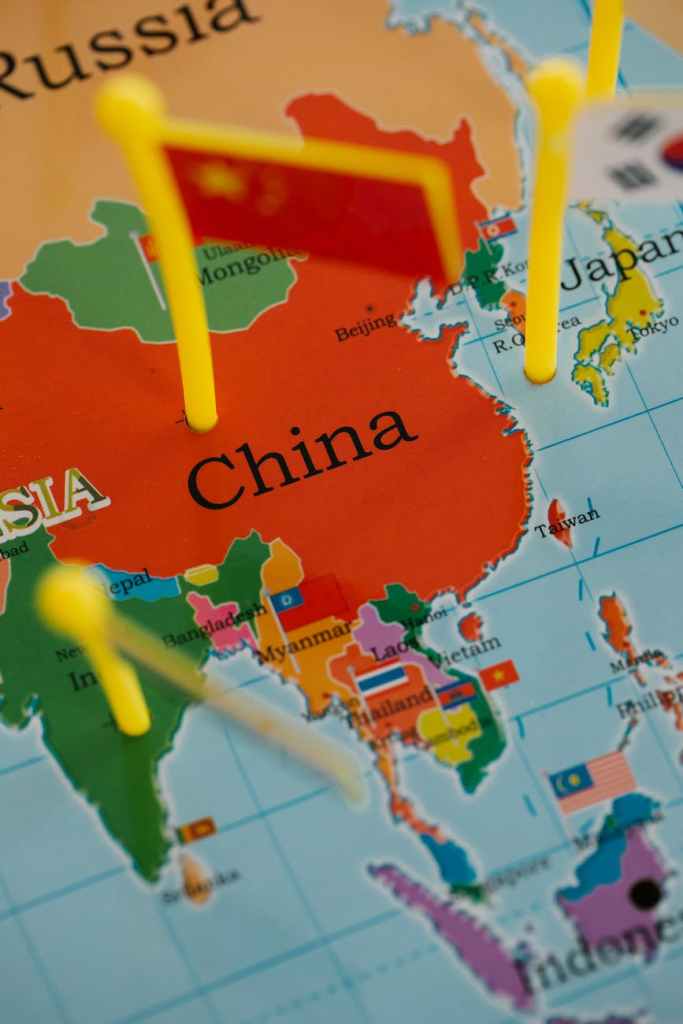
Through most of recorded history, the phrase “China has the biggest population” has a been a constant of every school room, pub quiz, and geopolitical calculation. So it’s going to feel slightly odd in November next year, when India is going to overtake the People’s Republic. But it’s going to be very, very significant, both for the two countries themselves and for the rest of us who share their planet. The Guardian has two pieces which explain the situation for any enquiring mind. The first [1] by Hannah Ellis Peterson will give you all the detailed facts you need, along with some excellent graphics.

The second [2] by Julian Borger looks at the implications. Will China’s population shrink? Will they see a huge demographic bulge which has to be supported by a smaller and smaller pool of young workers? What are the implications for China’s military future, especially if confronted by an aggressive younger power just across the Himalayas? As Julian presciently observes:

Through that prism, China’s military spending is a bet that it will bend a large part of the world to its will so that it gains privileged access to resources. But if that bet fails, Beijing will have spent a lot of capital that could have been used to adapt its economy to the encroaching limits, leaving the country stuck in a middle-income trap.

But lastly, gentle readers, we’d like to turn back to Hannah’s article because we think the statistics in it bear out a point we’ve been trying to make for a long time (see LSS 22.6.,4.7/1/11.22) Richer people have less children than poor ones. They also have less motive to up sticks and move. With all the implications that has for the so called immigration “debate” in western countries. Could we start to conduct it in grown-up terms from now on, please?

[1]https://www.theguardian.com/world/2022/nov/14/india-faces-deepening-demographic-divide-as-it-prepares-to-overtake-china-as-the-worlds-most-populous-country

[2]https://www.theguardian.com/world/2022/nov/14/why-india-overtaking-china-as-most-populous-country-is-more-than-symbolic

#india #china #population #demographics #superpowers

Weekly Round Up: Alphabets, Songwriters, Cancer Cures, Tosca and How Donald Trump can cope with failure

Alphabet on a Comb The change from a pictorial alphabet like the Egyptian one, where every single word has a unique symbol, to a true alphabet, where a few symbols can suddenly convey the entire sounds of a language was like the digital revolution of its day. The earliest evidence of it was not in some portentous work of great literature, but a simple inscription on a humble comb as Ian Sample makes clear for the Guardian. Ian Sample-what a great name for a Science editor, by the way!

https://www.theguardian.com/science/2022/nov/09/oldest-known-written-sentence-discovered-on-a-head-lice-comb

Joni the Pioneer Attentive readers of this blog will recall our praise for the songs of Joni Mitchell, who as early as the 1960s was pointing out the ravages that crass materialism was inflicting on our planet. Turns out she was pioneering in other ways, like upsetting the boys with her frank expositions of the human condition. Or didn’t they realise women are human too? Once again, the BBC has it all

https://www.bbc.co.uk/news/entertainment-arts-63596059

Can CRISPR cure cancer? Imagine if every cancer patient had there wn treatment system, specific and unique to them. Well, our old friend CRISPR, long boosted in these blogs, may make that possible. Here’s snippet from Nature Briefings Most Complicate therapy ever.……..

A small clinical trial has shown that CRISPR gene editing can alter immune cells so that they seek out and destroy a person’s cancer. T cells, a type of white blood cell that patrols the body looking for errant cells, were modified to recognize the mutated proteins in tumours, which are different in every person. It is the first attempt to combine two hot areas of cancer research: gene editing to create personalized treatments, and the engineering of T cells to make them better at targeting tumours. “It is probably the most complicated therapy ever attempted in the clinic,” says study co-author Antoni Ribas, a cancer researcher and physician. “We’re trying to make an army out of a patient’s own T cells.”Nature | 5 min read

Sympathy for the Devil Poor Mr Trump, whose hopes have suffered such a crushing at the recent US elections! His quest now we surely be: how do I cope with being such a dreadful failure? What will Daddy say? Fortunately, help is at hand in the shape of this article from the Conversation, which basically recommends the consolation of Philosophy. Such an erudite, reflective man as Mr Trump will lap this up, no doubt.

https://theconversation.com/philosophy-can-help-us-deal-with-failures-that-seem-insurmountable-193351?utm_mediu

Terfel Magic Welsh baritone Bryn Terfel has been one of the best singers around in the last few decades. One of our favourite moments in his illustrious career was this Te Deum from Puccini’s Tosca, here with the Royal Opera. How do these guys belt it out so loud yet still say in tune? Remarkable.

#donald trump #crispr #bryn terfel #puccini #joni mitchell #alphabet #archaeology

Friday Night: The Wines of Bordeaux

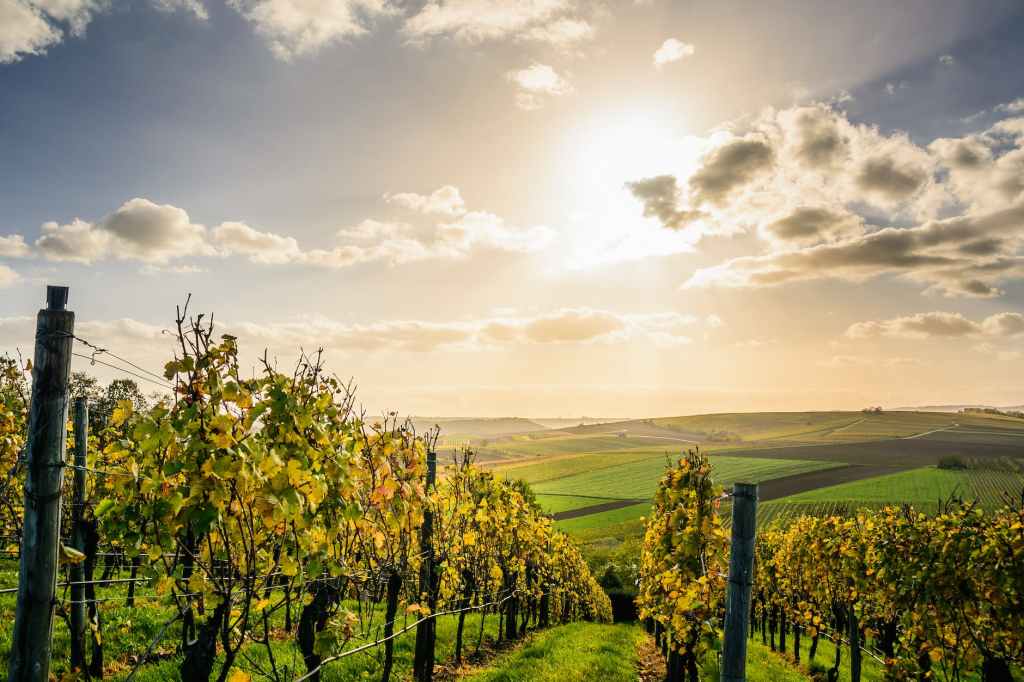
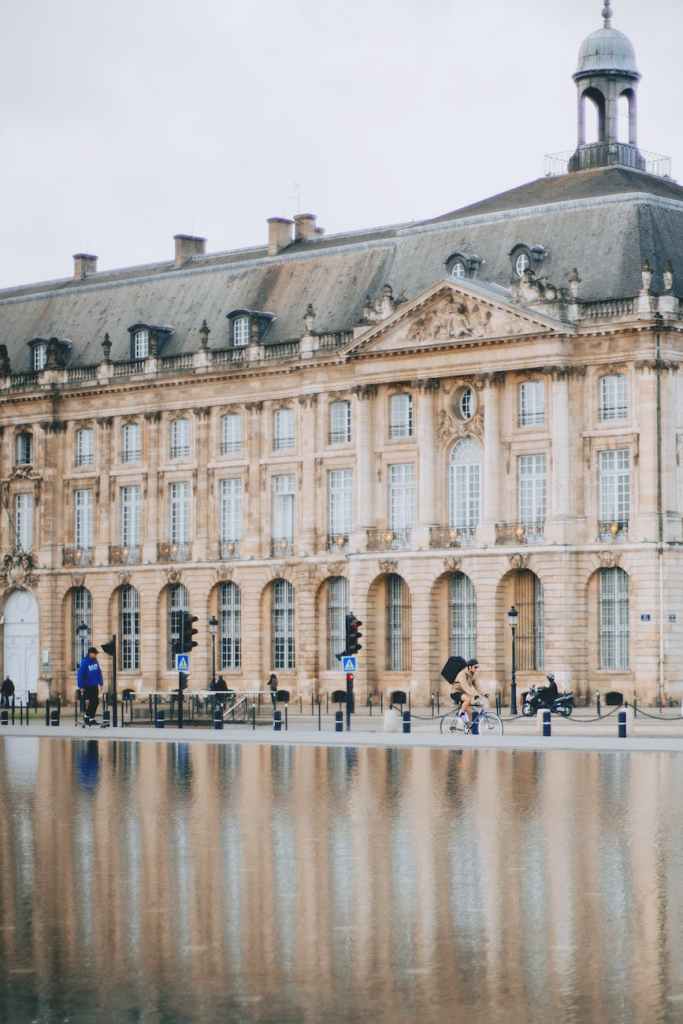
Many have asked: “What is Civilisation?” “What is the Good Life?” One area that has made a reasonable stab at answering these questions is the Bordeaux region of South-Western France, And they’ve been doing it for a very long time. Wine seems to have come to the area in around 43 AD, since when they’ve been knocking out the good stuff ever since, despite the irruptions of marauding Goths, Vandals, Saxons, English, the phyllorexa virus, Germans and recently, global warming. The union with England under Henry and his Queen Eleanor in 1154 was actually a boost, for it formed a kind of early single market, which the later Hundred Years War wrecked. But Bordeaux saw ’em all off in the long run, and now boasts some of the finest vintages in the world.

You could spend a week driving round the various regions scattered along the Gironde. The very names-Medoc, Graves, Entre-Deux-Mers and others are evocative of warm sunshine and Atlantic breezes. Our second link, Vins de Bordeaux, has everything the armchair explorer needs to start an expedition. There’s great notes on varieties, tours, grapes and we loved the interactive map of the terroir.

So why not sit back, pour a glass of fine claret and look forward to a good weekend? You’ve earned it.

[1] https://en.wikipedia.org/wiki/History_of_Bordeaux_wine

[2] https://www.bordeaux.com/gb/

#france #bordeaux #wine #friday night

Pollution shows the limits of individualism

The dominant narrative of the last fifty years or so, at least in Anglo-Saxon economies, has been that of the free untrammelled individual. You know the creed ” I am a free man, any brake on my ability to do exactly as I want at any time is a monstrous outrage. And anyhow, complete and utter selfishness will help the economy grow!” This belief has been expounded in countless different ways, from the speeches of people like Margaret Thatcher, the academic works of people like Hayek, the rants of Ayn Rand, and schoolboy-level popularisations of the work of people like Maynard-Smith and EO Wilson. As a doctrine, it’s not without merits (usually a millionaire is less immediately dangerous than a commissar). But it has a deep theoretical flaw: what if my liberty impinges on yours?

Real world, tangible evidence is always the best response to imperfect theory. A very simple example is a piece we saw by Jessica Mouzo of El Pais, [1] the title of which roughly translates as “Pollution machine guns the health of children“.” Jessica’s evidence list is long: premature births, underweight infants, defective neurodevelopment, respiratory and skin ailments…,all are linked to pollution. Obviously, the bulk is coming from industry, transport and so on. But all of these enterprises are run by sovereign individuals. So, let’s take it down even more personally. Smoking cigarettes is an obvious form of pollution, as anyone who remembers the pubs and discotheques of the 1970’s will testify. Smokers are quick to adduce their rights and freedoms, and the need to exercise both aggressively. But what if your right by its very existence, sui generis, impinges on mine? Or of an unborn infant, as Jessica so neatly points out?

The sovereign autonomous individual does not and cannot exist. That is not to say we should all adopt Communism, or some form of Theocracy along Iranian lines. But any economic and social model must take into account that humans are inescapably joined to one another, whether they like it or not. And the ones that best reflect this truth are the currently unfashionable ones like Social Democracy, Christian Democracy, Keynesianism and their soul mates. Perhaps it’s time to see them again in action. (Inhabitants of the anglosphere and others will now need their translator apps)

[1] https://elpais.com/salud-y-bienestar/2022-11-10/la-polucion-acribilla-la-salud-de-los-ninos-partos-prematuros-bajo-peso-al-nacer-y-dificultades-cognitivas.html

#hayek #social democracy #pollution