Weekly Round Up: Predictions, Essays, Conspiracies, Bees

interesting items from a week of news

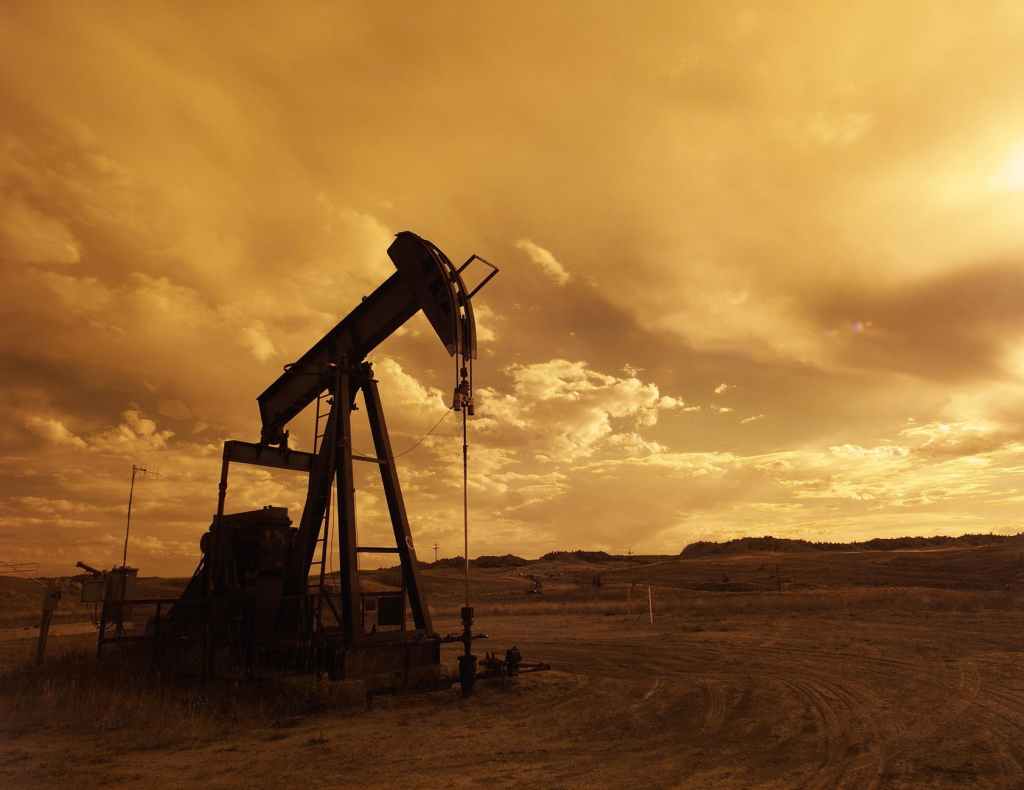
Saw it coming? Did Exxon Mobile know all along about climate change? Could they, should they, have said “hey, guys-there might be a problem here!” a little more loudly? Try this from the BBC

https://www.bbc.co.uk/news/science-environment-64241994

Write me a thousand word essay.….ever since the dawn of time, schoolchildren everywhere have groaned beneath the burden of those dread words. Even when they took you for a day out at the Natural History Museum or Sandown Races, the teachers at our school could not resist spoiling everything with that baleful command. Now comes a machine which ends all that drudgery. We say: what’s not to like? The Guardian is a little more nuanced, however:

https://www.theguardian.com/technology/2023/jan/13/chatgpt-explainer-what-can-artificial-intelligence-chatbot-do-ai

Conspiracy Antidote? It’s not what people say they believe. it’s the deep psychological reasons about why they try to believe it that is the problem. A truth George Orwell realised more than eighty years ago. The Conversation has ideas about how we might start to tackle this major problem of out time.

https://theconversation.com/bullying-power-and-control-why-people-believe-in-conspiracy-theories-and-how-to-respond-194227?utm_med

Bee aware No bees equals no pollination equals no crops equals starvation. It’s as stark as that. Now at least there is some hope that humanity is paying attention to the plight of our buzzing friends,to whom we have done so much to harm. Here’s Nature, First Vaccine for Bees

The world’s first honeybee vaccine has been approved in the United States. It prevents American foulbrood, a highly contagious bacterial disease that reduces larvae to brown goo. The vaccine contains a dead version of the bacteria, and is incorporated into the royal jelly that worker bees feed to the queen. The queen deposits the vaccine in her ovaries, which gives the developing larvae immunity.The New York Times | 5 min read

Medical Disputes As the UK is racked by disputes between Government and medical unions, we thought that Mr Rishi Sunak might like this one from Robert Palmer, before he and they go into the negotiations, or get round the table, or whatever it’s called. “doctor, doctor, give me the news” the PM might well say

#chatbot #global warming #climate change #big oil #AI #bees #agriculture #conspiracy

Drinks Night: St Benedict and Moist January

LSS is not an influencer website and receives no reimbursement, financial or otherwise, from products mentioned herein

When St Benedict of Nursia founded his Order around AD 500, he did so in an intensely practicable way As Professor Davis[1] tells us, before Benedict had his way monasticism was more like a reckless competition for feats of endurance among lonely ascetics, with little regard for the practical aspects of life , or how it might benefit the wider community. But by reducing the severity of the rules, and making community life more agreeable, Benedict founded an order which became the guardian of learning, and a considerable refuge of economic know-how, throughout the Middle Ages.

There was in fact a spirit of humanity in St Benedicts Rule: it did not attempt to make the monastic life more difficult than was necessary (p71)

Now all of us know we must cut back from the excesses of the recent holiday period. And there has been much discussion of the so-called “dry January” whose acolytes are enjoined to eschew the demon booze for the whole calendar month. But-is it feasible? Is it practicable? What would St Benedict have said? It is in his spirit therefore that we avow the institution of a moist January, when drinks are modest and restraint at a premium. And we instituted a survey of friends and readers to see what they thought and suggested.

A number of Christian readers opined that there was no need for a dry January at all, citing the Miracle at Cana (John 1:32) as proof that wine may be enjoyed in moderation at all seasons. Those of other faiths, or none, had thoughts as well. Bill from Kent recommended Schonhoffer wheat Beer at a modest 2%. Lindsay, who also hails from England’s garden, offers the whole Majestic Wines website https://www.majestic.co.uk. They seem to have a whole range of low alcohol stuff. Jill of Fulham points us to the free newspaper put out by the Waitrose chain of supermarkets, tps://www.waitrose.com/ecom/shop/browse/groceries/beer_wine_and_spirits/low_alcohol_and_alcohol_free_drinks A view at least partially endorsed by Morag of West Sussex. Margaret of Dorset liked Beck’s Blue lager. If you must “Go Total” then Gaynor of London suggests Badoit water, while Nigel of Sutton Coldfield suggested Gordon’s Alcohol free Gin. Alcohol free Gin and Tonic ? To us it’s like the Himalayas with no Yeti. Something rather special is missing, however good the other parts might be. Finally Karen of Sussex chimes in the two beers: Erdinger and Bud Light.

Well ,that is just a cut-down version of our vast international intercontinental survey. Whichever Rule you decide to follow, Dry, Moist or Standard, we wish you a happy weekend and welcome to the First Friday Night of this New Year.

[1] RHC Davis A History of Medieval Europe Longman 1989

#dry january

Drivers, will you remember Louis Thorold?

Recently driving on a narrow strip of road in Sussex, England, we noticed that someone had vandalised the 40mph road safety signs. To what sort of person is a little road safety so objectionable that they must spend their time doing that, when there are so many important things in the world? Perhaps Louis Thorold could have answered, had he lived. But he was killed at the age of five months in a motor accident [1]

Libby Brooks has the full story here in the Guardian. We’ll let you read it for yourselves, together with the work of the Louis Thorold Foundation, which his parents have set up in its memory [2] It aims to campaign for every measure which might reduce roadside mortality. That there might never be another case like Louis’. Good luck with that one. For they are up against the Cult of the Car which Libby describes as

the legacy of a car-is-king culture promoted since the 1960s by manufacturers, road designers and motorists’ organisations. 

who have of course used their power to object to every rational measure of road safety introduced ever since. Older British readers will recall the furore they caused when a sensible minister called Barbara Castle introduced a few restrictions on drunken driving in 1967. Followed by the outrage at the introduction of 70mph speed limits on our motorways. More recently there were digs at speed cameras from bloated loudmouths using their bully pulpits in press and TV to try to suggest that the little boxes did not cut road accidents. They do [3].

Strange to say in the light of the foregoing, we like cars at LSS. We love the style and ingenuity of their designs. Some of them. The freedom they give to discover the world. The way a motoring culture binds so many into a democratic network of “wayfarers all” where everyone on the motorway or at a service area is a common man, or woman however fleetingly. We hope and believe that clever engineers and scientists will quite soon find ways to reduce the ecological impact of these flawed but still wondrous devices. What we object to is the way that lives can be ruined because some confuse an obsession for haste with a love of liberty. Please readers can you donate to the memory of Louis?

[1]https://www.theguardian.com/world/2023/jan/12/baby-killed-car-parents-road-deaths-louis-thorold-foundation

[2]https://www.louisthorold.com/

[3]https://www.axa.ie/articles/driving/do-speed-cameras-reduce-serious-road-accidents/

#louis thorold #road safety #speed cameras #cars #transport #barbara castle #drink driving

What shall we call the next type of human?

News that a new type of artificial pancreas has been developed does not surprise us. [1] Andrew Gregory covers it here for the Guardian, [1] but it’s the longer term trends that interest here .

The idea of artificial bits to replace failing organs of the human body is not new. It’s grown from primitive beginnings; think of the wooden legs and hands beloved of pirates and other pre-industrial types. The invention of devices like spectacles and hearing aids took the process a little further. A glance at Wikipedia[2] reveals a veritable cornucopia of functioning body parts such as hearts, limbs, lungs and testes. Complex neurological engineering on things like eyes and brains is starting to break down the barriers between living tissue and technology. Advances in gene-editing techniques (LSS passim) take the whole process down to a more fundamental level.

The science fiction writer Arthur C Clarke speculated on species which, starting out as flesh and blood animals like ourselves, slowly transformed. Firstly into hybrid machine-biological entities, and finally into beings of pure energy, with unimaginable powers of reason and knowledge. If so, the old Homo sapiens branding may no loner be applicable. So how about some new names for a new being? Homo Cyborgensis? Homo terminatorensis? We’d love to learn your thoughts.

[1] https://www.theguardian.com/society/2023/jan/10/nhs-england-artificial-pancreas-type-1-diabetes

[2] https://en.wikipedia.org/wiki/Artificial_organ

#prosthetics #genetic engineering #future #cyborg

Strikes Ban: Short term good, long term bad?

Foreign readers may not have noticed, but the UK has recently been plagued by a series of labour disputes, resulting in a chronic series of strikes and other actions. Whether public or private sector, all tend to occur in heavily “public-facing” sectors like railways, healthcare, law and education. LSS is not going to get involved in the rights and wrongs. Feelings in such matters always run high, and each side will have its case to put. But we might consider the long term consequences of a particular action by the British Government,as we think it might have wider implications.

For this Government has introduced legislation which will effectively emasculate the right to withdraw labour across a wide variety of these sectors[1] On the face of it, it’s an attractive idea. It will be popular with much of the public, many of whom are seriously inconvenienced when people like nurses or railway workers strike. The Government claims that similar legislation exists in certain European countries, which guarantees minimum service levels. And removing the bargaining power of large groups of workers could in theory effectively reduce the levels of pay inflation. What’s not to like?

Our doubts start with the last point. Yes, this legislation may well crush pay levels for nurses, dragging them down further in ancillary professions like health care, social work and housing. But what are the consequences of creating a vast, impoverished network of overworked, usually female, wage-slaves? The long term effects of chronic poverty are well known: low efficiency, low productivity and poor educational outcomes, which is passed on down the generations. There is little incentive to invest in new technologies, such as robotics and AI. Britain will drift further back technologically, and therefore culturally. This has happened before: the late nineteenth century saw low wage, low investment Britain fall behind its competitors in key sectors like metallurgy, textiles and shipbuilding. A poor hungry proletariat is not the raw material from which future progress may be forged.

The American writer Gore Vidal once observed that “England’s problems stem from an ancient, unsolved class war.” That war has not gone away, and continued efforts to fight it will result in continued bad outcomes. For both sides.

[1] https://www.bbc.co.uk/news/uk-64219016?at_link_id=F166DD7E

#trades unions #uk government #nurses #low pay #railways #strikes #class war #gore vidal

Getting Old? The reason may be hiding in your genes

Juan Carlos Izpisua is the Lionel Messi of molecular genetics. A world beater who left his homeland to lift his laurels in the top professional locations in the world. For Messi, that was FC Barcelona, followed by PSG. For Izpisua, it it is currently the Altos Labs in California, the world capital of biology. Oh, and they both speak Spanish, by the way.

Ippy is 62 now, which is even older than Messi. But he thinks he knows why this is. It’s called endogenous retroviruses and according to Manuel Ansede of El Pais [1] they make up no less than 8% of your genome. Molecular fossils if you will, that have got in there from somewhere else and are now getting a free ride. And one of them, the snappily named HERV K(HML-2) may be directly infecting the processes that make you old. At least, according to old Ippy it does, But don’t worry-he’s investigating the causes and hopes to do something about the whole mess quite soon.

And just like PSG has the top guns in football, this Altos Labs outfit seems to deploy a roll call of the absolute world top guns in Molecular Biology, as Manuel makes plain. It’s not the only hang-out for people of this sort in California. There’s whole clusters of them around the Salk Institute, UCLA and other institutions dotted around places like San Diego. It’s a perfect example of the potent mix of universities, research institutes and dynamic entrepreneurs which we think are the most potent engines of human progress you can get. It’s a theme we shall be returning to in later blogs. In the meantime-hats of to Izpisua and all his teams, and let’s wish them many more happy discoveries before they get old.

[1] https://elpais.com/ciencia/2023-01-06/virus-ancestrales-integrados-en-el-adn-humano-resucitan-y-promueven-el-envejecimiento.html

Englishpersons- you’ll need the ol’ translator for this one

[2]https://altoslabs.com/

#Izpisua #molecular genetics #ageing #cancer #California

Weekly Round up: Spanish Dinners, American Reform, Indian Measles, British Research, and a French Song

Interesting stories from the week gone by

Spanish Dinners How can you find out what people are really think? Spanish Mayor Michel Montaner has one answer. Every night he goes to dinner with a different family of his constituents. As the Rioja and Paella kick in, people drop their inhibitions and tell him what’s really on their minds. But what would English people really say if Rishi Sunak dropped in for a curry and a glass of Cobra?

https://www.theguardian.com/world/2023/jan/07/no-topic-off-table-spanish-mayor-hearing-voters-out-over-dinner

Time to stop the steal American readers: why does Wyoming (population 581.381) get the same number of Senators as California (population 39 538, 223)? How come Donald Trump beat Hilary Clinton in 2016, although he had 2 868 686 less votes? Could one tiny part of the answer lie in the reform of the so called Electoral College, that strange machine whose sole purpose seems to be to baffle foreign TV viewers on Election Night? Thanks to P Seymour

https://www.msnbc.com/opinion/msnbc-opinion/jamie-raskin-right-electoral-college-threatens-democracy-rcna63346

Indian Measles There is one ineradicable truth. If you ignore science, you get poor outcomes. Certain regions of India have always had low vaccination rates, and the result is a mass outbreak of measles, a disease which could have been eradicated by now. Not that India is unique in denigrating the experts. We remember a certain popular British “newspaper” leading the charge against vaccines here in the 2000s, with appropriately baleful results. Nature Briefings, Measles Outbreaks threaten eradication

Large measles outbreaks, centred mostly in four cities, mean India is set to miss its self-imposed deadline of eliminating the disease by 2023. The country already had persistently low immunization rates when the COVID-19 pandemic disrupted measles vaccination campaigns. Between 2019 and 2021, only 56% of children received both doses of the measles vaccine by the time they were 3 years old.Nature | 5 min read

LSS gets smug Well, we can’t help it. Because our old doctrine that “research in one one field usually has spin offs in others” was never more true than this story. Remember Covid-19 and the success of mRNA vaccines? Now this same class of vaccine may be effective against some types of tumours. We’re in early days. But next time someone down the Dog and Duck spouts off about tax cuts, you point out the advantages of a little spending on education.

https://www.bbc.co.uk/news/health-64176038

This week’s song Medieval music is its own treasure house of sounds, but can be a little forbidding for newcomers. As a way in we offer this old French song S’on me Regarde, which probably dates form the thirteenth century,as the melody and harmonies will not be unpleasing to the modern ear

#democracy #spain #electoral college #usa #uk mRNA #India #measles #medieval music

The Economy: it’s inequality, stupid

Whatever happened to the roaring twenties? When the world economy was meant to bounce back from Covid-19, and we would all be living in sunlit uplands, as if the era of Blair and Clinton had never gone away. But as Larry Elliott of the Guardian[1] points out, things are about as far from that Golden Age as they possibly could be.

Larry’s litany of woe is long. About one third of the world will be in recession this year. Prices are rising faster than wages, which in turn depresses consumer spending, which in turn depresses demand……and on it goes. Meanwhile hopeful new starts like cryptos and tech stocks have been falling quicker and faster than Russian businessmen from windows. No one has seriously invested for a long, long time, despite the oceans of cheap money that were flowing around following the Crash of 2007-2008. We had to look long and hard through our textbooks of Economics to find a mess like this. Funnily enough, it was the last lot of twenties, particularly in the United States. Then a business friendly Republican Administration presided over a regime of low wages and a gilded age for the very rich. Demand slumped, and the glut of stuff piling up in warehouses led to the sudden crash of 1929. The poison of inequality, you might say.

Which brings us back to the current lot of twenties, and Larry’s conclusion. The way out of the interwar malaise was actually less inequality. Keynesian and Social Democratic policies, pursued more or less in conjunction across the USA, the UK and western Europe, led to sustained and rising standards of living, investment and general welfare. Elliott contends that we need a strong dose of this common sense now. But why not click on the link below, and read for yourself-you have the technology.

[1]https://www.theguardian.com/commentisfree/2023/jan/04/global-recession-investment-innovation-equality-productivity-policies

#larry elliott #john maynard keynes #roaring twenties #investment #inequality #economics

The day the Prime Minister read our blog “On Foolish Opinions”

And we can prove it. Because his decision to put mathematics at the centre of British education[1] is not only sagacious and far sighted, but it flows directly from out little blog Avoiding Foolish Opinions (LSS 30 9 2020), in which we exalted the opinions of Bertrand Russell (1872-1970). Why?

Borrowing freely again from the superb FS website, let’s look at what Russell said

The most savage controversies are those about matters as to which there is no good evidence either way. Persecution is used in theology, not in arithmetic, because in arithmetic there is knowledge, but in theology there is only opinion. So whenever you find yourself getting angry about a difference of opinion, be on your guard; you will probably find, on examination, that your belief is going beyond what the evidence warrants.

In mathematics there is only logic. You won’t solve a quadratic equation by screaming at it. Whether a function can be differentiated is not a matter of opinion. Data sets, such as those in meteorology or quantum mechanics may be uncertain. But the rules on interpreting them, such as confidence limits, are not.

In recent years, our country has suffered from passionate controversies, resulting in deeply suboptimal economic and social outcomes. Most of the damage was due not to the matters at dispute, but because the protagonists were unable to frame clear logic, or realise the differences between opinion and fact. The education system here is not only under-resourced and deeply riven by class advantage. It is also skewed toward humanities and rote learning. In such circumstances, it is not surprising that large numbers of people make bad choices.

The discussions around Mr Sunak’s policy will emphasise the practical reasons why it was chosen. But we see it as a first practical step towards clearer thinking. And until that is done then can be no benefits from Brexit. Or anything else.

Once again our gratitude to the authors of the FS website, who provide such an easy access to crucial aspects of Russell’s thought

[1]https://fs.blog/bertrand-russell-on-avoiding-foolish-opinions/

[2] https://www.bbc.co.uk/news/uk-politics-64158179?at_medium=RSS&at_campaign=KARANGA

Wild about rewilding? Then here’s where to find out more

In yesterday’s blog (LSS 2 1 23) we suggested that rivers and lakes might make a good place to start our collective efforts at rewilding. The post prompted a number of responses, including this one from a regular reader (you will also find it in yesterday’s comments)

No doubt you have mentioned it before on these pages, but the Rewilding project at Knepp Castle near Horsham (https://knepp.co.uk/) gives an insight into what farms could perhaps look like in the future. Providing a platform for bio-diversity and production of food, it abandons intensive farming for less productive but more environmentally friendly species and seems to strike a happy medium between the two extremes. The book “Rewilding” by Isobella Tree is worth a read anyway, although it is a bit preachy at times.

All of which prompted us to hope that readers might want to learn a little bit more about the whole topic, or at least be provided with some jumping off points so they can find out for themselves. However, we would like to stress that we are not in the business of advertising, nor are we “influencers” in any conventional way that word is used on the modern interweb. We will receive absolutely no money for what you are about to read. Nothing, Zilch. Nada. Happy now?

First, the Knepp Estate: A fantastic pioneering project in the heart of beautiful Sussex. We can’t begin to describe the range of their work on re-introduction, sustainable farming amd landscape, so we’ll leave you to their amazing website. But…Isobella Tree. What a great name for a Conservationist!

https://knepp.co.uk/

Starter Text More than one reader has recommended Rewilding by Paul Jepson and Cain Blythe. You’ll find it on most good book sites, but we freely admit to filching this review blurb from Amazon. Nudge nudge. Just to kindle your interest, you see

As ecologists Paul Jepson and Cain Blythe show, rewilding is a new and progressive approach to conservation, blending radical scientific insights with practical innovations to revive ecological processes, benefiting people as well as nature. Its goal is to restore lost interactions between animals, plants and natural disturbance that are the essence of thriving ecosystems.

Big Daddy George George Monbiot has always been our main man when it comes to saving the planet. Over the years we’ve watched him take down legions of Destructors and their lackeys in the media. On global warming. pollution, even basic justice, George has been a man in indefatigable industry and a moral titan. His ouvre is extensive, but we thought we’d choose Regenesis , his latest, as it tries to map a way forward from this indescribable mess we’re in

Once again, a certain site that sounds like a well-known tropical river might be worth a visit.

https://www.theguardian.com/books/2022/jun/05/regenesis-by-george-monbiot-review-hungry-for-real-change

https://www.monbiot.com/

Use your fingers Putting the terms Rewilding books and Rewilding documentaries into a search engine produced hundreds of hits. Readers of LSS are a discerning, think-for themselves lot. And it’s basically what we did to write this blog. So-over to you. We’d be interested to hear about what you find.

#rewilding #fresh water #george monbiot #nature #wildlife #sustainability