Private Tutors teach us about the way things really are

Everyone wants the best for their children. That’s only human. But here’s an intriguing thought: what happens when wanting the best actually harms them? Especially of you can pay for it, and by more than anyone else can?

It’s in that spirit that we draw your attention, gentle readers, to a piece in Vogue by a woman called Sarah Thomas, who spent several years acting as a private tutor to the children of the-well, not rich exactly, but very, very very rich. The ones who go around on private jets and appear to be taking an increasing share of the wealth which we are all supposed to be creating. [1] As you would expect, it’s a world of giant yachts, mansions, under water hotels, infinity pools and ruthlessly enforced hierarchies. But it’s also a world of the driven and the neurotic, the consequences of which are born by the children. One lass was hooked up to electrodes to help her pass her GCSE* in biology. Another was held in a Cote D’Azur villa(her parents’ fourth home) but spent six hours a day on mathematics revision. There’s more: but our killer quote concerns a 13 year old lad called Vova:

What have I done to deserve this?” is how he greeted me, pulling his Gucci hoodie over his face. He’d been deposited in a vast white elephant of a house in Belgravia for the summer, with a guardian and a tutor, because his parents thought his grades needed improvement. They remained in Russia, and between lessons Vova WhatsApped friends back home and played Fortnite, machine-gun fire ricocheting around this empty palace, hastily furnished with plexiglass tables and chairs. [2]

Our modern catechism is taught from birth, at least to anyone born after 1980. The purpose of life is to get as rich as possible, and thus enjoy as many of the bright, shiny things that alone confer true grace. We think the experience of these children hints at the hollowness of all that, but we fear for them in a darker, sinister sense. For as they sit at desks, a hungry, angry mob is slowly gathering in the streets outside. And it could make their lives very unpleasant indeed.

  • an examination administered to schoolchildren at 16 in UK

with thanks to Mr P Seymour

[1]https://www.bbc.co.uk/news/business-59565690

[2] https://www.vogue.co.uk/arts-and-lifestyle/article/tutoring

#sarah thomas #inequality #disadvantage
Weekly Round Up: Law and Order, Man-Apes, Critical Thinking, yet more Covid-and Burt Bacharach

stories of more than fleeting interest

Law ‘n’ Order, guvnor! More powers to the Police! It’s the cry of every pub bore, and the newspapers that feed them their opinions. And it will always go wrong because every police force contains a number of -ahem, persons of doubtful moral integrity- who help the well connected and the powerful every time, as this piece from the Mail makes clear. Ironic, in a way.

https://www.dailymail.co.uk/news/article-11738091/M25-killer-Kenneth-Noye-reveals-sickening-truth-evaded-justice-long.html

Give us the tools and we’ll finish the job One of the problems of Paleoanthropology, at least among the popularisers, is the tendency to tell stories. Like: nimble, clever Homo genus (the Hero) invents tools and outcompetes lumbering old Paranthropus, (the Fall Guy)who were no more than gorillas on two legs. The evidence of the finds however, raises deep and intriguing questions. Not answers! As this piece from Nature makes clear: Who Butchered this Hippo?

Archaeologists in Kenya have unearthed dozens of stone tools scattered around the butchered bones of ancient hippopotamus-like creatures. The site dates to between 2.6 and 3 million years ago, and pushes back the known start of large-animal butchering by early human relatives by at least 600,000 years. The tools are the earliest known example — by around 700,000 years — of Oldowan tools, which became widespread across Africa and Asia. The tools were found alongside the teeth of an ancient human relative from the genus Paranthropus, raising the possibility that Paranthropus, rather than a member of the modern-human genus Homo, used the tools.Nature | 4 min read
Reference: Science paper

So, think carefully, right? Yes, well…….the foregoing should demonstrate the importance of Critical Thinking. a quality long-promulgated on these humble pages. We accept that. But is it enough to weed out every bore, crank, knave and fool that so abound on the Internet? The Conversation thinks not:

https://theconversation.com/when-critical-thinking-isnt-enough-to-beat-information-overload-we-need-to-learn-critical-ignoring-198549?utm_me

Who gets Covid-and who doesn’t? Older readers who recall the Covid-19 pandemic of 2020 will recall that some people got it really badly, and others breezed away with scarcely a sniffle. The answer may lie in who has a certain protein in the lungs, and who doesn’t

https://www.dailymail.co.uk/news/article-11734051/Australian-scientists-make-astounding-Covid-19-discovery.html

Bye Bye Burt. And thanks Hard core fans of genres like classical music, heavy metal rap and others have always delighted in disparaging middle-of-the-road writers like Burt Bacharach. Trouble is- like ABBA, his stuff is catchy, technically well-written and often able to catch moods and emotions that somehow escape JS Bach and AC DC. He and his lyrics man, Hal David were as accomplished as anyone has been, and deservedly so, as our Guardian link makes clear. However, we cannot refrain from mentioning their one blooper: Lost Horizon (1973) It was a Turkey, as all the critics agreed

https://www.theguardian.com/music/2023/feb/09/burt-bacharach-obituary

But in honour of his achievements, this week’s music vid goes to the great Burt: long time pal Dione warwick with Do you know the way to San Jose?(obviously written before the age of the SatNav)

#burt bacharach #paleoanthropology #covid-19 #crime #corruption

Heroes Of Learning-George Gamow

Who was the last of the polymaths? By which we mean someone who is so clever and erudite that they may leap over the walls of specialisation and make a meaningful contribution in more than one field of learning? Some say it was Thomas Young (1773-1829). Others make the case for John von Neuman(1903-1957). Today our candidate is George Gamow (1904-1968) [1] whose awesome intellect ran the gamut of physics, cosmology and biology. With successful excursions into teaching and writing along the way. That’s quite a guy.

Gamow was born in Odessa, then part of the Russian Empire. He was well educated in science, after which his career and CV reads like a resume of the absolute top gun institutes and minds of the twentieth century. Gottingen, Rutherford, the Cavendish at Cambridge, this rising star was making waves in quantum theory and nuclear physics before he was thirty. But seeing which way the wind was blowing(anyone intelligent in Russia ends up being imprisoned or murdered sooner or later) he fled to the freer atmosphere of the west in 1933. After completing his work on nuclear modelling, his attention shifted to cosmology. He it was who proffered the Big Bang theory, in the course of his studies on planetary and galactic formation.

But this wasn’t enough for Brainy George, as the lads down the pub used to call him. For his next trick, he palled up with Watson and Crick as they unpicked the mysteries of the DNA molecule. Which was surely they key advance of the last century, at least down here on Earth. And all the while he kept up a busy schedule of teaching and writing popular books. For George believed that everyone had the right and the ability to know about science and learning. It’s nostalgic now to reflect how nearly that became our prevailing philosophy, until people like Rupert Murdoch came along.

It’s probably impossible now to be a polymath. The depth of learning required in each field is too great, and the time needed for the work too long. But the qualities that he epitomises-intelligence, reasoning and learning- are needed more than ever. And in that sense, the work of George Gamow continues.

[1]https://en.wikipedia.org/wiki/George_Gamow

#george gamow #physics #big bang #quantum theory #nucleus #dna #watson and crick

So-what exactly is a drug?

We’ve noticed more than once how certain elderly journalists, writing for a largely elderly readership, are furious advocates of bans on substances which they deem o be “drugs”. Yet somehow drugs favoured by their readers-alcohol, caffeine, nicotine, usually-are always deemed to be “not drugs at all”.

Yet caffeine is very much a drug, by any consistent use of the word. As this article by Emma Beckett for the Conversation[1] makes clear, it’s just like any other stimulant. It acts on the same receptors in the nervous system as other stimulants. It affects the same sorts of neural pathways. Like any stimulant, it “borrows” energy for you now, to be paid back later with a deep “down” phase. What’s the difference?

You see, gentle reader, it’s this word “consistent” that we keep coming back to. It works in science, in law, in art. Even Philosophy. Because thinkers from St Augustine to John Rawls agree that a society is only stable if it’s based on justice. Treating everyone the same and all that. We’d be the last to deny that certain psychoactive substances such as heroin and cocaine are highly addictive. So are alcohol and nicotine. We are quite prepared to believe that all can effect profound physiological and psychological damage. If you want to be consistent, you have to ban them all.

But be prepared for the consequences.

[1]https://theconversation.com/nope-coffee-wont-give-you-extra-energy-itll-just-borrow-a-bit-that-youll-pay-for-later-197897?utm_source=Nature+Br

[2] St Augustine De Civitate Dei (On the City Of God) 413

[3]John Rawls A Theory of Justice 1971

#drugs #justice #prohibition

Weekly Round-up: Strikes, Power, Ice

weekly stories of more than passing note

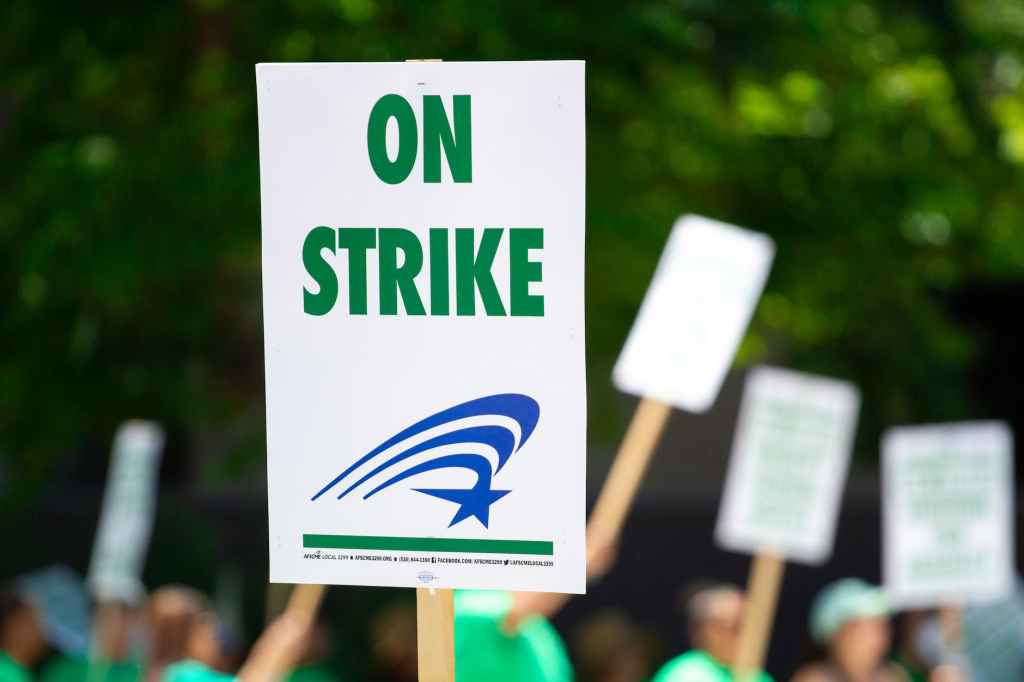
Striking Truth It’s always been a trope of the British Right that our decline was due to endless strikes. Hence the unions were ruthlessly crushed. But a surprisingly counter-intuitive piece from the The Conversation suggests that the truth may be more subtle and complex. There’s three concepts likely to cause problems in editorial meeting at The Sun!

Ice, Right? Scientists seem to have discovered a new form of ice, more akin to that found in such locations as the moons of Saturn and other exotic locations. Should we try some in our Friday Night Cocktail recipes? The Mail explains

https://www.dailymail.co.uk/sciencetech/article-11709601/Scientists-create-entirely-new-type-ice-neither-floats-nor-sinks.html

Power Down Why go to all that trouble building fusion reactors on earth, when you canget for next to nothing from our nearby fusion reactor, i.e. the sun? The most likely way ahead would be to beam down microwaves, as Nature explains, Can a Solar Farm be built in Space?

The first orbiting solar power station could be operational by 2040. Until then, huge technical hurdles remain. The arrays would need to be more than one square kilometre in size, and would have to be assembled in space — an incredibly complex engineering challenge. Arguably the biggest problem: beaming the power generated in space back to Earth. The most promising option is to convert energy into microwaves that will be captured by receiving stations that are even larger than the solar-panel arrays.Nature | 6 min read

Green growth, the rushes show Back in about 2015 climate change deniers were fond of saying that the economy could not afford the change-over to to renewable technologies. It’s early days yet, but the indications are that a green switch will be good for jobs and growth. This is the BBC

https://www.bbc.co.uk/news/science-environment-64440827

Batteries Flattened The price of not adopting green technology may be high indeed While the EU and USA forge ahead with state crafted schemes for green transport factories, the UK has started to fall terminally behind. In thrall to right wing think tanks who were ever-hostile to state intervention and evidence of climate change, UK Ministers seem to have been blindsided. And now it may be too late to save our automotive industry

https://www.theguardian.com/business/2023/jan/26/britishvolt-collapsed-owing-120m-as-uk-car-industry-reports-dismal-year

And this week’s music It’s always good when two of the Greats manage to put aside their egos and work together, although it probably helps when one of them has been dead for seventy years. That’s why this Shakespeare-Purcell jam session, The Fairy Queen has survived the test of time. Although it got lost after the 1690s and only resurfaced in in 1910! here’s a brief but delightful extract, showcasing Baroque harmonies and singing at their enlightened best!

https://www.bing.com/videos/search?q=purcell+fairy+queen&&view=detail&mid=DF2CEA478B24C65DB4DADF2CEA4

#british decline #economics #ice #solar power #nuclear fusion #renewables #growth #henry purcell #william shakespeare

Friday Night Cocktails: Rum

Mention the word “rum” and you conjure up a world of tropical islands with evocative names like Leeward, Windward, Antilles and Keys. Of blue seas, white beaches, and warm sunny days under tropical skies. Of famous pirates like Blackbeard and Captain Morgan, who presumably liked nothing better than to drop into a beach bar for quick Daiquiri after a hard day’s cruising.

The origins of the drink and the word itself are highly disputed [1] But as early as 1651 it had a acquired a dubious reputation, as this observation upon the Island of St Nevis shows

The chief fuddling they make in the island is Rumbullion, alias Kill-Divil, and this is made of sugar canes distilled, a hot, hellish, and terrible liquor.”

Rum soon went on to make its way into cocktail recipes the world around. A quick glance at a recipe book revealed over fifty such, including some of the most evocative: Cuba Libre, Havana Beach, Pina Colada and Blue Hawaiian. There isn’t time to make (or drink) even a fraction of them all this evening. But we would like to offer instead this link to the BBC Good Food Guide. It’s like a handy guide for the beginner, but with juicy mixes like the Zombie and the Long Island Iced Tea, which anyone can soon learn to run up to a professional standard. So for tonight, why not mix up a special? And and imagine yourself to be on a Friday night on Port of Spain in 1722, when the taverns were alive with music and laughter, the fleet was in town, and the streets were full of excitement and discharged seamen. Happy days!

We thank Gary Herbert for the inspiration for tonight’s entry to the blog

[1]https://en.wikipedia.org/wiki/Rum

[2]https://www.bbcgoodfood.com/howto/guide/best-ever-rum-cocktail-recipes

#rum #cocktails #pirates

A Big Thank you for February-and is this blog number 800?

February is a wonderful time up here in the mid-latitudes of the northern hemisphere. Yes, it’s still cold, but the skies are bright for longer and the “cold, goblin spring of the crocuses” as Kurt Vonnegut [1] would have it, is already upon us.

It’s been a busy time here at LSS. Lots of likes from regulars, quite a lot of sign-ups, and the odd comment, which we more than welcome. There’s also the strong possibility that this is our eight hundredth blog! We’ll check that after we press the “send” button. We do chronicle the odd bad thing here;after all, there’s a lot of them about. But we also do a of of good stuff. January was full of hopeful stories on antibiotics progress, ending in fact with two strong ones back to back. It’s nice to see such movement on our original raison d’etre. Which shows, moreover-if we keep on plugging research, and the education that supports it, things can only get better.

[1]Kurt Vonnegut The Sirens of Titan 1959

There’s been another antibiotics breakthrough, but we missed it!

It was a peaceful Sunday morning, gentle readers. And we should have been scouring the media to bring you more stories of advances in the struggle against microbial antibiotic resistance. We even read the Observer, which is kind of like the Guardian‘s Sunday sister. So how did we miss this one by Robin McKie, their estimable and most learned science supremo?

It’s all about a bacteria called Xanthomonas albinecus, which can cause havoc to the growers of sugar cane. But the little creature carries a secret which could be of incalculable benefit: Albicidin[1] A substance which killes bacteria with deadly force by acting as a DNA gyrase inhibitor. Alright, we know tht last phrase doesn’t trip off everyone’s tongue. But get this from your labroots link: [2]

this plant pathogen inhibits DNA gyrase and prevents bacterial DNA replication, since DNA gyrase enzymes are present in bacteria but not humans.1,3 

Yes, unlike Brexit, this time it really does look as if we can have our cake and eat it. The potential to develop this method as it is, then augment it with genetic engineering, could be enormous.

When we started our original Facebook page back in far off 2015, with the sole aim of promoting antibiotics research, the situation looked bleak indeed. But as avid readers, who had the public-spiritedness to follow us into this blog will have observed, things now look much much better. Thanks to the efforts of people like Professor Colin Garner and his doughty champions at antibiotics research UK[3],journalists like Robin and many others around the world, there has been real progress. We could spend lines on hackneyed metaphors about lights, tunnels, woods, trees, cups and lips. But we’ll spare you that. Provided that you promise to keep donating, pushing your politicos and spreading the word in every conversation in the pub/supermarket/cafe/waiting room and wherever else you can. How’s that for a deal?

[1] https://www.theguardian.com/society/2023/jan/29/plant-toxin-new-weapon-antibiotic-war-against-bacteria-albicidin?CMP=Share_iOSApp_Other

[2]https://www.labroots.com/trending/drug-discovery-and-development/24547/introducing-plant-toxin-antibiotic-albicidin#:~:text=Albicidin%20is%20a%20peptide%20antibio

[3]https://www.antibioticresearch.org.uk/

#robin mckie #antibiotics #albicidin #bacteria #antibiotic resistance #medicine

Michel Barnier on how Brexit went wrong

Brexit is over. It’s done. We may not have agreed with it, but there was a democratic vote, and we agree with that. What’s more we think it both inadvisable and impossible for the United Kingdom to join the European Union now. Brexit must be made to work. And the problems of the UK are far more deep rooted and chronic than the sudden irruption of 2016. So much so that EU membership is largely irrelevant to them.

But did it have to be done quite so incompetently? So much so that even many of its erstwhile supporters are beginning to doubt its relevance or wisdom?[1] How did a nation manage its affairs so badly in the crucial years 2016-2020? The reappearance of Michel Barnier on British television prompts memories of that question, and many others. His book My Secret Brexit Diary is excoriating about successive British negotiating teams. He and the EU ran rings around them from the start. [2] In this tiny space we can offer but one extract, but it says it all

When negotiations opened, the media made much of a photo of Barnier sitting with a file full of papers on the table in front of him while David Davis had nothing at all. The reality was far worse. Barnier was astounded by Davis’s “nonchalant” approach: “As is always the case with him we rarely get into the substance of things

How did intelligent, educated men like Davis, Boris Johnson and David Frost play their hand so very badly? They were backed by an superb diplomatic machine, the support of most of the nation, and an overwhelmingly, almost obsessively compliant media. Or is the clue to their downfall in that last?

You see, foreign readers, the British Ruling Class does not need to negotiate. Never had to. Never learned it. Every enemy they come across-miners, europeans, immigrants, teachers- can at once be screamed down, demonised and demolished by a hopelessly partisan, hysterical press and media. So effectively that they are deprived of all legitimate agency. No case they can present is worthy of consideration. To consider their point of view, to empathise(a key skill in negotiation) is to become a Traitor. This works well in Britain, where all opposition has been successfully flattened for decades . But in wider lands, where the writ of the Daily Mail does not run, this attitude causes problems. And so our rulers, so accustomed to getting their way at home, became hopelessly out of their depth when faced with a real world intellectual challenge, which less cossetted statesmen take in their stride.

Now Britain sits isolated from any trading bloc of significance, and the consequences mount by the day. Brexit has to be made to work, their is no other option. But before it can, we must learn about why it has started so badly for us.

[1]https://www.msn.com/en-gb/news/uknews/changing-attitudes-to-brexit-three-years-on/ar-AA16TgQu?ocid=msedgntp&cvid=542f3870a6014399a69cc70d19d9641

[2]https://www.theguardian.com/books/2021/sep/25/my-secret-brexit-diary-by-michel-barnier-review-a-british-roasting

#brexit uk #eu

New antibiotic offers real signs of hope

We’ve said it before-we started this blog to highlight the dangers of antibiotic resistance. It’ still what we’re really all about, despite the odd excursion into other matters. So when something comes up that really offers hope, we quickly revert to type. And so we think we have something good for you today, or rather Ethan Ennals of the Daily Mail does. [1]

It’s called Gepotidacin. It’s been developed for UTIs, and is still in its early stages. But we’ll let Ethan and Wikipedia[2] riff on that for you. The key learning points for us are more general, and we hope not too discursive, for our busy readership.

Firstly: it’s a new antibiotic, developed in a rigorous programme of research. After all the doom and gloom we throw at you here, that has to be something to cheer about. Secondly, there’s a clever new methodology, carefully targeting the gene sequence of the offending organism. As the researchers point out, this may give the new medicine a longer shelf life. Don’t forget; resistance to he first generation of antibiotics was springing up after only a few years. Thirdly (admittedly a bit speculative): research successes tend to be like buses. There’s nothing for a long time, and suddenly three come along at once. And so we offer congratulations to the researchers who pioneered this success, and to the journalists who are spreading the Good News. Where’s there’s thought, there’s hope.

[1]https://www.dailymail.co.uk/news/article-11687755/Relief-1-7million-Britons-suffering-urinary-tract-infections.html

[2] https://en.wikipedia.org/wiki/Gepotidacin#antibiotic resistance #superbugs #medicine #dna