
Why Cruelty isn’t the same as Efficiency: ask Jake

About ten years ago one George Gideon Oliver Osborne (Norland Place, Colet Court, St Pauls, Magdalen Oxford), who happened to be passing through the post of Chancellor of the Exchequer, graciously shared his thoughts on those in receipts of state assistance. He characterised them as “sleeping off a life on benefits” while their hard working neighbours set off for a day of hard work. Given that Gideon (son of Baronet Sir Peter Osborne) could have had only limited experience of the sort of estates where such people lived, we wondered even then how he knew. Or how his nominal boss David Cameron (Heatherdown, Eton, Brasenose Oxford), who was enjoying a few years in occupancy of the post of Prime Minister), could have known much either, or met someone like Jake, who might have enlightened them.

Jake, the subject of this story by Amy Taylor in the Guardian tried to do all the right things. [1] He was honest and self employed (a wet dream for certain right-wing theorists) paying his taxes and even tried to own his own home via a mortgage. Tried. For Jake committed the cardinal sin in contemporary Britain. He was unlucky. He got a hernia. You can read the full heart-breaking details via the link. But the essence was that he couldn’t work, fell into our labyrinthine benefits system which is designed above all to starve all claimants except old age pensioners, of every possible penny it can. And from there his life has quite quickly spiralled out of control.

Gideon and his boss rode into town on a tide of enthusiasm whipped up by a media determined to demonise all in need of help-with their health, with their income, with their homes, what-have you) as feckless scroungers determined to milk the taxpayer and so dragging down our economy that we would be pauperised by 2023. (we are, aren’t we?-ed) Yet their relentless ethos of suspicion, blockage and grudge has transformed Jake from a contributing economic unit into a permanent pauper. With a little more help, Jake might have made it through. He probably won’t, now. And there are hundreds of thousands like him.

Before some readers accuse us of gullibility, naivety and being soft, we beg them to consider this null hypothesis. It pays to treat people as members of society, not entries on a spreadsheet. And so to help is actually an investment for us all.

[1]https://www.theguardian.com/commentisfree/2023/mar/06/england-2023-welfare-system-debt-state-support

#universal credit #george osborne #davis cameron #poverty #inequality #benefits

Jimmy Carter and the mystery of the Evangelicals

A short while ago we published a little piece on Elizabeth Blackwell (LSS 28.2 23) in which we opined:

she was a product of that remarkable culture of Protestant Christianity that rooted in New England in the seventeenth century. ……….. all were united in their aspiring, hopeful lives, which prized Duty way above individual greed.

Hang on, that doesn’t sound too much like those gun-totin’, Trump-votin’ good ol’ boys from the Deep South we know and love so much today, does it? To quote John Blake of CNN [1]

Today White evangelical Christians are associated, rightly or wrongly, with a conservative set of theological and political stances. Those include opposition to abortion, being the most enthusiastic supporters of a brand of Christian nationalism that seeks to turn the US into a White Christian nation, and championing a former president who boasted about sexually assaulting women.

Not exactly a wholesome bunch. The biblical injunction “for there is no partiality with God” (Romans 2.11) seems to have passed them by. So has “There is neither Jew nor Greek, there is neither slave nor free man, there is neither male nor female, for you are all one in Christ Jesus” (Galatians 3.28) And all that tricky stuff about the meek from the Sermon on the Mount! But we won’t go on, lest we start sounding like an overexcited Fox News anchorman.

But as John observes:

Yet there were periods in the 19th and early 20th century when White evangelical leaders led campaigns against slavery, fought for women’s rights and became leaders in an array of social justice reform movements.

So, how did this essentially progressive, hopeful movement get hi jacked and how was it turned into a reliable voting machine for Donald Trump and some other equally unsavoury characters? One clue lies in the life of Jimmy Carter, surely one of the most honest and upright men who has ever held the office of President of the United States. We’ll let John tell his story, he does things much better than we ever could; do please click, because it’s a good one.

And our thoughts? There’s a strange strand in the human psyche where people like to portray themselves to themselves as gallant underdogs, full of homely virtues like equality, humour and matey-ness, struggling against corrupt elites. Until our underdogs find another group below them. A group who must thereby be oppressed, lest they get out and spoil the comfortable little hierarchies of unreason. The Boers of South Africa were like it with anyone who had a browner complexion. The Australians with the Aborigines. And always, always, the old Slavocracy of the southern United States, ever ready to destroy the Constitution in abeyance to their deepest hatred. Jesus was just another way to do it.

https://edition.cnn.com/2023/03/05/us/jimmy-carter-evangelicals-blake-cec/index.html

#jimmy carter #southern baptists #reform #racism #christianity

Weekly Round-up: CRISPR, rainforests, evolution and Robbie Williams

Stories that caught our eye

CRISPR marches on    We try to bring you as much as we can of really -cutting edge stuff. And nothing is more so than CRISPR, which we’ve showcased here for some time  Here’s another update from Nature Briefings Genome Editing Beyond CRISPR babies

The Third International Summit on Human Genome Editing kicks off in London on Monday. The last summit, in 2018, convened on the day after biophysicist He Jiankui announced that he had edited the genomes of three embryos, resulting in the birth of the ‘CRISPR babies’ — and ultimately landing him in prison for three years. Researchers aren’t expecting similar revelations to shake this year’s proceedings, as there is broad consensus in the field that the technology is not ready for use in human embryos. Other ethical quandaries, such as how genome-editing therapies — the first of which could be approved later this year — could be made broadly accessible, will be up for discussion.Nature | 5 min read

Don’t give up on the rainforests You might think that Destructors are having it their own way. Not so, at least not entirely, as this heartening news from Indonesia shows Thanks to P Seymour

https://www.wsj.com/articles/indonesia-shows-its-possible-to-tame-rainforest-destruction-f6261f1

Devonian was best   We’ve always had a weakness for the word Devonian. Not only because it was generally warm and sunny, and a crucial turning point in the evolution of life, but also because it evokes a nice scenic coastline, cream teas, peaceful cows and fine beaches. The Conversation riffs on the first part, anyway

Robbie was the best Of what, or who? Well, we can’t answer that without legal representation, so we’ll leave you to guess. But evidence for our theory appears in this early solo effort. Take that, ye detractors!

ttps://www.bing.com/videos/search?q=robbie+williams+angels&docid=608015963554786440&mid=AEBC104FD12D1115F084AEBC104FD12D1115F084&view=det

#CRISPR #devonian #climate change #deforestation #indonesia #robbie williams

What’s the best drink to go with curry?

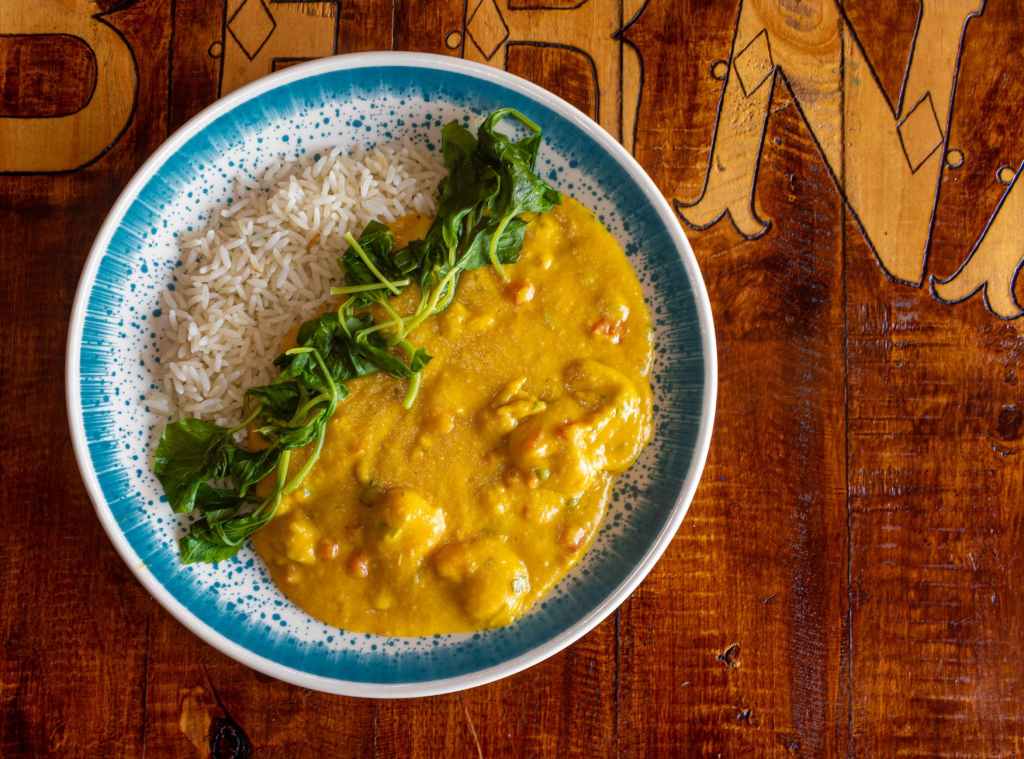
The experience of dining recently with some business acquaintances in a small village to the north of London prompted an age-old question: what is the best drink to partner a curry? For it may still surprise certain overseas readers that curry is now our number one dish on this island, ahead of such supposed staples as fish and chips and roast beef.  How this came about is explained in this delightful video from the BBC

Curry: A history of one of Britain’s national dishes – BBC Ideas

Discussions were wide ranging. All agreed on one thing: even the mildest Asian dishes like Korma do not sit well with wines, which were developed to accompany European dishes. And as you go up the scale, challenging your mates to try something hotter and ever hotter, the need to slake an over stretched palate becomes ever more acute. There is water of course. And we believe you should have plenty of it, well-iced, always close at hand on these occasions.

But hey, you can’t have a really good night out inn a curry house with just water! The occasion would lack that certain je ne sais quoi, as they used to say in old Kahnpoor. So, with the benefits of hundreds of years of collective curry achievement under their belts (and what wide belts some of them now are!) we came up with this list of suggestions

Cobra Lager  It not only feels Indian, with a name straight out of the pages of Rudyard Kipling, but is the standard request as it comes in a big cold, thirst-quenching bottle which somehow stands naturally among all those funny spice trays and poppadoms you see at the beginning of the evening, when you can still remember what you’re doing. At 4.5% it’s not too deadly, making it our beer of choice, even though much of it now seems to come from Burton-on Trent

Cobra Beer – Wikipedia

Kingfisher   1857 was a turning point in Indian history for all sorts of reasons. Not least for seeing the invention of Kingfisher, which has delighted the tastebuds of thirsty Indians and Brits ever since. We always liked it because when we lived in Kingston Upon Thames our local curry house (not the posh one) served it on tap, a service amiably extended to take away patrons with a few minutes to kill while the order was prepared, Happy memories!

Kingfisher (beer) – Wikipedia

Singha  Not every curry comes from the Indian subcontinent. Thailand has a long and honourable tradition in this regard. Many a tourist has regaled us with stories of Bangkok in the 1990s and curry restaurants were often among their tales, though not always the most interesting of such. And the establishment of Thai curry here has brought in train Singha, which to us has a marvellously unique flavour of its own, quite different from the Indian ones we have mentioned, or Eurolagers for that matter.

Singha Beer | Our Brew

Well, there’s our little suggestion for tonight. Doubtless you will add to it, and if so-we’d love to here from you. In the meantime, have  a happy Friday night.

#india #bangladesh #curry #cobra #singha #kingfisher

It’s RNA’s world-we just live in it

Fans of the origin of life and all things evolutionary will recall the RNA World hypothesis. [1] Stated simply, it holds that the whole apparatus of DNA, tRNA, ribosomes mRNA and associated enzymes is just too complicated to have arisen at once. Information Theory alone would suggest an earlier, simpler stage, when something was taking bits of chemical out of the primordial soup and organising it into simple chains of amino acids. If only for something to do-there was no TV or internet back then.

Whatever it was must have been a simpler, no frills version of the ribosome, that little molecular engine that builds all the proteins we use to live. A hypothetical protoribosome, for want of a better word. But could such a thing have arisen itself from the primordial soup? Now two independent teams of scientists suggest the answer could be a qualified “yes”.[2] Nature Briefings has this summary and link, The molecule that kickstarted life

For more than 15 years, scientists have been on a quest: create a functional ‘protoribosome’, a reconstructed version of the protein-building machine that many think might have helped to kickstart life on Earth. The modern ribosome is a key ingredient of life as we know it because it translates genetic information into proteins. At its heart sits a small RNA pocket that some think might be closest to what the very first ribosome looked like. Now, there’s proof that some reconstructed protoribosome-like RNAs can link amino acids — the first step to making proteins. Some scientists say there are other ways for proteins to emerge, without a ribosome. But others are already thinking about repurposing these simple machines to manufacture new kinds of biomolecule.Nature | 12 min read

You can praise this on all kinds of levels; cutting edge intellectual research, awesome techniques and even the possibility of something useful in areas like research or medicine growing out of it. But for the romantic in us, it offers a possible glimpse into the origins of life in a dark sea as the asteroids still smashed down, long long ago.

[1]https://en.wikipedia.org/wiki/RNA_world

[2]https://www.nature.com/articles/d41586-023-00574-4?utm_source=Nature+Briefing&utm_campaign=22d7dd2757-briefing-dy-20230301&utm_medium=email&utm_term=0_c9dfd39373-

Heroes of Learning: Elizabeth Blackwell

Imagine if we had no female Doctors. Do you think we might be in a bad way? Well, the fact we have any at all is partly due to Elizabeth Blackwell (1821-1910) who was showing the boys that the Sisters could do it at a time when female suffrage was regarded as a quaint joke, and slavery was still widely practiced in the United States.

What’s remarkable about Elizabeth was her all-consuming energy. In the course of a long life her ferocious will was applied to most of the progressive Reform and Progressive causes of her day. Like Garrison, Stowe and many others, she was a product of that remarkable culture of Protestant Christianity that rooted in New England in the seventeenth century. It generated many offshoots and heterodox subsets-Blackwell was a doyenne of both Congregationalists and Unitarians at different times-but all were united in their aspiring, hopeful lives, which prized Duty way above individual greed.

The roll call of her achievements is too long for this tiny blog. First female medical graduate 1847 (hats off to Geneva College, NY for this one!) Founded New York Infirmary for women 1857. Deeply involved in medical work in Civil War 1961-1865 (she hated slavery) Flits across the pond to Britain where she founded the National Health Society in 1871. A prescient title indeed. Then came retirement, when most of might choose to spend our days in beer and skittles. But:

Her greatest period of reform activity was after her retirement from the medical profession, from 1880 to 1895. Blackwell was interested in a great number of reform movements – mainly moral reform, sexual purity, hygiene and medical education, but also preventive medicine, sanitation, eugenics, family planning, women’s rights, associationismChristian socialism, medical ethics and antivivisection – none of which ever came to real fruition.[6] She switched back and forth between many different reform organisations, trying to maintain a position of power in each. Blackwell had a lofty, elusive and ultimately unattainable goal: evangelical moral perfection. All of her reform work was along this thread. She even contributed heavily to the founding of two utopian communities: Starnthwaite and Hadleigh in the 1880s.[6] [1]

She wasn’t right on everything (nor were Darwin and Einstein) and she quarrelled with some equally remarkable people including Florence Nightingale. Such are the occupational hazards of a life lived at the cutting edge. But, man or woman, before you sink into apathy and self satisfaction with your accomplishments, ask yourself: have I lived my lfe as well as this?

[1] https://en.wikipedia.org/wiki/Elizabeth_Blackwell

#women #feminism #medicine #protestant #new england #reform #progressive

New Prostate Cancer Test reveals an inconvenient truth

It’s another day in the office here at LSS. And in between watching the trains coming and going from East Croydon Station, we thought we’d showcase a nice little article from the Daily Mail about a new test for the prostate cancer.[1] A new testing technology will massively improve screening for this disease, saving thousands of lives. And anyway, haven’t we always been big champions of preventive medicine here, or what?

And then we looked again and found the hidden message. Get these extracts

British medics have been working to evaluate the test, developed by Indian firm Datar Cancer Genetics.

Researchers in India collaborated with Imperial College and Guy’s Hospital in London on the study, which is published in the journal Cancer Medicine.

India? Collaborated? Were these words really used in the Daily Mail? Have they just confessed that working with other people across borders might actually produce some useful results? That Foreigners might know something we plucky British do not?

Unfortunately, it seems the answer is “yes.” Our second exhibit is this little piece from Nature [2] which looks at Covid-19 research back in 2020. The authors conclude, overwhelmingly:

Collaborations are essential — we need diverse teams to tackle global problems such as pandemics, and to help navigate social and geopolitical challenges. COVID-19 has provided a timely reminder that it can be done — and of the enormous rewards it can bring.

And what’s true for biomedical research is true for work in IT, astronomy. food sciences and every other discipline that works to ameliorate the lot of humankind. Thanks, Mail, you’ve proven the case. We’re better together.

[1]https://www.dailymail.co.uk/health/article-11793975/New-highly-accurate-blood-test-gives-hope-doctors-soon-able-screen-prostate-cancer.html

[2]https://www.nature.com/articles/d41586-021-01581-z

#prostate cancer #testing #preventive medicine

Left and Right: labels well past their sell-by date

Why do we all go around labelling ourselves “Left wing” and “Right Wing“? An anthropologist landing from Alpha Centauri would find a bewildering variety of tribes: Hard Left, Soft Left, Centre Left, and so on all the way out again on the other side to something called the Hard Right. It’s more like one of those pH charts that chemists use to measure acidity and alkalinity than a rational description of political economy. How did we get here? According to Evan Andrews of the History site:

The split dates to the summer of 1789, when members of the French National Assembly met to begin drafting a constitution. The delegates were deeply divided over the issue of how much authority King Louis XVI should have, and as the debate raged, the two main factions each staked out territory in the assembly hall. The anti-royalist revolutionaries seated themselves to the presiding officer’s left, while the more conservative, aristocratic supporters of the monarchy gathered to the right. [1]

Hang on. 1789? Wasn’t that rather a long time ago? And hasn’t rather a lot happened since then, such as Industrialisation, De-industrialisation, Feminism, the Interweb and a few other Broad Societal Trends, to use a term beloved of economic historians? Well, yes they have. So does this “Left” “Right” stuff really map on to a society standing on the verge of quantum computing, biological engineering and a five hour working week?

We think the split is , and always has been, between Progressives and The Other Lot (confession: we can’t think of a name for them yet). Down the years, Progressives have gone by various monnikers, including Whig, Liberal, and New Labour in the UK-you can create your own list for homework if you wish. Haltingly, and at great distance, we dare to detect a few common themes: that Justice supersedes Order. That change can lead to better things. That the more people you include, the more potential your society has to grow. And that information should flow as freely as possible.

Of course there are arguments for The Other Lot, some of them very good indeed. But they are deeply fractured (see The Kronenbourg Question, LSS 7 2 2022), whereas none of the Progressive beliefs cancel each other out, and can actually be mutually reinforcing in certain circumstances

A new coalition built around progressive beliefs would include businessmen anxious for a well fed, well educated work force, scientists and professionals, the educated, the young, workers of all classes, and groups whose historical legacy is to be excluded and alienated, such as women and minorities, all united by the beliefs we have espoused above. A coalition of Opportunity, in fact.

https://www.history.com/news/how-did-the-political-labels-left-wing-and-right-wing-originate

#Left #Right #French Revolution #progressives

Why did I just do that? The great unanswered question of our times

Why did I do that? It’s a question that has plagued humankind since Adam and Eve discovered a fruit diet wasn’t all it was cracked up to be. Anyone who has had a hangover, had a row with a partner or cast a wrong ballot has asked it at some time. How do we make decisions, and on what basis? Especially dreadful ones?

In the eighteenth century Whigs and other Enlightenment folk told themselves that they had the answer. The human mind would use its intelligence to look at the best available facts, and by use of reason, arrive at the optimal outcome. It’s a nice theory and it sometimes works on a good day, but its really only for the top 5% and then only sometimes. In the nineteenth century certain Marxists riffed on it by saying classes would make rational decisions based on economic circumstances. And look what happened when that was applied in practice.

Unless you stretch the meaning of self interest so far that its no longer a useful concept, you have to admit people may vote against their best interests. Not a few, but millions at a time. To take one small example, from one small country: why does England vote Conservative in such large numbers? Adam Ramsay examined this for Open Democracy[1] back in 2020, but it’s still relevant today, for it reveals the deep ancient bedrocks of the English psyche. In particular:

………………….But the double helix in the DNA of these issues is sentimentality about the empire, and support for the monarchy, especially as the House of Windsor completed its transition to TV and tabloid monarchy.

It’s this feeling that makes England Conservative (even if not generally conservative): the Tories are the party of Anglo-British nationalism and Empire, the party of the ruling class. And the underlying message in much of Anglo-British nationalism is that posh people – and the monarchy first of all – ought to be in charge. That is, after all, who ran things when Britain was ‘great’.

This is why David Cameron and Boris Johnson were considered ‘prime ministerial’ while John Major, Gordon Brown and Ed Miliband weren’t

A deep psychological yearning for lost status trumped any calculation of rational economic interest. And it will be the same across the entire world, especially as we deal with groups whom are older, less well educated and economically precarious. “The mass of men lead lives of quiet desperation” observed Thoreau. Unless progressives recognise these forces as ineluctable fact, we will lose, and the future of the planet with us.

[1]https://www.opendemocracy.net/en/opendemocracyuk/why-does-england-vote-tory/

#nationalism #identity #religion #nostalgia

Note: For security reasons, Cocktail Night has been cancelled this week

Weekly Round Up: Feminism, Bird Flu, and 365 days of War

stories that caught our attention this week

She’s a woman  Good news for the feminist cause. The UK is about to get its first female Chief Scientific Officer. Just in time for the next pandemic, which could be the ultra dangerous H5N1 flu strain, which is starting to find its way into humans, as we explain below. Meanwhile, here’s Nature

Angela McLean, a mathematical biologist who helped to steer the country’s response to COVID-19, has been appointed as the UK government’s next chief scientific adviser. She will take over from clinical pharmacologist Patrick Vallance, who gained a high profile for his unflappable appearances in frequent televised pandemic briefings. McLean will need to “step back from the immediate aftermath of that crisis and look afresh at how well our system is working”, says research-policy analyst James Wilsdon.Nature | 3 min read

Sorry, what were you just talking about? Appalling animal husbandry and a feckless desire to put profit over science has nurtured appallingly dangerous strains of influenza. You haven’t heard the last of this story, gentle readers, but here’s the latest, today from the Independent

https://www.independent.co.uk/asia/southeast-asia/cambodia-girl-bird-flu-dead-b2288808.html

One Year of War It’s been 365 days since Russian Dictator Vladimir Putin launched his invasion. Today we present a series of expert views on how we got here and what might happen next

Jonathan Este looks at how things have gone in the actual fighting, which hasn’t been nearly as one sided as Putin daydreamed it would be

https://t https://theconversation.com/ukraine-war-how-have-vladimir-putins-narratives-survived-a-year-of-reality-checks-199907?utm_medium=email&utm_campaign=Latest%20fromheconversation.com/ukraine-recap-how-the-conflict-stands-after-12-months-of-bitter-fighting-200611?utm_medium=email&utm_campaign=Latest%20from%20The%

Why has Russia done so badly? Putin rose from a gangster background and  presides over a gangster regime. The result? Corruption and graft are rife, but spare at least a thought for the poor Russian recruits who are forced to fight for the regime. Here’s Frank Lewidge

Lie machine Of course it helps if you are holding a gun to the population’s head, but Putin lies like a horse coper as .well, to get them to go along with this war. Precious Chatterjee Doody makes clear

And China? Their actions in the next few days could shape human history for decades, if not centuries to come. If there is to be any human history, that is. Here’s Ian Williams for the Mail

If China supplies weapons to Russia our whole world will change FOR EVER, writes author IAN WILLIAMS | Daily Mail Online

America has its idiots too   Yes, Putin miscalculated. But don’t forget George W Bush, whose Iraq blunder arguably broke the world order and gave dictators everywhere the green light to invade who they wanted, when they wanted

https://www.msnbc.com/opinion/msnbc-opinion/george-w-bush-was-worse-remember-rcna71216

thanks to P Seymour

And our view? Western countries are not entirely angels, and we can see why some people in other lands are suspicious or even want to cheer on Putin as “the underdog”. But for us there is a line of right and wrong here. In 1994 Russia took control of all Ukraine’s Nuclear weapons, guaranteed its frontiers and agreed to refrain form aggression against it. The UK and the USA signed up to the Budapest Memorandum too; at the time, it was seen as an important step to prevent nuclear proliferation. By his action on 24th February 2022 Vladimir Putin tore up that treaty, and has unleashed a terrifying peril. He would not have done so if Ukraine had retained those weapons. The message is clear: if you want to be safe, get nuclear weapons as soon as possible. That is why his action was not just evil, but irresponsible at an almost adolescent level. He must be stopped.

#avian flu #ukraine #vladimir putin #russia #china #aggression #NATO