We’re up to our necks in Smoot Hawley here

God knows, we don’t like to blow our own trumpet here. The pictures of the Conceited Ape and the Man Blowing His Own Trumpet (both generated with AI) are entirely coincidental. But attentive readers may have noticed how we have been pushing the dangers of the Smoot-Hawley Tariff of 1930 and its parallels to the policies of Mr Donald Trump (at the time of writing his title is still Mr) .

Now the admirable Larry Elliott of the Guardian has got in on the act [1] We’ve often repeated his thoughts on these pages. And this time he goes further, suggesting it is a sign of American weakness, not strength. Well worth a read over your morning latte, we think As for us, we hope that is the last we see of Messrs Smoot and Hawley and their execrable tariff.

But before we go here are a few final thoughts

1 You read it here first

2 Most historians and economists think Smoot Hawley was a major step in the road to World War 2

3 Despite what nostalgists tell you, wars aren’t all chirpy cockneys singing jolly songs in Underground Stations. Ask them in Ukraine if you don’t believe us.

4 A nation may claim the right to act entirely in its own interest, without regard to others. Fair enough. But by the same logic does an individual have the right to sell Class A drugs such as heroin, if he can make money thereby?

[1]https://www.theguardian.com/commentisfree/2025/feb/13/donald-trump-trade-war-president-china#

#tariffs #trade #world war #smoot hawley #larry elliott #donald trump

Lung cancer rising again Plus: is all that plastic in your brain doing you any good?

One of the great achievements that we progressives can still chalk up is the gradual elimination of smoking. Ok it’s still out there. But in western countries it’s in steep decline, and cases of lung cancer were falling accordingly. Or so it seemed. But since about 2020 it seems to be on the rise again. Among non smokers. Among women non-smokers in fact. Odd, isn’t it? The reasons are discussed by Dr Pinar Oysal Ongoner of the prestigious University of Westminster[2] *for the Conversation.[1] She is particularly interested in the rise in adenocarcinoma. The cause ? It looks as if air pollution is a strong candidate, with a strong pointer to our old friend PM2.5 which is spewed out daily by millions of cars, lorries taxis and vans. Clean air zones, anyone?

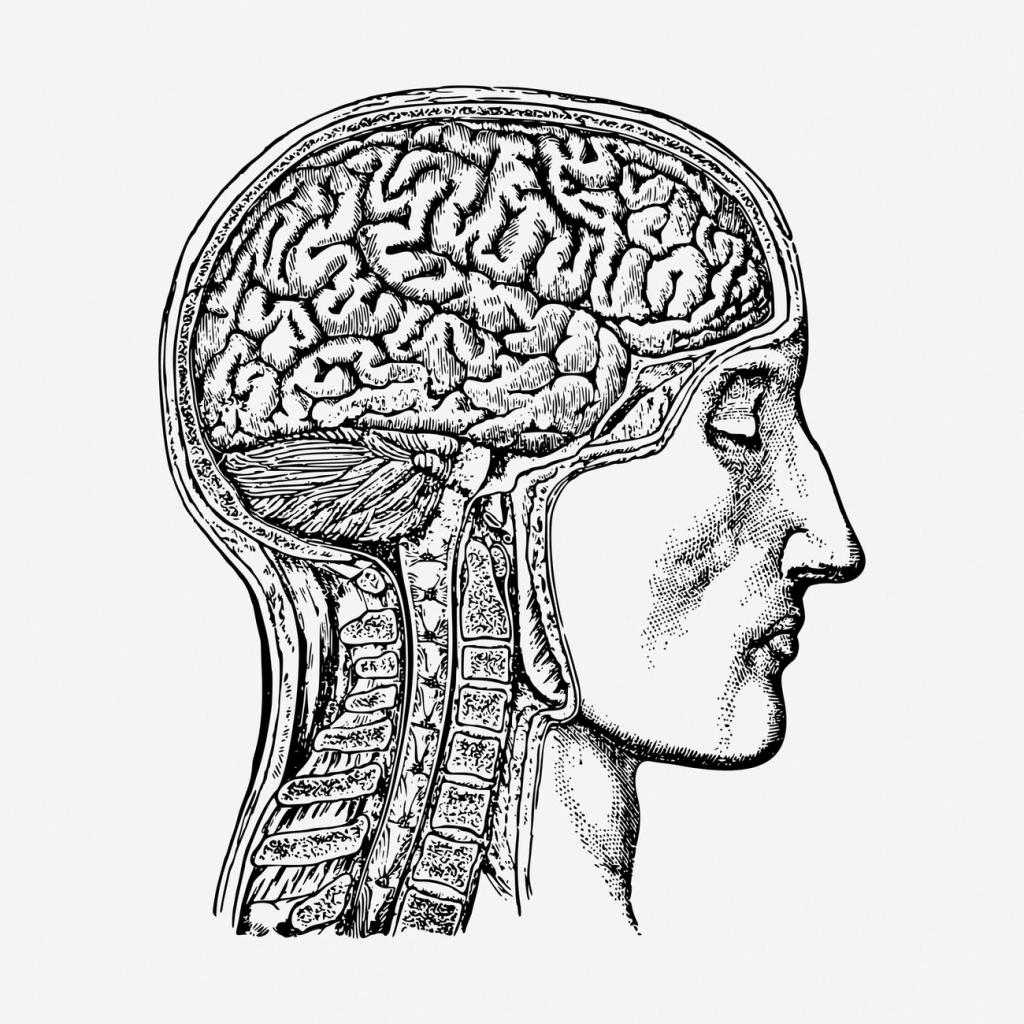
As if one pollution story wasn’t bad enough, here’s another that may be worse. Ten years ago the idea of plastic micropollution getting into the brain was either ignored or scoffed at. Now we know better: Our Brains are full of plastic bits from Nature Briefings

Toxicologist Matthew Campen estimates that he can isolate about 10 grams of microplastics from a donated human brain; that’s about the weight of an unused crayon. Scientists are scrambling to understand how these tiny fragments, which have been found in every recess of our planet and our bodies, affect our health. They need clear data to communicate potential risks to policymakers, and with plastic production reaching new highs every year, they’re in a race against time. “It’s very scary to think the concentration of plastics in my brain will go up several percentage points before we have answers,” says Campen.Nature | 11 min read

A whole crayon’s worth of plastic in your brain? isn’t that, like, rather a lot? It took decades to discover the link between tobacco and lung cancer. And many more to overcome the vested interests and start saving lives. At that rate, how soon are we going to cope with this new plastic threat?

*The University of Westminster is not only famed for its academic excellence but also for the production of graduates of outstanding charm, good looks and modesty. Well, Postgraduates, actually

[1]https://theconversation.com/why-is-there-an-increase-in-lung-cancer-among-women-who-have-never-smoked-249406?utm_medium=email&utm_campa

[2]https://www.westminster.ac.uk/

#cancer #pollution #traffic #pm2.5 #plastic #drinking straws

If you want to cure cancer, try paying more taxes

Cancer is the great unspoken truth running through our civilisation. Everyone knows someone who has it. Most people know someone who has died of it. The statistics suggest one in two of us will develop it in one form or another. When strangers discover that we run a science blog it isn’t long before cancer cures edge into the conversation. Everyone deep down wonders “will it happen to me?” You do, don’t you?

Which is why it gets a lot of coverage, and fresh discoveries always make the news. Following Ellyn Lapointe for the Mail [1] and the Korean owned Medical Life Sciences News,[2] we showcase the work of the brilliant Professor Kwang-Hyun Cho of the Korean Advanced Institute of Science and Technology. Instead of painful drawn-out chemical treatments it looks to cure cancer by manipulating the biochemical mechanisms of the cell. Admirable, and you can read more by following the links. But for us, for today, that is not the point.

Look again. The Korean Advanced Institute of Science and Technology. Turns out it’s state owned. Paid for by taxes, Its at the centre of an ecosystem of research institutes, university departments, private companies and assorted government and non-government organisations whose collective wisdom and output is far more than the sum of its parts. It’s not so much arriving at another cure for cancer that is important for us today. It is because this cure is part of a rolling programme of research and discovery that throws up such discoveries as it goes along. Creating a thriving centre of excellence and high value jobs.

The view taken by most people in the UK is that taxes are evil things. The State is an evil parasite holding back economic growth and thereby progress. But isn’t our story today prime evidence that the opposite is the case?

[1]https://www.dailymail.co.uk/sciencetech/article-14369821/breakthrough-switch-reverses-cancer-human-body.html

[2]https://www.news-medical.net/news/20241223/Groundbreaking-technology-converts-cancer-cells-into-normal-cells.aspx?form=MG0AV3
#cancer #medical sciences #economics #research

Smoot-Hawley for the 21st Century: Why The Conversation agrees with this blog

Tariffs: here we go again. We understand that Mr Donald Trump may have his own reasons for imposing them. As the ruler of a proud and independent nation he has the right to do so. But, for the moment, we still have the right to comment on his action. Which we did in two blogs (LSS 19 5 20, 12 11 24) Being of a historical turn of mind we drew parallels with the famous Smoot-Hawley Tariff of 1930. Which in the view of most economists and historians not only deepened the gathering recession, but also lead more or less directly to World War Two.

In such circumstances it is questionable whether it is “nice” to find that minds far better educated and profound than ours agree with our insights. For today The Conversation publishes an article by Thomas Giffe and Micheal Pouffle which agrees with us in almost every detail [1] In fact it does the whole job rather better; and you must read it, gentle reader.

Because the article brings out the key psychological reasons for the decisions. And psychological they are, not economic. Here are three killer quotes from Trumps most earnest supporters

Congresswoman Claudia Tenney of New York told Fox News that she’s glad the US is “projecting strength for once on the world stage”. Senator Eric Schmitt of Missouri insisted that tariffs were “not a surprise,” emphasising that Trump had relentlessly campaigned on “improving our standing in the world.”

former adviser and populist nationalist Steve Bannon warned that America would no longer be “abused” by “unbalanced trade deals.” “Yes, tariffs are coming,” he said. “You will have to pay to have access to the US market. ………… the free market is over.”

Now these are proud and intelligent people. But their priorities lie in fields other than economics. They may be right. They may not. But we do remember a passage from our Gibbon about the declining years of the Empire. Wherein a particularly tyrannous but insecure Emperor, having arranged the murder of his best general. asked an ordinary Roman Citizen for his opinion of the deed:

“I am ignorant, sir, of your motives and intentions” replied the honest man “I only know you have acted like a man who cuts off his right arm with his left”

[1]https://theconversation.com/the-us-tried-high-tariffs-and-america-first-policies-in-the-1930s-trump-should-note-what-happened-next-249079?utm_medium=email&utm_campaig

#smoot hawley #tariff #trade war #world war #USA #China #economics

Information Inflation: when the internet acts like a debased currency

Pump more money into the economy and you get inflation. It’s a lesson as old as time. The Roman Emperors of the Third Century successively put less and less silver into their coins, slowly debasing the currency. The result? Everyone needed more coins, and so the value of each unit fell. It was the same in the famous case of Weimar Germany where bank notes carried astronomically high face denominations, but were worth no more than than the paper they were made of.

Is it the same with information? The internet, news media, social media, feeds, all churn out a torrent of information. In such circumstances it becomes increasingly hard to know the value of any one piece and many people just give up trying. All information, any information, becomes worthless and people fall back on bartering local knowledge and techniques. We didn’t have this idea first of course: authors such as James Gleick [1] and Nicholas Carr have more than touched upon it. [2] Think how so many people choose to believe the facts that suit them. That is a perversion of the brain.

It’s interesting to see this convergence between information science and economics. If facts act like money, then they too can be debased. People who throw out streams of data, designed to flood, overwhelm and mislead are the greatest inflationists of all. If they can do it with data they can do it with currencies too.

[1] James Gleick Information: A History A Theory A Flood

[2] NIcholas Carr The Shallows: What the Internet is doing to our Brains

#inflation #information science #currency #economics

Mura Technology brings real hope on plastic pollution

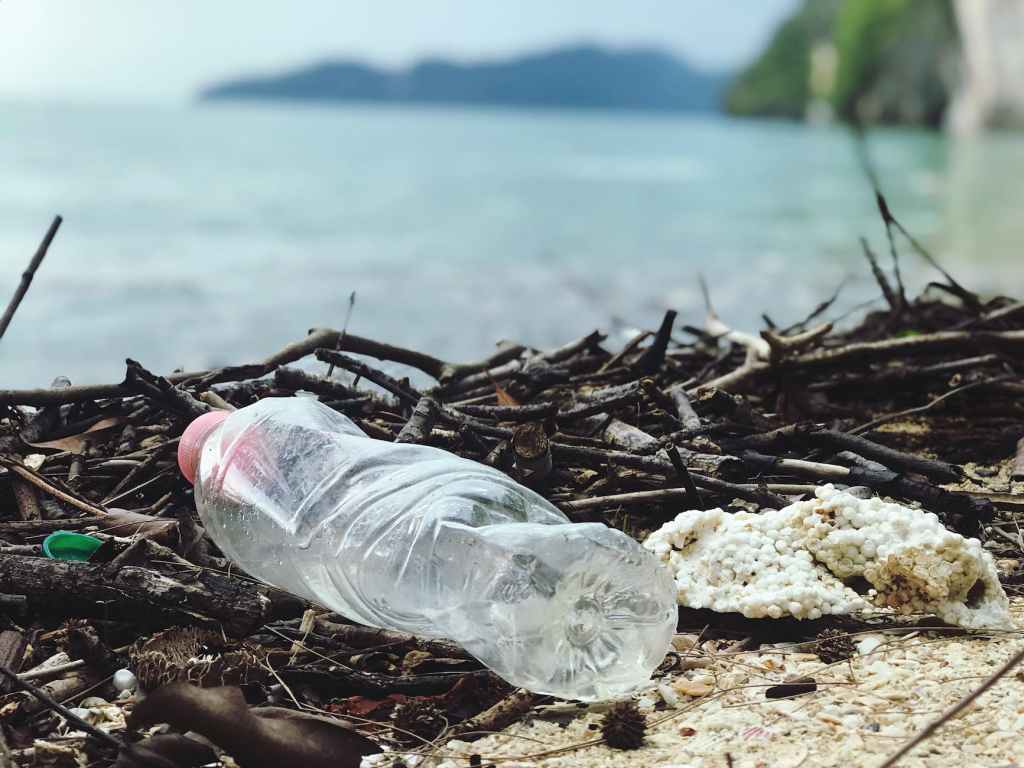
The other day, someone on the Board suggested a reprise piece on Plastics Pollution. But when we looked back to the archives, we’d done so many of them! Choking up the system like the plastics themselves. Unlike the plastics however, the old articles don’t choke up the waterways, poison the seas, kill wild life and damage our health. Real plastic waste does all of this and more, as this article from Wikipedia makes clear.[1]

There is no realistic, practicable way to ask mankind, particularly the more-erm, intellectually challenged-members of our species to give up plastics. Yet they are slowly but steadily killing us. So what is to be done. Mura Technology[2]think that the answer is to recycle them. They think what? Yes, we didn’t believe it at first. But with the right combination of heat and pressure they think they can resolve any plastic waste back to the original oily products they were made from. To be used again. Humankind imitating nature. Circular manufacturing and all that. It won’t get rid of all the horrible plastic already in the sea; but it will stop anymore going in. and that’s a start.

Now, we owe this infographic to the amazing website Nature Briefings. It’s our go-to website for up to date clearly explained developments in Science, technology and of course their impacts on society. We think you should too. so once again we have put in their link[3[ in the hope you will sign up. Because the more people that do it, the quicker reason and learning will re assert themselves and we will move from this dark place [3] And get this-it’s free!

Good, isn’t it?

[1]https://en.wikipedia.org/wiki/Plastic_pollution

[2]https://muratechnology.com/

[3]Enjoying this newsletter? You can use this form to recommend it to a friend or colleague — thank you!

#plastic pollution# #recycle #environment #nature #ecosystem

Heroes of Learning: Colin Renfrew

Anyone with the slightest interest in early civilisation must pay tribute to the work of Professor Colin Renfrew. That fascinating period spanning the Neolithic to the early Iron Age witnessed the transformation of humanity from hunter gatherers subsisting barely above the animal level to the first technological civilisations, deploying writing, building, pottery, roads and all the other appurtenances that set us above the beasts. This was Renfrew’s territory. And it encompassed a vast sweep from Cycladic figurines to the immense migrations of the Indo European speakers and the changes they wrought With a few Anatolians thrown in for good measure

So today we throw this blog open to the likes of Nature Briefings (see below) and Wikipedia [1] to tell you about his life and accomplishments. For Renfrew had all the marks of the true scholar. His learning was vast, his methods empirical, his conclusions provisional. He knew the real value of learning to is prompt further investigations, not to provide easy answers. If someone had provided clear and unequivocal evidence that the Indo Europeans had originated in Sutton Coldfield and not the Steppes, he would have been the first to agree. If ever you have travelled the sunny lands of the Mediterranean or Levant, gazed in wonder at the ruins still there, or tried to understand the guide book, remember :you are in Renfrew territory. Tread with respect.

Archaeology’s Closest thing to a household name Colin Renfrew, who helped to transform archaeology as a scientific discipline, died last November, aged 87. In the 1960s, researchers discovered that tree rings from bristlecone pines (Pinus longaeva) — which are among the oldest living things on Earth — could be used to redate artefacts in Europe. Prompted by these developments, Renfrew helped develop a fresh understanding of how European and Near Eastern civilizations developed, alongside new models for how societies change. “Renfrew’s ideas were decades ahead of available computational modelling power,” writes his colleague, archaeologist Cyprian Broodbank.Nature | 5 min read

[1]https://en.wikipedia.org/wiki/Colin_Renfrew

#colin renfrew #neolithic #bronze age #iron age #fertile crescent #middle east #indo europeans #archaeology #language

Go back to where you came from: Why we will be watching UK Channel 4 tonight at 9pm

Immigration. Immigration. Immigration. The central issue of our times. It’s been a neuralgic stopping point in conversations for as long as we can remember. Now, as unprecedented waves of people travel globe in search of a better life, it has become acute. Its almost mystic power to provoke the most passionate feelings, its ability to divide, to elicit fear, rage and compassion in equal measures is like nothing else, not economics, not football…certainly not our pet peeves about climate change and antibiotic resistance!

But don’t worry, you are not reading the wrong blog. Because at least we have always recognised the issue. What’s more, we have even urged that the causes of it are addressed. And what are those causes? That people will move from places from where life is unpleasant to where it is more pleasant. Obeying economic laws the way charged ions in an electric field obey the laws of physics.

Tonight Channel 4 will take six people with strong views and try to suggest the causes of the problem. That is quite something. It runs the gauntlet of two well-entrenched and aggressive mind sets. On the one hand an odd alliance of Free Market Fundamentalists and Left wing bien-pensants who try to pretend that all is well, and there can be no problem. On the other, a group of existentially frightened people who take refuge in facile nostrums like sending tiny planeloads of undesirables to Rwanda, or Rouen or Rutland, or wherever it was. We do not pretend this programme will solve everything overnight. We do not expect sudden overflows of compassion or understanding, for we always distrust strong emotions and sudden conversions. However we do expect that the problem has for the first time entered public discourse in a dispassionate and rational way. That we think is a beginning. Support them by watching, please.

#channel 4 #go back to where you came from #immigation #economics

Rookwood Operations: Clearing phosphates AND capturing carbon

Today we have a good news story, brought to us by the ineffable Robin McKie of the Guardian, which brings genuine hope, Because it solves two problems for the price of one.[1]

To begin at the beginning. In the last fifteen years or so, England’s rivers have started to fill with huge, choking blooms of algae, which seize all the oxygen from the water, thus killing everything else before, dying back themselves . To leave a poisonous foul-smelling sewer , like the ones you used to find in old towns in the Industrial revolution. The cause? High levels of phosphates on agricultural lands, which runs off into the waterways, producing sudden spurts in the aforementioned algae-and down we go to death, for the ecosystem that is. Now, it could be argued that without high phosphate levels we could not feed our population ( feed or fatten?-ed) So how to square the circle?

The answer is to trap the run-off phosphates and return them to the land. And a small company called Rookwood Operations[2] is doing just that, down in the leafy county of Somerset. Their new Phosphate Removal Material just sits in the water, soaking up the phosphates until it’s full. Whereupon it is returned to the land ready for the farmers to exploit again. And get this:

For every metric ton of PRM produced, carbon is sequestered, locking CO2 for up to 1000 years.
PRM is made from completely natural circular sourced sustainable components

How’s that for two in one? There’s so much to like here for LSS readers. There’s even a feminist angle, as one of the company founders was up for the prestigious UK Women in Innovation Award.

Thinking new. Thinking differently. Using existing technologies to squeeze progress in a new way. Surely that trumps going round smashing your friends over the head because it makes you feel better?

[1]https://www.theguardian.com/science/2025/feb/02/uk-scientist-wins-prize-for-invention-that-could-help-avert-phosphogeddon

[2]https://rookwoodoperations.co.uk

#Rookwood operations #phosphates #river pollution #capture technologies #agriculture #technology

Antibiotic Resistance: predicting it before it happens

In war, Intelligence is just about the most vital thing you can have. You know, predicting the enemy’s next move before he makes it. How useful it would be to know which bacteria will show resistance to our next antibiotic, where, how , and when! That’s why some new work from Dr Kalen Hall and team of Tulane University, reported on Phys.org is so exciting [1]

They have identified a genetic signature in the bacteria Pseudomona aeruginosa which predicts the likelihood of developing genetic changes which facilitate resistance to antibiotics. Ingeniously, they studied the DNA mismatch repair pathway, which spurs rapid mutations in the genome. As every schoolchild knows, the more mutations you throw up, the more likely it is that one will give you resistance to antibiotics.

But for LSS homies there’s a deeper learning point. The team took their cue from similar research being carried out in the field of cancer treatment. The idea was to use it to predict carcinogenic mutations-but look what these antibiotic folk have done with it! Science breeds science. Knowledge and learning breeds more knowledge and learning. To our readers in the United States we would observe that this is a lesson you used to know well. Why have you started to forget?

[1]https://phys.org/news/2025-01-genetic-fingerprint-bacteria-drug-resistance.html

#microbiology #dna #antibiotic resistance #cancer #bacteria