Who was your best teacher? Why?

We at Learning, Science and Society are fascinated b y the way people learn. Don’t learn. And unlearn. Last year the UK, from where we sit now, spent £91.8 billion on education, which was 11% of its GDP*. If you add to that the amount spent on private education, professional training, all the various types of evening classes and so on, that’s a very, very great deal of money. How much value does a society get from all this spending. In a nutshell: how often does a piece of knowledge get transferred to from one person to another?

Let me give an example. Many years ago a friend of mine moved with his young family to one of the new villages springing up around the boom city of Cambridge in England (there’s that education word again). As did many, he joined the local football club: busy young executives need exercise. His team had mixed fortunes in their local league. But they tried hard, had practice every Wednesday evening, and were led by one of those enthusiastic types you find a lot in local clubs and societies. This one had made a study of football tactics and training, which he tried to impart to my friend and his teammates on Wednesday nights.

The Trainer had diagnosed that one of the reason for their bad results was a tendency to boot the ball away aimlessly in great long kicks, especially when danger threatened. There was no attempt to make passes or find a colleague: in fact it was very much the English style of the time.

The Trainer felt that the solution was close, directed passing, “playing the short ball.” And one Wednesday evening he drilled them endlessly in this. Everyone agreed; everyone bought in, as they say.

Came Sunday morning, and the first match in the new style of play. The other team kicked off, and attacked. The Centre Half of my friend’s team found the ball at his feet and in one second, BOOT, away he hoofed it to the centre circle. As if Wednesday night had not happened at all.

I hope I do not ruffle too many feathers when I assert that some central defenders are more noted for their qualities of strength and toughness rather than agility in any form. And that, as a psychological type, they form the rugged honest yeoman, don’t- waste- my -time -with- fancy- new- ideas attitude that is the bedrock of any human group. Many have even gone on to careers in management, or the Professions. Yet it must be admitted that this man seemed to have learned nothing, absolutely nothing from two hours of training. And that only three days before.

So what was going on? Why do some people learn some things, and others not? Did you have a good teacher, who made the information flow? Or did you do better in later life, perhaps in work training, where things were less academic? Did you have a difficulty to overcome? Why do girls seem to be outpacing boys? Why do some groups, especially boys, seem to despise learning?

We don’t know. We want your ideas. For us at LSS, there is no better or more interesting source of ideas than other peoples’ experiences. As the above example shows. Please contact us on the links shown, or via Facebook. We want to know

*UK Public Spending website ukpublicspending.co.uk

#Learning #education #learningtransfer #good teacher #schoolmemories

After Coronavirus, what’s the next horrible thing to befall humanity? Part three

Well, according to Nouriel Roubini..

Hang, on, who’s he?

Professor of Economics at New York University Stern School of Business, who has also moonlighted for The International Monetary Fund, the US Federal Reserve, and the World Bank.

And, apart from that?

He was the one who accurately predicted the crash of 2007-2008. When a thinker makes an accurate prediction, that’s the time to take them seriously. Like Einstein and light wave bending.

So what’s his latest prediction?

That there is going to be a rather large, unpleasant recession in the 2020s, in the form of a letter L. For falling off a cliff and then crawling painfully away from the bottom.

And how does he work that one out?

He’s got ten reasons. Do you want to hear them?

Well. It’s not as if I’ve got to go to work or anything, is it?

Nor will you, by the sound of it. Okay . Number one is debt default. Covid-19 has led governments everywhere to run up massive fiscal deficits, at a time when these were already becoming unsustainable. Paying them off will need more austerity. As households lose income, private sector debt becomes unsustainable, with inevitable defaults and bankruptcies.

But surely the natural cycles of the economy will unleash growth?

Well, there could be a brake here, which leads us to number two, the demographic time bomb. Many countries have ageing populations. But Covid-19 has shown that having an integrated efficient public health system is just as essential as an army. Both can be expensive. Which implies more borrowing and spending.

So-will I have to work until I am eighty three?

Well only if there is something for you to do. Covid-19 has unleashed a curious slack in both production (all our machines stand idle as no one can buy the things that they make) and demand (no one has a job making anything) Which in turn leads to a price collapse, and more insolvencies. This is our number three.

But, wow, a price collapse! I will have loads of money to spend!

Not if the currency is debased, because it won’t buy anything. At first governments will run monetarised fiscal deficits to avoid depression. But as more and more money is printed, inflation will follow. We could get stagflation, a slightly nostalgic number four.

What’s that?

Inflation, but no economic growth. It was quite fashionable in the nineteen seventies. Around the time of glam rock. In fact the Professor thinks that the supply shocks will lead to further declines in globalisation, making it inevitable. That leads us to number five.

You mean we’ve got five more to go?

Six, actually. And they are the ones that seem to really worry the good Professor. Number five is digital disruption. As a result of supply shocks , companies will source production home, away from cheap overseas suppliers.

That has to be good for jobs at home, right?

Not necessarily. If you bring production into a relatively high cost economy, the pressure is on for automation. You should no longer confuse output with jobs. Which leads us easily to number six-de-globalisation

At least some of these link together well

Lucky us! Roubini observes that this is already well underway in things like pharmaceuticals and food. As protectionism kicks in there will be restrictions on the flow of goods, labour, services and capital, among others. So economies shrink further, leading to number seven

Seven was never my lucky number! Alright, let’s have it.

He predicts a backlash against democracy. Numbers five and six can only lead to a scapegoating of Foreigners, and the rise of populists and dictators, which must lead to further restrictions on trade.

But everyone’s a foreigner to someone! Surely we can’t all be to blame!

Well in a way, we are, The Professor deals with those in number ten, below. But he wants you to go through numbers eight and nine first-war. He thinks all these problems will lead to rising tensions between the US and China (both are Foreigners) leading to certain increases in cyber warfare, (eight) with a possible deterioration into a conventional shooting war.(nine) Not good, if we are to deal with things like global warming. Which finally leads us to number ten, as I promised.

Ten? Ah, yes, we’re all to blame

Professor Roubini agrees with all the conspiracy theorists -up to a point. He thinks that Covid 19, HIV, SARS, MERS and H1N1 are man-made. Not dreamed up by diabolical conspirators in Labs, but as a result of our reckless over population, crashing into natural ecosystems, and poor public health and sanitation. He implies a real rethink in the way we do things generally.

And in the meantime?

Well, we could sing a song, How about Let the Good Times Roll?

https://www.theguardian.com/business/2020/apr/29/ten-reasons-why-greater-depression-for-the-2020s-is-inevitable-covid

#NourielRoubini #Covid19 #GreaterDepression #Guardian

Using Artificial Intelligence to get ahead of the virus

Fans of our old Facebook blog (what’s Facebook?-ed) will recall a significant posting about how Artificial Intelligence was used to scour the databases of old papers to come up with a new class of antibiotic, called Halicin. We hoped that this team of workers would receive a Nobel Prize . God knows they deserve it.*

Could AI help to dig us out of this terrible hole we are in due to SARS-Cov-2? Especially, will the virus mutate, and if so, how? And if it does, will all these wonderful new vaccines stop working all of a sudden? Uh-oh.

There may be hope. We know that DNA contains “hotspots” where the chances of a mutation are higher. A Google search will give you lots on this, so I’ll include just one ref to give you a jumping off point.* Up to know, this work has mainly been the preserve of workers in fields like cancer and autism, but that’s fair enough, as we didn’t have a virus pandemic until this year.

But will it work for the RNA in a coronavirus? According to a post in Engineering.com by Vincent Charbonneau an AI start-up called Graphen are doing exactly that. Using data on whole genome sequencing from over 30 countries, they are using AI to plot how the virus mutates, spreads and propagates. This will lead both to better drugs, and predictions of the most harmful variants of the virus.

A thought occurs, albeit in the realms of Science Fiction. Can someone use AI to look at hotspots and map the future mutation potential of other viruses? What about other organisms, such as bacteria?

We await with anticipation.

*J Stokes R Barzailly J Collins et al A deep learning approach to antibiotic discovery CELL vol 180 pp 688-702 Feb 20 2020

*https://www.sciencedaily.com/releases/2018/07/180730132924.htm

https://www.engineering.com/DesignSoftware/DesignSoftwareArticles/ArticleID/20036/Using-AI-to-Monitor-COVID-19s-Evolution.aspx

#graphen #engineering.com #mutationhotspots #ArtificialIntelligence

After the Coronavirus, how poor will we all be?

It has always been our aim at LSS to bring up things which intelligent people might like to discuss.

So today, we present the work of Adam Tooze from the Guardian. It’s not that we revere every word Adam says. But sometimes someone like him puts the crucial questions so succinctly that we cannot ignore them. So read on, but before you do, look for the answers to these questions

1 There will be enormous debts remaining from this crisis. What will that mean for spending on defence, pensions and education, to name but a few?

2 Is there a moral obligation to repay debt? If so, how quickly? Do some moralists have other agendas?

3 Is the budget of a nation like that of a household?

4 What happens to GDP growth in nations that spend all their time paying back debt?

5 How can central banks play a role?

https://www.theguardian.com/commentisfree/2020/apr/27/economy-recover-coronavirus-debt-austerity

#debt #austerity #adamtooze #keynes

If you want to do something new, start a crisis, not a meeting

Photo by LJ on Pexels.com

We note with pleasure an article by Alex Hern in the Guardian* about StarshipTechnologies, which is pioneering a new robot food delivery service in Milton Keynes. It’s the first of its kind in the UK. In a completely unscientific way, we cannot help but feel that their choice is shrewd: young demographic, big grids of wide streets, quite a high tech town anyway. Amazon, too, are pioneering their scout robots in Washington State, USA.

It’s interesting how you need a good crisis to bring out an idea whose time has come. The First World War saw enormous advances in aviation and chemicals technologies. The Second gave birth to leaps in information technology (think Turing) antimicrobials(think penicillin and mepacrine) and of course the jet engine. Romantics argue that the demands of the Space Race spawned both anti-stick frying pans and computer miniaturization. Whence cameth mobile phones, laptops, games and the plucky robots of Milton Keynes.

Former inmates of the Civil Service (by which we mean most Government Organisations) will, recall how new initiatives were so often buried in a culture of committees, existing practice and downright obstructionism. And we have sat long hours into the night listening to tales of how able private sector managers saw their ideas buried, burned or lost in the wind. Usually this came down to accountants’ balance sheets, and/or senior executives wishing for a few more years of comfy service in the old way, before they grabbed their pensions and ran.

It seems to take a big crisis, and the presence of a dangerous common enemy, to concentrate enough minds to make real change happen. The economic benefits of that change eventually outweigh the costs many, many times. So, how do we ensure real change is effected in “normal” times, assuming we ever get back to them? It is a theme to which we will return again.

Coda: we strongly suggest that you keep an eye on Alex Hern. We think he’s on to something generally

https://www.theguardian.com/uk-news/2020/apr/12/robots-deliver-food-milton-keynes-coronavirus-lockdown-starship-technologies

#AlexHern #StarshipTechnologies #Technologicalleap

Maria Zambon-You saw it here first, gentle readers

Long standing readers of Learning, Science and Society will recall how, as long ago as April 16th, we identified how leading virologist Maria Zambon had warned the world of impending doom as long ago as 2014.

We are pleased to note that she now sits on the Government’s SAGE committee , where top scientists advise our rulers on what buttons to press, levers to pull, and what’s just going on generally in the world of super infective microorganisms. It is clear from the foregoing that Professor Zambon’s advice will be sage, learned and prescient.

Dominic Cummings, take note!

#Mariazambon #dominiccummings #SAGE

https://www.dailymail.co.uk/news/article-8254901/Dominic-Cummings-member-secretive-SAGE-group-advising-government.html

Back to the past. The pleasures of old books with new technologies

One of the unexpected pleasures of the Coronavirus lockdown has been the chance to visit favourite old books by favourite old authors. Take 1989. It was a long time ago in my life. It was a long time ago in your life. I put it to you it was a different life, and that you were doing different things. Certainly your internet collection was a bit slower. Yet was their an old book at the time that was part of that world? A book that the You-of-1989 used to take out a lot, but now sits dustily on the shelves, loved still, but unused?

One of my favourite authors of that epoch was the writer Alfred Duggan . He wrote of Romans and Greeks, Knights and Normans, Archbishops and Kings. Even in the midst of hard work, I would find a few hours to follow Count Bohemond and the first crusade along the dusty shores of the Mediterranean to Antioch, or run through the swamps of Kent as a beaten British army fled from the invading Anglo Saxons.

One indubitable advantage of reading historical novels was that you could try to follow them on maps. The problem in the nineteen eighties was that all the maps were on paper. They never quite showed you where you wanted to be. Now Google Earth has changed all that. For me, there is now Bari, where Bohemond and Pope Urban plotted the First Crusade. How much has survived from 1094? How much from when Duggan was there researching 1n the 1930s? Would you go on holiday there today?

This is a game anyone can play. If you like Jane Austen, try to find the stately homes where her heroes and heroines lived out their cossetted lives. Fans of Raymond Chandler can visit the streets that run down to the booming Pacific rollers; how many more murders, and cocktails are still going on behind those high stuccoed walls? Zoom in on Nassau (James Bond) or the Islands of the South Sea (Joseph Conrad) Did your favourite author really capture the spirit of the place? Why did they not mention the car park or the phone mast? (it won’t give you the virus, by the way) Now I can stand in Doryleum at the exact spot where Bohemond unleashed the Frankish Cavalry and opened the way to Jerusalem. Where are you going to go?

New technology doesn’t destroy old pleasures-it augments, accentuates and adds. Happy reading Happy searching.

#books #GoogleEarth #AlfredDuggan #JaneAusten

Friday Night is cocktail night

picture by Christine Hartley

Yesterday was St George’s Day in England and many of our friends were celebrating as best they could, in spite of the lockdown. We hope and believe that by next year the pubs will be back open and they can celebrate once more in their normal way with many pints of their favourite fine olde Englishe ales!

But, cocktail pickers, there is another drink that is also quintessentially English. That had its origins in England of beautiful gardens, fine lawns and Oxbridge Colleges, Inns of Court, the deep greens of Surrey golf courses and Hampshire forests. We refer to Pimms, which has been steadily moving outwards from its roots to embrace barbecues and evening sundowns, without ever losing a drop of class. So why not follow our recipe, mix one up, and dream of some summer in the future when you are back at Glyndebourne, Ascot, or pulling a fast one at Henley!

Be advised: this recipe is designed to fill one glass. You can scale up to make a pitcher for a St George’s Day parties.

What you will need:

5 good sized ice cubes

3 slices fresh sweet orange I strawberry cut into pieces 3 slices of lemon 3 slices cucumber sprig of fresh mint

3 measures of cold lemonade (diet is just about OK here

2 measures Pimms No 1 Cup

add all to a chilled hurricane glass in the above order. (although if you can get a glass with the Pimms logo, it looks great) A nice mixer rod helps- see above

Final Thoughts: In our discussion and research for this blog, we took counsel from the noted journalist, broadcaster and business entrepreneur Mr Lindsay Charlton. He recommends adding an extra measure of gin to the above, But otherwise, basically, he says it’s alright

#Pimms #lemonade #cocktails #StgeorgesDay

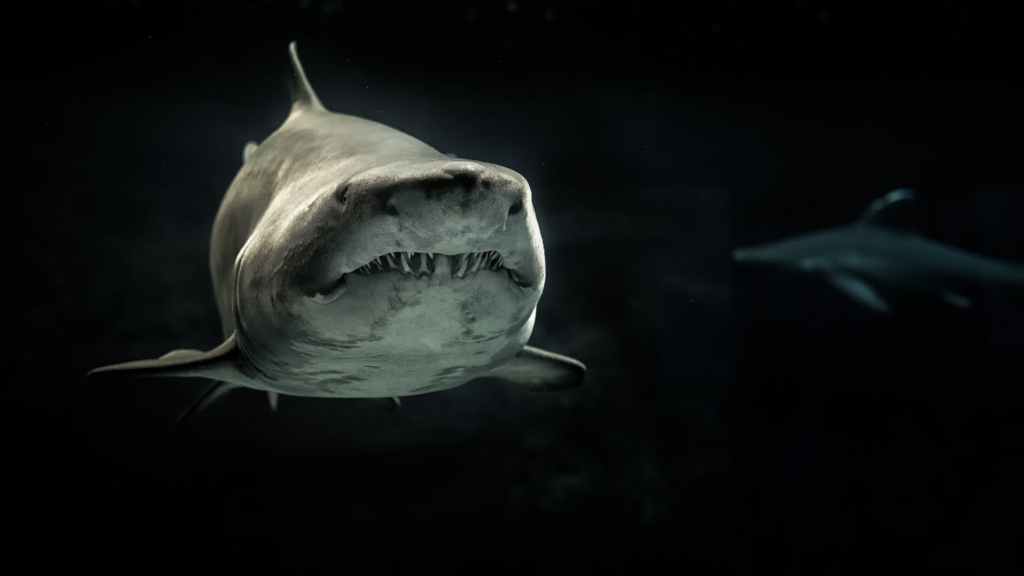
Will Eating Ice Cream get me eaten by a Shark? The mathematics of right and wrong

We are grateful to Mr Peter Seymour, of Hertfordshire, for drawing our attention to the article by Daniel Burke* on CNN, concerning the increasingly acrimonious debate in the United States about whether that country should be opened again for normal commercial business. Burke bases his argument on a detailed analysis of the Utilitarian Philosopher Jeremy Bentham, author of the famous dictum “The Greatest Good of the Greatest Number“. “Openers” will scream that more damage will be done to more people by the lockdown than the lives saved by its converse. The other side will reply in the opposite, with every weapon in its armoury. We expect that the coming months will see a bitter and divisive debate, with each side brandishing statistics, arguments and proofs, with no clear winner.

We lack a really objective mathematical model of what actually works.

Now Ciaran Lee Gilligan, writing in New Scientist, offers an answer.* He thinks the problem is that we do not clearly distinguish between causation and correlation. Here is an example.

“Data from seaside towns tells us that the more ice creams are sold on a day, the more bathers are attacked by sharks. {Correlation}Does this mean that ice cream vendors should be shut down in the interests of public safety?”

The answer is no. Here it is easy to see the cause behind this correlation. More people go to the beach in hot weather. More ice creams. More swimmers. More shark deaths. But-if you only had the data on the sharks and ice creams, how would you know this? The trouble is for thousands of problems in science, medicine and economics, we have lots of data. And no way of knowing the true cause, because correlation is never proof of cause.

In the 1990s, Judea Pearl of UCLA came up with a new tool which he called the theory of causal inference. At this point you really, really should read the article below: but to give you a flavour-

It should allow us to mine data sets to better establish the real causes and effects in all sorts of areas like medicine, science and economics (see the relevance to Burke now?)

It should allow us to remove all sorts of biases and uncontrolled variables when we try to replicate the work of other researchers

Economists are excited, as it should give us much better ways of really assessing all kinds of policy changes, in health, taxation, and so on. (Both Daniel Burke and Jeremy Bentham would love this)

We at LSS humbly admit to the most breathless, desperate filleting of an intelligent article about intelligent people. We know where the foregoing sentence leaves us. But please again, read and judge for yourself. If enough people do it, maybe we can avoid these desperate miscomprehensions in places like Denver.

https://edition.cnn.com/2020/04/23/us/reopening-country-coronavirus-utilitarianism/index.html

https://www.newscientist.com/article/mg24632790-700-correlation-or-causation-mathematics-can-finally-give-us-an-answer/

#CNN #JeremyBentham #Utilitarianism #Reopen #coronavirus #JudeaPearl #causalinference