Was Coronavirus the point of no return in American Decline?

When nations decline, does it happen from the bottom or the top? Scholars of national declines, such as Paul Kennedy* usually point to long term demographic and economic factors. For example, the decline of the Spanish Empire was due to the hollowing out of the Castilian economy, due to the demands of wars-their manpower was decimated and their currency debased by inflation. Students of British decline point to the failure to develop a healthy, educated workforce, and the financial structures necessary to advance manufacturing to the levels developing in the emerging powers of the USA and Germany. Factors which were due to deep cultural biases (Spain: Catholicism; Britain: Free Market fundamentalism) and which took decades to play out.

Students of the other school point out that the people at the top of any country make decisions, which have consequences. Phillip II and his advisers decided to initiate the daft series of religious wars which lasted eighty years and bled the Empire dry. Britain in the 1930s still had the remains of a powerful empire. But its foreign policy blunders lost it so much prestige that its enemies (Germany, Italy, Japan) were emboldened to start the war which led to the final collapse of the British Empire in the payments crisis of 1941, and the disasters in the Far East in 1942.

In this light, the Presidency of Donald Trump has been catastrophic. We won’t reprise his appalling series of economic and domestic blunders. Our readers have newspapers and TV. But we will observe that in any crisis, people tend to follow the adults in the room. We cannot stop thinking about the following observation from Martin Kettle in the Guardian.*

look no further than what happened at the World Health Organization assembly in Geneva this week. On the one hand, Trump spent the week slagging off the WHO, threatening to withdraw all US funding, promoting quack medical remedies and attacking China. On the other, Xi addressed the assembly, donated $2bn to the WHO for the coronavirus battle, called for a vaccine to be made available to all, and successfully watered down the planned post-pandemic international investigation into Covid-19. Having done that, Xi slapped a punitive 80% tariff on Australian barley to punish Canberra for pressing for a fuller, more independent Covid-19 probe. Stand by, if it takes place, for a similar Xi approach at the postponed Cop26 climate conference.

Friends of democracy will tremble that their system can throw up such a troubled leader. Its enemies will rejoice to see China acting rather like the US was doing in the 1940s: the sensible honest broker offering reason all round. And then ruthlessly pursuing its own interests as all powers on the rise do. And Trump’s behaviour is not a one-off. From the BBC*we learn that he has got into a ridiculous twitter war with a hostile TV Host (from his own party) alleging foul play in a sad death which happened nearly twenty years ago. The President of the United States in a Twitter war? The Defender of the Constitution, the boss of the CIA using social media to follow personal grudges, like someone from a trailer park on the outskirts of Flint, Michigan? With a TV host, yet?

Historians of the future will point to many steps on the road in America’s decline from its pinnacle of power and riches. The Invasion of Iraq in 2003; the financial collapse of 2007-8;the super-pac Supreme Court Ruling 0f 2010. But anyone writing a historical novel on what it felt like to live through the decisive moments will set their characters in the months from January to June 2020,when Trump dropped the baton. And Xi picked it up.

https://www.theguardian.com/commentisfree/2020/may/20/post-coronavirus-uk-alliances-stand-up-china-us

ps://www.bbc.co.uk/news/world-us-canada-52748844

Paul Kennedy The Rise and Fall of the Great Powers Random House 1987

Corelli Barnett The Audit of War 1986

#donald trump #americandecline #presidentxi #coronavirus #martinkettle

Homo naledi- a real puzzle to get you through lockdown

Imagine you opened a disused garage, and found a very strange Rolls Royce car parked in it. And that you can climb all over, with your flashlight and keys, can open it up to look under the hood, at the serial numbers, and inside the boot. Imagine that the wheels were from a 1968 Silver Shadow. The engine is from the 1937 Phantom 111. The seats and fittings are perfect for a 1979 Carmargue. The bodywork is a classic 1965 Phantom V, the big ones you see in the old Beatles and James Bond films. Then you open the glove compartment and find the tax and insurance documents: this thing was running around in 2010. Do you think that you might be puzzled?

Such was the sort of problem given to the world by Professor Lee Berger when he discovered one of the largest, best preserved and frankly, strangest, collection of human fossils ever made, in the Rising Star Caves in South Africa. They are like no other human fossils found, because they are a bit like every other human fossil ever found-in various ways. He called his new species Homo naledi, as naledi means star in one of the local languages.

Their brains are so small that you would expect to find them in pre human ancestors, or the most absolute early humans- a design that fits to about three million years ago. The body shape is a bit apish in places, and they may have spent some time in trees. However, the general shape of the head and the structure of the brain, are more like those of modern humans, and this includes the teeth. The hands look very modern too, as though they were good at skilled movements. They could walk upright very well , but may not have been very good at long distance endurance running, unlike some earlier humans, who could use this skill to run large animals to death. You can find many more comparisons in the links below.

It gets even odder. No tools were found; yet humans and pre-humans had been making tools for millions of years before H Naledi. In fact no artefacts of any kind have been found. There is no evidence of fire use. At this time several other types of humans had been cheerfully using fire for hundreds of thousands of years. Yet all the bodies were found in deep caves, with almost no possibility of them having been dragged their by wild animals. It looks as if they were burying their dead. However, the real shocker is the date, which comes in at 335-236 000 years before the present. You would have expected something with a brain this small, and no tools, to have lived more like 3.35-2.36 million years ago, not thousand. yet the burial practices are way ahead of their time: the first evidence of modern humans and Neanderthals doing this is hundreds of thousands of years later. For more data on this, go to the links below.

So what is going on? Were they a survival of a very primitive type of human, that somehow clung on? On an island, perhaps: but it’s hard to see that in South Africa, which is wide open to migration by other humans. Why are their no tools of any kind? Some say that tools we have found elsewhere may have been made by them. Which is not evidence; no jury would convict on the basis of a knife found somewhere else, with no link to a defendant. Were they really burying their dead, or is there some other explanation? Had they found an odd drug in a plant and become decadent, spending their days in intoxicated orgies? Not likely in the African bush, with so many lions, leopards, hostile humans, and hyaenas about. There is even a suggestion that they were a sort of cross between humans and a pre human ancestor called Australopithecus. Which would have been like sex with a chimpanzee, albeit one that walked on two legs.

We at LSS believe that the worst sort of people you can meet are the ones who know all the answers. There are no easy answers to this one . Sometimes, science throws up ambiguities, and the frankly inexplicable. We invite you to look at the sites below (there are many more if you want more data) and take it in the spirit of a puzzle for corona lockdown. Maybe it’ll make a change from all those computer games.

https://en.wikipedia.org/wiki/Homo_naledi

https://www.britannica.com/topic/Homo-naledi

#leeberger #homonaledi #humanevolution #anomalies #risingstarcave

The Smoot-Hawley Tariff and Another Fine Mess. Two tales from History

Laurel And Hardy, Faces, Heads, Laurel
pixabay

It is the year 1930, and Republican Herbert Hoover is in his second year as President of the United States. Outside the White House, popular tunes on the radio include Embraceable you, by George and Ira Gershwin, and Ten cents a dance by Lorenz Hart and Richard Rogers. In cinemas Laurel and Hardy have made their transition to talking pictures with shorts like Hog Wild and Another Fine Mess. These would have supported new feature films such as Hells Angels and The Dawn Patrol, both evoking strong memories of the recent World War.

In May 1930 Hoover was a very worried man. In the previous autumn, the Wall Street Crash had sent shares into meltdown, triggering an avalanche of company closures and layoffs. By March 1930, US unemployment was already at 1.5 million. Now there was even worse news. On his desk lay a Bill called the Smoot-Hawley Tariff-and he, as President, was expected to sign it.

The Bill had been introduced into both Houses by Senator Reed Smoot (Rep, Utah) and Representative Willis C Hawley (Rep, Oregon). It was a response to cry from Republican heartlands to protect American jobs for American workers-and especially American Farmers. To this end, it introduced high tariffs on a vast range of imported manufactured and agricultural goods. Now it had passed both Houses of Congress, and so only needed the President’s signature to become law.

The trouble was that the whole rest of the world depended on trade with a thriving American economy. America was the only healthy economy left of any size after the Great War. A rise in US Tariffs would mean a collapse in trade for everyone else; and even the possibility that they might retaliate. 1,028 leading economists signed a petition asking the President to use his veto. The head of JP Morgan begged the President to reject this “asinine” legislation. Henry Ford spent an evening with the President in a last- ditch attempt to persuade him to use his veto. It didn’t work: Hoover knew that he needed the support of his Republican Party to govern at all. Not to have signed would have sparked a civil war inside the party. And so on 7 June 1930, the Smoot Hawley Tariff became Law.

The economic consequences unfolded at once. Over the next three years US imports decreased by 66%, and exports by 61%. An economy estimated at $103.1 billion in 1929 had fallen to $55.6 billion by 1933. The collapse in farm and other commodity prices brought starvation to the farming communities who had so strongly pressed for the Bill. In December 1931 US unemployment reached 9 million. By December 1932 it was 13 million.

The international consequences were disturbing. Led by Canada, all the major trading countries began putting up their own protectionist tariffs. Any hope of the world trading its way out of depression vanished. Unemployment rose to vertiginous heights, especially in Germany. There were consequences. In 1928 the Nazi Party had 12 seats and 2.6% of the vote. By 1932 they commanded 230 seats and 37.3%. Most worrying of all was Japan, which in despair abandoned the world community. Instead they looked for resources and markets by seizing Manchuria from China, initiating the eastern half of a war that would last until 1945.

What can we learn from all this, ninety years on? Never underestimate the power of ignorance and stupidity in human affairs. That nations have a right to defend their interests, but need to be very, very thoughtful about how they do it. And that the Talkies were here to stay.

By 1934 the new President, Democrat Franklin Roosevelt, was already starting to lower tariffs again. But the damage had already been done. Japan was by now so committed to China that only military defeat would get them out. In Germany, Hitler was consolidating his power by becoming Fuhrer. Some years of peace lay ahead, but the lines that led to war were already laid down.

Perhaps we should leave the last words to WH Auden, who wrote these memorable lines on 1st September 1939, as Germany marched into Poland, and the most terrible conflict in history got under way

Accurate scholarship can/Unearth the whole Offence/from Luther until now/That has driven a culture mad……………………….I and the public know/What all schoolchildren learn/That those to whom evil is done/Do evil in return

we apologise for being unable to find a royalty-free image of Messrs Smoot and Hawley

Hugh Brogan The Pelican History of the United States of America penguin 1985

https://en.wikipedia.org/wiki/Smoot–Hawley_Tariff_Act

https://poets.org/poem/september-1-1939

#smoothawley #tariff #protectionism #populism #RepublicanParty

Welcome back the Bundesliga-and why the Tables never lie

Listening fleetingly on BBC Radio 4 this morning, we were thrilled to hear the return of terms like “going in hard”, “talking point”, “tonight’s game”. As Germany slowly pulls out of its Coronavirus epidemic, the Bundesliga is back. We don’t doubt that one day the English Premier League will be too, a sure sign of life eventually returning to normal in this country.

Larry Elliott, writing in today’s Guardian, uses the football league as a metaphor for understanding statistics. * We at LSS have always found ourselves utterly confused by the babble of competing statistics shouted by all sides in debates on Covid 19, the economy-and just about anything else. “The US has the most deaths!” “French output falls below Germany!” And on and on they shout-but you get the picture. And the first point that Elliott makes is that you shouldn’t make rash predictions about which team will be relegated when only three games have been played. The Coronavirus crisis is still in its early days, and there is a lot more data to come in.

And as it does, the internet is also filling with selected statistics, cherry picking, half truths and downright lies. Many people fear that the lines between news, fake news, and lies have been blurred forever, that we have become so degenerate that we can no longer tell truth from untruths. But humans can create spaces for objective truth, where the data is preserved with scrupulous accuracy for all. One of them is football league tables. Elliott reminds of the old football managers’ dictum- the tables never lie. It is in this light that he refers to a new paper by Oxford University researchers John Muellbauer and Janine Allen. We post the link below.(you can get a good PDF with this) To refine the data the authors study the effect of excess death rates, it cuts through the complications on reporting causes, under recording and differences in practice. It lets you allow for things like regional geography, population densities and other important factors.

Once the results are compared for England with other countries in the UK and across Europe, it seems the Government is well justified in being so cautious about re-opening things like the Premier League. It also seems that their decision to reverse their initial “herd immunity” response was the right one, given these statistics from Sweden* for which we duly thank Mr Peter Seymour of Hertfordshire (Sweden’s per capita death rate from corona virus is among the highest in the world-Apple News 15 May 2020)

We have fond memories of how the weekly football results of our youth in the nineteen- sixties and seventies were like a proud roll call of Britain’s lost industrial heritage. Bristol (aerospace) Liverpool (shipping) Manchester (cotton) Newcastle (shipbuilding and coal) -readers will cite many, many more. The Premier League will return. As economic policy changes, could manufacturing make a comeback? It makes for better jobs. It makes for more well paid jobs. It’s even easier to run up supplies of things like PPE

https://www.theguardian.com/business/2020/may/17/how-england-found-itself-at-the-foot-of-the-covid-19-league-table *

https://www.inet.ox.ac.uk/files/6-May-20-Muellbauer-Aron-Excess-mortality-in-England-vs.-Europe-and-the-COVID-pandemic

# larryelliott #excessdeaths #bundesliga

A Good Read-Ulysses by James Joyce

Our Guest Columnist is Mike Mooney, Language Teacher and Academic Manager

My favourite book is Ulysses by James Joyce. No, shut up, it actually is. I’ve re-read it about once every two years for 20 years now-and it’s 30 years since I studied it at Uni. For my degree I had to know what was going on, and a book called IIRC The Ulysses Companion explained what the various sections were about. After that, I could just enjoy it. And boy do I enjoy it! He has the ability to write in a beautiful, formal and erudite way which complements rather than jars with his ear for the Dublin demotic. As I’ve grown older-and more like Bloom than Stephen-my appreciation of it has deepened. It’s a sack full of jewels. It’s life-affirming and astounding in so many ways, unlike the puzzle factory that is Finnegans Wake, which I’ve only ever read scraps of. Someone once summarised Ulysses by saying “Man goes for a walk around Dublin. Nothing much happens.” That’s not true. Everything happens, all human life is here and nobody has since managed to describe it so breathtakingly.

#jamesjoyce #ulysses #mikemooney

What the readers saw

Our weekly look at what our readers are telling us- and what we saw that never had time to make it into the blog this week.

Have you ever met his Royal Highness Prince Andrew, Duke of York? According to Nigel Cawthorne, writing for the Daily Mail, you may not want to. In this warts-and-all biography, we are given a picture of a man who, apart from brave war service, seems to have little going for him. Is it the whole picture, we wonder?

https://www.dailymail.co.uk/news/article-8324925/The-making-Prince-Andrew.html

From Hertfordshire, Mr Peter Seymour wonders what is happening in Africa, which many predicted would suffer a devastating outbreak. He tells us

There hasn’t been much reporting of C19 (or anything for that matter) in Africa. Some reported that it has not yet become the pandemic that it had in Europe and US. The reason given for this being the lower average age in African countries being lower leading to a lower R. This article forecasts what is likely to happen longer term. 

https://www.msn.com/en-gb/news/world/virus-could-infect-more-than-200-mn-in-africa-who-modelling/ar-BB1473EB?ocid=msedgntp

Nature, that beacon of rational and enlightened thought discusses the problems science companies face in How to Make enough Coronavirus drugs

Dozens of coronavirus drugs are in development (for example, there were encouraging drips of data from a large clinical trial of the antiviral remdesivir last month). Next, we face the challenge of ramping up complex manufacturing processes to produce sufficient quantities of successful therapies to treat everyone in need. Drug manufacturers face supply-chain weaknesses and sourcing issues. And each treatment will face different challenges when scaling up production. (Nature | 7 min read)

Most commentators agree that both the Internet and the world wide web are becoming filled with hatred and misinformation. It’s a pleasure to see that the majority of our facebook pals are full of good cheer, hope, and selfless altruism. We have seen them rescue cygnets and restore them to their families. We watch the tireless way they support charities, especially animal charities such as Cats Protection , but also ones that support dogs, wildlife, and donkeys. Unfortunately, we can’t go back too many days. So here are a few honourable mentions of the last five hours

Mr Tony Kirkness, who has discovered a wonderful library of old BBC comedies, including Round the Horn and Hancock’s Half Hour. (Not Matt!)

Lesley Brackley for helping with so many lost pets. We have friends going through this currently, and it can be heartbreaking.

Douglas Nakaya and Maddy Mead, two friends from very different parts or our life, both like Greenpeace and their campaigns against one use plastic

And finally …our old friends Jill Lee from Fulham, and Steve Smith from Reading. Who during their lockdown perambulations have provided unforgettable images of our old River Thames and its nooks and reaches. We wish them and all our readers on Facebook, twitter and this blog a happy wweekend.

Sweet Thames, run softly till I end my song

Sweet Thames, run softly, for I speak not loud or long

TS Elliot

#nature #greenpeace #catsprotection #nature #princeandrew

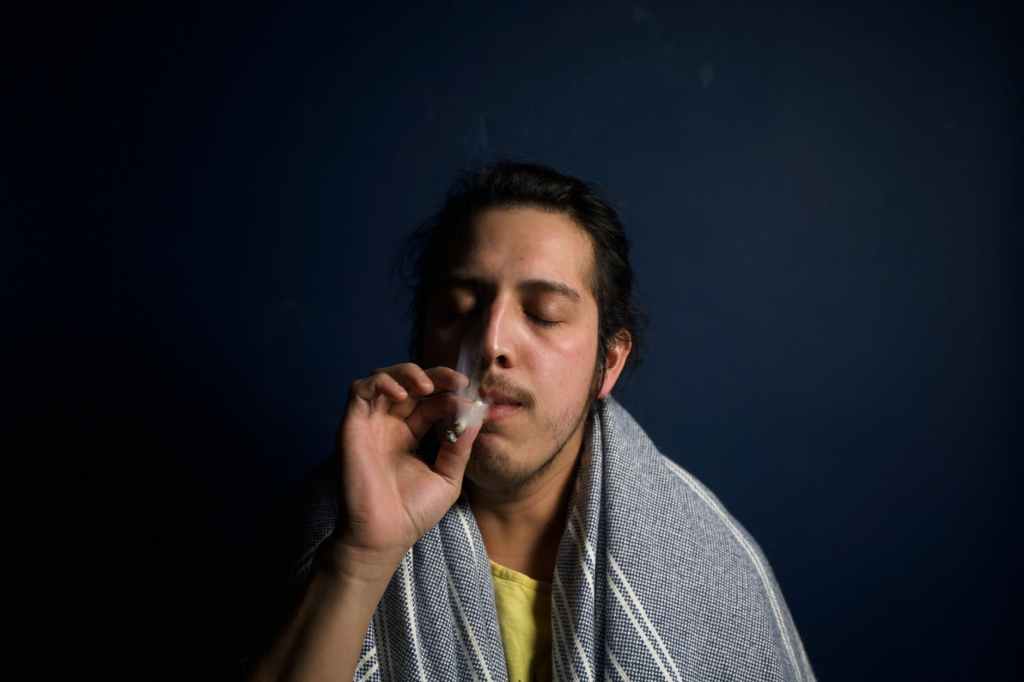
Could Cannabis pay our Covid debts?

There is currently a drug in widespread use in the UK that does immense harm to its users. It causes obesity; it has been linked to a wide variety of cancers, including those of the liver, oesophagus and bowel. It has been shown to be linked in heavy users to brain damage including the frontal lobes, and depression. It is linked to at least 1.2 million violent incidents a year, and sensible people avoid places where its widespread use is encouraged, especially at night. That drug is alcohol, which in 2014 was worth £46 billion to the UK economy, contributed 2.5% of GDP, and gave a much needed tax yield of £10.7 billion.**

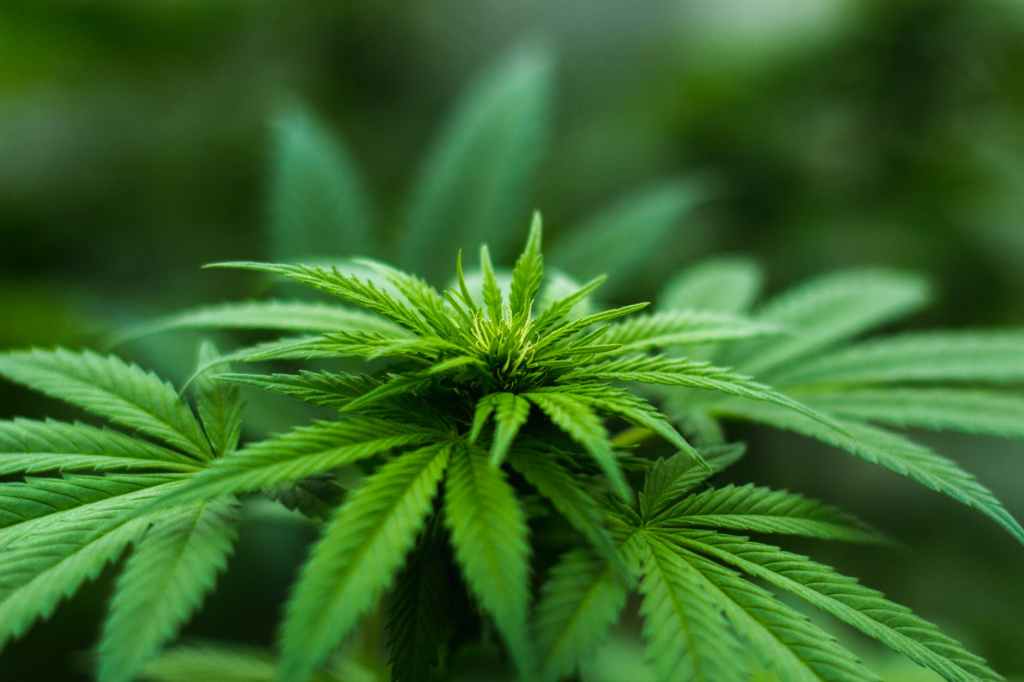
Britain now faces an immense economic problem as a result of the Covid-19 epidemic. So why not legalise and tax the common drug marijuana in order to pay for it? It is an idea that at first seems to belong to the wilder shores of Guardian– reading Liberals and Lefties, many of whom inhabit the London Borough of Islington. Yet now we find the idea seriously proposed by the impeccably right-wing Adam Smith Institute. Of their Conservative credentials, there can be no doubt- low taxes, privatise the NHS, abolish planning restrictions and bureaucracy, end all capital gains and corporation tax, and so on. They were a big part in the ideological push around the rise of Mrs Margaret Thatcher , and contributed to many of the policy studies in her administrations. Not the stuff of socialist revolutionaries. If they believe anything, they see the free individual as central to a productive economy, and are prepared to accept a little inequality as a necessary price.

And so to their Big Idea. We at LSS are open to all ideas from left, right, centre, provided they are backed by reasonable facts, and are couched in civilised language. And this report, by Daniel Pryor and Liz McCulloch, is also quire clearly written, another factor which runs it up the LSS flagpole.

Dan and Liz’s central assumption is that the Free Market will ultimately produce the optimal social outcome, if left to itself by Governments. So Prohibition laws, and meddling by state officials are counterproductive-they only produce black markets, poor product quality, and rampant criminality.

Advertising and branding of cannabis, as for alcohol, would solve all of the above problems, especially if supply was through reputable outlets-perhaps high street pharmacists like Boots, or on mobile apps. They estimate that a multibillion economy could be created in the UK, perhaps reducing our aching budget deficit by £1.25 billion per year. In the US State of Colorado alone, a legal cannabis industry created 18000 jobs, a market of $2.39 billion and tax revenues close to $1 billion. Thus, they suggest a tax scale for the UK, with stronger varieties such as “skunk”, being taxed more heavily.

For those worried about the social consequences, they point out that statistics on road traffic accidents and that cannabis is a gateway drug, are at best mixed. They even suggest that cannabis legalisation could help reduce the opioid epidemic that is currently sweeping through poorer communities in the USA.

Now we at LSS are well aware of the health risks of cannabis. Without going into too much detail, there is at least a 10% risk of addiction. There seem to be mental problems for even mild users, such as sleeping difficulties, irritability and nervous disorders. We have seen good evidence that heavy users are at risk of psychotic disorders, including schizophrenia*. And if you smoke it, you are instantly exposed to the same risks as nicotine addicts with their habit-lung cancer being the obvious one. In fact, we would counsel anyone not to use it.

But Cannabis is “out there”, as they say. So is alcohol. So are high risk sports. So is crossing the road. The authors make a reasonable case, and we present it to you as such, to make your own mind up.

http://www.ias.org.uk *

https://www.drinkaware.co.uk/ *

https://www.adamsmith.org/

-facts/https://www.adamsmith.org/research/the-green-light-how-legalising-and-regulating-cannabis-will-reduce-crime-protect-children-and-improve-safety

https://www.nhs.uk/live-well/healthy-body/cannabis-the-facts/ *

#taxcannabis #legalisecannabis #adamsmithinstitute #freemarkets

Grow the economy, then pay the debt

At the end of the Second World War in 1945, Britain faced a mountain of debt so large that it was to all intents and purposes, bankrupt. There was massive damage to the merchant marine fleet, some industrial plant was damaged by bombing ( though not as much as Germany or Japan) and much of the remaining industrial stock had been so run down by wartime overuse that it was effectively scrap.

A Government based on principles of good housekeeping would have tried to concentrate all resources on paying the debt, in the hope that a strong pound would underpin the economy, and please financial markets. Like a certain Mr Osborne in 2010, in fact.

Instead the Labour Government of Attlee embarked on a course of massive borrowing , demand stimulus and economic growth, which to be fair was kept up by the Conservative governments that followed. The overall effect was the longest period of sustained growth and rising prosperity in British History. The size of the debt mountain fell relative to that of the economy, and paying it became unnoticed in a wave of new cars, televisions, foreign holidays and new homes.

The economic history of the post 2010 years has been somewhat different.

In today’s Guardian, Larry Elliott describes how the present Government has, tentatively embarked, tentatively, on such a course. We post the link below.

Britain may be taken as a reasonably representative of many advanced countries trying to cope with this unexpected, and very grave, emergency. Which leads us to one worrying thought. The years after 1945 were marked by unprecedented and successful international co-operation. It was after all the era of Bretton Woods, The IMF, the World Bank and growing co-ordination among the advanced economies of Europe. Now most of those trends are going the other way, at varying speeds. Is it time then for a new international economic body to pool the activities of as many nations as possible?

More worryingly, what is the alternative?

https://www.theguardian.com/business/2020/may/14/how-will-britain-dig-itself-out-of-a-300bn-coronavirus-hole

#larryelliott #borrowing #rishisunak #britain

Friday Night Is cocktail night-questions and answers

Today w open our portals to you , the readers, in the hope we can allay your anxieties about this important aspect of all our lives. Your anonymity is guaranteed!

What is the correct dress for a Gentleman to wear to cocktail night? Mr AF, Bridport, Dorset Dear Mr AF: the rules on this have always been very prescriptive, but fair. In winter, a dark blue or black jacket, striped shirt, creased chinos and smart black shoes. Tie; anything regimental. old school, or your golf club. The building, not the thing you hit the ball with! In summer you may sport a light jacket, summer being defined as any date from Easter Sunday until the final Bank Holiday in August. You may of course wear a Panama. But don’t wear it indoors, or you will look like a numpty.

Does my favourite brew, Old Rogered Dog, count as a cocktail? After all, it’s got alcohol in it, and a mix of organic chemicals of dubious provenance, just like a cocktail? Dave Geezer, Watford

No

Can the enormous volume of sound systems, for example in a strip club, cause the ice in my cocktail to melt prematurely, thereby marring the pleasure of my evening? Mr NS, Sutton Coldfield

Dear Mr NS, we would hate to have the pleasure of your evening marred in any way! After consultation with leading physicists. we can report: sound is energy, and could in theory increase the rate of melting of your ice cubes. Nevertheless, other factors, such as ambient temperature, will prove more significant, so concentrate on mitigating that.

Why should a Martini be stirred, and not shaken? JB, Vauxhall

Because that’s what it says in the book, you div! Honestly, what do they teach you people at MI6 these days?

Were cocktails invented in Pirate Days? Mr SS, Reading

Dear Mr SS-The general consensus is, yes, they were. As the pirates sailed around the Caribbean, they found an abundance of fruit, and both white and dark rum. Hence most experts agree that most early cocktails were rum- based such as early versions of Between the Sheets or Pink Rum. Ice could be easily obtained by sending those who worked below decks up into the mountains-the exercise did them good. Then, as now, cocktails were for the better sort-the ship’s officers. The men were quite happy with grog and beer, and pulling weevils from each others’ beards.

What music shall I play with my cocktails? DT, Washington, USA

Anything jazzy and piano-ey. Oscar Petersen is a good jumping off point; try to imagine the atmosphere of a Manhattan hotel, full of secret agents, detectives and femmes fatales, where eyes meet over cold glasses and the promise of indiscretion hangs ever in the air. A bit hard to drum up if you live in Sutton Coldfield like Mr NS, but, as we head off to our own wardrobe to dress, we like to think you will try.

#cocktails #pirates #oscarpetersen

An Inspiring Teacher-Guest Column

Today our guest columnist is Dr Stephen Day, a Forensic Scientist and University Lecturer

Inspiring teacher: When thinking of how they ended up in the career they have, many people will cite a favourite teacher that inspired them to study science/take up acting/persevere with the violin.  I would like to do the same, but in truth there is no academic teacher in particular that I would identify that led me down the scientific route, the chemistry path or into investigative science.  These things all happened through decisions made during normal life and were just natural progression.  Instead I would say the most influential teacher I had was Mrs Higgins who was in charge of what would now be called the reception class. With her I learnt that learning itself is fun and interacting with other people, albeit small ones, inspires new ideas and teaches co-operation and compromise.  I would argue that these formative years are probably the most important in anyone’s life and that habits and attitudes manifested throughout the later years are learnt here. I worry that today’s children, with working mothers, too-busy fathers, deprived households, target-driven education, lack of continuity in childcare and stressful environments may be developing attitudes that will have repercussions down the line that we as a society will regret later. Lockdown has shown some at least that family is more important than extra money and may change attitudes to parenthood. Maybe we should as a nation gravitate towards the Swedish model, where childcare for 1-6 year old is considered vital to the nations well-being.  https://www.naeyc.org/       I particularly like the idea of gravitating towards the Swedish Model.   

#teacher #education #swedishmodel #drSPDay