It is not often, gentle readers, that we at LSS can boast the help of professional broadcasters and journalists. But tonight we are proud to present their inimitable contribution, a specially designed cocktail quiz for your Friday night delectation. For the benefit of our copyright lawyers, Mr Larsmon wrote the original for his pub, the Lockdown Arms, in Wiltshire. Mr Charlton has added his own suggestions, and we are proud to present their joint efforts.
Answers will be published tomorrow.
1 When is it generally agreed that “cocktails” were first created?
2 One of the earliest cocktails was called an “Old Fashioned”. What is its main ingredient?
3 Bringing things up to date – what was the world’s best- selling cocktail in 2019?
4 What goes into a White Russian?
5 What is the “pink” in a pink lady?
6 Which Cuban classic consists of white rum, lime juice, sugar, soda water, and crushed mint?
7 Who claims to have invented the daiquiri and which bar did he make famous in Havana?
8 Who sung Making Your Mind Up? Clue– it was the song which won Eurovision for the UK in 1981?
9 The Eagles named a song after a cocktail. What was is called?
10 James Bond is famous for asking that his martinis are ‘shaken but not stirred’. In which novel did he first use this phrase?
The first in a series celebrating those who have advanced learning and knowledge.
Imagine that you lived in a world where all civilisation, order and trade were collapsing. Where statues and other works of art were torn down. Roads, bridges and aqueducts crumbled. Where schools and Universities were closed , and blind faith replaced reason and evidence as the basis of human life. Would you give up in despair, concluding that barbarism and ignorance had triumphed over law and learning? Conclude that darkness had triumphed forever? Or try to save something from the wreck, and pass it on to future generations?
Such was the situation facing Marcus Aurelius Cassiodorus Senator (c 485-585 AD). In his lifetime the Barbarians achieved the final destruction of the western Roman Empire. Cities and trade routes slumped into decline. The Emperor Justinian, urged by his religious advisors, closed the Universities of Athens.* The same Emperor invaded Italy, and the subsequent wars with the Goths wrecked Italian economy and society, initiating the real start of the Dark Ages. We could continue with massive volcanic eruptions and plagues, but we think you get our drift.
Cassiodorus was a realist. He came from a distinguished family, raised in the tradition of Classical culture. But he was the first to face the fact that the old world was gone. The Goths were there to stay. The Imperial power was decadent. So the only reasonable course was to adapt to this new world, to try to save something from the old, for future generations. He was the first to tackle the new realities of his time, with his History of The Goths. It was completely outside the old curriculum. In all his life in public office, he was always trying to reconcile Romans and Goths, realising that they would achieve far more together than they would by squabbling and fighting.
When this failed, rather late in his life, he still refused to despair. He moved to Squillace in Italy and founded a monastery called the Vivarium. This was to be far more than just a place to pray. He had realised that the one place where works of learning could be effectively preserved was in the shelter of monasteries. And so he set his monks to work, copying and preserving as many works as they could. It is thanks to him that so much work survived the collapse of ancient civilisation. And that one day this learning, more precious than gold, would be revived.. To this end, he instituted a set curriculum, including such subjects as vocabulary, etymology, arithmetic, geometry, music and astronomy.
Of course he has his critics. He deliberately cultivated an obscure and pompous writing style, to make him seem more learned. But that is quite familiar to those who have suffered the teachings of the humanities departments of certain modern universities, with all their Structural criticism and post modernism. An uncritical adoration of books led him to believe that elephants had no knees; that they saluted only just and not unjust rulers; and that their breath was a cure for headache.*
For all his faults, Cassiodorus had realised the vital truth. That learning and knowledge must be prized for their own sakes. And that to learn anything worthwhile requires a formal disciplined training. We live in a world where learning ahs to show a cash profit. Where exchange of ideas becomes almost impossible, as people retreat into screaming silos of mutual hatred. Where the adolescent mind has triumphed over the adult, in fact.
The ultimate victory of the educated will be by passing on what we have learned, ensuring that the current triumphs of the barbarians are remembered with contempt. If remembered at all.
RH Davis A History of Medieval Europe Longman 1987
Here’s a quote from Dr Peter Daszak in The Guardian
Determining the origins and emergence of a pandemic is as messy and complex as studying a plane crash. Just as the air crash investigator pieces together the fragments at a crash site, pinpointing the origins of a new virus is painstakingly difficult and time consuming, and requires logic and reason.
Now here are some conspiracy theories which you will find all over the internet. You don’t have to look very hard.
It came from outer space. It’s all the work of Bill Gates, who wants to control the world. It was created in a government lab in China. It comes from 5g masts……
Of course everyone has an opinion. Merely existing gives you opinions. So does beer. Isolation. Personal unhappiness. The need to be noticed-lots of reasons, in fact. The post modern crowd say that all are equally valid, from Nigel Farage to Dianne Abbott. If that is true, we at LSS have a problem. If we have a persistent pain and cough, should we consult the opinion of a Doctor, or a painter and decorator? If I we have a knocking sound coming from a car, then should it be the opinion of a mechanic, or an expert in literary structural theory? (hey, he’s even got a PhD!)
Practical people need practical examples. Let’s compare Dr Daszak and a conspiracy theorist, both talking about the Covid-19 outbreak and decide whose opinion might be more useful to us.
Dr Daszak: Trained scientist. Head of Eco Health alliance which maps disease hotspots around the world.
Conspiracy theorist: has been “going on the internet a lot since this thing started, and what you find there, it’s really scary, they say………”
Dr D and team: 15 years studying problem in China
Conspiracy theorist: Has no team. Has spent 15 days talking to like minded souls on internet.
Dr D Has sampled 16 000 bats.
CT No bats sampled. Or Rats. Or Cats. Used to think bats were used in cricket, but now recalls them from old Scooby Doo cartoons.
Dr D Has found cluster of corona viruses in Yunnan, Laos, Vietnam region, all related to Sars-Cov-2.
CT: Has read menu in local Chinese restaurant. Saw a film once about these guys in the Vietnam war, that bloke from the West Wing was in it, or was it his son?….anyway..
Dr D: Has found that 3% of locals there have antibodies for bat corona viruses. Implies 7 million people have them naturally.
CT: If they put them antibodies in us, it will destroy our freedom!
Dr D: Has found that the protein sequence on the Sars-Cov-2 “spike” occurs in natural variants of the virus.
CT: Has difficulty with this one as failed biology at school. But believes firmly in freedom of speech.
Dr D: Thinks the balance strongly indicates a natural origin in a disease hotspot in South East Asia. And there are more to come
CT: Heard from their mate Dave who used to go to the Dog and Duck before this thing started that the Chinese had a Lab and it got out, but really the North Koreans were behind it, because it’s just the sort of thing they would do………
Dr D: changes ideas as facts come along.
CT: When a new fact comes along it must be quickly cut and butchered to fit his opinion, because that must never change.
Before you read the article, we shall take a personal note, a thing we rarely do at LSS. For many years, we had the privilege to work alongside leading Forensic Scientists whose job was to investigate difficult and complex criminal cases (we repeat-alongside, not as). Whatever their personal faults, each one of them knew that every case they did required immense amounts of time, hard work, thorough examination, and the intellectual honesty to admit, again and again, that their initial ideas were wrong, and so were modified as they found new things. So, having witnessed seen how much hard work and thought is required to obtain just a little truth, we tire of those who can seem to demonstrate neither in the support of their opinions.
Western countries and their freedoms face many threats in years to come. China may well be one of them. To face them with a population where large numbers of people are prey to hoaxes and delusions is a sure way to let these threats overcome us all.
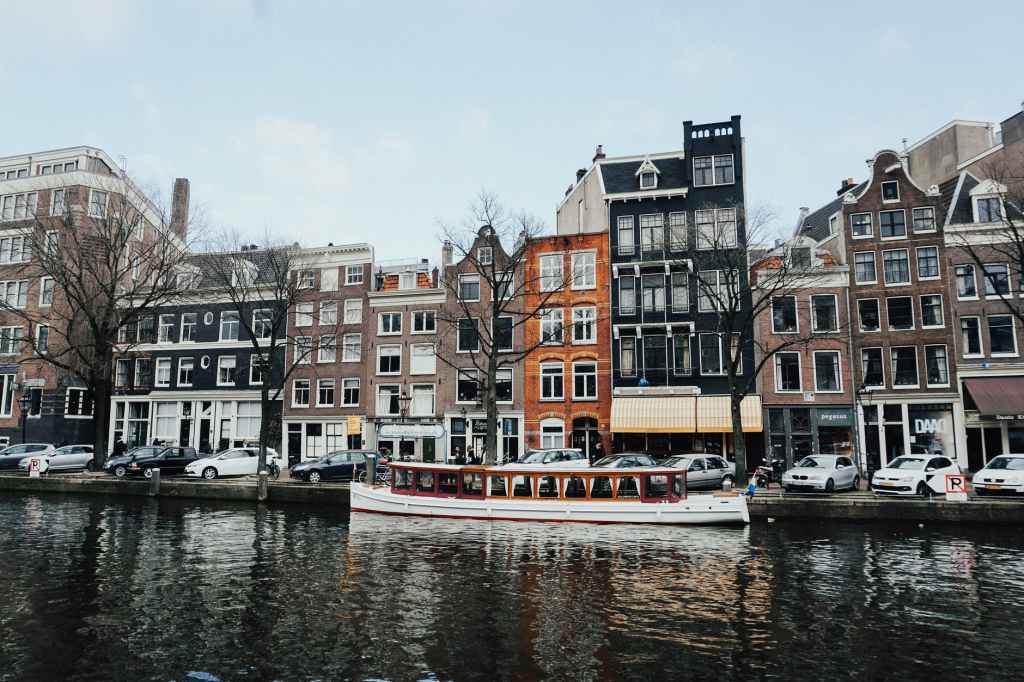
Is the High Street finished forever? Yesterday we discussed Larry Elliott‘s article on the economic and political aspects Since when we have not been idle, Gentle reader. As our regulars know, we are ever in pursuit of ideas that are whacky, ahead of their time, left field, outre, bizarre, different, new- and occasionally, a mix of two or more of the foregoing. And today we are proud to have found some. In Amsterdam, of all places.
In the minds of most, Amsterdam is associated with canals, tulips, Inspector Van Der Valk and a relaxed attitude to cannabis and adult entertainment. But today we can report on two new initiatives that might revive the traditional high street, and save the planet at the same time. If you like a bit of optimism, start reading from here.
The central criticism of the high street has always been its glut of shops selling cheap, throw away fashion. We didn’t know, but get these- apparently thirty per cent of the average person’s wardrobe is never worn at all! Sixty percent of all clothing ends up in landfill one year after it is made. What if you created a Green High Street, filled with eco conscious millennials from home conversions all around it? In our first link * Amira Arastah of Pebble magazine discusses the ways Amsterdam is pioneering recycle, reuse, vintage and a host of other ways to make fashion green at last. “10 reasons why Amsterdam is the real sustainable fashion capital.”
Larry Elliott talked of planning. Sometimes that is about buildings and transport. Sometimes it’s about setting the tone, and putting your eco friendly shops inside a super eco-friendly city. In our second link the City of Amsterdam explains how their goal of making their city sustainable in a series of graduated decades-long steps.*We at LSS have never been big fans of official prose, even in English(this is), but this one is a happy exception.
2030: Emissions Free; 80% of power from renewables; 50% less raw materials; 55% less CO2
2040: No more natural gas
2050: City is climate neutral; all roofs generate electricity; optimal recycling in a “circular” economy
Oh, and we forgot. Amsterdam was the home of Baruch Spinoza, one of the most intelligent and original thinkers of all time. Most of you are no doubt familiar with his work, but for those who need a refresher, we include a link to Wikipedia below. Let’s end with a quote* from him
The highest activity that a human being can attain ids learning for understanding, because to understand is to be free.
If we learn enough, and use it wisely, we can be free from the threat of climate change.
Some readers will recall this blog’s solicitude for the good old High Street (LSS 6 April 2020 The Empty High Street..) We frankly own to liking high streets. Not just the bright busy shops, but the way they provided a community hub where neighbours could meet, and real forum for activities like music, charity, politics religious revivals and buying and selling in little street markets. And, gentle readers, you will recall our gloom in that little piece, not entirely in keeping with our usual optimistic spirits.
Now Larry Elliott of the Guardian has come up with a Cunning Plan, or rather, reports on the several Cunning Plans of others, who are in the business of offering hope to this much-loved but battered old friend. Once again, we tremble in to stand in Larry’s way, instead offering you the link below.* But for those of you frantic to dash off to the shops, here is a brief summary.
Elliott concedes that the problems are grave. Any short-term sugar rush of spending, as people bounce back from lockdowns, will be soon offset as problems like the end of furlough and return of business rates return-like the shades of gloomy ghosts around the cradle of a sickly infant. And behind that lie the deep structural problems of the shift to out of town retailing, and on line shopping.
His solution, heavily citing experts whose reports you can reach through the links in the link, is to return High Streets to the people who own them. That means getting people to work and live there. It will mean returning powers to councils so the local community can decide how the spaces are best used. Maybe they can even take derelict areas over by compulsory purchase to chase out speculators and other creators of property blight.
You know why we think these areas work. To leave them to fall into dereliction would be a criminal waste of infrastructure and investment. Thriving towns which are worth inhabiting will take the pressure off of rural areas. And if we are going to avoid a global climate catastrophe, we are going to need every blade of green grass we can find.
It’s a question asked by Ross Clark in the Spectator,* and in view of the money that Britain now needs to borrow, it’s an urgent one. As we don’t have one in the UK, British readers are entitled to a brief resume. Basically a Sovereign Wealth Fund is like a Private Equity fund, except it is owned by the Government on behalf of all its citizens. The largest in the world is Norway’s. Using their share of North Sea Oil profits, their fund has grown to $1186.7 billion. That’s about £160,000 per citizen. If you were Norwegian, last year you would have earned £26, 400 without getting out of bed. Writing in the Spectator* Ross Clark makes a convincing summary of the arguments for and against-and comes down on the side of for.
We at LSS see a potential here for another blame game, something we prefer to avoid. So, in place of the dubious pleasures of hindsight, let’s go back to how Mrs Thatcher and her ministers saw things at the time. It was an age when the overwhelming urge was to roll back the state. The aim was to cut government borrowing and to privatise wherever possible. To lower taxes and get people to work harder by removing state featherbedding. This ideology was especially prevalent in the so called Anglo-Saxon economies, but you could find variants in many countries. Like every other ideology, the extent to which it has worked can be debated. But it is intellectually defensible. So how could Mrs Thatcher defend all these beliefs if she then set up a powerful state- owned agency like Norway’s? She was never intellectually dishonest.
So, the oil’s gone, the milk’s spilt, let’s all stop crying and ask-where can we get the money to set one up now? Well, here’s one answer. Britain still owns many overseas territories. Some are a bit remote and it seems unlikely that other powers would want to acquire them, beautiful though they are. But some, like The Falklands (Malvinas to our world-wide readers) and Gibraltar are very sought after indeed. And when someone wants something, they will pay a price. Now we are not calling for their immediate selling-off. But we do think that an audit of their value to the British Economy might be fruitful. Especially when compared to the potential value of a Sovereign Wealth Fund, paid for by their sale.
If all of this sounds fanciful, do not forget how the hard-headed British Governments of the eighteenth century traded the sovereignty of islands like Corfu and Menorca. There were no sacred cows for them, just profits and losses. In the last century, the Government of Winston Churchill felt free to trade bases and land across the world in return for US Destroyers. In many ways, our crisis now is not so different from that of 1940. It is common to talk of the legacy left by that generation. Is this a way for us to leave one of equal magnitude?
we were worried about the link to Ross’ article, so here it is again tps://life.spectator.co.uk/articles/britain-needs-a-sovereign-wealth-fund-like-norways/
Between 1845 and 1849 the population of Ireland fell by 25%. One million people died. One million emigrated.* The political effects of this Great Hunger (Gorta Mor) are still with us today. The cause? A plant pathogen called Phythoptera infestans.
If all this seems a very long time ago, think again. Plant pathogens including oomycetes are lurking in the soil in many countries, particularly hot ones. They can cause tremendous damage to all sorts of crops. And according to Raul Limon of El Pais,* global warming is causing them to stir-and move north.
Once again, we will not get in the way of Raul’s excellent article, which we post below. But for the benefit of monoglot anglophones, Raul makes these telling points:
A new atlas maps the distribution of all the most dangerous organisms
There are excellent predictive graphics, showing how the threat will vary according to different levels of global warming
The list of threatening organisms is frighteningly high, with threats to crops like bananas, wheat, apples and rice.
Our weekly round up of what we and our readers saw as they roamed the vast trackless wastes of the media, the internet, the world wide web-or just chatted about on the good old fashioned telephone.
We have to start with an honest to goodness plug for Nature Briefings. We often state here ,and on Facebook, thatNatureis one of the finest publications on the planet. Their raison d’etre has always been to publish the very finest scientific papers by the best authors. The problem for us humble joes is that they are difficult technical language. Nowadays the internet is full of specious conspiracies, fake news and ranting self righteousness. Nature Briefings tries to put the case for reason, science and evidence in a way that lets us easily access the best learning in the world. Here are just two examples as a taster-but we urge you to sign up for your self.
For better or worse, Climate Change is going to produce massive migrations. Here they post a new book which tries to address an issue which is going to make a lot of people hot under the collar in years to come!
The shifting climate means that we must allow — and assist — people, plants and animals who are forced to relocate to survive, argues a book by journalist Sonia Shah. Shah draws on affecting anecdotes and reflects on animal movements — both natural and human-caused — to explore our attitudes in advance of the vast human migration that will be caused by climate change. “The altered communities that result won’t just be different, they’ll often be better adapted to thrive in our warming world,” writes reviewer Emma Marris. Nature | 5 min read
And where on earth did this wretched virus come from? The mystery at the heart of the pandemic looks at bats and possible vectors. Nice stuff to balance the rantings of the unlettered.
The SARS-CoV-2 virus almost certainly originated in bats, then probably passed to an intermediate animal, which spread it to people. But it’s been very difficult to identify that animal — or to completely rule out the unsubstantiated idea that the virus escaped from a laboratory. Pinpointing the source of SARS-CoV-2 would require extensive sampling of coronaviruses in wildlife and livestock, and could take years. Nature | 9 min read
Earlier in the week (LSS 4 6 2020) we briefly covered the new flexible solar panels from Singapore. If you want to know more, Mr Peter Seymour of Hertfordshire recommends that you read this article from popular mechanics, which boasts some excellent pictures alongside a nice clear text.
As the lockdown eases, Governments and citizens everywhere are agonising about the chances of a second wave. David Heyman, Professor of Infectious Diseases and Epidemiology at the London School of Hygieine and Tropical Medicine, no less, discusses the chances in the Telegraph article, again tipped for us by Mr Seymour
Is a new crayfish about to devastate our inland waterways? Keen waterman Mr Gary Herbert of Buckinghamshire draws our attention to the Signal Crayfish which appears to be chewing its way through our native fauna, and the walls of the riverbanks themselves. Apparently they were introduced in about 1970 to fish farms, but then escaped. Another Fine Mess, as they say.
Well we think that’s it for the week. Thanks to all who pointed out the defects in our Tequila Sunrise recipe, from Fulham to Florida. Have a good weekend and stay safe out there
We at LSS have always been strong admirers of the popular musical singing group The Eagles. It has hard for non-musicians to write of music without sounding cliched and puerile. Yet for us songs like Doolin Dalton and Take it Easy, and Desperado capture something of the life lived in the vast plains and mountains of the western states. The Last Resort and Hotel California sing of the opulent , and sometimes corrupt atmosphere of the long coastal belt running from San Diego up to San Francisco. Nowhere was this more true than in the golden sixties and seventies, when California was the technological and cultural hope of the world. That was the world Frey and Henley knew.
The lush relaxed sounds of Tequila Sunrise at first suggest nothing more than a pleasant sundowner, looking out between the palm trees as the sun sinks into the Pacific. Perhaps you have a nice job in banking, financing the burgeoning new tech and entertainment industries. Maybe you build swimming pools, and now you’re sitting by your own one. Or perhaps you are connected with the arts, and your world is more like that described in the paintings of David Hockney, or the film Boogie Nights, with its intriguing insights into the film industry. Life’s pretty good, huh?
Well, maybe. We can’t reproduce the lyrics here for copyright reasons. But listen carefully and you suddenly find a couple whose relationship is breaking down in a tangle of incomprehension, adultery, and booze. Why do things go wrong, in the middle of all this plenty? It’s a good question. Frey and Henley asked many more. They proved that to be a poet you don’t need battlefields and mouldy old abbeys. The stuff to write about is right there in the malls, freeways and condos of what still in our opinion, is one of the most interesting places to visit in the world. So, my fine readers, let’s mix this one to the memory of Glen Frey (1948-2016). Thanks.
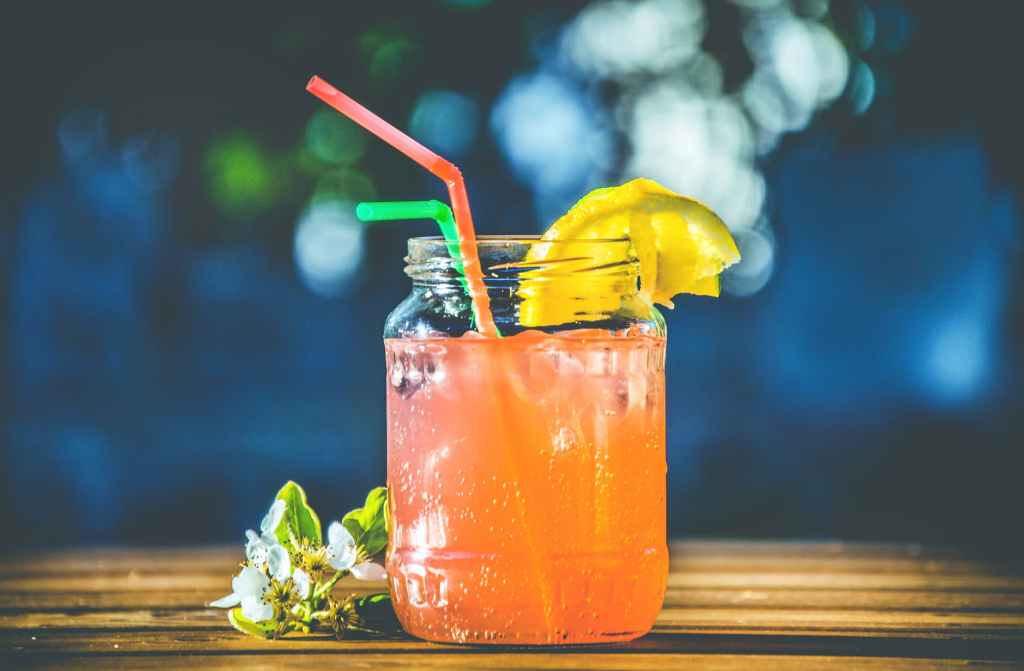
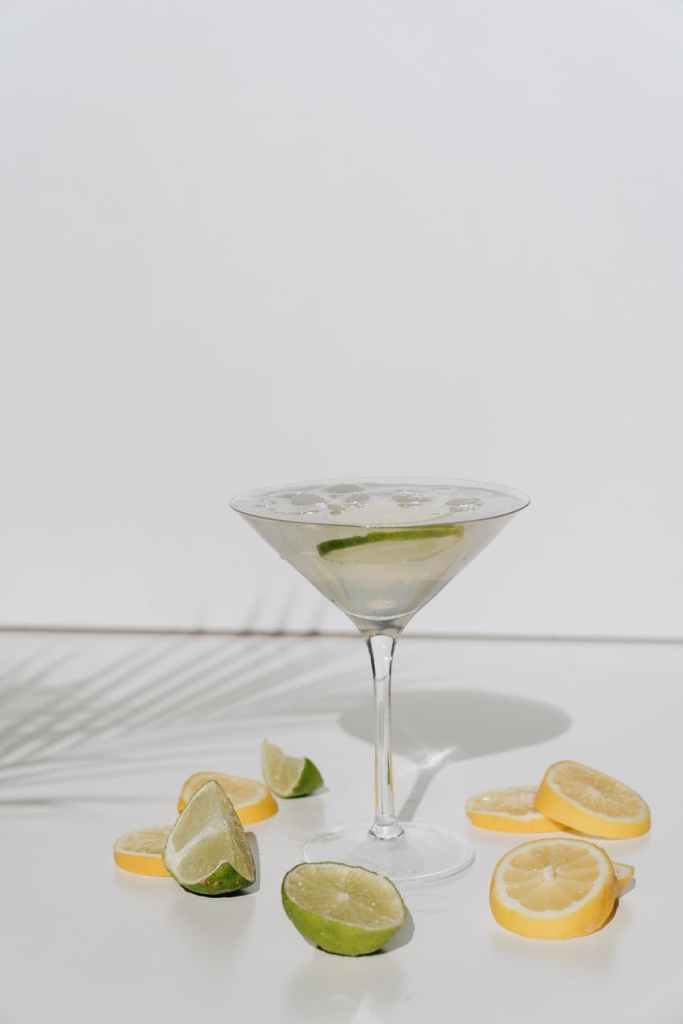
What you will need: Cocktail shaker. 6 medium ice cubes. 1.5 measures tequila. 3 measures fresh orange juice-and we don’t mean out of a container, we mean real oranges. Half measure grenadine.
How to do it: Add the ice to your cocktail shaker, then pour the juice, grenadine and tequila. Shake vigorously for 20 seconds. Pour into a cocktail glass and decorate with a slice from one of the oranges.
Decline and Fall of the fossil fuel industry-really? That’s what Jillian Ambrose of The Guardian* reports today. The dual effects of Coronavirus and the new efficiency of alternative energy sources may have produced a tipping point in which this once mighty industry enters into its sunset years. Revenues are expected to fall from $39 trillion to $14 trillion, with a 2% decline in use of fossil fuels every year. Read the link below. To which we might add two things. Firstly, remember how the denialists used to tell us how green energy would never work? Secondly -investors beware-as Jillian says, “fossils” are an enormous component of market valuations, and portfolios. Clearly, a transition is needed. And there are indeed alternative energy markets which shrewd managers would do well to scrutinise. Let’s look at two possible examples below.
If we could make profits from cleaning up pollution, then everyone would be doing it. One hopeful company is Climeworks of Switzerland, which has set up a plant to capture CO2 from the air, and sell it on to people like growers of cucumbers and tomatoes. Definitely two of our favourite vegetables at LSS. We post links below,** and also a summary article by Ali Morris of Dezeen
As for solar power the Mail has a great story by Jonathan Chadwick*. Professor Tan Swee Ching of the National University of Singapore is working on a highly promising new solar panel which can work at low light intensities, maybe even in the shadows. It may even be possible to make a flexible one to wear as a bracelet, so you can charge your phone as you go along. Again, take a look at the link. We thank Mrs Christine Hartley for this last source



















 Learning, Science and Society