Coronavirus. Why conspiracy theories are wrong

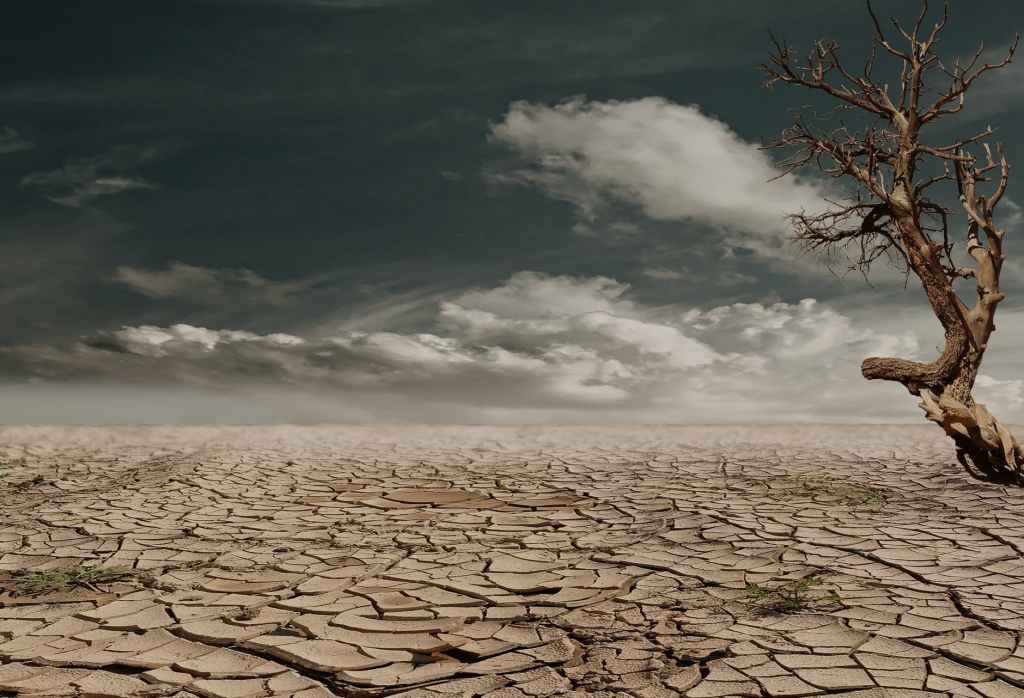
In 1965 the world’s population was 3,324 million. 35% of us were hungry. Now it is 7,800 million, only 15% of whom are hungry, which is quite an achievement. But it has come at a sinister price as Daniel Mediavilla explains in El Pais. Every time that we open wild land to cultivation, we destroy its biodiversity. Which opens the way to the rise of those species most likely to harbour pathogens which will jump to humans.

Some of this has been known for some time. Outbreaks of infectious diseases have risen three times in that period, with particular worries about new cultivation setting off outbreaks of Nile fever and Chagas disease. But Daniel points to a new paper by UCL which looks at 184 studies of over 7000 species.**. It seems that species such as bats, rodents and passerine birds, all reservoirs of zoonotic diseases, are particularly favoured by land clearances. Daniel also posts a link to Nature, so our English- speaking friends won’t need a translator.

We at LSS won’t comment on the science, as there are far better qualified persons than ourselves to do so. But we will comment on conspiracy theorists and blame-gamers, whose principle qualifications seem to be heightened emotional anxiety and a firm belief in the infallibility of their own opinions. The origins of coronavirus, and other diseases both past and future lie in the destruction of complex ecosystems and their replacement by monocultures. Which poses an agonising dilemma: how to feed people while keeping them free of killer diseases. It will require masses of deep thought, hard work and lots and lots of humble objective study to resolve that one. But conspiracy theorists don’t have to think at all, really. They know all the answers, and all facts can be plugged into their conspiracy without effort. Thus they can escape from the fear of hard questions, and their own responsibilities, leaving the rest of us to carry the burdens. A pity that we are so few.

read://https_elpais.com/?url=https%3A%2F%2Felpais.com%2Fciencia%2F2020-08-05%2Fla-reduccion-de-la-biodiversidad-favorece-la-aparicion-de-nuevas-pandemias.

https://www.nature.com/articles/s41586-020-2562-8

#zoonosis #covid-19 # sars-covid-2 #coronavirus #chagasdisease #nilefever
Corona Cures-Bloomberg tells us exactly what’s happening

There’s an old story from the teaching profession. A teacher’s wife asks him “how did the lesson go today?” And he replies “Badly. The lesson was fine, but the pupils were too stupid to understand it.” Teaching is all about communication: if they don’t understand it is the teacher’s fault, not theirs.

Good journalism is like good teaching-it communicates difficult ideas in way that is easy to understand, and leaves us wanting more. Such is the case with Bloomberg writers Cristin Flanagan, Riley Griffin and Robert Langreth.* In one short article, they summarise everything you need to know about what’s happening in the world of Covid-19. Vaccine development, anti-virals and secondary drugs like dexamethasone are all there. At this point, we are going to get out of the way and say: read and enjoy. Especially if you are the President of the United States, as your knowledge of the subject so far seems to be a little lacking in some areas . Well, we’re only trying to help!

We thank Mr Lindsay Charlton of Kent for this piece

https://www.bloomberg.com/features/2020-coronavirus-drug-vaccine-status/?sref=r3j1EEXP

#coronavirus #covid19 #sars-cov-2 #vaccine #antiviral #dexamethasone

Drug Resistance-a radical new approach?

One of the most frustrating things about medical research is drug resistance. You know the old story- clever people spend years developing a new antibiotic, only for the target to become resistant in a few years. Back to life, back to reality as the old Soul to Soul song would have it. The way bacteria do it is rather clever and we include a detailed link here* for those who are interested. Basically, if you’re a bacterium resistance is all about changing your peripheral bits while keeping your core functions stable.

It’s a moot point whether viruses are alive or not; but they certainly obey Darwinian laws of natural selection, building resistance to hostile drugs. One such is herpes, which can do immense damage to us, as sufferers will know. Now a team at Lund University led by Professor Alex Evilevitch is trying a new approach-target their attack on the core functions, which by definition the virus can’t change. Here we have a report from Mariella Attard of Forbes which outlines the work.*

We at LSS always like it when someone tries to solve an old problem in a new way. Maybe it’s applying the wonders of AI to drug databases and throwing up a new antibiotic. Maybe it’s suddenly realising that birds are dinosaurs, they’ve been living alongside us for millions of years. You always get something new when you look at facts from a different perspective.

We thank Mr Peter Seymour of Hertfordshire for this story If you want to help with the problem of drug resistance visit the website of antibiotic research uk*

here’s how bacteria resist

here’s the Forbes article

https://www.forbes.com/sites/mariellaattard/2020/08/03/resistance-is-futile-is-this-herpes-treatment-the-future-for-a

#drugresistance #herpes #virus #bacteria

Stiglitz, Debt and Immigration. Quite a cocktail

In a world already on fire from Global Warming and dying of Covid-19, the news of a looming debt crisis is as welcome as a plague of locusts in a memorial garden. Yet such is the eminence of Joseph Stiglitz (Professor, Columbia; Nobel Memorial Prize; Chief Economist World Bank) that we just have to take him seriously. And how we wish we didn’t!

In an article penned with Hamid Rashid for the Guardian he describes a threat to world capital markets posed by a looming debt crisis. * Many of the world’s poorest nations are going to default on their loans quite soon, with all the implications that has for their economies. We leave the details to the good Professor, linked below, as he seems to know a lot about it.

The trouble with economic collapse is that people flee from it, looking to escape to better lives. However heartless it sounds, we at LSS think that people are like charged ions, moving from negative to positive along economic fields, towards money. That is what drives immigration. Many people are calling for ” reduced aid budgets, and for spending our money at home.” We can understand that. In our acquaintance, they are the same people who call most loudly for reduced immigration. So we ask them-wouldn’t spending a little to improve things in the poorest countries turn out to be a good long term investment?

https://www.theguardian.com/business/2020/aug/03/global-debt-crisis-relief-coronavirus-pandemic

#stiglitz #debtcrisis #capitalmarkets #restructuring #immigration #migration #refugee #aidbudget

On the High Street. In praise of John Harris

Old Hands on LSS will recall our concern for the good Old High Street, that parade of shops in the middle of our town where so much shopping and other social life used to be done. And now on the same topic along comes John Harris of the Guardian, a man beside whom our own efforts are puny indeed.

John has done some of the most refreshing journalism of the last ten years in the UK. In his series Anywhere but Westminster, he and John Domotkos roamed the depressed and fading post industrial landscape of Britain, and recording the voices of its despairing inhabitants. In effect, they saw Brexit(and many other things) coming; try to catch the podcasts if you can still find them. Their very achievement depended on a High Street to interview people in. Now the very existence of the vox pop is in question. And for Harris, the Villain is Jeff Bezos and his mighty Amazon organisation.

I will not spoil the piece* for you, except to point out that Amazon is now worth $1.49 trillion. E- commerce now accounts for 44% of all shopping in the US and 30% in the UK. Harris waxes lyrical on the efforts of those who criticise Amazon, and want to break it up. There is even a link to a blogpost by a disgruntled former employee*

But….the essence of Harris is to always give both sides, just as he did in the Brexit debate. And so he quotes from Bezos himself

The only real constant in retail is customers’ desire for lower prices, better selection, and convenience,” Bezos told his questioners on Capitol Hill. Herein lies what is propelling us into the future, from Seattle to post-industrial Scotland: supply meeting demand.

In other words, Amazon is growing big because most of us want it to. Like Microsoft before it. And ESSO before that. And Ford before that. We want other people to shop in the High Street,so we have somewhere to buy coffee, but we are damned if we do it. And one other thing. We at LSS consider the Amazon Kindle and the library in our pocket thereby afforded, as one of the finest aids to civilisation yet devised.

https://www.theguardian.com/commentisfree/2020/aug/02/decline-high-street-amazon-power-tech-giant

https://www.tbray.org/ongoing/When/202x/2020/04/29/Leaving-Amazon

#johnharris #guardian #amazon #jeffbezos #Highstreet

Obesity in the UK-let’s give two cheers for Boris Johnson

We at LSS welcome UK Government initiative on the national obesity crisis. Partly their action is due to worries about coronavirus and the Prime Minister’s own terrifying experiences. And partly it addresses a national shame which has been growing since at least the nineteen-eighties of the last century. There’s to be a whole range of new ideas from encouraging cycling to reducing adverts on unhealthy foods, and our link for your jump-off today comes from the Guardian*, although all the outlets covered well. So-three hearty cheers?

“Not quite, my Lord” as the character Baldric put it in the old historical drama series Blackadder II. Weight policies are like a three legged kitchen stool. Leg one: more exercise. (Hooray) Leg two-less junk food. (Hooray) Leg three: less inequality. Not much in the package about that. What happens to kitchen stools with only two legs?

So-what has inequality got to do with it? Astute readers will recall the ground breaking work of Richard Wilkinson and Kate Pickett in The Spirit Level .* It was a major study of income inequality and how it relates to poor social outcomes across the thirty richest countries in the world. Not even its enemies could deny its rigour and scope. They found that a slew of major social evils came back again and again to the level of relative income inequality, including teenage pregnancy, stress, social mobility, mental illness, life expectancy-and of course obesity.

Since roughly 1985, the poor have been getting fatter and the rich thinner in high inequality societies like the UK and the USA. They found that absolute levels of fat increase too. In the USA 30% of the population were obese, but in more equal Japan, it was only 2.4%. Sumo fans take note. The causes are multifarious; among them we find that stressed people lay down more fat. Comfort eating, especially tasty foods like take-aways, seems to be a consolation for long hours on low pay. In some areas, guzzling on things like pizzas and fizzy drinks shows you have a spare income-it’s a perverse status symbol. But look for yourselves gentle readers; one thing about these two, they do write an easy reader.

And so we say: two cheers to the Prime Minister for the new initiative. But unless something is done about inequality, we fear that the policy could be doomed to failure.

https://www.theguardian.com/society/2020/jul/11/no-10-plans-weight-loss-drive-to-ready-uk-for-expected-covid-19

Wilkinson, R and Pickett, K: The Spirit Level: Why Equality is Better for Everyone Penguin 2010 pp 89 et seq

#borisjohnson #obesity #wilkinsonandpickett #ukgovernment #inequality

How do you make 7.7 billion of anything?

It’s quite clear to rational people that the ultimate solution of the Covid-19 pandemic will only come when there is a safe vaccine. And the research and testing stage looks good at the time of writing. But a vaccine is only going to be really effective if it can leap the following hurdles.

Firstly, everyone must get a dose. Populations with low levels of inoculation are still vulnerable to diseases like measles. They stay endemic.

Secondly, the vaccine must stay high quality all the way from the production point to the patient. How are they going to be affected by temperature, humidity-or just a good old bashing in a truck along a dirt road?

Thirdly, anything you put in the vaccine to preserve it can’t hurt humans. Certain types of person will be hovering, ready to jump on any mistake we have made, so they can take us all back to their beloved Middle Ages.

So-has anyone ever made 7.7 billion of anything to a high standard, and distributed it effectively? What follows is pure fantasy, but some thoughts spring to mind.

Coca-cola and Pepsi have made and distributed colossal numbers of high quality products to their customers across the whole world for many years. A quick glance at the figures suggests 1.9 billion cokes going out every day. We suspect many other food products enjoy these sorts of production runs. It is a colossal achievement of quality and organisation, so yes, it can be done.

Even more encouraging are the results of the IT industry by which we mean phones and tablets. No disrespect to Coke and Pepsi, which we love, but a smartphone is of a different level of complexity to a can of fizzy drink. To send out millions of identical units of this complexity, and in a way that everyone is happy that they will work, is competence indeed. We think the distribution teams at people like Microsoft, Apple and Samsung have a lot to teach the world.

And finally, closer to home……pharmaceuticals. We couldn’t get too much on numbers of pills and doses. But the Fierce Pharma website* has a a flavour of the sheer scale of pharmaceutical mass production and distribution. And basically with drugs, you just can’t make mistakes, there’s too many hungry lawyers for one thing.

With the right finance, production engineers and trainers, this thing can be done. You can put out a high quality medicine in repeated to doses again and again until you reach the billions, and be sure that it works every time. A booster programme will be easy. The thing is-are people going to obstruct it, and how?

https://www.fiercepharma.com/special-report/top-20-generic-molecules-worldwide

#covid-19 #sars-cov#2 #coronavirus #vaccine vaccineproduction #vaccinedistribution

we thank Mrs Margaret Foster of Dorset for the inspiration for this piece

Could Brexit herald a wealth tax?

The justification for Brexit, according to its thoughtful supporters, was that it would force the UK to confront the deep structural issues which had led to its continuing decline. Membership of the EU, they argued, had “featherbedded” areas like London and the Southeast, which sold financial services to the EU, while the old industrial regions rotted in neglect. It is a view held by leftwingers such as Larry Elliott and rightwingers such as Dominic Cummings.

One of the deepest problems that has afflicted the UK for centuries is its comparative lack of entrepreneurs and industrialists, and its development of a rich rentier class. Historians (many with impeccably rightwing credentials) have traced the consequences of this distortion. Think Corelli Barnett‘s Collapse of British Power * or Martin Wiener.* Their thesis is well known. As a powerful rentier class emerged from the profits of the industrial revolution, its values and mores crowded out those of the industrial engineer. The political and strategic consequences are well summarised by Simon Heffer in The Age of Decadence.* A report in today’s Guardian maps the current picture, which you can read for yourselves *. We point to one chilling fact: one in ten adults will inherit half as much wealth as the average person earns in a life time. The effect on such virtues as enterprise, thrift and hard work are obvious. As Piketty warns-how you marry will have far more effect on your outcomes than how hard you work.

Two Prime Ministers made attempts to tackle this. Margaret Thatcher hoped that her reforms would unleash wave of industrialists and makers. The capture of her party by financial interests, and perhaps the wave of oil money ensured the initiative would be still-born. Harold Wilson had flickering hopes for a wealth tax . But the combination of social, financial and media power meant that he was never able to introduce it. There are profound cultural and historical reasons to suspect that a government which bears a Labour badge will never be allowed to do so.

History shows that rentier societies are decadent. Think seventeenth century Castile or France before 1789. Healthy societies do two things that are quite different . They recruit the best talents from all ranks. And they make things, not money. Keynes called for the abolition of the rentiers so that the intelligence, skill and determination of the entrepreneur can be harnessed to the service of the community on reasonable terms of reward. The current Conservative government has a large majority, a friendly media, and deep cultural support from the mass of its subjects. Can it find the will to do the patriotic thing?

https://www.theguardian.com/commentisfree/2020/jul/26/the-guardian-view-on-a-wealth-tax-necessary-but-not-sufficient

Simon Heffer The Age of Decadence Britain 1880-1914 Random House 2017

Corelli Barnett The Collapse of British Power Alan Sutton 1984. The work is the first in his Pride and Fall series

Martin Wiener English Culture and the Decline of the Industrial Spirit Cambridge 1981

Thomas Piketty Capital in the 21st Century Harvard 2014

#wealthtax #rentier #inequality #keynes #brexit #conservativeparty

Artificial Intelligence, falling numbers, and much more

another instalment of our weekly round-up things we, and others think you ought to know about

AI and medicines- Regular readers will recall our enthusiasm for using AI to solve the puzzles encountered in developing new pharmaceuticals. They ‘re even helping with new antibiotics. Here that superb Spanish journal Investigaccion y Ciencia summarises work in progress. Warning; translators at the ready!

https://www.investigacionyciencia.es/revistas/investigacion-y-ciencia/una-nueva-visin-de-la-va-lctea-805/intelige

Blood group and Covid– Staying with the medical theme, that indefatigable scourer of the media, Mr Gary Herbert of Buckinghamshire offers this intriguing New Scientist piece. Does your blood group (in the ABO system) make it more likely you’ll go down with Covid- 19? Important, isn’t it?. And what about rhesus and the other markers so beloved of forensic scientists of yesteryear?

https://www.newscientist.com/article/2249854-does-your-blood-type-influence-how-susceptible-you-are-to-covid-19/

Vaccine progress- When we finally get out of this mess, it’ll be thanks to vaccines. Nature briefings has its usual cool and discerning summary of progress to date. We strongly urge you to subscribe to them in general, don’t just wait for us to pick out the best bits. And Spanish readers, you should be doing el mismo with Investigaccion y Sciencia! Our guess is that vaccines are like buses. You see none for a long time and then three come along at once.

Three new vaccines produce an immune response to the new coronavirus. Two of the vaccines — one from China’s CanSino Biologics and the other from a collaboration between Oxford University and Astrazeneca — use an altered adenovirus that mimics the coronavirus and, when injected in humans, triggers the creation of antibodies against it. The third, from Pfizer and German biotech BioNTech, relies on messenger RNA (mRNA) that synthesizes a crucial part of the coronavirus called the receptor-binding domain. They join US biotechnology company Moderna, which last week published evidence that its mRNA-based vaccine provoked immune responses in its early-stage trial. Next comes the all-important large phase III trials that will show whether these vaccines actually protect people from the new coronavirus. “What this means is that each of these vaccines is worth taking all the way through to a phase III study,” said vaccine researcher Peter Jay Hotez. “That is it. All it means is ‘worth pursuing’.”
New York Times | 6 min read
Reference: The Lancet paper 1The Lancet paper 2 & medRxiv preprint (not yet peer reviewed)

Population falls Earlier this week we discussed the implications of a falling world population, which should start to kick in by the sixties or seventies. Here Michael Safi of the Guardian presents an excellent summary. We at LSS are glad to say that we were on the right lines!

https://www.theguardian.com/world/2020/jul/25/all-the-people-what-happens-if-humanitys-ranks-start-to-shrink

And finally...The Mail has a diverting, if not very scientific summary of the way in which our feline friends like to pass their hours of repose. We wish we had time for such leisure.

https://www.dailymail.co.uk/femail/article-8553087/From-lying-end-end-dozing-face-face-strange-positions-cats-sleep

#cats #vaccine #covid19 #coronavirus #bloodgroup #artificialintelligence #medicinesresearch

Arab spring-why have a revolution if nothing is going to change?

Older readers will recall the heady days of the soi disant Arab Spring in 2011. For a few heady weeks-or was it just days?-it really looked as though the courage and hopes of ordinary people might bring genuine advances where repression, particularly of women, was the norm. It takes colossal levels of courage and energy to revolt against a police state. If you are going to do it, it had better be worth it. Sadly it wasn’t in the case of Egypt, as the linked report by Wael Eskander of Open Democracy makes clear.

By the standards of some countries, Egypt is relatively enlightened. But in Egypt: no country for all women, Mael tells a tale of wildly differing standards of justice depending on class. And how the deep patriarchal attitudes of so many Middle Eastern lands still pervade Egyptian society like a cancer. No liberation will be as important as the liberation of women, both to their own societies and to the long term future of the world. Sadly the position of women in Egypt seems as dire as it was before the days of hope.

Before we dismiss the report as ” a far away country of which we know nothing” to quote Neville Chamberlain, remember how small the world is now. Oppression in one part of the world can easily be exported to another.

https://www.opendemocracy.net/en/north-africa-west-asia/egypt-no-country-all-women/

#oppressionwomen #egypt #middleeast #patriarchy