Round up of the week

So much this week, gentle readers! And even you, the cream of the elite of the cutting edge of the top 1% (that’s enough superlatives-ed) are going to have to be a bit picky. So we’ve thrown them under different filter headings to aid you in your busy lives.

Crime and Forensic Science It was always the non sequitur in Forensic Science that DNA techniques could do anything except pull apart identical twins. Now at last that may be changing. Nature posts a Guardian story on small but significant variations in the genomes even of identical twins. We are sure that some enterprising forensic scientists are already working on this!

Scientists have quantified the small genetic differences between monozygotic twins. Researchers analysed the DNA of 381 identical twin pairs (and 2 triplets) and found thousands of mutations that appeared in one twin and not the other. Twins differed on average by 5.2 early developmental mutations, which occurred after the initial formation of the zygote. Some siblings differed by dozens of mutations, and some did not differ at all. “The implication is that we have to be very careful when we are using twins as a model” for teasing apart the influences of nature and nurture, says geneticist Jan Dumanski.The Guardian | 4 min read
Reference: Nature Genetics paper

Our old friend Mr Covid Big one here is: will the new variants of Sars-CoV-2 prove immune to our new vaccines. Nature looks at the current state of play :

Researchers are racing to determine why SARS-CoV-2 variants identified in Britain and South Africa spread so quickly and whether they’ll compromise vaccines. The first laboratory results are trickling in, and many more are expected in coming days. Researchers are probing the viral variants and their constituent mutations in cell and animal models of SARS-CoV-2, and testing them against antibodies elicited by vaccines and natural infections. A preprint study (that has not yet been peer reviewed) published today found that a mutation shared by both variants did not alter the activity of antibodies produced by people who received the Pfizer–BioNtech vaccine.Nature | 7 min read
Reference: bioRxiv preprint

Environment All those pesky waste plastics are slowly killing us and every living thing on the planet. It’s like the whole place is a rubbish tip to be honest. Maybe plastic destroying enzymes in microorganisms could be the answer. Here’s Monit Khanna in the Times of India

Scientists Create Enzyme That Can Destroy Plastic Within Days, Not Years (indiatimes.com)

we thank Mr Gary Herbert of Buckinghamshire for this story

If we’re going to save this planet, change must come at local levels. Here’s the Cambridge Independent on how the residents of Swaffham are weaning themselves off of oil and into renewable energy systems. Is your community this far-sighted?

Cambridgeshire village renewable energy project wins £2m funding (cambridgeindependent.co.uk)

we thank Mr Peter Seymour of Hertfordshire for this story

That’s more than enough for one week! See you Monday.

#renewables #DNA #forensicscience# identicaltwins #plastics #pollution #enzyme #swaffham

When Biology and Information Science unite

Once upon a time, Biology and the Information Sciences were two different worlds. with different students, departments and career patterns. Now there’s every reason to expect that they are coming together. It makes sense. Information scientists are the people whose skills run factories, supply chains and international markets. When you think about it, a cell is like a factory, whose components and functions (mainly proteins) have to be in exactly the right place at exactly the right time for it to function. But how?

Now a team at the University of Sevilla, in co-operation with Swiss and Japanese workers, think they have the answer to the logistical mechanism that lets cells recognise the right molecules, and put them into the right place just in time. Led by Manuel Muñiz they have discovered that it is lipid molecules which do the identification, recognising and placing. Read it for yourself at the link below, but English-language readers be warned- you are going to need your translator app.

For us there were several learning points and questions:

1 Every scientific advance builds on something that went before, and the researchers acknowledge their debt to the Nobel Prize work of Rothman, Schekman and Südhof. To paraphrase Newton, “everyone stands on the shoulders of giants.”

2 The best science clearly grows from multi-national teams. So how do you build on this? Is it a) attract them into bigger and bigger Universities? Or B) work hard on fast cheap communication systems and language translator software that lets, for example, a German team talk with a Uruguayan one?

3 The idea of a controlled understanding of cellular processes offers real hope in the science of cancer research. We are not snake oil salesmen offering false hope-but watch this space.

El Amazon de la vida | Ciencia | EL PAÍS (elpais.com)

#cell #informationscience #protein #lipid #logistics

Friday Night Cocktails: let’s get high

Anyone can drive a drinks trolley on a plane. But it takes real savoir-faire to put your kit on a mule, or a yak, and drag all those bottles, ice, glasses and bar stools to the top of a mountain. Or a really tall office block. Then set it up and give sophisticated pleasure seekers a real experience. We’re going both ways tonight, as they used to say in the Navy. First five superb drinkers from the tops of the world’s highest buildings, courtesy of Chilled Magazine. Then seven from the highest mountains in the world, from the Liftopia blog. Here goes:

Man made

Chilled presents five amazing locations. The one that does it for us is by definition is the one on the Burj-Khalifa in Dubai-the world’s highest, 122nd floor, 442 metres-all the stats are there. That said, they all look like amazing watering holes up in the clouds. Check this out for some great pictures. Chilled magazine certainly doe s what it says on the tin!

Top Five of The World’s Highest Bars – Chilled Magazine

Man Made in the mountains

Although personally not devotees of winter sports, we at LSS have always admired the bravura of all you skiers and snowboarders. We know it’s hard, often dangerous work on the piste. So where better to relax than these seven locations below from Liftopia. Do they just go outside to get the ice for the gin and tonic? Better get up there quick before climate change melts all the snow, and you have to take up water-skiing.

7 of the World’s Highest Ski Bars (liftopia.com)

#skilodges #bars #cocktails #climatechange

Where are we now on Climate Change?

Readers of LSS, being the educated, far seeing type, will agree that whatever the ups and downs of Trumps, Kardashians and the Premier League, the issue of climate change is the paramount one if our times. How far have we got-and what about the backsliders?

Writing for Bloomberg, Akshat Rathi is an optimist.* He sees climate change action as becoming “institutionalised”. Despite the growing disasters like floods and fires, he sees much to be proud of. His List of Good Guys is big and growing- Japan, China South Korea the EU and the UK, whose recent divorce agreement mentioned climate change 51 times. Even the USA gets a favourable mention, thanks to the election of Joe Biden. It’s a nice, readable audit of how far we’ve come.

It may no longer be polite to be an out-and-out denier at the best dinner tables, but according to Michael E Mann, author of The New Climate War, the other side have simple shifted tactics-much as the tobacco lobby did when it was clear that the game was up on scientific grounds. They now go in for soft denialism, and the range of tactics is accomplished. A favourite target is renewable energies like wind and solar, which become a target of scare stories in right wing outlets, or lobbying against subsidies for their development. There’s far more than the space in a tiny blog allows-see for yourself.

We rarely take a personal note. But one of the more astonishing moments of our life was when we were assured by a Brazilian Student that “climate scientists are only in it for the money” When we compared the pitiful salaries of researchers against the massive financial resources of the carbon industries, we knew where the money lay. And how much he still had to learn. Progress has been made, but we have a long, long way to go.

Climate Action Is Embedding Into How the World Works – Bloomberg

THE NEW CLIMATE WAR | Kirkus Reviews

Book Reference The New Climate War Michael E Mann Public Affairs 2021

#climatechange #globalwarming #renewable energy #fossilfuel #softdenialism

Healthy chickens means healthy humans

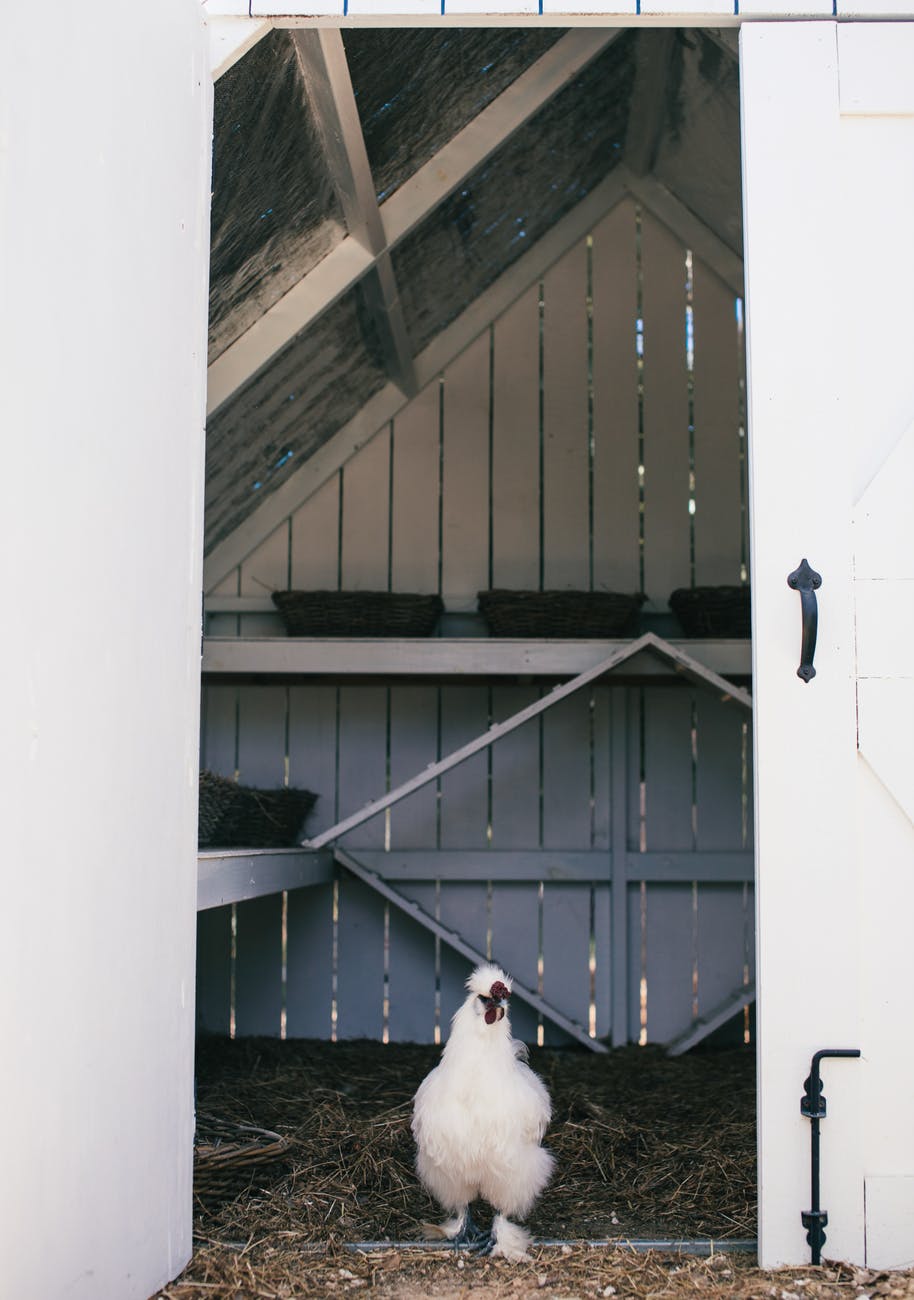
It’s all too easy to say “yes, we care about animal welfare-but people will always want their cheap food, so you’ll never get very far”. Our jumping-off point today is a passionate and deeply moral article by British MP Andrea Jenkyns for the Independent. She is excoriating about the dreadful conditions that factory chickens are kept in, and the pandemics of avian flu that sweep through the industry (nine in 2020 alone!)

It’s the word pandemic that presses the alarm button for us at LSS. Because it could spread to us too. Most of the pandemic diseases that plague us started with the domestication of animals in the Neolithic. Including tuberculosis, measles, rhinoviruses, smallpox and of course the influenza group, the orthomyxoviridae. The key genus to worry about is alpha, with its well known HxNx classification, whose various strains can cause bird flu or human flu, among others. What is more, the pesky things can jump the barriers between humans, birds and pigs, incubate and mutate in any one, then jump out again to kill. Especially when the hosts are living in crowded filthy conditions-which is Andrea’s great fear. Web MD has a nice link which goes into this: but what you should know is that bird flu is high on the list as the next possible pandemic agent.

And so, with Andrea Jenkyns, we ask you, our readers this question: is money the only way to measure the price of food?

We thank Mr Gary Herbert of Buckinghamshire for this story

There’s no place for ‘Frankenchicken’ in post-Brexit Britain – here’s how we end their sale in supermarkets | The Independent

What is avian or bird flu? (webmd.com)

#influenza #pandemic #avianflu #factoryfarming #chicken

We still don’t think Aliens are out there-yet

It is August 15 1977. England and Australia are locked in the fourth Test Match at Headingley. If you got tired of cricket you could turn your dial to the Hit Parade Charts, which were topped by the Brotherhood of Man’s Angelo. But with the benefit of hindsight, the one to listen for was the astronomically-themed Magic Fly by Space, then at Number 27. For this was the day that the famous, enigmatic Wow signal arrived at the Big Ear telescope in Ohio. It has remained utterly inexplicable ever since.

Now it has been joined by a second candidate, detected by the Parkes Radio Telescope on Australia. It was another narrow band signal dubbed BLC-1, picked up in the spring of 2019. It seems to have come from our nearest neighbour. Proxima Centauri, which is known to have at least one rocky planet. Or did it?

The problem with both candidate signals is that they are one- off data points, quite unrelated to each other. Either could be little green men, earth interference, or something we don’t know about at all. The trouble with observing with just one radio dish is that you can’t be absolutely certain it was Proxima Centauri-there are hundreds of potential stars in the observation field. Good scientists can do little with single data points-they are as useless as single fact soundbites in politics.

As it’s quite important to know if anybody is out there, it’s time we tightened up on our techniques. Writing in The Conversation, Michael Garrett thinks they way to eliminate all these pesky ambiguities is by using many dishes across the globe at the same time. The technique is called Very Long Baseline Interferometry. The obstacles are formidable; it’s very new, and the amount of data to process is colossal. But we do at last have the computers to do it. If you really are interested in the science of aliens, and not flying saucer fantasies, this could at last be the way ahead. I know there’s a bit of science here, but don’t be put off; Michael writes very clearly. We give you a Wikipedia link on the Wow signal, in case you need refreshing.

SETI: new signal excites alien hunters – here’s how we could find out if it’s real (theconversation.com)

Wow! signal – Wikipedia

#seti #extraterrestrialintelligence #biglisteningproject #blc1 #wowsignal #aliens

Return of the whales-The Conversation gives us hope in dark times

Confession: we at LSS could never really get on with Moby Dick, Herman Melville‘s nineteenth century classic. Yes, we know you’re not supposed to judge books by the standards of a later age. But for us the one sided, money driven slaughter was insupportable. An old soldier, who had fought real men with real guns, once told us that he didn’t like hunting because it wasn’t very brave at all to go up against animals when you have guns and they don’t.

The slaughter of intelligent whales and dolphins seemed especially barbaric, given their well-known intelligence and importance to the ecology. If these people really wanted to be ignorant and aggressive, why didn’t they just get tanked up on cheap beer, apply to demolish Chartres Cathedral, and replace it with a superstore? Anyway, by the nineteen seventies it really looked as if all cetaceans, including the Blue Whale (Balaenoptera musculus) were on the way out forever.

However, due to the tireless and often brave efforts of conservationists and other educated people, it really does seem that there is now a chance. Lauren McWhinnie, in The Conservation has a really heart warming piece about the return of all kinds of whales to their ancestral feeding grounds in the Antarctic. There’s a couple of good pictures and lots of facts for you to jump off from, as Lauren’s piece is part of their Oceans 21 series for this year. An old friend and sometime contributor to these pages recently took a holiday in the southern oceans, and told us how marvellous it was to see these living treasures returning again to their ancient waters. A victory of sorts for learning and intelligence over aggression and greed. We need a lot more.

The hopeful return of polar whales (theconversation.com)

#antarctica #southernoceans #conservation #whales #dolphins #whaling #oceans21

How to get a bit of free money

The debts being run up to cover the costs of Covid-19 lockdowns are now so eye-watering that they are truly comparable to those run up in wars. To take one example; by October 2020, UK national debt had already reached 100.8% of GDP- a chilling ratio last seen in the years after the Second World War. Many other countries have similar problems.

There are two possible approaches to debt. You could pay it back. This was the approach of the Cameron-Osborne government from 2010-2016, and even with the best will in the world, the results were mixed for UK PLC. The other is to wait until the economy grows, letting the proportion of debt fall until it is manageable. This was the strategy pursued by both Labour and Conservative Governments in the UK from 1945 until 1979, and on the whole, it worked.

So how can you persuade an economy to grow? And especially fast? More and more findings seem to indicate that the answer is to spend on R&D. This leads to innovation (especially in marketable products) which in turn leads to growth, funding more R & D, which in turn…….etc etc. We’ve got a couple of links below where you can explore at leisure. We liked John Wu in Innovation Files,* who puts it succinctly

The more a country sets aside today for R&D, the greater the dividends they stand to reap in the future. In that sense, among OECD nations, Korea leads in R&D intensity at 4 percent, followed by Japan at 3.4 percent, and then the United States trailing in third at 2.8 percent. For comparison, the R&D intensity of all OECD nations averages at 2.4 percent. Countries such as Korea and China have focused on expanding heavy investment into R&D over the past decade

The fact he wrote this in 2015 only makes his predictions for the rise of China all the more prescient!

A little extra spend on R&D is worth a lot more in a few years. As the world emerges from the Covid-19 crisis there are limitless opportunities for new technologies and new markets. We are not financial advisers and can make no prediction. But to us as laymen, the speculation around healthcare and renewable energies looks intriguing. And anyone who could master cleaning up the results of 200 years of industrial pollution would indeed be wealthy. The world of the 2030s might be clean, healthy and prosperous indeed.

Fueling Innovation: The Role of R&D in Economic Growth | The Innovation Files

How important is R&D for economic growth? – Research & Development World (rdworldonline.com)

R&Dspending #GDP #nationaldebt #science #covid-19 #renewableenergy #greenindustries

Time for an Information Purity Act

“I am a sovereign individual, entire of myself; thus free to do whatever I want ,whenever ; any attempt to constrain me is an intolerable assault on liberty.” Noble sentiments; but also the creed of every polluter, and their supporters in media and government, who wish to dump the consequences of their lucrative operations into someone else’s life. And death.

Historically the worse pollution happens with the sudden appearance of new, rapidly changing industries. For the simple reason that old established legislation was quite inadequate to meet the threats. The new cities of the industrial revolution were famous for smoke, disease and contaminated water. It took decades and centuries of bitterly contested legislation to bring even minimal standards of health and safety. But no one would deny that it was worth it. An even better example was food purity legislation. Early mass produced foods were full of questionable ingredients including strychnine and lead (which helped with flavour and appearance) or just bulkers like water and chalk. It took the efforts of reformers like Arthur Hill Hassall (1817-1894) *and many others, in many countries, to effect reforms.

The massive explosion in information technology has allowed anyone and everyone to dump whatever they want into the common pool of human knowledge. All cry the same “I am free to say want-my opinion is as good as yours!” The damage effected has been clear for all to see.

The need for legislation to control the quality of what is put into the public domain is now overwhelming. Oddly enough, examples of good practice exist, which might give us a clue as to how standards might evolve. Let’s take the Scientific Journal Nature as an example. Anyone is free to send anything to it. They may expound on an almost infinite number of topics from Archaeology to Zoology. However, the Editor sets certain limits before he will publish. These include standards on proof, evidence, verifiability and logic. Intolerable affronts to many, no doubt. But they have made Nature a byword for trustworthiness-and therefor a product of high value. Try a subscription if you don’t believe us. And these standards can be found across many journals.

Parliamentary legislation need not stand in the way of free speech or liberty. But a common space needs common rules of behaviour. The internet is no different.

Arthur Hill Hassall – Wikipedia

#informationpurityact #cleanairacts #pollution #internet