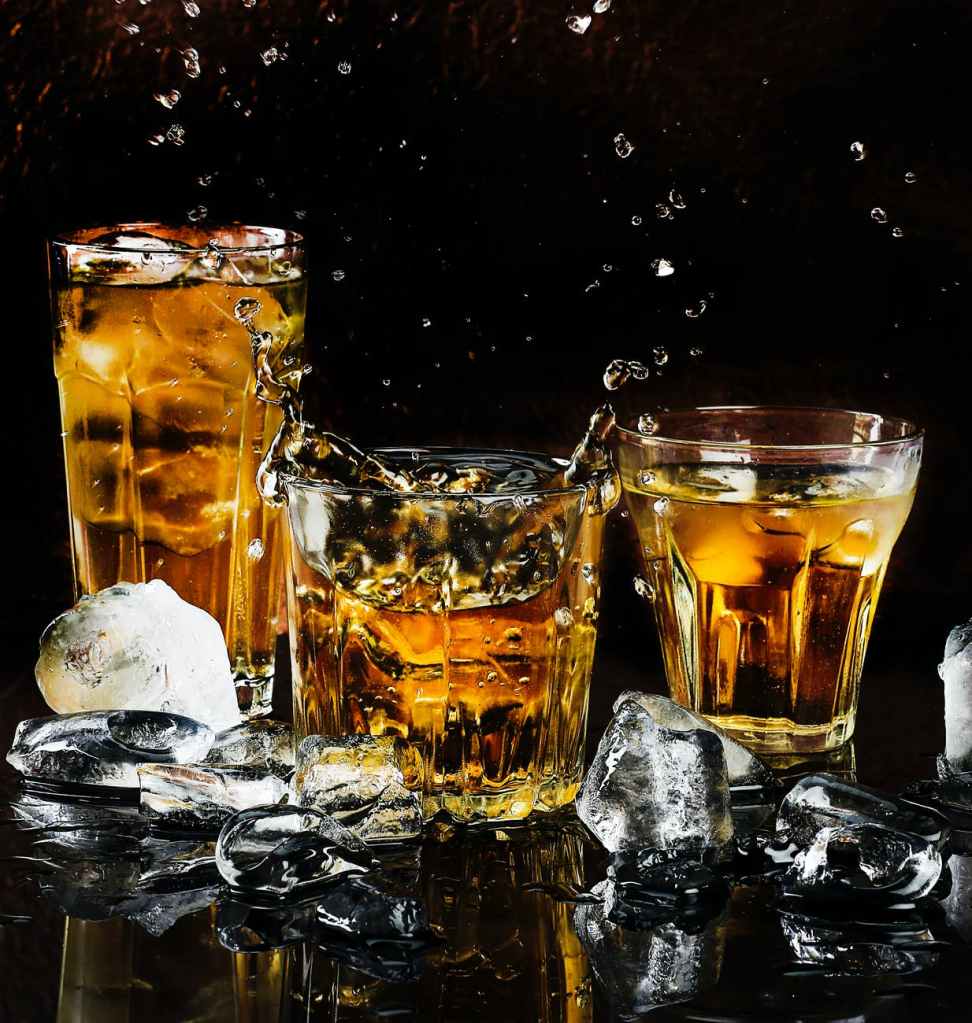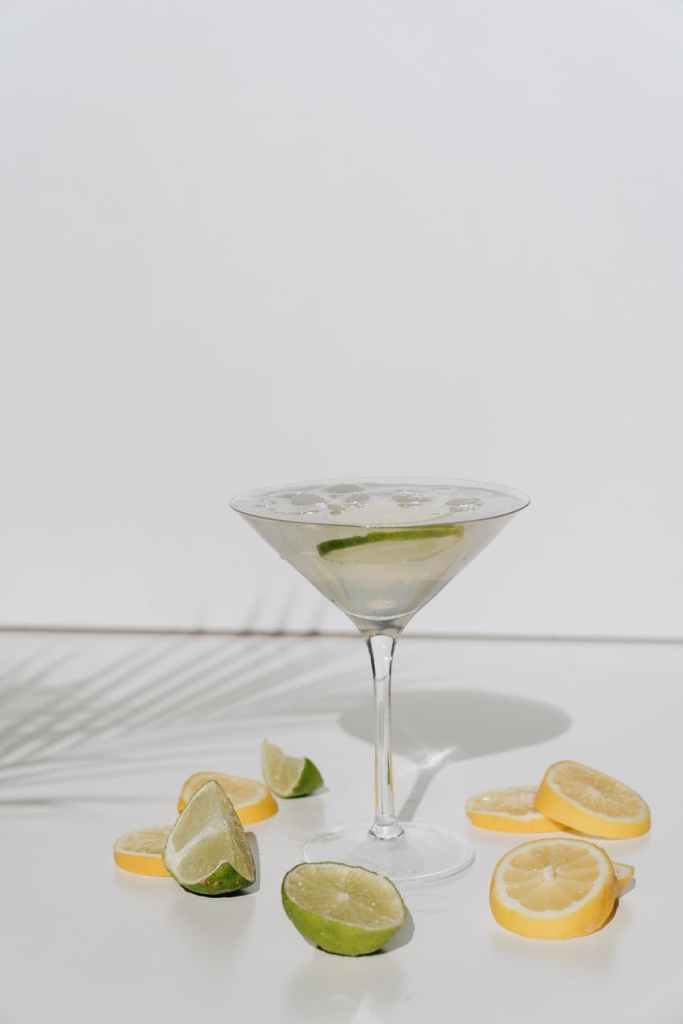
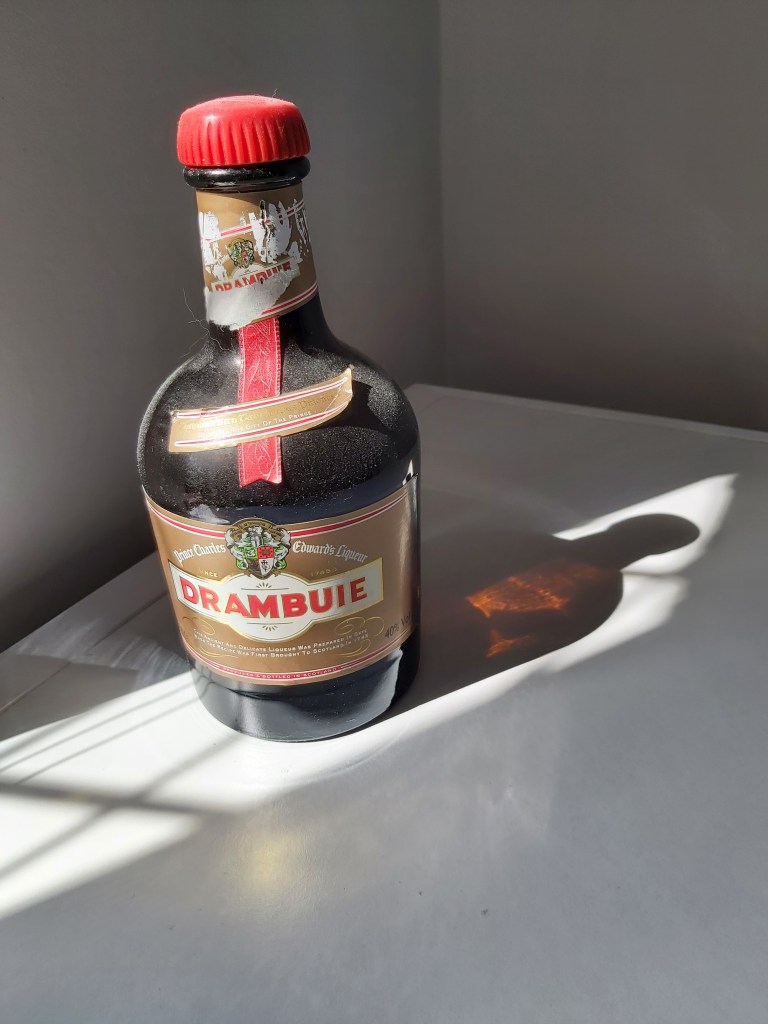
Three liqueurs and a hangover cure

Fans of nineteen eighties TV will recall the old Cointreau advert in which a naughty Frenchman with a twinkling eye recalls an old liaison with a Respectable Englishwoman at a very formal dinner party. Perhaps a tad cliched (but aren’t all good ads?), it nevertheless got us thinking about Cointreau and other fine liqueurs. So for all of you former lovers with a naughty past, and the rest of us sad types who just watched the football on the telly in the bar, here’s a few mixes for the long weekend starring famous liquers. Thanks as ever to Hamlyn’s The Ultimate Cocktail Book and that ever faithful standby,The Bartender’s Guide by Peter Bohrman (Greenwich Books) Go buy a copy of each, now!

Le Mans: Fans of motor racing will know to take a tall glass, add three large ice cubes, one measure of Cointreau and 1/2 measure of vodka. Add a slice of lemon and top up with soda water. You’ll find the orangey taste of the Cointreau opens the way to vistas further south.

The Loch Lomond Monster: You need a shaker to which you add five cubes of ice. Take two measures of good industrial whisky (Johnny Walker for example) and add one measure of Drambuie. Two drops of Angostura bitters complete the mix. Shake ’em, don’t break ’em. Pour, sans ice, to a cocktail glass and decorate with a slice of orange. With its mix of herbs and heathers, Drambuie is a bit like a north-of -the border Pimms.

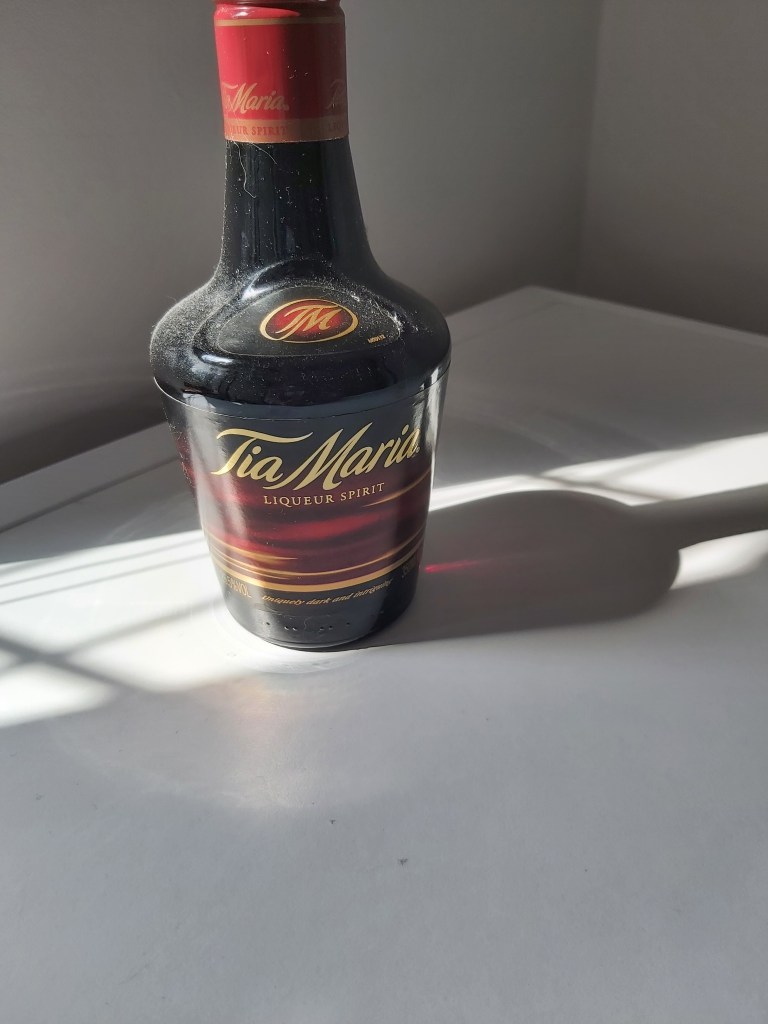
October Revolution: The book tells us to add five ice cubes to your shaker. Then; one measure of vodka, 1 of Tia Maria 1 measure of creme de cacao and 1 measure of double cream. Shake, then pour the lot into a tall glass, adding extra ice if necessary. We don’t know what it’s got to do with the Bolsheviks, but clearly Lenin and Trotsky must have loved it!

Hangover Cure– Accoding to our sometime correspondent Mr Gary Herbert of Buckinghamshire, an old friend of his swore by creme de menthe poured into fresh milk. Wow!

#tiamaria #cointreau #drambuie #creme de menthe #cocktails

Harriet Taylor Mill-behind a great woman stands a great man

Feminists, philosophers, and liberals everywhere will toast the memory of John Stuart Mill (1806-1873). Arguably the most eminent English-speaking philosopher of the nineteenth century, his pioneering ideas were decades, sometimes centuries, ahead of their time.

Most celebrated among his many accomplishments was his groundbreaking On the Subjection of Women (1861). Cleverly avoiding many of the intellectual morasses into which later feminists fell, it argues simply and clearly that the emancipation of women would benefit all, on simple utilitarian grounds. In other words, we all get richer.

Yet Mill claimed that the credit for this work should largely go to his wife, Harriet Taylor, saying he was

“chiefly the amanuensis of my wife”

in the research and production of his work. He proclaimed her as the moving spirit and collaborator in all his works including those on liberty, politics, democracy,racial equality, slavery and many other causes whose advances we take far too much for granted today.

Sadly, she predeceased him. Both had tuberculosis, which carried him off too eventually, and we can only speculate what this remarkable pair might have achieved had antibiotics been available.

JS Mill is a name which should be shouted by progressives everywhere; but with him at all times was a truly great woman, as he was the first to acknowledge. Teamwork always wins best in the end.

#antibiotics #tuberculosis #jsmill #liberty #democracy #feminism #women

John Stuart Mill – Wikipedia

Airships-making green flying possible

In his fantasy novel The War Lord of the Air novelist Michael Moorcock imagined a 1973 where the airship reigned supreme. There had never been a First World War, the great European empires had never fallen, and aeroplanes were deemed impossible. The trade routes of the sky were filled with huge silver dirigibles crossing the skies and linking continents.

In the real world, it never happened. From 1919 onwards the sky was increasingly filled with fast, heavier than air machines which could whisk you from Frankfurt to New York in hours. Or on your holiday from Luton to Benidorm. But there is one problem; they already contribute quite a slice of greenhouse gases, and as flying grows, this will start piling up fast. We could cut this before it happens-but how?

One company that thinks it has an answer is Hybrid Air Vehicles of Bedford in the UK. Their hybrid powered Airlander 10 is designed to take over the short haul routes (think Barcelona- Balearics or San Francisco- Seattle) , to be updated by all-electric models by 2025. It’ll be slower than a plane, but the emissions will be a whopping 90% lower. And we think the views will be a lot better! So,we’ve got two links for you today. One to Rupert Neate of the Guardian and one to HAV themselves. There’s some great photos and videos for you to enjoy.

We at LSS would hate air travel to fail: nothing has done more to break down barriers between peoples. Yet we do need to make every effort, large and small, to cut greenhouse emissions. We think HAV represent a really brave attempt to do that. Airships have never quite gone away: Londoners will recall visits from the Goodyear blimp in the 1970s, and the old Airship Industies pioneer from the 1990s. Now perhaps they have a reason to come back, big time.

HAV (hybridairvehicles.com)

Airships for city hops could cut flying’s CO2 emissions by 90% | Air transport | The Guardian

#aviation#co2emissions #airships #airtravel #aeroplane #holiday #business #bedfordshire

Michael Moorcock The Warlord of the Air NEL 1971

Daniel Kahneman-still packing a punch at 87

Why do so many organisations make such bad decisions? Have you ever been on the sharp end of dreadful blunders? Do you ever wonder “why can’t people do things better?” If so Daniel Kahneman is the man for you. He’s spent a lifetime studying decision making and group behaviour, and must know a bit about it, because they gave him a Nobel Prize for it back in 2002. A younger generation will recall his bestseller Thinking Fast and Slow, to which we also link below. Now he’s at it again in a new work Noise:A Flaw in Human Judgement*: not bad for an 87 year old who started life as a refugee from the Nazis in occupied France.

We won’t spoil the excellent interview article by Tim Adams of The Guardian which you should click to * at once. But there was one killer quote which we couldn’t resist:

It takes a long time to educate intuition.

When we consider how many people live their lives by intuition, and that much of their information comes from rubbish noise and emotional outpouring on the internet, we tremble for the future. Perhaps the only hope lies in the wisdom of people like Kahneman.

We thank Mr Peter Seymour for recommending today’ s blog. He further advises you to listen to a programme which Kahneman made recently: we hope our link to BBC sounds works for you.

Daniel Kahneman: ‘Clearly AI is going to win. How people are going to adjust is a fascinating problem’ | Science and nature books | The Guardian

Daniel Kahneman: Thinking Fast and Slow Penguin 2012

Daniel Kahneman Olivier Sibony and Cass R Sunstein Noise: a Flaw in Human Judgement Harper Collins 2021

https://www.bbc.co.uk/sounds/play/m000w4nb

#psychology #management #decisions #AI

Cancer vaccines and lateral thinking

One of the best things about writing this blog is watching intelligent people in action. Nothing is more intelligent than when they transfer learning from one area into another. Consider how fire, originally developed for the catering industry, came to transform metallurgy. Or when strange mathematical techniques like fractals are suddenly paid off for biologists.

So it may yet be with vaccines and cancer. According to Ethan Ennals of the Mail, no less a firm than BioNTech are becoming involved in the search for vaccines which might, just might, have some effect. That’s right, the BioNTech, whose pioneering science has been so effective against Covid-19. The same idea of manipulating messenger RNA to get the patient to produce the antigen may work against cancers. Ethan even has a couple of practical case examples.

That’s why we’ve linked both to the Mail article and, for those of you still on furlough time, a nice overall summary from PubMed, that excellent database of papers and reviews for the professionals.

And remember-the next time you hear someone disparaging vaccines and medical science, you can remind them of this.

We thank Mrs Christine Hartley of Sussex for this story

How the pioneering science behind the Covid jab could soon offer a new vaccine… for cancer  | Daily Mail Online

Cancer Vaccines: A Brief Overview – PubMed (nih.gov)

#cancer #covid-19 #sars-cov-2 #mRNA #vaccines

Could a flu pandemic follow Covid-19?

So why aren’t we doing round up of the week?

Because something rather big has come up which we think our informed and discerning readers might want to know about

Which is?

That this Covid-19 pandemic , which you may well have noticed, could be followed by a flu pandemic of equally awesome proportions

Heavens-where did you get that from?

Well according to Manuel Ansede of El Pais, there’s a nasty little flu virus called H5N8 which has just learned to jump the species barrier from birds to humans, and so could be heading our way quite soon

How does he know this?

Because he’s been reading the Journal Science, which is to the world of Learning what Dom Perignon Champagne is to the world of drinking. Quite near the top,in other words.

And what do they say?

Two Chinese scientists from the same team that first identified Sars-Cov-2 back in 2019 have warned that H5N8 has the potential to do the same sort of thing

But isn’t that just in birds?

Quite a lot of birds, actually. Up to now it has caused outbreaks in birds in 46 countries. But, so far birds only, sort of.

Sort of?

Well, a new variation of H5N8 jumped the barrier and infected 7 humans in Astrakhan. Ok, no one seemed to have symptoms, so far. But what worries George Fu Gao and Weifeng Shi is the trend of the mutation pattern which they think might make a species jump increasingly likely

But surely it’ll just be a bad cold?

Well.. there was the little matter of Spanish Flu in 1918 which killed 50 million people, which more than the First World War times over. Thjen there was the Hong Kong outbreak of 1968, which…

OK, I get the picture What should the average citizen do?

Well, learn Spanish, Because the article below is written in that language. Or get a translator app. And after that-follow the story. Stay alert. Cuidarte.

Dos expertos chinos que identificaron el coronavirus alertan del peligro del virus de la gripe H5N8 | Ciencia | EL PAÍS (elpais.com)

#h5n8 #sars-cov-2 covid-19 influenza #pandemic

Friday Night for Sophisticates-Cinnamon Maple Whiskey Sour

Every so often, fans of cocktail night will demand something a little more sophisticated, a little more outre, if you will. At LSS, we’ve been over the classic recipes more times than you’ve fallen off of a bar stool. Now one reader, Mr Peter Seymour of Hertfordshire, has demanded that we try to spice things up. Literally.

Real cognescenti will be aware of the basic ingredients of the Whisky Sour. It’a bourbon (or scotch) lemon juice and sugar syrup. The Cinnamon Maple Whisky Sour starts there and takes the idea further. We have found a bright breezy website called Cookie and Kate who explain the whole thing in detail, and we earnestly implore you to click below. But the essential trick is to add maple syrup and a certain measure of cinnamon. This, we are told, adds depth and interest, and keeps the merry drinker happy all the way to the bottom of the glass. And, once you get there, why not order another?

We’d love to learn your reactions to this somewhat startling, not to say radical departure from our normal path. Mr Seymour does not disparage the whisky sour, far from it. He is simply imitating the genius of Sir Isaac Newton, who once famously remarked “If I see a little further, it is because I stand on the shoulders of giants.” What more appropriate sentiment for a cocktail column?

Cinnamon Maple Whiskey Sour Recipe – Cookie and Kate

#whiskey #bourbon #cocktails #newtonianphysics

Ever heard of Lady Katherine Jones? Well, you should have

Bet you’ve heard of Robert Boyle,(1627-1691),pioneering chemist, scientist, philosopher and uber-doyen of the Royal Society. According to a new biography, his sister Katherine, Jones by marriage, Lady Ranelagh by title, (1615-1691) was his support, mentor, collaborator and patron all rolled into one. And as so happens with women in science , she has been effectively airbrushed from history-until now.

Her story is well summarised in the Nature article attached. Born in comfortable circumstances, she married a member of the Irish Peerage, by whom she had four children. He being a gambler and boor, like so many men, she escaped to an intellectual life in London, participating fully in discussion circles whose raison d’etre was to discern:

“useful knowledge revealed through experimental science”

When little brother Johnny came along, she was soon bankrolling his laboratory, collaborating, experimenting herself and generally taking charge of the epistemological side of the business. But alas! The nascent Royal Society was not due to admit women until 1945, and her brother became the focus of attention, both then and for centuries afterwards.

A new biography Lady Ranelagh: The incomparable life of Robert Boyle’s Sister by Michelle di Meo (UCP 2021) is reviewed by Georgina Ferry for Nature. We show the summary below, but earnestly entreat you to click to the link, because it’s a gripping review.

Katherine Jones, Lady Ranelagh, worked at the heart of seventeenth-century scientific, political and philosophical debates. But, because she obeyed the convention that women should not put their thoughts into print, she is remembered chiefly — if at all — as the sister of chemist and Royal Society co-founder Robert Boyle. A scrupulously researched history of Ranelagh’s contributions to the tumultuous seventeenth century gives us a second chance to meet the woman known as “the Incomparable”.Nature | 5 min read

We can’t go back in time to correct the many injustices done to women in previous centuries. We can learn from our mistakes. And agree that bias, conscious or otherwise, is one of the single biggest brakes on human progress.

Welcome to the Royal Society | Royal Society

#enlightenment #science #robertboyle #chemistry #london #womeninscience

Neanderthals within neanderthals-this is going to be a big one

A radical new breakthrough, which could solve dozens of unanswered questions on human evolution has been announced by the Max Planck Institute. Scientists can now take dust from the floor of old caves, find DNA and sequence it to see who was living there. Potentially this is as big for Paleoanthropology as LCN techniques were for Forensic Scientists a generation ago.

To realise how important this is, let’s put it into context. Our current data sets for human evolution (fossils, tools, a little DNA from a few fortuitously preserved bones) have left enormous gaps in understanding. The key questions: Who was living there? What were they doing? Who were they related to? are frustratingly unanswered. Site one has tool but no bones. Site two has bones but you can’t get DNA from them. Site three has tiny scraps of bone with good DNA, but almost nothing else. And so it goes.

Already the new technique is coming up with startling findings. Researchers at the Galeria de las Estatuas cave site in Spain:

found that, about 100,000 years ago, the population who had been living in the cave for millennia were replaced by a completely different group of Neanderthal people……It was as if a modern human population of Europeans had been replaced by East Asians,” (from Robin McKie, Guardian 17 5 21 *)

In other words you can’t say “the Neanderthals” as if they were a single homogenous group any more. Who else is that true for? As Robin wonders, can we at last find out more about Denisovans, Homo floresiensis, the Red Deer Cave, Homo naledi and a host of other recent enigmas in our family tree?

It won’t solve everything; we doubt that the techniques will work for three million year old australopithecus fossils frozen in old sandstones for example. But for the movements of recent populations,including even the Neolithic and Iron Age, it could be stunning. Once again a big thank you to the Max Planck Institute *for another contribution to human learning.

Tiny traces of DNA found in cave dust may unlock secret life of Neanderthals | Archaeology | The Guardian

Nuclear DNA from sediments helps unlock ancient human history: Max Planck Institute for Evolutionary Anthropology (mpg.de)

#dna #paleoanthropolgy #neanderthals #humanevolution #fossil #denisovan #neolithic #bronzeage

Weekly round up: Brain size, global cooling,and a little political controversy

The usual round up of items which are not merely good news stories, but where we think that the author is on to something significant.

What’s going on in Britain? Every so often a writer comes along and says something we’ve been struggling to say ourselves, and says it with real clarity and insight. So it is with Mary Dejevsky of the Spectator on the massive cultural and ethnic re-alignment of British politics.

Meet 5000 of my closest friends We have followed evolutionist Robin Dunbar for years, and on the whole like his theories about group size and brain size in primates and other animals. Tiny worry: once, while explaining the theory to a very clever Forensic Scientist, he observed “if brain size is related to group size-why do ants have small brains?”

https://theconversation.com/dunbars-number-why-my-theory-that-humans-can-only-maintain-150-friendships-has-

Brain IT interface We have long been fascinated by the idea of boosting your brainpower with artificial implants. Imagine going to a clinic, having a quick op, and you walk out able to sing like Bryn Terfel or play tennis like Roger Federer (what if they got it the other way round?-ed) A piece from Nature shows that things are coming along nicely:

A brain–computer interface for typing could eventually let people with paralysis communicate at the speed of their thoughts. The device was able to decode, in real time, signals from electrodes implanted in the brain of a 65-year-old man with full-body paralysis as he imagined writing. (Scientific American | 5 min read — or watch the 2 minute Nature video)

Cooling Nature’s way-Everyone agrees that the need to cool down the atmosphere and hit our targets is becoming acute. Here’s a heartwarming piece about using natural ecological solutions like wetlands and forest as our carbon sinks. And didn’t we read somewhere how more parks and open spaces are good for our psychological health?

Analyses of nature-based solutions often focus on how much carbon they can remove from the atmosphere. A new analysis explores how these solutions will affect global temperatures — a crucial metric as humanity attempts to limit global warming. It suggests that a nature-based strategy could reduce peak warming by an additional 0.3 °C under a scenario consistent with a 2 °C overall temperature rise by 2085. Climate-change policy analyst Cécile Girardin and seven colleagues explain how projects that manage, protect and restore ecosystems could offer climate, biodiversity and socio-economic benefits — if done properly, and soon.Nature | 12 min read

All this fascinating thought and research was done by people who have better things to do than indulge their taste for interethnic and religious violence. Compare that, gentle readers, with our Arab and Israeli neighbours, of whom it might fairly be said, to paraphrase the old Sister Sledge song:

We’re lost in hatred/Caught in a trap/No turning back/We’re lost in hatred

(With compliments to the original by Nile Rodgers and Bernard Edwards)

Can you imagine the current combatants ever coming up with anything to better even their own lives, let alone anyone else’s? Be glad you have nothing to do with them, and enjoy a peaceful weekend

#kinship #evolution #brainsize #labour #democrats #conservatives #republicans #artificialintelligence #globalwarming #ecology #arabisraeli #palestine #gaza