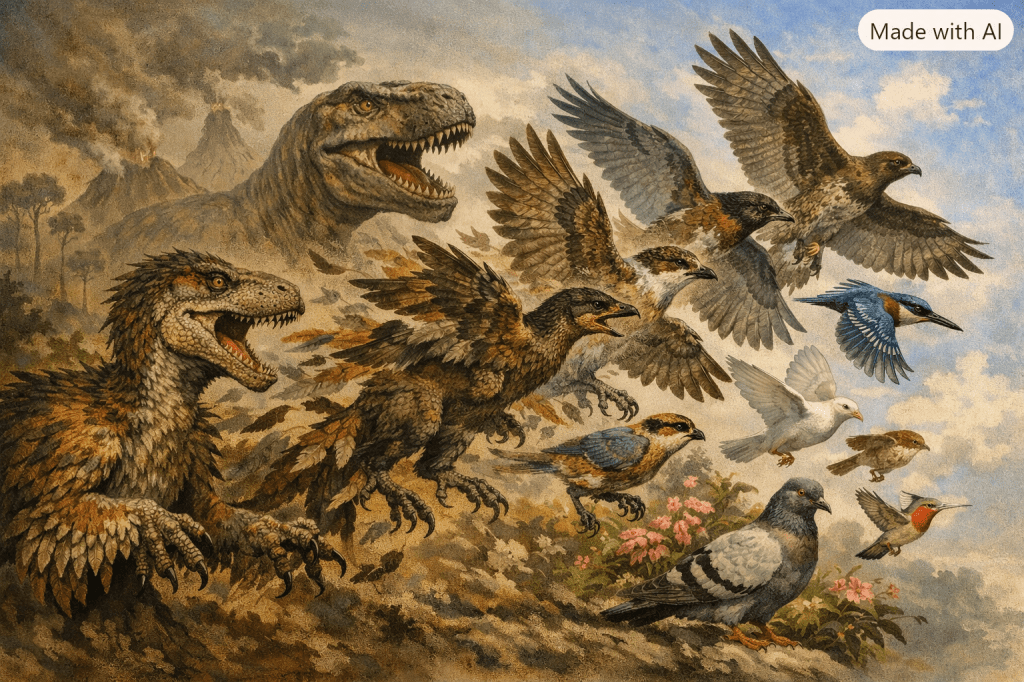
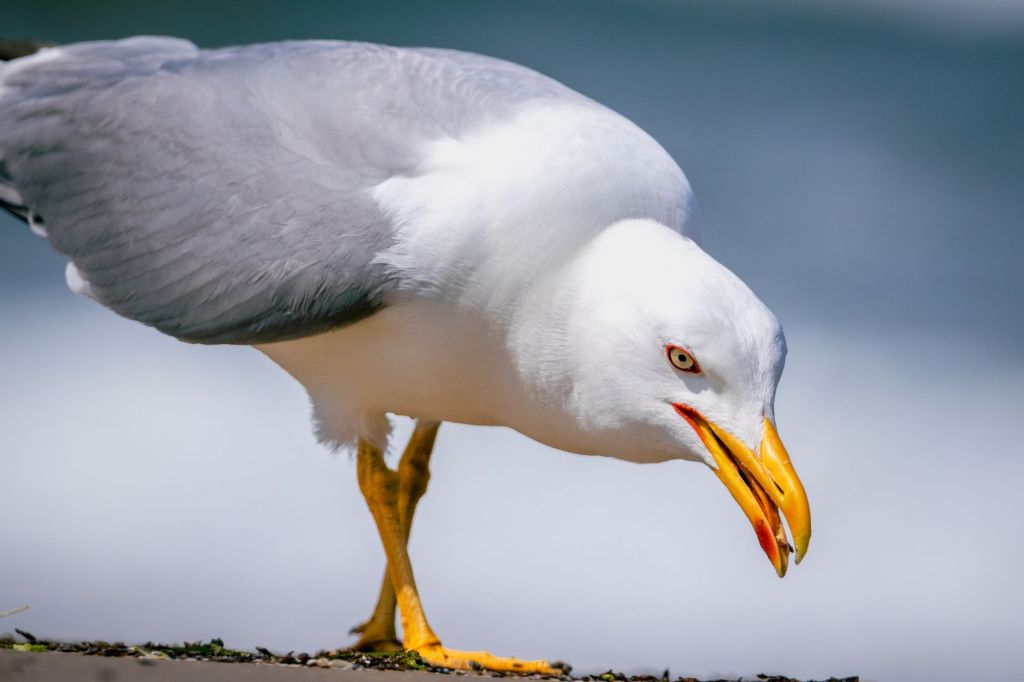
As a party of academics led by world renowned palaeontologist Steve Brusatte crossed the remote landscape of Scotland, one of their number was attacked by an angry dinosaur. The victim, an eminent mathematician of Edinburgh University, had got ahead of the main party, Alone and isolated, he was an easy target as the animal swooped, forcing him to race back to his companions for cover Does this sound like something from a Doug McClure movie? Perhaps. But the dinosaur in question was well within her rights, for the Physicist represented a clear and imminent threat to her chicks: and as her partner was out hunting for fish, she was already in a nervous, jumpy mood. Yep, you guessed it she was a herring gull (Larus argentatus) and many who have wondered along a British cliff edge will have encountered this kind of agonistic interaction. But for Brusatte the anecdote illustrates the clear and simple message Birds are dinosaurs the way that Texans are Americans. The perfect start to his latest book The Story of Birds [1] the third in his triptych of eminently readable titles [2] [3] which make even subjects as arcane as vertebrate palaeontology the easiest of reads for those of curious mind but no formal biological training.
Birds are dinosaurs. How well we remember the scornful reactions when pioneers like Ostrom, Bakker and those wonderful old BBC Horizon programmes back in the 1970s first ventured this heretical asseveration. Actually, quite prominent scholars like TH Huxley had pointed out the glaring obviousity in Victorian times. But as early discoveries filled out the museums, the creatures morphed into giant scaly saurians, all impressively huge, but nicely dead, so they couldn’t bite you. After ruling the planet in majestic grandiosity, they were felled by a rogue asteroid, and disappeared for ever, an object lesson in fallen grandeur. It took some adjustment to realise they were hiding in plain sight all along: birds as Byzantium to the Dinosaurs’ Rome. No longer rulers of all, they are still powerful players, filling our skies and seas and forests with sights of unforgettable beauty and wonder. Even their asteroid defying survival was a bit of a miracle, as their close cousins the Dromeosaurids and the Troodonts, equally fast, intelligent and warm blooded were utterly erased by that same impact.
As in all books Brusatte writes with skill ,easily walking the line between over technical and too simple, the very devil of science writing. If you are in anyway interested in where we have come from, in the immense sweep of time and the deep evolutionary roots of your cat’s bitter rivalry with the family of gulls who live up on the roof, then this one is for you.
[1] Brusatte, Steve. The Story of Birds: An Evolutionary History of the Dinosaurs That Live Among Us. London: Picador, 2026; New York: Mariner Books, 2026
[2]Brusatte, Steve. The Rise and Fall of the Dinosaurs: A New History of a Lost World. New York: William Morrow, 2018; London: Picador, 2018.
[3]Brusatte, Steve. The Rise and Reign of the Mammals: A New History, from the Shadow of the Dinosaurs to Us. London: Macmillan, 2022; New York: HarperCollins/William Morrow, 2022.
# Doug McClure #TH Huxley #dinosaurs #birds #paleontology #kt impact #mammals #texas #evolution #flight


