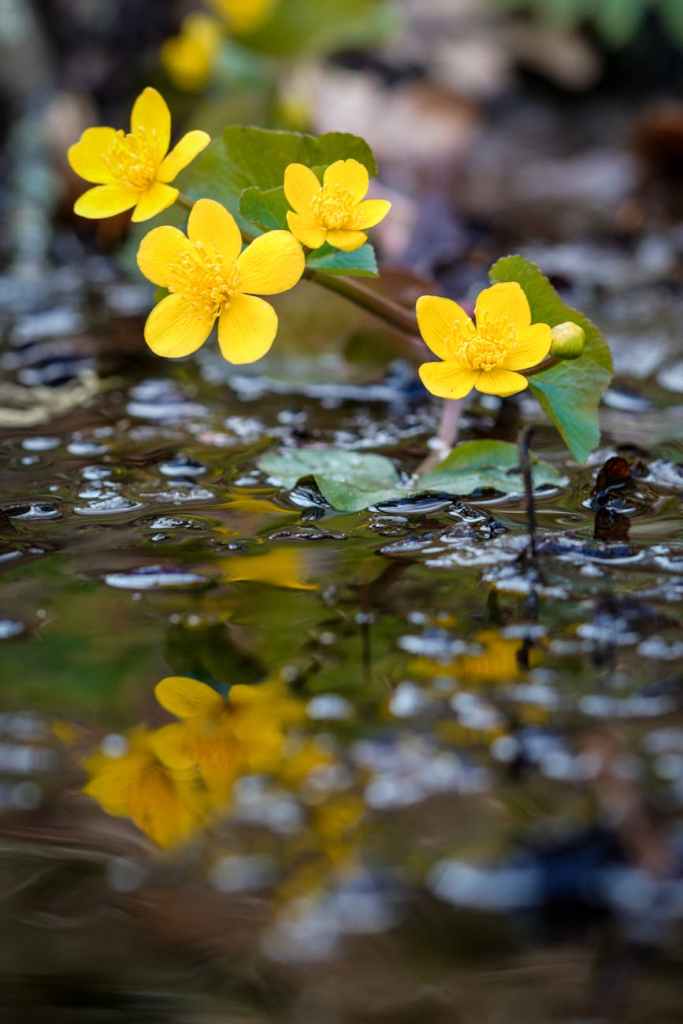
Could a humble little wildflower growing unnoticed in bog and marshland be a key player in the science of antibiotic resistance? According to an article by researchers Ronan McCarthy John J. Walsh and Kavita Gadar for the Conversation[1], yes it could. For they have discovered that Tormentil (Potentilla erecta) [2] not only has intriguing antibiotic properties of its own, it may help us to retread and recycle some old human made antibiotics which are sadly reaching the end of their effective lives.
Tormentil has appeared for centuries in the herbariums of traditional folk medicine. It has been used variously to treat ailments as diverse as gum disease, diarrhoea and wounds. Noting this, our resourceful researchers put it into a cross study against 70 other plant species in their Laboratory. It came out tops, hacking into the biofilms that bacteria use to defend themselves and thereby shortening the lives of these creatures by more than somewhat. They even identified the active agents in the tormentil which are ellagic acid and agrimonem. But you probably guessed that, being such an erudite and well-informed bunch of readers. Even more remarkably they:
…. combined low levels of the antibiotic colistin – an antibiotic that is only used as a last-resort against severe infections due to its potential toxicity to patients – with the tormentil extract. The low-level antibiotic dosage wasn’t enough to kill the bacteria when used on its own. But when combined with the tormentil extract, the plant compound enhanced the antibiotic’s efficacy.
You don’t need to be an old LSS hand to realise our worries about the declining effectiveness of colistin and some of the other older antibiotics.[3]
And our conclusions? We’ve written over twenty blogs on the theme of antibiotics or other medicines which may be hidden in nature. And therefore to destroy wildlands in order to grow food which no one really needs, or to build shopping malls of aching vacuity, is biologically insane, whatever the short term economic benefits. That probably half of all wild plants contain something useful, if only to the secret services of certain well known governments . As Shakespeare had it
“Within the infant rind of this small flower / Poison hath residence and medicine power.”
— Romeo and Juliet, Act 2, Scene 3
[2] Potentilla erecta – Wikipedia
[3] Liu, Y.-Y. et al. (2016). “Emergence of plasmid-mediated colistin resistance mechanism MCR-1 in animals and human beings in China.” The Lancet Infectious Diseases, 16(2), 161–168.
DOI: 10.1016/S1473-3099(15)00424-7
#health #medicine #antibiotic resistance #wild flowers #tormentil #bacteria #microbiology

 Learning, Science and Society