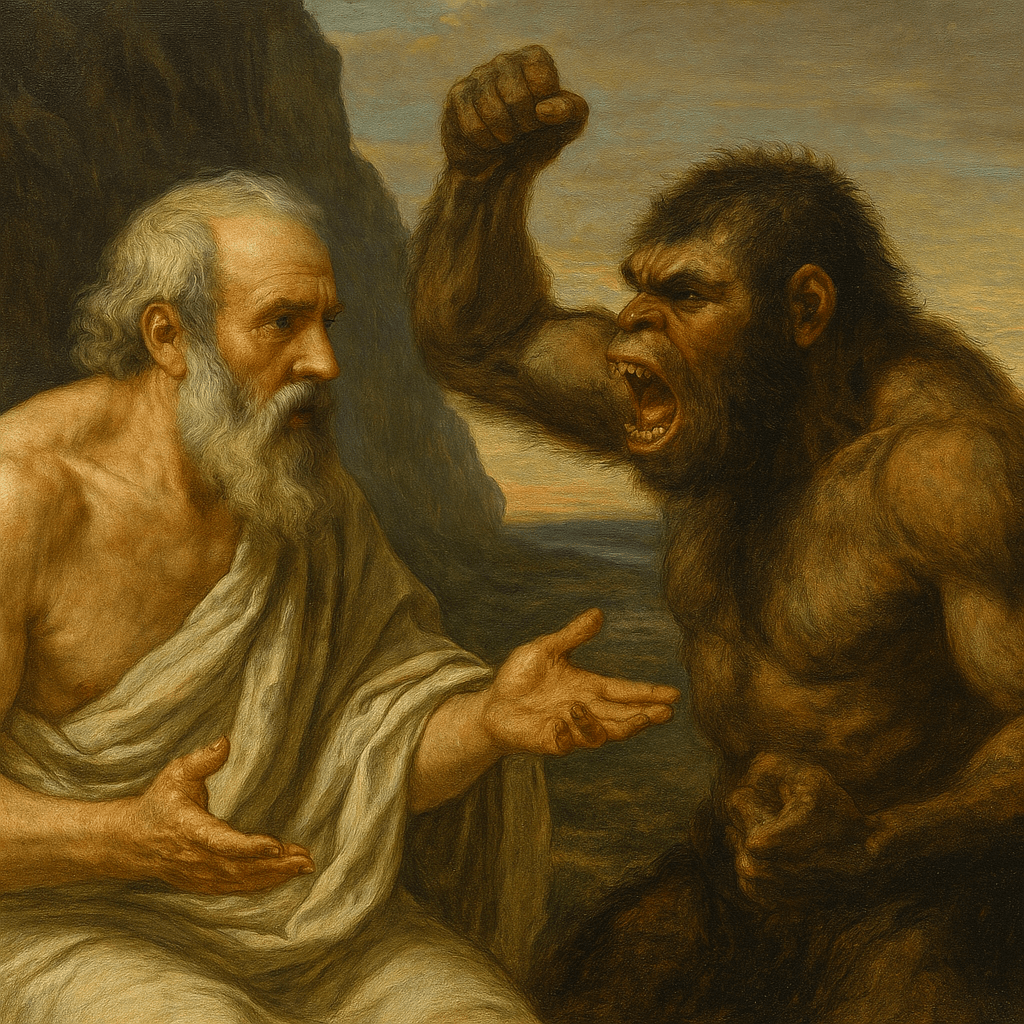


Have you ever stood in a pub and listened to a group of men talking? Are they really exchanging information? Trying to learn, to incorporate new facts and modify their opinions? Or do they just stand there, declaiming little nuggets of information, signalling their belonging to the group, and their status in it? We think its about 6% the former and 94% the latter. If that is the case, the implications for how people think, the very way they use and incorporate facts are disturbing indeed.
Dan Kahan[1] [2] and Brendan Nyhan[3] suggest this is exactly what happen in most peoples minds, most of the time. They think that considerations like pride and group loyalty far outweigh the effects of evidence and logical process. Our space is limited; but we hope the extensive bibliographies below will convince readers of the essential value of their insights, “If I admit I am wrong, then I have lost face” is where most people come from. And suddenly we see: This terror of looking weak, of jeopardising social status, lies behind so many of the mysteries we have struggled with here for five years now. Why does emotion seem to always triumph over reason? Why do objective facts, on things like Climate Change or vaccination, so utterly fail to change preconceived views? How indeed have issues of pure science become mired in questions of group identity and gender role?
Veteran readers will recall our long-held belief that reason and evidence are the principal survival adaptations of this species. We can never be as strong as bears, nor swim as well as whales. It was these qualities of intelligence that allowed a small weak ape to survive, and prevail. There have been times when these qualities did indeed seem to dominate, briefly. And other times when these qualities were almost extinguished by barbaric ignorance and brutality. Somehow, reason survived and recovered, and even went on to brief triumphs in eras such as the Renaissance or the Enlightenment. The difference now is that the threats such as Climate Change or pollution are existential. If not addressed, this species will become extinct. Yet the very people who might solve these problems-scientists, lawyers, independent journalists- are becoming fewer. Their voices drowned, their budgets starved by the hysteria of the mob and its angry leaders. If humanity is to survive, intelligent people must find ways to first protect themselves, and then prevail once more. But how, and if we have enough time, are complete unknowns,
Kahan, Dan M.; Peters, Ellen; Dawson, Ellen; Slovic, Paul. “Motivated Numeracy and Enlightened Self-Government.” Behavioral and Brain Sciences 38 (2017): e56.
Kahan, Dan M.; Braman, Donald; Gastil, John; Slovic, Paul; Mertz, C.K. “Culture and Identity-Protective Cognition: Explaining the White Male Effect in Risk Perception.” Journal of Empirical Legal Studies 4, no. 3 (2007): 465–505.
Nyhan, Brendan. “When Corrections Fail: The Persistence of Political Misperceptions.” Political Behavior 32, no. 2 (2010): 303–330.
#reason #education #psychology #science #learning

 Learning, Science and Society