
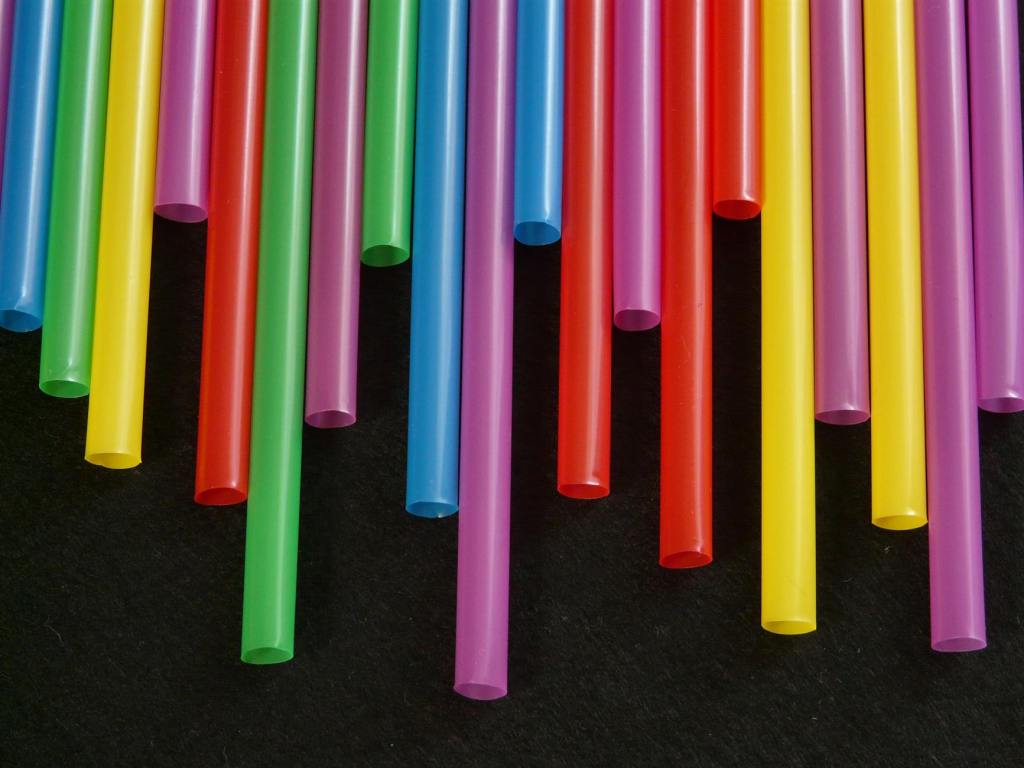

It’s hard to convey now what plastics meant to us Space-Age children of the 1960s. Bright, cheap, coloured, light, clean and multipurpose, they were the material of choice for a democratic age. They were what your new Fireball XL5 rocket was made of. The tape recorder for your Beatles songs. The beakers for your free school milk. The fittings in your Dad’s new Ford Anglia. With them we would create a new heroic age, and get to The Moon.
Sixty years on? Well, they’re just everywhere, aren’t they? Up on the top of Mount Everest. Deep at the bottom of the Marianas Trench. And everywhere, everywhere, in between. In the blossom in your garden. Blowing in the wind between the trees. In your water. In your food. In your bodies. And that last should afford pause for thought. Because the effects of all this plastic are not really understood. According to Anne Pinto-Rodrigues of Science News,[1] microplastics particles can be found in the gut biome; in the reproductive system; in breast milk; and in blood. What’s worse, some of the additives, such as BPA can act as endocrine disruptors (see LSS 26 3 24). There is even a chance that they may have a harmful effect on the immune system.
There’s lots more. Instead of summarising all the literature, which astute LSS readers will do for themselves, we’ll just point to one case study. It comes from Sue Hughes of Medscape, and though its primary focus is on cardio vascular disease, we think it’s a pretty good representative of what is to come, as more is found out in the next few years. And one other thought: how on earth do we clean this lot up?
with thanks to Gary Herbert
[1]https://www.sciencenews.org/article/microplastics-human-bodies-health-risks
[2]https://www.medscape.com/viewarticle/plastic-particles-carotid-plaques-linked-cv-events-2024a10004ge
#plastic #BPA #microplastics #health #pollution #contamination

 Learning, Science and Society